
European
The spiritual family
0:05 - 0:56 (51 min)
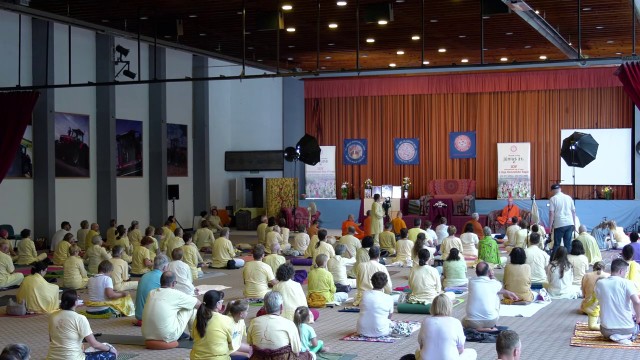
An opening talk at a spiritual seminar addressing the absence of the guru and the purpose of gathering.
"People are always complaining, 'Oh, Kali Yuga is not good, Kali Yuga is a terrible time.' But if you know how to utilize it, Kali Yuga is also excellent."
"We need to be like a Paramahaṁsa... We should be like that. In this world, we have so many things... we should be like the Haṁsa: take the pearls, take the milk, and leave the water."
A senior disciple addresses the assembled spiritual family at the Vép seminar, acknowledging the physical absence of Viśvagurūjī. He reframes the gathering as a vital opportunity to recharge, strengthen spiritual family bonds, and deepen personal practice. Key themes include extracting the essence from the Kali Yuga, the necessity of a supportive community for sādhanā, and using the seminar for introspection, mauna (silence), and focused practice of āsana and prāṇāyāma to calm the mind.
Filming location: Vép, Hungary
Around the world - Bhajans from Kailash(3/3)
1:00 - 1:47 (47 min)
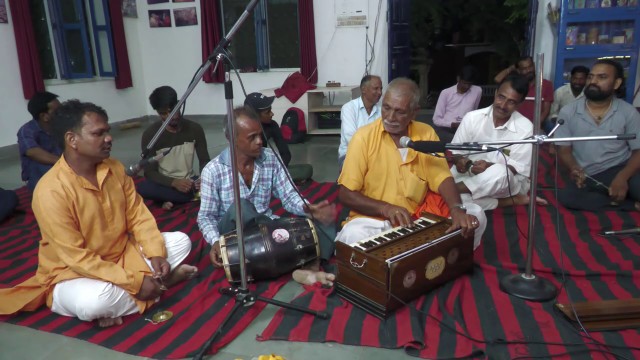
Evening satsang from Kaliash Ashram, Rajasthan, India. Bhajans on the occasion of Sri Devpuriji Mahasamadhi.
Proper exercise is important to us
1:55 - 2:27 (32 min)
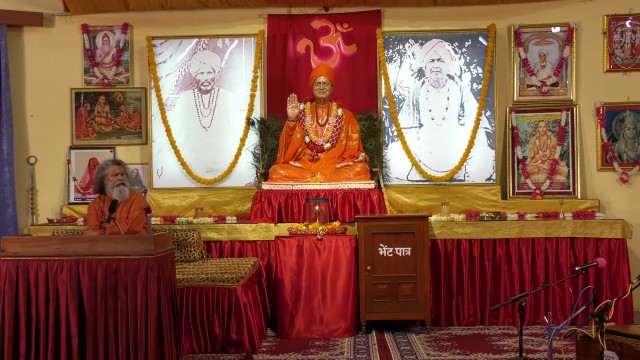
Evening satsang from Jadan Ashram, Rajsthan, India. Two things are important in our lives. What we eat and what we breathe. Yoga in Daily Life are practiced all over the world. Sarva Hitta asanas are good for everyone. Proper exercise is as important to us as food.
Full moon Satsang with Vishwaguruji
2:35 - 3:02 (27 min)
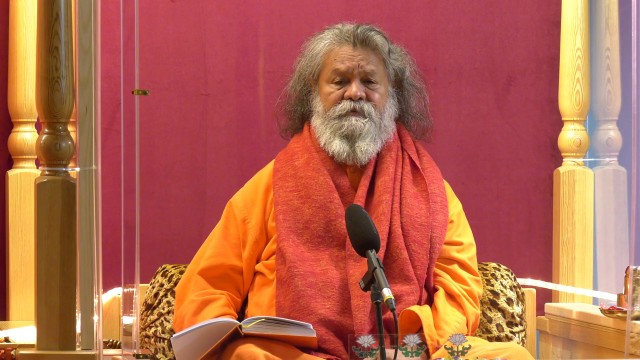
from Guruji Ashram, Vienna, Austria
One in All and All in One
3:10 - 4:01 (51 min)
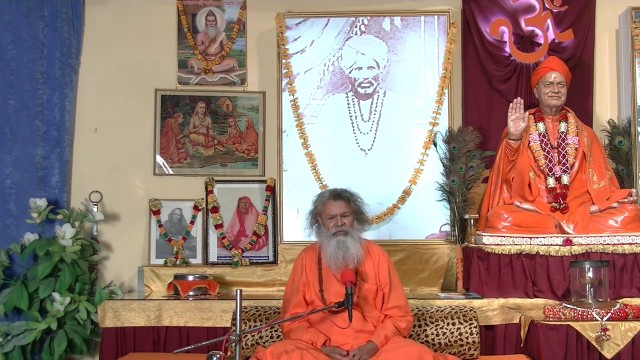
Evening satsang with Vishwaguruji from Jadan Ashram, Rajasthan, India. You should have confidence. We respect all Sadhus but we should have one Guru. One in all and all in one. There is only one Master for us. Surrendering and renouncing is important. Don't be the slave of your student. Repeat the mantra: Om Prabhu Deep Niranjan Saba Dukha Bhanjan.
Live webcast from Vep
3:30 - 5:00 (90 min)
Evening satsang from Vep, Hungary.
Live Balanced Life
4:05 - 4:54 (49 min)
A global satsang addressing spiritual transition and contemporary challenges.
"In this age, we see many divisions. It is said the times are changing, and a transition between Yugas is approaching."
"Therefore, we should every day chant the mantra 'Namaḥ Śivāya.' ... This is the time of Śiva."
Swamiji addresses practitioners worldwide, reflecting on the lunar cycle, the tensions of the current Yuga, and global crises like the pandemic and conflict. He discusses the need for divine balance, symbolized by Lord Śiva, and responds to a question about COVID-19 vaccination by sharing his personal choice while emphasizing individual responsibility. The talk concludes with a collective chanting of the Śiva mantra for peace and protection.
Filming location: Strilky, Czech Republic
Advice for Dark Sun
4:55 - 5:29 (34 min)
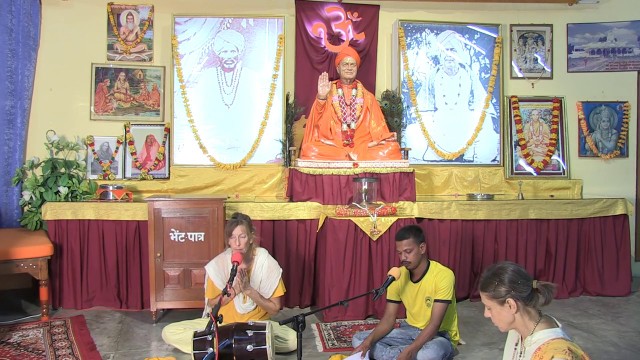
Evening satsang with Vishwaguruji from Jadan Ashram, Rajasthan, India. Lucky are we all, that Gurudev gave us immense knowledge, peace, and harmony. We are preparing ourselves whole year for Gurupurnima. Some people saying Sun is a God, others have a different opinion. We can feel and observe the effect of the solar eclipse. What we should do when the Sun becomes dark.
Yuga Yuga Jivo Maheshwarananda
5:30 - 5:37 (7 min)
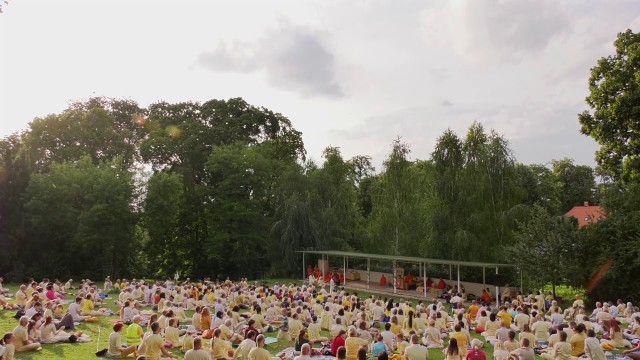
Evening satsang with Vishwaguruji from Strilky Ashram, Czech Republic. Bhajan singing on Gurupurnima satsang.
Sataguru rakho laj hamari
5:45 - 5:51 (6 min)
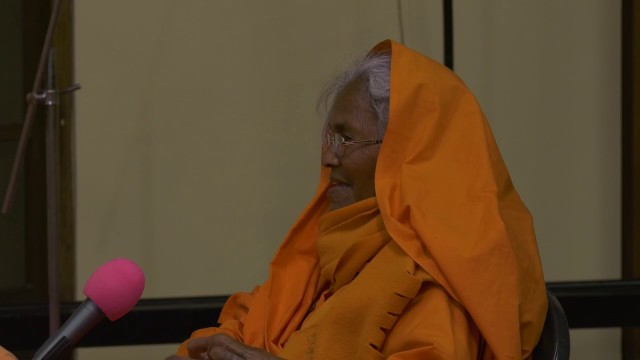
Evening satsang from Jadan Ashram, Rajasthan, India. Vishwaguruji"s sister sings Bhajans.
Repeat the name of Gurudev
5:55 - 6:22 (27 min)
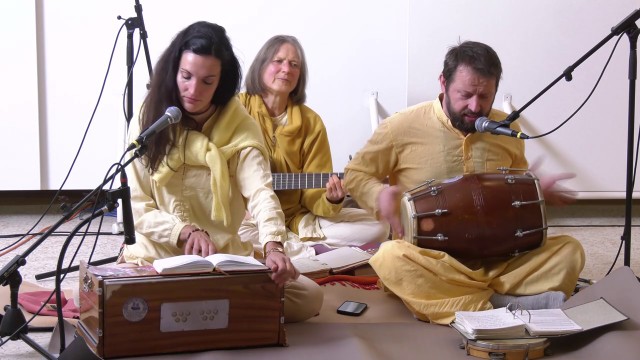
Evening satsang with Vishwaguruji from Vienna, Austria. Bhajan singinig to the Guru. Guru carano me arasatha tiratha he
Bhajan singing in the presence of the Master
6:30 - 7:17 (47 min)
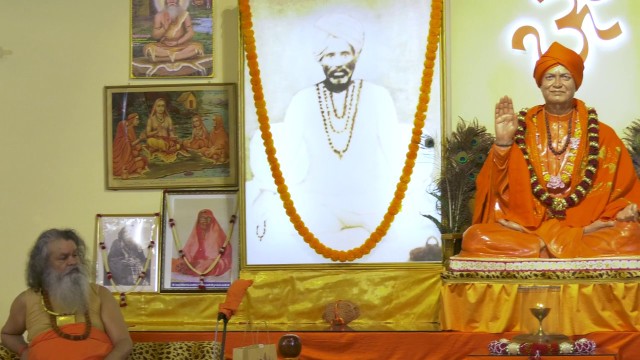
Evening satsang from Jadan Ashram, Rajasthan, India. Bhajan singing from Jadan. Including He nath ab to, Suno sakhi Sataguru aya, Guru carano me arasatha tiratha he
Guru bhakta jagata me na rahe
7:25 - 8:08 (43 min)
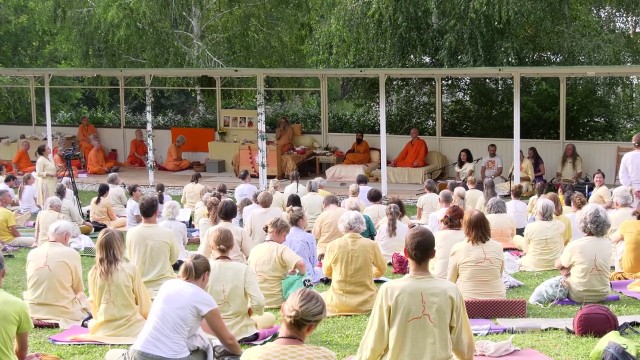
Evening satsang with Vishwaguruji from Strilky Ashram, Czech Republic. Bhajan singing on satsang, including bahajan Guru bhakta jagata me na rahe, Prema ka pyala Hari
Death is a transition
8:15 - 9:16 (61 min)
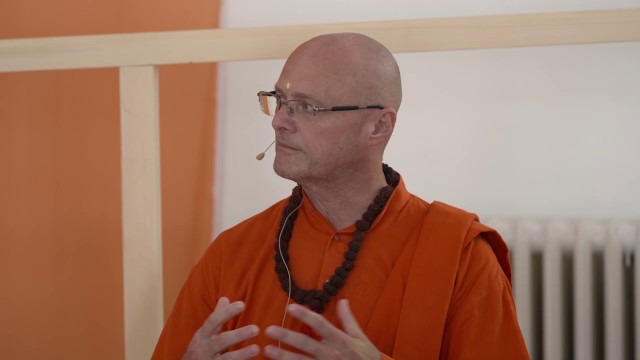
Morning satsang with Vishwaguruji from Strilky Ashram, Czech Republic. Lecture by Swami Avatarpuriji. Once we realize that death is basically a transition from this body to a higher place it is not scary. Who comes will go, that the universal law. A story about king Vidhur, who had a fear about what will happen when he dies. Learnig and translating mantras, a prayer to Lord Vishnu. Salutations to the infinite one, who has thousands forms... Lecture by Swami Vivekpuriji. What is a Guru, how we are feeling about the Guru?
Incarnation Day Of Holy Guruji
9:20 - 10:17 (57 min)
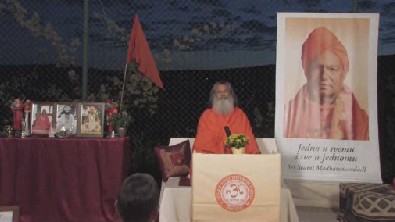
A satsang commemorating the incarnation day of Gurudev Śrī Svāmī Madhavānandapurījī Mahārāj.
"Today is a special blessing coming to you on the holy occasion of our beloved Gurudev."
"I live there, where my bhaktas sing my name with love, with devotion. There are the saints."
The lecturer leads the evening gathering, sharing teachings on the nature of divine incarnations and saints, illustrated by the story of Nārada and Viṣṇu. He recounts his own profound journey to his Guru, Śrī Svāmī Madhavānandapurījī, describing their first meeting and the transformative grace he received. Swami Jñāneśwar Purī Ji then offers heartfelt reflections on the blessings of both his Guru and Swamiji.
What Incarnation means
10:25 - 11:19 (54 min)
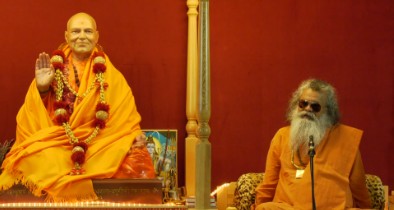
A spiritual discourse on the nature of the soul, creation, and Śiva.
"There is one who is not born from a mother and not from a father. Only that one can be called an incarnation, and that one is called Svayambhū."
"We all are one. It doesn't matter, the human or reptilian or the birds or any. There is a soul, jīva. Life, they are all one."
The lecturer speaks at the Yogandī Life center in Vienna on the anniversary of Gurudev Swami Madhavānandajī. He contemplates the concept of incarnation, explaining Śiva as the unmanifest Svayambhū who willed multiplicity into being through the five elements. Using the metaphor of the ocean and water cycle, he describes the singular soul within all life forms, discusses karma, and emphasizes the power of speech through a parable about the tongue and teeth.
Filming location: Vienna, Austria
The day I met Holy Guruji
11:25 - 12:20 (55 min)
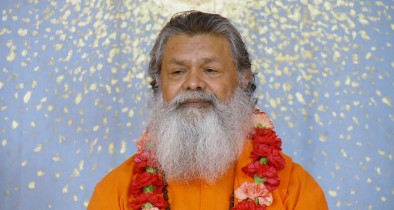
A spiritual discourse reflecting on divine descent, the guru-disciple relationship, and personal history.
"Every soul, when descending from the astral world to this mortal world, must be chosen by some higher hierarchies... You are not elected. You are selected, so such a divine great master comes to this world."
"The master is the master, and we are the raw rock. We have to go through all these situations. He will make you position, give you position on the altar, in the temple."
Swami Maheshwarananda (Swamiji) speaks intimately about the nature of a Satguru's incarnation, selected by divine will rather than personal karma. He shares the story of his own spiritual calling, describing his first encounter with his Guru, Swami Madhavananda, as a child and his determined journey to enter the ashram. He weaves in teachings on karma yoga, liberation, and the transformative, often arduous process of the disciple under the master's guidance, using the metaphor of a sculptor shaping a raw stone into a sacred statue.
Filming location: Strilky, Czech Republic
Examples of yogic power and awareness
12:25 - 13:19 (54 min)
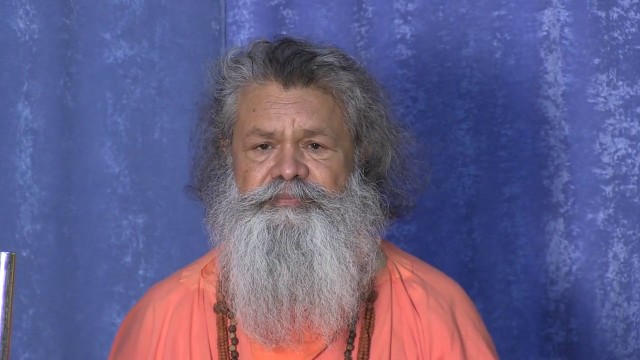
Evening satsang with Vishwaguruji from Jadan Ashram, Rajasthan, India. Vishwaguruji explains the origin of the name Holy Guruji. One has to be very conscious, aware like the driver. Yogi needs awareness. We should see the whole Earth like unity. The story of Mahaprabhuji, and the hunter, who wants to kill a bird.
Message of the Deepak
13:25 - 13:55 (30 min)
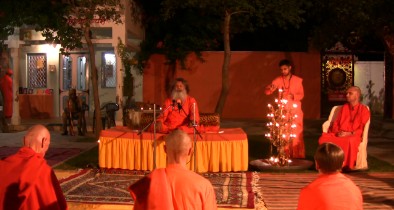
A spiritual discourse on the significance of Diwali (Dīpāvalī).
"This light is the truth, and we light these lights in everyone's heart. If we forget the sins of people, forgive them, and accept them, it means we light the candle again in their heart."
"Therefore, Dīvalī is not only for one day; Dīvalī is every day. When you open your eyes, you get the light, you see the light."
The speaker delivers a satsang on the festival of Diwali, explaining its origin in Lord Rama's return to Ayodhya and its deeper spiritual meaning as the inner light of Brahman. The talk explores the symbolism of the oil lamp—comparing the body to the pot, prana to the oil, the self to the wick, and the flame to the atman—and emphasizes themes of forgiveness, love (prem), non-violence (ahiṃsā), and daily spiritual practice. The discourse includes philosophical reflections, mantra chanting, and a critique of ritual animal sacrifice.
Filming location: Jadan, Rajasthan, India
Practicing of the system 'Yoga in Daily Life', Level 1 - Part 6
14:00 - 15:05 (65 min)
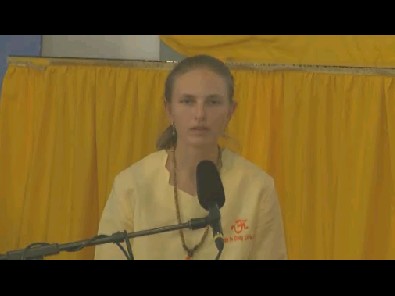
Practicing of the system "Yoga in Daily Life", Level 1 - Part 6, in Om Vishwa Deep Gurukul Swami Maheshwaranand Ashram, Jadan, Rajasthan, India on 24th of October 2009.
We Cannot Deny Guru Principle
15:10 - 15:48 (38 min)
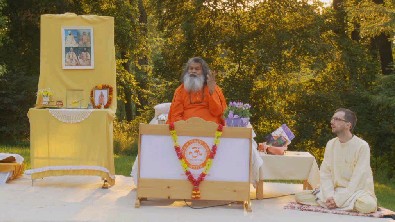
A discourse explaining the spiritual significance of Guru Pūrṇimā.
"There are two kinds of explanation about Guru Pūrṇimā. The first is that when, for the first time, the Earth emerged from the water, and the first light of the sun and moon was experienced by this earth... that was Guru Pūrṇimā."
"Secondly, Guru Pūrṇimā is generally known and explained as the birthday or incarnation of Bhagavān Vedavyāsa."
The speaker, Swami Mādhavānand, elucidates the dual origins of the festival, from a cosmic event to the birth of the sage Vedavyāsa who compiled the Vedas. He emphasizes the indispensable guru principle (guru paramparā), linking it to all teachers and the transmission of wisdom (Śruti and Smṛti). Through anecdotes and teachings, he discusses the qualities of a true guru, the nature of spiritual knowledge, and concludes with the story of Vedavyāsa enlisting Lord Gaṇeśa to write the scriptures.
Filming location: Strilky, Czech Republic
Om Ashram
15:50 - 15:59 (9 min)
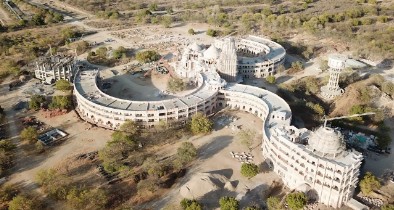
A promotional video about the Omkara Mahavira, a large-scale world peace monument and humanitarian complex under construction in Rajasthan.
"Since 1993, this structure has been under construction for the welfare of humanity, the protection of animals and nature, for teaching yoga, meditation, and philosophy."
"To bring this vision to full fruition, it needs everybody’s contribution. You are not a drop in the ocean. You are the entire ocean in a single drop."
The video details the vision of yogi Paramahamsa Swami Maheshvarananda to build the world's largest Om symbol, which will contain 108 residential compartments. It highlights the existing, operational facets of the site including a free school and college, a hospital, and a large artificial lake for water conservation. The narrative connects this to the global activities of the "Yoga in Daily Life" system, such as tree planting and animal shelters, framing the entire project as a holistic effort for peace, health, and environmental revival. It concludes with a call for donations to complete the monument.
Filming locations: Jhadan, Rajasthan, India.
The Practice and Power of Trāṭaka
16:00 - 16:52 (52 min)
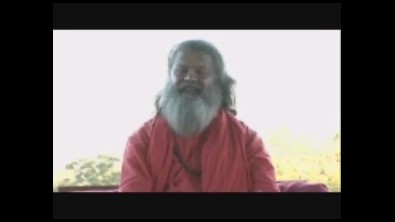
An evening satsang on the theory and practice of Trāṭaka, or yogic gazing.
"Trāṭaka means gazing on one point. The best object is the flame from a lamp of good ghee from a cow—not from buffaloes, goats, or sheep."
"While practicing Trāṭaka, if you practice every day, morning and evening, without interruption for twelve years, you will attain a siddhi... a very pure, very kind, and merciful look in your eyes."
Swami Prakashananda Saraswati provides detailed instructions for the cleansing technique of Trāṭaka. He explains suitable objects for gazing, such as a pure ghee flame or a black dot, and warns against using a mirror. He describes the profound benefits, including purification of mind, improved speech, and the awakening of divine energy and intuition, while stressing the necessity of guidance from a properly trained teacher and the use of a Guru Mantra. The talk includes a cautionary story about two monks to illustrate the importance of inner purity and forgiveness.
Filming location: Australia
Wonders of the human being
17:00 - 18:26 (86 min)
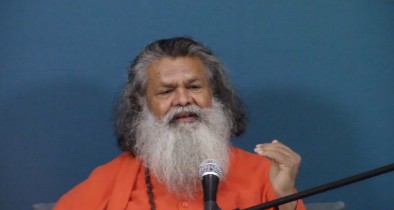
A morning satsang in a Canadian rainforest on the inner body, breath, and spiritual search.
"Where are you searching for me, oh my friend? My heart is in the forest, but I am dwelling in your breath."
"If you really search for me, I will meet you within a second."
Swami Satyanarayana Dasa gives a discourse, using the surrounding forest as a metaphor for the inner landscape of chakras and nadis. He explains the vital importance of breath (prana) and shares stories—including a parable of Ramakrishna and a devotee—to illustrate the intensity of devotion required to know God. The talk covers the five sheaths (Panchakosha), the caution around awakening kundalini, and practical guidance on pranayama and asanas for purifying the physical and energetic bodies.
Filming location: Vancouver, Canada
Live webcast from Vep
17:30 - 19:00 (90 min)
Morning satsang from Vep, Hungary.
Who am I?
18:30 - 19:18 (48 min)
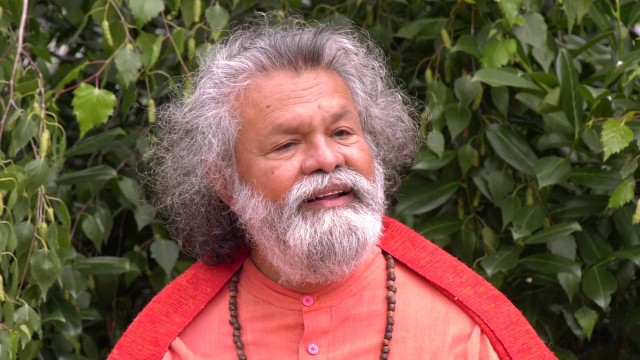
A spiritual discourse on the breath of life, the limits of the body, and destiny.
"Our breath is day and night equally, and it is written how many breaths we will have; then it is finished."
"Even God cannot prolong. That’s it."
The lecturer leads a satsang, exploring the relationship between breath, life, and a predetermined lifespan. He explains that while practices like yoga and prāṇāyāma can make life more comfortable, the ultimate duration is preordained. He illustrates this with an ancient story about a ṛṣi who repeatedly postpones his death to study the Vedas, only to be shown the futility of his endeavor by Dharmarāja. The talk weaves in reflections on the five elements, anecdotes about Czech yogis, and the spiritual nature of the region.
Filming location: Strilky, Czech Republic
Practice leads to the development
19:20 - 20:03 (43 min)
Evening satsang with Vishwaguruji from Jadan Ashram, Rajasthan, India. We are not connected to the time. There is only oneness in the oneness. The best way is yoga. Do not meditate on outer things. The development will come by practicing. Shiva puja gives calmness. It is very important how to worship Gurupurnima, tomorrow we are going to show it.
Unity with the Master
20:05 - 20:58 (53 min)
A spiritual discourse on the living succession within a guru lineage.
"The Master never dies. The body goes, for they become one with Brahman. As long as the master is living in the body, he is with us. When he passes away or leaves this body, then he is not with us, but he is within us."
"Anger, greed, jealousy, hate, etc.—these negative qualities create a barrier... So anger—not only towards the Master, but towards anyone. Anger is there where there is fear."
A speaker explains the eternal nature of the master's consciousness, which transcends the physical body and is passed to a prepared successor, making them the same person in a "different cloth." He emphasizes that receiving this consciousness (parāvidyā) depends on purity and the elimination of negative qualities like anger, not academic learning. The talk includes a story of Guru Gauraknāth, references to devotional songs, and an anecdote about the integrity of former Indian President Abdul Kalam to illustrate spiritual principles.
Filming location: Strilky, Czech Republic
Spiritual Way Of Living
21:05 - 21:53 (48 min)
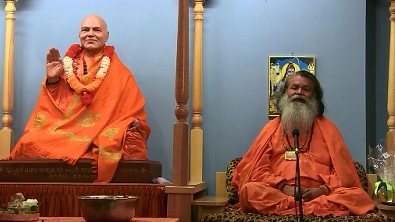
A satsang commemorating the 89th birth anniversary of Satguru Dev Swami Madhavanandaji.
"Everyone has birth, but rare are those who make this birth successful."
"Guru kṛpāhi kevalaṁ kṛpāḥ. On whom the kripa of the Gurudev is there, everyone’s kripa will be there."
A spiritual teacher leads a discourse honoring the birth anniversary of Satguru Dev. He explores the nature of a divine birth, where an immortal soul enters the mortal world as a guide. Key themes include the importance of blessings over curses, the eternal Guru Tattva principle, and the lineage of grace from Alakpuriji through Devpuriji to the present Satguru. The talk emphasizes surrendering negative qualities, following the Guru's word as mantra, and the protective power of faith.
Filming location: Vienna, Austria
The Path of Kindness and the Flow of Giving
22:00 - 22:37 (37 min)
A spiritual discourse and Q&A session on cultivating kindness, understanding karma, and overcoming personal blocks through selfless giving.
"Practice ahiṃsā. See yourself in others. If someone does something bad to you, how will you feel? The same is true if you have negative feelings or thoughts toward others; they will feel it too."
"The best way is to give. Give some seeds to the birds. Give water to the flowers... Give, give, give. Yes, we are coming here for giving."
A Swamiji leads the session, beginning with teachings on kindness and the principle of ahiṃsā, illustrated by the story of the saint Dadhīci Ṛṣi. He then answers questions on the accumulation of karma and how to overcome creative and energetic blocks, emphasizing the transformative power of generosity. He shares the story of Max Muller to illustrate faith and concludes by detailing the many forms of helpful giving that purify karma and open spiritual pathways.
Filming location: Kranj, Slovenia
Marriage has its proper time and order
22:45 - 0:24 (99 min)
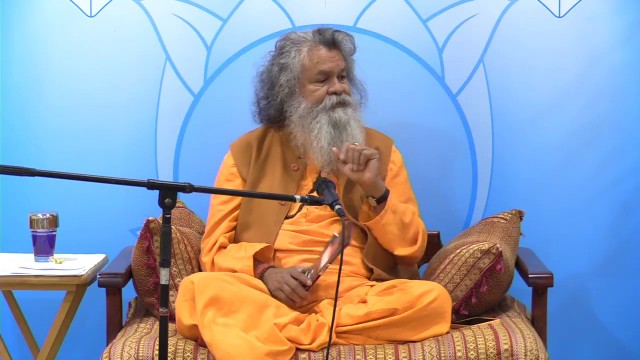
Evening satsang with Vishwaguruji from Sydney Ashram, Australia. Bhajan singing and explanation. Swami Jasraj Puri introduces our Masters and our parampara and their Ashrams and that territory of India. Indian people know many bhajans. There are many languages in India. Everything has its proper time to do. Marriage also has its proper time. In India, a boy and a girl should marry only if the family and a pandit also agreed with that. If you married in a church you should be faithful your whole life to your partner. Nowadays many people leave their partner and it brings many problems for children. The story of a boy and a girl who loved each other but they had a problem with the bread. Practising some simple exercises and bhramari pranayama.
American
Australian