
European
Bhaktas are longing for Satsang
0:05 - 0:53 (48 min)
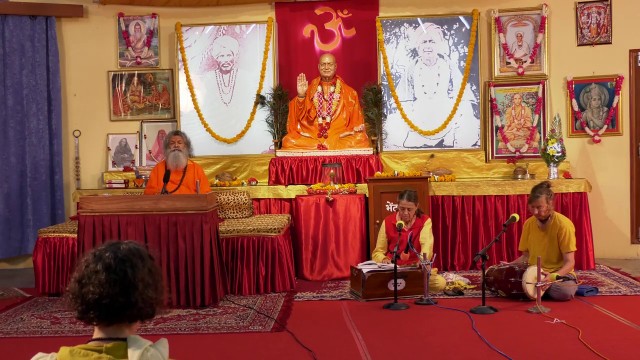
Evening satsang from Jadan Ashram, Rajasthan, India. Bhajan singing. Swami Umapuri says some words about her spiritual development in the Jadan Ashram. She spoke about her experiences with Yoga Nidra. She explains the bhajans of Swami Sivananda and Bhagwan Sri Deep Mahaprabhuji.
Around the world -- 2011 Satsang tour of Mahamandaleshwar Swami Jasraj Puri Ji in Hungary
1:00 - 1:07 (7 min)
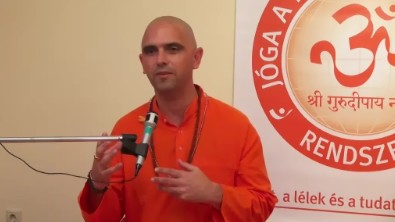
Around the world - 2011 Satsang tour of Mahamandaleshwar Swami Jasraj Puri Ji in Hungary.
Around the world - Bhajans from Kailash(1/3)
1:15 - 2:03 (48 min)
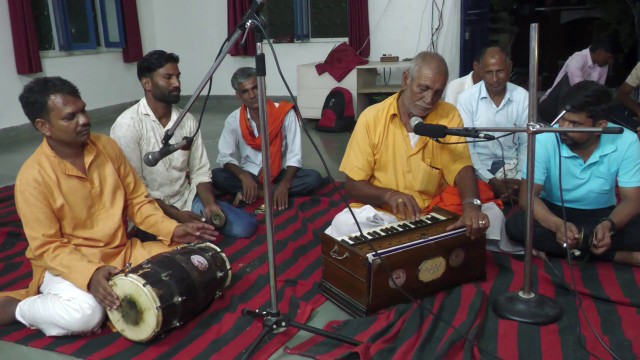
Evening satsang from Kaliash Ashram, Rajasthan, India. Bhajans on the occasion of Sri Devpuriji Mahasamadhi.
Be joyful
2:10 - 2:37 (27 min)
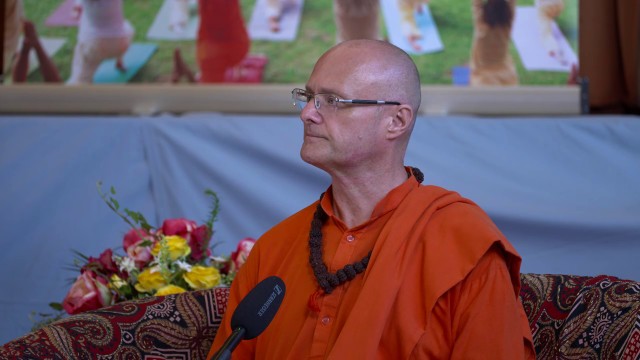
A satsang discourse on the spiritual significance of a guru's birthday, drawing parallels to Christmas.
"I recall Swāmījī saying, 'I was observing one person who was practicing Kriyā under the tree.'"
"For us, the day of incarnation of Mahāprabhujī, the day of incarnation of Swāmījī, Gurujī, is Christmas. But even more than Christmas, because that is our guru."
A spiritual teacher addresses a gathering, explaining why the birthday of a guru is a sacred celebration akin to Christmas. He emphasizes the necessity of a living guru for correct spiritual practice and describes the Guru Tattva (the essence of the guru) as a pure, divine light within a physical form. He explains how devotees can connect to this energy through satsang, devotion, and bhajans, transforming their own energy and creating a joyful spiritual life. The talk includes practical advice on using prayer, song, and positive thinking to change one's internal state and the surrounding atmosphere.
Filming location: Vép, Hungary
The Guru can change our destiny
2:45 - 3:07 (22 min)
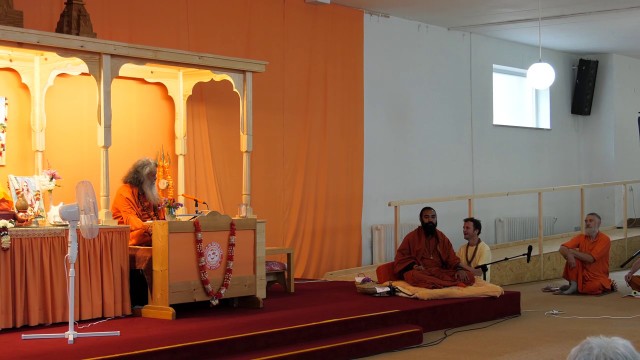
A spiritual discourse on the guru's power to transform destiny.
"Everything depends on our karmas... What is written for you, what is written in your destiny, that is what is going to happen."
"Guru Kṛpāhi Kevalam... So this is Guru Kṛpā. The guru is the one who can actually change your destiny if he wants."
The lecturer narrates a traditional story from Holī Gurujī about a king's guru and the Vedāntā, the deity who writes destiny. The tale illustrates how a guru's compassion and clever guidance can alter the seemingly fixed fate of two princes, demonstrating the supreme grace of the guru. The discourse emphasizes the guru's equal love for all, regardless of status.
Filming location: Strilky, Czech Republic
The Endless Glory of the Rāmāyaṇa
3:15 - 4:06 (51 min)
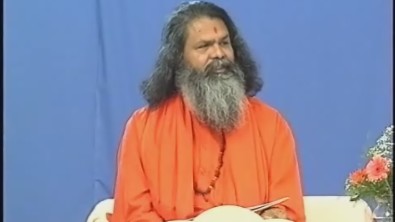
A discourse on the glory of the Rāmāyaṇa and the sacred city of Ayodhyā.
"The glory of God is Ānanda, endless. There is never an end to God’s glory."
"In those hearts where God is known, that heart is a temple. Otherwise, it is a cave of the Rakṣasas, or a grave."
The speaker expounds on the infinite, joyful nature of the Rāmāyaṇa's wisdom, explaining its transmission from Lord Śiva to Pārvatī and then through Tulsīdās. He describes the divine qualities of Lord Rāma, the holiness of Ayodhyā and the Sarayū River, and emphasizes remembering God in all circumstances. The talk connects devotion to environmental reverence and concludes with the liberating power of the sacred land.
Filming location: Strilky, Czech Republic
Live webcast from Vep
3:30 - 5:00 (90 min)
Evening satsang from Vep, Hungary.
Difficulties
4:10 - 5:02 (52 min)
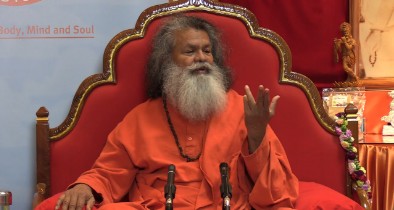
A spiritual discourse exploring the concept of tapas (austerity or fire) and the nature of human fear.
"Generally, according to the Vedānta, also according to the Āyurveda, we can use it for yoga, because that is how it happens."
"Tino yī tāpa, adhibhautika, adhidaivika, adhyātmika. And pāp. Pāp means sin. So, the sin of these three tāpas will be cleaned up."
Swami Maheshwarananda (Swamiji) leads a satsang, examining why humans are uniquely fearful and troubled compared to other creatures. He narrates a parable where animals confront God about why humans are considered the best creation, with God denying having made such a declaration. The talk analyzes the three fires (tapas) of human suffering—physical, divine, and spiritual—and prescribes mantra, detachment from worldly affairs ('todo'), and connection to the divine ('jodo') as the path to everlasting joy. He concludes by recommending teachers read from spiritual texts like Hidden Powers in Humans.
Filming location: Wellington, New Zealand
Yoga and spirituality
5:05 - 5:27 (22 min)
Evening Satsang with Swamiji from Brisbane, Sunshine Coast, Australia.
Bhajan singing from Strilky Ashram
5:30 - 6:03 (33 min)
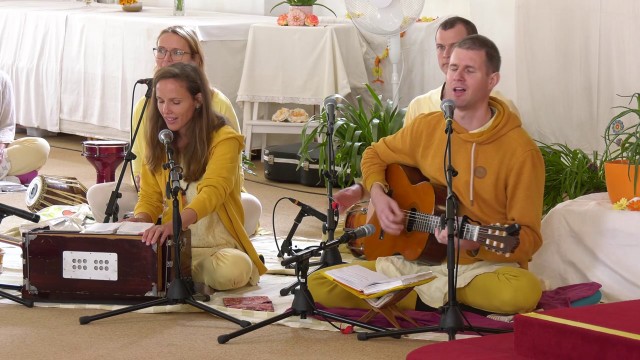
Morning satsang with Vishwaguruji from Strilky Ashram, Czech Republic.
Bhajan evening from Strilky
6:10 - 6:24 (14 min)
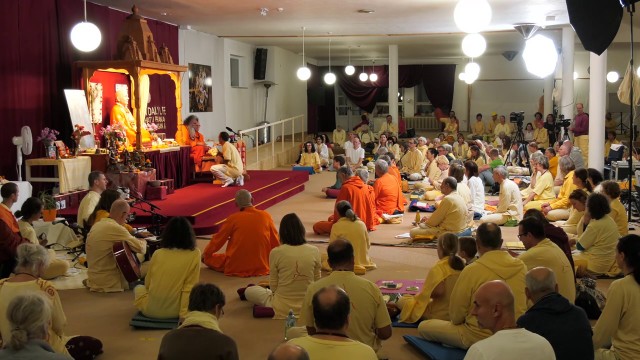
Evening satsang with Vishwaguruji from Strilky Ashram, Czech Republic.
Hymns of Adoration and the Nirvāṇa Ṣaṭkam
6:30 - 6:53 (23 min)
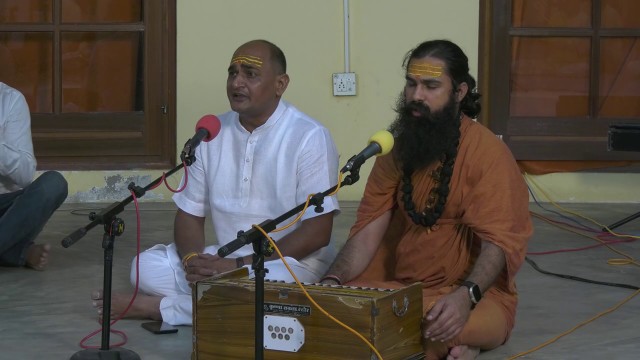
A devotional video featuring the chanting of Sanskrit hymns dedicated to Lord Shiva.
"Na me dveṣa rāgau. Na me lobho, na mādo, neva me neva sāryabhā. Na dharmo, na cārtho, na kāmo, na mokṣaḥ. Cidānanda-rūpaḥ śivo'ham, śivo'ham."
"Brahmā Murārī Surārchitaliṅgam, Nirmalabhāśita Śobhitaliṅgam, Janmajaḍukha Vināśakaliṅgam, Tat praṇamāmi Sadāśivaliṅgam."
The video consists of a continuous recitation of three primary hymns: the Rudrāṣṭakam, the Nirvāṇa Ṣaṭkam (a declaration of the true Self as consciousness and bliss), and the Liṅgāṣṭakam. The chanting is interspersed with and concluded by energetic salutations (jaya) to a lineage of spiritual masters, including Śrī Alakhpurīṣa Mahādeva, Śrī Devapurījī, Śrī Dīp Nārāyaṇa Mahāprabhujī, and others.
Filming location: Jadan, Rajasthan, India
Bhajan singing from Jadan
7:00 - 7:17 (17 min)
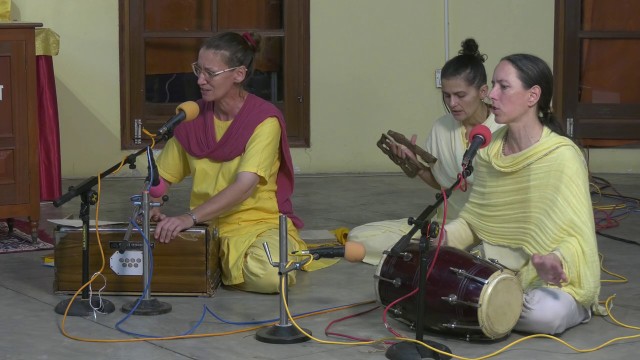
Evening satsang with Vishwaguruji from Jadan Ashram, Rajasthan, India.
Bhajan singing from Strilky Ashram
7:25 - 8:06 (41 min)
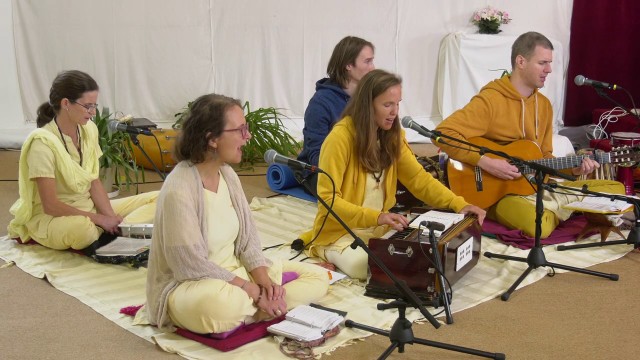
Morning program from Strilky, Czech Republic. Bhajan singing.
Bhajans on the Satsang
8:10 - 9:00 (50 min)
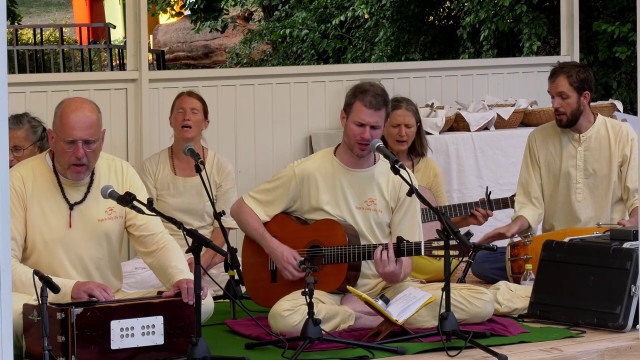
Evening satsang with Vishwaguruji. Bhajan singing.
Proper exercise is important to us
9:05 - 9:37 (32 min)
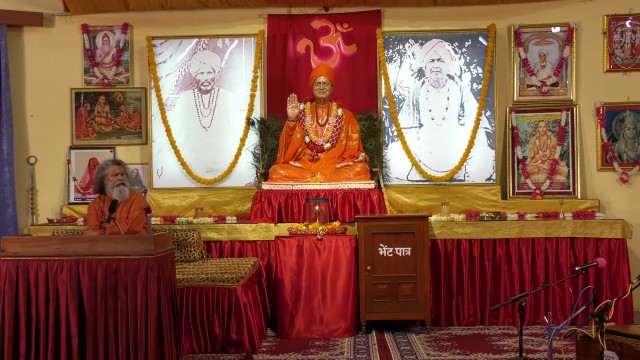
Evening satsang from Jadan Ashram, Rajsthan, India. Two things are important in our lives. What we eat and what we breathe. Yoga in Daily Life are practiced all over the world. Sarva Hitta asanas are good for everyone. Proper exercise is as important to us as food.
Death is a transition
9:45 - 10:46 (61 min)
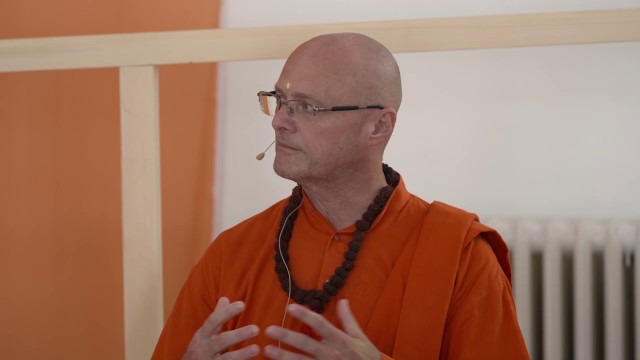
Morning satsang with Vishwaguruji from Strilky Ashram, Czech Republic. Lecture by Swami Avatarpuriji. Once we realize that death is basically a transition from this body to a higher place it is not scary. Who comes will go, that the universal law. A story about king Vidhur, who had a fear about what will happen when he dies. Learnig and translating mantras, a prayer to Lord Vishnu. Salutations to the infinite one, who has thousands forms... Lecture by Swami Vivekpuriji. What is a Guru, how we are feeling about the Guru?
Be positive
10:50 - 12:00 (70 min)
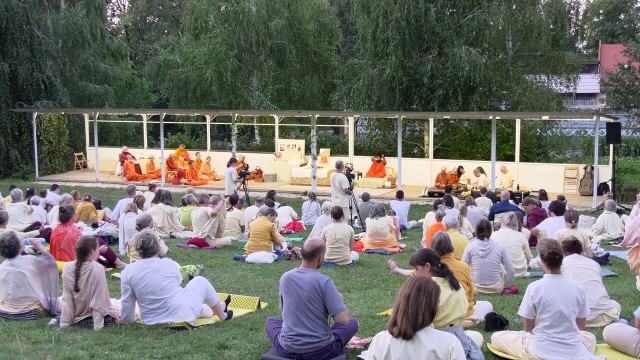
Evening satsang from Summer Yoga Retreat from Strilky, Czech Republic. Find your own mistakes first instead of finding bad points in others. Swami Avatarpuriji tells stories about the positive and negative side of things. Mantras and Yoga Nidra.
Atma is spotless
12:05 - 12:51 (46 min)
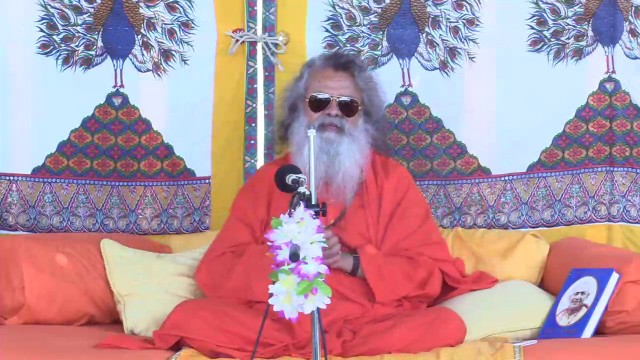
A spiritual discourse on divine presence, the nature of the soul, and the guru's grace, illustrated through parables and teachings.
"When the difficult time comes, then you should know that you are now with God."
"Śrī Guru Ātmā, that is the highest... our Ātmā is connected to Holy Gurujī."
A teacher shares parables, including one where God carries a devotee through hardship and another where a renunciate yogi refuses Lord Shiva's offer. He explains the spotless, all-pervading nature of the soul (Ātmā) and its connection to the Guru, weaving in teachings on devotion, renunciation, and the elements of the body.
Filming location: Australia
Don't kill Animals!
12:55 - 13:53 (58 min)
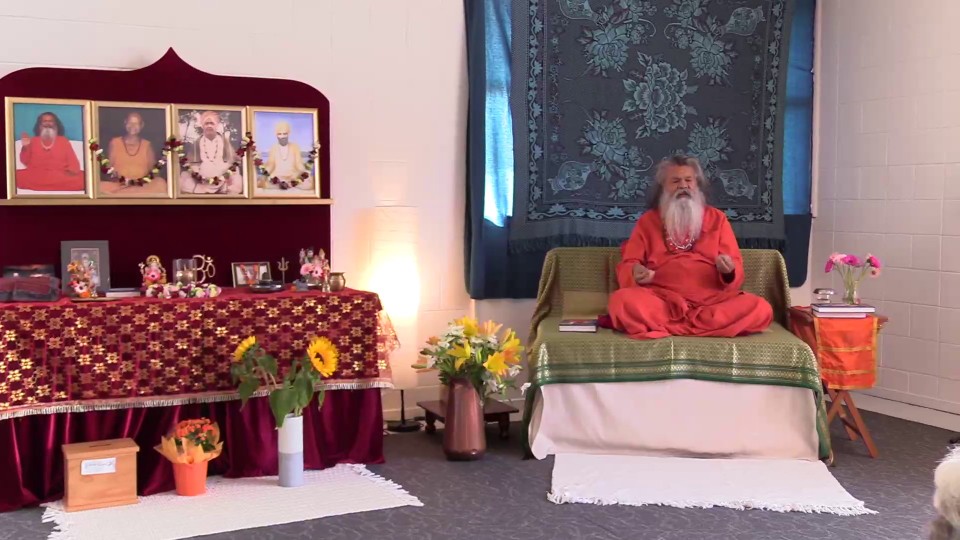
Morning satsang with Vishwaguruji from Auckland, New Zealand. The origin of many diseases is in our relationships. We can solve problems if we are practicing yoga. Advice from Vishwaguruji for good health. Search your Guru in the heart. We have to follow the words of the Saint's. Do not kill animals and eat them. Humans cause immense pain to innocent animals. That is why viruses are coming as a strike-back.
Practicing of the system 'Yoga in Daily Life', Level 1 - Part 4
14:00 - 15:04 (64 min)
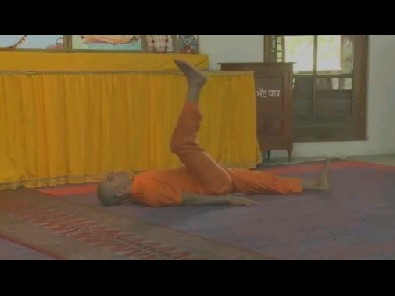
Practicing of the system "Yoga in Daily Life", Level 1 - Part 4, in Om Vishwa Deep Gurukul Swami Maheshwaranand Ashram, Jadan, Rajasthan, India on 23rd of October 2009.
The spiritual family
15:10 - 16:01 (51 min)
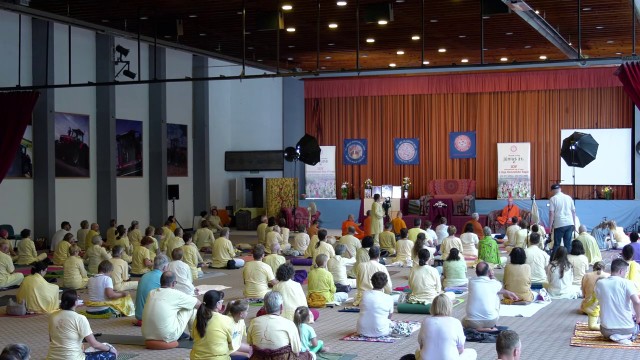
An opening talk at a spiritual seminar addressing the absence of the guru and the purpose of gathering.
"People are always complaining, 'Oh, Kali Yuga is not good, Kali Yuga is a terrible time.' But if you know how to utilize it, Kali Yuga is also excellent."
"We need to be like a Paramahaṁsa... We should be like that. In this world, we have so many things... we should be like the Haṁsa: take the pearls, take the milk, and leave the water."
A senior disciple addresses the assembled spiritual family at the Vép seminar, acknowledging the physical absence of Viśvagurūjī. He reframes the gathering as a vital opportunity to recharge, strengthen spiritual family bonds, and deepen personal practice. Key themes include extracting the essence from the Kali Yuga, the necessity of a supportive community for sādhanā, and using the seminar for introspection, mauna (silence), and focused practice of āsana and prāṇāyāma to calm the mind.
Filming location: Vép, Hungary
The Guru can change our destiny
16:05 - 16:27 (22 min)
A spiritual discourse on the guru's power to transform destiny.
"Everything depends on our karmas... What is written for you, what is written in your destiny, that is what is going to happen."
"Guru Kṛpāhi Kevalam... So this is Guru Kṛpā. The guru is the one who can actually change your destiny if he wants."
The lecturer narrates a traditional story from Holī Gurujī about a king's guru and the Vedāntā, the deity who writes destiny. The tale illustrates how a guru's compassion and clever guidance can alter the seemingly fixed fate of two princes, demonstrating the supreme grace of the guru. The discourse emphasizes the guru's equal love for all, regardless of status.
Filming location: Strilky, Czech Republic
The spiritual family
16:35 - 17:26 (51 min)
An opening talk at a spiritual seminar addressing the absence of the guru and the purpose of gathering.
"People are always complaining, 'Oh, Kali Yuga is not good, Kali Yuga is a terrible time.' But if you know how to utilize it, Kali Yuga is also excellent."
"We need to be like a Paramahaṁsa... We should be like that. In this world, we have so many things... we should be like the Haṁsa: take the pearls, take the milk, and leave the water."
A senior disciple addresses the assembled spiritual family at the Vép seminar, acknowledging the physical absence of Viśvagurūjī. He reframes the gathering as a vital opportunity to recharge, strengthen spiritual family bonds, and deepen personal practice. Key themes include extracting the essence from the Kali Yuga, the necessity of a supportive community for sādhanā, and using the seminar for introspection, mauna (silence), and focused practice of āsana and prāṇāyāma to calm the mind.
Filming location: Vép, Hungary
The health of the bones
17:30 - 18:22 (52 min)
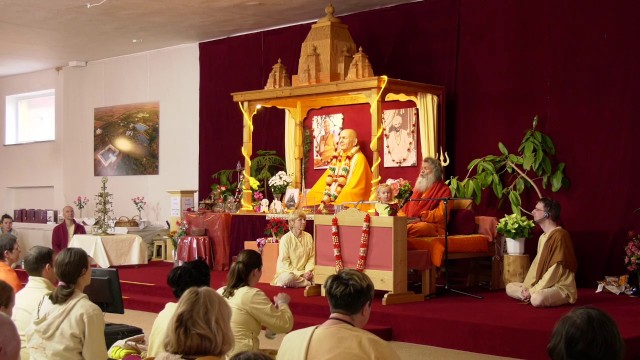
A spiritual talk on the purification of the body and mind, focusing on holy water and natural self-care.
"You can give this, what we call, the holy water. Give this to all your friends and everybody this Christmas."
"So bring the happiness... put a holy, a holy thought within us. 'Holy' means the clean and have a good energy."
Swami Ji offers a wide-ranging discourse, encouraging the use of holy water for purification and harmony during Christmas. He advises on caring for the physical body through natural means—like simple oils, yoga, and avoiding synthetic creams—linking it to the care of the subtle bodies (kośas). The talk includes personal anecdotes about habits and diet, emphasizing a return to simplicity and gratitude.
Filming location: Strilky, Czech Republic
Live webcast from Vep
18:30 - 20:00 (90 min)
Morning satsang from Vep, Hungary.
Working for the Liberation
18:30 - 19:23 (53 min)
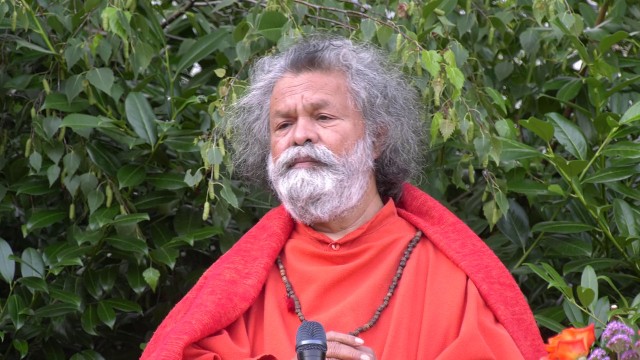
A spiritual discourse on finding inner truth versus external pursuits, delivered with personal anecdotes.
"Everything is within us. But we have to awaken that. If we are searching outside, it is not our property."
"We are all in that one wheel. What is that wheel? It is the circulation—the circulation between birth and death for every creature."
Swami narrates a satsang, teaching that eternal happiness and liberation from life's cycle are found within, not through external techniques. He contrasts this with humorous stories about sunbathing and sauna experiences, ultimately emphasizing disciplined inner practice like Kriyā Anuṣṭhāna to awaken the true Self.
Filming location: Strilky, Czech Republic
Blessing the new ashram in Debrecen
19:25 - 20:01 (36 min)
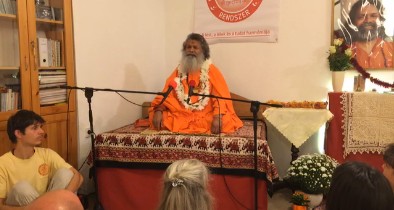
An evening satsang on the purpose of human life and spiritual practice.
"My dear Devapurījī said, 'A tree takes time to grow.'" "The great saint Svāmī Śivānandajī of Ṛṣikeś said: 'Within you is the ocean of immortality. Within you is the fountain of joy. And within you is the immortal soul. Kill this little ‘I’ and lead divine life.'"
Swami Maheshwarananda addresses the community, reflecting on the global growth of the Yoga in Daily Life organization and its humanitarian projects. He explains the core aim of human life is to be a protector, cultivating divine qualities like kindness and forgiveness to remove inner impurities. The talk covers the synergy of yoga and Ayurveda, the nature of spiritual practice as a path to liberation, and concludes with blessings for the new ashram.
Filming location: Debrecen, Hungary
Maya can destroy everything
20:05 - 20:47 (42 min)
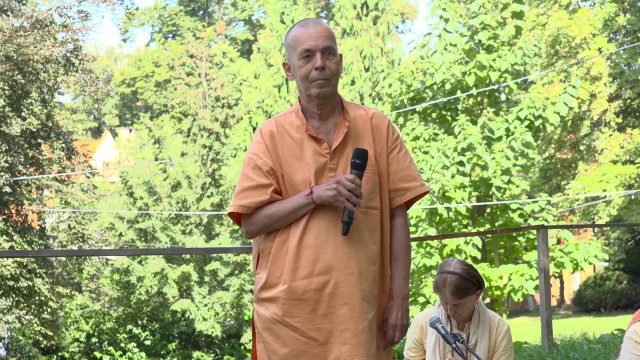
A spiritual discourse warning against greed and emphasizing correct devotional practice.
"Kāma, krodha, mada, lobha, ahaṅkāra. These are all important factors in the downfall of any spiritual seeker."
"For us, our Māyā should be Gurudev. We should run behind him. We should remember Him all the time."
A swami leads a satsang, using parables and a personal anecdote to illustrate the destructive power of greed (lobha). He stresses constant devotion to the Guru over material illusion. The talk concludes with detailed instructions for performing mantra japa correctly, including how to hold a mala and the significance of different rudrākṣa beads, while ultimately pointing to pure devotion as the supreme principle.
Filming location: Strilky, Czech Republic
Support your heart
20:55 - 21:34 (39 min)
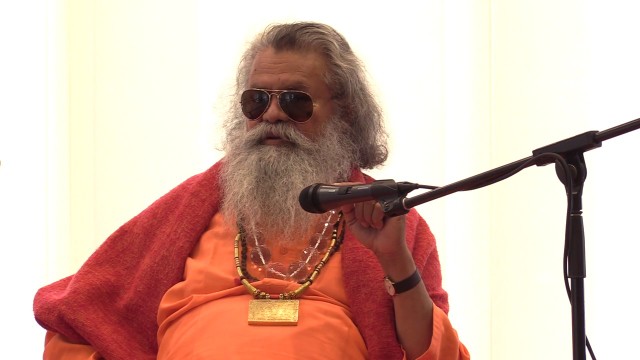
Live webcast from Melbourne, Australia. We all know the heart, the seat of love and life. Many people have problems with their hearts. I want to show you some simple exercises that are very good for the health of the heart. Practice and demonstration.
Bhaktas are longing for Satsang
21:40 - 22:28 (48 min)
Evening satsang from Jadan Ashram, Rajasthan, India. Bhajan singing. Swami Umapuri says some words about her spiritual development in the Jadan Ashram. She spoke about her experiences with Yoga Nidra. She explains the bhajans of Swami Sivananda and Bhagwan Sri Deep Mahaprabhuji.
Every creature have its karma
22:35 - 23:28 (53 min)
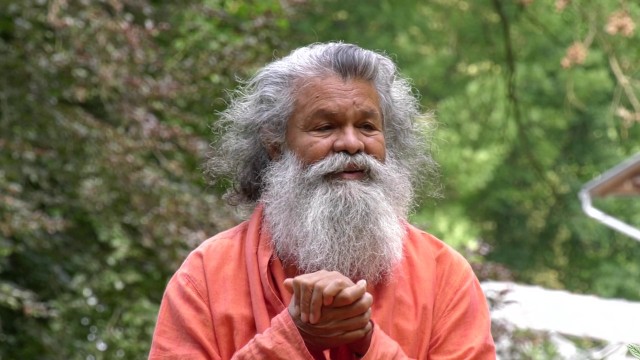
A spiritual discourse on karma, interconnectedness, and human nature.
"Karma is not only for humans; it is for all creatures, any animal."
"So always, our people, our friends, we do not know who is thinking today, now."
The lecturer addresses a gathering, exploring the universal law of karma that binds all life—humans, animals, and even trees. He shares parables, including a story of an ancient tree foretold to die by a yogi, to illustrate how actions interconnect. The talk weaves through themes of compassion, environmental destruction, and personal responsibility, concluding with a call to do good for all.
Filming location: Strilky, Czech Republic
Gurudev is always merciful and loving
23:35 - 0:05 (30 min)
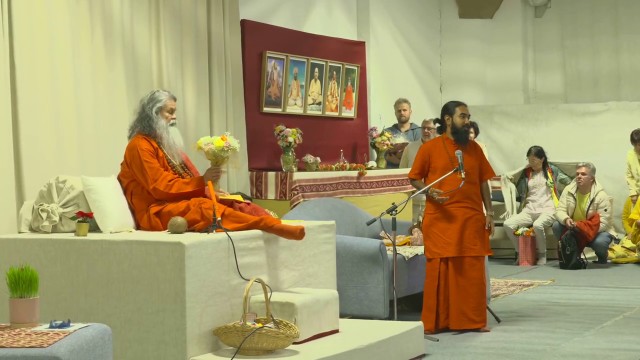
A satsang discourse on the grace and necessity of the guru.
"It does not matter how tired his physical body is or how exhausted he may be. When he is with all of you, with his bhaktas, he always wishes to stay as long as it is possible for him."
"If we want to be freed from this cycle of death and birth, then we need Gurudeva, because he removes this cycle of death and birth from all his bhaktas."
A speaker addresses a gathering in the presence of Gurudeva, expressing gratitude for the guru's loving endurance. He explains the essential role of the Sadguru in spiritual life, using the story of Dhruva's devotion and a parable about two Brahmins discovering that all holy rivers purify themselves at the feet of a true guru. The key theme is that the guru's grace removes all sorrow, purifies sins, and liberates the disciple from the cycle of birth and death.
Filming location: Maha Kumbha Mela, India
American
Australian