
European
Support your heart
0:05 - 0:44 (39 min)
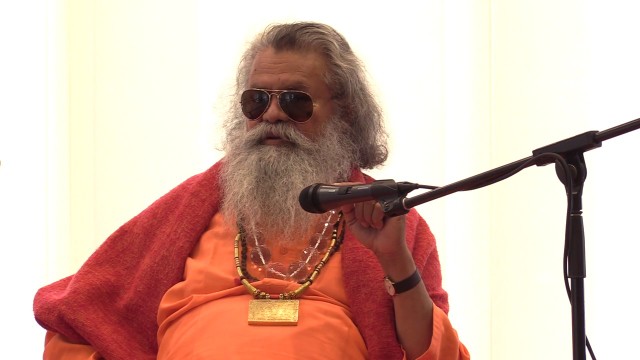
Live webcast from Melbourne, Australia. We all know the heart, the seat of love and life. Many people have problems with their hearts. I want to show you some simple exercises that are very good for the health of the heart. Practice and demonstration.
The Inner States: Jagrat, Svapna, Suṣupti, and Beyond
0:45 - 0:59 (14 min)
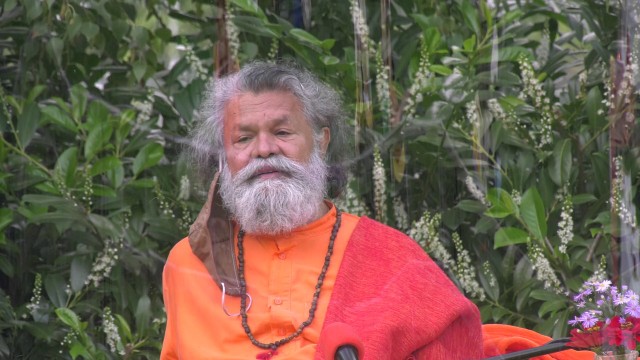
A spiritual discourse on the states of consciousness and the importance of sleep.
"First, we are Jāgrat. Jagrat means awake... This is whatever we see now: we were cooking, we are eating, we are drinking, we are shopping—anything we are doing. This is from outside to inside."
"What this sleep means is that we are 100% aware about our Self, and so it is very comfortable, relaxed, and peaceful. That is your life."
Swami Madhvānandaji addresses the community, explaining the three common states of waking (Jagrat), dreaming (Svapna), and deep sleep (Suṣupta). He emphasizes the divine quality of sleep as a time to be with the inner Self (Ātmā) and introduces the higher state of Yoga Nidrā, described as a conscious sleep where yogis are awake to the Supreme. The talk concludes with a transition to the Sandhyā prayer, marking the junction of day and night.
Filming location: Strilky, Czech Republic
Part 1: Welcoming Address and Valedictory Session on Yoga for Wellness
1:00 - 2:08 (68 min)
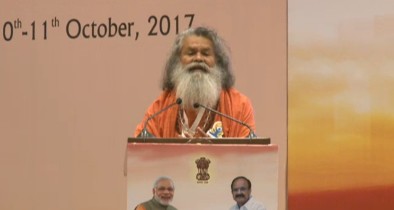
A valedictory session for a conference on "Yoga for Wellness," featuring addresses by government ministers and spiritual leaders.
"Yoga for wellness is this year’s subject. It is not just about the practice of yoga, but also about using it in the lives of every human being for achieving better health and wellness."
"Our method of treatment does not have any side effects. That is why we develop research about it, develop websites, develop programming, develop its videos."
The session opens with a welcome address emphasizing yoga's global role and the need to integrate traditional and modern medicine. Union Minister Nitin Gadkari delivers a valedictory address, sharing his personal health transformation through yoga and proposing structured training and research to professionalize the field. Following remarks from other ministers, Professor H.R. Nagendra gives a speech contrasting the multidimensional approach of yoga with modern medicine's limitations for non-communicable diseases. Swami Maheshvarananda and actress Anu Agarwal also share perspectives, with Agarwal recounting her recovery from a major accident through yoga.
Filming location: Delhi, India
A Monument for Krishnanaji
2:15 - 2:30 (15 min)
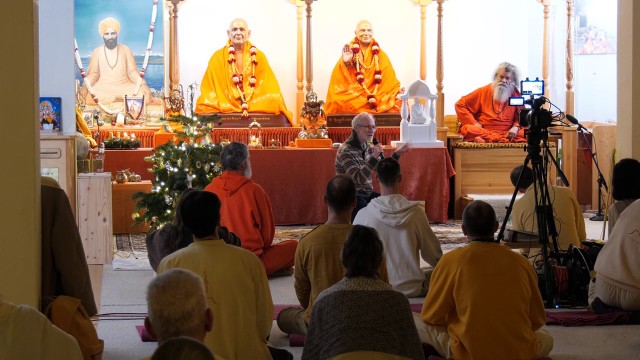
A presentation on the creation of a memorial monument for a senior disciple.
"Swāmījī said... that for dear Krishnanaji... we should do a monument in Vép, in the main square."
"He was really the seed of the seed in Hungary for yoga in life and in the paramparā."
A speaker presents a small model of a planned stone monument for Krishnanaji, a foundational figure for the yoga community in Hungary. He recounts Krishnanaji's devotion, his role in hosting Swāmījī and spreading teachings, and shares Swāmījī's wish for the memorial to be placed in Vép's main square. The narrative later becomes fragmented, touching on disciples' conduct and vague anecdotes.
Filming location: Vienna, Austria
Part 1: Yoga in Daily Life: Union, Harmony, and Self-Knowledge
2:35 - 3:52 (77 min)
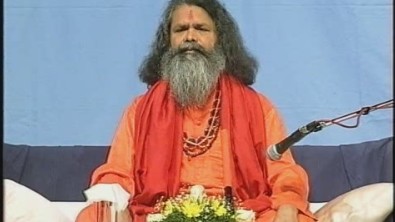
A public lecture on integrating yoga philosophy and practice into daily life, focusing on self-knowledge and chakra awakening.
"Yoga is a balancing principle which balances the entire universe. Where there is balance, there is harmony."
"Unless we change our qualities, we cannot become one with God. Human qualities are love, understanding, kindness, mercifulness, helping, spiritual, and so on."
Swami Paramadvaiti addresses an audience, explaining yoga as a science for achieving harmony and union with the cosmic consciousness. He discusses the nature of human problems, the journey of the individual soul, and the importance of cultivating positive qualities. The lecture then delves into practical yoga techniques for health and stress relief, before providing a detailed teaching on the energy body, focusing on the awakening and purification of the Svādhiṣṭhāna chakra and its associated emotions.
Filming location: Croatia
Live webcast from Strilky
3:30 - 5:00 (90 min)
Evening satsang from Strilky Ashram, Czech Republic.
Pain Of Separation Is A Driving Force
3:55 - 4:29 (34 min)
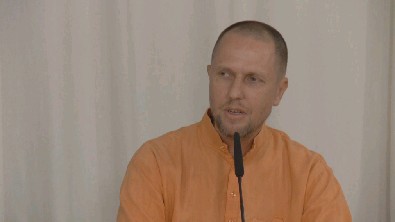
A satsang discourse on spiritual discontent and the search for the true Self.
"Pain is normal, and suffering in life is an option. So suffering is an option for everybody. It is one's own decision."
"We come to satsaṅg because satsaṅg is the biggest painkiller... And real satsaṅg can only happen through a real saint, a sādguru, who knows the truth."
A speaker reflects on the universal pain of separation from one's true nature as the driving force behind seeking satsang. He explores concepts of karma, identification, and the illusion of being the doer, arguing that while personal effort and inquiry are necessary, ultimate enlightenment depends on grace and complete surrender to the guru. The talk references Tulsīdāsa and the Bhagavad Gītā, concluding with a search for the unchanging reality within.
Filming location: Strilky, Czech Republic
Concentration on the Heart
4:30 - 5:01 (31 min)
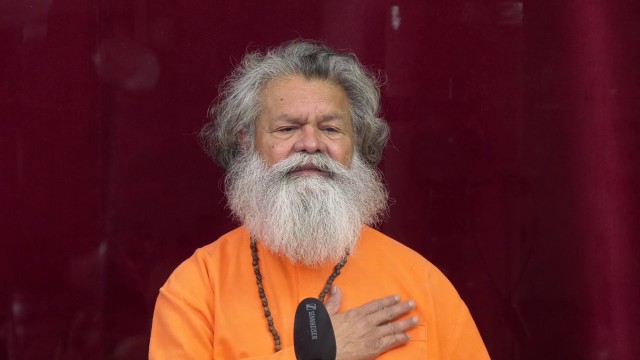
Morning program from Strilky Ashram, Czech Republic.
Shiva will bless All
5:05 - 5:28 (23 min)
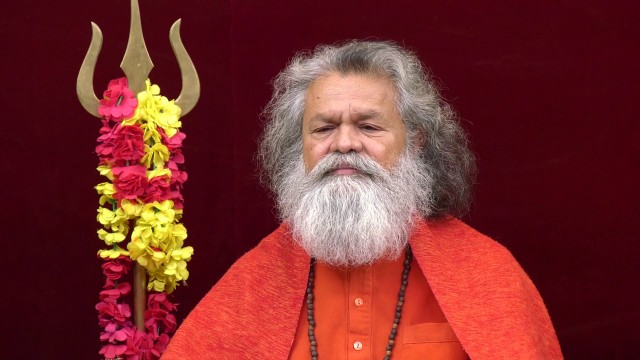
A spiritual discourse on the importance of devotion to Śiva in the current age.
"In this time of the Kali Yuga, we all have to become one."
"Therefore, our holy Gurujī said, 'One in all and all in one.'"
Following opening prayers, the speaker addresses a global audience, warning of the coming hardships of the Kali Yuga and proclaiming that Śiva's unifying grace is the solution. He explains that Śiva accepts all people, unlike other deities, and urges constant remembrance through chanting. The talk includes a recitation and explanation of a Hindi bhajan about the preciousness and fleeting nature of human life.
Filming location: Strilky, Czech Republic
The 2nd Sri Swami Maheshwarananda Festival(5/5)
5:30 - 6:06 (36 min)
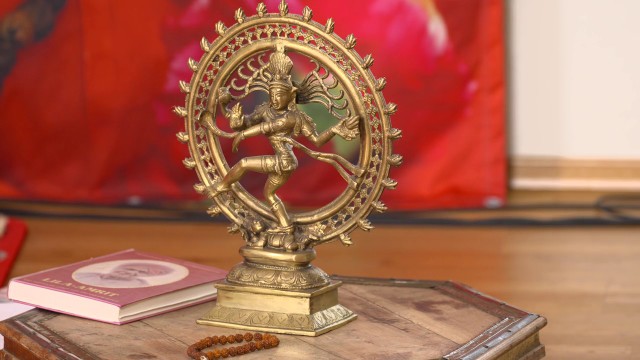
Welcome to the 2nd Sri Swami Maheshwarananda Festival of Spiritual Music from YIDL Ashram in Villach, Austria.
The 2nd Sri Swami Maheshwarananda Festival (3/5)
6:10 - 7:58 (108 min)
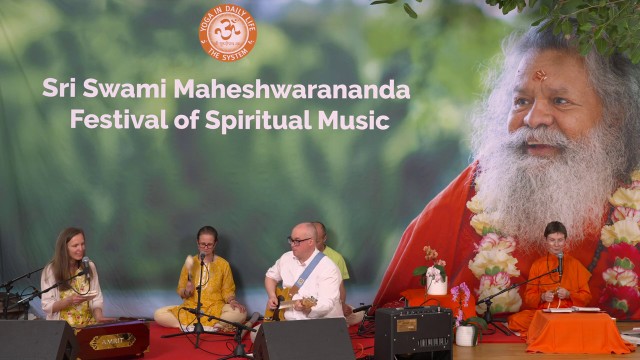
The 2nd Sri Swami Maheshwarananda Festival from Villach, Austria.
The 2nd Sri Swami Maheshwarananda Festival (4/5)
8:05 - 8:43 (38 min)
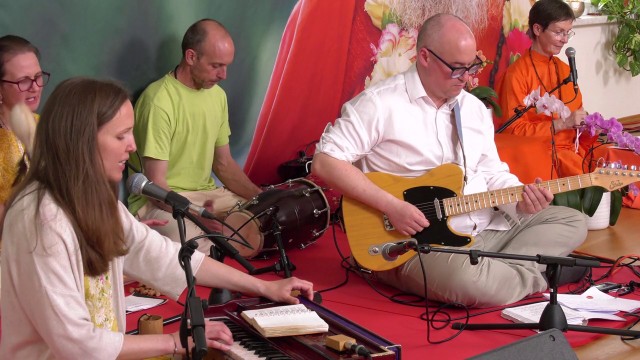
The 2nd Sri Swami Maheshwarananda Festival from Villach, Austria.
God is everywhere
8:50 - 10:31 (101 min)
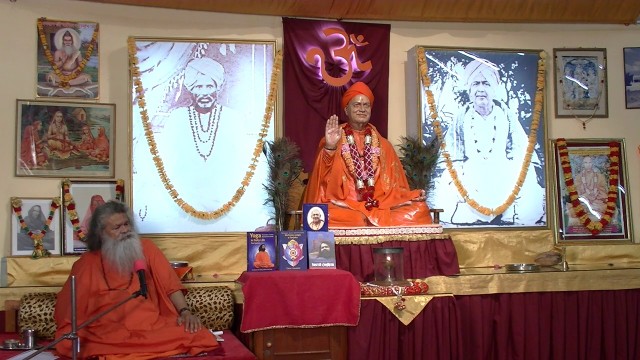
Evening satsang with Vishwaguruji from Jadan Ashram, Rajasthan, India. First Swami Avatarpuri and Swami Premanand are speaking. The sixth day of Navratri is dedicated to Goddess Katyayani. Goddess Katyayani is revered on the sixth day of Navratri. She is an incarnation of Durga, came to protect the whole World against demon Maheesasur. Worship is everywhere. All of our actions becomes worship, we are a part of God. Just allow yourself to get locked in the room if you would like to know the World - said Hafiz. Vishwaguruji is speaking about Bhagwan Ram and Bhagwan Krishna. Many people are not understanding Bhagwan Shiva and do not worship. Yoga means knowledge, Gurudev will make disciple Guru.
We have to become one
10:35 - 12:09 (94 min)
Evening satsang with Vishwaguruji from Auckland, New Zealand. There are many things in the space. We should stop our attachment. Great yogis do not attach to anything and to anybody. Break from the attachment and join to God. Nothing is mine. Explanation of bhadzsan Chidananda Rupam Sivoham Sivoham. Sometimes we can not understand wisdom. Shiva means only space. He is everywhere in everything and nowhere. Explanation of bhadzsan Ragupati Raghava Raj Ram. One in all and all in one. Explanation of bhadzsan Sabda Sanehi Mhari Jatra. A story or a poem can help you to understand knowledge. The knowledge what we have we should understand, realize and give further. Chakras are the major stations in our body. The Earth connected to the Sun. The system of elements and chakras in our body.
To be independent
12:15 - 13:29 (74 min)
Evening satsang in the occasion of Gurudev's Birthday What means independency to you? Many people where witnessing several wars. The ambition to fight is in any human and animals too. When the human gets the ambition to fight for position, for money and creating or awakening cruel thoughts, to kill or damage properties, that means, that the animal qualities awakens in their body and intellect. That we call the animal instinct. When that awakens, then the human is blinded and focusing only on that illness. There is no remedy to cure such qualities. When the animal instinct comes into the human mind and emotions, means the ambition to fight for the position, or the money and for governing the rules, then only knowledge can give us freedom and liberation. The burning desire to get liberation, this is the independent day in the life.
How to train our mind?
13:35 - 13:56 (21 min)
A spiritual discourse on taming the restless mind using a parable from Gurudeva.
"Our mind is chanchal. Chanchal means very restless, and that is normal for a human mind, but you need to learn how to train and tame your mind."
"In the same way, our minds are very restless, running around. We should just let it go; that is its job, to roam around and have thoughts continuously. Then, slowly, slowly, train your mind towards Guru Bhakti."
A speaker recounts Gurudeva's parable of a king's untamable horse and the patient trainer who tamed it through gentle, persistent companionship and reward. The story serves as an analogy for taming the restless mind through devotion to the Guru and the path of Bhakti, rather than forceful suppression. The session concludes with the guided recitation and explanation of a Sanskrit mantra focused on meditating on the Supreme Self within the heart.
Filming location: Strilky, Czech Republic
Practising Asanas 3
14:00 - 14:53 (53 min)
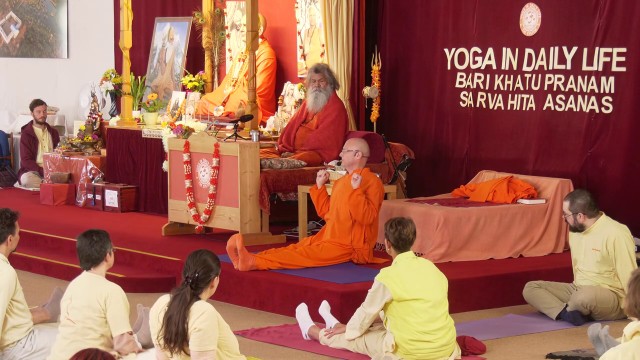
Morning practice from Strilky Ashram, Czech Republic. Asanas mainly from the first level of Yoga in Daily Life demonstrated and explained by Mahamandaleshwar Swami Vivekpuriji.
Yoga, Āyurveda, and the Journey Beyond: From Vikāra to Turīya
15:00 - 15:55 (55 min)
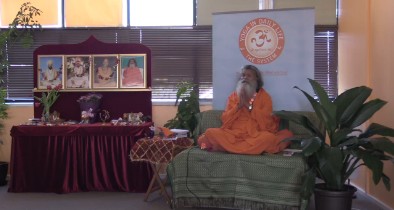
A spiritual discourse on Yoga, Āyurveda, and consciousness, transitioning into teachings on Yoga Nidrā.
"Āyurveda has now again brought this science forward and is very, very helpful."
"Meditation is one of the best ways to realize that this is not a reality now, what I am worrying."
Swami Anand Arun leads a morning satsang, continuing a two-day series. He discusses Āyurveda's approach to physical and mental disease (vikāra), focusing on the destructive nature of worries (cintā) and overthinking (cintan). He explains how unfulfilled desires reside in the subconscious, introducing Yoga Nidrā as a technique to purify these layers and master the states of waking, dreaming, and deep sleep to access higher consciousness.
Filming location: Auckland, New Zealand
Longing for God
16:00 - 16:59 (59 min)
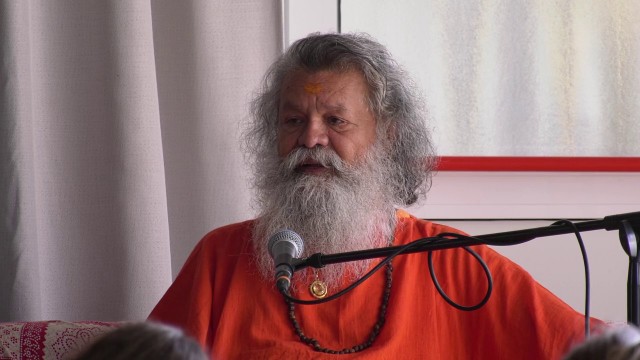
Morning satsang with Vishwaguruji from Rijeka Ashram, Croatia. Bhajan singing. We should be careful with our bodies and we should live very healthily. Our practice is very important and also our good food. We are really yogis. We have learnt many things that are really important in yoga. Real yogis should practise yoga every day. We help other people to become spiritual. Some people eat cats and kill them in a very cruel way. We should feel every creature in our hearts. The story of a man who wanted to see God. The story of an Indian lady living near Rupavas who became a holy person. The other story is of a woman in Gujarat who doesn't eat and doesn't drink anything.
Listen to only ourselves and our Gurudev
17:05 - 17:45 (40 min)
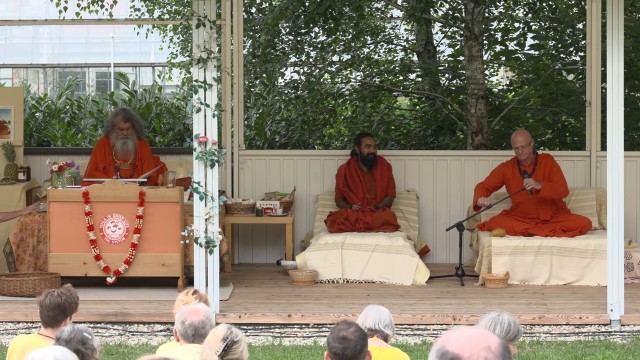
A satsang discourse on the true purpose of spiritual holidays and the importance of guru guidance.
"Coming here to the Ashram... after a whole year of working and school, is truly a holiday."
"The only way for that is to be in satsaṅg, to have darśan with a self-realized person, a guru, and to be in peace."
A speaker addresses attendees at Strelka Ashram, contrasting modern distractions with the ancient value of solitude (ekānta) for reflection. He emphasizes that a spiritual holiday involves satsang, darshan, and unity within the spiritual family. He shares a cautionary tale of a couple who, by listening to others' opinions instead of directly approaching their guru, create conflict, illustrating the need for direct guidance and discernment.
Filming location: Strilky, Czech Republic
Sri Devpurijis Gnade
17:50 - 18:52 (62 min)
Vienna, June 2000
Live webcast from Strilky
19:00 - 20:00 (60 min)
Morning satsang from Strilky Ashram, Czech Republic.
Become one with yourself
19:00 - 19:59 (59 min)
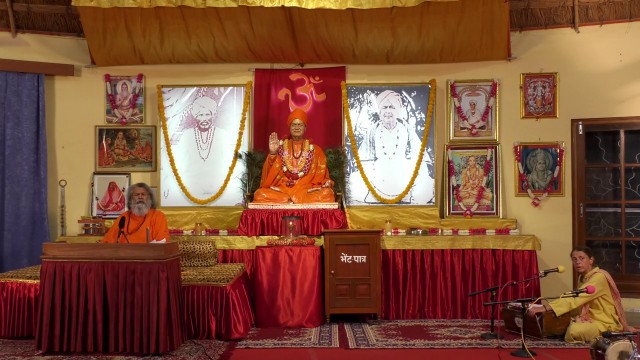
Evening satsang in Jadan Ashram, distr. Pali, Rajasthan, India. I have been to many places, all of which have their own songs. In India, there are many bhajans. The bhajans have a lot of beauty. Even the birds are whistling as if they are singing bhajans. The chanting of the Om starts from the navel, ascends from there and returns back to the navel. Then the yogis enter into meditation. Many people actually turn outwards during meditation. But what we need to do is to become one with ourselves, to unite with our Self.
A Monument for Krishnanaji
20:05 - 20:20 (15 min)
A presentation on the creation of a memorial monument for a senior disciple.
"Swāmījī said... that for dear Krishnanaji... we should do a monument in Vép, in the main square."
"He was really the seed of the seed in Hungary for yoga in life and in the paramparā."
A speaker presents a small model of a planned stone monument for Krishnanaji, a foundational figure for the yoga community in Hungary. He recounts Krishnanaji's devotion, his role in hosting Swāmījī and spreading teachings, and shares Swāmījī's wish for the memorial to be placed in Vép's main square. The narrative later becomes fragmented, touching on disciples' conduct and vague anecdotes.
Filming location: Vienna, Austria
Remain pure
20:25 - 21:14 (49 min)
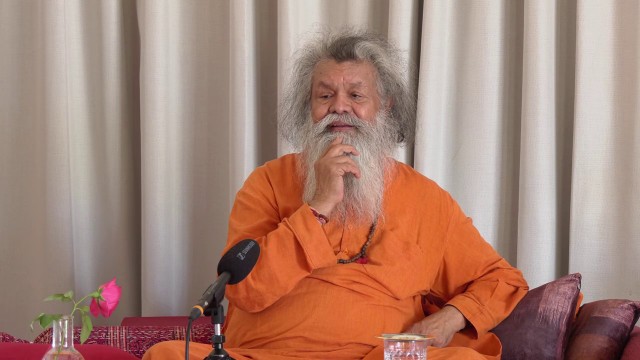
Morning program with Vishwaguruji from Rijeka, Croatia. Vishwaguruji explains problems if one of the parents eats meat. We should take care. He introduces a picture about the nadis. God made women and man, but the whole universe is one.
Webcast from Slovenska Vas
21:20 - 22:02 (42 min)
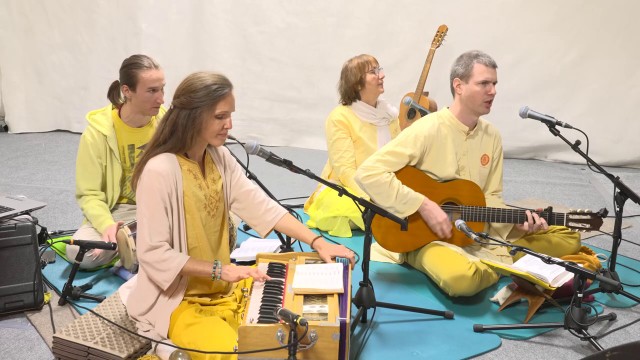
Evening satsang with Vishwaguruji from Slovenska Vas, Slovenia.
The spiritual family
22:10 - 23:01 (51 min)
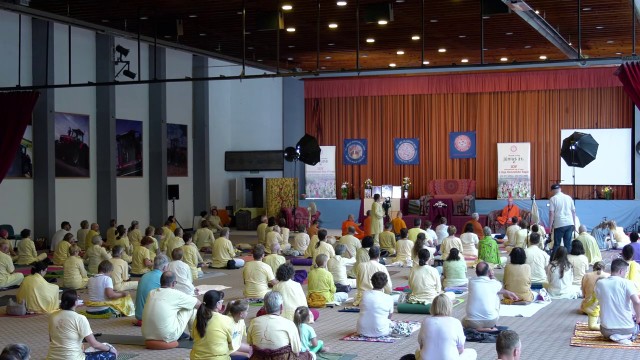
An opening talk at a spiritual seminar addressing the absence of the guru and the purpose of gathering.
"People are always complaining, 'Oh, Kali Yuga is not good, Kali Yuga is a terrible time.' But if you know how to utilize it, Kali Yuga is also excellent."
"We need to be like a Paramahaṁsa... We should be like that. In this world, we have so many things... we should be like the Haṁsa: take the pearls, take the milk, and leave the water."
A senior disciple addresses the assembled spiritual family at the Vép seminar, acknowledging the physical absence of Viśvagurūjī. He reframes the gathering as a vital opportunity to recharge, strengthen spiritual family bonds, and deepen personal practice. Key themes include extracting the essence from the Kali Yuga, the necessity of a supportive community for sādhanā, and using the seminar for introspection, mauna (silence), and focused practice of āsana and prāṇāyāma to calm the mind.
Filming location: Vép, Hungary
Inner awakening: be with the dharma
23:05 - 23:52 (47 min)
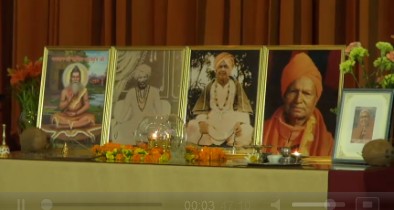
A spiritual discourse on inner awakening and the hidden powers of consciousness, beginning on the Mahāsamādhi day of Holy Mother.
"God has bestowed upon each a kind of talent according to the need or requirement of its life."
"One in all and all in one. That is the reflection of that Ātmā."
The lecturer leads a satsang, explaining the journey of the individual soul (Jīvātmā) through 8.4 million life forms and its relationship with the indestructible Ātmā. He discusses duality, non-duality, and the karmic consequences that define a soul as dharmātmā or pāpātmā. Using the analogies of the moon's reflection and stories of Krishna, Duryodhana, and Vidura, he emphasizes that divine grace comes only through selfless love (prema), not through material offerings.
Filming location: Vép, Hungary
American
Australian