
European
Shiva is balancing all
0:20 - 0:52 (32 min)
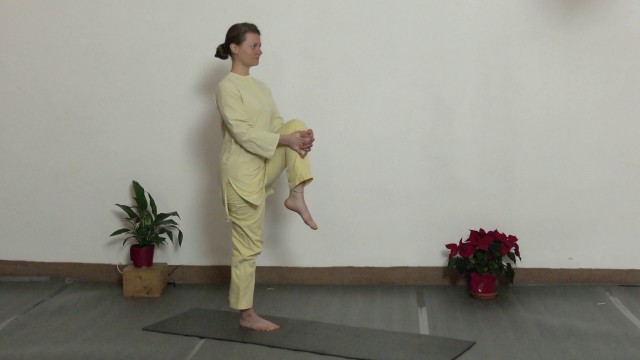
A spiritual discourse and yoga practice session on the theme of cosmic and personal balance.
"In Sanātana Dharma, we worship all because there is only one God."
"Therefore, now is the time... Śiva has opened his eyes... he will bring something again better, balancing."
Swami Anandpuri addresses the global community, discussing the universal nature of divinity and the role of Śiva as the cosmic balancer of positive and negative forces inherent in all life. He then invites Umapurījī to lead practical balancing exercises, including one-legged stands and stretches, to cultivate physical and inner stability, concluding with a moment of meditation and contentment.
Filming location: Strilky, Czech Republic
We all will come to oneness
1:00 - 1:39 (39 min)
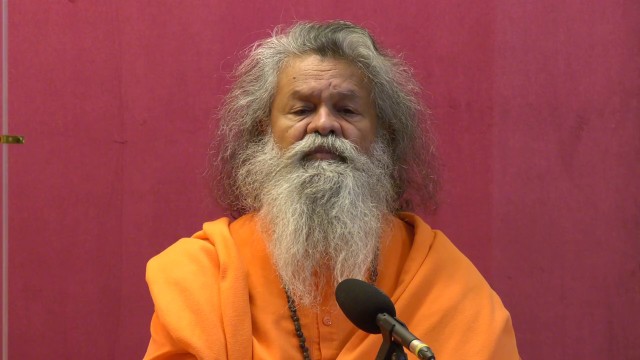
A satsang discourse on spiritual equality, service, and the soul's journey.
"Everyone, without exception, is equal in the eyes of our Gurujī, Mahāprabhujī."
"And when this ātmā, the soul, will go, then it is completely there. There is nothing; there is only one."
The lecturer addresses the community, emphasizing that all disciples—regardless of background or role—should be included in practices like pūjā. He teaches that service and respect form a spiritual family, illustrates oneness with an ocean metaphor for the soul, and shares an anecdote about Holy Gurujī and Mahāprabhujī to illustrate humble service.
Filming location: Vienna, Austria
Repeat the name of Gurudev
1:45 - 2:12 (27 min)
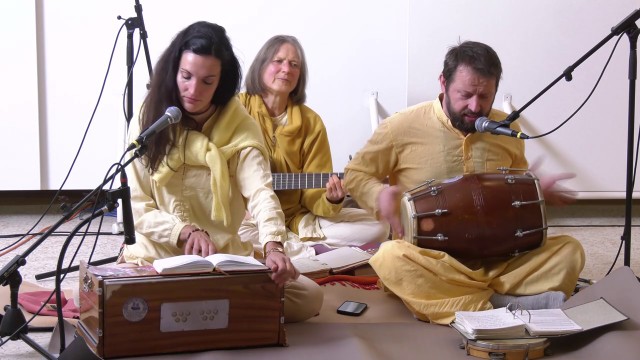
Evening satsang with Vishwaguruji from Vienna, Austria. Bhajan singinig to the Guru. Guru carano me arasatha tiratha he
Yoga Nidra: The Yogi's Conscious Sleep
2:20 - 3:11 (51 min)
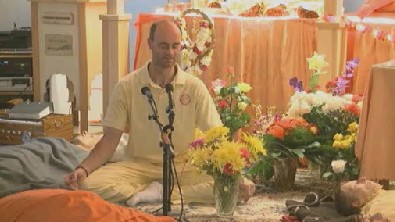
A guided Yoga Nidra (yogic sleep) meditation session.
"Yoga Nidra, the sleep of the yogi, is a deep relaxation technique... You remain completely aware, completely relaxed, yet at the same time completely conscious."
"At the beginning of Yoga Nidra, you have the opportunity to make a Śaṅkalpa... Make a brief Śaṅkalpa with a short sentence."
An instructor guides practitioners through a complete Yoga Nidra practice. The session begins with creating a personal resolution (Śaṅkalpa), followed by a detailed body scan for physical relaxation. The guide then leads awareness to the breath and prāṇa (energy) in the abdominal, chest, and throat areas, incorporating the mantra so'ham. The practice concludes by reaffirming the Śaṅkalpa, gently returning awareness to the room, and ending with a collective chant.
Filming location: Vienna, Austria
The Inner Conflict of Śiva
3:15 - 4:10 (55 min)
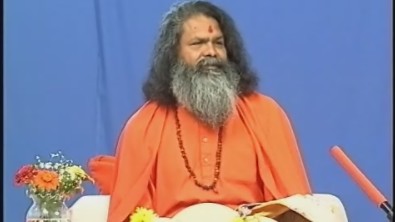
A narrative discourse exploring the inner conflict of Lord Śiva following Satī's test of Lord Rāma.
"Sometimes, to speak the truth is not easy. You hesitate to tell something; you do not want to lose face."
"Therefore, God, please, you can take everything away, or may I lose everything, but not one thing: my belief, my devotion to you."
The speaker recounts the mythological story where Satī, after testing Rāma by disguising herself as Sītā, lies to Śiva about her actions. Śiva, the knower of all, discovers the truth through his divine sight and is plunged into a profound inner conflict. He wrestles with a dilemma: to love Satī in her transformed state feels like a sin that would compromise his pure devotion (bhakti) to Rāma, yet he cannot reject his pure and faithful consort. The discourse uses this story to examine themes of truth, doubt, devotion, and the painful inner arguments that arise when faith is tested, concluding that only divine mercy can resolve such struggles.
Live webcast from Strilky
3:30 - 5:00 (90 min)
Evening satsang from Strilky Ashram, Czech Republic.
We are never old for yoga
4:15 - 4:28 (13 min)
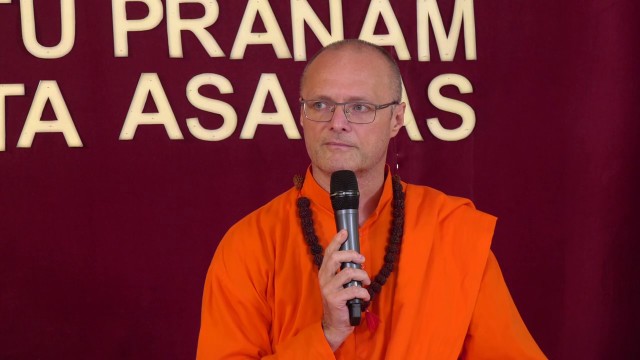
A closing address summarizing a weekend spiritual seminar.
"One topic was our vegetarian food... from Viśvagurujī, we learn the main reason: ahiṃsā paramodharma."
"What we learned from Viśva Gurujī is that it is very important to know how to say 'No' to ourselves."
A speaker concludes a seminar, sharing insights from Viśvagurujī. Key themes include the spiritual principle of non-violence (ahiṃsā) behind vegetarianism, the subtle dangers of the Kali Yuga era, and the importance of steadfast spiritual practice, likened to receiving a protective vaccination. The talk also looks forward to the opening of Om Āśram, emphasizing the need for inner spiritual readiness over mere external form.
Filming location: Strilky, Czech Republic
Pranayama from Vep
4:30 - 4:54 (24 min)
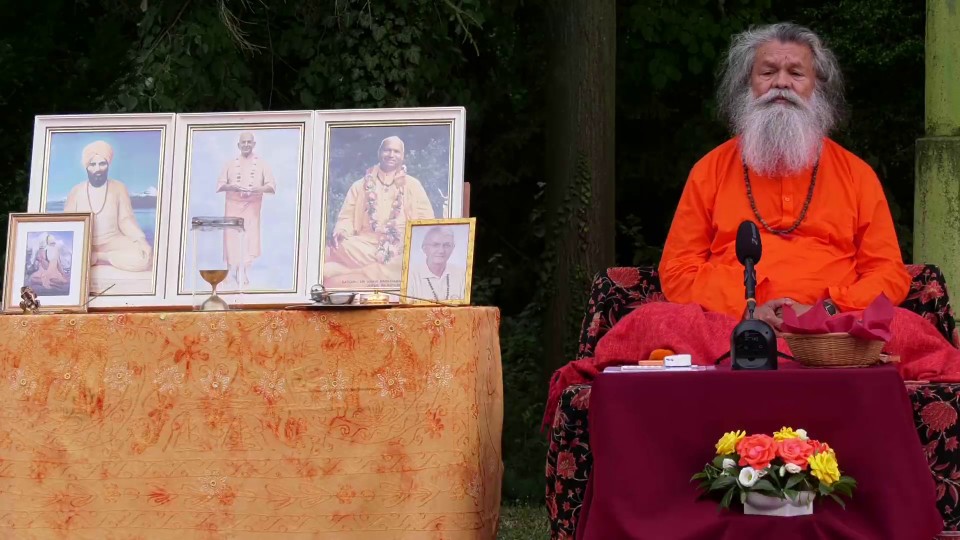
Evening satsang with Vishwaugurji from Vep, Hungary. Practicing pranayama.
The beauty of a tree
4:55 - 5:28 (33 min)
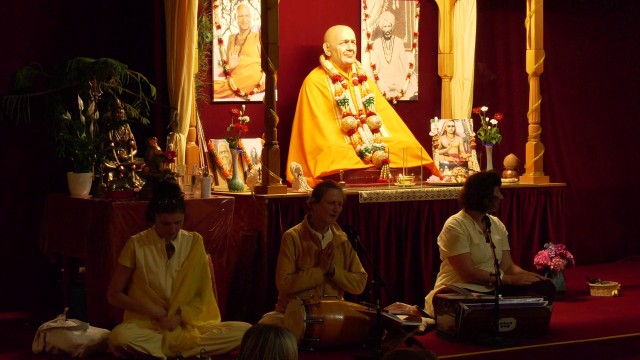
An evening satsang featuring a spiritual discourse using the metaphor of a tree.
"A great saint spoke of this, and Mahāprabhujī also told about it. Gurujī said to me that a big tree and humans are the same."
"No one can burn me, no one can destroy me. I am eternal. As long as the earth is, I am with thee."
Following bhajans, the speaker delivers a teaching on divine immanence and maternal compassion, personifying a tree as a self-giving mother who shelters all creatures, endures hardship, and provides endlessly. The talk includes a parable of a sādhu and an old tree felled by an axe, illustrating themes of impermanence and betrayal, yet culminates in the tree's declaration of its eternal, indestructible essence as a reflection of God.
Filming location: Strilky, Czech Republic
Bhajan singing in the Strilky Ashram
5:30 - 6:05 (35 min)
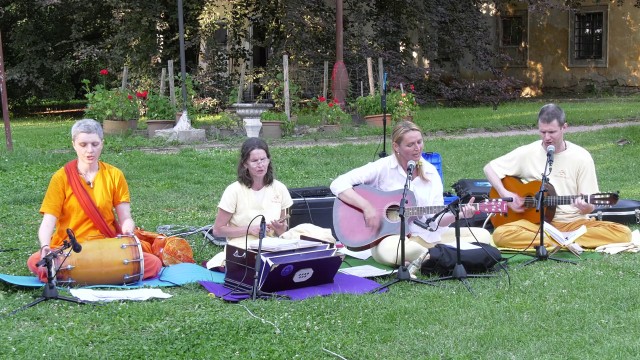
Evening satsang with Vishwaguruji from Strilky Ashram, Czech Republic.
Bhajan singing from Jadan Ashram
6:10 - 6:45 (35 min)
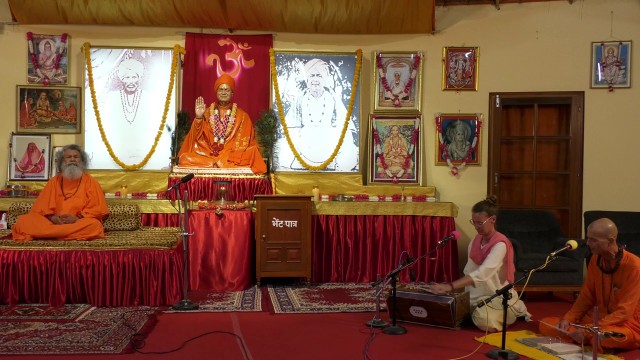
Evening satsang with Vishwaguruji from Jadan Ashram, Rajasthan, India. Singing bhajans.
Bhajan evening in Jadan Ashram
6:50 - 7:25 (35 min)
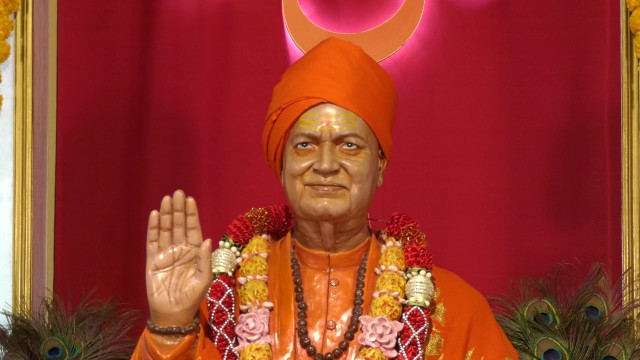
Evening satsang in Jadan Ashram, Distr. Pali, Rajasthan, India. Bhajan singing.
Bhajan singing from Villach
7:30 - 8:13 (43 min)
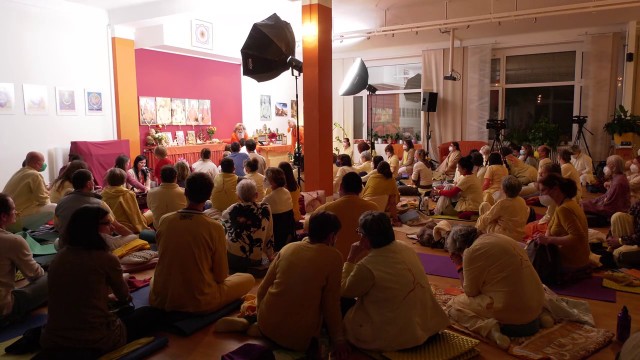
Evening program with Vishwaguruji from Villach, Austria. Bhajans.
Without work, nothing can happen
8:20 - 9:18 (58 min)
A spiritual discourse weaving ancient creation myths with teachings on dharma and modern life.
"Jīva jīva bhakṣate: all creatures eat other creatures. So that began to move."
"Dharma is spirituality and good, not killing anyone, taking care of everyone. Adharma is the opposite."
A spiritual teacher narrates a syncretic creation story, blending tales of Varāha lifting the earth, Brahmā's emergence from a lotus, and the evolutionary rise of life. He explains the primordial cycle of life consuming life (jīva jīva bhakṣate) and the subsequent establishment of dharma. The discourse shifts to contemporary lessons, advocating for non-violence, mindful consumption, self-reliance, and environmental responsibility, while cautioning against addiction.
Filming location: Strilky, Czech Republic
To be independent
9:25 - 10:39 (74 min)
Evening satsang in the occasion of Gurudev's Birthday What means independency to you? Many people where witnessing several wars. The ambition to fight is in any human and animals too. When the human gets the ambition to fight for position, for money and creating or awakening cruel thoughts, to kill or damage properties, that means, that the animal qualities awakens in their body and intellect. That we call the animal instinct. When that awakens, then the human is blinded and focusing only on that illness. There is no remedy to cure such qualities. When the animal instinct comes into the human mind and emotions, means the ambition to fight for the position, or the money and for governing the rules, then only knowledge can give us freedom and liberation. The burning desire to get liberation, this is the independent day in the life.
Shiva is balancing all
10:45 - 11:17 (32 min)
A spiritual discourse and yoga practice session on the theme of cosmic and personal balance.
"In Sanātana Dharma, we worship all because there is only one God."
"Therefore, now is the time... Śiva has opened his eyes... he will bring something again better, balancing."
Swami Anandpuri addresses the global community, discussing the universal nature of divinity and the role of Śiva as the cosmic balancer of positive and negative forces inherent in all life. He then invites Umapurījī to lead practical balancing exercises, including one-legged stands and stretches, to cultivate physical and inner stability, concluding with a moment of meditation and contentment.
Filming location: Strilky, Czech Republic
Morning Lecture from Vep
11:25 - 12:35 (70 min)
Morning satsang from weekend yoga seminar from Vep, Hungary.
We need Gurudev
12:40 - 13:34 (54 min)
A satsang discourse on the necessity of the guru and the goal of Advaita philosophy.
"The moment you begin to think you have already heard and know everything, in that moment your free fall begins."
"Understand from this that the guru is not the physical body. It is most important to understand that the guru is that Guru-Tattva, the element of the guru."
A speaker leads a satsang, emphasizing the eternal student's attitude and the critical role of the embodied spiritual master (Guru-Tattva) as the essential guide. Using stories and analogies—such as the matchbox with a diamond, the friend with a boat, and the river merging into the ocean—the talk explains the guru's function and explores the ultimate goal of yoga: to transcend the cycle of rebirth and realize the Advaita (non-dual) union of the individual self with the cosmic Self.
Filming location: Strilky, Czech Republic
Sri Devpurijis Gnade
13:40 - 14:42 (62 min)
Vienna, June 2000
Longing for God
14:50 - 15:49 (59 min)
Morning satsang with Vishwaguruji from Rijeka Ashram, Croatia. Bhajan singing. We should be careful with our bodies and we should live very healthily. Our practice is very important and also our good food. We are really yogis. We have learnt many things that are really important in yoga. Real yogis should practise yoga every day. We help other people to become spiritual. Some people eat cats and kill them in a very cruel way. We should feel every creature in our hearts. The story of a man who wanted to see God. The story of an Indian lady living near Rupavas who became a holy person. The other story is of a woman in Gujarat who doesn't eat and doesn't drink anything.
Find your Shelter near Gurudev
15:55 - 17:14 (79 min)
Evening satsang with Vishwaguruji from Jadan Ashram, Rajasthan, India. Singing Bhajans. Day by day Atma is going on the right path of purification when we are aware of Oneness. One day the bird will fly away from the worldly nest, to find the shelter near Gurudev. To sing bhajan is not enough, we should understand and realize its meaning. Translation of Bhajan written by Sri Mangilalji.
Who are we to judge
17:20 - 18:26 (66 min)
Evening satsang from Jadan Ashram. On the begining Swamiji is chanting Om Namah Shivaya.
Live webcast from Strilky
18:30 - 20:00 (90 min)
Morning satsang from Strilky Ashram, Czech Republic.
Think over what you have realized the past year
18:30 - 19:18 (48 min)
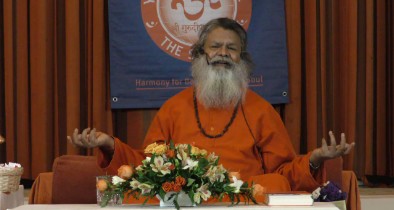
Opening Satsang with Vishwaguruji from weekend yoga seminar at Vep, Hungary. Vishwaguruji talks about our problems and their solutions. In order to reach the aim we should strengthen our gyana indriyas (the five senses of knowledge) and purify the antahkaranas (inner functions of mind).
Human Life Is A Great
Blessing
19:20 - 20:08 (48 min)
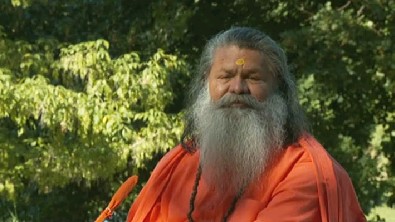
A morning satsang on the purpose of human life and spiritual discipline.
"Human life is a great blessing. There must be some reason why the Creator gave this soul a human body, human intellect, human talents. This is to attain realization, self-realization, to step out of the cycle of birth and death."
"Śaṅkarācārya said in Aparokṣānubhūti: 'Vairāgya, the pure vairāgya, is that from the earth till Brahmaloka, all bhogas you should renounce like the dirt of the birds.'"
Swami Avatarpuri Ji opens with greetings and feedback on the satsang stream. He shares a story about Lord Śiva, Parvati, and Narada to illustrate the cycle of birth and death and the quest for immortality. He then expounds on the preciousness of human life as an opportunity for liberation, discussing karma, the importance of mercy and renouncing harsh words, and the need to master the senses. He emphasizes the vital role of proper diet, traditional yoga, and prāṇāyāma for physical and mental well-being, cautioning against commercialized yoga practices. The talk concludes with practical instructions for seminar attendees to participate in group practice and a blessing.
Filming location: Strilky, Czech Republic
The Purifying Path of Haṭha Yoga: An Introduction to Ṣaṭkarma
20:10 - 20:57 (47 min)

An instructional webcast introducing the Haṭha Yoga purification techniques (Ṣaṭkarma).
"Haṭha Yoga is not only that we clean and purify our whole system, our whole body, but it also has a very great effect on our nervous system."
"Haṭha means willpower to do these Haṭha Yoga techniques. And with this, you also get the willpower, the strength to persevere, to continue, to get rid of the laziness."
A teacher from the Śrīkī Ashram, joined by assistants, explains the purpose and benefits of the six purification acts. The session features a detailed, practical demonstration of Jala Netī (nasal cleansing with salt water) and Kapāla Bhāti, followed by an introduction to Agni Sāra and the Naulī Kriyā for digestive health. The instruction emphasizes using natural elements, proper technique, and the holistic effects on physical and energetic systems.
Filming location: Strilky, Czech Republic
We all will come to oneness
21:00 - 21:39 (39 min)
A satsang discourse on spiritual equality, service, and the soul's journey.
"Everyone, without exception, is equal in the eyes of our Gurujī, Mahāprabhujī."
"And when this ātmā, the soul, will go, then it is completely there. There is nothing; there is only one."
The lecturer addresses the community, emphasizing that all disciples—regardless of background or role—should be included in practices like pūjā. He teaches that service and respect form a spiritual family, illustrates oneness with an ocean metaphor for the soul, and shares an anecdote about Holy Gurujī and Mahāprabhujī to illustrate humble service.
Filming location: Vienna, Austria
Eat well and practice
21:45 - 22:25 (40 min)
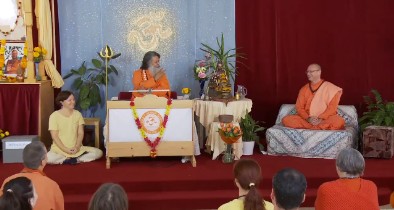
A satsang on integrating yoga into daily life for natural beauty and health.
"If you want to see the beauty of life, then do not put color in your hair. Why do we put color? There must be some desire we still have."
"Yoga regenerates our body, the cells, our skin. It is great support for our gland systems, organs, and blood circulation."
The lecturer addresses a gathering, using the colorful autumn landscape as a metaphor for accepting the natural aging process. He advises reducing chemical cosmetics and processed foods, advocating instead for daily yoga practice, natural oils, and a balanced diet including ghee and sugar in moderation. He shares personal anecdotes about breaking dependency on skin cream and discusses the health impacts of diet, concluding with well-wishes for the Diwali season and his travel plans.
Filming location: Strilky, Czech Republic
Practice well
22:30 - 23:12 (42 min)
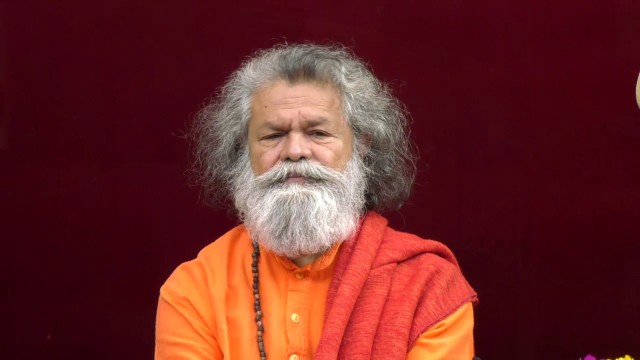
A discourse on Haṭha Yoga practice and the ideal of the true yogī.
"A Hatha yogī, he will not take when I give him... He doesn't want anything, no money, nothing."
"Yoga is the greatest. And in that Hatha Yoga, Hatha Yoga is the best."
Swami Ji teaches a satsang, continuing a series on Haṭha Yoga cleansing techniques (kriyas) like nauli and basti. He emphasizes proper diet, discipline, and learning from a true master. He narrates a story of Lord Śiva, Pārvatī, and a self-sufficient Haṭha yogī at a cremation ground to illustrate ultimate non-attachment, and shares a parable about a Himalayan sage to caution against endless theoretical learning without realization. The talk concludes with practical advice on group purification practices.
Filming location: Strilky, Czech Republic
How to train our mind?
23:20 - 23:41 (21 min)
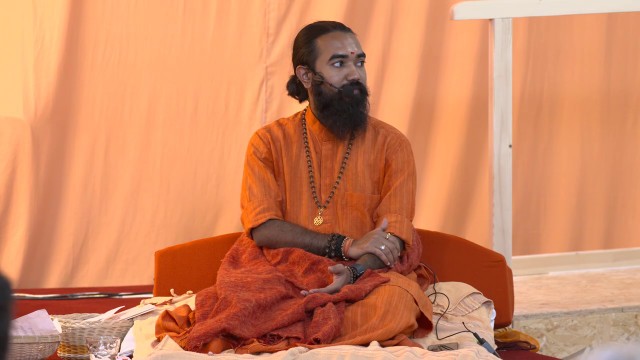
A spiritual discourse on taming the restless mind using a parable from Gurudeva.
"Our mind is chanchal. Chanchal means very restless, and that is normal for a human mind, but you need to learn how to train and tame your mind."
"In the same way, our minds are very restless, running around. We should just let it go; that is its job, to roam around and have thoughts continuously. Then, slowly, slowly, train your mind towards Guru Bhakti."
A speaker recounts Gurudeva's parable of a king's untamable horse and the patient trainer who tamed it through gentle, persistent companionship and reward. The story serves as an analogy for taming the restless mind through devotion to the Guru and the path of Bhakti, rather than forceful suppression. The session concludes with the guided recitation and explanation of a Sanskrit mantra focused on meditating on the Supreme Self within the heart.
Filming location: Strilky, Czech Republic
Morning Lecture from Vep
23:45 - 0:55 (70 min)
Morning satsang from weekend yoga seminar from Vep, Hungary.
American
Australian