
European
Practice well
0:10 - 0:52 (42 min)
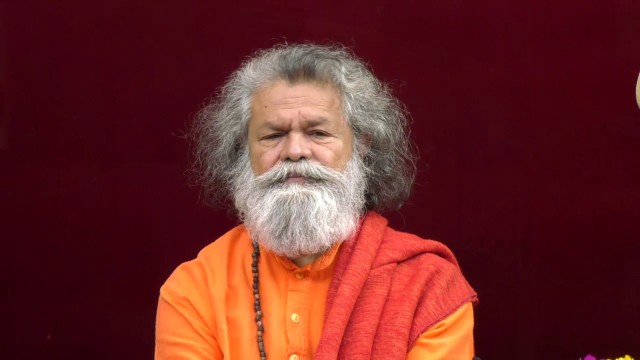
A discourse on Haṭha Yoga practice and the ideal of the true yogī.
"A Hatha yogī, he will not take when I give him... He doesn't want anything, no money, nothing."
"Yoga is the greatest. And in that Hatha Yoga, Hatha Yoga is the best."
Swami Ji teaches a satsang, continuing a series on Haṭha Yoga cleansing techniques (kriyas) like nauli and basti. He emphasizes proper diet, discipline, and learning from a true master. He narrates a story of Lord Śiva, Pārvatī, and a self-sufficient Haṭha yogī at a cremation ground to illustrate ultimate non-attachment, and shares a parable about a Himalayan sage to caution against endless theoretical learning without realization. The talk concludes with practical advice on group purification practices.
Filming location: Strilky, Czech Republic
Opening Address: Yoga for World Peace and Non-Violence
1:00 - 1:07 (7 min)
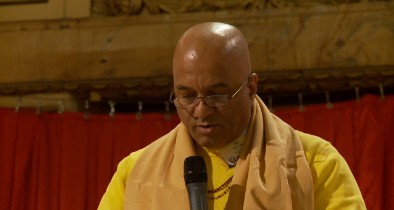
An opening address for the "Yoga for World Peace and Non-Violence" International Conference in Prague.
"Yoga is not a religion. It represents the original balancing principle that promotes nonviolence and peacefulness."
"To achieve peace in the world, we must start by achieving inner peace ourselves."
A representative of the Czech Hindu Religious Society, Vishwaguru Deep Hindu Mandir, welcomes attendees and explains his organization's role in co-organizing the conference. He honors the spiritual lineage of Swami Madhavanandaji and Swami Maheshvaranandaji, detailing global humanitarian projects and drawing a direct connection between yogic principles like non-violence (ahimsa) and the universal pursuit of peace. The speech emphasizes inner peace as the foundation for world peace.
Filming location: Prague, Czech Republic
The Path of Yoga for Universal Peace
1:15 - 1:38 (23 min)
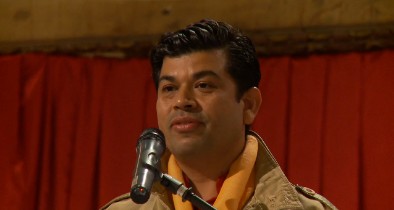
A keynote address advocating for yoga as a universal path to global peace.
"If you want a result in one year, plant crops; in ten years, plant fruit trees; if you want a result forever, practice yoga."
"Yoga is less than 30% physical; it is more than that—it is emotional, mental, and spiritual. For humankind, it is the interconnection from the individual to people, from people to nature, and from nature to the planet."
A speaker from Nepal addresses a World Peace Council conference, framing yoga as a non-religious, practical solution to violence and unrest. He argues for its integration into global education and diplomacy, urging governments to invest in yoga over military spending. The talk blends philosophical teachings from multiple faiths with calls for personal and political action, concluding with a collective peace chant and meditation.
Filming location: Prague, Czech Republic
The Seed of Practice
1:45 - 2:10 (25 min)
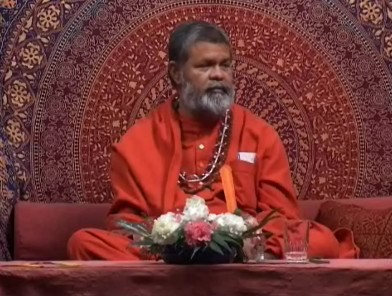
A spiritual discourse on the importance of practice over mere intellectual knowledge.
"Too much reading also leads you nowhere. It’s only intellectual information. Therefore, practicing is very important."
"God is more happy to them, those who are doing with a pure heart, not only with a pure intellect."
The speaker emphasizes the necessity of faithful spiritual practice, critiquing humanity's self-inflicted suffering and disconnect from nature. He illustrates this with a parable of two brothers, a jñāna yogi focused on intellectual correctness and a bhakti yogi devoted to simple worship. The story demonstrates that sincere devotion, not perfect technique, yields spiritual power, a point reinforced by a concluding analogy about a seed growing regardless of how it is planted.
Filming location: Vép, Hungary
We need Gurudev
2:15 - 3:09 (54 min)
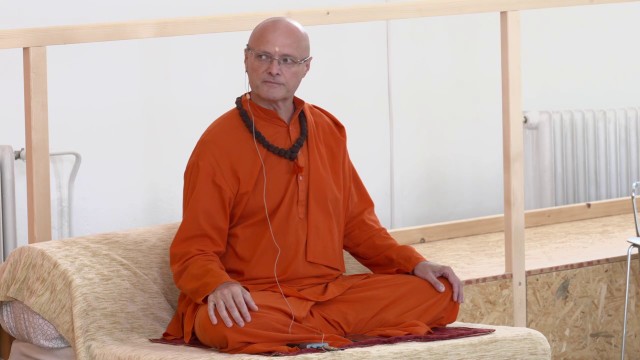
A satsang discourse on the necessity of the guru and the goal of Advaita philosophy.
"The moment you begin to think you have already heard and know everything, in that moment your free fall begins."
"Understand from this that the guru is not the physical body. It is most important to understand that the guru is that Guru-Tattva, the element of the guru."
A speaker leads a satsang, emphasizing the eternal student's attitude and the critical role of the embodied spiritual master (Guru-Tattva) as the essential guide. Using stories and analogies—such as the matchbox with a diamond, the friend with a boat, and the river merging into the ocean—the talk explains the guru's function and explores the ultimate goal of yoga: to transcend the cycle of rebirth and realize the Advaita (non-dual) union of the individual self with the cosmic Self.
Filming location: Strilky, Czech Republic
Everything is in your hands
3:15 - 3:50 (35 min)
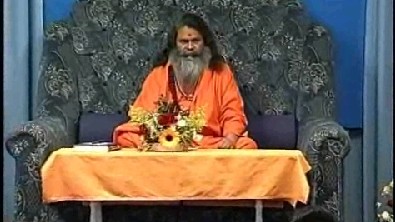
A discourse on the initiation of eight new sannyāsīs and the principle of personal responsibility.
"Whether this bird is alive or dead depends on your hands. That I cannot say to you. That depends on you."
"Everything is in your hands; your enlightenment is in your hands. Your liberation is in your hands."
The speaker recounts the recent initiation of eight disciples into sannyāsa during a journey to the Kumbh Melā, describing the character and journey of several, including Yogīś, Premānandjī, and devotees from Australia and Israel. He emphasizes that the decision for spiritual progress and liberation ultimately rests with the individual, illustrating this with a parable about a bird whose fate lies in a disciple's hands. The talk concludes with practical instructions on attire for disciples and reflections on the serious commitment of sannyāsa.
Filming location: Vép, Hungary
This time will not come back
3:30 - 4:28 (58 min)
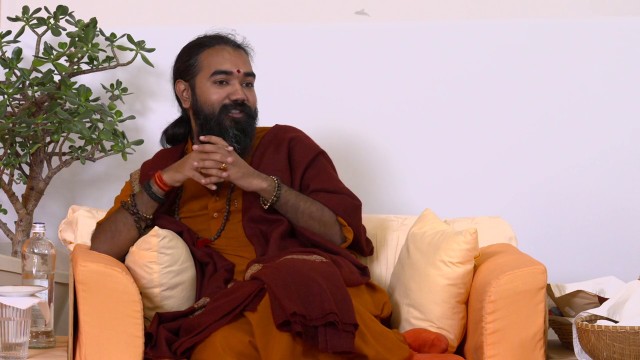
A satsang discourse on the foundational principles of yoga and spiritual life.
"Our spiritual growth is like climbing a mountain. It is hard; there are many steps going upwards."
"You cannot just directly start from the top... it is a gradual process."
The lecturer leads an evening talk, using the analogy of building a house to explain the sequential, foundational importance of the yamas and niyamas in Ashtanga Yoga. He expands on themes of patience, gratitude, managing expectations, and surrendering inner conflicts to progress on the path, emphasizing the preciousness of human life and the disciple's connection to the guru parampara. The session includes personal anecdotes, audience interaction, and concludes with traditional chants and a peace invocation.
Filming location: Strilky, Czech Republic
Humans have the chance to get liberation
3:55 - 4:46 (51 min)
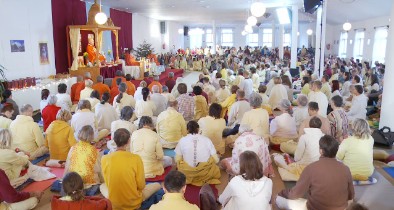
A spiritual discourse on the final hour of life, karma, and the philosophy of yoga.
"The ultimate result will be given to us in the last minutes of our life... We may have done good our whole life... But in the last minute, we can destroy everything."
"Blood is holy. Do not destroy this blood. Do not let this blood flow away. In your blood are all your relations from many, many ages."
Swami Maheshvaranand Ji leads a morning satsang, beginning with reflections on the critical importance of one's final thoughts and the perseverance of spiritual practice. He discusses the awakening and direction of inner energy, the cosmic roles of Shiva, Brahma, and Vishnu, and the vital need to preserve human dharma and ancestral lineage. The talk connects yoga postures to overcoming past impressions, emphasizes compassion, and concludes with the significance of India's holy lands and rivers, before passing the microphone to other speakers.
Filming location: Strilky, Czech Republic
Only oneness leads to happiness
4:48 - 5:28 (40 min)
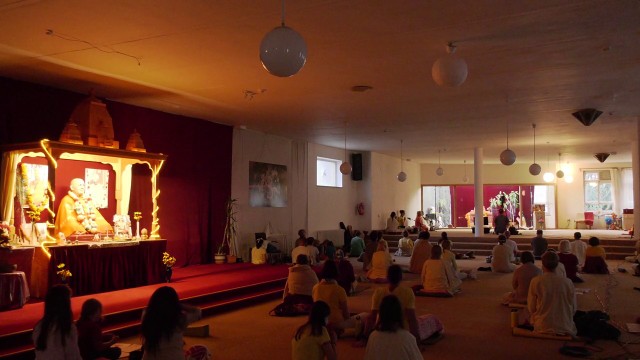
A spiritual discourse on the nature of consciousness, the soul, and worldly illusion.
"Cetana kī icchā nahīṁ. Consciousness has no desire, and from the inert, nothing is distant."
"Ekobrahman duttye nasti. That Brahman is only one. Where there are two, they are always equal; this is not good."
A speaker explores profound spiritual concepts, explaining the mantra Aum as the fundamental resonance of existence and distinguishing between conscious beings and inert matter. Using metaphors like a water drop seeking the ocean and a soul trapped by attachment to the body, the discourse examines the cycle of saṃsāra, the illusion of worldly desires, and the ultimate oneness of the soul (ātmā) with Brahman. The talk concludes with a critique of modern attachments and a reminder that the individual self is the source of its own suffering.
Filming location: Strilky, Czech Republic
Bhajan evening in Jadan Ashram
5:30 - 6:12 (42 min)
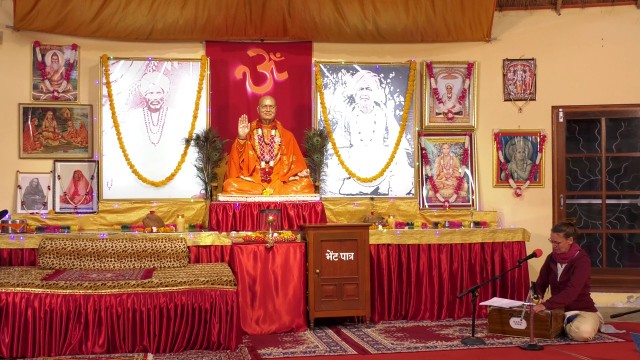
Evening satsang from Jadan Ashram, Rajasthan, India. Bhajan singing
Bhajan singing from Jadan Ashram
6:20 - 7:06 (46 min)
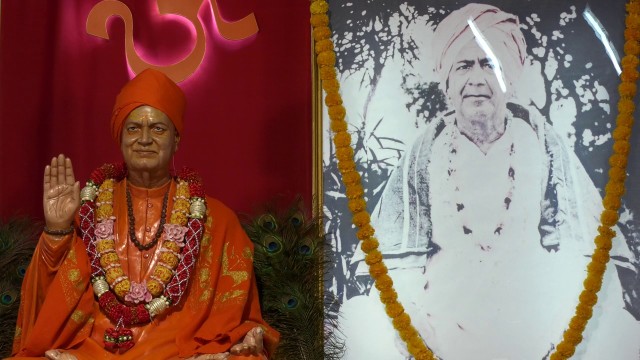
Evening satsang with Vishwaguruji from Jadan Ashram, Rajasthan, India.
Bhajan evening in Strilky Ashram
7:10 - 7:56 (46 min)
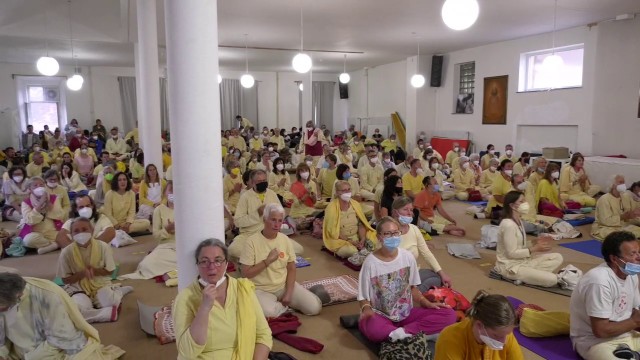
Evening satsang with Vishwaguruji from Strilky Ashram, Czech Republic. Bhajan singing.
Bhajans from Slovenska Vas
8:00 - 8:44 (44 min)
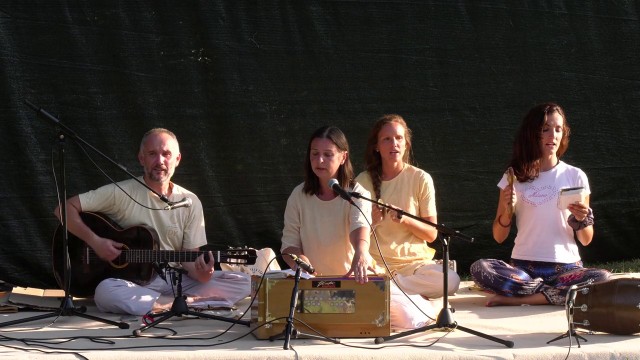
Evening satsang from Slovenska Vas, Slovenia.
Find your Shelter near Gurudev
8:50 - 10:09 (79 min)
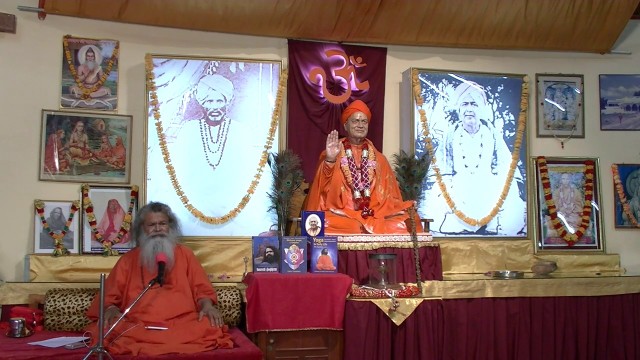
Evening satsang with Vishwaguruji from Jadan Ashram, Rajasthan, India. Singing Bhajans. Day by day Atma is going on the right path of purification when we are aware of Oneness. One day the bird will fly away from the worldly nest, to find the shelter near Gurudev. To sing bhajan is not enough, we should understand and realize its meaning. Translation of Bhajan written by Sri Mangilalji.
To be independent
10:15 - 11:29 (74 min)
Evening satsang in the occasion of Gurudev's Birthday What means independency to you? Many people where witnessing several wars. The ambition to fight is in any human and animals too. When the human gets the ambition to fight for position, for money and creating or awakening cruel thoughts, to kill or damage properties, that means, that the animal qualities awakens in their body and intellect. That we call the animal instinct. When that awakens, then the human is blinded and focusing only on that illness. There is no remedy to cure such qualities. When the animal instinct comes into the human mind and emotions, means the ambition to fight for the position, or the money and for governing the rules, then only knowledge can give us freedom and liberation. The burning desire to get liberation, this is the independent day in the life.
Morning Lecture from Vep
11:35 - 12:45 (70 min)
Morning satsang from weekend yoga seminar from Vep, Hungary.
Who are we to judge
12:50 - 13:56 (66 min)
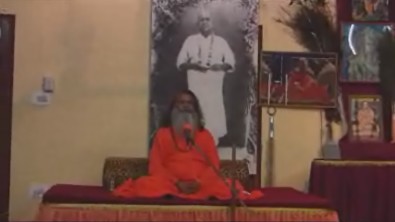
Evening satsang from Jadan Ashram. On the begining Swamiji is chanting Om Namah Shivaya.
Practice from Auckland with MM Vivekpuri
14:00 - 15:00 (60 min)
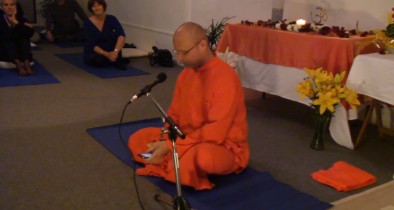
Auckland, New Zealand
Our heart is very great
15:05 - 15:38 (33 min)
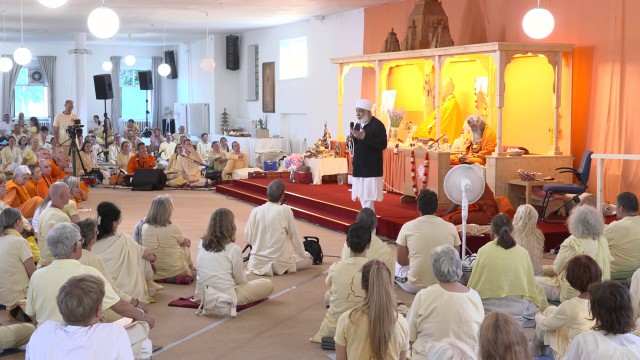
A satsang discourse on the universal sound of Om and the spiritual practice of surrender.
"In India, a name changes with region. In North India, you have Rāma. In Middle India, it becomes Rāma. In South India, it becomes Rāmaṇ."
"The easiest option is to let go, put it down, and allow the mind to become peaceful. The happiest thing is simply to let it be, to release it calmly and let it flow."
A speaker first explains the universality of Om, linking it to the words 'Amen' and 'Amin', and discusses his work promoting Indian traditional sciences in European parliaments. Swami Maheshvaranand then shares a teaching story about a restless monkey to illustrate how surrendering thoughts leads to peace, emphasizing meditation and devotion to the Guru.
Filming location: Strilky, Czech Republic
Repeat the name of Gurudev
15:45 - 16:12 (27 min)
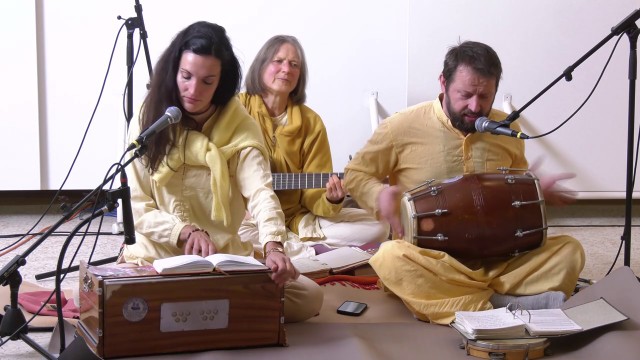
Evening satsang with Vishwaguruji from Vienna, Austria. Bhajan singinig to the Guru. Guru carano me arasatha tiratha he
Eat well and practice
16:20 - 17:00 (40 min)
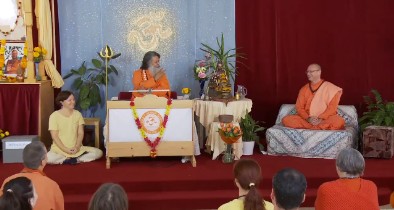
A satsang on integrating yoga into daily life for natural beauty and health.
"If you want to see the beauty of life, then do not put color in your hair. Why do we put color? There must be some desire we still have."
"Yoga regenerates our body, the cells, our skin. It is great support for our gland systems, organs, and blood circulation."
The lecturer addresses a gathering, using the colorful autumn landscape as a metaphor for accepting the natural aging process. He advises reducing chemical cosmetics and processed foods, advocating instead for daily yoga practice, natural oils, and a balanced diet including ghee and sugar in moderation. He shares personal anecdotes about breaking dependency on skin cream and discusses the health impacts of diet, concluding with well-wishes for the Diwali season and his travel plans.
Filming location: Strilky, Czech Republic
We all will come to oneness
17:05 - 17:44 (39 min)
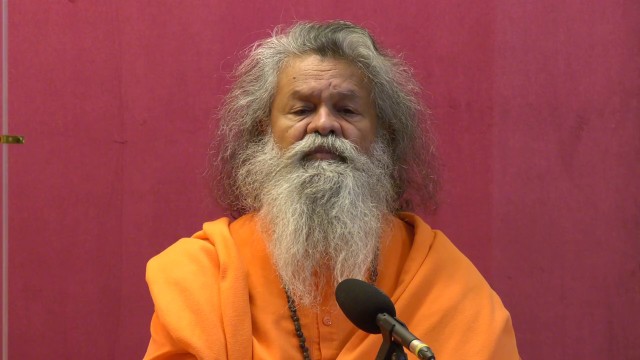
A satsang discourse on spiritual equality, service, and the soul's journey.
"Everyone, without exception, is equal in the eyes of our Gurujī, Mahāprabhujī."
"And when this ātmā, the soul, will go, then it is completely there. There is nothing; there is only one."
The lecturer addresses the community, emphasizing that all disciples—regardless of background or role—should be included in practices like pūjā. He teaches that service and respect form a spiritual family, illustrates oneness with an ocean metaphor for the soul, and shares an anecdote about Holy Gurujī and Mahāprabhujī to illustrate humble service.
Filming location: Vienna, Austria
Shiva is balancing all
17:50 - 18:22 (32 min)
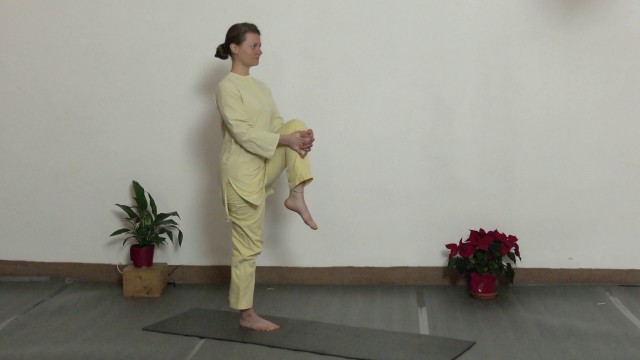
A spiritual discourse and yoga practice session on the theme of cosmic and personal balance.
"In Sanātana Dharma, we worship all because there is only one God."
"Therefore, now is the time... Śiva has opened his eyes... he will bring something again better, balancing."
Swami Anandpuri addresses the global community, discussing the universal nature of divinity and the role of Śiva as the cosmic balancer of positive and negative forces inherent in all life. He then invites Umapurījī to lead practical balancing exercises, including one-legged stands and stretches, to cultivate physical and inner stability, concluding with a moment of meditation and contentment.
Filming location: Strilky, Czech Republic
Live webcast from Strilky
18:30 - 20:00 (90 min)
Morning satsang from Strilky Ashram, Czech Republic.
Part 1: Inner Peace for World Peace: The Eternal Principle of Yoga
18:30 - 19:39 (69 min)
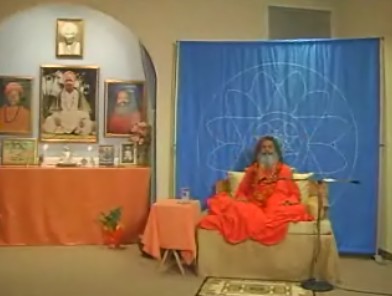
A spiritual discourse on achieving world peace through inner peace and the eternal principle of yoga.
"Yoga means balancing—not āsanas, physical exercise, breath exercise, meditations, and concentration. These are the way to yoga. This is not yoga itself."
"Therefore, in yoga and daily life... I bring three main points: tolerance, respect, and understanding."
Swami Avatarpuri (Swāmījī) delivers a comprehensive talk on the cosmic origins of discord and the path to harmony. He explains yoga as the primordial balancing principle between universal consciousness and space, describing the creation of duality and the human role as protectors and liberators. The key to peace, he asserts, is cultivating individual knowledge (jñāna) and mercy (dayā) through self-inquiry, respectful tolerance, and loving speech.
Without work, nothing can happen
20:05 - 21:03 (58 min)
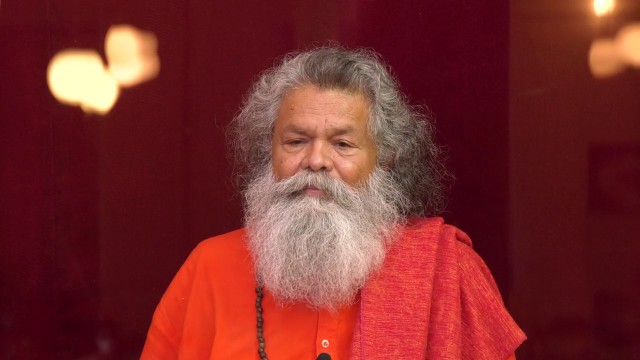
A spiritual discourse weaving ancient creation myths with teachings on dharma and modern life.
"Jīva jīva bhakṣate: all creatures eat other creatures. So that began to move."
"Dharma is spirituality and good, not killing anyone, taking care of everyone. Adharma is the opposite."
A spiritual teacher narrates a syncretic creation story, blending tales of Varāha lifting the earth, Brahmā's emergence from a lotus, and the evolutionary rise of life. He explains the primordial cycle of life consuming life (jīva jīva bhakṣate) and the subsequent establishment of dharma. The discourse shifts to contemporary lessons, advocating for non-violence, mindful consumption, self-reliance, and environmental responsibility, while cautioning against addiction.
Filming location: Strilky, Czech Republic
Dharma and Satsang
21:10 - 22:19 (69 min)
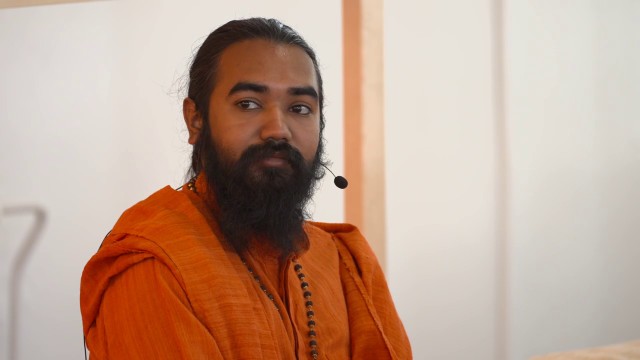
A satsang discourse on dharma, spiritual practice, and the importance of community.
"We always try to find the shortcuts, and we always try to find the easy way out."
"In the satsaṅg, on the full moon, usually we listen to Guru Gītā. Try to really listen to Guru Gītā. I have listened to Guru Gītā for more than 40 years, and I must say that every time I hear something new inside."
Following traditional invocations, a speaker addresses a gathering, weaving teachings on personal duty (dharma) with illustrative stories, including a sādhu persistently saving a scorpion and Nārada's lesson from Lord Viṣṇu. The talk emphasizes perseverance in one's path, learning from failures, and the critical role of regular satsang and deep, repetitive study of core teachings like the Guru Gītā over seeking novel techniques. A letter from the Indian Prime Minister congratulating the opening of Om Ashram is read. The session includes chanting and concludes with a universal peace mantra and final salutations.
Filming location: Strilky, Czech Republic
Yoga Nidra: The Yogi's Conscious Sleep
22:25 - 23:16 (51 min)
A guided Yoga Nidra (yogic sleep) meditation session.
"Yoga Nidra, the sleep of the yogi, is a deep relaxation technique... You remain completely aware, completely relaxed, yet at the same time completely conscious."
"At the beginning of Yoga Nidra, you have the opportunity to make a Śaṅkalpa... Make a brief Śaṅkalpa with a short sentence."
An instructor guides practitioners through a complete Yoga Nidra practice. The session begins with creating a personal resolution (Śaṅkalpa), followed by a detailed body scan for physical relaxation. The guide then leads awareness to the breath and prāṇa (energy) in the abdominal, chest, and throat areas, incorporating the mantra so'ham. The practice concludes by reaffirming the Śaṅkalpa, gently returning awareness to the room, and ending with a collective chant.
Filming location: Vienna, Austria
Sri Devpurijis Gnade
23:20 - 0:22 (62 min)
Vienna, June 2000
American
Australian