
European
We need Gurudev
0:00 - 0:54 (54 min)
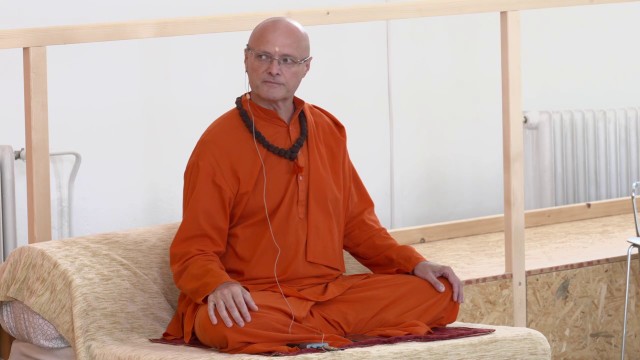
A satsang discourse on the necessity of the guru and the goal of Advaita philosophy.
"The moment you begin to think you have already heard and know everything, in that moment your free fall begins."
"Understand from this that the guru is not the physical body. It is most important to understand that the guru is that Guru-Tattva, the element of the guru."
A speaker leads a satsang, emphasizing the eternal student's attitude and the critical role of the embodied spiritual master (Guru-Tattva) as the essential guide. Using stories and analogies—such as the matchbox with a diamond, the friend with a boat, and the river merging into the ocean—the talk explains the guru's function and explores the ultimate goal of yoga: to transcend the cycle of rebirth and realize the Advaita (non-dual) union of the individual self with the cosmic Self.
Filming location: Strilky, Czech Republic
Around The World - Vegetarianism and top sport, Part 1
1:00 - 1:24 (24 min)

A practical cooking demonstration and discussion on vegetarian nutrition for athletes from a yogic perspective.
"In our yoga tradition, everyone is vegetarian for moral reasons. For us, ahiṃsā paramo dharma—non-injury is the highest duty."
"The foundation of healthy vegetarian cooking is quality ingredients... Higher quality food is better utilized by the body, yielding better results."
Swami Avatarpuri, in the kitchen of Sridev Purījī Ashrama, explains the principles of a vegetarian diet tailored for elite sports performance. He emphasizes digestibility, energy provision, and muscle support, highlighting key ingredients like whole grains, tofu, and legumes. The talk covers the medicinal use of spices like turmeric and cumin, addresses protein and vitamin sources, and concludes by framing vegetarianism as a complete and health-supporting lifestyle rooted in the principle of non-harm.
Filming location: Zagreb, Croatia
Shivaratri Satsang with Vishwaguruji
1:30 - 2:05 (35 min)
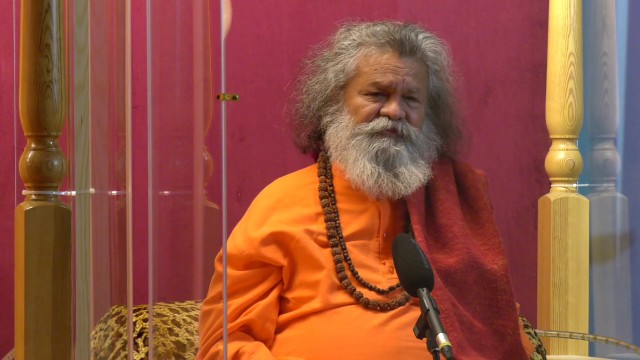
A spiritual discourse on the unity of consciousness, the elements, and the nature of the guru.
"And so it is that we are never separate. We are always with one and one and one."
"You are all guru. Guru means who is giving us. What means giving us? Training, etc."
An elder teacher addresses a gathering, weaving together cosmological concepts of Śiva and Śakti, the five elements, and the pervasive presence of the ātmā (soul). He explains fundamental oneness using the metaphor of a drop merging with the ocean, and expansively defines the guru as any source of knowledge, from a parent to a driving instructor. The talk touches on comparative religion, personal anecdotes, and concludes with an invitation for future meditation.
Filming location: Vienna, Austria
Yoga Nidra or bhajan singing is like meditation
2:10 - 3:25 (75 min)
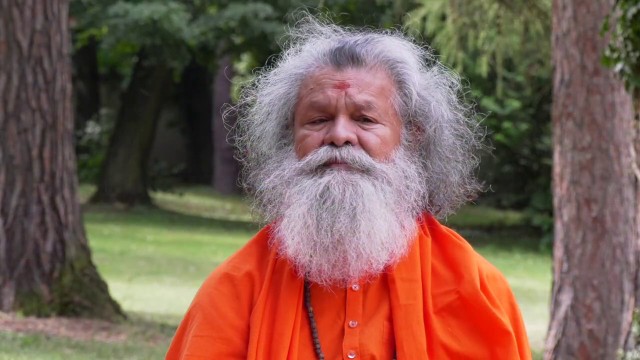
Morning satsang with Vishwaguruji from Strilky Ashram, Czech Republic. Singing bhajan Yogi jano ki Yoga Nidra. Bhajans sometimes are like meditation. We are awakened but in that state, it is very good to do yoga nidra or sing bhajans. There is a difference between yogi and rogi. The story of a great yogi and a young girl in Jaipur. The other story of an Italian professor and Vishwaguruji. The story of why Vishwaguruji changed the name of savasana to anandasana. Practising relaxation and bhramari pranayama.
Live webcast from Strilky
3:30 - 5:00 (90 min)
Evening satsang from Strilky Ashram, Czech Republic.
Mala leads us to the Cosmic Self
3:30 - 4:14 (44 min)
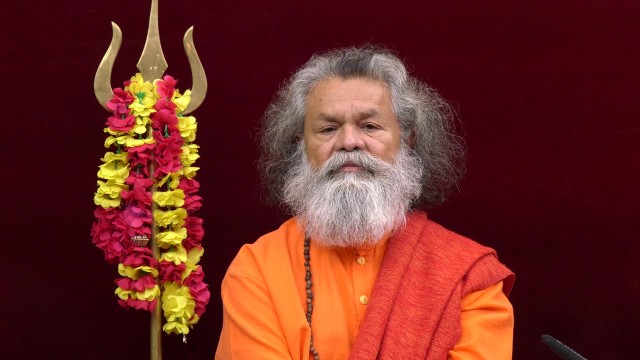
A spiritual discourse on the cosmic significance of the prayer mala (japa mala).
"Each bead of the mala is immense with powers from the cosmic Self."
"In that one thread, all creatures on this earth are bound."
The lecturer addresses a satsang, elaborating on the profound symbolism of the mala beyond its physical form. He explains how the thread represents the unifying force binding all beings and elements, while the beads encompass the diversity of creation. The talk explores the universal spiritual power within all life, the mala as a metaphor for bodily rhythms like breath and heartbeat, and practical guidance for its use in mantra meditation.
Filming location: Strilky, Czech Republic
Governing The Spiritual Light
4:15 - 4:59 (44 min)
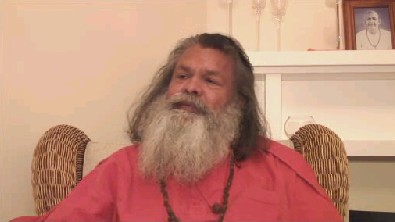
A spiritual discourse on awakening the senses and the supreme value of satsaṅg.
"O my friends, wake up, the dawn has risen. It means the dawn of the Gurudev’s satsaṅg, the dawn of the Gurudev’s wisdom."
"In this Kali Yuga, to come to heaven is easier... But satsaṅg is durlabh, most rare."
Swami Avatarpuri unpacks the bhajan Saheliyā Sūtī Jagāye, explaining that the call to awaken is for our senses and thoughts sleeping in ignorance. He describes satsaṅg as the divine dawn that opens the heart's locks, destroys karma, and is more precious than any heavenly realm or worldly wealth, contrasting it with negative company (kusaṅga).
Filming location: Wellington, New Zealand
Sing Bhajans on the Satsang
5:05 - 5:25 (20 min)
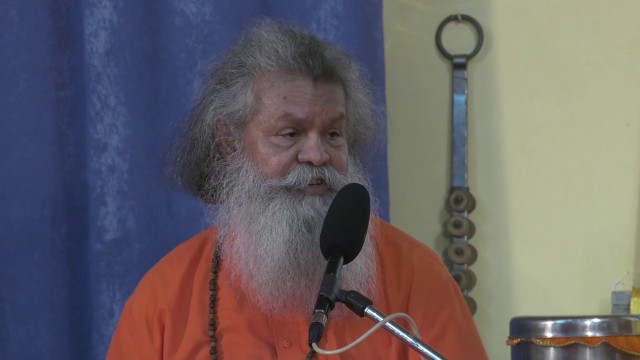
Evening satsang with Vishwaguruji from Jadan Ashram, Rajasthan, India. Lectures are also good, but the best is for us if we are singing bhajans on the Satsang.
Yuga Yuga Jivo Maheshwarananda
5:30 - 5:37 (7 min)
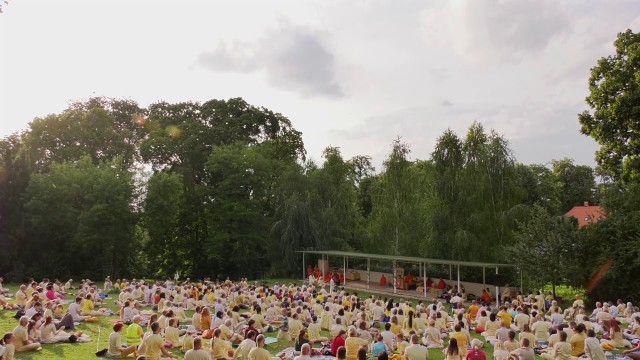
Evening satsang with Vishwaguruji from Strilky Ashram, Czech Republic. Bhajan singing on Gurupurnima satsang.
Sataguru rakho laj hamari
5:45 - 5:51 (6 min)
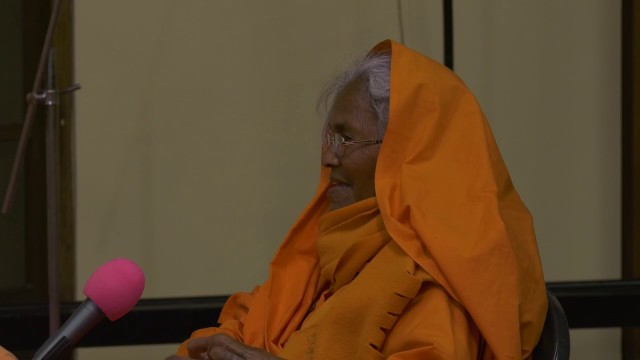
Evening satsang from Jadan Ashram, Rajasthan, India. Vishwaguruji"s sister sings Bhajans.
Repeat the name of Gurudev
5:55 - 6:22 (27 min)
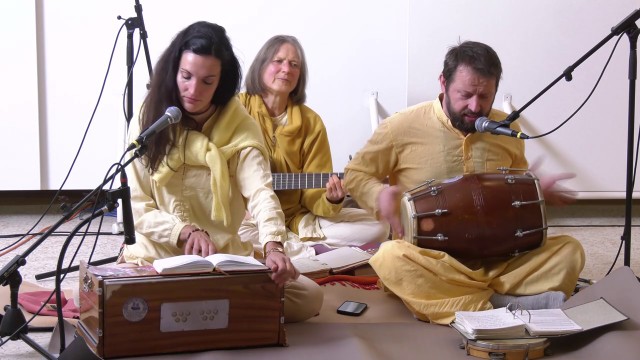
Evening satsang with Vishwaguruji from Vienna, Austria. Bhajan singinig to the Guru. Guru carano me arasatha tiratha he
Bhajan singing in the presence of the Master
6:30 - 7:17 (47 min)
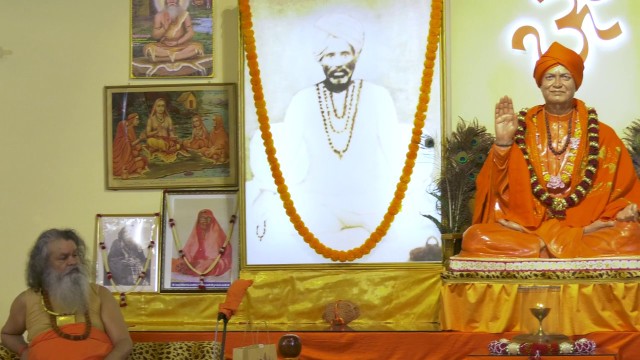
Evening satsang from Jadan Ashram, Rajasthan, India. Bhajan singing from Jadan. Including He nath ab to, Suno sakhi Sataguru aya, Guru carano me arasatha tiratha he
Guru bhakta jagata me na rahe
7:25 - 8:08 (43 min)
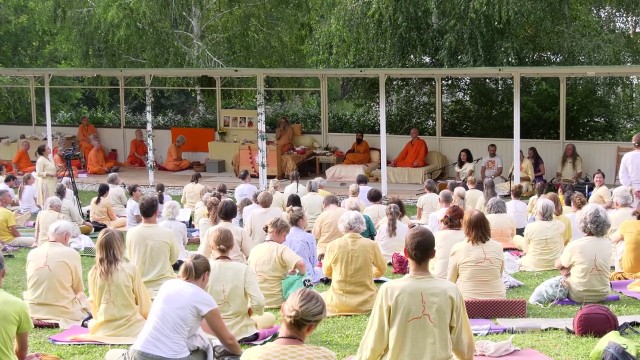
Evening satsang with Vishwaguruji from Strilky Ashram, Czech Republic. Bhajan singing on satsang, including bahajan Guru bhakta jagata me na rahe, Prema ka pyala Hari
Pyare darashana diyo aj
8:15 - 8:18 (3 min)
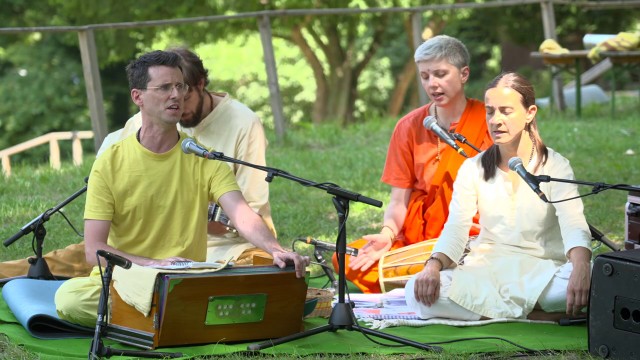
A spiritual song expressing longing for divine vision, followed by analytical remarks on the text's structure.
"Ākula vyākula fero re na dhinna" and "Darśan na dī chokhā. Darśan sannakā nindā, Nairin divasannā."
The content consists of poetic lyrics lamenting the agony of separation and the unfulfilled desire for divine sight (Darśan). This is followed by a separate section of critical remarks that analyze the song's text, pointing out its abrupt language shift, unclear referents, and narrative discontinuity.
Filming location: Strilky, Czech Republic
Bhajans from Vep
8:25 - 8:49 (24 min)
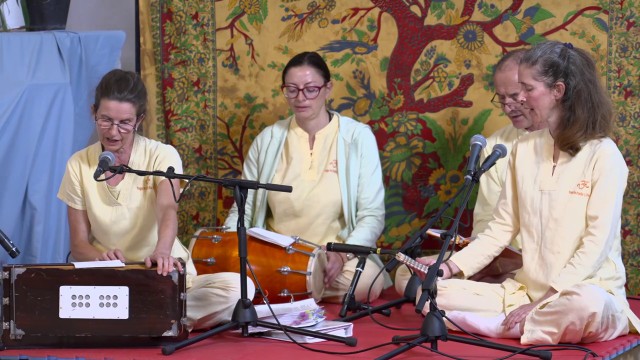
Yoga Summer Retreat from Vep, Hungary. Bhajan singing including Guruvara me cal usa una des.
Instructions for mantra practicing
8:55 - 9:52 (57 min)
A spiritual seminar on the guru-disciple relationship and spiritual practice.
"Guru Kṛpā Hi Kevalam—the Gurudeva's blessings. And śiṣya kī ānanda maṅgalam. The disciples have happiness, joy."
"When we get mantra, guru mantra, then you should have that cloth. We are also going through the mantra. Then it means you have already taken your seat."
A spiritual teacher addresses a gathering, expounding on the principle that the guru's grace is everything and the disciple's state is one of auspicious joy. He discusses the nature of a true guru, the importance of the guru lineage (paramparā), and the correct use of a personal meditation seat (āsana). He shares a story about two disciples to illustrate the importance of following a guru's instructions without mental attachment, and concludes with practical advice for daily practice.
Filming location: Strilky, Czech Republic
Pollution
10:00 - 11:01 (61 min)
A spiritual discourse on the five sheaths (kośas) and the impact of nourishment.
"Jaisā khāī annā, vaisā rahe man—what kind of nourishment or food you are eating—like that will turn your mind."
"So first is the physical nourishment, Annamaya Kośa... What kind of food you will eat, like that will be your mentality."
Swami Ji explains the five layers of human existence, beginning with the food sheath (Annamaya Kośa). He emphasizes how diet shapes one's energy, mind, and consciousness, weaving in critiques of modern food systems, historical anecdotes about pre-industrial community life, and cautionary tales about arguing with a spiritual master. The talk uses the symbol of the crocodile in the Svādhiṣṭhāna chakra to represent destructive emotions.
Filming location: Auckland, New Zealand
Past is gone future is not here yet
11:05 - 11:49 (44 min)
A spiritual discourse on living in the present moment and the nature of past, present, and future.
"Therefore, it is at present. Be in the present."
"So the past is gone. The present is here. But you think, 'In the future, I will also get this.' But you will not get it. That’s it."
An instructor addresses a group, advising them to release attachment to past experiences and future anxieties. He advocates for a simple, relaxed practice, contrasting it with other meditation techniques. Using stories, such as a dog losing its bread by coveting a reflection, he illustrates the futility of dwelling on what is gone or what might be, emphasizing that true practice (Anuṣṭhāna) is about being grounded in the now.
Filming location: Strilky, Czech Republic
You are free to choose good or bad
11:55 - 12:39 (44 min)
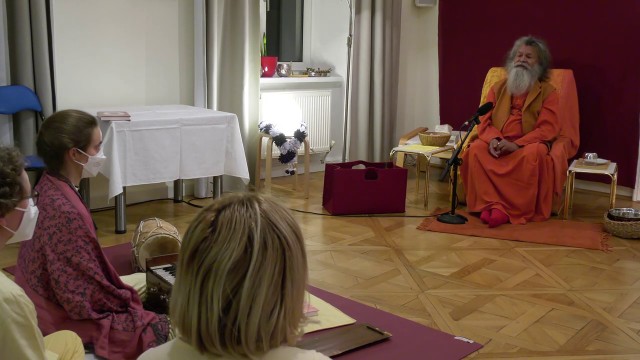
Evening satsang with Vishwaguruji from Linz, Austria. An instrument is a simple construction, but it can give very beautiful sounds. Our body is also like an instrument. We are free to do good or bad things. From our childhood we can develop in good or bad direction also. The story of a tiger baby who mixed among the sheeps. Everybody should know why we shouldn't to eat meat. Bhajan singing.
The Purifying Path of Haṭha Yoga: An Introduction to Ṣaṭkarma
12:45 - 13:32 (47 min)

An instructional webcast introducing the Haṭha Yoga purification techniques (Ṣaṭkarma).
"Haṭha Yoga is not only that we clean and purify our whole system, our whole body, but it also has a very great effect on our nervous system."
"Haṭha means willpower to do these Haṭha Yoga techniques. And with this, you also get the willpower, the strength to persevere, to continue, to get rid of the laziness."
A teacher from the Śrīkī Ashram, joined by assistants, explains the purpose and benefits of the six purification acts. The session features a detailed, practical demonstration of Jala Netī (nasal cleansing with salt water) and Kapāla Bhāti, followed by an introduction to Agni Sāra and the Naulī Kriyā for digestive health. The instruction emphasizes using natural elements, proper technique, and the holistic effects on physical and energetic systems.
Filming location: Strilky, Czech Republic
Practice well
13:40 - 14:22 (42 min)
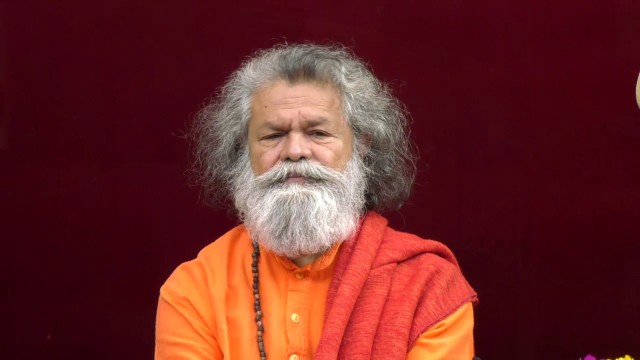
A discourse on Haṭha Yoga practice and the ideal of the true yogī.
"A Hatha yogī, he will not take when I give him... He doesn't want anything, no money, nothing."
"Yoga is the greatest. And in that Hatha Yoga, Hatha Yoga is the best."
Swami Ji teaches a satsang, continuing a series on Haṭha Yoga cleansing techniques (kriyas) like nauli and basti. He emphasizes proper diet, discipline, and learning from a true master. He narrates a story of Lord Śiva, Pārvatī, and a self-sufficient Haṭha yogī at a cremation ground to illustrate ultimate non-attachment, and shares a parable about a Himalayan sage to caution against endless theoretical learning without realization. The talk concludes with practical advice on group purification practices.
Filming location: Strilky, Czech Republic
Yoga Nidra: The Yogi's Conscious Sleep
14:30 - 15:21 (51 min)
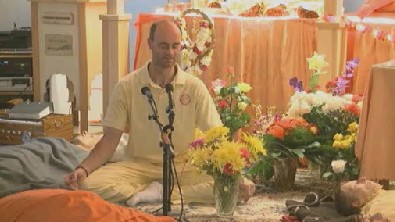
A guided Yoga Nidra (yogic sleep) meditation session.
"Yoga Nidra, the sleep of the yogi, is a deep relaxation technique... You remain completely aware, completely relaxed, yet at the same time completely conscious."
"At the beginning of Yoga Nidra, you have the opportunity to make a Śaṅkalpa... Make a brief Śaṅkalpa with a short sentence."
An instructor guides practitioners through a complete Yoga Nidra practice. The session begins with creating a personal resolution (Śaṅkalpa), followed by a detailed body scan for physical relaxation. The guide then leads awareness to the breath and prāṇa (energy) in the abdominal, chest, and throat areas, incorporating the mantra so'ham. The practice concludes by reaffirming the Śaṅkalpa, gently returning awareness to the room, and ending with a collective chant.
Filming location: Vienna, Austria
Our heart is very great
15:25 - 15:58 (33 min)
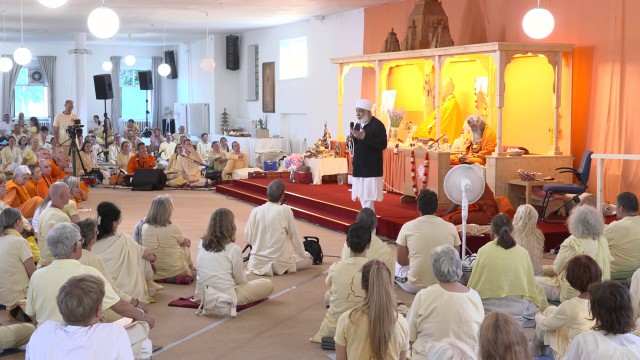
A satsang discourse on the universal sound of Om and the spiritual practice of surrender.
"In India, a name changes with region. In North India, you have Rāma. In Middle India, it becomes Rāma. In South India, it becomes Rāmaṇ."
"The easiest option is to let go, put it down, and allow the mind to become peaceful. The happiest thing is simply to let it be, to release it calmly and let it flow."
A speaker first explains the universality of Om, linking it to the words 'Amen' and 'Amin', and discusses his work promoting Indian traditional sciences in European parliaments. Swami Maheshvaranand then shares a teaching story about a restless monkey to illustrate how surrendering thoughts leads to peace, emphasizing meditation and devotion to the Guru.
Filming location: Strilky, Czech Republic
The real Guru is in oneness
16:05 - 17:06 (61 min)
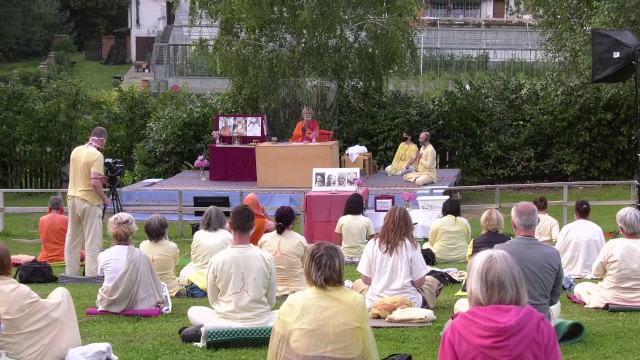
A spiritual discourse on universal oneness and the nature of the divine path.
"If a God says, 'Do not worship that God,' then neither is that God right, nor are you good. We have to come to oneness."
"The drop is not there. I am not a drop. I am the ocean. Similarly, we are in that condition. But you are still not near the beach of the ocean."
The speaker, likely a spiritual teacher, leads a satsang exploring the essential unity of all spiritual paths and deities. He emphasizes that a true guru or God would never forbid the worship of another, advocating for a non-sectarian devotion. Using metaphors like a drop merging into the ocean and the irreversible flight of an airplane, he discusses the preciousness of time, the journey of the soul, and the nature of prana (life force) as both a suffering entity and a divine connection. The talk weaves between philosophical points, practical advice, and anecdotal reflections, concluding with a call for inner purity and an end to religious duality.
Filming location: Strilky, Czech Republic
Dharma and Satsang
17:10 - 18:19 (69 min)
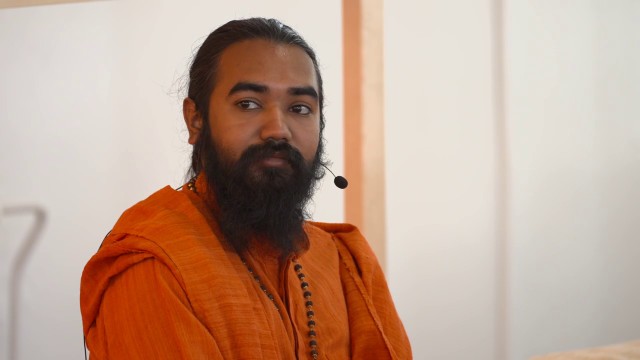
A satsang discourse on dharma, spiritual practice, and the importance of community.
"We always try to find the shortcuts, and we always try to find the easy way out."
"In the satsaṅg, on the full moon, usually we listen to Guru Gītā. Try to really listen to Guru Gītā. I have listened to Guru Gītā for more than 40 years, and I must say that every time I hear something new inside."
Following traditional invocations, a speaker addresses a gathering, weaving teachings on personal duty (dharma) with illustrative stories, including a sādhu persistently saving a scorpion and Nārada's lesson from Lord Viṣṇu. The talk emphasizes perseverance in one's path, learning from failures, and the critical role of regular satsang and deep, repetitive study of core teachings like the Guru Gītā over seeking novel techniques. A letter from the Indian Prime Minister congratulating the opening of Om Ashram is read. The session includes chanting and concludes with a universal peace mantra and final salutations.
Filming location: Strilky, Czech Republic
The Pranas
18:25 - 19:09 (44 min)
A spiritual discourse on the science of prāṇa and holistic health.
"You should look in our yoga book, as well as in Hidden Powers in Humans. Ten prāṇas are described: Prāṇa and Upaprāṇa."
"Systematically, when we do the prāṇāyāmas and āsanas, then meditation must be, because many things are affected by the reaction of the brain centers."
Following an opening chant, The lecturer delivers a teaching on the vital energies, or prāṇas, that govern bodily functions. He explains the roles of Prāṇa and Apāna, links physical ailments like constipation to prānic imbalances, and advocates for yoga, prāṇāyāma, and a vegetarian diet as foundational practices. The talk includes critiques of over-reliance on allopathic medicine, illustrated by an anecdote about a milk-drinking cow, and emphasizes practical application over intellectual knowledge.
Filming location: Bratislava, Slovakia
Live webcast from Strilky
18:30 - 20:00 (90 min)
Morning satsang from Strilky Ashram, Czech Republic.
Dharma (1/2)
19:15 - 19:59 (44 min)
Satsang with Swami Gajanand from Strilky, Czech Republic.
We all will come to oneness
20:05 - 20:44 (39 min)
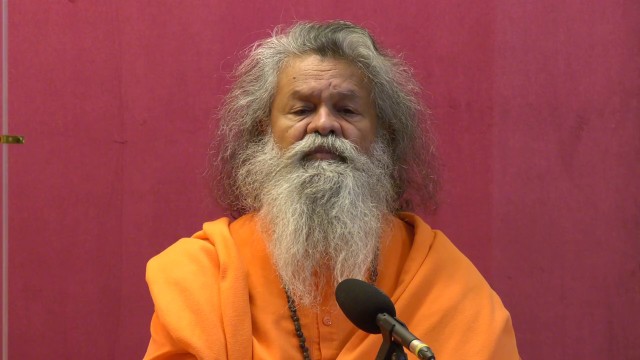
A satsang discourse on spiritual equality, service, and the soul's journey.
"Everyone, without exception, is equal in the eyes of our Gurujī, Mahāprabhujī."
"And when this ātmā, the soul, will go, then it is completely there. There is nothing; there is only one."
The lecturer addresses the community, emphasizing that all disciples—regardless of background or role—should be included in practices like pūjā. He teaches that service and respect form a spiritual family, illustrates oneness with an ocean metaphor for the soul, and shares an anecdote about Holy Gurujī and Mahāprabhujī to illustrate humble service.
Filming location: Vienna, Austria
We are a part of God
20:50 - 22:00 (70 min)
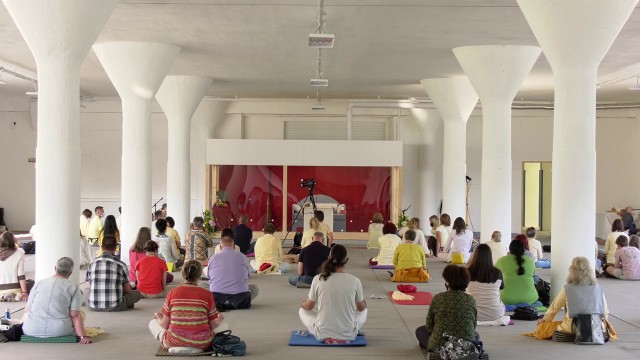
A spiritual discourse on the unity of yoga and the soul's journey.
"Yoga is not only physical, for the physical body, or just breath and concentration, etc. Yoga is very far-reaching."
"I said, your soul, your ātmā in you is your God."
A teacher addresses a gathering, explaining that all forms of yoga are one and that practice is a lifelong endeavor. He describes the soul's cyclical journey through 8.4 million life forms, the divine nature within each person, and the ultimate aim of merging with the cosmic consciousness. He concludes with a practical morning ritual, encouraging attendees to affirm "I am human" upon waking.
Filming location: Slovenia
Questions and answers from Debrecen
22:05 - 22:45 (40 min)
A satsang addressing practical yogic living and dietary discipline.
"If you really want to do your yoga sādhānā, then, first control over your tongue, the test. You will see that 90% of all difficulties in your body will disappear."
"Yoga begins with discipline. Atha yoga anuśāsana."
Swami Satyananda Saraswati answers questions from attendees, first offering advice on starting a yogic farm community in Hungary. He then delivers a core teaching on foundational spiritual practice, emphasizing strict dietary control (limited intake, no snacking, avoidance of processed foods and alcohol) as the primary step for health, discipline, and preparing for meditation. He expands on the importance of satsang, prāṇāyāma, and consuming local, organic, seasonal foods, using soy cultivation and an anecdote about Australian milk regulations as cautionary examples.
Filming location: Debrecen, Hungary
Find your Shelter near Gurudev
22:50 - 0:09 (79 min)
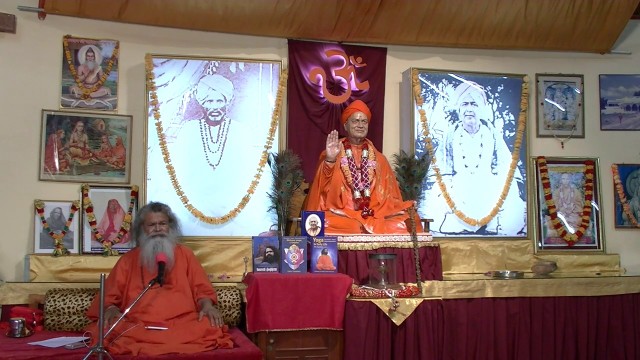
Evening satsang with Vishwaguruji from Jadan Ashram, Rajasthan, India. Singing Bhajans. Day by day Atma is going on the right path of purification when we are aware of Oneness. One day the bird will fly away from the worldly nest, to find the shelter near Gurudev. To sing bhajan is not enough, we should understand and realize its meaning. Translation of Bhajan written by Sri Mangilalji.
American
Australian