
European
The Essence of Yoga in Daily Life
1:00 - 1:35 (35 min)
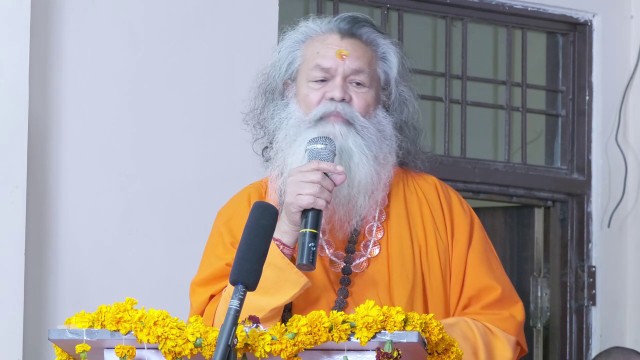
A spiritual discourse and award ceremony on integrating yoga and Sanātana Dharma into daily life.
"You should know why you have come to this world." "Yoga in daily life means in the whole world, in the whole world."
A speaker, referencing Gurudev and Swami Madhavanand, delivers a wide-ranging talk emphasizing the purpose of human life, the principles of yoga, and the protection of animals and Indian culture. He shares anecdotes about teaching yoga abroad, insists on vegetarianism for practitioners, and discusses the global spread of both meat-eating and veganism. The event includes the presentation of awards for promoting Indian culture and peace, with thanks given to organizing institutions like Apex University and the Yoga in Daily Life Foundation.
Filming location: Jaipur, Rajasthan, India
Influence of karmas on the soul
1:40 - 2:30 (50 min)
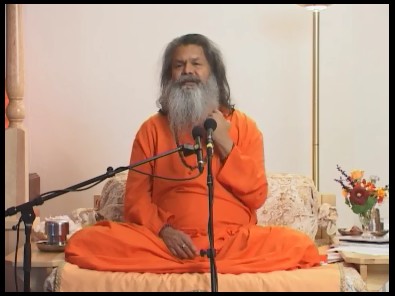
Morning lecture from the weekend seminar in Vienna, Austria with translation in English.
Purnima satsang
2:35 - 3:29 (54 min)
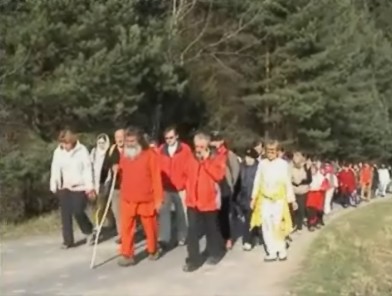
Swamiji in Sliac.
Prana and pranayam
3:35 - 4:22 (47 min)
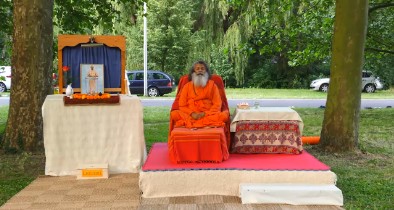
A spiritual discourse on prāṇāyāma and the interconnectedness of life, addressing modern pollution.
"To pollute the earth is a sin. It means you pollute Mother Earth."
"The most dangerous pollution is in the human mind. And that mind is so polluted, and of course, everyone is proud of that—how much my mind is polluted."
Swami Madhavan Ji delivers an evening talk, beginning with the science of breath (Pūrak, Rechak, Kumbhak) and the sacredness of Sanskrit. He expands the theme to describe a profound chain of pollution: of the Earth, our physical bodies through toxins, and finally our minds through negative thoughts. He presents yoga and prāṇāyāma as the essential science to purify these layers, explaining how breathwork balances the Ida and Pingala nadis and burns away karmic impurities, ultimately leading to unity with Brahman.
Filming location: Vép, Hungary
Karma and koshas
4:30 - 5:26 (56 min)
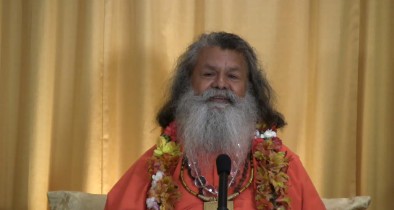
A spiritual discourse on the soul's journey, karma, and the five sheaths of being.
"When this all went back to the astral world, it was not easy... All the time in the astral world, the certain situation of the karma, the destiny, is going on."
"God has given the humans that 'I give you the freedom. Now I liberate you.' But there is a 'but.' Whatever you will do again, you have to face the karma."
A spiritual teacher delivers a satsang, explaining the cycle of birth, death, and karma across the astral and mortal worlds. He uses parables, like walking through a coal mine, to illustrate the challenges of human life and the consequences of action. The talk introduces the first two of the five kośas (sheaths), focusing on the physical (annamaya) and energy (prāṇamaya) bodies, emphasizing proper nourishment and life force.
Filming location: Alexandria, USA
Singing bhajans by Swami Gajanandji
5:30 - 6:07 (37 min)
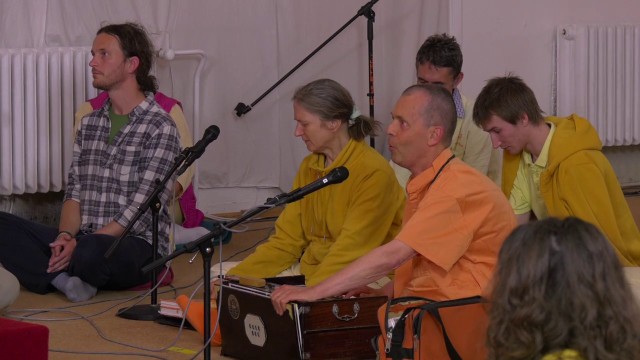
Evening satsang with Vishwaguruji from Strilky Ashram, Czech Republic. Singing bhajans by Swami Gajanandji.
Bhajan evening from Vep
6:15 - 7:10 (55 min)
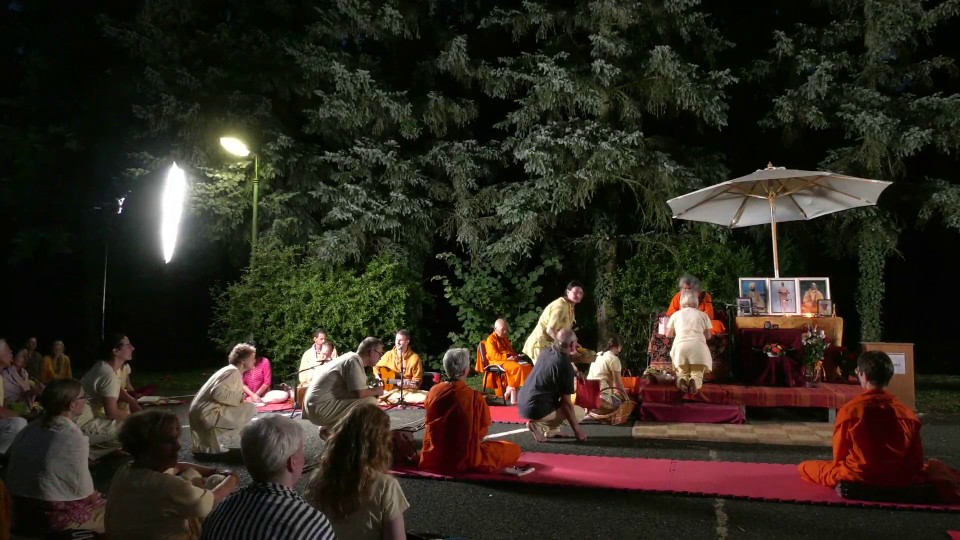
Evening satsang with Vishwaguruji from Vep, Hungary. Bhajan singing.
Bhajan singing from Vep
7:15 - 8:06 (51 min)
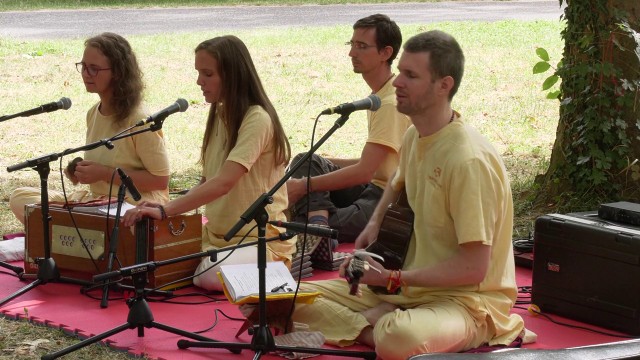
Morning satsang with Vishwaguruji from Vep, Hungary. Bhajan singing.
Bhajans from Strilky Ashram
8:10 - 9:44 (94 min)
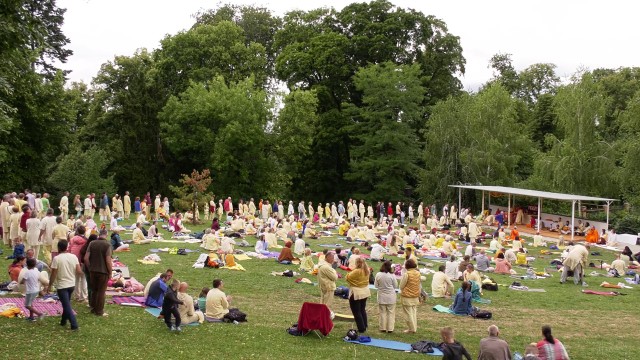
Morning satsang from Strilky Ashram, Czech Republic.
Anahat Chakra
9:50 - 11:45 (115 min)

Public lecture about Anahat chakra in Zagreb Croatia in April 2007.
The Effect of Karma on the Soul
11:50 - 12:31 (41 min)
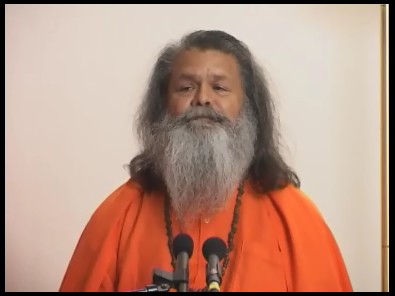
A spiritual discourse exploring karma and liberation through two illustrative stories.
"The soul in this cobra was a great bhakta, a dedicated scholar. But he did not yet renounce his goal... he has gone through his karma, and now it is time for him to be granted Mokṣa, liberation."
"If someone slaps you, then you are to blame, not the other who slaps you... You were there, that is how it is. Therefore, accept what happens."
The speaker narrates two parables to explain the effect of karma on the soul. The first describes how the sage Mahāprabhujī liberated the soul of an old cobra, revealing it was a former devotee working through its karma. The second tells of Saint Sagramdās, who encounters a camel bearing the karma of a cruel tax collector. Through these stories, the discourse emphasizes that beings reap the consequences of their actions across lifetimes, and that selfless service (Sevā) is the supreme path to lightening one's karmic burden.
Filming location: Vienna, Austria
Yoga is a science
12:35 - 13:54 (79 min)
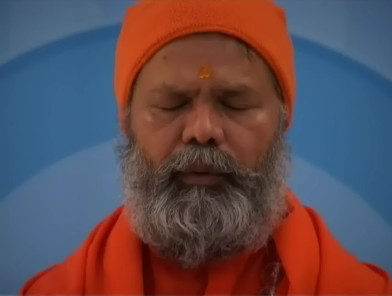
A spiritual lecture on Kuṇḍalinī, chakras, and the purpose of human life.
"Yoga is the science of body, mind, consciousness, and soul. Yoga without spirituality is like a body without a soul."
"Chakra is that which is purifying our body, mind, and consciousness. Chakra has to be purified through practice of mantra, prayers, or some yogic kriyās. Then the kuṇḍalinī will awake."
The teacher continues a multi-day seminar, delving into the nature of human consciousness through the lens of Kuṇḍalinī energy and the chakra system. He explains the five layers of the body (kośas), the persistence of karma using an analogy of salt in water, and the symbolism of the Mūlādhāra chakra—its red color, lotus imagery, and four petals representing the four aims of life: dharma, artha, kāma, and mokṣa. The discourse expands into themes of universal love, friendship, and living in the world with detachment, like a lotus in water.
Filming location: Australia
Yoga in Daily Life - excercise program
14:00 - 15:32 (92 min)
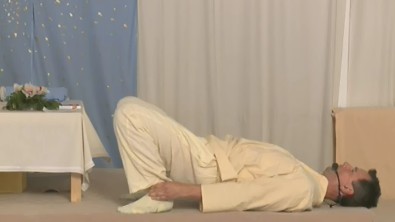
Morning Yoga excercise according to system Yoga in Daily Life from Mahaprabhudeep Ashram, Strilky, Czech Republic.
Lord Shiva Is The Most Merciful
15:35 - 15:59 (24 min)
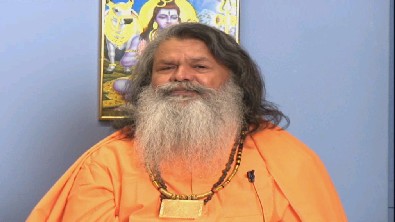
A spiritual discourse on the concepts of Saṅkalpa, Kalpa, and the significance of Śivarātri.
"Controlling thoughts is the hardest work. We think and we say, 'Let's be positive. Do not do to others what you do not want done to you.' Lightly spoken, but difficult to follow."
"Śiva is the most merciful father... I will take over all your sins and problems, and pray for you to be free."
A spiritual teacher addresses an ashram gathering, explaining the power and ethical necessity of a firm spiritual resolve (Saṅkalpa). He explores the cosmic concept of Kalpa (aeons), shares the story of a hunter and the merciful blessings of Lord Śiva that established Śivarātri, and discusses the purifying nature of Mother Gaṅgā. The talk concludes with the recitation of the Mahā Mrityunjaya Mantra and blessings for the global audience.
Filming location: Vienna, Austria
Hatha Yoga Kriyas (2/3)
16:00 - 16:27 (27 min)
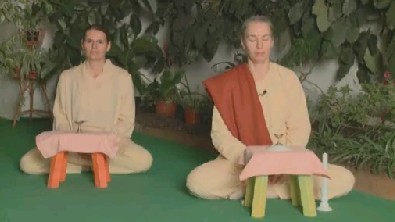
Hatha Yoga Kriyas, with Swamiji and Uma Puri, from Strilky Ashram, (CZ) on 14th November 2009.
Questions and answers from Debrecen
16:35 - 17:15 (40 min)
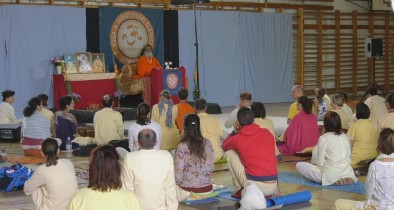
A satsang addressing practical yogic living and dietary discipline.
"If you really want to do your yoga sādhānā, then, first control over your tongue, the test. You will see that 90% of all difficulties in your body will disappear."
"Yoga begins with discipline. Atha yoga anuśāsana."
Swami Satyananda Saraswati answers questions from attendees, first offering advice on starting a yogic farm community in Hungary. He then delivers a core teaching on foundational spiritual practice, emphasizing strict dietary control (limited intake, no snacking, avoidance of processed foods and alcohol) as the primary step for health, discipline, and preparing for meditation. He expands on the importance of satsang, prāṇāyāma, and consuming local, organic, seasonal foods, using soy cultivation and an anecdote about Australian milk regulations as cautionary examples.
Filming location: Debrecen, Hungary
Prana and pranayam
17:20 - 18:07 (47 min)
A spiritual discourse on prāṇāyāma and the interconnectedness of life, addressing modern pollution.
"To pollute the earth is a sin. It means you pollute Mother Earth."
"The most dangerous pollution is in the human mind. And that mind is so polluted, and of course, everyone is proud of that—how much my mind is polluted."
Swami Madhavan Ji delivers an evening talk, beginning with the science of breath (Pūrak, Rechak, Kumbhak) and the sacredness of Sanskrit. He expands the theme to describe a profound chain of pollution: of the Earth, our physical bodies through toxins, and finally our minds through negative thoughts. He presents yoga and prāṇāyāma as the essential science to purify these layers, explaining how breathwork balances the Ida and Pingala nadis and burns away karmic impurities, ultimately leading to unity with Brahman.
Filming location: Vép, Hungary
Detachment and Liberation
18:15 - 19:26 (71 min)
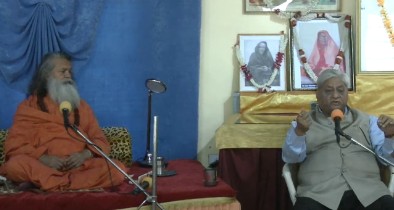
A satsang featuring a discourse by scholar Śrī Gulābjī Kothārī on spiritual life and householder duties.
"Today is a very auspicious day, a holy day, a divine day, a day full of colour and happiness."
"The basic aim of life is... everybody should prosper and have a good life. But once it is over at 50, you are moving towards the society, then you move towards... the path has changed to enlightenment."
Swami Maheshvarananda introduces the visiting scholar Śrī Gulābjī Kothārī to the ashram gathering. Gulābjī delivers an extensive talk on integrating spiritual practice with worldly life, framing existence within the Vedic puruṣārthas (dharma, artha, kāma, mokṣa). He explains the journey of the soul, the importance of living in the present, and details a cosmology where food (annam) and the elements (Agni and Soma) link human life to the universe. A significant portion addresses the dynamics of married life (Gṛhasthāśrama), described as a 25-year period where complementary masculine and feminine principles unite for creation and spiritual growth. The session concludes with a question-and-answer segment where Gulābjī and Swamiji discuss challenges to family life in the modern West, emphasizing traditional gender roles.
Filming location: Jadan, Rajasthan, India
Influence of karmas on the soul
19:30 - 20:20 (50 min)
Morning lecture from the weekend seminar in Vienna, Austria with translation in English.
Prana in food
20:25 - 21:15 (50 min)
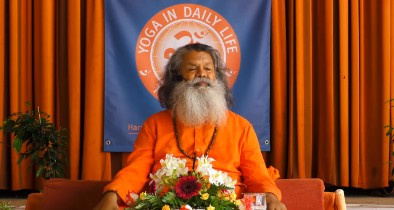
A satsang discourse on prāṇa, diet, and Haṭha Yoga practices.
"Prāṇāyāma means 'āyāma'—exercise or regulation. Like āsanas are yoga Vyāyāma (yogic exercise), this Vyāyāma is for every joint, muscle, ligament, and tissue in the body."
"Haṭha Yoga is a most powerful technique. It is said even God adores the Haṭha Yogī. But a Haṭha Yogī has no moha (attachment), no desires, no rāga and dveṣa."
The lecturer continues teachings on prāṇa, explaining the three parts of prāṇāyāma and warning against premature practice of breath retention. He links prāṇa to nourishment, advocating for fresh, sattvic food and criticizing alcohol, old food, and cheese. He outlines the six techniques of Haṭha Yoga—Netī, Dhautī, Bastī, Naulī, Trāṭak, and Kapālabhātī—describing their benefits and promoting group practice. The talk distinguishes between physical preparation and the ultimate goal of yoga, concluding with the importance of the Guru's grace in attaining liberation.
Filming location: Vép, Hungary
Part 1: The Divine Chambers of Being
21:20 - 22:29 (69 min)
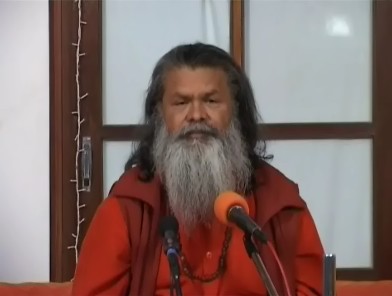
A spiritual discourse on the five sheaths (kośas) and the purification of the physical body.
"Jaisā khāyegā anna, vaisā rahegā mana. (As is the food you eat, so will be your mind.)"
"Hinduism is based on non-violence, Ahiṃsā. The statement 'Ahiṃsā Paramo Dharma' was spoken by Pitā Mahābhīṣma after the Mahābhārata battle."
Swami Maheshwarananda (Swamiji) leads a satsang focusing on the annamaya kośa, the food sheath. He explains how diet influences the mind through the three guṇas (qualities), stressing the importance of sāttvic food and the principle of non-violence. He shares a cautionary tale of a sādhu whose mind was corrupted after unknowingly eating food provided by a thief, illustrating the spiritual impact of nourishment. The discourse also touches on cultural preservation, meditation practices, and concludes with a bhajan.
Filming location: Jadan, Rajasthan, India
How to overcome the obstacles of practicing
22:35 - 23:53 (78 min)
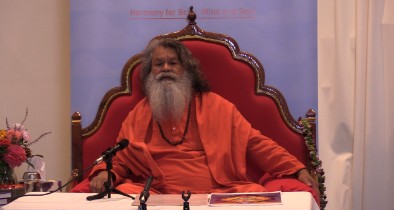
A spiritual discourse on the chakra system, focusing on the Maṇipūra chakra and the journey of self-mastery.
"My first master was my father, who imparted immense knowledge in a simple way. Through his instruction, I found my path."
"Strive for oneness, purity, without blemish. Do not stain your body."
Swami Maheśvarānand leads a satsang, weaving teachings on the manipura (navel) chakra with personal stories from his childhood and path to sannyas. He explains the symbolic animals and deities within each chakra, the role of the guṇas (qualities), and the necessity of a guru's guidance. The talk emphasizes practical discipline, advocating for specific prāṇāyāma techniques like Kapālabhāti and Bhastrikā to awaken inner energy, and concludes with a blessing.
Filming location: Wellington, New Zealand
American
Australian