
European
Introduction to Jadan Ashram
0:55 - 1:54 (59 min)
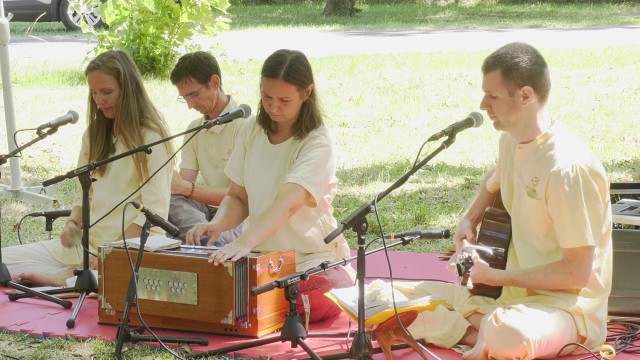
Morning satsang with Vishwaguruji from Vep, Hungary. Swami premanand talks about the special blessing of being together with Gurudeva at Vep. Explaining the significance of the Jadani Ashram. The Jadan Ashram is the embodiment of Gurudeva's plan, the Master's playground. Everyone who comes here will find their way. The practice of Bhramari pranayam.
Detachment and Liberation
2:00 - 3:11 (71 min)
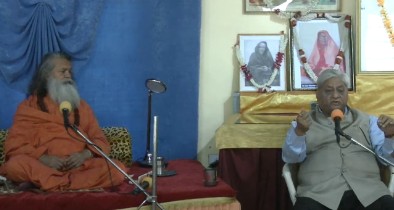
A satsang featuring a discourse by scholar Śrī Gulābjī Kothārī on spiritual life and householder duties.
"Today is a very auspicious day, a holy day, a divine day, a day full of colour and happiness."
"The basic aim of life is... everybody should prosper and have a good life. But once it is over at 50, you are moving towards the society, then you move towards... the path has changed to enlightenment."
Swami Maheshvarananda introduces the visiting scholar Śrī Gulābjī Kothārī to the ashram gathering. Gulābjī delivers an extensive talk on integrating spiritual practice with worldly life, framing existence within the Vedic puruṣārthas (dharma, artha, kāma, mokṣa). He explains the journey of the soul, the importance of living in the present, and details a cosmology where food (annam) and the elements (Agni and Soma) link human life to the universe. A significant portion addresses the dynamics of married life (Gṛhasthāśrama), described as a 25-year period where complementary masculine and feminine principles unite for creation and spiritual growth. The session concludes with a question-and-answer segment where Gulābjī and Swamiji discuss challenges to family life in the modern West, emphasizing traditional gender roles.
Filming location: Jadan, Rajasthan, India
Everything is in your hands
3:15 - 3:50 (35 min)
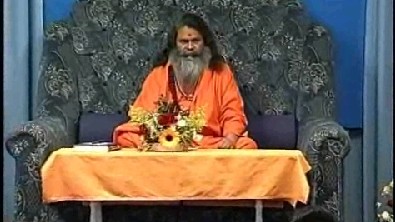
A discourse on the initiation of eight new sannyāsīs and the principle of personal responsibility.
"Whether this bird is alive or dead depends on your hands. That I cannot say to you. That depends on you."
"Everything is in your hands; your enlightenment is in your hands. Your liberation is in your hands."
The speaker recounts the recent initiation of eight disciples into sannyāsa during a journey to the Kumbh Melā, describing the character and journey of several, including Yogīś, Premānandjī, and devotees from Australia and Israel. He emphasizes that the decision for spiritual progress and liberation ultimately rests with the individual, illustrating this with a parable about a bird whose fate lies in a disciple's hands. The talk concludes with practical instructions on attire for disciples and reflections on the serious commitment of sannyāsa.
Filming location: Vép, Hungary
The Pearl of Everlasting Bliss
3:55 - 4:16 (21 min)
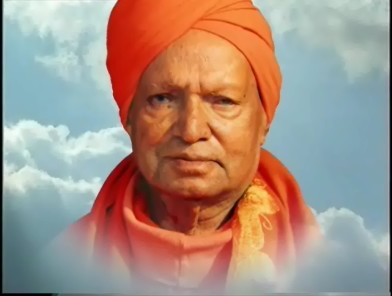
A biographical tribute to the life and legacy of Hindu saint Paramahaṁsa Śrī Svāmī Madhavānandajī.
"My eyes filled with tears, and I fell to my knees. I knew I had found the everlasting light of my life. I was home at last."
"All humans belong to one religion, and that is humanity... ahiṃsā paramo dharma: non-violence is the highest religion."
The narrative chronicles the spiritual journey of Swami Madhavānandaji, from his childhood in Rajasthan and transformative meeting with his guru, Bhagavān Śrīdīp Nārāyaṇa Mahāprabhujī, to his life of devotion, teaching, and global service. It details his initiation, his work establishing ashrams, and his teachings on non-dualism and universal love, culminating in his Mahāsamādhi in 2003 and the continuation of his lineage through his disciple, Swami Māheśvarānandajī.
Filming location: Rajasthan, India; Kathu Ashram, India; Bola Guda Ashram, India; Nepal
Sadhana maintains inner harmony
4:20 - 5:23 (63 min)
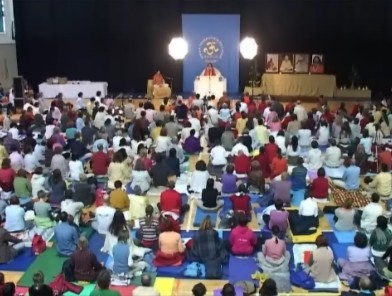
A morning satsang on the Maṇipūra Chakra and spiritual practice.
"Tons of theory are nothing compared to a gram of practice."
"Discipline is your inner master. That best master will lead you twenty-four hours."
Swami Maheshwarananda leads a discourse in Novo Mesto, focusing on the 'city of jewels,' the Maṇipūra Chakra. He emphasizes daily practice as the foundation for health, freedom, and spiritual awakening, explaining how discipline purifies consciousness and overcomes negative qualities. He outlines the riches gained from this center: health, kindness born of non-dependence, devotion, and wisdom, concluding with the protective power of pure consciousness and spiritual community.
Filming location: Slovenia
Singing Bhajans to the Masters
5:30 - 6:11 (41 min)
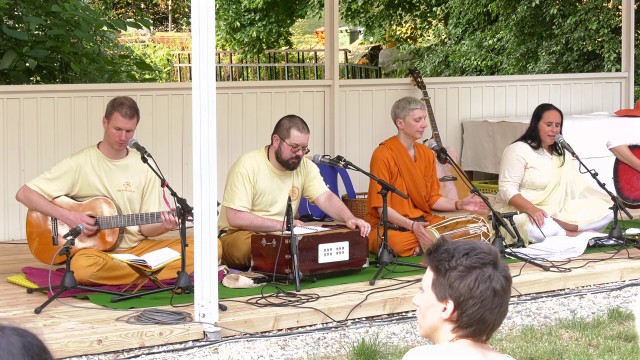
Evening satsang from Střílky Ashram, Czech Republic. Bhajans sung to the Master: Sobhāvo Satsaṅga Re, Yogi Jāno Kī Yoga Nidrā, Dhyān Karo, Hamẽ Hī Kam Satsaṅg Hī, Sataguru Sandeśo Moyē.
Bhajan singing from Strilky
6:15 - 6:50 (35 min)
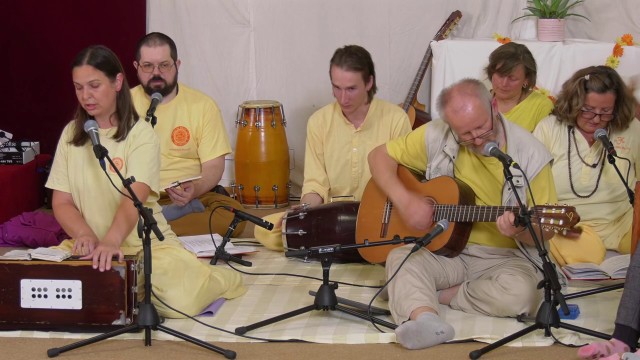
Evening satsang from Strilky Ashram, Czech Republic.
Bhajan evening from Strilky Ashram
6:55 - 7:21 (26 min)
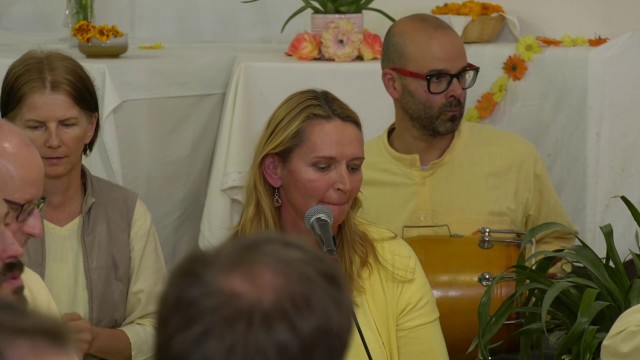
Evening satsang with Vishwaguruji from Strilky Ashram, Czech Republic.
Bhajan singing from Strilky Ashram
7:25 - 7:58 (33 min)
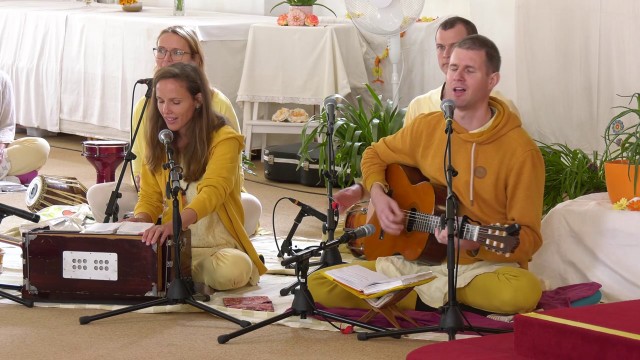
Morning satsang with Vishwaguruji from Strilky Ashram, Czech Republic.
Bhajan evening from Strilky
8:05 - 8:19 (14 min)
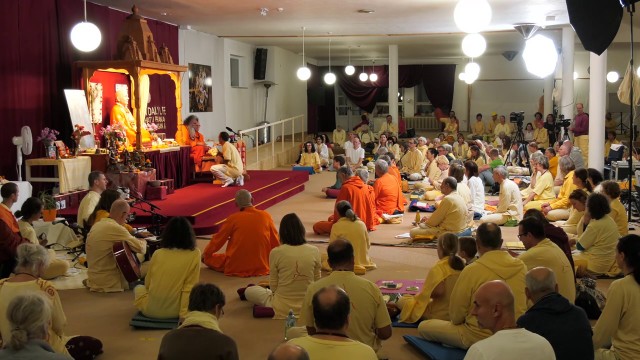
Evening satsang with Vishwaguruji from Strilky Ashram, Czech Republic.
Detachment and Liberation
8:25 - 9:36 (71 min)
A satsang featuring a discourse by scholar Śrī Gulābjī Kothārī on spiritual life and householder duties.
"Today is a very auspicious day, a holy day, a divine day, a day full of colour and happiness."
"The basic aim of life is... everybody should prosper and have a good life. But once it is over at 50, you are moving towards the society, then you move towards... the path has changed to enlightenment."
Swami Maheshvarananda introduces the visiting scholar Śrī Gulābjī Kothārī to the ashram gathering. Gulābjī delivers an extensive talk on integrating spiritual practice with worldly life, framing existence within the Vedic puruṣārthas (dharma, artha, kāma, mokṣa). He explains the journey of the soul, the importance of living in the present, and details a cosmology where food (annam) and the elements (Agni and Soma) link human life to the universe. A significant portion addresses the dynamics of married life (Gṛhasthāśrama), described as a 25-year period where complementary masculine and feminine principles unite for creation and spiritual growth. The session concludes with a question-and-answer segment where Gulābjī and Swamiji discuss challenges to family life in the modern West, emphasizing traditional gender roles.
Filming location: Jadan, Rajasthan, India
We have to become one
9:40 - 11:14 (94 min)
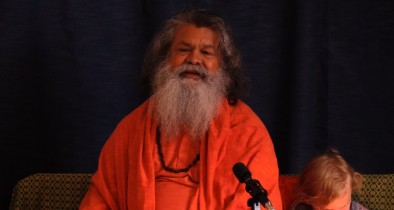
Evening satsang with Vishwaguruji from Auckland, New Zealand. There are many things in the space. We should stop our attachment. Great yogis do not attach to anything and to anybody. Break from the attachment and join to God. Nothing is mine. Explanation of bhadzsan Chidananda Rupam Sivoham Sivoham. Sometimes we can not understand wisdom. Shiva means only space. He is everywhere in everything and nowhere. Explanation of bhadzsan Ragupati Raghava Raj Ram. One in all and all in one. Explanation of bhadzsan Sabda Sanehi Mhari Jatra. A story or a poem can help you to understand knowledge. The knowledge what we have we should understand, realize and give further. Chakras are the major stations in our body. The Earth connected to the Sun. The system of elements and chakras in our body.
Anahat Chakra
11:20 - 13:15 (115 min)

Public lecture about Anahat chakra in Zagreb Croatia in April 2007.
Guru is the first
13:20 - 13:56 (36 min)
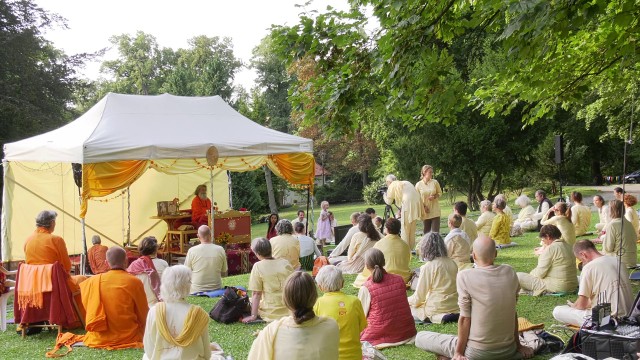
A spiritual discourse on the continuity of sādhanā and the centrality of the Guru.
"Your sādhanā was very beautiful, very good. Many experienced beautiful powers, feelings, and even incarnations. Yes, we should continue this until the end of our life."
"Holy Gurujī, our Swamījī Madhavānandajī Bhagavān, he always said that Seva is all the time with us. We are going, as all goes, to the Cosmic Self."
A teacher addresses students after a spiritual retreat, using the metaphor of a stone creating eternal ripples in a pond to describe the lasting impact of their practice. He emphasizes selfless service (Seva) and explains the Guru's paramount importance, stating all spiritual activities must follow devotion to the Guru. The talk covers the meaning of mantra, the significance of the prayer mala, and outlines the traditional four stages of life (āśramas).
Filming location: Strilky, Czech Republic
Practicing of the system 'Yoga in Daily Life', Level 1 - Part 2
14:00 - 15:04 (64 min)
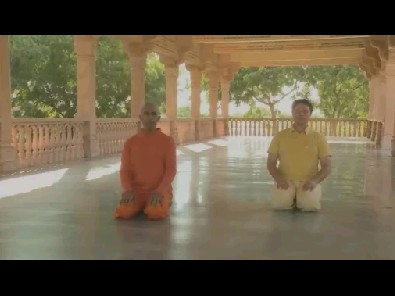
A guided morning yoga class from the Yoga in Daily Life system.
"Relax your whole body from the toes to the top of the head and from the top of the head to the toes."
"Prepare yourself for practicing prāṇāyāma, the breath technique... Breathe twenty times only through your left nostril."
An instructor leads a comprehensive session from the Om Vishwadeep Gurukul ashram. The practice begins with deep relaxation in Ānanda Āsana, followed by a series of gentle stretches, spinal twists, and core exercises like Pavanamuktāsana, all coordinated with conscious breathing. The class transitions to seated postures for spinal extension and flexion, concludes with guided relaxation and a round of Nāḍī Śodhana prāṇāyāma, and ends with a closing mantra.
Filming location: Jadan, Rajasthan, India
Prana in food
15:10 - 16:00 (50 min)
A satsang discourse on prāṇa, diet, and Haṭha Yoga practices.
"Prāṇāyāma means 'āyāma'—exercise or regulation. Like āsanas are yoga Vyāyāma (yogic exercise), this Vyāyāma is for every joint, muscle, ligament, and tissue in the body."
"Haṭha Yoga is a most powerful technique. It is said even God adores the Haṭha Yogī. But a Haṭha Yogī has no moha (attachment), no desires, no rāga and dveṣa."
The lecturer continues teachings on prāṇa, explaining the three parts of prāṇāyāma and warning against premature practice of breath retention. He links prāṇa to nourishment, advocating for fresh, sattvic food and criticizing alcohol, old food, and cheese. He outlines the six techniques of Haṭha Yoga—Netī, Dhautī, Bastī, Naulī, Trāṭak, and Kapālabhātī—describing their benefits and promoting group practice. The talk distinguishes between physical preparation and the ultimate goal of yoga, concluding with the importance of the Guru's grace in attaining liberation.
Filming location: Vép, Hungary
Muladhara chakra. Part one.
16:05 - 16:37 (32 min)
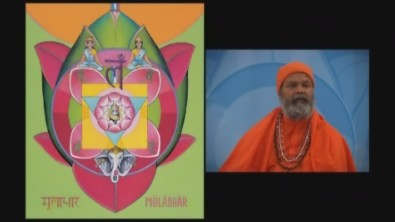
A spiritual discourse on the necessity of a guru and the symbolism of the Mūlādhāra chakra.
"Yoga without spirituality is a body without a soul. A part of yoga requires a master."
"Your being in this world is more needed than you think. Therefore, never think that you want to die now."
Swami Anand Arun explains the essential role of a spiritual guide (guru), using analogies like learning to drive. He then details the Mūlādhāra (root) chakra, describing its red color, earth element, and the lotus as a symbol for living in the world with detachment. He emphasizes serving others with love and wisdom, urging attendees to be a light for others.
Filming location: Brisbane, Australia
The Effect of Karma on the Soul
16:45 - 17:26 (41 min)
A spiritual discourse exploring karma and liberation through two illustrative stories.
"The soul in this cobra was a great bhakta, a dedicated scholar. But he did not yet renounce his goal... he has gone through his karma, and now it is time for him to be granted Mokṣa, liberation."
"If someone slaps you, then you are to blame, not the other who slaps you... You were there, that is how it is. Therefore, accept what happens."
The speaker narrates two parables to explain the effect of karma on the soul. The first describes how the sage Mahāprabhujī liberated the soul of an old cobra, revealing it was a former devotee working through its karma. The second tells of Saint Sagramdās, who encounters a camel bearing the karma of a cruel tax collector. Through these stories, the discourse emphasizes that beings reap the consequences of their actions across lifetimes, and that selfless service (Sevā) is the supreme path to lightening one's karmic burden.
Filming location: Vienna, Austria
Simple living and higher thinking
17:30 - 18:17 (47 min)
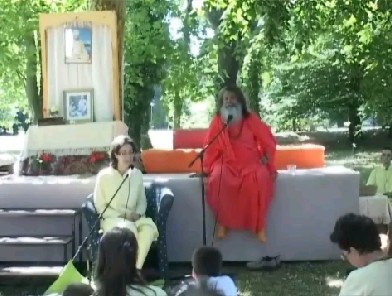
A discourse on Hindu devotional practices and philosophy.
"Why do Indians decorate their gods? The answer is very simple: because we love our God."
"Whatever you are doing for God, you are doing for yourself."
The lecturer addresses devotees, explaining the cultural and spiritual significance of decorating altars and deities as an expression of love and devotion. He explores core Hindu concepts, including the nature of the one supreme God manifesting in many forms, the personal benefits of selfless service and offering, and the importance of cultivating beautiful thoughts and living in the present. The talk weaves together scripture, personal anecdote, and metaphor to illustrate these principles.
Filming location: Vép, Hungary
Influence of karmas on the soul
18:25 - 19:15 (50 min)
Morning lecture from the weekend seminar in Vienna, Austria with translation in English.
Anahata chakra
19:20 - 20:06 (46 min)
A spiritual discourse on meditation, chakra awakening, and contentment.
"Yoga in Daily Life around the world is doing miraculous work. A lot of work is done towards the protection of the environment, the protection of animals, and supporting poor people."
"When the Anāhata Chakra is pure, then we call it the holy heart. The holy heart means the divine consciousness awakens in your heart."
Swami Paramadvaiti addresses practitioners at a Yoga in Daily Life center, discussing the organization's charitable work before delving into spiritual teachings. He explains the three principles of sound, light, and energy within all phenomena, detailing the awakening of the heart chakra (Anāhata) and the resulting state of supreme contentment (Śāntoṣa). The talk includes a poetic analogy on spiritual wealth and concludes with a practical, step-by-step guided meditation technique focusing on breath and light.
Filming location: Prague, Czech Republic
Introduction to Jadan Ashram
20:10 - 21:09 (59 min)
Morning satsang with Vishwaguruji from Vep, Hungary. Swami premanand talks about the special blessing of being together with Gurudeva at Vep. Explaining the significance of the Jadani Ashram. The Jadan Ashram is the embodiment of Gurudeva's plan, the Master's playground. Everyone who comes here will find their way. The practice of Bhramari pranayam.
Sadhana maintains inner harmony
21:15 - 22:18 (63 min)
A morning satsang on the Maṇipūra Chakra and spiritual practice.
"Tons of theory are nothing compared to a gram of practice."
"Discipline is your inner master. That best master will lead you twenty-four hours."
Swami Maheshwarananda leads a discourse in Novo Mesto, focusing on the 'city of jewels,' the Maṇipūra Chakra. He emphasizes daily practice as the foundation for health, freedom, and spiritual awakening, explaining how discipline purifies consciousness and overcomes negative qualities. He outlines the riches gained from this center: health, kindness born of non-dependence, devotion, and wisdom, concluding with the protective power of pure consciousness and spiritual community.
Filming location: Slovenia
The way how yoga is helping us
22:25 - 23:28 (63 min)
A lecture on the chakra system and spiritual purification.
"The human birth and human body possess very special abilities and a most powerful tool: the intellect. Through our intellect, we can discover all our hidden powers."
"Before we awake or open the chapter of the chakra... [there are] three negative points to address... mala, vikṣepa, and āvaraṇa."
Swami Paramananda leads an evening satsang from the Yoga and Life Ashram, continuing a series on the chakras. He explains the human body's subtle anatomy, including the 72,000 nerves and the three primary nāḍīs (Iḍā, Piṅgalā, Suṣumṇā). The core teaching focuses on the three obstacles to spiritual awakening: impurities (mala), mental disturbances (vikṣepa), and the veil of ignorance (āvaraṇa). He details methods for purification through Haṭha Yoga techniques, control of the senses, and satsang, weaving in stories and analogies about the mind, karma, and the goal of liberation beyond the cycle of birth and death.
Filming location: New York, USA
Part 1: The Divine Chambers of Being
23:35 - 0:44 (69 min)
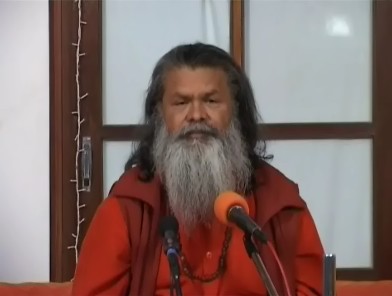
A spiritual discourse on the five sheaths (kośas) and the purification of the physical body.
"Jaisā khāyegā anna, vaisā rahegā mana. (As is the food you eat, so will be your mind.)"
"Hinduism is based on non-violence, Ahiṃsā. The statement 'Ahiṃsā Paramo Dharma' was spoken by Pitā Mahābhīṣma after the Mahābhārata battle."
Swami Maheshwarananda (Swamiji) leads a satsang focusing on the annamaya kośa, the food sheath. He explains how diet influences the mind through the three guṇas (qualities), stressing the importance of sāttvic food and the principle of non-violence. He shares a cautionary tale of a sādhu whose mind was corrupted after unknowingly eating food provided by a thief, illustrating the spiritual impact of nourishment. The discourse also touches on cultural preservation, meditation practices, and concludes with a bhajan.
Filming location: Jadan, Rajasthan, India
American
Australian