
European
A Prayer for the Immortal Soul
0:25 - 1:07 (42 min)
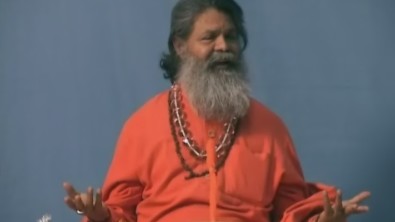
A satsang dedicated to a prayer for the departed.
"Let me sing day and night this name of thine."
"At the end of my life, when I renounce this body, I have only one wish, that you are standing in front of me."
The lecturer leads a prayer satsang in Prague for the late Milena Hypsmanova, recounting her final trip to South Africa. He reflects on the mystery of destiny, time, and mortality, using the story of Oedipus to illustrate how fate unfolds. The discourse explores how spiritual practice and remembrance of God's name prepare the soul for the final transition from life to death.
Filming location: Prague, Czech Republic
Proper practising of Bhramari
1:15 - 1:15 (0 min)
Morning program with Vishwaguruji from Brisbane, Australia. Moodiji brought India and the whole world towards spirituality. We should practise bhramari regularly but not too much at one time. Explanation and demonstration of different bhramari pranayama technics.
Enjoy your life
2:00 - 2:39 (39 min)
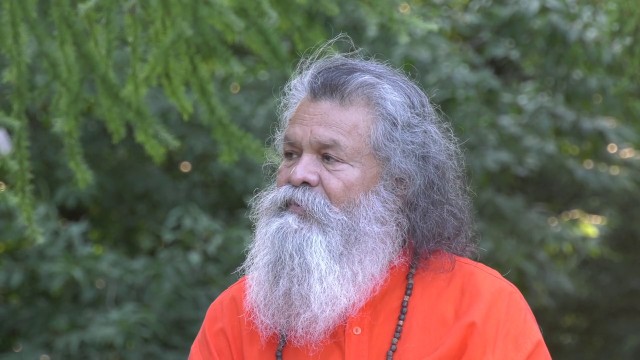
Evening satsang with Vishwaguruji from Strilky Ashram, Czech Republic. Strilky Ashram is not for one it is for all. Many people died by corona. It has many hidden signs. We are the real yoga from the earth till the cosmic. When we leave our body we don't know about how is in the world. God gave us the possibility not to be born again. Sometimes people are afraid of ghosts in the darkness. There is no ghost in reality. We can come back to the earth only through the mother's womb. Nowadays people have many problems with the health of their bodies. Maybe the cause of this is some karma from our past lives. Every creature feels pain and sadness when they die. Sometimes our soul is suffering in this body but we don't want to die. the whole ocean consists of drops. Yogic science knows how it will be afraid we leave this body. So we want to live and enjoy our life.
The Youth for Sustainable Future
2:45 - 3:19 (34 min)
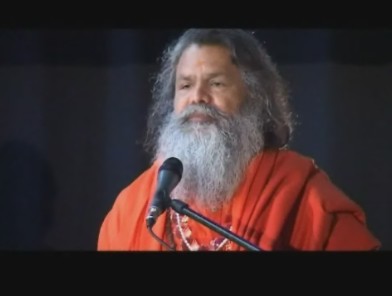
The 4th International Conference of Children and Youth in Zlin 2005 (CZ), The Youth for Sustainable Future.
Interview with Vishwaguruji on Lok Sabha
3:25 - 3:55 (30 min)
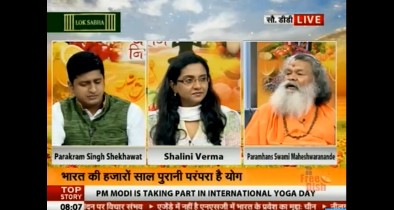
A television panel discussion on International Yoga Day, featuring a host and guests.
"Yoga is the mother of all sciences and arts. It is the science of human origin and evolution to a point where you can overcome the boundaries of space and time."
"Yoga should not be commercial. No. It should be free. A guru gives knowledge to the disciple not because of money or with money, but with blessings."
A host moderates a discussion with senior journalist Gyanendra Bhattaria and Swami Maheshvaranandji on the global celebration of Yoga Day, its origins, and its core principles. The panel addresses the event's scale, the essence of yoga beyond physical postures, the role of a guru, and concerns over commercialization and modern interpretation. The conversation references Prime Minister Narendra Modi's leadership in establishing the day and a live yoga session in Chandigarh.
Filming location: India
Exercises for activating Svadisthan Chakra
4:00 - 5:19 (79 min)

Evening satsang with Vishwaguruji from San Francisco. A chakra is an energy center. Its energy has effects for the body and mind. This practice, guided by Vishwaguruji, helps us to activate Svadisthana Chakra. He explains and shares with us fundamental knowledge and information about chakras and gives essential explanation about the effects of the postures and how they are functioning.
Bhajan evening from Vienna 2
5:30 - 6:24 (54 min)
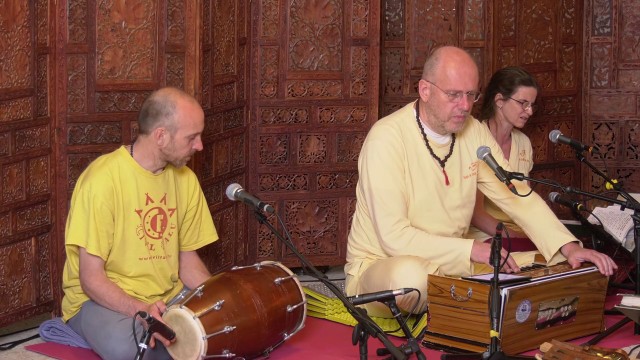
Evening Satsang with H.H. Vishwaguruji from Vienna, Austria. Bhajan singing.
Singing Bhajans to the Masters
6:30 - 7:11 (41 min)
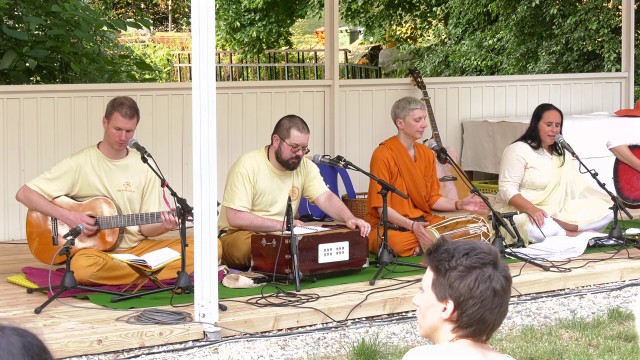
Evening satsang from Střílky Ashram, Czech Republic. Bhajans sung to the Master: Sobhāvo Satsaṅga Re, Yogi Jāno Kī Yoga Nidrā, Dhyān Karo, Hamẽ Hī Kam Satsaṅg Hī, Sataguru Sandeśo Moyē.
Tapasya leads to purity
7:15 - 7:53 (38 min)
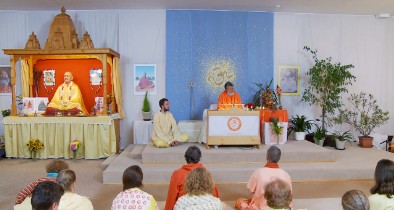
A discourse on the essential spiritual disciplines of tapasyā, vairāgya, and tyāga.
"Tapasyā is a well-known word; it leads a person to purity. Just as we put gold or any metal into fire to purify it, tapasyā is like that fire."
"If the rules are so strict to win a sports medal, what about winning the medal of Brahmajñāna? It is stricter."
Following a month-long sādhanā retreat at the ashram, a teacher addresses attendees and webcast viewers. He explains that attaining self-knowledge in the modern age requires the fiery discipline of tapasyā (austerity), alongside vairāgya (dispassion) and tyāga (renunciation). Using analogies from sports and daily life, he stresses that unwavering practice, control of the senses, and sincere devotion (bhakti) are necessary to progress on the spiritual path, which is more demanding than any worldly pursuit.
Filming location: Strilky, Czech Republic
Bhajan evening from Strilky Ashram
7:55 - 8:21 (26 min)
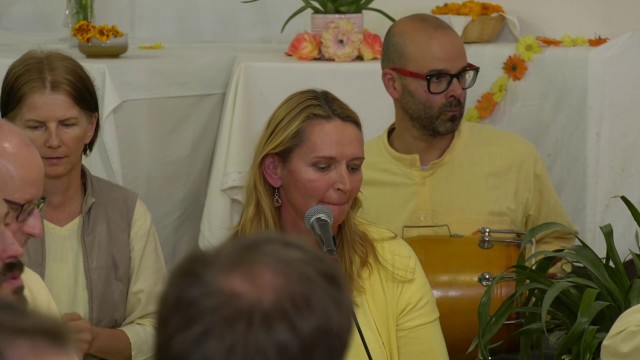
Evening satsang with Vishwaguruji from Strilky Ashram, Czech Republic.
The Principles and Power of Sādhanā
8:25 - 9:10 (45 min)
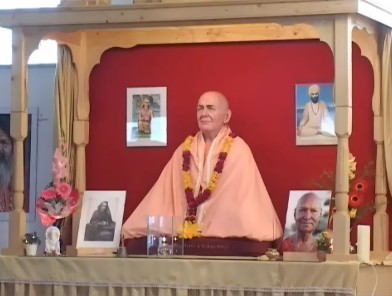
A spiritual discourse on the principles of sādhanā and the significance of the Maṇipūra Chakra.
"Any kind of sādhanā requires perfect technique and discipline. One must follow the principles."
"That energy, which is located in the maṇipūra cakra, is called hara-śakti. That is the life force, the energy that keeps you moving."
A teacher explains the necessity of disciplined practice, using the analogy of fueling a car correctly. He delves into the esoteric importance of the Maṇipūra Chakra as the seat of life force (hara-śakti) and the junction of vital energies, connecting its functions to immunity, sound resonance (nāda), and mythological symbolism involving Vishnu. The talk covers related practices like Śabda Sañjālan and Khaṭupranām, emphasizing that authentic practice requires devotion, a spiritual lineage, and following a master's instructions to awaken inner energy and burn karmic seeds.
Filming location: Strilky, Czech Republic
Introduction to the science of Chakras
9:15 - 10:35 (80 min)
Introduction to Chakras, Presov, Slovak Republic. Muladhara stores much karmic information about us. What is dormant in Muladhara is sprouting in Svadisthana. This is the place of kriya shakti and iccha shakti. If we purify this chakra, half way to our final goal is behind us. Manipura is the powerhouse of our body. Anahat is the place of our feelings. Vishuddhi is the door to the astral world.
Ayurveda - The science of life
10:40 - 12:26 (106 min)
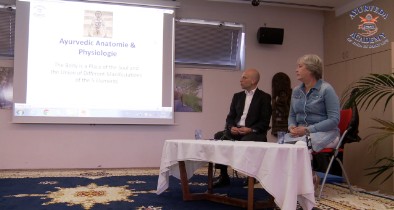
An introductory lecture on the history and scope of Ayurveda.
"Ayurveda is a science that deals with the useful and the harmful, the happy and unhappy life."
"The scope of Ayurveda is to maintain the health of healthy people and to cure those who are afflicted with diseases—two things."
The speaker outlines a lecture on Ayurveda, beginning with its mythological origins from Brahmā through sages like Dhanvantari and its textual compilation in works like the Caraka Saṃhitā. He corrects the notion that it is only 5,000 years old, explaining its vast scope for maintaining health and treating disease, and details its eight traditional branches.
Filming location: Prague, Czech Republic
Exercises for activating Svadisthan Chakra
12:30 - 13:49 (79 min)
Evening satsang with Vishwaguruji from San Francisco. A chakra is an energy center. Its energy has effects for the body and mind. This practice, guided by Vishwaguruji, helps us to activate Svadisthana Chakra. He explains and shares with us fundamental knowledge and information about chakras and gives essential explanation about the effects of the postures and how they are functioning.
Practising with Vishwaguruji
14:00 - 14:57 (57 min)
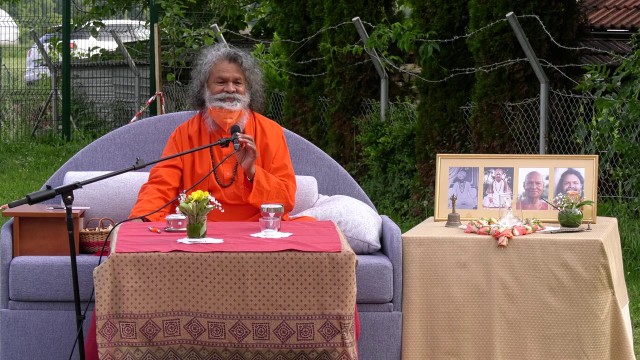
Evening Satsang with Vishwaguruji from Slovenia. Relaxation and bhajan singing. Vajra nadi gives the power of our whole body. Vajra nadi is like a tree it has a root and some branches. Practising sarva hita asanas and bhramari pranayama. If we practise asanas lifelong we will die very easy without pain.
Proper practising of Bhramari
15:05 - 15:05 (0 min)
Morning program with Vishwaguruji from Brisbane, Australia. Moodiji brought India and the whole world towards spirituality. We should practise bhramari regularly but not too much at one time. Explanation and demonstration of different bhramari pranayama technics.
Mental food
15:50 - 17:48 (118 min)
Swamiji in Sliac, April 2007
Prana is the source of our life
17:55 - 18:39 (44 min)
Evening Satsang with Vishwaguruji from Jadan Ashram, Rajasthan, India. We should think first in the morning that we are human. Water is holy because it is the basis of our life. Prana is also holy and necessary for our life. Animals are aware in their sleep also. The story about a yogi and the tigers. We need oxygen for meditation. The story about two friends who went to the Himalayas and try to share their meal. The story about Vishwaguruji Mansadev and a bear in a forest in Kanada. We have to be the winner against corona.
We all should get oneness
18:45 - 19:01 (16 min)
A spiritual discourse on the language of oneness and silence during Guru Purnima.
"The best language is when people from many countries, each with their own language, suddenly all understand."
"Silent means oneness."
A spiritual teacher addresses an international satsang on Guru Purnima, exploring how true communication and unity transcend spoken language. He discusses understanding through sound, vibration, and silence, using examples like music and opera, and contrasts the noisy chaos of worldly festivals with the profound, unifying silence of spiritual gathering.
Filming location: Strilky, Czech Republic
Mantra is in the Hearth
19:05 - 20:12 (67 min)
Evening satsang with Vishwaguruji from Jadan Ashram, Rajasthan, India. We should give up selfish thinking like I am the best. The story of Abhymanju gives an example of the qualities of a disciple. Jealous means burning fire in the body. Mantra within our hearth, even in a very hard situation we can develop spirituality.
Your body is the map of your destiny
20:20 - 21:05 (45 min)
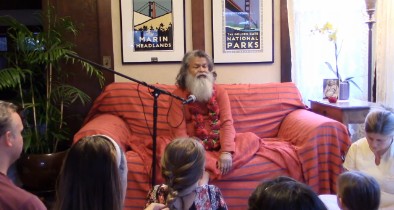
A final evening satsang on destiny, karma, and the possibility of spiritual intervention.
"Destiny is written; it cannot be changed."
"Rekh Parmek Gurudev: your destiny can change only by the guru."
Swami Avatarpuri concludes a program by elaborating on the concepts of janma-bhūmi, karma-bhūmi, and dharma-bhūmi. He narrates the story of Oedipus to illustrate inescapable fate, then explains how destiny is mapped on the human body through lines on the forehead, palms, and fingers. He contrasts the fixed nature of karma with the potential for change through spiritual practice (sādhanā) and, ultimately, the grace of a true guru, who acts as a divine navigator.
Filming location: San Francisco, USA
A Prayer for the Immortal Soul
21:10 - 21:52 (42 min)
A satsang dedicated to a prayer for the departed.
"Let me sing day and night this name of thine."
"At the end of my life, when I renounce this body, I have only one wish, that you are standing in front of me."
The lecturer leads a prayer satsang in Prague for the late Milena Hypsmanova, recounting her final trip to South Africa. He reflects on the mystery of destiny, time, and mortality, using the story of Oedipus to illustrate how fate unfolds. The discourse explores how spiritual practice and remembrance of God's name prepare the soul for the final transition from life to death.
Filming location: Prague, Czech Republic
As you do, you will get
22:00 - 22:54 (54 min)
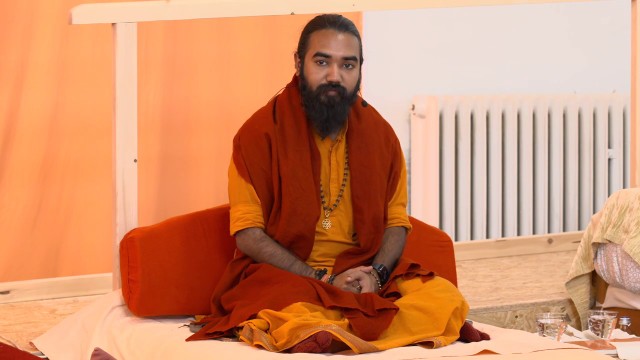
A satsang discourse on the importance of sāttvic food, strong digestive fire (agni), and the karmic effects of our actions.
"In yoga, it is very important to know cooking. I heard from Viśvagurujī that it will be excellent if we are able to cook for ourselves—not to go to restaurants, not fast food, but to prepare food for yourself."
"That is such a great lesson to us, that we, like a Yogī, should have such a kind of digesting fire, that kind of agni, jāṭharāgni, to be able to dissolve everything."
Swami Vivek Puri and another speaker lead a satsang, emphasizing the spiritual and practical importance of cooking and consuming sāttvic, vegetarian food prepared with good intent. They explain how strong agni, cultivated through Haṭha Yoga practices like Agniśa Kriyā and Bhastrikā prāṇāyāma, allows one to digest not only food but also negative experiences. Several illustrative stories are shared, including a yogi defeating a demon through his digestive power, a woman whose poisoned food karmically affects her own family, and a thief whose negative intent temporarily influences a guru through offered food. The discourse consistently links diet to mental state, karma, and safe spiritual practice within the Yoga in Daily Life system.
Filming location: Strilky, Czech Republic
The Presence of the Guru
23:00 - 23:43 (43 min)
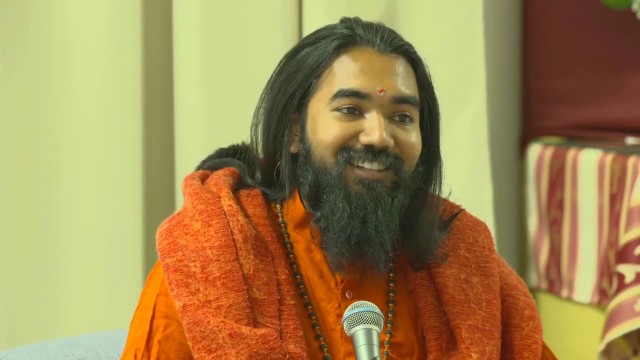
A satsang on devotion, surrender, and relating to the spiritual teacher.
"Gurudev is in the same space, same region, I would say, but we all should know that Gurudev is watching. It doesn’t matter where he is, he is always observing everything."
"If we have that mindset within us, that whatever we are doing, it’s him doing... then nothing is going to stop us in this world."
The lecturer addresses disciples in Slovenia, sharing insights from traveling with Gurudev, Sri Vishwaguru Mahamandaleshwar Paramahamsa Maheshwaranand Puri. He discusses the Guru's omnipresence, the importance of selfless service (seva), and cultivating trust over logic. He advises on etiquette in the Guru's presence, tells a parable about faith, and leads a guided meditation (manasik puja) to feel the Guru's inner presence.
Filming location: Slovenia
Chakras and Nadis
23:50 - 0:53 (63 min)
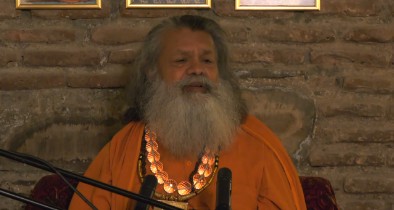
A spiritual lecture on the Mūlādhāra chakra and the nature of haṭha yoga.
"Haṭha means that you try very hard; you use willpower. We must have the willpower to achieve something. Don't give up. Try, try, try."
"Therefore it is: renounce and enjoy. If you want to be happy, if you want to enjoy life, then renounce."
A teacher explains the foundational Mūlādhāra chakra as the root of energy and the seat of the dormant Kuṇḍalinī. He details the three primary nāḍīs (Iḍā, Piṅgalā, Suṣumṇā) and defines true haṭha yoga as the forceful application of willpower for spiritual union, distinct from common physical practice. Through stories—including an ant's perseverance and a Haṭha Yogī who renounces even Śiva's offer—he emphasizes themes of relentless practice, renunciation of desire, and the ultimate goal of awakening energy to unite with divine consciousness.
American
Australian