
European
The Principles and Power of Sādhanā
0:10 - 0:55 (45 min)
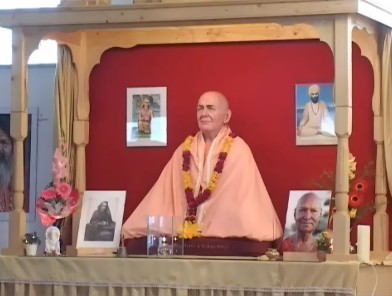
A spiritual discourse on the principles of sādhanā and the significance of the Maṇipūra Chakra.
"Any kind of sādhanā requires perfect technique and discipline. One must follow the principles."
"That energy, which is located in the maṇipūra cakra, is called hara-śakti. That is the life force, the energy that keeps you moving."
A teacher explains the necessity of disciplined practice, using the analogy of fueling a car correctly. He delves into the esoteric importance of the Maṇipūra Chakra as the seat of life force (hara-śakti) and the junction of vital energies, connecting its functions to immunity, sound resonance (nāda), and mythological symbolism involving Vishnu. The talk covers related practices like Śabda Sañjālan and Khaṭupranām, emphasizing that authentic practice requires devotion, a spiritual lineage, and following a master's instructions to awaken inner energy and burn karmic seeds.
Filming location: Strilky, Czech Republic
Around the world - Anandpuriji Sannyas
1:00 - 1:04 (4 min)
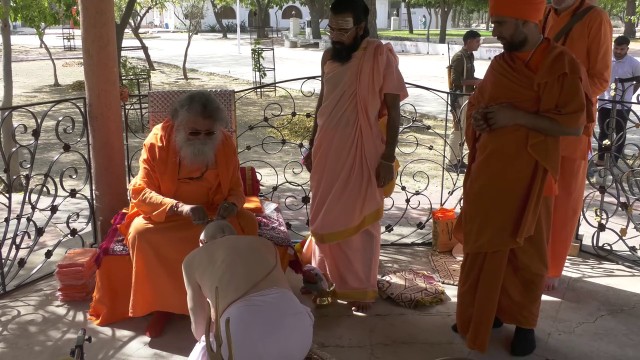
Around the world - Bhajans from Kailash(1/3)
1:10 - 1:58 (48 min)
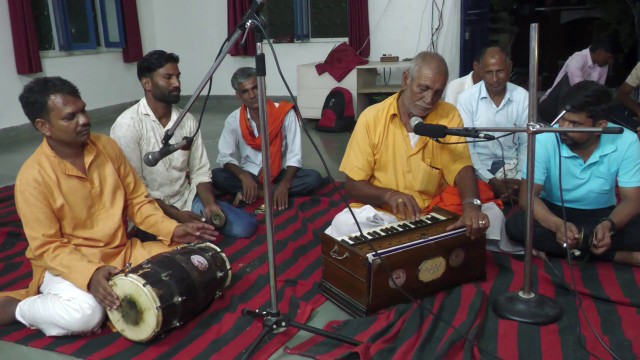
Evening satsang from Kaliash Ashram, Rajasthan, India. Bhajans on the occasion of Sri Devpuriji Mahasamadhi.
The reality is within you
2:05 - 2:42 (37 min)
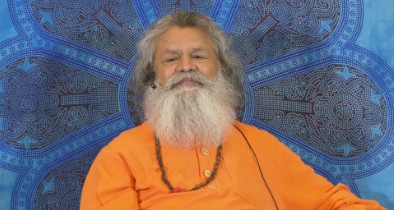
A spiritual discourse on discipline, grace, and the enduring nature of authentic practice.
"Yoga in Daily Life did not become different. That is its quality."
"Gurujī always said, 'Guru Kṛpā Hi Kevalam.' As long as you have the mercy, the Kṛpā, of Gurudeva, you will be on the good path."
The lecturer addresses a gathering, emphasizing unwavering discipline in spiritual practice and loyalty to one's guru. He explains the unique, unchanging quality of the Yoga in Daily Life system over decades, using the analogy of a single flame to represent the soul. The talk covers themes of oneness in Sanātana Dharma, the importance of family, and the need for inner work amidst life's impermanence.
Filming location: Vép, Hungary
Atma resides in all creatures
2:45 - 3:14 (29 min)
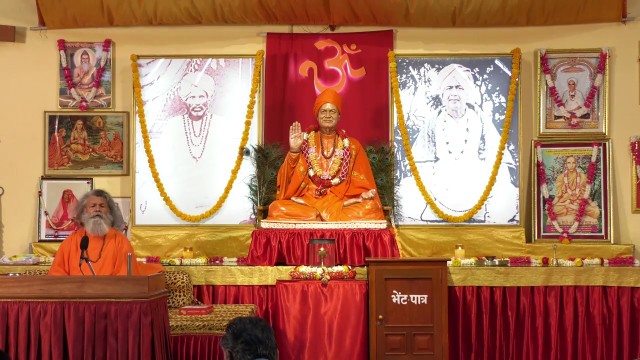
A spiritual discourse on the soul's journey and universal divinity.
"God is not there only once. God is not there only once. God is not there only once, but in our Sanātana Dharma, Where does it happen? It happens in the Paravara Brahma Ātmā."
"A drop of water and the whole ocean are the same inside... Therefore, what we are doing, pūjā, prārthanā, so Father, first, what is a mother? One God comes."
The speaker delivers a satsang, weaving together themes of non-duality, using the metaphor of a drop merging with the ocean to describe the soul's union with the divine. He discusses the human birth, the role of parents and gurus, the cyclical nature of existence, and advocates for compassion towards all beings, concluding with an anecdote about providing water for ants.
Filming location: Jadan, Rajasthan, India
The Inner Conflict of Śiva
3:15 - 4:10 (55 min)
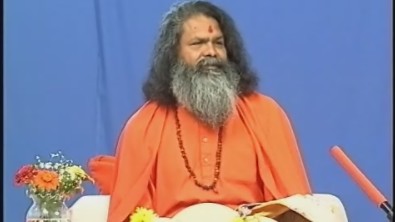
A narrative discourse exploring the inner conflict of Lord Śiva following Satī's test of Lord Rāma.
"Sometimes, to speak the truth is not easy. You hesitate to tell something; you do not want to lose face."
"Therefore, God, please, you can take everything away, or may I lose everything, but not one thing: my belief, my devotion to you."
The speaker recounts the mythological story where Satī, after testing Rāma by disguising herself as Sītā, lies to Śiva about her actions. Śiva, the knower of all, discovers the truth through his divine sight and is plunged into a profound inner conflict. He wrestles with a dilemma: to love Satī in her transformed state feels like a sin that would compromise his pure devotion (bhakti) to Rāma, yet he cannot reject his pure and faithful consort. The discourse uses this story to examine themes of truth, doubt, devotion, and the painful inner arguments that arise when faith is tested, concluding that only divine mercy can resolve such struggles.
This ashram is your work
4:15 - 4:50 (35 min)
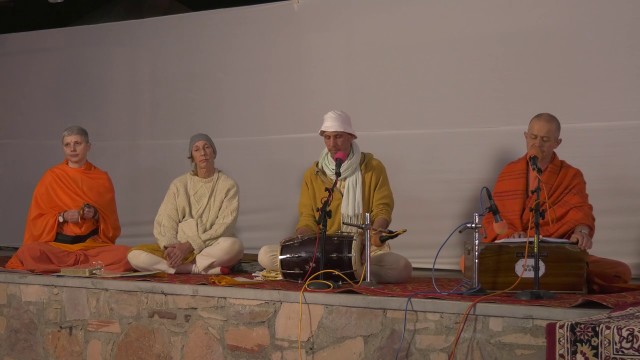
Evening satsang with Vishwaguruji from Jadan Ashram, Rajasthan, India. Bhajan singing. Welcoming words from Vishwaguruji. I was so happy how we made this Ashram, people from many many countries. Indian people are also coming and see how great it is.
Interview with Vishwaguruji
4:56 - 5:20 (24 min)
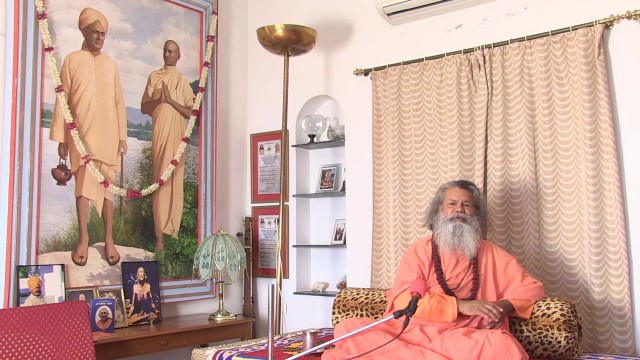
A live interview with His Holiness Vishwaguru Mahāmaṇḍaleśwar Paramahaṁsa Maheśvarānand Gurujī, founder of the "Yoga in Daily Life" system.
"It doesn’t matter if one is in a little village or a big city. It depends on the parents. When parents are full of love, harmony, and good education, and are very spiritual, they will always tell you what God is."
"Yoga is not only the physical body; it is more than that... Yoga is within human consciousness, in the human heart, in human humbleness, in a humble way of looking at everything."
The host, a disciple, introduces the guru's lineage before asking about his spiritual journey from childhood. Gurujī describes his upbringing, perpetual childlike purity, and his view of yoga. He discusses the ongoing construction of the O-Māśram monument, his first travels to Europe, and the essential guru-disciple relationship, emphasizing oneness and equal love for all.
Bhajan singing in the presence of Vishwaguruji
5:30 - 7:05 (95 min)
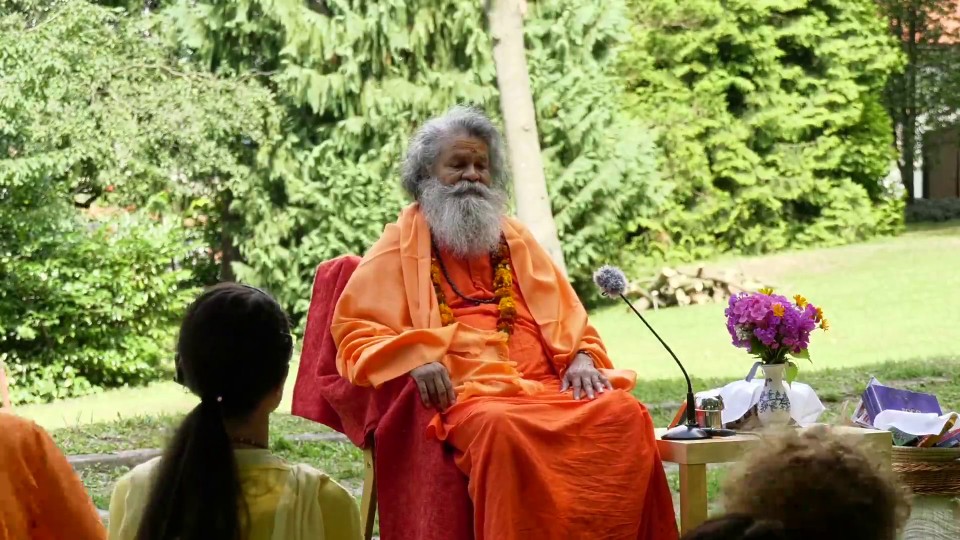
Morning satsang with Vishwaguruji from Strilky Ashram, Czech Republic.
Bhajans from Strilky
7:10 - 7:34 (24 min)
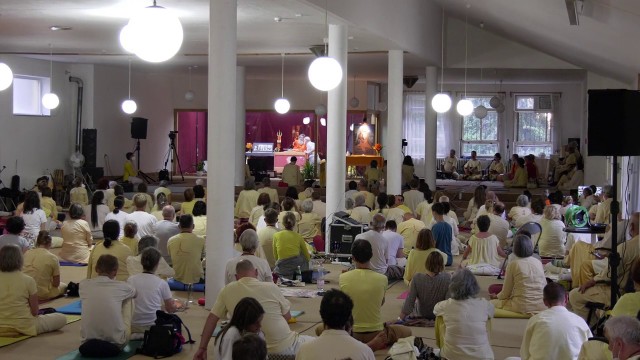
Evening satsang with Vishwaguruji from Strilky Ashram, Czech Republic.
Bhajan singing from Vep
7:40 - 8:03 (23 min)
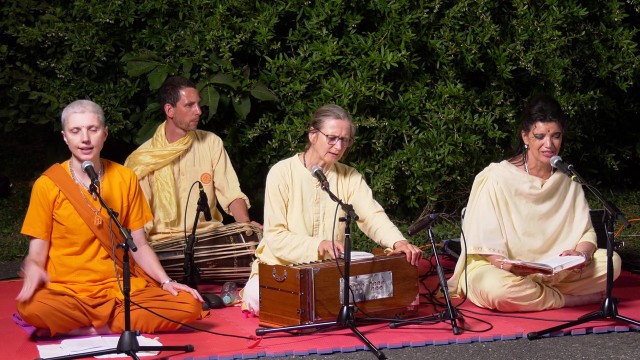
Morning satsang with Vishwaguruji from Vep, Hungary. Bhajan singing.
Bhajans from Rijeka
8:10 - 8:38 (28 min)
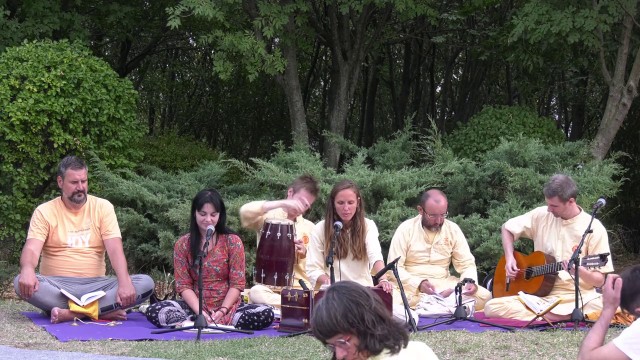
Evening satsang with Vishwaguruji from Rijeka Ashram, Croatia.
As you do, you will get
8:45 - 9:39 (54 min)
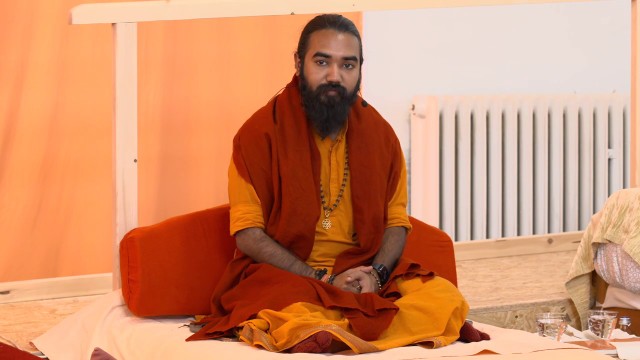
A satsang discourse on the importance of sāttvic food, strong digestive fire (agni), and the karmic effects of our actions.
"In yoga, it is very important to know cooking. I heard from Viśvagurujī that it will be excellent if we are able to cook for ourselves—not to go to restaurants, not fast food, but to prepare food for yourself."
"That is such a great lesson to us, that we, like a Yogī, should have such a kind of digesting fire, that kind of agni, jāṭharāgni, to be able to dissolve everything."
Swami Vivek Puri and another speaker lead a satsang, emphasizing the spiritual and practical importance of cooking and consuming sāttvic, vegetarian food prepared with good intent. They explain how strong agni, cultivated through Haṭha Yoga practices like Agniśa Kriyā and Bhastrikā prāṇāyāma, allows one to digest not only food but also negative experiences. Several illustrative stories are shared, including a yogi defeating a demon through his digestive power, a woman whose poisoned food karmically affects her own family, and a thief whose negative intent temporarily influences a guru through offered food. The discourse consistently links diet to mental state, karma, and safe spiritual practice within the Yoga in Daily Life system.
Filming location: Strilky, Czech Republic
Real health comes from Nature
9:45 - 10:44 (59 min)
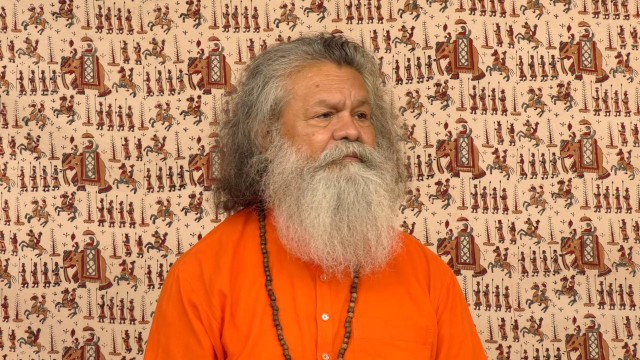
A satsang on health, natural remedies, and gentle yoga practice.
"I am not a doctor, yes? Please. I am Swami. I am a yogī. And I am you, a natural."
"So many things we do not know. We do not know that one has. If you know exactly, then everything is gone."
Swami Maheshvaranand leads a satsang, discussing the limitations of conventional medicine and praising natural, holistic approaches to health. He shares anecdotes about medicinal tree bark and the work of Yogī Ramdev, while also critiquing how doctors often manage rather than cure illness. The session concludes with instructions for a gentle, supine yoga exercise intended for digestive health.
Filming location: Strilky, Czech Republic
Try to live in a natural way
10:50 - 11:52 (62 min)
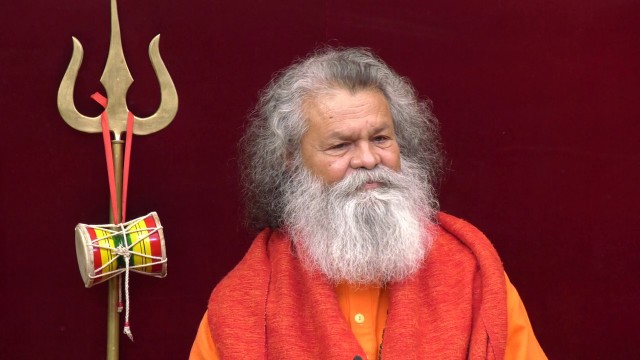
A satsang discourse reflecting on an eight-month spiritual retreat (Anushthana) and sharing teachings on health and lifestyle.
"In this Kali Yuga, yoga is coming more and more to bring light and peace."
"Mahāprabhujī said, 'A man should not drink tea and coffee. Coffee is bad for both male and female liver, and tea, for men, will make it difficult to have a child.'"
Swami Vishwaguruji addresses a global audience, recounting the recent eight-month Anushthana at the Sattva ashram in Střílky. He discusses the ashram's holy history, the importance of satsang, and shares traditional teachings from Mahāprabhujī and his own Guru on diet, health, and disciplined living. He contrasts modern habits with a purer past, advocating for simple food, periodic fasting, and a return to family and home. The ashram's president then offers thanks, noting the pandemic allowed for an extended, blessed stay with Gurudev.
Filming location: Bari Khatu, Rajasthan, India
The Principles and Power of Sādhanā
12:00 - 12:45 (45 min)
A spiritual discourse on the principles of sādhanā and the significance of the Maṇipūra Chakra.
"Any kind of sādhanā requires perfect technique and discipline. One must follow the principles."
"That energy, which is located in the maṇipūra cakra, is called hara-śakti. That is the life force, the energy that keeps you moving."
A teacher explains the necessity of disciplined practice, using the analogy of fueling a car correctly. He delves into the esoteric importance of the Maṇipūra Chakra as the seat of life force (hara-śakti) and the junction of vital energies, connecting its functions to immunity, sound resonance (nāda), and mythological symbolism involving Vishnu. The talk covers related practices like Śabda Sañjālan and Khaṭupranām, emphasizing that authentic practice requires devotion, a spiritual lineage, and following a master's instructions to awaken inner energy and burn karmic seeds.
Filming location: Strilky, Czech Republic
Chakras and Nadis
12:50 - 13:53 (63 min)
A spiritual lecture on the Mūlādhāra chakra and the nature of haṭha yoga.
"Haṭha means that you try very hard; you use willpower. We must have the willpower to achieve something. Don't give up. Try, try, try."
"Therefore it is: renounce and enjoy. If you want to be happy, if you want to enjoy life, then renounce."
A teacher explains the foundational Mūlādhāra chakra as the root of energy and the seat of the dormant Kuṇḍalinī. He details the three primary nāḍīs (Iḍā, Piṅgalā, Suṣumṇā) and defines true haṭha yoga as the forceful application of willpower for spiritual union, distinct from common physical practice. Through stories—including an ant's perseverance and a Haṭha Yogī who renounces even Śiva's offer—he emphasizes themes of relentless practice, renunciation of desire, and the ultimate goal of awakening energy to unite with divine consciousness.
Practice from Auckland with MM Vivekpuri
14:00 - 15:00 (60 min)
Auckland, New Zealand
Heaven and Hell
15:05 - 15:56 (51 min)
An evening satsang on the illusory nature of time and the urgency of spiritual practice.
"In reality, there is no time. Who created time? Animals do not count it. We humans made time."
"Use it or lose it. This was my mantra, and so I was practicing. Till now, I am 103 years, I am still like this."
The lecturer leads the discourse, exploring the human construct of time and its unstoppable flow. He shares parables, including one of a Himalayan rishi who learns his vast knowledge is but a handful of sand compared to the whole, and another of a yogi whose pride ruins his sādhanā. The key theme is that our limited time must be used for sincere practice and humility, lest it be lost.
Filming location: Strilky, Czech Republic
Introduction to the science of Chakras
16:00 - 17:20 (80 min)
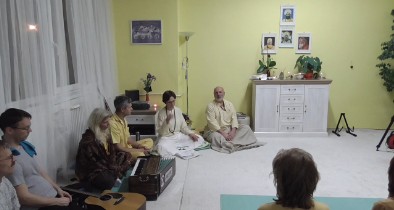
Introduction to Chakras, Presov, Slovak Republic. Muladhara stores much karmic information about us. What is dormant in Muladhara is sprouting in Svadisthana. This is the place of kriya shakti and iccha shakti. If we purify this chakra, half way to our final goal is behind us. Manipura is the powerhouse of our body. Anahat is the place of our feelings. Vishuddhi is the door to the astral world.
A Prayer for the Immortal Soul
17:25 - 18:07 (42 min)
A satsang dedicated to a prayer for the departed.
"Let me sing day and night this name of thine."
"At the end of my life, when I renounce this body, I have only one wish, that you are standing in front of me."
The lecturer leads a prayer satsang in Prague for the late Milena Hypsmanova, recounting her final trip to South Africa. He reflects on the mystery of destiny, time, and mortality, using the story of Oedipus to illustrate how fate unfolds. The discourse explores how spiritual practice and remembrance of God's name prepare the soul for the final transition from life to death.
Filming location: Prague, Czech Republic
Try to know what we should do
18:15 - 19:06 (51 min)
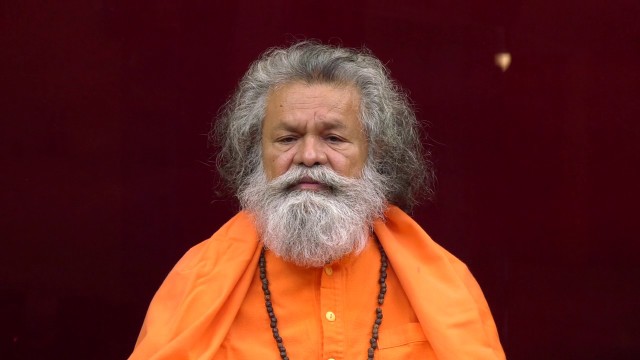
An evening satsang on the soul's journey and human responsibility.
"Life in which the soul—the soul cannot say yes or no. It is coming like a bird in a nest, sitting in the nest. In the morning it will fly out."
"Our soul is the same, be it in humans, animals, birds, or fish. Each one has a life, and we should not disturb the life of anyone."
The lecturer addresses a global audience, explaining the nature of the soul (jīva) using metaphors of water droplets and a bird in a cage. He discusses the cycle of life, death, and rebirth, emphasizing ethical conduct, compassion for all beings, and the soul's liberation from the physical body. The talk includes anecdotes and reflections on modern life.
Filming location: Strilky, Czech Republic
Proudness
19:10 - 20:02 (52 min)
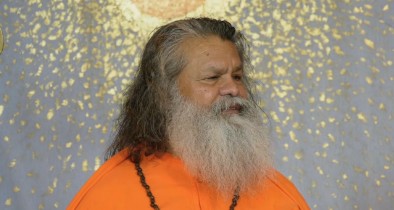
A spiritual discourse narrating two stories from the Ramayana about divine ego and its cure.
"Sometimes the buddhi, the intellect, can turn for a while in another direction." "Don’t think that through your help, Rāma was victorious... It was a test for you."
The speaker, Swami Avatarpuri, recounts the tale of Garuda losing devotion after rescuing Lord Rama from a snake arrow, and his healing by listening to the satsang of the crow Kakabhushundi. He then tells how Lord Rama cured Hanuman's pride by sending him on a mission to a sage, revealing countless identical rings to demonstrate the cyclical nature of divine incarnations. The talk concludes by relating these themes to the modern discovery of sacred Himalayan caves.
Filming location: Strilky, Czech Republic
This ashram is your work
20:10 - 20:45 (35 min)
Evening satsang with Vishwaguruji from Jadan Ashram, Rajasthan, India. Bhajan singing. Welcoming words from Vishwaguruji. I was so happy how we made this Ashram, people from many many countries. Indian people are also coming and see how great it is.
Advice for good health
20:50 - 21:58 (68 min)
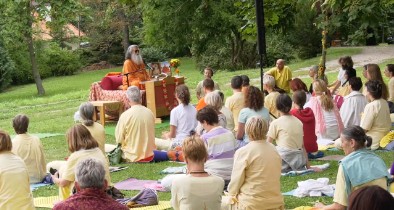
A satsang on Haṭha Yoga practices and natural wisdom, blending personal anecdotes with traditional teachings.
"Gurujī said, 'I am now in Mumbai, and I am going tomorrow morning by train. What is the constellation? If it is not good, then should we stop the train?'"
"Better to die, but with the salt. Yes, so Āyurveda, and Āyurveda is saying senda salt."
The lecturer leads the session, sharing stories about his Gurujī and the practical applications of Haṭha Yoga. He explains the importance of salt for health, details cleansing techniques like netī and kuñjal kriyā, and emphasizes learning from nature, illustrated by a folk tale about the origin of ocean salt. The talk connects yogic purification with Āyurvedic principles found in plants and natural elements.
Filming location: Strilky, Czech Republic
The reality is within you
22:06 - 22:43 (37 min)
A spiritual discourse on discipline, grace, and the enduring nature of authentic practice.
"Yoga in Daily Life did not become different. That is its quality."
"Gurujī always said, 'Guru Kṛpā Hi Kevalam.' As long as you have the mercy, the Kṛpā, of Gurudeva, you will be on the good path."
The lecturer addresses a gathering, emphasizing unwavering discipline in spiritual practice and loyalty to one's guru. He explains the unique, unchanging quality of the Yoga in Daily Life system over decades, using the analogy of a single flame to represent the soul. The talk covers themes of oneness in Sanātana Dharma, the importance of family, and the need for inner work amidst life's impermanence.
Filming location: Vép, Hungary
Mental food
22:52 - 0:50 (118 min)
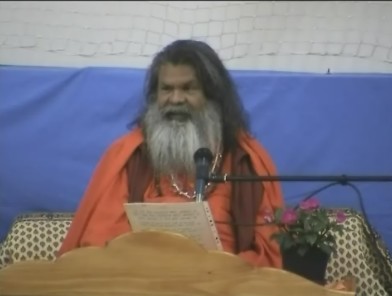
Swamiji in Sliac, April 2007
American
Australian