
European
The hatha yogi wants to live a long and healthy life
0:05 - 0:56 (51 min)
A satsang on herbal remedies and the principles of Haṭha Yoga.
"You take only a little of this babool fruit... Shake it in the water... By morning, it is ready. You drink the water, and you eat that."
"The biggest enemy of the human is laziness. Where there is laziness, there is tamas guṇa."
Swami Ji leads a session beginning with practical uses for neem and babool plants, sharing recipes and a disciple's testimony about neem healing a wound. The talk transitions into the philosophy of a Haṭha Yogī, emphasizing the conquest of laziness, dietary practices including the defense of garlic, and internal cleansing. The session concludes with a live demonstration of the Agni Sāra Kriyā by a disciple.
Filming location: Vép, Hungary
Around the world - YIDL at the Budapest Carfree Day
1:00 - 1:03 (3 min)

A presentation about a yoga organization's participation in Budapest's Car-Free Day.
"We have a yoga center at 121 Baross Street, 8th floor. In the district, this is our guru āśrama, our first center in Hungary."
"It’s a very interesting experience that you can practice yoga even in such a place, and nothing really disturbs you. On the contrary, the curious onlookers inspire us greatly in our practice."
A representative of the Yoga in Daily Life system describes their annual participation in the event on car-free Andrássy Avenue. She explains the organization's origins under Paramahaṁsavāmī Maheśvarānanda and highlights their long-standing Budapest center. The talk emphasizes the unique experience of practicing yoga in the transformed urban space and invites the public to join.
Filming location: Budapest, Hungary
Around the world - YIDL at the Budapest Vegetarian Festival 2011
1:10 - 1:15 (5 min)

A presentation on the Yoga in Everyday Life system at a Vegetarian Festival.
"Among these, the foremost is to maintain a vegetarian lifestyle."
"Our first aim is to gain good health. The major part of our illnesses... originates from our stomach."
A representative describes their organization's long-standing participation in the festival, highlighting yoga demonstrations and classes accessible to all. This year's focus was explaining the Falahārī diet, a concept from Swami Maheśvarānanda. The talk connects vegetarianism with physical yoga, prāṇāyāma, and relaxation, framing the practice as a holistic path to health and self-discovery.
Filming location: Budapest, Hungary
Around the world - Yoga against backpain
1:20 - 1:26 (6 min)
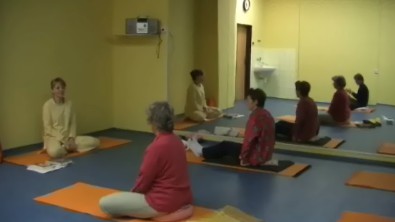
Report about yoga classes organized specifically to address people with backpain from Prague.
Mantra is with you for your whole life
1:30 - 1:52 (22 min)
A spiritual discourse on life's two paths, illustrated through a parable about marriage and communication.
"You know very well... And there are two paths." "Spiritual human life is everything. This is what it is, and for that we are thinking."
The speaker presents two life paths: a worldly, professional path and a spiritual path centered on relationships and conscious living. He emphasizes the spiritual path through a lengthy parable about a married couple whose 50-year resentment stems from miscommunication over sharing bread, illustrating how small, unspoken issues can define a life. The talk concludes with the imparting of a lifelong mantra and instructions for a disciplined lifestyle, including vegetarianism.
Filming location: Salzburg, Austria
We are Humans
2:00 - 2:28 (28 min)
A spiritual discourse exploring the nature of self and practice through contemplative inquiry.
"All that is moving is not you; it is that." "We are human. But what does it mean to be human? It is important to see what we are and what we are not."
A speaker leads a satsang, questioning the identity of the practitioner within yoga and life. Using a stream-of-consciousness style, they contemplate the names of yoga postures, the elements composing the body, and phenomena like airplanes and light to point toward a transcendent Self. The talk oscillates between deconstructing the doer and advocating a yogic lifestyle, concluding with blessings for oneness and enjoyment.
Filming location: Strilky, Czech Republic
Yoga is One
2:35 - 3:06 (31 min)
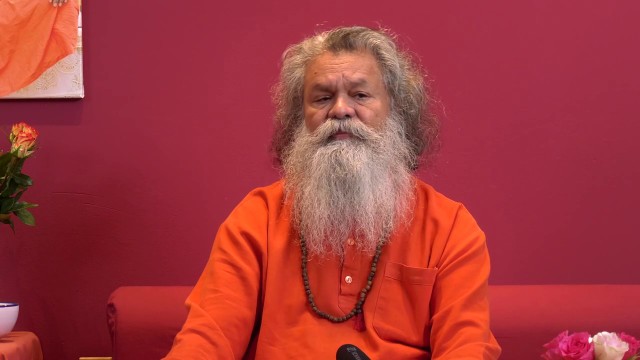
A spiritual talk on the principles and practice of yoga in daily life.
"Yoga is the yoga. It’s the yoga, that’s all then. There’s nothing else."
"Yoga in daily life... means we should practice every day. That’s all. And that is for everyone, whether they are Hindus, Muslims, Christians, or anybody."
The speaker addresses a group, holding up the system's foundational book. He emphasizes that true yoga requires daily practice according to these teachings, not just theoretical knowledge. He discusses the importance of ethical living, notably vegetarianism, criticizes the dilution of yoga by other systems, and urges a return to disciplined, foundational practice. The talk meanders through topics including dietary rules, the global spread of yoga, and personal anecdotes.
Filming location: Austria
Pride is an ego trap
3:15 - 4:34 (79 min)
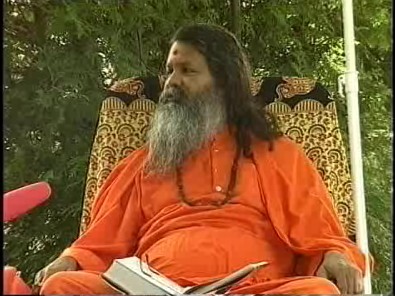
Lecture from Vep, Hungary, 2001
Yoga for the physical body and beyond
4:40 - 5:02 (22 min)
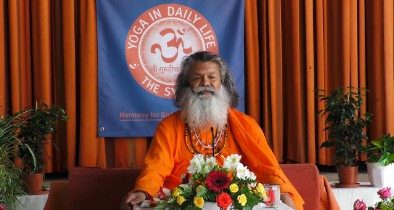
A morning satsang at a summer retreat discussing the modern practice of yoga and a return to spiritual roots.
"Spirituality does not mean religious practice. Spirituality means not only doing meditation, but encompasses everything."
"Yoga is from the mother’s womb until liberation, and it should be a very easy practice. Everyone can do it."
The teacher addresses the assembly, reflecting on the global spread of yoga since International Yoga Day. He cautions against practices focused solely on physical fitness or difficult postures, which he links to future injuries, and criticizes the commercialization of yoga. Emphasizing the need for a genuine guru lineage, he shares the discovery of their spiritual ancestor, Ālagpurījī, in the Himalayas, and concludes with remarks on environmental protection and a blessing for practice.
Filming location: Vép, Hungary
Trees also have karma
5:05 - 5:27 (22 min)
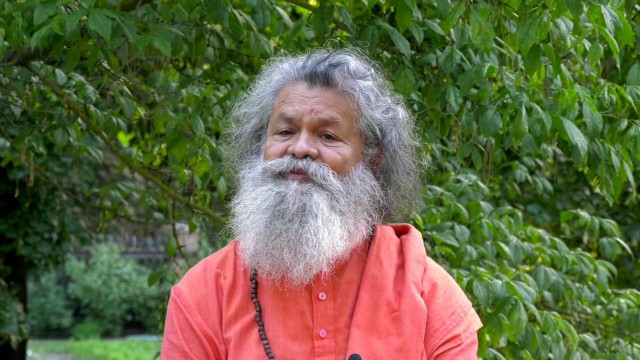
A spiritual discourse sharing a parable about a talking tree and the nature of karma.
"Ṛṣi, you take care of yourself. I am okay."
"Therefore, we should always be careful and always be very happy and kind to others."
The speaker narrates a story set in an ancient forest, where a ṛṣi prophesies the death of a proud, ancient tree. Through a dialogue between the ṛṣi and the tree, the tale explores themes of karma, humility, and the unexpected sources of danger, concluding with a lesson on kindness and non-harm. The telling blends this parable with personal reflections on sacred forests in the speaker's ashrams.
Filming location: Strilky, Czech Republic
Bhajan singing on the Satsang
5:30 - 5:57 (27 min)
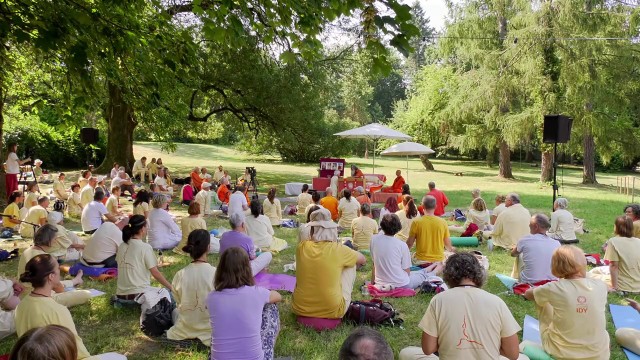
A devotional introduction and singing of a traditional bhajan.
"We can sing a very beautiful bhajan from Swāmī Lālā Nānjī. It is called Manarata Nāma, and it means, 'Oh my mind, repeat the name of God, repeat your mantra.'"
"Give your body and mind to Sāddhā Gurudeva, and he will destroy all your doubts and all your bad qualities. In the holy lotus feet of Satguru Deva reside all holy pilgrimages."
The speaker introduces a lesser-sung bhajan by Swāmī Lālā Nānjī, emphasizing the urgency of spiritual practice in human life. They explain the bhajan's theme of repeating the divine name and extol the glory and essential role of the true Guru in guiding devotees across the ocean of worldly existence. The session includes singing verses from the bhajan and concludes with salutations.
Filming location: Strilky, Czech Republic
Bhajans evening from the Strilky Ashram
6:05 - 7:08 (63 min)
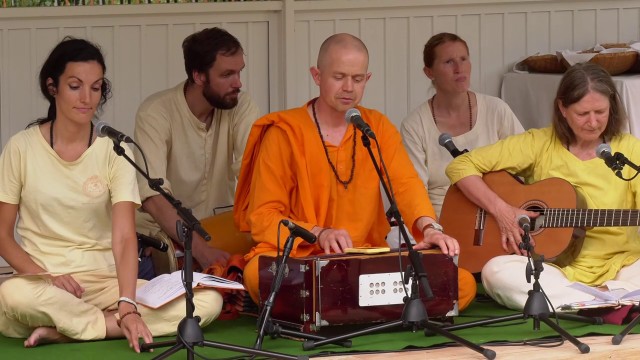
Evening satsang from Strilky Ashram, Czech Republic. Bhajan singing and translation.
Bhajan evening in the Strilky Ashram
7:15 - 8:08 (53 min)
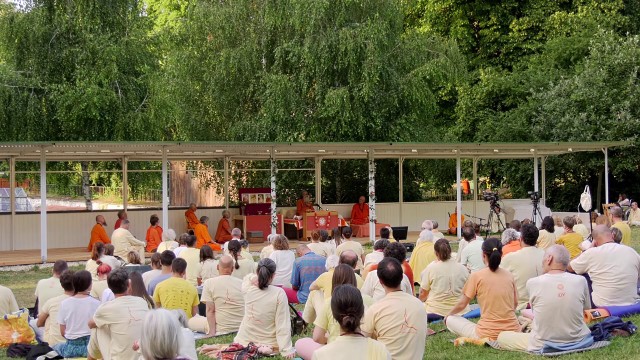
Evening satsang from Strilky Ashram, Czech Republic. Bhajan singing and translations. We shouldn't hold animals in a cage. They feel much pain there. Let them be free. We are also like that bird in the
Bhajan singing from Jadan
8:15 - 8:26 (11 min)
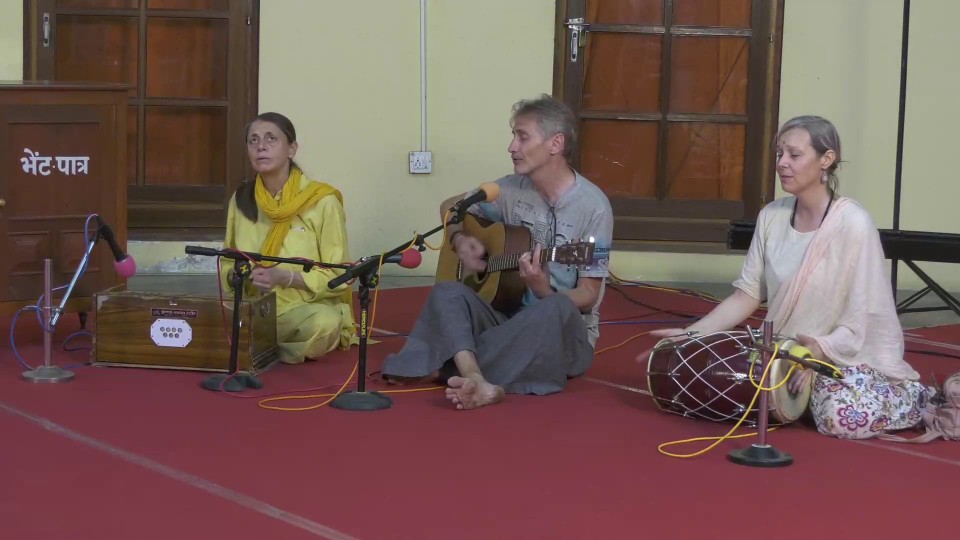
Evening satsang with Vishwaguruji from Jadan Ashram, Rajasthan, India.
Webcast from Strilky
8:30 - 9:46 (76 min)
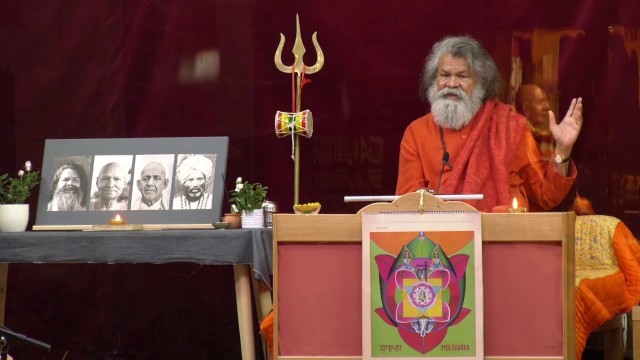
Evening satsang with Vishwaguruji from Strilky, Czech Republic.
We should have God in our heart
9:50 - 11:11 (81 min)
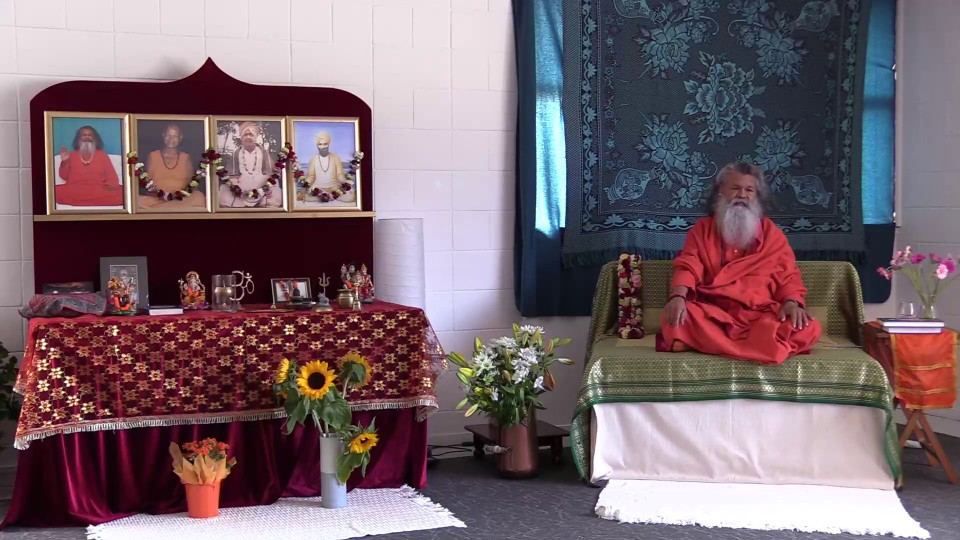
A spiritual discourse weaving stories and observations on faith, tradition, and true knowledge.
"Any lecture we hear... for one and a half or two and a half minutes we have concentration, then we don't have concentration... but that story is there; that story will never forget."
"We must not have a thousand, but even a hundred is enough, or one is enough. My Gurujī said, 'A hundred goats and one tiger is more than enough.'"
The lecturer delivers an evening satsang, moving from observations on preparation and cultural greetings into profound spiritual parables. He shares stories including a Pope testing devotees' faith, a devoted brother walking on water, and the mythological tales of Śiva, Śakti, and the sage Śukadeva, all illustrating that heartfelt devotion surpasses mere intellectual knowledge. The talk concludes with reflections on the enduring power of stories and the core principles of yoga.
Filming location: Auckland, New Zealand
Satsang from Strilky
11:15 - 12:32 (77 min)
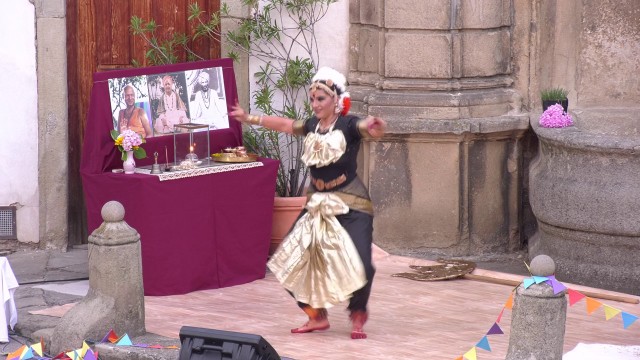
Evening satsang from Strilky Ashram, Czech Republic. Explanation and singing bhajans. Bharatanatyam dance by Bhaktidevi. The glory of Devpuriji Bhagawan is around the whole world. He was the incarnation of Bhagawan Shiva.
What means Satsang
12:40 - 13:56 (76 min)
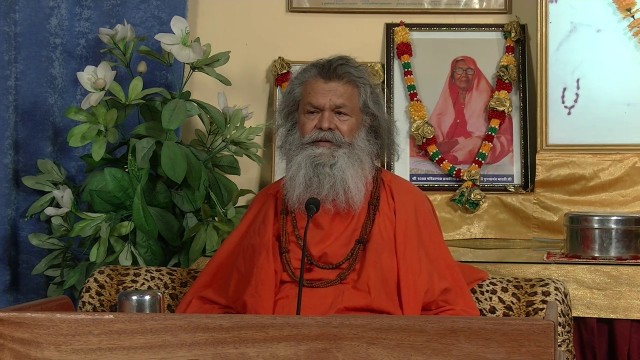
Evening satsang with Vishwaguruji from Jadan, Rajasthan, India. Nearly one-hour bhajan singing. Without prayers, meditation and singing bhajans humans life is not complete. When we are coming to the prayer we are in oneness again. In Satsang, we are in the truth. Do not continue with negative thinking. That one is lost.
Practicing of the system 'Yoga in Daily Life', Level 1 - Part 4
14:00 - 15:04 (64 min)
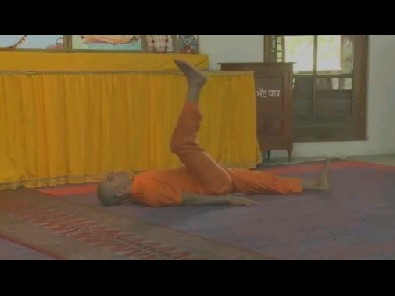
Practicing of the system "Yoga in Daily Life", Level 1 - Part 4, in Om Vishwa Deep Gurukul Swami Maheshwaranand Ashram, Jadan, Rajasthan, India on 23rd of October 2009.
Purify your prana
15:10 - 16:14 (64 min)
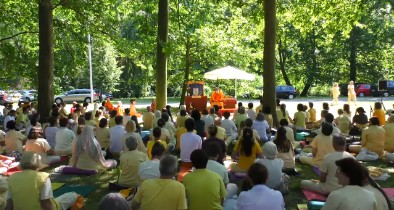
Morning satsang with Vishwaguruji from Summer Retreat in Vep, Hungary. We should protect every creature, not only humans. Bad smell indicates impurities in the prana. Sattvic nourishment and practicing yoga exercises cleans the prana and energies in the body.
Eat healthy food and live as a human
16:20 - 17:03 (43 min)
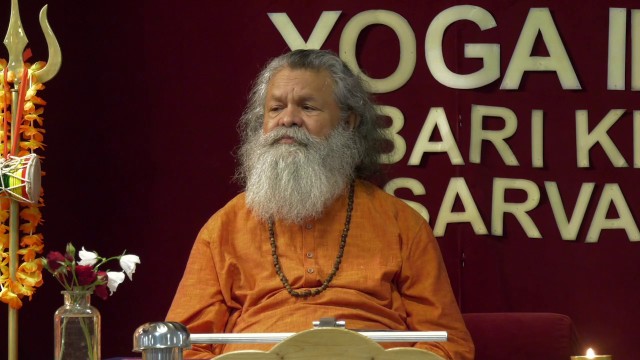
A spiritual discourse on prayer, lifestyle, and simple daily remembrance.
"Morning, midday, evening—always the whole family, women, men, and children. When they sat at the table to eat, they would pray."
"When we open our eyes, then tell, 'I am human.'... And then, second, don't look at animals and this and that first. Mother, mother. So see our mother."
The lecturer reflects on the decline of traditional prayer across religions and its connection to modern societal problems. He discusses dietary shifts, including the rise of veganism, and critiques modern agriculture's impact on the earth. He concludes with a simple daily practice: upon waking, remember "I am human," honor Mother Earth, and reverence water as life.
Filming location: Strilky, Czech Republic
Our origin is in God
17:10 - 17:51 (41 min)
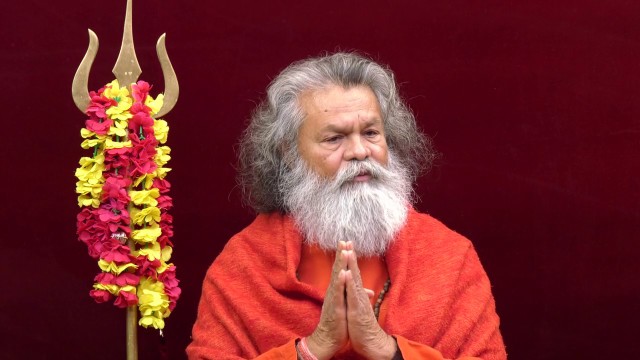
A spiritual discourse on the five sheaths of existence and the nature of life.
"God has given us this body. When the soul, the ātmā, enters the body, it comes into this world, to Earth."
"These five kośas, one after the other, Annamaya kośa, prāṇamaya kośa, manomaya kośa, vijñānamaya kośa, ānandamaya kośa."
A speaker, conveying blessings from Gurudeva Swāmī Madhavānanda, explores the journey of the soul into the human body and the five energetic sheaths (kośas) that surround it. The talk contemplates the cycle of life, the nature of God across traditions, and ethical principles like non-violence and forgiveness, weaving in references to Jesus and a parable about a fruit tree. The session concludes with a tribute to Satguru Dev on the anniversary of his Mahāsamādhi, honoring his life and teachings.
Filming location: Strilky, Czech Republic
Respect is important
17:55 - 18:48 (53 min)
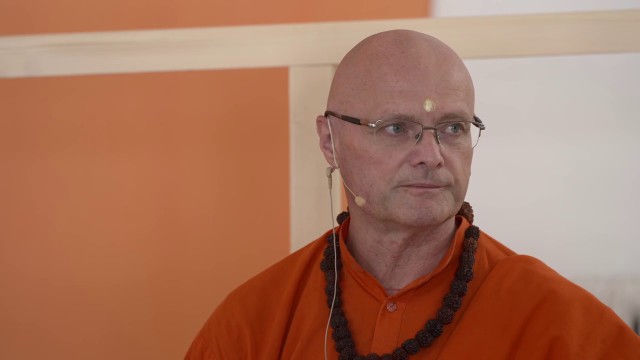
A spiritual discourse and mantra teaching session on the power of language, respect, and energy.
"Spirituality does not mean wholly very slow... But with this different energy inside, just try to be aware of this thing: in which way are we addressing other people?"
"You get from an object only as much as you respect it... If your mālā has some value for you, you will keep it in a safe place... Because of that, you will, from your mālā, get energy when you need it."
A speaker leads a satsang, emphasizing the profound impact of words, gestures, and intention. He discusses how language shapes reality, using examples from addressing others to serving food and respecting spiritual objects like a mala. The talk covers the importance of positive speech, respectful action, and the energy behind our deeds. The session concludes with Swami Avatar Puri teaching and explaining the "Nāma kamala nābhāya" mantra, including its translation and significance.
Filming location: Strilky, Czech Republic
Supporters on the Spiritual Path
18:55 - 20:03 (68 min)
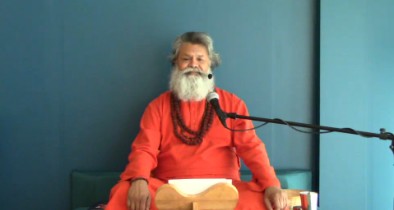
A spiritual discourse on the chakra system and the qualities needed for self-realization.
"Spiritual practice means not only just to sit and meditate and practice mantras, but to change inner feelings. Humbleness is one of the best parts of spirituality."
"Dayā dharam kā mūl hai, pāp mūl hai abhimān... the roots of the dharma, right-house-ness, is the mercy. And the roots of the sins is the ego."
Swami Brahmapuri leads a satsang, continuing a series on the chakras. He transitions from discussing the foundational Mūlādhāra Chakra to explaining the Svādhiṣṭhāna Chakra. The core teaching outlines five spiritual qualities—Vairāgya (detachment), Tyāga (renunciation), Bhakti (devotion), Jñāna (knowledge), and Dayā (mercy)—as the means to overcome negative obstacles like desire and anger. He illustrates these principles with stories of Krishna and Shiva, and gives practical advice, including how to care for a rudrākṣa bead.
Filming location: Vancouver, Canada
The Journey Beyond Duality: Life, Self, and the Path to Oneness
20:10 - 21:22 (72 min)
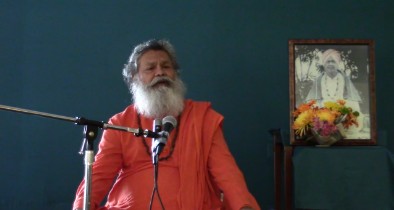
A spiritual discourse on yoga philosophy, the nature of the self, and the path to oneness.
"Our life, as we said, is a destiny and a journey. It is a journey; the destination is still not there."
"In Ātmā, in the self, there are no dualities; there is only oneness. So where there is heaven and hell, there is life and death... that's what we want to come out of, to become one with the highest, with our Self."
Swami Anand Arun delivers an extensive teaching, exploring the journey beyond dualities like life/death and divine/demonic energies. He explains core concepts of Ātmā, karma, and the three guṇas, detailing the system of senses (indriyas), vital energies (prāṇas), and channels (nāḍīs). The talk defines yoga as union, clarifies traditional Haṭha Yoga, and maps the subtle body's chakras, concluding with anecdotes about advanced practices like Khecharī Mudrā and the nectar of immortality.
Filming location: USA
Chakras, Nadis and Kundalini
21:30 - 22:09 (39 min)
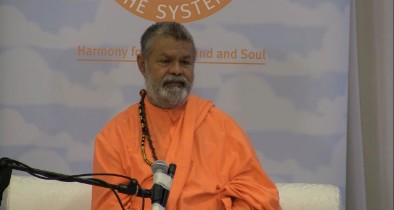
A discourse on the subtle energy systems of yoga, including chakras, nāḍīs, and the mind.
"The chakras are a methodological representation. You will not see this exact picture if you look within your own body, so do not try to see it literally."
"The mind is a river; we should not block it. If we block a dam, we must provide an outlet. Without an outlet, the dam will break and cause greater harm. The mind needs direction."
The teacher provides a detailed explanation of the chakra and nāḍī (energy channel) system, relating it to human physiology, the elements, and life metaphors like a leaf separating from a tree. Key themes include the symbolic nature of chakras, the function of the Iḍā and Piṅgalā nāḍīs, the dangers of improperly awakening kuṇḍalinī energy, and how suppressed emotions manifest as physical ailments. The talk integrates concepts of the five sheaths (kośas), the role of the guru, and the purpose of spiritual practice for holistic health.
Filming location: London, UK
Don't kill animals, remain clean
22:15 - 23:28 (73 min)
Evening sastang from Jadan Ashram, Rajasthan, India. When it rains, it feeds all the vegetation. The sea, the grass, the trees need water. Only humans can reach the highest. Those who don't use drugs or drink alcohol. Today, the whole world, all religions and cultures are right in the palm of our hands, accessible by mobile phone. With the help of yoga, meditation and ancient sacred scriptures, spirituality can be realized. Outer purity means inner purity.Chemical pollution is a big problem all over the Earth.
The hatha yogi wants to live a long and healthy life
23:35 - 0:26 (51 min)
A satsang on herbal remedies and the principles of Haṭha Yoga.
"You take only a little of this babool fruit... Shake it in the water... By morning, it is ready. You drink the water, and you eat that."
"The biggest enemy of the human is laziness. Where there is laziness, there is tamas guṇa."
Swami Ji leads a session beginning with practical uses for neem and babool plants, sharing recipes and a disciple's testimony about neem healing a wound. The talk transitions into the philosophy of a Haṭha Yogī, emphasizing the conquest of laziness, dietary practices including the defense of garlic, and internal cleansing. The session concludes with a live demonstration of the Agni Sāra Kriyā by a disciple.
Filming location: Vép, Hungary
American
Australian