
European
Learning in the Gurukul
0:20 - 0:56 (36 min)
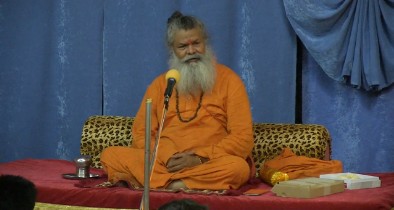
A presentation on the Gurukul education system and its philosophical foundations.
"In our Gurukul, we have a different education. Not this modern education where they only want to work and earn money, earn money, earn money."
"The knowledge that has been taught in the Gurukul, according to the culture of India and according to the knowledge of the sages of India, we will do it."
A spiritual teacher speaks from the Om Shri Visva Dip Gurukul in Rajasthan, outlining the history and purpose of the traditional Gurukul system. He emphasizes education as a sacred, cultural duty focused on knowledge and morality over material gain, introduces the Gyān Putra scholarship project, and explains the significance of the students' Pitāmbara (yellow) uniforms. The talk is followed by an address from Mahāmaṇḍaleśvar Śrī Gyāneśvar Purī Jī Mahārāj, who discusses the logistical and ethical challenges of education in India, contrasting the Gurukul's holistic approach with modern, commercialized systems.
Filming location: Jadan, Rajasthan, India
The Means Are the End: On Non-Violence, Patience, and Peace
1:00 - 1:14 (14 min)
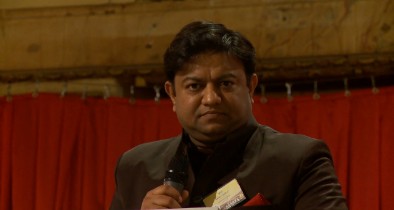
A keynote address on non-violence, patience, and peace at a World Peace Council conference.
"Wrong means will always fetch wrong ends. We must understand the basic fundamental: it is the means which become the ends."
"Happiness is a peaceful state of mind. If you have a peaceful mind, you live in the present, and when you live in the present, you are happy."
Swapnil Kothari, a teacher from India, delivers a speech exploring non-violence as a conscious philosophy, not just a default position. He argues for the primacy of ethical means over ends, asserting that violence breeds violence while non-violence breeds compassion and inner peace. He uses personal anecdotes, historical references, and a humorous story about marital patience to illustrate the stamina required for this path.
Filming location: Prague, Czech Republic
Yoga for the physical body and beyond
1:20 - 1:42 (22 min)
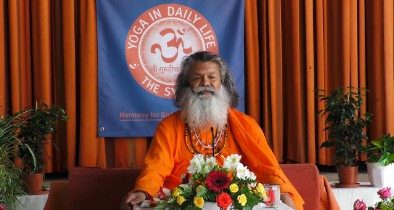
A morning satsang at a summer retreat discussing the modern practice of yoga and a return to spiritual roots.
"Spirituality does not mean religious practice. Spirituality means not only doing meditation, but encompasses everything."
"Yoga is from the mother’s womb until liberation, and it should be a very easy practice. Everyone can do it."
The teacher addresses the assembly, reflecting on the global spread of yoga since International Yoga Day. He cautions against practices focused solely on physical fitness or difficult postures, which he links to future injuries, and criticizes the commercialization of yoga. Emphasizing the need for a genuine guru lineage, he shares the discovery of their spiritual ancestor, Ālagpurījī, in the Himalayas, and concludes with remarks on environmental protection and a blessing for practice.
Filming location: Vép, Hungary
Yoga is One
1:50 - 2:21 (31 min)
A spiritual talk on the principles and practice of yoga in daily life.
"Yoga is the yoga. It’s the yoga, that’s all then. There’s nothing else."
"Yoga in daily life... means we should practice every day. That’s all. And that is for everyone, whether they are Hindus, Muslims, Christians, or anybody."
The speaker addresses a group, holding up the system's foundational book. He emphasizes that true yoga requires daily practice according to these teachings, not just theoretical knowledge. He discusses the importance of ethical living, notably vegetarianism, criticizes the dilution of yoga by other systems, and urges a return to disciplined, foundational practice. The talk meanders through topics including dietary rules, the global spread of yoga, and personal anecdotes.
Filming location: Austria
The One in All and All in One
2:25 - 2:53 (28 min)
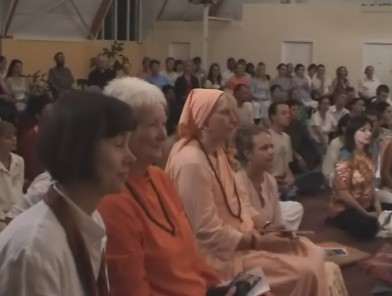
A spiritual discourse on universal consciousness, creation, and human purpose.
"Our great master used to say, 'One in all and all in one.'"
"Yoga is not physical postures... Yoga is the balancing principle... Where there is a balance, there is harmony."
The lecturer delivers a talk exploring the origins of the universe, consciousness, and the principle of yoga. He explains the Vedic concept of creation from sound (Aum) and the elemental evolution from space to earth. The discourse covers the oneness of all life, the unique potential of human intellect, and the importance of education in human values, tolerance, and understanding. He concludes by relating the cycle of rebirth to the modern concept of recycling.
Filming location: Brisbane, Australia
Spirituality and joy
2:55 - 3:12 (17 min)
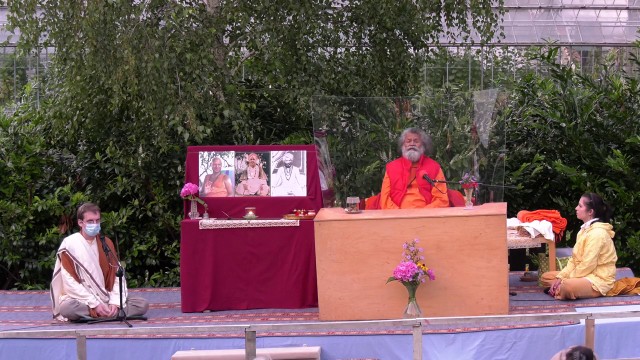
An evening satsang on the nature of spirituality.
"Spirituality: purity and humbleness, kindness, peace, understanding, oneness. Without this oneness, no peace, no spirituality."
"What can be more spiritual than this? Joy, joy, joy. It is that joy we should get like this now. Spirituality is what we call the joy."
A spiritual teacher addresses a gathering in an ashram, exploring the essence of spirituality beyond religious forms. He describes it as the harmonious union of mother (earth/nature) and father (divine light/energy) principles, manifesting as inner joy, peace, and oneness. He contrasts this with the discord of the modern age, concluding that true spirituality is found in present happiness and collective harmony.
Filming location: Strilky, Czech Republic
The Power of Tapasyā: Pārvatī's Resolve
3:15 - 4:03 (48 min)
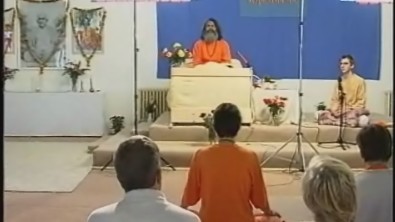
A spiritual discourse narrating the story of Pārvatī's resolve to perform tapasyā (austerity) and explaining its power.
"Tapasya is the giver of happiness and the remover of all troubles."
"Through the power of tapasyā, Brahmā is able to create this world. Through the power of that tapasyā... Viṣṇu is able to protect the world. And through that power of tapasyā, Śiva, is able to destroy all the negative powers."
The speaker recounts how Pārvatī, consoling her mother Mēnā, describes a dream in which a Brāhmaṇa instructs her to undertake severe spiritual austerity, affirming the truth of sage Nārada's words. The narrative details the immense power of tapasyā, using the examples of the Hindu trinity and Śeṣanāga, and describes Pārvatī's subsequent journey into the forest for a prolonged, extreme penance to attain Lord Śiva. The discourse frequently shifts to address a modern audience directly, exhorting them to cultivate similar willpower in their own sādhanā (practice) to overcome mental obstacles and attachments.
Filming location: Strilky, Czech Republic
Bhajan singing from Jadan
4:10 - 4:27 (17 min)
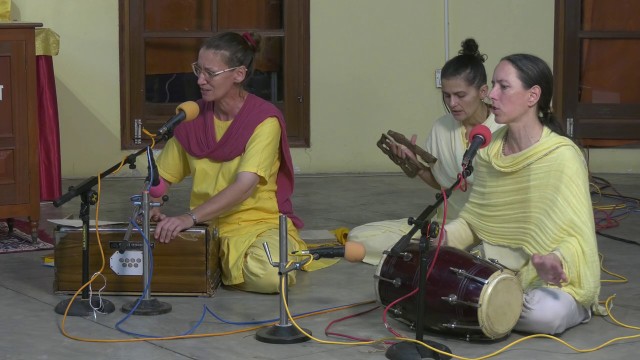
Evening satsang with Vishwaguruji from Jadan Ashram, Rajasthan, India.
Practical guide to meditation (4/11)
4:30 - 6:03 (93 min)
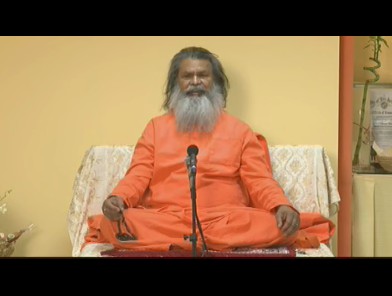
Morning satsang from weekend seminar in Vep, Hungary on 15th, Feburary 2009.
Bhajan singing in the Jadan Ashram
6:13 - 7:31 (78 min)
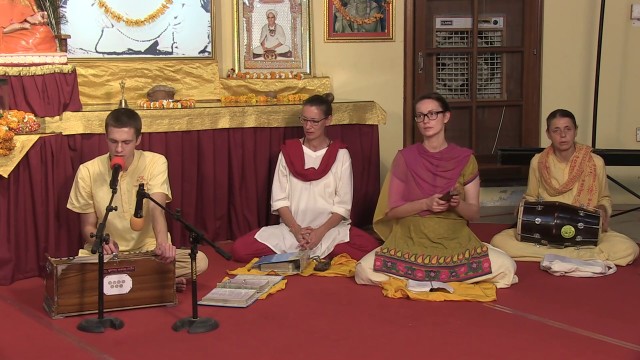
Evening satsang with Vishwaguruji from Jadan Ashram, Rajasthan, India. Bhajan singing evening.
Bhajan evening in Jadan Ashram
7:40 - 8:02 (22 min)
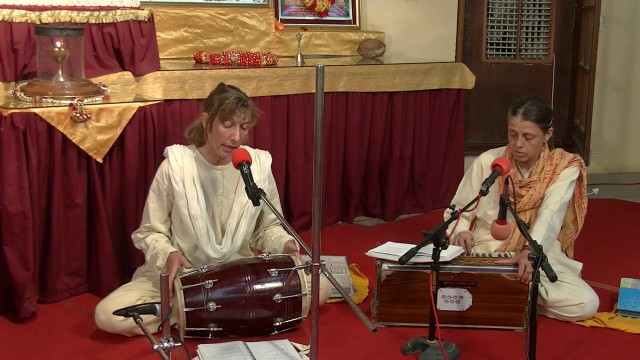
Evening satsang with Vishwaguruji from Jadan Ashram, Rajasthan, India. Bhajan singing.
Bhajan evening from Jadan Ashram
8:10 - 8:47 (37 min)
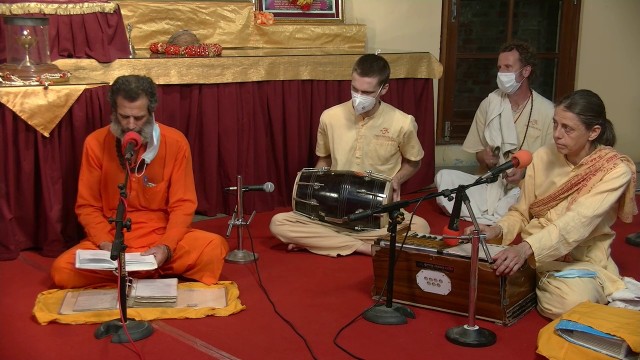
Evening satsang with Vishwaguruji from Jadan Ashram, Rajasthan, India. Bhajan singing.
One day we will be together
8:55 - 9:39 (44 min)
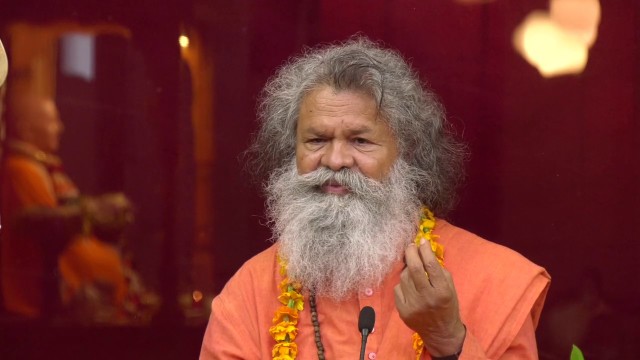
An evening satsang on spiritual unity and the essence of all paths.
"It is very important that everyone has their yoga center's name... but yoga is only one yoga; we simply have different names."
"All children are born into what we call a kindergarten. In the kindergarten, we see all children as very beautiful and very good."
The lecturer addresses the global Yoga in Daily Life community, using analogies of families, children, and the water cycle to illustrate the fundamental oneness underlying all yoga schools, religions, and human beings. He emphasizes respect for all traditions and lineages while cautioning against the discord created by attachment to names and identities. The talk concludes with a prayer for harmony and a reminder to seek inner unity.
Filming location: Strilky, Czech Republic
Webcast from Strilky
9:45 - 11:01 (76 min)
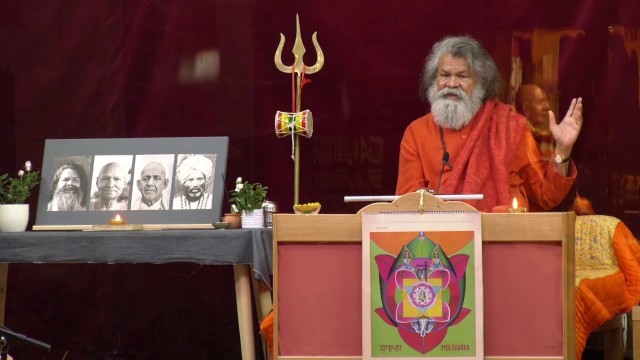
Evening satsang with Vishwaguruji from Strilky, Czech Republic.
Satsang from Strilky
11:05 - 12:22 (77 min)
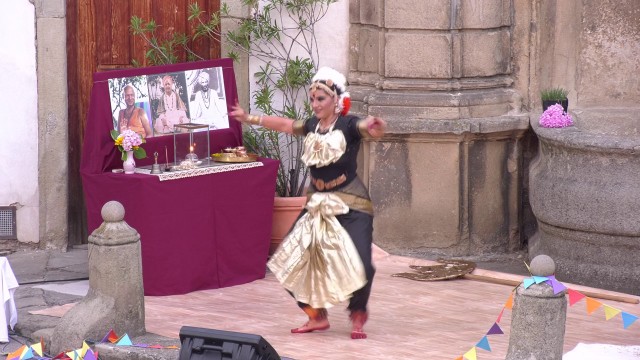
Evening satsang from Strilky Ashram, Czech Republic. Explanation and singing bhajans. Bharatanatyam dance by Bhaktidevi. The glory of Devpuriji Bhagawan is around the whole world. He was the incarnation of Bhagawan Shiva.
We should have God in our heart
12:30 - 13:51 (81 min)
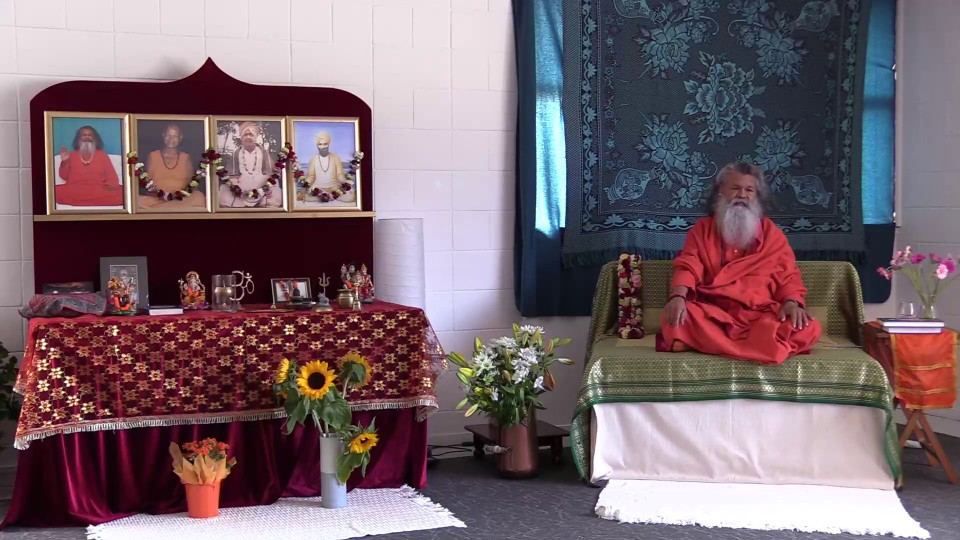
A spiritual discourse weaving stories and observations on faith, tradition, and true knowledge.
"Any lecture we hear... for one and a half or two and a half minutes we have concentration, then we don't have concentration... but that story is there; that story will never forget."
"We must not have a thousand, but even a hundred is enough, or one is enough. My Gurujī said, 'A hundred goats and one tiger is more than enough.'"
The lecturer delivers an evening satsang, moving from observations on preparation and cultural greetings into profound spiritual parables. He shares stories including a Pope testing devotees' faith, a devoted brother walking on water, and the mythological tales of Śiva, Śakti, and the sage Śukadeva, all illustrating that heartfelt devotion surpasses mere intellectual knowledge. The talk concludes with reflections on the enduring power of stories and the core principles of yoga.
Filming location: Auckland, New Zealand
Morning practice from Strilky
14:00 - 15:19 (79 min)
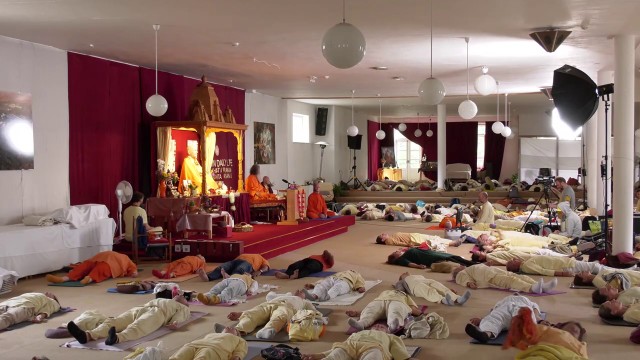
Morning satsang from Strilky Ashram, Czech Republic. Morning practice from Strilky in the presence of Vishwaguruji, led by M. M. Swami Vivekpuriji.
Supporters on the Spiritual Path
15:25 - 16:33 (68 min)
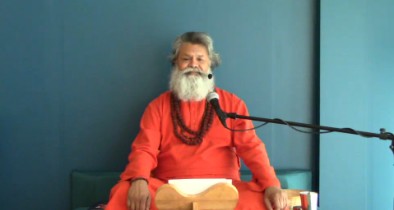
A spiritual discourse on the chakra system and the qualities needed for self-realization.
"Spiritual practice means not only just to sit and meditate and practice mantras, but to change inner feelings. Humbleness is one of the best parts of spirituality."
"Dayā dharam kā mūl hai, pāp mūl hai abhimān... the roots of the dharma, right-house-ness, is the mercy. And the roots of the sins is the ego."
Swami Brahmapuri leads a satsang, continuing a series on the chakras. He transitions from discussing the foundational Mūlādhāra Chakra to explaining the Svādhiṣṭhāna Chakra. The core teaching outlines five spiritual qualities—Vairāgya (detachment), Tyāga (renunciation), Bhakti (devotion), Jñāna (knowledge), and Dayā (mercy)—as the means to overcome negative obstacles like desire and anger. He illustrates these principles with stories of Krishna and Shiva, and gives practical advice, including how to care for a rudrākṣa bead.
Filming location: Vancouver, Canada
Purify your prana
16:40 - 17:44 (64 min)
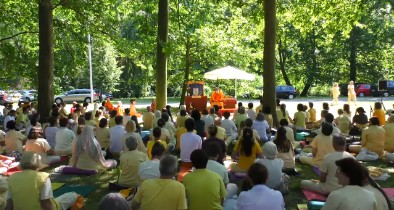
Morning satsang with Vishwaguruji from Summer Retreat in Vep, Hungary. We should protect every creature, not only humans. Bad smell indicates impurities in the prana. Sattvic nourishment and practicing yoga exercises cleans the prana and energies in the body.
Yoga for the physical body and beyond
17:50 - 18:12 (22 min)
A morning satsang at a summer retreat discussing the modern practice of yoga and a return to spiritual roots.
"Spirituality does not mean religious practice. Spirituality means not only doing meditation, but encompasses everything."
"Yoga is from the mother’s womb until liberation, and it should be a very easy practice. Everyone can do it."
The teacher addresses the assembly, reflecting on the global spread of yoga since International Yoga Day. He cautions against practices focused solely on physical fitness or difficult postures, which he links to future injuries, and criticizes the commercialization of yoga. Emphasizing the need for a genuine guru lineage, he shares the discovery of their spiritual ancestor, Ālagpurījī, in the Himalayas, and concludes with remarks on environmental protection and a blessing for practice.
Filming location: Vép, Hungary
The hatha yogi wants to live a long and healthy life
18:20 - 19:11 (51 min)

A satsang on herbal remedies and the principles of Haṭha Yoga.
"You take only a little of this babool fruit... Shake it in the water... By morning, it is ready. You drink the water, and you eat that."
"The biggest enemy of the human is laziness. Where there is laziness, there is tamas guṇa."
Swami Ji leads a session beginning with practical uses for neem and babool plants, sharing recipes and a disciple's testimony about neem healing a wound. The talk transitions into the philosophy of a Haṭha Yogī, emphasizing the conquest of laziness, dietary practices including the defense of garlic, and internal cleansing. The session concludes with a live demonstration of the Agni Sāra Kriyā by a disciple.
Filming location: Vép, Hungary
Proper exercise is important to us
19:15 - 19:47 (32 min)
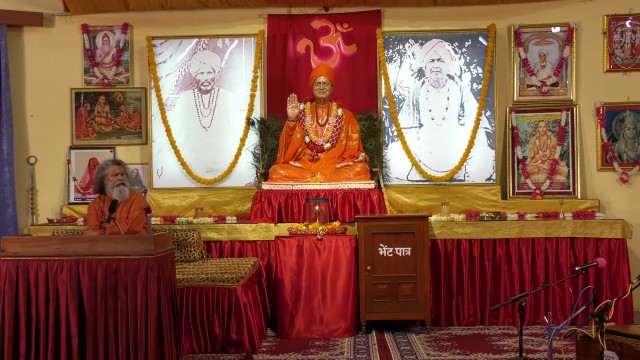
Evening satsang from Jadan Ashram, Rajsthan, India. Two things are important in our lives. What we eat and what we breathe. Yoga in Daily Life are practiced all over the world. Sarva Hitta asanas are good for everyone. Proper exercise is as important to us as food.
Eat healthy food and live as a human
19:55 - 20:38 (43 min)
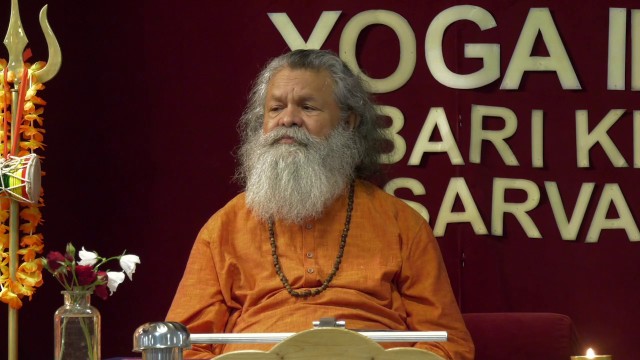
A spiritual discourse on prayer, lifestyle, and simple daily remembrance.
"Morning, midday, evening—always the whole family, women, men, and children. When they sat at the table to eat, they would pray."
"When we open our eyes, then tell, 'I am human.'... And then, second, don't look at animals and this and that first. Mother, mother. So see our mother."
The lecturer reflects on the decline of traditional prayer across religions and its connection to modern societal problems. He discusses dietary shifts, including the rise of veganism, and critiques modern agriculture's impact on the earth. He concludes with a simple daily practice: upon waking, remember "I am human," honor Mother Earth, and reverence water as life.
Filming location: Strilky, Czech Republic
Chakras, Nadis and Kundalini
20:45 - 21:24 (39 min)
A discourse on the subtle energy systems of yoga, including chakras, nāḍīs, and the mind.
"The chakras are a methodological representation. You will not see this exact picture if you look within your own body, so do not try to see it literally."
"The mind is a river; we should not block it. If we block a dam, we must provide an outlet. Without an outlet, the dam will break and cause greater harm. The mind needs direction."
The teacher provides a detailed explanation of the chakra and nāḍī (energy channel) system, relating it to human physiology, the elements, and life metaphors like a leaf separating from a tree. Key themes include the symbolic nature of chakras, the function of the Iḍā and Piṅgalā nāḍīs, the dangers of improperly awakening kuṇḍalinī energy, and how suppressed emotions manifest as physical ailments. The talk integrates concepts of the five sheaths (kośas), the role of the guru, and the purpose of spiritual practice for holistic health.
Filming location: London, UK
Yoga is One
21:30 - 22:01 (31 min)
A spiritual talk on the principles and practice of yoga in daily life.
"Yoga is the yoga. It’s the yoga, that’s all then. There’s nothing else."
"Yoga in daily life... means we should practice every day. That’s all. And that is for everyone, whether they are Hindus, Muslims, Christians, or anybody."
The speaker addresses a group, holding up the system's foundational book. He emphasizes that true yoga requires daily practice according to these teachings, not just theoretical knowledge. He discusses the importance of ethical living, notably vegetarianism, criticizes the dilution of yoga by other systems, and urges a return to disciplined, foundational practice. The talk meanders through topics including dietary rules, the global spread of yoga, and personal anecdotes.
Filming location: Austria
Mind and chakras
22:05 - 22:30 (25 min)
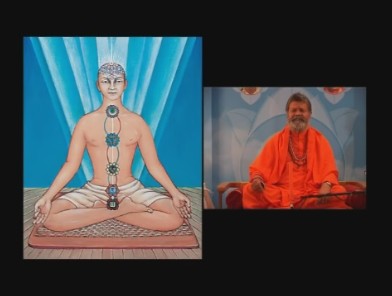
A lecture on the nature of the mind, subconscious impressions, and yogic philosophy.
"Our senses are mostly connected to and work with the consciousness, the awakened state."
"The mind is that principle which functions between the conscious and subconscious, pendling up and down."
The teacher provides a detailed explanation of how sensory impressions become stored desires in the subconscious, using the analogy of an unfulfilled ice cream craving manifesting in a dream. He describes the mind as a pendulum between conscious and subconscious levels, warning against blocking mental energy and instead advocating for directing it through self-discipline. The talk expands into the relationship between emotion, intellect, consciousness, and the nadis (Ida, Pingala, Sushumna), linking psychological concepts to the chakra system and the dormant energy of kundalini.
Filming location: Brisbane, Australia
We have to go on that path
22:35 - 23:32 (57 min)
Evening satsang with Vishwaguruji from Himalaya. Sri Alakhpuriji Cave. Here is the place of peace and happiness. Alakhpuriji has given us his carana amrit. Bhagirati's disciple was Ganga and Alakhpuriji's disciple was Nanda Devi. Singing and explanation of bhajan or arati Sri Guru Atma Paramatma. Alakh means we can not write we can not speak about. In reality, Alakhpuruji created this arati through Sivanandji and he brought it to us Vishwaguruji. We have to follow Alkhpuriji's path with concentration. This path drives us to Brahma Loka. We are those souls who can give this blessing and energy. Singing bhajan Sabda Sanehi Mhari Jatra, Guru carano me, Manv Dhire Dhire and Sataguru Satasangi.
The One in All and All in One
23:40 - 0:08 (28 min)
A spiritual discourse on universal consciousness, creation, and human purpose.
"Our great master used to say, 'One in all and all in one.'"
"Yoga is not physical postures... Yoga is the balancing principle... Where there is a balance, there is harmony."
The lecturer delivers a talk exploring the origins of the universe, consciousness, and the principle of yoga. He explains the Vedic concept of creation from sound (Aum) and the elemental evolution from space to earth. The discourse covers the oneness of all life, the unique potential of human intellect, and the importance of education in human values, tolerance, and understanding. He concludes by relating the cycle of rebirth to the modern concept of recycling.
Filming location: Brisbane, Australia
American
Australian