
European
We should unite with the Supreme
0:40 - 0:59 (19 min)
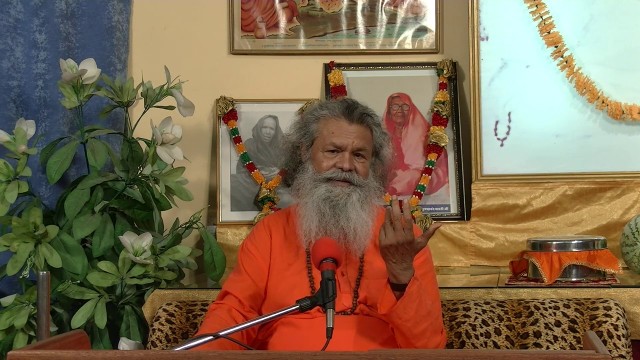
A spiritual discourse on the nature of the individual soul and its merging with the divine.
"Your father was, let’s say, 20, 35 years, and his mother also, something like that, and they gave the baby, the child, and that child begins from there."
"We are all like one drop. We know we are on this earth. We are individual, our body, everything. What it is, but we want to become one with that, so that I will not come again back."
The speaker addresses a gathering, using the metaphor of a single drop of water to explore the journey of the individual soul (ātman) toward merging with the infinite ocean of the divine. He discusses the temporary nature of earthly life, relationships, and identity, emphasizing the ultimate desire to transcend individuality and become one with the cosmic whole. The talk concludes with a chant and salutations.
Filming location: Jadan, Rajasthan, India
Around The World - Summer Yoga at the Beach, Split, CRO
1:00 - 1:06 (6 min)
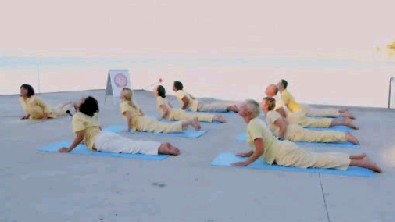
Summer Yoga at the Beach, Split, Croatia
Around The World - Surya Namaskar at Sri Devpuriji Ashram, Zagreb, CRO
1:10 - 1:46 (36 min)
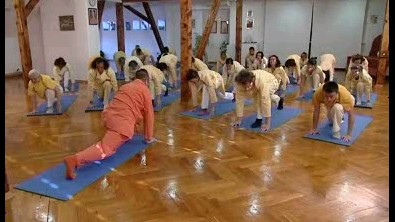
Surya Namaskar in Sri Devpuriji Ashram, Zagreb, Croatia with english subtitles
Peace Tree planting
1:50 - 2:13 (23 min)
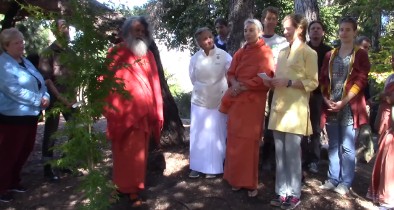
Peace tree planting by Vishwaguruj, Oakland, California, USA. Yoga is the path to the nonviolence and peace. If we would like to change our life we should change our way of thinking. We should start with the first thoughts in the morning. I am human, what makes me a human? What are the human qualities? How to develop them? Demonstration of the presence of the self healing energy in the body.
Yoga for the physical body and beyond
2:20 - 2:42 (22 min)
A morning satsang at a summer retreat discussing the modern practice of yoga and a return to spiritual roots.
"Spirituality does not mean religious practice. Spirituality means not only doing meditation, but encompasses everything."
"Yoga is from the mother’s womb until liberation, and it should be a very easy practice. Everyone can do it."
The teacher addresses the assembly, reflecting on the global spread of yoga since International Yoga Day. He cautions against practices focused solely on physical fitness or difficult postures, which he links to future injuries, and criticizes the commercialization of yoga. Emphasizing the need for a genuine guru lineage, he shares the discovery of their spiritual ancestor, Ālagpurījī, in the Himalayas, and concludes with remarks on environmental protection and a blessing for practice.
Filming location: Vép, Hungary
Yoga and nature is one
2:45 - 3:12 (27 min)
A spiritual address on the essence of yoga and Ayurveda as a natural way of life.
"Yoga is the science of humans. Yoga is a natural way of life."
"Āyurveda is one of the first ancient medicines. It originates from what we call the Yugas, which span millions of years."
Swami Ji addresses an international gathering at a college in Hungary, following a tree-planting ceremony. He explains the ancient, plant-based origins of Ayurveda and contrasts it with modern chemical medicine, acknowledging the value of both. He discusses the role of diet, particularly sugar, in health, and criticizes purely acrobatic approaches to yoga, emphasizing that "Yoga in Daily Life" is a holistic system for health and longevity. The talk expands into spiritual themes, stating we are all God and that our actions determine our fate.
Filming location: Vép, Hungary
Everything is in your hands
3:15 - 3:50 (35 min)
A discourse on the initiation of eight new sannyāsīs and the principle of personal responsibility.
"Whether this bird is alive or dead depends on your hands. That I cannot say to you. That depends on you."
"Everything is in your hands; your enlightenment is in your hands. Your liberation is in your hands."
The speaker recounts the recent initiation of eight disciples into sannyāsa during a journey to the Kumbh Melā, describing the character and journey of several, including Yogīś, Premānandjī, and devotees from Australia and Israel. He emphasizes that the decision for spiritual progress and liberation ultimately rests with the individual, illustrating this with a parable about a bird whose fate lies in a disciple's hands. The talk concludes with practical instructions on attire for disciples and reflections on the serious commitment of sannyāsa.
Filming location: Vép, Hungary
Mind and chakras
3:55 - 4:20 (25 min)
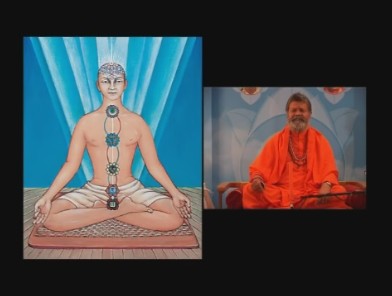
A lecture on the nature of the mind, subconscious impressions, and yogic philosophy.
"Our senses are mostly connected to and work with the consciousness, the awakened state."
"The mind is that principle which functions between the conscious and subconscious, pendling up and down."
The teacher provides a detailed explanation of how sensory impressions become stored desires in the subconscious, using the analogy of an unfulfilled ice cream craving manifesting in a dream. He describes the mind as a pendulum between conscious and subconscious levels, warning against blocking mental energy and instead advocating for directing it through self-discipline. The talk expands into the relationship between emotion, intellect, consciousness, and the nadis (Ida, Pingala, Sushumna), linking psychological concepts to the chakra system and the dormant energy of kundalini.
Filming location: Brisbane, Australia
We have to go on that path
4:25 - 5:22 (57 min)
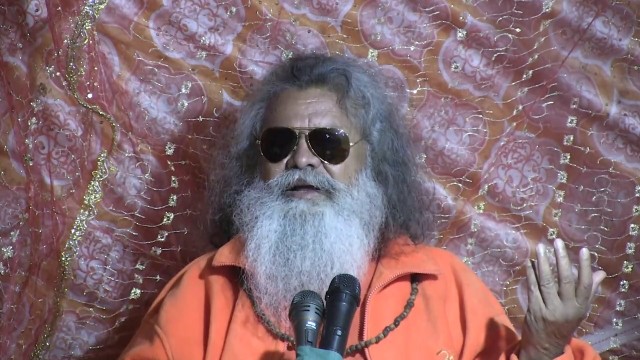
Evening satsang with Vishwaguruji from Himalaya. Sri Alakhpuriji Cave. Here is the place of peace and happiness. Alakhpuriji has given us his carana amrit. Bhagirati's disciple was Ganga and Alakhpuriji's disciple was Nanda Devi. Singing and explanation of bhajan or arati Sri Guru Atma Paramatma. Alakh means we can not write we can not speak about. In reality, Alakhpuruji created this arati through Sivanandji and he brought it to us Vishwaguruji. We have to follow Alkhpuriji's path with concentration. This path drives us to Brahma Loka. We are those souls who can give this blessing and energy. Singing bhajan Sabda Sanehi Mhari Jatra, Guru carano me, Manv Dhire Dhire and Sataguru Satasangi.
Bhajan evening in Jadan Ashram
5:30 - 6:12 (42 min)
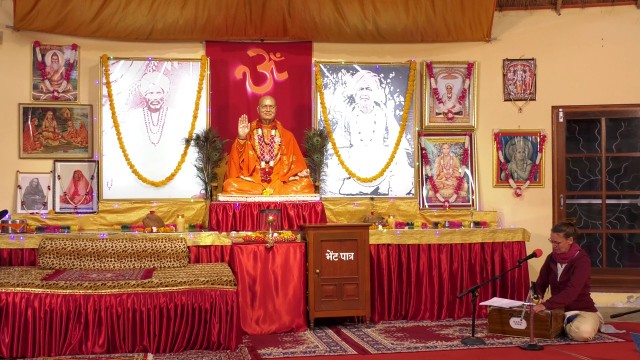
Evening satsang from Jadan Ashram, Rajasthan, India. Bhajan singing
Bhajan singing from Jadan Ashram
6:20 - 7:06 (46 min)
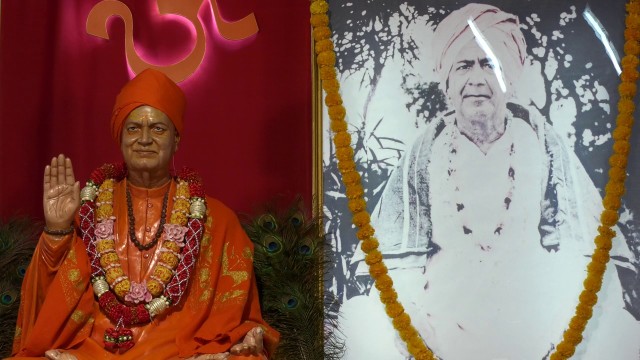
Evening satsang with Vishwaguruji from Jadan Ashram, Rajasthan, India.
Bhajan evening in Strilky Ashram
7:10 - 7:56 (46 min)
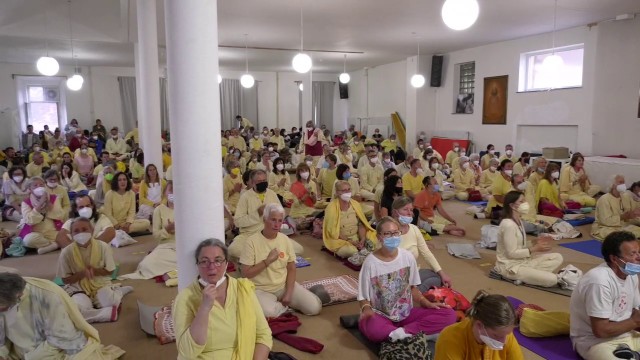
Evening satsang with Vishwaguruji from Strilky Ashram, Czech Republic. Bhajan singing.
Bhajans from Slovenska Vas
8:00 - 8:44 (44 min)
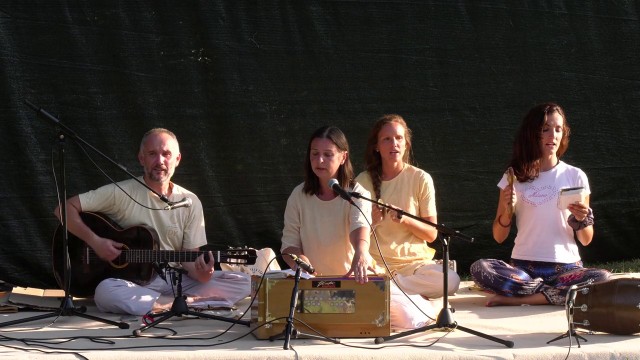
Evening satsang from Slovenska Vas, Slovenia.
Purify your prana
8:50 - 9:54 (64 min)
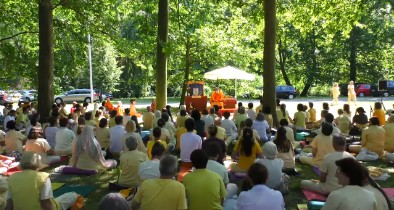
Morning satsang with Vishwaguruji from Summer Retreat in Vep, Hungary. We should protect every creature, not only humans. Bad smell indicates impurities in the prana. Sattvic nourishment and practicing yoga exercises cleans the prana and energies in the body.
We have to go on that path
10:00 - 10:57 (57 min)
Evening satsang with Vishwaguruji from Himalaya. Sri Alakhpuriji Cave. Here is the place of peace and happiness. Alakhpuriji has given us his carana amrit. Bhagirati's disciple was Ganga and Alakhpuriji's disciple was Nanda Devi. Singing and explanation of bhajan or arati Sri Guru Atma Paramatma. Alakh means we can not write we can not speak about. In reality, Alakhpuruji created this arati through Sivanandji and he brought it to us Vishwaguruji. We have to follow Alkhpuriji's path with concentration. This path drives us to Brahma Loka. We are those souls who can give this blessing and energy. Singing bhajan Sabda Sanehi Mhari Jatra, Guru carano me, Manv Dhire Dhire and Sataguru Satasangi.
Webcast from London
11:05 - 12:10 (65 min)
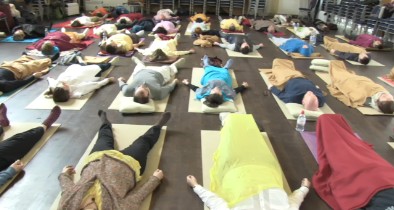
Morning practice with Vishwaguruji from London, UK.
Supporters on the Spiritual Path
12:15 - 13:23 (68 min)
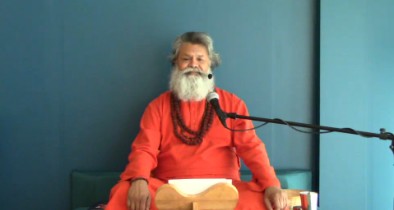
A spiritual discourse on the chakra system and the qualities needed for self-realization.
"Spiritual practice means not only just to sit and meditate and practice mantras, but to change inner feelings. Humbleness is one of the best parts of spirituality."
"Dayā dharam kā mūl hai, pāp mūl hai abhimān... the roots of the dharma, right-house-ness, is the mercy. And the roots of the sins is the ego."
Swami Brahmapuri leads a satsang, continuing a series on the chakras. He transitions from discussing the foundational Mūlādhāra Chakra to explaining the Svādhiṣṭhāna Chakra. The core teaching outlines five spiritual qualities—Vairāgya (detachment), Tyāga (renunciation), Bhakti (devotion), Jñāna (knowledge), and Dayā (mercy)—as the means to overcome negative obstacles like desire and anger. He illustrates these principles with stories of Krishna and Shiva, and gives practical advice, including how to care for a rudrākṣa bead.
Filming location: Vancouver, Canada
Mind and chakras
13:30 - 13:55 (25 min)
A lecture on the nature of the mind, subconscious impressions, and yogic philosophy.
"Our senses are mostly connected to and work with the consciousness, the awakened state."
"The mind is that principle which functions between the conscious and subconscious, pendling up and down."
The teacher provides a detailed explanation of how sensory impressions become stored desires in the subconscious, using the analogy of an unfulfilled ice cream craving manifesting in a dream. He describes the mind as a pendulum between conscious and subconscious levels, warning against blocking mental energy and instead advocating for directing it through self-discipline. The talk expands into the relationship between emotion, intellect, consciousness, and the nadis (Ida, Pingala, Sushumna), linking psychological concepts to the chakra system and the dormant energy of kundalini.
Filming location: Brisbane, Australia
Practicing from Strilky
14:00 - 15:31 (91 min)
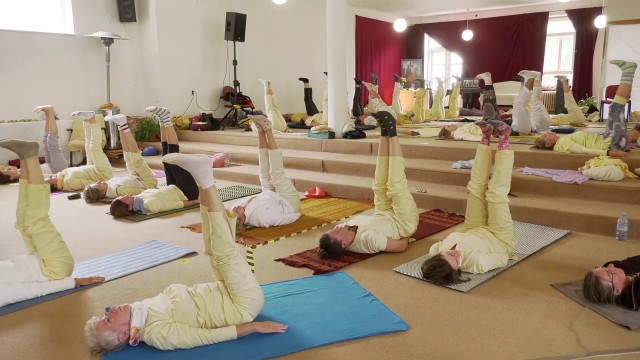
Morning satsang from Strilky Ashram, Czech Republic. Practice with Vishwaguruji and Swami Umapuriji.
One day we will be together
15:35 - 16:19 (44 min)
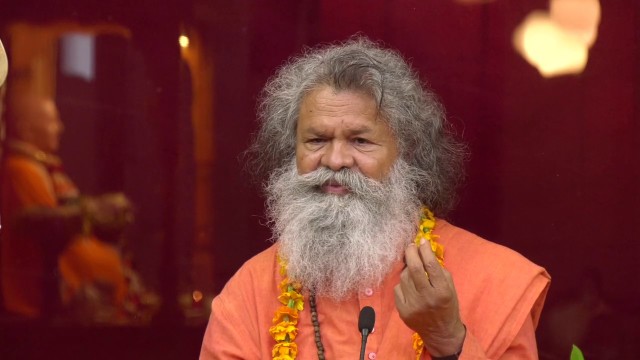
An evening satsang on spiritual unity and the essence of all paths.
"It is very important that everyone has their yoga center's name... but yoga is only one yoga; we simply have different names."
"All children are born into what we call a kindergarten. In the kindergarten, we see all children as very beautiful and very good."
The lecturer addresses the global Yoga in Daily Life community, using analogies of families, children, and the water cycle to illustrate the fundamental oneness underlying all yoga schools, religions, and human beings. He emphasizes respect for all traditions and lineages while cautioning against the discord created by attachment to names and identities. The talk concludes with a prayer for harmony and a reminder to seek inner unity.
Filming location: Strilky, Czech Republic
Yoga is One
16:25 - 16:56 (31 min)
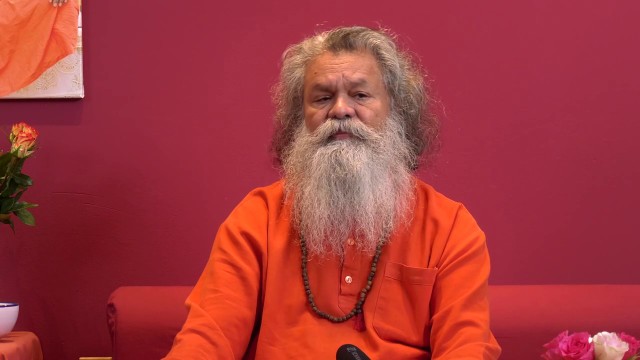
A spiritual talk on the principles and practice of yoga in daily life.
"Yoga is the yoga. It’s the yoga, that’s all then. There’s nothing else."
"Yoga in daily life... means we should practice every day. That’s all. And that is for everyone, whether they are Hindus, Muslims, Christians, or anybody."
The speaker addresses a group, holding up the system's foundational book. He emphasizes that true yoga requires daily practice according to these teachings, not just theoretical knowledge. He discusses the importance of ethical living, notably vegetarianism, criticizes the dilution of yoga by other systems, and urges a return to disciplined, foundational practice. The talk meanders through topics including dietary rules, the global spread of yoga, and personal anecdotes.
Filming location: Austria
Part 1: Yoga, Stress, and Cardiovascular Disease: A Cardiologist's Perspective
17:00 - 18:47 (107 min)
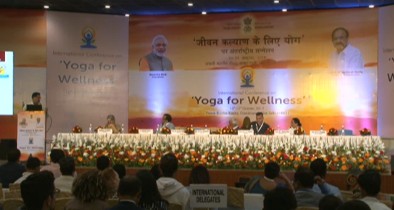
A cardiology conference lecture on yoga, stress, and cardiovascular disease.
"Chronic stress should be treated on par with the other cardiovascular risk factors like hypertension, diabetes, dyslipidemia, and smoking—but we ignore it."
"This is the first study that actually demonstrated that metabolic activity within the amygdala is associated with risk of developing cardiovascular disease."
Professor Dr. Gautam Sharma, a cardiologist from AIIMS Delhi, presents data on the global burden of heart disease, arguing for stress to be recognized as a major risk factor. He cites neuroimaging research linking amygdala activity to cardiovascular events and reviews studies on yoga's benefits, while highlighting the need for more robust clinical trials to validate yoga as a therapeutic intervention.
Filming location: Delhi, India
Traveling with Swamiji (1/5)
18:50 - 18:57 (7 min)
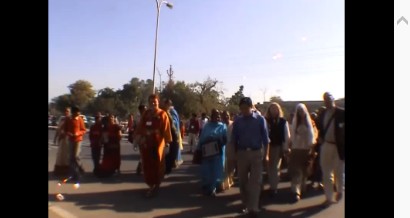
Second International conference of ancient traditions and cultures. Organized by Indian government and with participants from 40 countries.
Vegetarian kitchen in praxis (part 2)
19:00 - 20:08 (68 min)
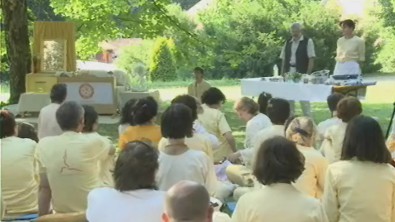
A culinary lecture and demonstration on vegetarian cooking, focusing on legumes and practical dietary wisdom.
"A common mistake is when someone says, 'I am independent of food; I am already a great yogī; I do not care what I eat.' But this is not a sign of spiritual maturity."
"The difference between us vegetarians and non-vegetarians is that we eat such food daily, while they might have it two or three times a week."
The speaker, Jaroslav, opens by discussing the philosophy of vegetarian food, arguing it should be a pleasurable gastronomic experience for everyone. He addresses protein sources, the role of fats, and critiques common dietary mistakes. His wife then takes over to explain detailed techniques for preparing legumes to improve digestibility, including soaking, peeling, and spicing. She also introduces a product called Hraška (pea flour) as a versatile, egg-like binding agent. The session concludes with a Q&A where the couple fields questions on soy sauce, legume varieties, and product availability.
Filming location: Strilky, Czech Republic
Don't kill animals, remain clean
20:15 - 21:28 (73 min)
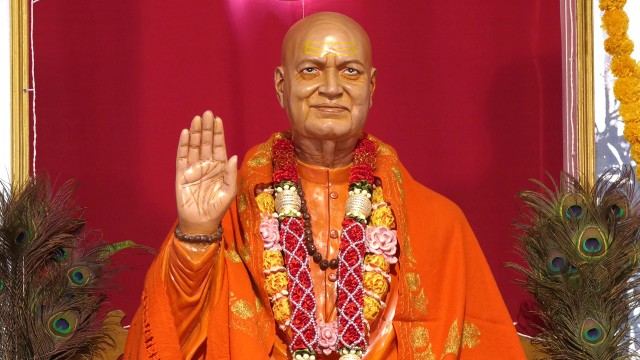
Evening sastang from Jadan Ashram, Rajasthan, India. When it rains, it feeds all the vegetation. The sea, the grass, the trees need water. Only humans can reach the highest. Those who don't use drugs or drink alcohol. Today, the whole world, all religions and cultures are right in the palm of our hands, accessible by mobile phone. With the help of yoga, meditation and ancient sacred scriptures, spirituality can be realized. Outer purity means inner purity.Chemical pollution is a big problem all over the Earth.
The Nature of Kuṇḍalinī, Śiva, and Śakti
21:35 - 22:15 (40 min)
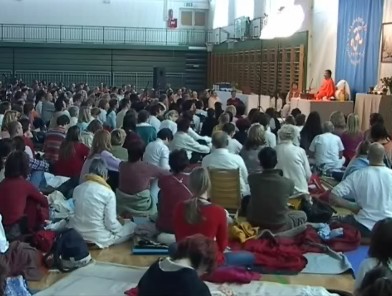
A spiritual discourse on the nature of Kuṇḍalinī, Śiva, and Śakti.
"Śiva means consciousness, not a physical form. It is the entire consciousness that dwells in the universe."
"Śakti is also that energy which dwells in the entire universe, and it resides in our body as well—Paraśakti, Mahāśakti, Śakti, whatever you call it."
The teacher continues a lesson on Kuṇḍalinī, explaining it as the divine energy and consciousness within. He elaborates on Śiva as pure, liberating consciousness and Śakti as the active energy governing karma, whose union leads to Self-realization. He stresses the necessity of a master's guidance and years of sāttvic practice for the safe, gradual awakening of this energy, warning against attempting it without proper preparation.
Filming location: Kranj, Slovenia
Don't kill and understand everybody
22:20 - 23:13 (53 min)
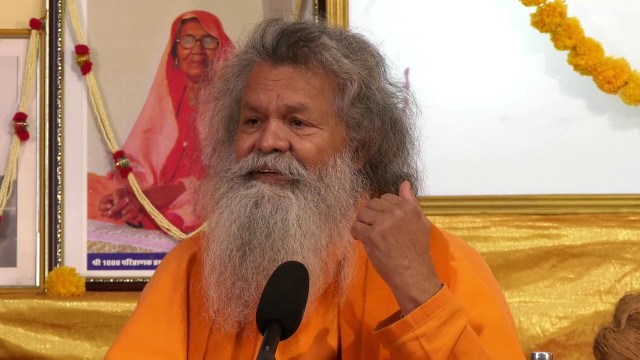
Evening satsang with Vishwaugurji from Jadan Ashram, Rajasthan, India. Vishwaguruji is also with us through our practice. Creatures are killing each other but humans have got all qualities from God so we have responsibility for how to use them. We have to work ourselves to become God. Any religious people should accept and respect the Gods of others also. Our souls will unite with God like a drop of water with the ocean. Atma will not fie. We should like and help all old people. We have many Gurus. Everybody is a Guru who teaches us something. It is not easy also to be a Guru. The story of how Bhramari chooses its successor. There are only three or four languages that are completely used in both hemispheres. Practising different variations of bhramari pranayama.
Chakras, Nadis and Kundalini
23:20 - 23:59 (39 min)
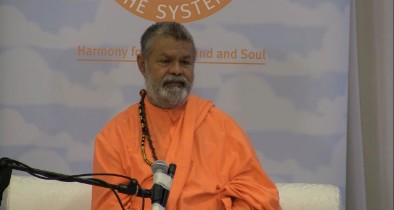
A discourse on the subtle energy systems of yoga, including chakras, nāḍīs, and the mind.
"The chakras are a methodological representation. You will not see this exact picture if you look within your own body, so do not try to see it literally."
"The mind is a river; we should not block it. If we block a dam, we must provide an outlet. Without an outlet, the dam will break and cause greater harm. The mind needs direction."
The teacher provides a detailed explanation of the chakra and nāḍī (energy channel) system, relating it to human physiology, the elements, and life metaphors like a leaf separating from a tree. Key themes include the symbolic nature of chakras, the function of the Iḍā and Piṅgalā nāḍīs, the dangers of improperly awakening kuṇḍalinī energy, and how suppressed emotions manifest as physical ailments. The talk integrates concepts of the five sheaths (kośas), the role of the guru, and the purpose of spiritual practice for holistic health.
Filming location: London, UK
American
Australian