
European
We need purity in our minds and souls
0:00 - 0:54 (54 min)
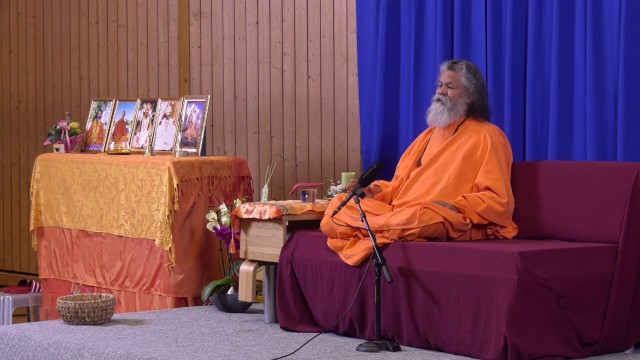
A spiritual discourse on unity, the nature of the soul, and daily practice.
"A very fine drop is also that... This very fine drop will become the whole ocean."
"God is each and every one: your mother and your father are God. Then come the children; they are our gods."
Swami Maheshwarananda (addressed as Guruji) delivers an evening satsang, reflecting on his travels and the global family of Yoga in Daily Life. He explores the metaphor of the individual as a drop merging into the divine ocean, discusses the relationship between science and spirituality, and emphasizes lifelong purification, respect for parents as divine, and integrating spiritual practice into daily life through mantra and humility.
Filming location: Salzburg, Austria
The Essence of Yoga in Daily Life
1:00 - 1:35 (35 min)
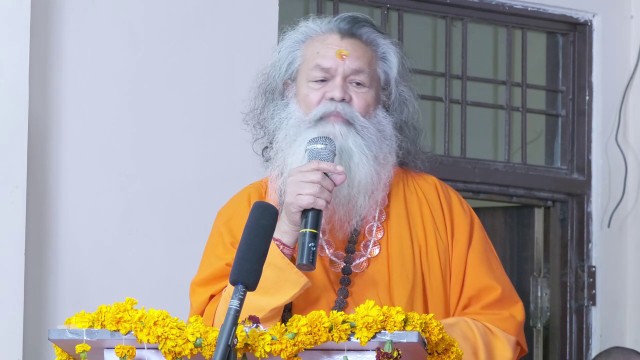
A spiritual discourse and award ceremony on integrating yoga and Sanātana Dharma into daily life.
"You should know why you have come to this world." "Yoga in daily life means in the whole world, in the whole world."
A speaker, referencing Gurudev and Swami Madhavanand, delivers a wide-ranging talk emphasizing the purpose of human life, the principles of yoga, and the protection of animals and Indian culture. He shares anecdotes about teaching yoga abroad, insists on vegetarianism for practitioners, and discusses the global spread of both meat-eating and veganism. The event includes the presentation of awards for promoting Indian culture and peace, with thanks given to organizing institutions like Apex University and the Yoga in Daily Life Foundation.
Filming location: Jaipur, Rajasthan, India
Be Under His Shelter
1:40 - 2:45 (65 min)
A spiritual discourse on cultivating inner peace through faith, surrender, and overcoming inner obstacles.
"One who is always under divine shelter is safe. But how does one come under God's shelter?"
"If you have peace within, you can bring peace outside. Without inner peace, you cannot."
The speaker delivers a satsang, weaving together devotional songs, parables, and teachings to explore the path to inner peace. He discusses the necessity of true surrender and faith in God, illustrated by a story of an atheist climber. Using examples from Gandhi and analyses of inner fires like anger and desire, he explains how peace is developed through prayer, meditation, and purifying negative qualities like rāga (attachment) and krodha (anger). The talk emphasizes that world peace begins with individual inner peace.
Filming location: Wellington, New Zealand
We are here to learn
2:50 - 3:14 (24 min)
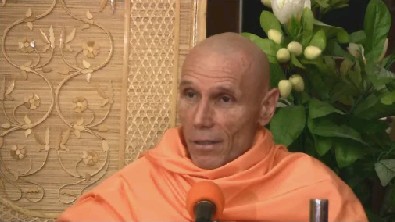
A spiritual discourse on the root of global peace and personal sorrow.
"Since we cannot find the true reason for our misfortunes and dissatisfaction, our ego asserts it is always right."
"The answer for a happy and peaceful world lies only in spirituality, in self-development, in working with oneself, in understanding that we are divine beings originating from the Divine."
Swami Jogeshanand begins with a dedication and explores the theme of peace, connecting personal longing and sorrow to global conflict. He argues that war and extremism stem from humanity's forgotten divine nature and identification with the ego, and calls for religious and political leaders to achieve enlightenment through genuine spiritual practice. He invites listeners to all sincere paths while specifically welcoming them to Yoga in Daily Life centers.
Filming location: Jadan, Rajasthan, India
The Third Eye and the Awakening of the Mūlādhāra Cakra
3:15 - 3:53 (38 min)
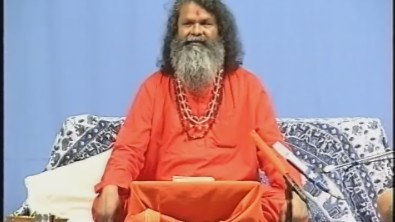
A spiritual discourse on the third eye and the Mūlādhāra Cakra.
"The third eye signifies wisdom. All your karmas will be burned, and everything becomes pure."
"When we begin to awaken the Mūlādhāra Cakra, it is a wonderful feeling. You feel like you are coming out of darkness, like a seed which was under the earth now begins to sprout."
The speaker delivers a teaching on subtle anatomy, beginning with the wisdom of the third eye before focusing on the foundational Mūlādhāra Cakra. Using the symbol's imagery—the lotus, the elephant of prosperity, the coiled serpent of time, and the Śiva Liṅga—they explain the cakra's role as the seat of dormant energy (Śakti) and its awakening as the start of the spiritual journey toward union with supreme consciousness. The talk includes practical spiritual advice, references to Gaṇeśa, and concludes with a chant.
Filming location: Umag, Croatia
Peace Tree planting
4:00 - 4:23 (23 min)
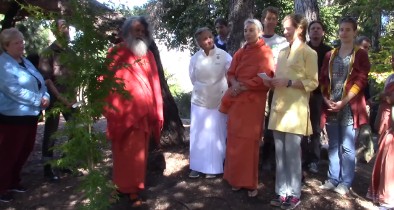
Peace tree planting by Vishwaguruj, Oakland, California, USA. Yoga is the path to the nonviolence and peace. If we would like to change our life we should change our way of thinking. We should start with the first thoughts in the morning. I am human, what makes me a human? What are the human qualities? How to develop them? Demonstration of the presence of the self healing energy in the body.
Each persons body is like the temple of God
4:30 - 5:25 (55 min)
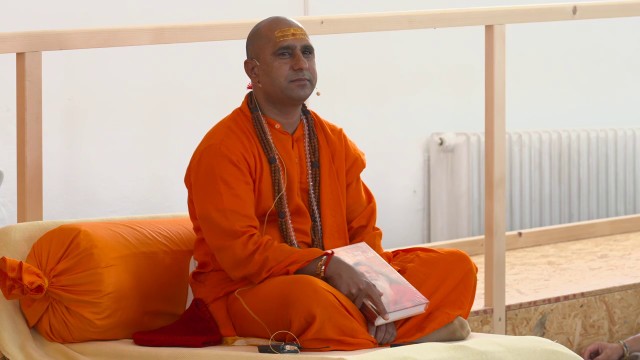
Morning program from Summer Yoga Camp, Strilky, Czech Republic. Lecture by MMS. Phulpuriji. Bhajans written by our Masters of our Parampara show us the way to the Brahmaloka. For us, God is here. Translation of the Bhajan written by one of the great Saints. Introduction of Vishwaguruji's Biography. The book is the Guru itself. Singin a Bhajan. Sort talk by Swami Avatarpuriji from the life of Sri Sankarajaryaji's life and works.
Bhajans for World Peace (1/3)
5:30 - 7:27 (117 min)
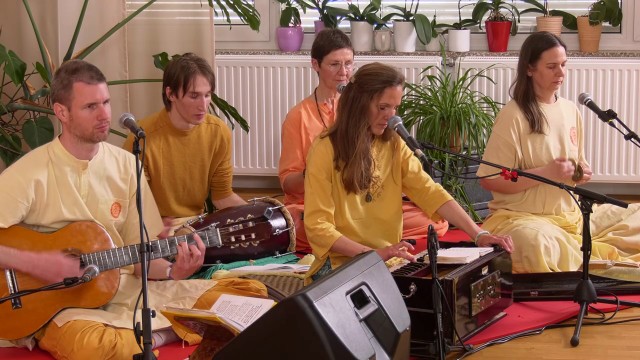
For world peace, first we need to find peace within ourselves. A recording of a live concert for world peace in YIDL center in Villach, Austria. Public concert lasted 6h with uninterrupted Bhajans. The concert was a part of a 24h of Bhajan Anushtana.
Bhajans for World Peace (2/3)
7:35 - 8:41 (66 min)
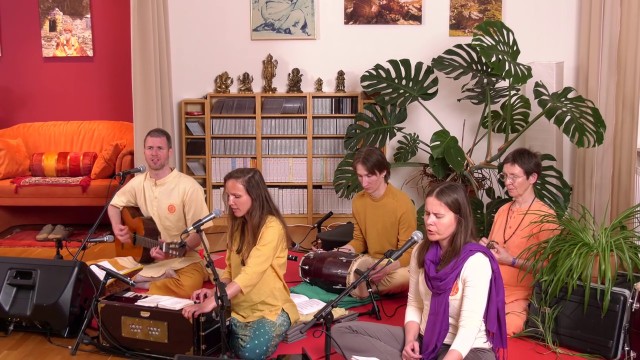
For world peace, first we need to find peace within ourselves. A recording of a live concert for world peace in YIDL center in Villach, Austria. Public concert lasted 6h with uninterrupted Bhajans. The concert was a part of a 24h of Bhajan Anushtana.
The wisdom of Chakras
8:45 - 10:07 (82 min)
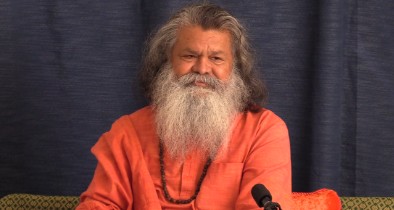
A yoga and meditation session focusing on hand mudrās, chakras, and daily spiritual practice.
"Symbolically, as a mudrā in yogic science, the thumb represents the Supreme... The index finger represents our self. Our aim is to become one."
"Research in many European hospitals shows they practice this... When we adopt this mudrā, peace comes automatically."
A spiritual teacher instructs the group in the symbolic and practical use of a hand mudrā representing the union of the individual soul (Jīvātmā) with the supreme consciousness (Paramātmā). He explains its calming effect on the nervous system and its use in greeting and prayer. The teaching expands into managing daily stress, the influence of thoughts and words on the chakras, and practical remedies for ailments like headaches. The session includes chanting the peace mantra and other prayers, concluding with advice on spiritual study.
Filming location: Auckland, New Zealand
Be satisfied and content whatever you have
10:15 - 11:28 (73 min)
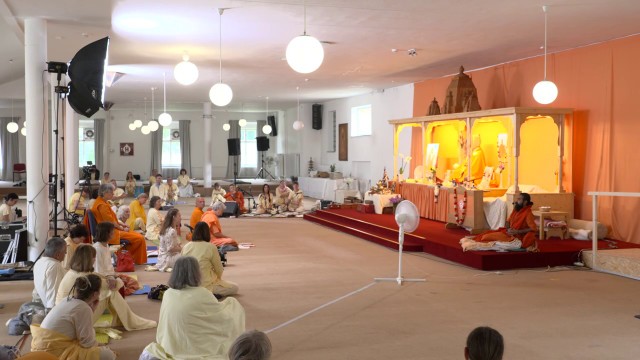
A satsang featuring spiritual stories and teachings on renunciation, ego, and the pitfalls on the spiritual path.
"Seeing you all the time indulged in these materialistic activities and always enjoying your life makes me sad."
"If you have ego, envy, or jealousy towards anything or anyone, then you get stuck in this māyā."
The lecturer narrates two primary parables. The first tells of King Gopichand, who renounces his kingdom at his mother's request and learns the true meaning of his mother's three advices for monastic life. The second, a cautionary tale, describes a powerful muni whose intense tapasya is destroyed by rising ego and desire, ultimately exploited by Kamadeva. The speaker weaves in related teachings, including a story of Lord Rama delivering justice to a dog, to emphasize controlling anger, speech, and the dangers of ego.
Filming location: Strilky, Czech Republic
Webcast from London
11:35 - 12:40 (65 min)
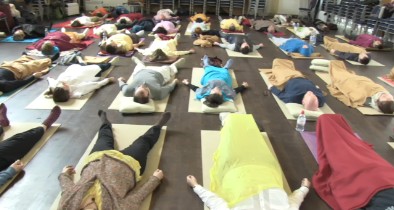
Morning practice with Vishwaguruji from London, UK.
Be Under His Shelter
12:45 - 13:50 (65 min)
A spiritual discourse on cultivating inner peace through faith, surrender, and overcoming inner obstacles.
"One who is always under divine shelter is safe. But how does one come under God's shelter?"
"If you have peace within, you can bring peace outside. Without inner peace, you cannot."
The speaker delivers a satsang, weaving together devotional songs, parables, and teachings to explore the path to inner peace. He discusses the necessity of true surrender and faith in God, illustrated by a story of an atheist climber. Using examples from Gandhi and analyses of inner fires like anger and desire, he explains how peace is developed through prayer, meditation, and purifying negative qualities like rāga (attachment) and krodha (anger). The talk emphasizes that world peace begins with individual inner peace.
Filming location: Wellington, New Zealand
Outer Situation Reflects The Inner Situation
13:55 - 14:52 (57 min)
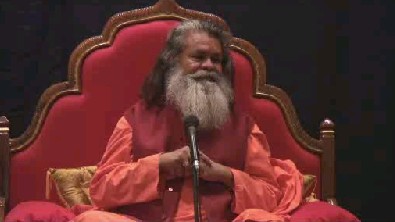
Satsang with Swamiji from Wellington, NZ. With the cleanness of our house we can see our inner condition. How we are keeping the ashram or the house in order, with this we can see our love and devotion. We can see if everything is in beauty. It is our inner beauty, the inner pureness, our inner clarity which is reflecting there. Doubts, desires and hidden wishes we did not clean up are spoiling our mind. If we are neglecting our sadhana, our duties, then tamas guna, the laziness takes over. It will grow more and more and we will find every self excuse for our mental pollution. Self enquiry meditation, which is taught in the Yoga in Daily life Yoga classes will help to clear up the question - not who am I but how am I. We have to search within, how is our inner world and how is our inner condition. Translation of the bhajan: Jag musafir dekh vo.
We need purity in our minds and souls
15:00 - 15:54 (54 min)
A spiritual discourse on unity, the nature of the soul, and daily practice.
"A very fine drop is also that... This very fine drop will become the whole ocean."
"God is each and every one: your mother and your father are God. Then come the children; they are our gods."
Swami Maheshwarananda (addressed as Guruji) delivers an evening satsang, reflecting on his travels and the global family of Yoga in Daily Life. He explores the metaphor of the individual as a drop merging into the divine ocean, discusses the relationship between science and spirituality, and emphasizes lifelong purification, respect for parents as divine, and integrating spiritual practice into daily life through mantra and humility.
Filming location: Salzburg, Austria
Don't kill and understand everybody
16:00 - 16:53 (53 min)
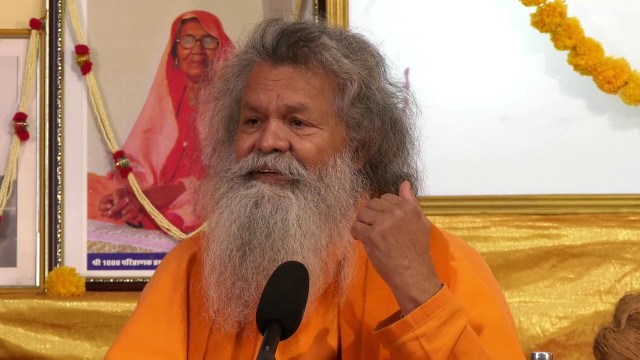
Evening satsang with Vishwaugurji from Jadan Ashram, Rajasthan, India. Vishwaguruji is also with us through our practice. Creatures are killing each other but humans have got all qualities from God so we have responsibility for how to use them. We have to work ourselves to become God. Any religious people should accept and respect the Gods of others also. Our souls will unite with God like a drop of water with the ocean. Atma will not fie. We should like and help all old people. We have many Gurus. Everybody is a Guru who teaches us something. It is not easy also to be a Guru. The story of how Bhramari chooses its successor. There are only three or four languages that are completely used in both hemispheres. Practising different variations of bhramari pranayama.
Divine Lila, Gods Play
17:00 - 17:47 (47 min)
A spiritual discourse exploring divine play, devotion, and karma through storytelling.
"His friends were called gopas, what we call disciples or friends. And his female disciples are known as gopīs."
"There is no power in the entire universe that can tie me, or close me, or stop me. But there is only one power that I cannot break, and that is love."
The lecturer narrates the pastime of young Krishna being bound by a "rope of love" to illustrate God's voluntary surrender to pure devotion. He expands on the theme by explaining the protective power of a guru-given mantra and mala, and recounts a detailed karmic parable about a leper, a donation of ghee, and a storekeeper's theft to underscore the law of cause and effect. The talk concludes with reflections on truthfulness and a brief linguistic note.
Filming location: Wellington, New Zealand
Roots are different
17:55 - 18:40 (45 min)
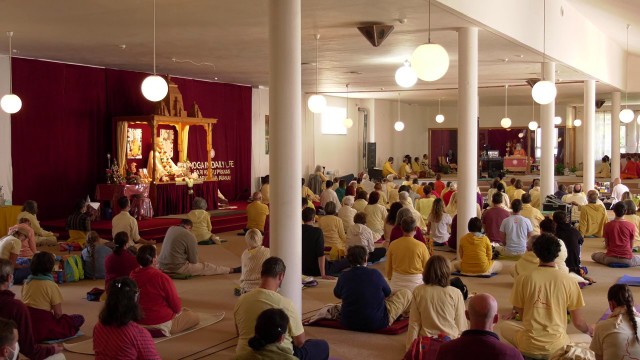
Morning satsang with Vishwaguruji from Strilky Ashram, Czech Republic. Fasting one day a week has a very good effect. Ahimsa means not doing anything to harm others. In getting angry, we destroy our spirituality. The story of a young boy who dies in an accident. Anger has many different types. Sometimes it is not very deep in our hearts. In some cases, it exists till the end of life. Practising kriya anusthan is very good for people. Guru is like a mother, disciples are like children. It is strongly prohibited to give these techniques further. The teaching of every guru is different, so don't mix them. There is one boat and one captain but many people can be in a boat. The story of a minister who attended Vishwaguruji's yoga class.
Yoga Is The Science Of Body, Mind, Consciousness And Soul
18:45 - 19:28 (43 min)
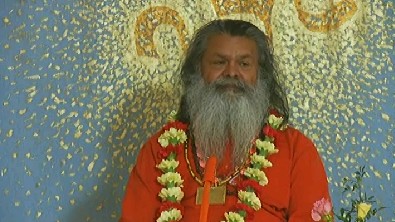
A satsang reflecting on forty years of the Yoga in Daily Life system in the Czech Republic.
"Tomorrow, the 3rd of March, marks 40 years since Swāmījī first came to the Czech Republic."
"Yoga is the science of body, mind, consciousness, and soul. What we call yoga is the way to God."
Due to Swamiji's delayed arrival, a senior disciple leads the gathering. He guides a reflective exercise on life before and after encountering the yoga teachings, shares a personal story of humility, and reports on a scientific conference validating the system's health benefits. The discourse then expands into the nature of yoga, self-realization, and cautions against commercialized, physically extreme practices.
Filming location: Czech Republic
The Nature of Kuṇḍalinī, Śiva, and Śakti
19:35 - 20:15 (40 min)
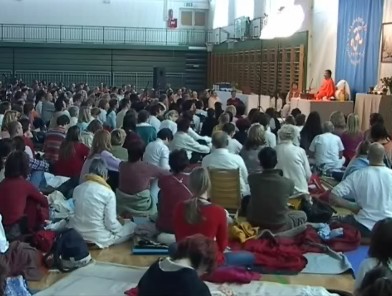
A spiritual discourse on the nature of Kuṇḍalinī, Śiva, and Śakti.
"Śiva means consciousness, not a physical form. It is the entire consciousness that dwells in the universe."
"Śakti is also that energy which dwells in the entire universe, and it resides in our body as well—Paraśakti, Mahāśakti, Śakti, whatever you call it."
The teacher continues a lesson on Kuṇḍalinī, explaining it as the divine energy and consciousness within. He elaborates on Śiva as pure, liberating consciousness and Śakti as the active energy governing karma, whose union leads to Self-realization. He stresses the necessity of a master's guidance and years of sāttvic practice for the safe, gradual awakening of this energy, warning against attempting it without proper preparation.
Filming location: Kranj, Slovenia
The Primacy of the Name in the Kali Yuga
20:20 - 20:54 (34 min)
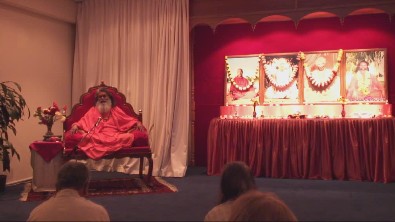
A discourse on the nature of the Kali Yuga and the power of the divine name.
"Kali Yuga is Kriyā Yuga. Kriyā Yuga means Karma Yuga. Karma is primary."
"Kali yuga kevala nāma ādhāra, sumira sumira nara hoi bhava pāra. (In the Kali Yuga, the name alone is the foundation; by repeating, repeating, a person crosses the ocean of existence.)"
Swami Maheshwarananda explains that the Kali Yuga is an age dominated by action (karma), but its true foundation is the repetition of God's name, as stated by Tulsidas. He shares a personal memory of his Guru appearing to him at the Strelky ashram and narrates a Puranic story about the sage Vishvamitra to illustrate the supreme value of satsang. The talk emphasizes that diligent spiritual practice (purushartha) is essential, yet liberation comes from anchoring oneself in the divine name.
Filming location: Wellington, New Zealand
The Foundations of Consciousness: Understanding the Chakras
21:00 - 21:32 (32 min)
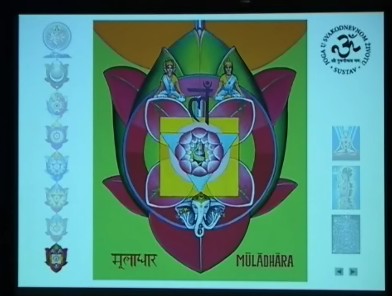
A spiritual discourse on the chakra system and the foundations of consciousness.
"Every chakra, every level of the chakras, has its own kingdom."
"Gu means darkness, and Ru means light. You enter into the light of wisdom, and you cross the border of this darkness."
The lecturer continues his explanation of the body's energy centers, detailing their locations from the feet to the head and their associated kingdoms from earth to divine. He focuses on the meaning of Mūlādhāra as the foundational root, explains the symbolism of its red color and lotus imagery, and clarifies the role of the Ājñā Chakra and the relationship between inner and outer guidance.
Filming location: Umag, Croatia
Yoga - The Path Of Liberation
21:40 - 22:10 (30 min)
A spiritual discourse on karma, consciousness, and the path to liberation.
"Karma pradhāna hai. Karma is very important. One must not understand karma as negative. Karma is action."
"So, what we have to become is a witness, a knower, or an observer... You become a witness of everything."
In a morning satsang, Swami Madhav Krishna explains the fundamental nature of karma as all action and process in the universe, distinguishing it from mere negative consequence. He describes the journey from identification with the physical body and worldly attachments to realizing the still, witnessing consciousness (Ātman) that exists beyond the movement of energy (śakti). Using parables and analogies—including driving a car and the story of Dattātreya learning from a woman's bracelets—he elucidates concepts of non-duality, the blessing of divine energy from liberated beings, and the ultimate goal of Self-realization.
Filming location: Wellington, New Zealand
The One in All and All in One
22:15 - 22:43 (28 min)
A spiritual discourse on universal consciousness, creation, and human purpose.
"Our great master used to say, 'One in all and all in one.'"
"Yoga is not physical postures... Yoga is the balancing principle... Where there is a balance, there is harmony."
The lecturer delivers a talk exploring the origins of the universe, consciousness, and the principle of yoga. He explains the Vedic concept of creation from sound (Aum) and the elemental evolution from space to earth. The discourse covers the oneness of all life, the unique potential of human intellect, and the importance of education in human values, tolerance, and understanding. He concludes by relating the cycle of rebirth to the modern concept of recycling.
Filming location: Brisbane, Australia
Mind and chakras
22:50 - 23:15 (25 min)
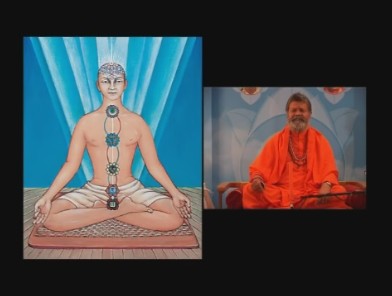
A lecture on the nature of the mind, subconscious impressions, and yogic philosophy.
"Our senses are mostly connected to and work with the consciousness, the awakened state."
"The mind is that principle which functions between the conscious and subconscious, pendling up and down."
The teacher provides a detailed explanation of how sensory impressions become stored desires in the subconscious, using the analogy of an unfulfilled ice cream craving manifesting in a dream. He describes the mind as a pendulum between conscious and subconscious levels, warning against blocking mental energy and instead advocating for directing it through self-discipline. The talk expands into the relationship between emotion, intellect, consciousness, and the nadis (Ida, Pingala, Sushumna), linking psychological concepts to the chakra system and the dormant energy of kundalini.
Filming location: Brisbane, Australia
Peace Tree planting
23:20 - 23:43 (23 min)
Peace tree planting by Vishwaguruj, Oakland, California, USA. Yoga is the path to the nonviolence and peace. If we would like to change our life we should change our way of thinking. We should start with the first thoughts in the morning. I am human, what makes me a human? What are the human qualities? How to develop them? Demonstration of the presence of the self healing energy in the body.
Webcast from London
23:50 - 0:55 (65 min)
Morning practice with Vishwaguruji from London, UK.
American
Australian