
European
Guru leads the disciple to liberation
1:10 - 2:03 (53 min)
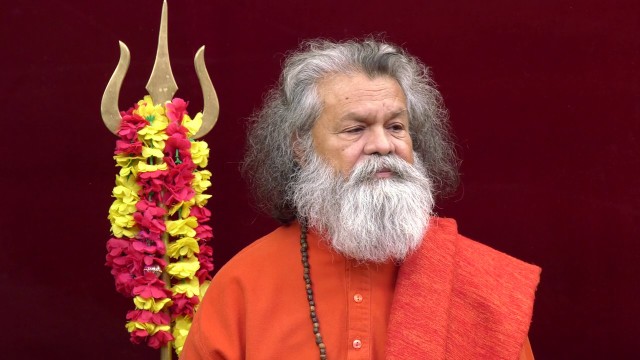
A spiritual discourse on the essential role of the Guru and principles of parenting.
"Guru sā binā kārya nahīṁ sare, koṭi upāya kare, koī chāhe, na bhava-sindhu tare. (Without the Guru, no work is accomplished; one may make millions of efforts, but one cannot cross the ocean of worldly existence.)"
"Sooner or later, they all will come to the Supreme Cosmic. And it can also happen that someone will fall down. That is very important for us to know, so that we do not do bad things."
The lecturer begins by singing a hymn on the indispensability of the Guru for spiritual crossing. He narrates a parable of a cruel man, illustrating how a Guru's grace can redeem a soul across lifetimes, leading to eventual liberation for all beings. The discourse then shifts to address parents, offering guidance on raising children with love, mindful education, proper habits, and the avoidance of negative influences, emphasizing parental responsibility and respect.
Filming location: Strilky, Czech Republic
All disciples are equal for the Guru
2:10 - 3:12 (62 min)
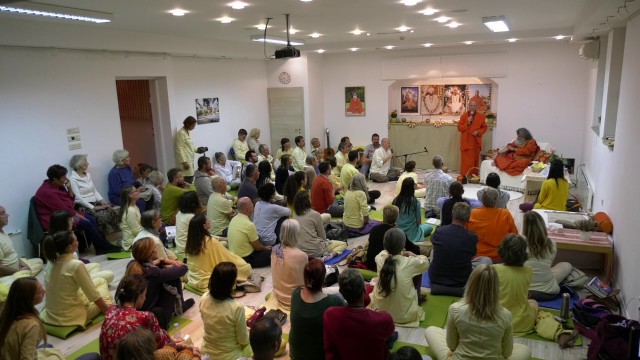
A spiritual gathering and discourse in Split, Croatia.
"Always, we should say, 'Yes, please come.'" and "Everything that we do to others, in fact, we are doing to ourselves."
The lecturer addresses a diverse group, expressing joy at the gathering and respect for all spiritual paths, notably the Hare Krishna movement. He shares parables, including one about a greedy dog losing its bread, to illustrate themes of non-greed, ethical conduct, and the karmic law that our actions return to us. A disciple then elaborates on the profound responsibility of handling donations and spiritual resources, sharing traditional stories about karma, accountability, and seeing the divine in all.
Filming location: Split, Croatia
Adoring the God
3:20 - 3:56 (36 min)
A satsang discourse on spiritual practice, the nature of God, and sacred sound.
"If you think good, you get good. If you think bad, you get bad." "Oṁ Kī Rachanā Śarīre... Everything is created by that Oṁ."
A spiritual teacher addresses a retreat, weaving observations of Fiji's natural beauty into teachings on meditation, the unity of God across religions, and righteous living. He discusses the holy land of Bharat, the importance of truthful authorship, and concludes with an extended explanation of the sacred syllable Oṁ as the formless, all-creating Parabrahma.
Filming location: Fiji Islands
Never lose the name of God
4:00 - 4:54 (54 min)
Evening satsang with Vishwaguruji from Jadan Ashram, Rajasthan, India. Corona time to time come back again so we have to be careful. Many people died and also many have lung problems. In India also many people died and many people were not careful enough. Nowadays it is not good to shake hand and hug each other. Nowadays many families fall apart and children are suffering very much because of it. If there is a bad connection between the father and the mother many diseases will come sooner all later such as cancer. Many people get depression after a corona. You have good health when you are happy. Mantra brings us happiness. Now we should learn to become happy. Gulabji tells how did he find his Guru and how did he experience the blessing of his Masters.
Morning Yoga practice, Umag, Croatia (6/9)
5:00 - 6:56 (116 min)
Morning Yoga practice from the international Yoga retreat Umag, Croatia on 30th of September
Śaṅkha Prakṣālana and Kunjal Kriyā: Purification of the Intestine and Stomach
7:00 - 7:40 (40 min)
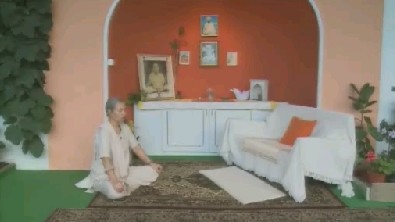
A practical demonstration and instructional lecture on the Haṭha Yoga purification techniques of Śaṅkha Prakṣālana and Kunjal Kriyā.
"Śaṅkha Prakṣālana is a very good exercise, but it has to be done early in the morning, of course, on an empty stomach."
"After Śaṅkha Prakṣālana, after purification, you have to keep a diet for at least, strictly, seven days, one week, and up to one month."
An instructor leads a session at an ashram, detailing the procedures for intestinal and stomach cleansing. He explains the preparation, the specific exercises and drinking process for Śaṅkha Prakṣālana, and the subsequent technique for Kunjal Kriyā (Vaman Dhautī), assisted by two experienced practitioners. Key themes include the importance of timing, dietary restrictions post-practice, and the health benefits of these purification rituals.
Filming location: Strilky, Czech Republic
Yogis are always alert
7:45 - 8:17 (32 min)
Evening satsang with Vishwaguruji from Jadan Ashram, Rajasthan, India. All the day we are working we are active. At that time we are not in our hearts. Our thoughts are many times with our friends and relatives. During sleep, we have another kind of consciousness. In our dream, we also can go very far and come back very quickly. Yogi and the horse are very alert in their dreams also. Singing bhajan Yogi jano ki yog-nindra.
Bhaktas are longing for Satsang
8:25 - 9:13 (48 min)
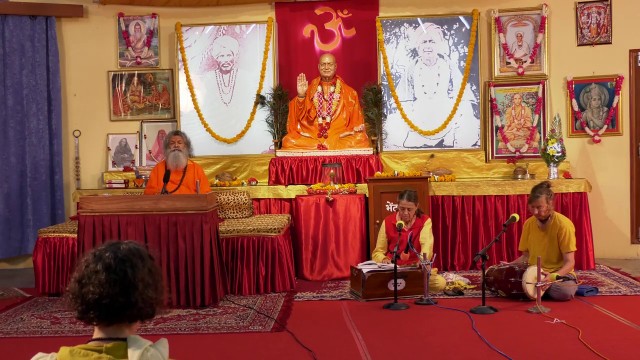
Evening satsang from Jadan Ashram, Rajasthan, India. Bhajan singing. Swami Umapuri says some words about her spiritual development in the Jadan Ashram. She spoke about her experiences with Yoga Nidra. She explains the bhajans of Swami Sivananda and Bhagwan Sri Deep Mahaprabhuji.
The real Human
9:20 - 10:06 (46 min)
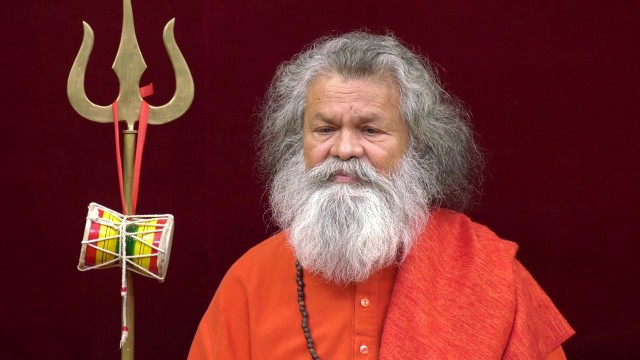
An evening satsang on universal compassion and perceiving the divine in all life.
"We should take care of all the different kinds of animals, the flies, and so on. We should think of all creatures. Then we will become one."
"Let us see: in your whole world, in any country, any religion, there are so many good people."
The lecturer addresses a global audience, expanding the concept of yoga beyond physical practice to include service and reverence for every living being. He stresses the interconnectedness of all souls, using a parable about a disciple at a mela to illustrate that true humanity is found in compassion, not just form. The talk weaves together themes of non-harm, the sanctity of all life, and the importance of a heartfelt connection to others.
Filming location: Strilky, Czech Republic
Turning black into white
10:10 - 10:47 (37 min)
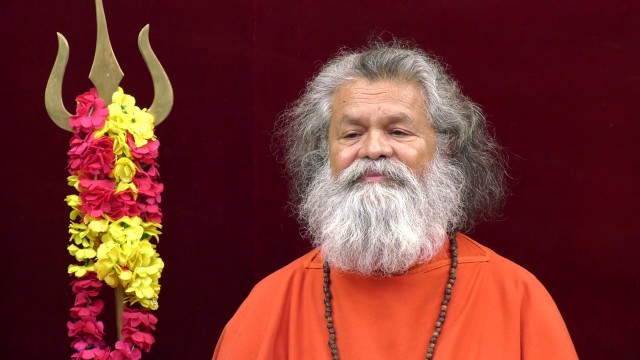
An evening satsang on inner purification and the necessity of the guru.
"Throughout the day, our actions and experiences—both good and painful—leave an imprint on our heart and mind."
"If you wish to cross the ocean, be in a big boat. The captain is inside—only one, controlling everything. Remain in that boat, and Gurudev will bring you to the shore."
The lecturer reflects on the mental "dust" accumulated daily and the challenge of purifying one's thoughts and dreams. He shares observations on spiritual receptivity across cultures and uses the analogy of a president returning home to discuss shedding external roles. He concludes that while personal effort is required, crossing the ocean of existence ultimately depends on the grace and guidance of a true guru.
Filming location: Strilky, Czech Republic
Animals are like our brothers and sisters
10:55 - 11:23 (28 min)
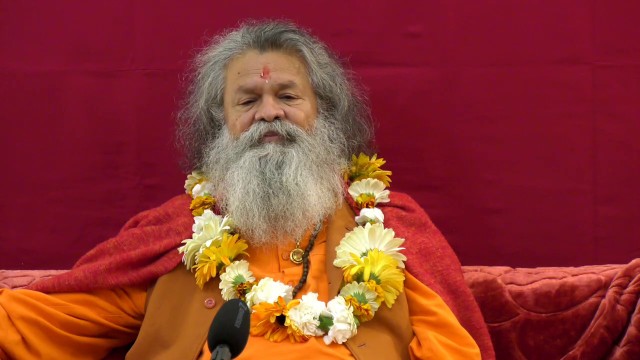
A spiritual address on yoga, health, and ethical living.
"By practicing yoga, we will move toward health."
"Come to the vegan way. With veganism, that is the only way now."
A spiritual teacher speaks at an ashram inauguration, linking modern health crises like cancer to the consumption of meat and dairy. He advocates for veganism and yoga as essential paths to physical health and compassion, citing the growth of veganism among youth and sharing personal travel anecdotes. He emphasizes protecting animals and future generations, despite feeling unwell himself.
Filming location: Vienna, Austria
In the end we all will be together
11:30 - 12:22 (52 min)
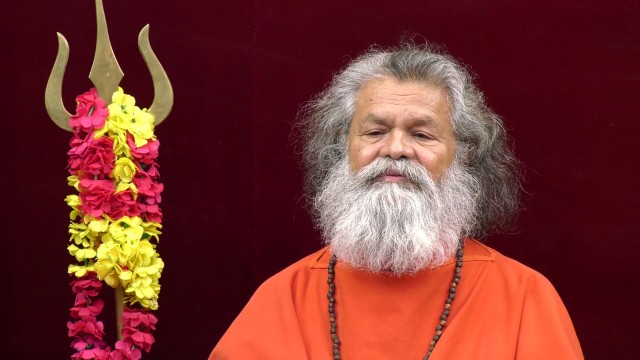
A morning satsang address reflecting on global travels, spiritual lineage, and universal teachings.
"Humans, we are here and there; we are moving. But we should understand that we are human. It doesn't matter from which country... all are one: human."
"And if you have a guru, you got mantras, then you are forever. You have a child forever."
Swami Ji welcomes the sangha after extensive travels, sharing experiences from ashrams in Australia, New Zealand, and Fiji. He speaks on unity beyond nationality, the guru-disciple relationship, parenting, and the cyclical nature of life, rejecting permanent concepts of heaven and hell. He concludes by connecting the assembly to the Alakpuriji lineage and invites questions.
Filming location: Strilky, Czech Republic
Mala leads us to the Cosmic Self
12:30 - 13:14 (44 min)
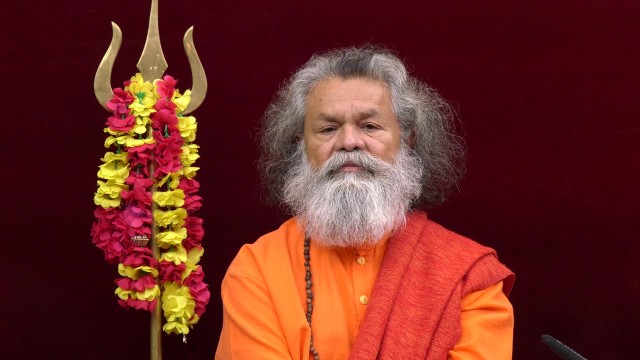
A spiritual discourse on the cosmic significance of the prayer mala (japa mala).
"Each bead of the mala is immense with powers from the cosmic Self."
"In that one thread, all creatures on this earth are bound."
The lecturer addresses a satsang, elaborating on the profound symbolism of the mala beyond its physical form. He explains how the thread represents the unifying force binding all beings and elements, while the beads encompass the diversity of creation. The talk explores the universal spiritual power within all life, the mala as a metaphor for bodily rhythms like breath and heartbeat, and practical guidance for its use in mantra meditation.
Filming location: Strilky, Czech Republic
The living God
13:00 - 13:58 (58 min)
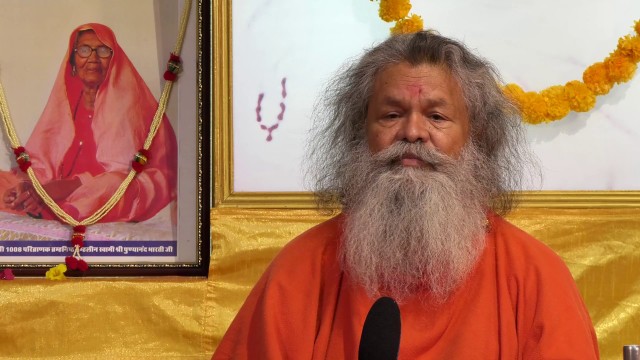
Evening satsang from Jadan Ashram, Rajasthan, India. Science is developing, which is good. Yoga is the science of the human being.The story of the professor who met a yogi while walking in the park. Where can we find God? Have you seen God? According to the teachings of Sanatana Dharma and Yoga, God lives here among us. Everyone has seen God. Each and every one of us is the living God, just like the ocean water is present in the raindrop. The same life is in all living beings. That is why we should not kill animals.
Turning black into white
13:20 - 13:57 (37 min)
An evening satsang on inner purification and the necessity of the guru.
"Throughout the day, our actions and experiences—both good and painful—leave an imprint on our heart and mind."
"If you wish to cross the ocean, be in a big boat. The captain is inside—only one, controlling everything. Remain in that boat, and Gurudev will bring you to the shore."
The lecturer reflects on the mental "dust" accumulated daily and the challenge of purifying one's thoughts and dreams. He shares observations on spiritual receptivity across cultures and uses the analogy of a president returning home to discuss shedding external roles. He concludes that while personal effort is required, crossing the ocean of existence ultimately depends on the grace and guidance of a true guru.
Filming location: Strilky, Czech Republic
Vaccinate or not vaccinate?
14:05 - 14:35 (30 min)
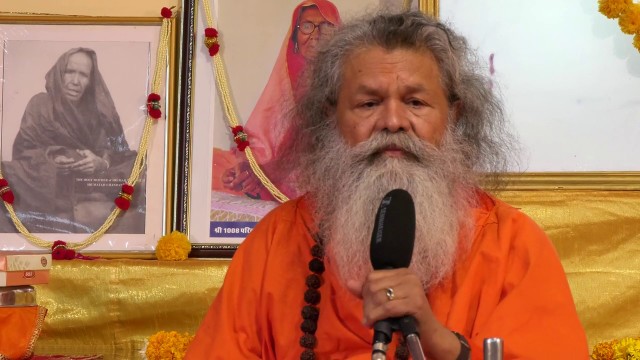
A spiritual discourse on religious festivals, health, and contemporary life.
"From there, all festivals—so they were for Rāma, Sītā, and his brother Lakṣmaṇa."
"And now, what is it? We all now have a time. We had our Dīvālīs, and now we have the Christians, what we call Christmas."
The speaker, referred to as Satguru Swāmījī, begins by discussing the spiritual significance of Diwali, linking it to Bhagavān Rāma and the symbolism of light. He then broadens the talk to encompass other faiths like Christianity and Islam, praising their devotion. The discourse shifts to modern concerns about food purity and health, where he strongly advocates for COVID-19 vaccination based on his positive personal experience, while repeatedly stating he does not wish to force anyone.
Filming location: Jadan, Rajasthan, India
What does Sanatana Dharma mean?
14:40 - 15:31 (51 min)
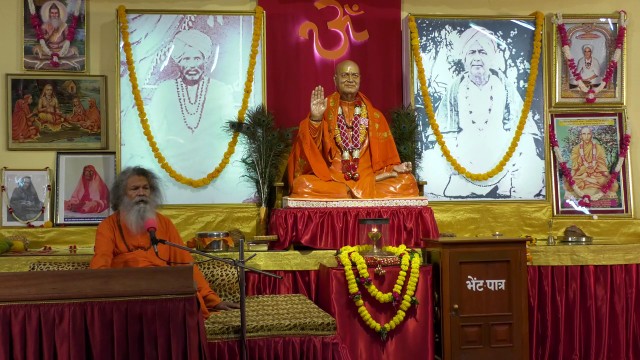
Evening satsang with Vishwaguruji from Jadan Ashram, Rajasthan, India. Lecture about Sanatana Dharma. by Acaryaji. Simple and clear explanation of many expressions and processes connecting to Sanatana Dharma and to the Hindu philosophy. Chanting mantras by one of Vishwagurujis youngest Indian followers. Swami Madhuram speaks about consciousness and how to realize atma in us and how he became sanatani. Swami Premanand speaks about the deep meaning of Divali. Bhajan singing.
Where is our happiness?
15:35 - 16:22 (47 min)
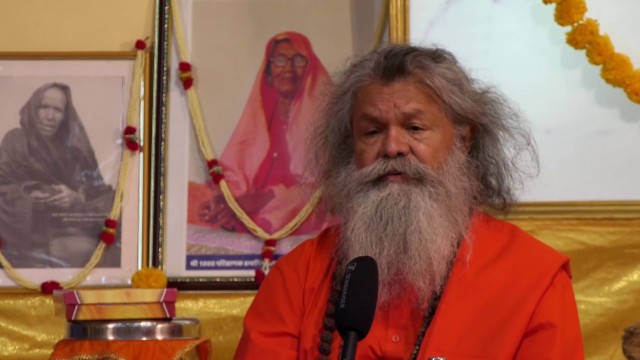
Evening satsang with Vishwaguruji from Jadan Ashram, Rajasthan, India. God can be happy and unhappy also. We can make him happy and unhappy like our parents. Animals also can be happy and we must not kill them to make them unhappy. Every morning we should be thankful to God that we are human. Don't marry before you completely finished your study. We also should be thankful for God before eating. Bhajan singing.
Yog and Viyog
16:30 - 17:06 (36 min)
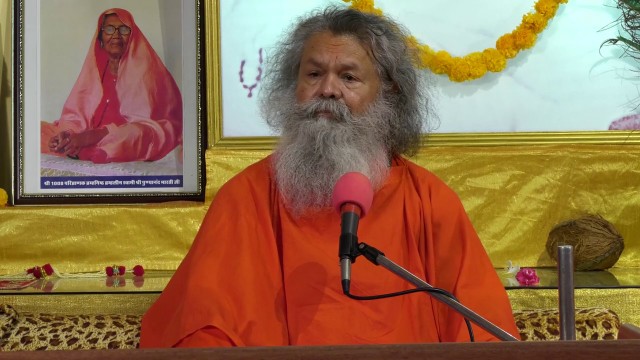
A spiritual discourse on the essence of yoga and the Vajranāḍī.
"Yoga must not be only physical exercises. It is from Bhagavān Śiva. But before Śiva, it is Paramatmā, the whole space."
"We are Vajranāḍī. As long as the Vajranāḍī is strong for us, we are happy, healthy, and can run and do everything. But if we have not controlled it... a yogī must control this Vajranāḍī."
A teacher addresses a global audience, explaining yoga's divine origins beyond physical postures. He discusses the human condition, the Ātmā, and the vital power of the Vajranāḍī (associated with the spinal cord), emphasizing the need for control through practice. The talk includes contemplative questions on the nature of yoga and concludes with disciples singing devotional mantras and a bhajan.
Filming location: Jadan, Rajasthan, India
Yoga means uniting
17:10 - 17:52 (42 min)
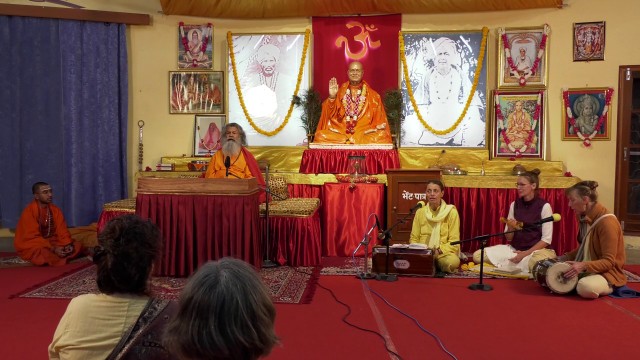
A satsang discourse on integrating yoga into daily life and recognizing the divine unity in all existence.
"Yoga is unity. Yoga, from this side, left and the right comes together, these two points, and that is so."
"Water is life, and that is like our body... If you want to know God, He is in every creature, in every creature."
Swami Madhavanji addresses a global audience, exploring the principle of yoga as union—of body, life, and spirit. He discusses the sacredness of all life through the element of water, the interconnectedness of all beings, and the path to realizing the divine within. The talk weaves in teachings on purity, diet, non-violence, and recounts the peaceful passing of a devotee from Kailash Ashram.
Filming location: Jadan, Rajasthan, India
Vaccinate or not vaccinate?
18:00 - 18:30 (30 min)
A spiritual discourse on religious festivals, health, and contemporary life.
"From there, all festivals—so they were for Rāma, Sītā, and his brother Lakṣmaṇa."
"And now, what is it? We all now have a time. We had our Dīvālīs, and now we have the Christians, what we call Christmas."
The speaker, referred to as Satguru Swāmījī, begins by discussing the spiritual significance of Diwali, linking it to Bhagavān Rāma and the symbolism of light. He then broadens the talk to encompass other faiths like Christianity and Islam, praising their devotion. The discourse shifts to modern concerns about food purity and health, where he strongly advocates for COVID-19 vaccination based on his positive personal experience, while repeatedly stating he does not wish to force anyone.
Filming location: Jadan, Rajasthan, India
All disciples are equal for the Guru
18:35 - 19:37 (62 min)
A spiritual gathering and discourse in Split, Croatia.
"Always, we should say, 'Yes, please come.'" and "Everything that we do to others, in fact, we are doing to ourselves."
The lecturer addresses a diverse group, expressing joy at the gathering and respect for all spiritual paths, notably the Hare Krishna movement. He shares parables, including one about a greedy dog losing its bread, to illustrate themes of non-greed, ethical conduct, and the karmic law that our actions return to us. A disciple then elaborates on the profound responsibility of handling donations and spiritual resources, sharing traditional stories about karma, accountability, and seeing the divine in all.
Filming location: Split, Croatia
My happiness is at Your holy feet
19:45 - 20:53 (68 min)
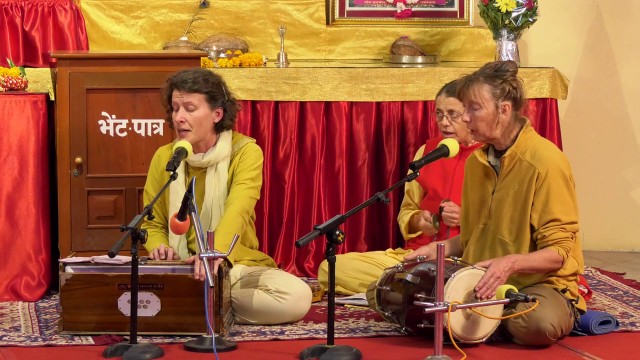
Evening satsang with Vishwaguruji from Jadan Ashram, Rajasthan, India. The master always gives us guidance. Translation of the bhajan "Milta he sacca sukha kevala". We must feel in every cell of our body what the words of the bhajan mean. The real thorn is what is inside us, it is difficult to take it out. Always be humble. The thorn can be taken out through another thorn. We are not all good. We could talk about this bhajan for a month.
Never lose the name of God
21:00 - 21:54 (54 min)
Evening satsang with Vishwaguruji from Jadan Ashram, Rajasthan, India. Corona time to time come back again so we have to be careful. Many people died and also many have lung problems. In India also many people died and many people were not careful enough. Nowadays it is not good to shake hand and hug each other. Nowadays many families fall apart and children are suffering very much because of it. If there is a bad connection between the father and the mother many diseases will come sooner all later such as cancer. Many people get depression after a corona. You have good health when you are happy. Mantra brings us happiness. Now we should learn to become happy. Gulabji tells how did he find his Guru and how did he experience the blessing of his Masters.
The coronation of Swami Avatarpuri
22:00 - 22:54 (54 min)
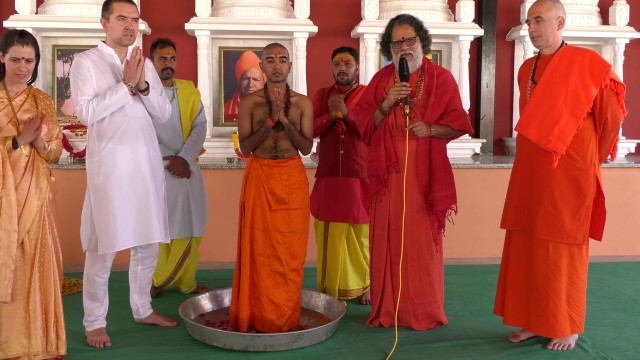
Morning program from Bhari Khatu, Rajasthan, India. On the occasion of Holiguruji's Mahasamdhi day, Swami Avatarpuri got the title that he becomes the successor of Vishwaguruji. Swami Avatarpuri had a ritual bath. Then he showed puja for Vishwaguruji by washing his feet. In the end, Swami Avatarpuri got a traditional cap and a sal from Vishwaguruji and many other sals from sanyasis.
Never lose the name of God
23:00 - 23:54 (54 min)
Evening satsang with Vishwaguruji from Jadan Ashram, Rajasthan, India. Corona time to time come back again so we have to be careful. Many people died and also many have lung problems. In India also many people died and many people were not careful enough. Nowadays it is not good to shake hand and hug each other. Nowadays many families fall apart and children are suffering very much because of it. If there is a bad connection between the father and the mother many diseases will come sooner all later such as cancer. Many people get depression after a corona. You have good health when you are happy. Mantra brings us happiness. Now we should learn to become happy. Gulabji tells how did he find his Guru and how did he experience the blessing of his Masters.
American
Australian