
European
Bhajan evening in Strilky Ashram
0:35 - 1:16 (41 min)
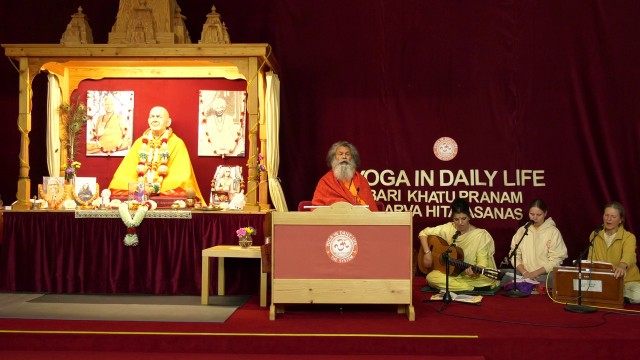
Sri Krishna Jayanti - Evening satsang with Vishwaguruji from Strilky Ashram, Czech Republic. Kirtan and bhajan singing.
The Science of Yoga
1:20 - 2:25 (65 min)
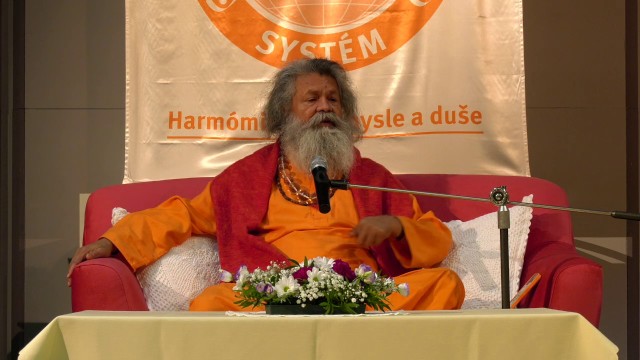
Evening satsang with Vishwaguruji from Košice, Slovakia. Every country has its own culture. We pray in India, as we do in Europe. The three letters of AUM are addressed to three gods - Brahma, Vishnu and Shiva. A brief history of Creation. Science is a product of the human mind and is developing continuously, but that knowledge is lost when death comes. Where does the soul go then? The Science of Yoga is different. Where do we find God? With the help of yoga we can make our body ninety percent healthy. It is good to practise AUM before eating. Bhramari pranayama.
After death, everything is counted
2:30 - 3:54 (84 min)
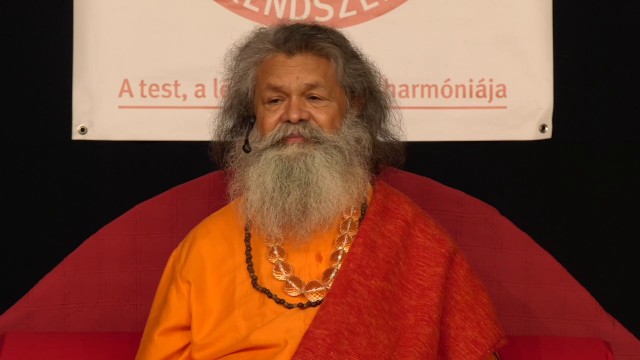
Evening satsang with Vishwaguruji from Debrecen, Hungary. There is God in all of us. It is within our body. There is a flame in our hearts which is the soul. After death, there are eleven points to leave the body. It depends on your qualities. We have immense knowledge. There is modern science and there is yogic science but they are different. The eleventh point in the top of the head and the navel are in connection. Sleeping is very important. Even if you practised yoga and stopped, the memories can awaken in you at any time. Life is the same in every creature. We should work on ourselves. We should complete our life to unite with the Cosmic. Concentration on the vibration of Om Namah Shivaya kirtan. When we die everything is counted as good and bad. Practising ashwini mudra, AUM chanting and bhramari pranayama.
Practice with Swamiji
4:00 - 5:07 (67 min)
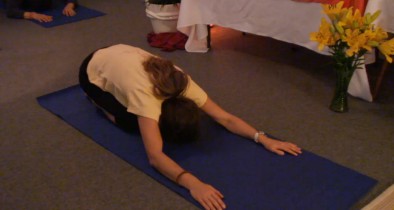
Practice with Swamiji from Auckland, New Zealand.
We can achieve the Paramatma
5:15 - 6:04 (49 min)
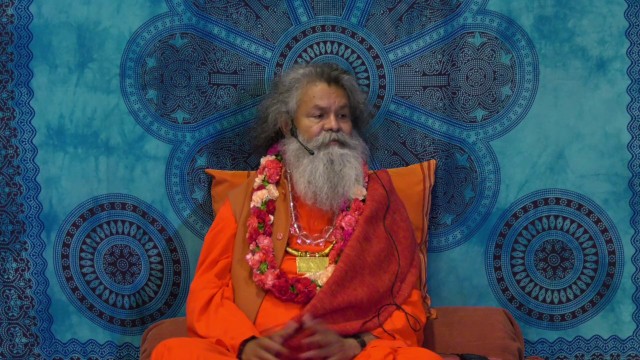
A spiritual talk reflecting on a return to Hungary, the pandemic, and the nature of the self.
"Now, we all know that it is only for the humans, not animals. Why only this disease for humans?"
"And so, but some are different. They said, 'Yes, I am good,' but backside this, backside that. So we have to clean ourselves."
The lecturer addresses a gathering, sharing memories of past visits and the loss of a devotee, Krishṇānand. He contemplates the COVID-19 pandemic as a divine response to human actions, using allegories of the water cycle and fire to illustrate the interconnectedness of life and the importance of humility, authentic practice, and overcoming ego on the spiritual path.
Filming location: Budapest, Hungary
We should also be clean inside
6:10 - 6:50 (40 min)
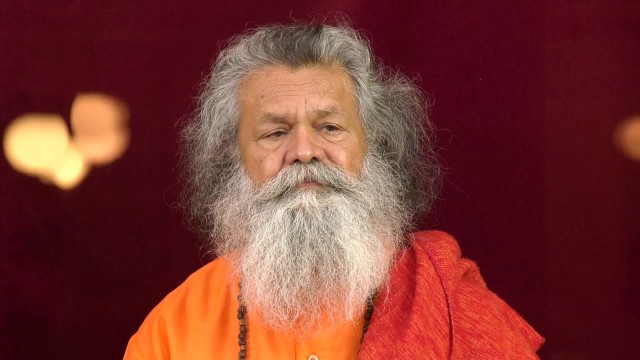
Evening satsang with Vishwaguruji from Strilky Ashram, Czech Republic. Strilky Ashram is very good place to practise spiritual sadhana. A jiva many times comes and goes, again and again. Every creature has the same atma. In the end, our atma arrives to God like a drop of water to the ocean. The story of a rakshasa (demon) who got a siddhi (special ability) from Shiva to burn anybody with his hand. God also burns up all negative qualities. God's light reaches everywhere. Those who are separated sooner or later will split. Dirty water is going out of the Ganga. Water is powerful. A bathe in the Alakhananda River cleanses us from all our negative qualities, thoughts and feelings. After that, if we are negative, it's like the dust coming to us again. We can clean ourselves with our breath.
The Hidden Powers in Humans
6:55 - 7:18 (23 min)
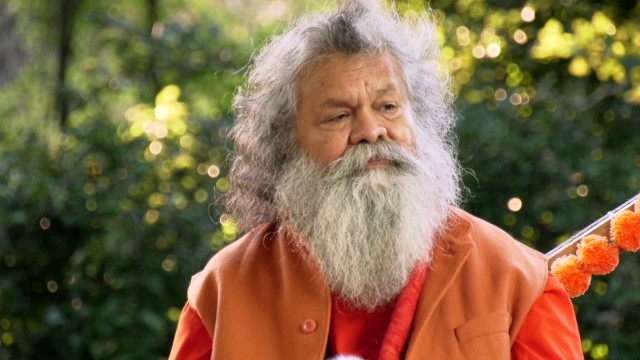
A satsang reflecting on spiritual practice during the pandemic and introducing the study of chakras.
"From our group, about one to two percent got the coronavirus. They were mildly affected, but they did not die."
"What we eat is sāttvic. Sāttvic means no alcohol, no meat, and not eating various kinds of food. I have the results."
Swami Maheshwarananda addresses gathered yoga teachers and students, sharing observations on how a sattvic lifestyle and practices like bhajan singing helped the global Yoga in Daily Life community during the pandemic. He transitions to introducing the study of hidden inner powers, referencing the book The Hidden Power in Man: Chakras and Kundalinī, and begins to explain the significance of Sanskrit letters and chakras, promising a detailed exploration in the coming days.
Filming location: Strilky, Czech Republic
Our relationship with the Guru
7:25 - 8:05 (40 min)
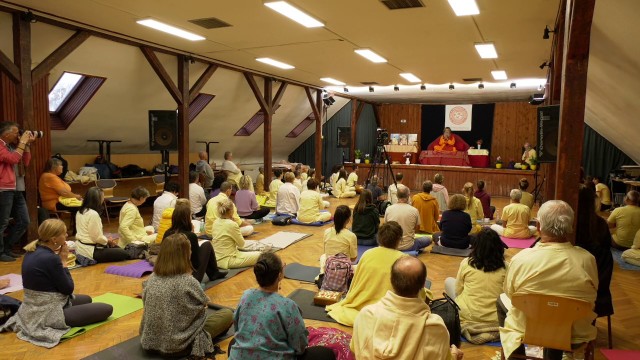
A spiritual discourse on the guru lineage and the nature of truth in the current age.
"Paramparā means one after another. So when that will sit, given here to sit, it’s not that you come and sit down. It will be when our Gurujī said, 'I am going now,' and he gives this place now."
"So in your life, I wish you should be very great and practice, practice, practice. Always only heart, and in the heart is a very little, tiny, tiny something, like a light."
The lecturer addresses a gathering on the 30th anniversary of his mission. He traces the spiritual lineage (paramparā) from Bhagavān Śiva through the Satya Yuga to the present gurus, including Śrī Devpurījī, Mahāprabhujī, and his own guru, Swami Madhavānand. He explains his role in this succession and discusses the loss of universal truth in the Kali Yuga, urging disciples toward spiritual practice rooted in the heart. The talk blends history, analogy, and personal reflection.
Filming location: Debrecen, Hungary
Give everything, so not to hold
8:10 - 9:00 (50 min)
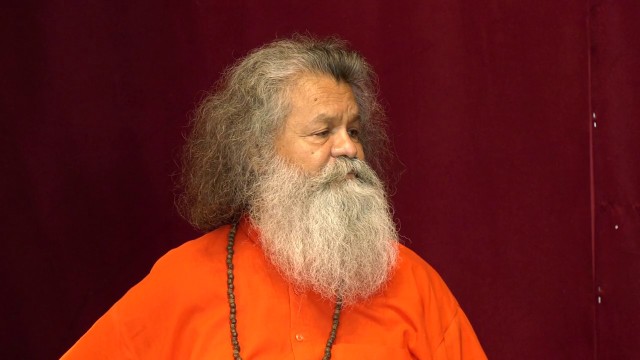
A spiritual discourse on the path of discipleship, austerity, and selfless service.
"Gurujī said, 'I have my spiritualities, my jñāna, my knowledge, everything. What do I want from others?'"
"To go on the path is not easy. One path is with torrents. Another path is very hot, with sand. And there is a knife on the side of the knife. On that, you have to go."
The speaker shares memories of austere early days with his Guru in a simple Jaipur ashram, illustrating the saint's path of inner richness over material possession. He uses parables, like that of a greedy rich man, and metaphors, like the firing of a clay pot, to teach the value of seva (selfless service), detachment, and rigorous spiritual training. The talk contrasts this with modern distractions and concludes with a focus on foundational spiritual practices.
Filming location: Strilky, Czech Republic
Our fate can always change
9:05 - 9:46 (41 min)
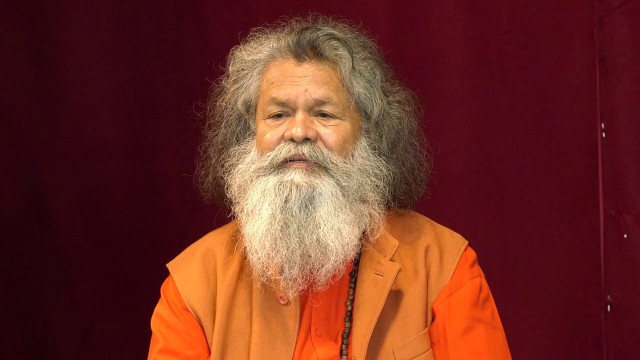
A spiritual discourse on destiny, the subtle body, and yogic techniques.
"Over about 10 or 15 years, it changes your life. We have to understand that this is the constellation. The constellation, which is connected to our palms, also changes in the foot soles."
"Sometimes it happens without warning; that is kismet. So it happens, say, 'Thank you, God.'"
Satguru Svāmī Madhavānandajī Bhagavān leads a teaching session, weaving together concepts of destiny (kismet), the diagnostic and spiritual significance of the palms and foot soles, and practical yogic techniques. He shares an anecdote about an elderly Austrian man who lost his wealth and social connections to illustrate the unpredictable flow of destiny. The talk also touches on subtle body practices, including a method for addressing bedwetting in children and the correct foot to step with when leaving the house based on nostril breath flow.
Filming location: Strilky, Czech Republic
Sakar and nirakar
9:50 - 10:19 (29 min)

A satsang discourse blending spiritual teachings with a story from the Ramayana.
"This consciousness is unbroken; it is everywhere. There is absolutely no place where it is not."
"I took you over Gaṅgā. So you take me over this ocean of suffering."
A speaker addresses a retreat gathering, first paying homage to the all-pervading consciousness and the Guru. He shares the story of a clever ferryman who, recognizing Lord Rama's divinity, bargains to wash his feet for passage and then asks Rama to ferry him across the ocean of suffering. The talk meanders into themes of form (Sākāra) and formlessness (Nirakāra), using the analogy of a flame and leaves in the wind, and concludes with well-wishes and observations on modern life.
Filming location: Strilky, Czech Republic
What is destiny?
10:25 - 11:01 (36 min)
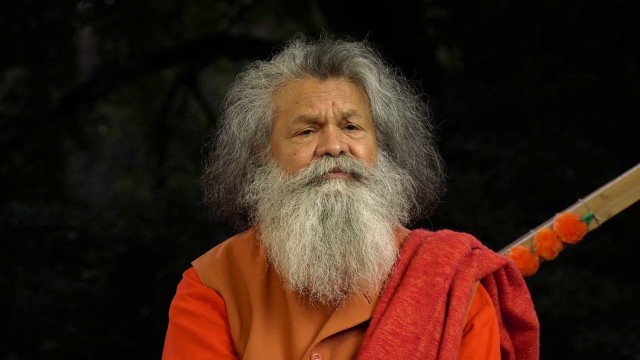
A spiritual discourse exploring the concept of kiśmat (fate/luck) and the value of satsaṅg (spiritual gathering).
"Kiśmat is more like a Muslim word, but it is very nice, very good... Kismet is so vast you cannot think."
"In satsaṅg, they had one guru... Satsaṅg is like this. And ku-saṅg is many things: drinking, going, cleaning, mind."
The speaker delivers an informal talk, weaving together observations on prayer across religions, anecdotes about marriage and village life, and a parable about two boys—one who attends a cinema and one who attends satsaṅg—to illustrate the subtle and protective nature of divine fortune (kiśmat). He emphasizes that true good fortune is aligned with spiritual company and devotion, not merely material gain.
Filming location: Strilky, Czech Republic
Sri Alakhpuriji and the Himalayas
11:05 - 11:33 (28 min)
A spiritual discourse on the sacredness of the Earth and the Himalayas.
"Our Earth is a living planet, a Living Earth. If God incarnates, if God comes on this earth, God performs His miraculous things here."
"That place is indescribable... Between these beautiful, mighty mountains is a beautiful valley where Ālakpurījī is always residing."
Swami Maheshvarananda delivers a talk, venerating the Earth as a living, holy creation and detailing the profound spirituality of the Himalayas. He describes the region as the abode of divine incarnations like Śiva and great Siddhas such as Ālakpurījī, sharing anecdotes from pilgrimages and emphasizing the need for inner purity to experience this divine reality. The discourse concludes with a blessing for the journey.
Filming location: Vép, Hungary
Our fate can always change
11:40 - 12:21 (41 min)
A spiritual discourse on destiny, the subtle body, and yogic techniques.
"Over about 10 or 15 years, it changes your life. We have to understand that this is the constellation. The constellation, which is connected to our palms, also changes in the foot soles."
"Sometimes it happens without warning; that is kismet. So it happens, say, 'Thank you, God.'"
Satguru Svāmī Madhavānandajī Bhagavān leads a teaching session, weaving together concepts of destiny (kismet), the diagnostic and spiritual significance of the palms and foot soles, and practical yogic techniques. He shares an anecdote about an elderly Austrian man who lost his wealth and social connections to illustrate the unpredictable flow of destiny. The talk also touches on subtle body practices, including a method for addressing bedwetting in children and the correct foot to step with when leaving the house based on nostril breath flow.
Filming location: Strilky, Czech Republic
The Sole Necessity of Guru's Grace
12:25 - 13:12 (47 min)
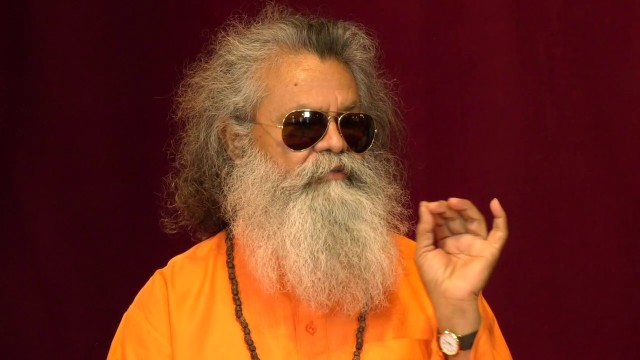
A spiritual discourse on the absolute necessity of the Guru's grace, illustrated with parables and observations on life.
"Without the grace of the Guru, nothing can be. We may think we can do without it and believe we are okay, but that is not how it is."
"Guru kṛpā hi kevalam. Guru’s grace... When Gurudeva’s blessing is there, then everything is possible."
The speaker, likely a swami, delivers a satsang emphasizing that all spiritual progress and worldly harmony depend solely on the Guru's grace. He expands the concept of Guru to include parents and the supportive community of village life, using anecdotes about street dogs and a detailed parable about a devoted disciple, his wife, and a test of sacrifice to illustrate the depth of true devotion and the singular source of blessing.
Filming location: Strilky, Czech Republic
The Forms of the Divine
13:20 - 13:52 (32 min)
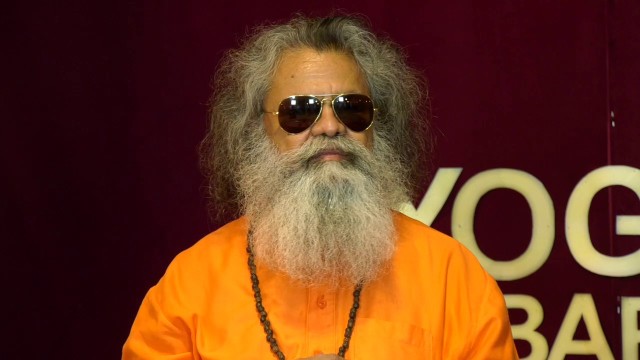
A spiritual discourse on the formless and manifest aspects of the divine.
"One is what we can call God, but we cannot see God; it is only God. That is called Nirākāra. Nirākāra means there is no form or posture."
"The second is Sākār. Sākār means with a form, like a statue or our body, so that we can worship God."
A spiritual teacher delivers a satsang on Guruji's birthday, explaining the concepts of Nirākāra (formless God) and Sākār (God with form). Using examples like Jesus, Krishna, and Buddha, he illustrates how divine incarnations suffer and are often misunderstood. The talk expands to cover creation stories, the cycles of the Yugas, and the importance of righteous living and sādhanā (spiritual practice) in the current Kali Yuga.
Filming location: Strilky, Czech Republic
We can achieve the Paramatma
14:02 - 14:51 (49 min)
A spiritual talk reflecting on a return to Hungary, the pandemic, and the nature of the self.
"Now, we all know that it is only for the humans, not animals. Why only this disease for humans?"
"And so, but some are different. They said, 'Yes, I am good,' but backside this, backside that. So we have to clean ourselves."
The lecturer addresses a gathering, sharing memories of past visits and the loss of a devotee, Krishṇānand. He contemplates the COVID-19 pandemic as a divine response to human actions, using allegories of the water cycle and fire to illustrate the interconnectedness of life and the importance of humility, authentic practice, and overcoming ego on the spiritual path.
Filming location: Budapest, Hungary
Around The World - Summer Yoga at the Beach, Split, CRO
15:00 - 15:06 (6 min)
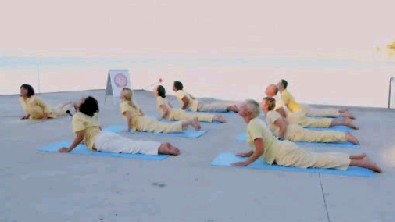
Summer Yoga at the Beach, Split, Croatia
Around the world - Satsang Mexico
15:12 - 15:50 (38 min)
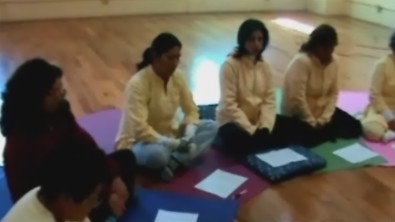
Evening satsang with meditation.
The Play of Coming and Going: Reflections on Life, Guru, and the Inner Journey
15:55 - 16:49 (54 min)
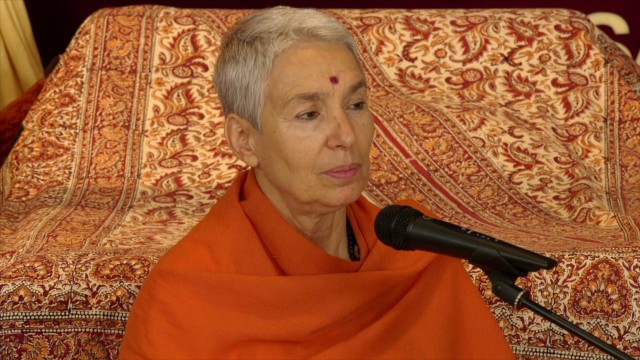
A satsang discourse reflecting on life's transient nature and the inner spiritual journey.
"This whole life is like a coming and going, coming and going. It is a play."
"You come alone and you go alone. Only that which will go with us is our karma, good or not so good, and the light of Gurudeva."
Following a bhajan, the speaker reflects on teachings from Swami Brahmanandaji and their own Guru. They explore the theme of life as a transient play (lila), the importance of performing selfless karma, and the constant inner companionship of the Guru. The talk includes a lengthy parable about a devotee of Vishnu getting lost in Maya, and concludes with insights into the dynamics of the chakras and the goal of becoming a selfless instrument.
Filming location: Strilky, Czech Republic
Our body is a miracle
16:54 - 17:14 (20 min)
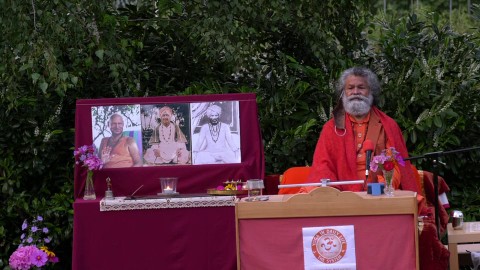
An evening satsang on the five sheaths (kośas) and holistic well-being.
"Our entire being becomes very pure—our body, our energy, our mind, our knowledge, and our peace and harmony."
"We must understand all five kośas. The first is just our physical body. We must keep this body very clean."
A spiritual teacher addresses a gathering at an ashram, introducing the concept of the five sheaths that constitute human existence. He begins with the Annamaya Kośa (the physical sheath), emphasizing the importance of pure nourishment, a sattvic diet, and maintaining bodily purity for a long and healthy life. The talk connects physical purity to managing emotions like anger, which harm the body, and invites attendees to meditate and absorb the divine energy of the place.
Filming location: Strilky, Czech Republic
Narada cursed Vishnu
17:15 - 17:58 (43 min)
A narration of the mythological story of Nārada's curse upon Lord Viṣṇu, followed by a discourse on its spiritual meaning.
"You made me a monkey, and I tell you, when you will be in great trouble, only the monkey will help you, nobody else."
"The merciful Lord said, 'Nārada, that was all My icchā. It was My will.'"
The speaker recounts how the sage Nārada, enraged after being tricked by Viṣṇu's illusion (māyā), confronts the Lord to curse Him. In his anger, Nārada pronounces a curse that Viṣṇu will incarnate as Rāma, suffer separation from His wife, and be aided by monkeys. Viṣṇu accepts the curse, explaining it was His own divine will, and later dissolves the illusion. A remorseful Nārada seeks forgiveness, and Viṣṇu promises to give him a liberating Kriyā. The talk includes a tangential account of the churning of the ocean (Samudra Manthan) to illustrate Nārada's accusations.
Filming location: Vép, Hungary
Respect and love everybody
18:05 - 18:58 (53 min)
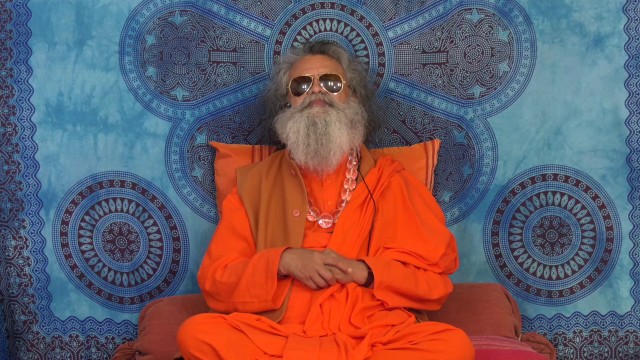
Morning program with Vishwaguruji from Budapest, Hungary. We should respect everybody, not forgetting women, elders and gurus. If a Guru passes away, only the successor can sit in their chair. The story of an Indian school and the father of one teacher who visited his son. The story of a company, the boss and a worker who had some problem. There are many problems between generations in America. The story of a Slovenian origin American scientist and a girl who became ill. Practising bhramari pranayama.
After death, everything is counted
19:05 - 20:29 (84 min)
Evening satsang with Vishwaguruji from Debrecen, Hungary. There is God in all of us. It is within our body. There is a flame in our hearts which is the soul. After death, there are eleven points to leave the body. It depends on your qualities. We have immense knowledge. There is modern science and there is yogic science but they are different. The eleventh point in the top of the head and the navel are in connection. Sleeping is very important. Even if you practised yoga and stopped, the memories can awaken in you at any time. Life is the same in every creature. We should work on ourselves. We should complete our life to unite with the Cosmic. Concentration on the vibration of Om Namah Shivaya kirtan. When we die everything is counted as good and bad. Practising ashwini mudra, AUM chanting and bhramari pranayama.
We have to become united in Oneness
20:35 - 21:52 (77 min)
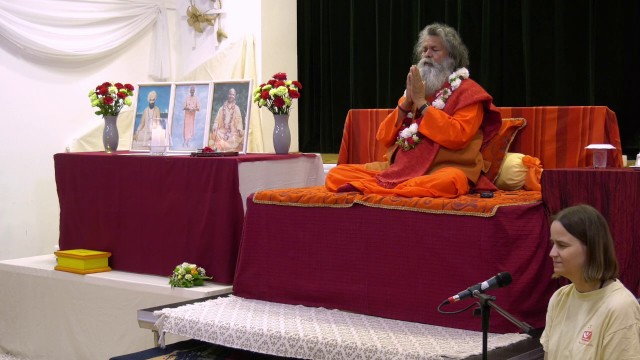
Evening program with Vishwaguruji from Szeged, Hungary. We have our destiny in which it is written when and where we are. The story of a boat in the ocean and a bird. It is in our fate that we want to reach God. We are like a bird coming and going. Life is only temporary. Every living creature has its fate and life. Become one with all. At the end, a drop of water arrives at the ocean and becomes one with it. When we die, our soul goes from the body, which is like a stone falling down. Some of us go towards the pure Light and others come back again. There is only one door when we leave our bodies. Nowadays children don't accept the advice of their parents. Don't kill anyone and don't speak negative words. Practising AUM chanting, bhramari pranayama and some simple asanas.
After death, everything is counted
22:00 - 23:24 (84 min)
Evening satsang with Vishwaguruji from Debrecen, Hungary. There is God in all of us. It is within our body. There is a flame in our hearts which is the soul. After death, there are eleven points to leave the body. It depends on your qualities. We have immense knowledge. There is modern science and there is yogic science but they are different. The eleventh point in the top of the head and the navel are in connection. Sleeping is very important. Even if you practised yoga and stopped, the memories can awaken in you at any time. Life is the same in every creature. We should work on ourselves. We should complete our life to unite with the Cosmic. Concentration on the vibration of Om Namah Shivaya kirtan. When we die everything is counted as good and bad. Practising ashwini mudra, AUM chanting and bhramari pranayama.
The Science of Yoga
23:30 - 0:35 (65 min)
Evening satsang with Vishwaguruji from Košice, Slovakia. Every country has its own culture. We pray in India, as we do in Europe. The three letters of AUM are addressed to three gods - Brahma, Vishnu and Shiva. A brief history of Creation. Science is a product of the human mind and is developing continuously, but that knowledge is lost when death comes. Where does the soul go then? The Science of Yoga is different. Where do we find God? With the help of yoga we can make our body ninety percent healthy. It is good to practise AUM before eating. Bhramari pranayama.
American
Australian