
European
Guruji is Divine Light
0:20 - 0:56 (36 min)
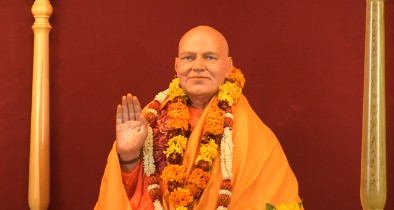
A personal discourse on Guru Bhakti, shared on the incarnation day of the speaker's master.
"The meaning is the same, but the person is the same while the inner being is different. So, it is holy Gurujī's divine incarnation."
"Guru Bhakti is the highest, greatest, divinest, and most successful... All knowledge comes through Guru Kṛpā."
Swami Maheshwarananda (Swamiji) addresses a gathering, reflecting on his first divine encounter with his Guru as a child and the profound training that followed. He describes the transformative power of the Guru's love and protection, illustrating the principles of Guru Bhakti with personal stories, including his Guru's strict discipline, the transfer of spiritual wisdom, and visionary experiences. He concludes with an account of his Guru's passing and the enduring presence of his blessings.
Filming location: Vienna, Austria
What Incarnation means
1:00 - 1:54 (54 min)
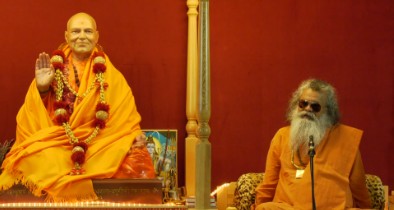
A spiritual discourse on the nature of the soul, creation, and Śiva.
"There is one who is not born from a mother and not from a father. Only that one can be called an incarnation, and that one is called Svayambhū."
"We all are one. It doesn't matter, the human or reptilian or the birds or any. There is a soul, jīva. Life, they are all one."
The lecturer speaks at the Yogandī Life center in Vienna on the anniversary of Gurudev Swami Madhavānandajī. He contemplates the concept of incarnation, explaining Śiva as the unmanifest Svayambhū who willed multiplicity into being through the five elements. Using the metaphor of the ocean and water cycle, he describes the singular soul within all life forms, discusses karma, and emphasizes the power of speech through a parable about the tongue and teeth.
Filming location: Vienna, Austria
The day I met Holy Guruji
2:00 - 2:55 (55 min)
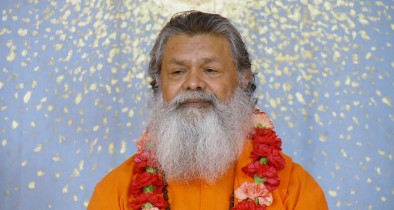
A spiritual discourse reflecting on divine descent, the guru-disciple relationship, and personal history.
"Every soul, when descending from the astral world to this mortal world, must be chosen by some higher hierarchies... You are not elected. You are selected, so such a divine great master comes to this world."
"The master is the master, and we are the raw rock. We have to go through all these situations. He will make you position, give you position on the altar, in the temple."
Swami Maheshwarananda (Swamiji) speaks intimately about the nature of a Satguru's incarnation, selected by divine will rather than personal karma. He shares the story of his own spiritual calling, describing his first encounter with his Guru, Swami Madhavananda, as a child and his determined journey to enter the ashram. He weaves in teachings on karma yoga, liberation, and the transformative, often arduous process of the disciple under the master's guidance, using the metaphor of a sculptor shaping a raw stone into a sacred statue.
Filming location: Strilky, Czech Republic
Satsang by Swami Jasrajpuri
3:00 - 3:56 (56 min)
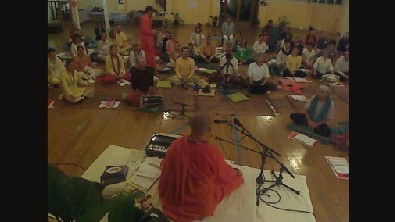
Satsang by Swami Jasrajpuri, on the 11th of September
Morning Yoga practice, Umag, Croatia (6/9)
4:00 - 5:56 (116 min)
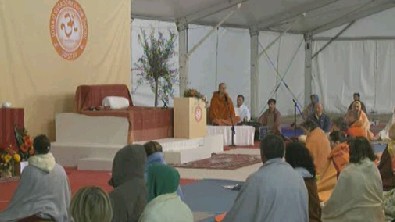
Morning Yoga practice from the international Yoga retreat Umag, Croatia on 30th of September
Examples of yogic power and awareness
6:00 - 6:54 (54 min)
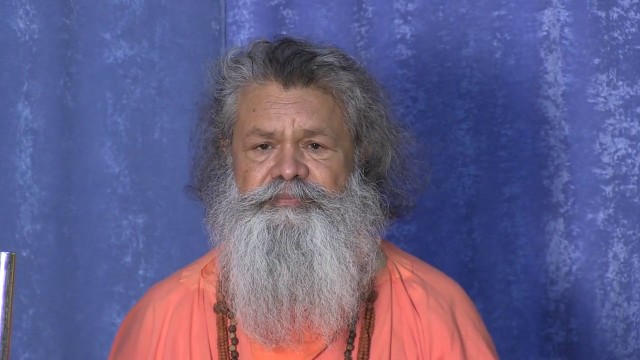
Evening satsang with Vishwaguruji from Jadan Ashram, Rajasthan, India. Vishwaguruji explains the origin of the name Holy Guruji. One has to be very conscious, aware like the driver. Yogi needs awareness. We should see the whole Earth like unity. The story of Mahaprabhuji, and the hunter, who wants to kill a bird.
Yoga, Faith, and Integration: A Personal Journey and Panel Discussion
7:00 - 8:04 (64 min)
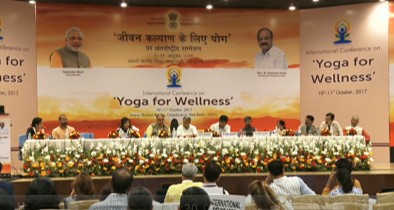
A personal testimony on faith-based yoga healing and a panel discussion on integrating traditional medical systems.
"I refused chemotherapy, radiotherapy, and surgery... I believed those fresh, positive thoughts in my consciousness would bleed down into my nervous system and start to talk to my cells."
"Yoga is not about the āsana. Why not? It is about God. If you allow God's energy to run into your system... God will provide the miracles."
Neil Patel shares his personal journey of using yoga and conscious thought to survive cancer for 18 years after refusing conventional treatment. Following his testimony, a moderated panel featuring practitioners of Homeopathy, Ayurveda, Siddha, and Yoga discusses pathways to integrate these AYUSH systems with modern medicine for holistic wellness. Key themes include treating the whole person, cost-effective care, managing non-communicable diseases, and yoga's role in raising consciousness beyond mere physical health.
Filming location: Delhi, India
Around The World - Summer Yoga at the Beach, Split, CRO
8:10 - 8:16 (6 min)
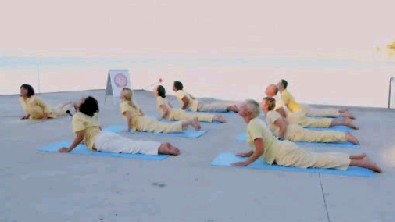
Summer Yoga at the Beach, Split, Croatia
Around The World - Surya Namaskar at Sri Devpuriji Ashram, Zagreb, CRO
8:20 - 8:56 (36 min)
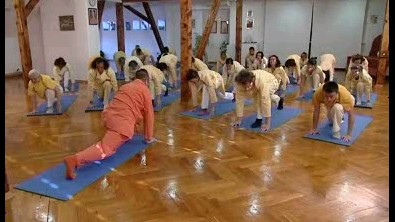
Surya Namaskar in Sri Devpuriji Ashram, Zagreb, Croatia with english subtitles
Vegetarian cooking lesson 6
9:00 - 9:07 (7 min)

Vegetarian cooking lesson from Yoga Summer Seminar in Vep, Hungary
There is no yoga with meat and alcohol
9:00 - 9:59 (59 min)
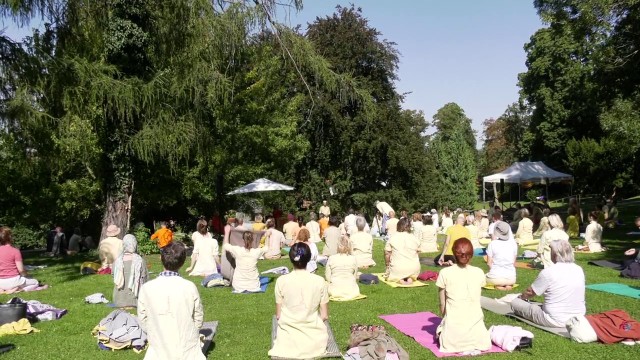
Sri Holy Guruji Jayanti Morning satsang with Vishwaguruji from Strilky Ashram, Czech Republic. Yogis have different techniques. But all of them are yoga. Many years ago, people in Europe didn't know what yoga is. Slowly people began to love animals more and they got more peace. Nowadays in many yoga schools they do not speak about meat and alcohol. Many people give up eating meat to be more healthy. Practising Bari Khatu Pranam, ashwini mudra, AUM chanting, relaxation in sashanka asana, bhramari pranayama and concentration.
Unity with the Master
9:15 - 10:08 (53 min)
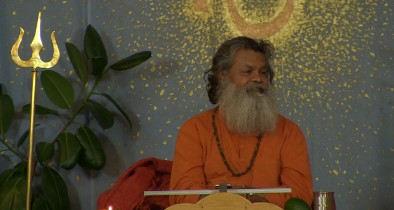
A spiritual discourse on the living succession within a guru lineage.
"The Master never dies. The body goes, for they become one with Brahman. As long as the master is living in the body, he is with us. When he passes away or leaves this body, then he is not with us, but he is within us."
"Anger, greed, jealousy, hate, etc.—these negative qualities create a barrier... So anger—not only towards the Master, but towards anyone. Anger is there where there is fear."
A speaker explains the eternal nature of the master's consciousness, which transcends the physical body and is passed to a prepared successor, making them the same person in a "different cloth." He emphasizes that receiving this consciousness (parāvidyā) depends on purity and the elimination of negative qualities like anger, not academic learning. The talk includes a story of Guru Gauraknāth, references to devotional songs, and an anecdote about the integrity of former Indian President Abdul Kalam to illustrate spiritual principles.
Filming location: Strilky, Czech Republic
Wonders of the human being
10:15 - 11:41 (86 min)
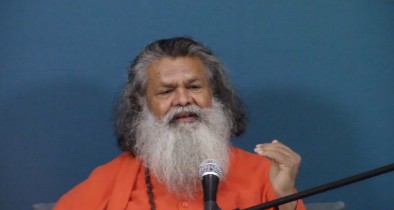
A morning satsang in a Canadian rainforest on the inner body, breath, and spiritual search.
"Where are you searching for me, oh my friend? My heart is in the forest, but I am dwelling in your breath."
"If you really search for me, I will meet you within a second."
Swami Satyanarayana Dasa gives a discourse, using the surrounding forest as a metaphor for the inner landscape of chakras and nadis. He explains the vital importance of breath (prana) and shares stories—including a parable of Ramakrishna and a devotee—to illustrate the intensity of devotion required to know God. The talk covers the five sheaths (Panchakosha), the caution around awakening kundalini, and practical guidance on pranayama and asanas for purifying the physical and energetic bodies.
Filming location: Vancouver, Canada
Yoga in Daily Life Lineage
11:45 - 12:09 (24 min)
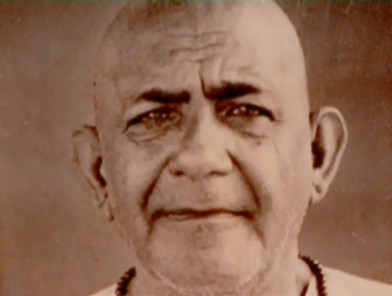
The guru lineage of Yoga in Daily Life. Presentation of YIDL.
The way Gurudev is teaching
12:15 - 13:07 (52 min)
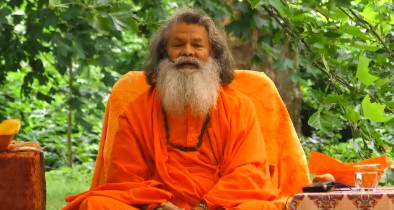
Morning satsang from Summer Retreat in Vep, Hungary. Listening to this lecture by Vishwaguruji we come to know the way a Master helps the Atma of a disciple on their journey towards the Light. Surya Nadi plays an important role in spiritual development.
Learning from Guruji
13:15 - 14:54 (99 min)
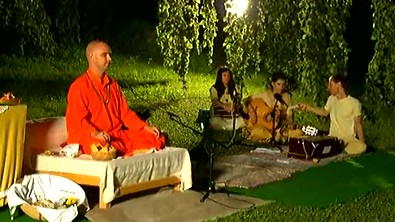
Evening Satsang with Mahamandaleshwar Swami Jasrajpuriji at Strilky Ashram, Czech Republic
Opening Address: Yoga for World Peace and Non-Violence
15:00 - 15:07 (7 min)
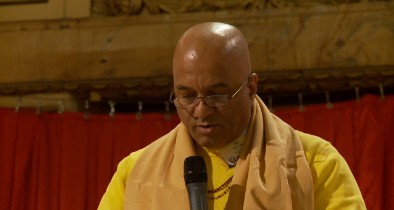
An opening address for the "Yoga for World Peace and Non-Violence" International Conference in Prague.
"Yoga is not a religion. It represents the original balancing principle that promotes nonviolence and peacefulness."
"To achieve peace in the world, we must start by achieving inner peace ourselves."
A representative of the Czech Hindu Religious Society, Vishwaguru Deep Hindu Mandir, welcomes attendees and explains his organization's role in co-organizing the conference. He honors the spiritual lineage of Swami Madhavanandaji and Swami Maheshvaranandaji, detailing global humanitarian projects and drawing a direct connection between yogic principles like non-violence (ahimsa) and the universal pursuit of peace. The speech emphasizes inner peace as the foundation for world peace.
Filming location: Prague, Czech Republic
Around the world - World peace in your hands
15:15 - 15:18 (3 min)

A promotional video about the Yoga in Daily Life organization and its founder, Paramahaṁsa Svāmī Maheśvarānanda.
"All elements are balanced in a perfect way, and that balancing principle, that is what I call yoga."
"Be the change you want to see."
The video profiles the global humanitarian and spiritual work of Svāmījī, founder of Yoga in Daily Life. It details the organization's reach, its United Nations affiliation, and its practical projects in education, healthcare, environmental protection, and interfaith dialogue aimed at fostering inner and world peace.
The Path of Kindness and the Flow of Giving
15:25 - 16:02 (37 min)
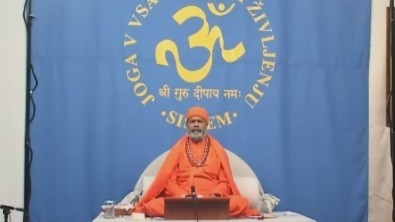
A spiritual discourse and Q&A session on cultivating kindness, understanding karma, and overcoming personal blocks through selfless giving.
"Practice ahiṃsā. See yourself in others. If someone does something bad to you, how will you feel? The same is true if you have negative feelings or thoughts toward others; they will feel it too."
"The best way is to give. Give some seeds to the birds. Give water to the flowers... Give, give, give. Yes, we are coming here for giving."
A Swamiji leads the session, beginning with teachings on kindness and the principle of ahiṃsā, illustrated by the story of the saint Dadhīci Ṛṣi. He then answers questions on the accumulation of karma and how to overcome creative and energetic blocks, emphasizing the transformative power of generosity. He shares the story of Max Muller to illustrate faith and concludes by detailing the many forms of helpful giving that purify karma and open spiritual pathways.
Filming location: Kranj, Slovenia
Suffering And Sweetness
16:10 - 16:43 (33 min)
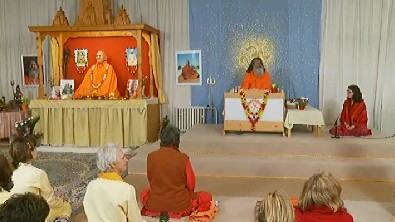
A spiritual discourse on the essence of all teachings, delivered on the occasion of Mahashivaratri.
"All beings desire happiness. So, all entities in this world, including people, have only two wishes: the attainment of happiness and freedom from troubles."
"Sukha and Duhkha are within us. Try to sweep out all the negative vrittis; then you will become free from Duhkha."
A speaker addresses the satsang gathering, exploring the fundamental human pursuit of happiness (Sukha) and freedom from sorrow (Duhkha). He explains that these states originate from within, cultivated by our positive or negative thoughts and actions. The talk weaves together teachings on fear, violence (himsa), non-violence (ahimsa), and the ultimate goal of merging individual consciousness with the divine, using the metaphor of a drop returning to the ocean. He references the wisdom of Satguru Dev and concludes with practical instructions for the upcoming Shivaratri observance.
Filming location: Strilky, Czech Republic
God is only one
16:30 - 17:06 (36 min)
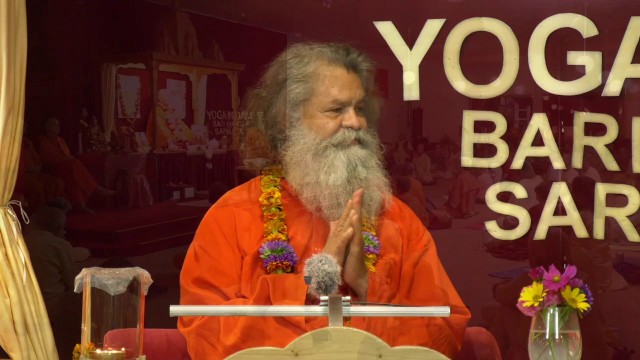
A spiritual discourse on unity, the human condition, and devotional surrender.
"I cannot plan anything that I would like. I am in the hand of my Master."
"Yoga means oneness... all humans, they are one."
Following an opening Sanskrit invocation, a spiritual teacher addresses a gathering, reflecting on a recent summer program with their Guru, Viśvagurujī. The talk emphasizes utilizing received spiritual grace and expands into themes of universal oneness, using metaphors of ocean water and the five elements to illustrate the singular divine source behind all religions and life. The speaker advises a mindful daily routine, warns against harming life and substance abuse, and concludes with blessings for all attendees and the world.
Filming location: Strilky, Czech Republic
The Living Light of God - Indian Saints
16:50 - 17:17 (27 min)
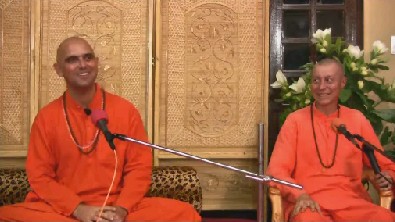
A satsang discourse using a parable to illustrate the guru's role and the disciple's responsibility.
"The saints are there to give us that light, to illuminate our path. The Guru provides the light so we can continue our journey more safely."
"But simultaneously, if we do not apply the brakes of self-discipline and engage in the practices he gives, then that light is of limited use."
The speaker shares a story of a saint offering a light to a speeding motorcyclist who has no brakes, using it as an analogy for spiritual guidance. He explains that the living tradition, or parampara, provides the illuminating light of wisdom through self-realized masters, but disciples must also practice self-discipline. The talk highlights how teachings evolve across generations while preserving their essence, referencing figures like Mahaprabhuji, Guruji, and Swamiji.
Filming location: Jadan, Rajasthan, India
We Cannot Deny Guru Principle
17:25 - 18:03 (38 min)
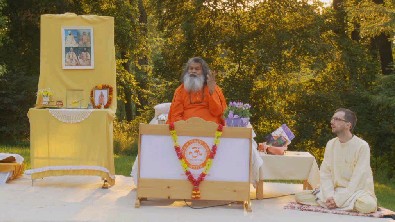
A discourse explaining the spiritual significance of Guru Pūrṇimā.
"There are two kinds of explanation about Guru Pūrṇimā. The first is that when, for the first time, the Earth emerged from the water, and the first light of the sun and moon was experienced by this earth... that was Guru Pūrṇimā."
"Secondly, Guru Pūrṇimā is generally known and explained as the birthday or incarnation of Bhagavān Vedavyāsa."
The speaker, Swami Mādhavānand, elucidates the dual origins of the festival, from a cosmic event to the birth of the sage Vedavyāsa who compiled the Vedas. He emphasizes the indispensable guru principle (guru paramparā), linking it to all teachers and the transmission of wisdom (Śruti and Smṛti). Through anecdotes and teachings, he discusses the qualities of a true guru, the nature of spiritual knowledge, and concludes with the story of Vedavyāsa enlisting Lord Gaṇeśa to write the scriptures.
Filming location: Strilky, Czech Republic
Message of the Deepak
18:10 - 18:40 (30 min)
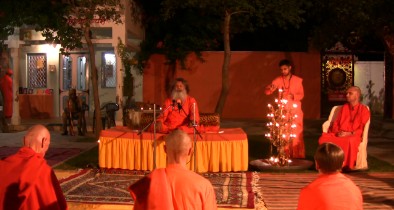
A spiritual discourse on the significance of Diwali (Dīpāvalī).
"This light is the truth, and we light these lights in everyone's heart. If we forget the sins of people, forgive them, and accept them, it means we light the candle again in their heart."
"Therefore, Dīvalī is not only for one day; Dīvalī is every day. When you open your eyes, you get the light, you see the light."
The speaker delivers a satsang on the festival of Diwali, explaining its origin in Lord Rama's return to Ayodhya and its deeper spiritual meaning as the inner light of Brahman. The talk explores the symbolism of the oil lamp—comparing the body to the pot, prana to the oil, the self to the wick, and the flame to the atman—and emphasizes themes of forgiveness, love (prem), non-violence (ahiṃsā), and daily spiritual practice. The discourse includes philosophical reflections, mantra chanting, and a critique of ritual animal sacrifice.
Filming location: Jadan, Rajasthan, India
Spiritual Way Of Living
18:45 - 19:33 (48 min)
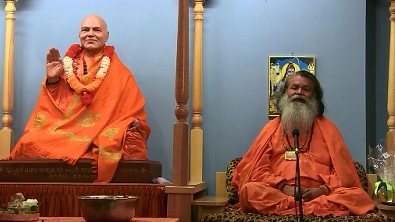
A satsang commemorating the 89th birth anniversary of Satguru Dev Swami Madhavanandaji.
"Everyone has birth, but rare are those who make this birth successful."
"Guru kṛpāhi kevalaṁ kṛpāḥ. On whom the kripa of the Gurudev is there, everyone’s kripa will be there."
A spiritual teacher leads a discourse honoring the birth anniversary of Satguru Dev. He explores the nature of a divine birth, where an immortal soul enters the mortal world as a guide. Key themes include the importance of blessings over curses, the eternal Guru Tattva principle, and the lineage of grace from Alakpuriji through Devpuriji to the present Satguru. The talk emphasizes surrendering negative qualities, following the Guru's word as mantra, and the protective power of faith.
Filming location: Vienna, Austria
Message of the Deepak
19:40 - 20:10 (30 min)
A spiritual discourse on the significance of Diwali (Dīpāvalī).
"This light is the truth, and we light these lights in everyone's heart. If we forget the sins of people, forgive them, and accept them, it means we light the candle again in their heart."
"Therefore, Dīvalī is not only for one day; Dīvalī is every day. When you open your eyes, you get the light, you see the light."
The speaker delivers a satsang on the festival of Diwali, explaining its origin in Lord Rama's return to Ayodhya and its deeper spiritual meaning as the inner light of Brahman. The talk explores the symbolism of the oil lamp—comparing the body to the pot, prana to the oil, the self to the wick, and the flame to the atman—and emphasizes themes of forgiveness, love (prem), non-violence (ahiṃsā), and daily spiritual practice. The discourse includes philosophical reflections, mantra chanting, and a critique of ritual animal sacrifice.
Filming location: Jadan, Rajasthan, India
Learning from Guruji
20:15 - 21:54 (99 min)
Evening Satsang with Mahamandaleshwar Swami Jasrajpuriji at Strilky Ashram, Czech Republic
Mahaprbhuji's glory is in the whole world
22:00 - 23:04 (64 min)
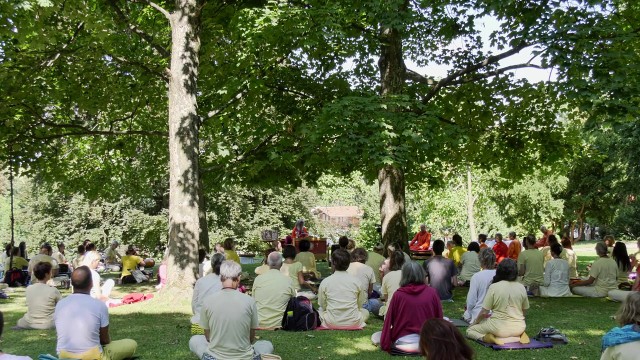
Morning satsang with Vishwaguruji from Strilky Ashram, Czech Republic. At first, we should give prashad to a temple for saints and then for the Guru and the sadhus. Better to get your food from a 50 km radius circle. The story of a lady who has cooked many times for the Vienna Ashram. Never touch the meal during cooking. Greeting mudra means you and I are in my heart. Holy Guruji could make a new bhajan any time. Explanation of bhajan Prakash Punj Amrita ke Sagar. Mahaprabhuji's blessing and glory is on the whole world. Story of Sri Devpuriji telling Holy Guruji that he gives blessing to Vishwaguruji. We should take little and give more to others. We should visit and help our friends who have health problems.
Believe or not believe in God is your choice
23:10 - 0:27 (77 min)
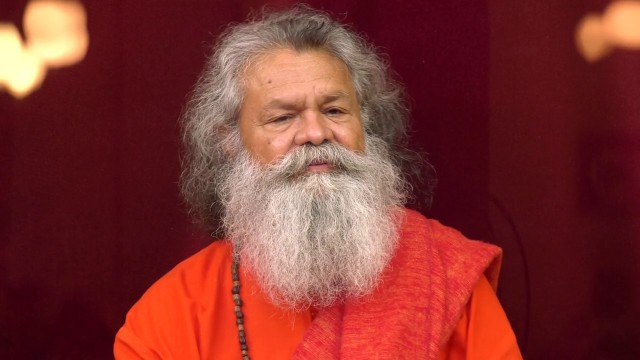
Evening satsang with Vishwaguruji from Strilky Ashram, Czech Republic. Jyotish tells us which day consists of what kind of festival and fasting. Muslims sometimes eat only after sunset. These kinds of fasting have spiritual meaning. We eat more than the generations before us, Farmers know, how is the healthy way of eating. Don't eat anything after sunset, but only drink water. If we practise yoga, don't eat meat and don't drink alcohol, we live a long and healthy life and when our time comes, we die healthy and in a short time. The story of an old Indian man who died healthily and his son. Because a yogi is filled with prana slowly they eat less and less. Live a good life. Many marriages went wrong because of alcohol. The story of a man who doesn't believe in God at all. If you believe in God or not this is your choice. The story of the birth of Jesus Christ. Krishna knows what is the Bhagawad Gita. Jesus said to believe in God and not in the gold.
American
Australian