
European
Practising from Jadan
1:00 - 1:27 (27 min)
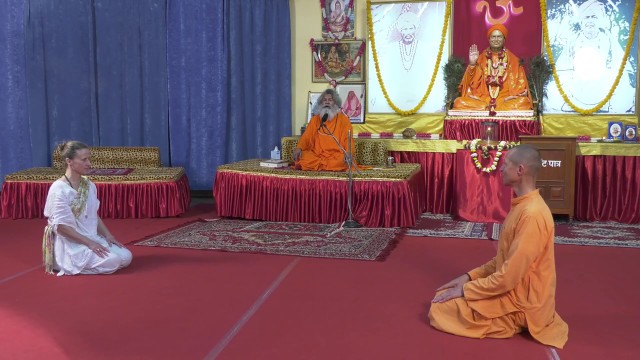
Evening satsang with Vishwaguruji from Jadan Ashram, Rajasthan, India. Practising Bari Khatu Pranam.
Meditation can help us
1:35 - 3:00 (85 min)
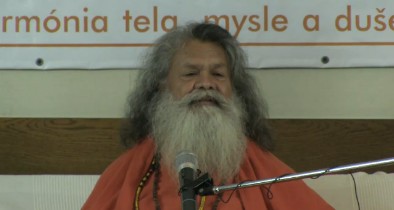
Public lecture with Vishwaguruji from Poprad, Slovakia. Why don’t we have time? Why are we suffering from stress? And even more if we have more money? If we would practice yoga three hours a day we would have happy life. Meditation can help us. Vishwaguruji gives a short and practical insight into the system of Yoga in Daily Life.
Self-inquiry meditation
3:05 - 3:54 (49 min)
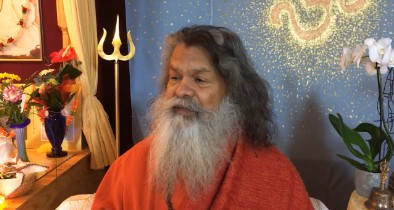
Satsang with Vishwaguruji, Strilky Ashram, Czech Republic. There are different kinds of disturbances (vrittis) in the consciousness, for example worries from the outer world. If we blame others, we will never reach our aim. Nature is destroyed and food poisoned with chemicals. Meditation brings positive thoughts into our consciousness. Go further and you will reach knowledge of the Self. Compassion will come into your heart and will remain there. In that way, life will be happy and healthy.
Around the world - Yoga from Presov
4:00 - 5:09 (69 min)
Presentation of Yoga In Daily Life from the city of Presov, Slovak Republic.
Around the world - Hidden beauty
5:15 - 5:37 (22 min)

Report about the beauties of underwater life and our current paths of their destruction. From Australia.
Ayurvedic advice on proper nourishment
5:40 - 5:59 (19 min)
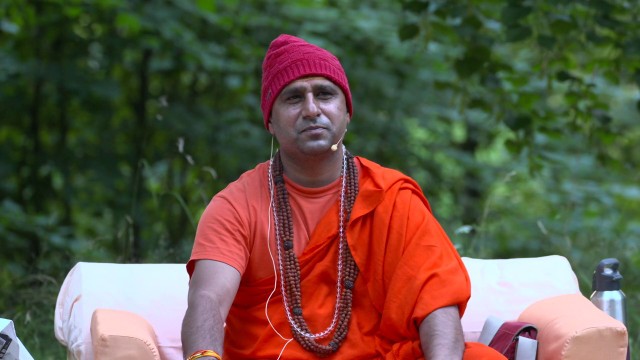
A satsang on the integral relationship between Yoga and Āyurveda as essential nourishment.
"A human requires two types of food or nourishment. One is the physical food we eat... But we also have a mind. The mind likewise needs a kind of nourishment, which is bhajan, mantra, and the study of spiritual scriptures."
"Yoga and Āyurveda are brothers... Āyurveda tells humans what they should eat, when they should eat, and what they should not eat."
Following opening prayers and salutations, a speaker addresses the assembly, introducing the concept of dual nourishment for body and mind. The talk focuses primarily on Āyurvedic principles for physical health, detailing rules for water consumption to support digestion and balance the bodily doshas (vāta, pitta, kapha). Key advice includes maintaining a 45-minute gap between drinking water and eating, avoiding ice-cold water, and drinking room-temperature water sip by sip. The session concludes with a chant and a prayer.
Filming location: Strilky, Czech Republic
Vegetarian cooking lesson 15
6:00 - 6:11 (11 min)

Vegetarian cooking lesson
Sources of happiness
6:15 - 7:37 (82 min)
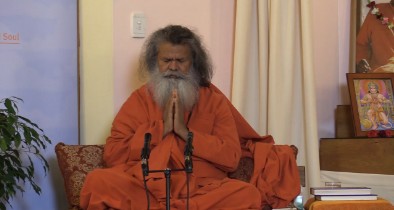
A satsang on the foundations of health and happiness through Yoga and Āyurveda.
"Health is not everything, but everything is nothing without health."
"Yoga and Āyurveda are like the two wings of a bird to fly."
Swami Maheshvarananda leads an evening talk, presenting health as the primary wealth and outlining Āyurvedic principles for a harmonious life. He shares a parable about a king and a beggar with a bottomless pot to illustrate the insatiability of human desire. The session includes practical demonstrations of energy-awareness and touch techniques for self-healing, and concludes with a critique of modern diet and lifestyle.
Filming location: New Zealand
Remember the beauty of the world
7:45 - 8:18 (33 min)
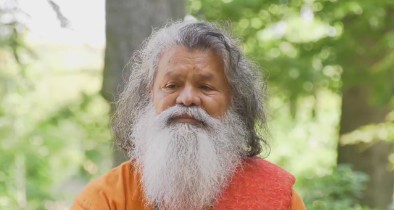
A guided meditation and teaching session on perception, memory, and the analogy of the human body as a living tree.
"Observe the trees; take all this into your memory now, more consciously. Now close your eyes and see the picture inside. This is the test: how much concentration do you have?"
"This tree is like our self. It’s alive in the tree... Similarly, in our body, it’s not only one soul. We have one, our big soul, but we have millions of other creatures in our body."
A teacher guides students through a visualization exercise in a park, using observation of a tree to discuss concentration and memory. He expands the analogy, comparing the tree's structure to the human body and spine, and discusses the multitude of life within a single body. He emphasizes storing beautiful memories, like winter landscapes, to aid meditation, sharing personal anecdotes from snowy environments to illustrate his points.
Filming location: Strilky, Czech Republic
Influence Of The Full Moon
8:25 - 9:22 (57 min)
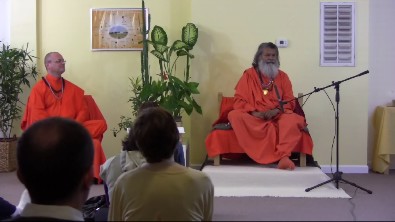
A satsang discourse on the full moon's influence, human consciousness, and spiritual practice.
"In the holy book Bhagavad Gītā, God Kṛṣṇa says, 'Arjuna, I enter into the vegetation as a nectar through the moonlight.'"
"In yoga, we used to say a yoga practitioner and the yogī should be—or every human should be—like a honeybee. It brings nectar even from the poisonous cactus or some plants."
Swami Paramadvaiti leads an evening talk, beginning with the spiritual and ecological significance of the full moon and the honeybee. He expands into a wide-ranging discussion covering the lunar effect on emotions, the importance of fasting, the journey of the soul through the chakras and at death, and the foundational principles of yoga for health and consciousness. He weaves in teachings on managing desires, subconscious impressions from early life, and the ultimate goal of meditation and mantra.
Filming location: New York, USA
There is no end of learning
9:30 - 10:11 (41 min)
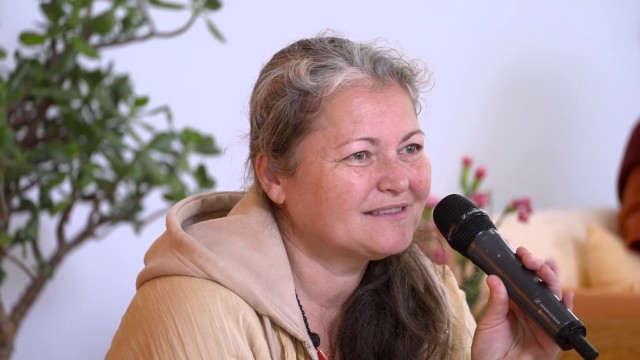
A devotee shares personal stories of spiritual guidance and grace within the Yoga in Daily Life community.
"Nothing is more beautiful than this ashram. Are you all in agreement? That is why all of you are here."
"Gurudev sent me to China. I realized he sent me there to learn about myself."
A speaker addresses the satsang, expressing deep connection to the ashram and global spiritual family. They recount how inner guidance from Gurudev, Viśvagurujī, directed their service—leading to establishing an ashram in Romania—and guided a pilgrimage through the Himalayan Chārdhām. They also describe how a casual remark from Gurudev inspired scientific research on prāṇāyāma, later fostering a university partnership.
Filming location: Strilky, Czech Republic
Purify The Karmic Layers
10:15 - 11:08 (53 min)
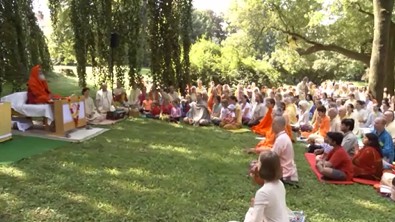
An opening discourse for a spiritual retreat seminar on destiny, karma, and the human journey.
"Destiny is the production of the actions, the karma." "God gave us freedom to do the karma. But he didn't give us the freedom to harvest the fruits of the karma."
Swami begins the retreat with a prayer and addresses the assembly. He explains the law of karma as the source of destiny, using analogies like a SIM card's credit to describe the exhaustion of good karma leading to rebirth. He discusses the journey of the soul, the nature of heavenly realms, and the unique responsibility of human life, emphasizing purification through spiritual practice and the guidance of a Master. Stories, including one about a farmer and a devotee at heaven's gate, illustrate these principles. The talk concludes with practical advice for the retreat, focusing on connecting with nature and simple living.
Filming location: Strilky, Czech Republic
Bhramari pranayama can help against many problems
11:15 - 11:54 (39 min)
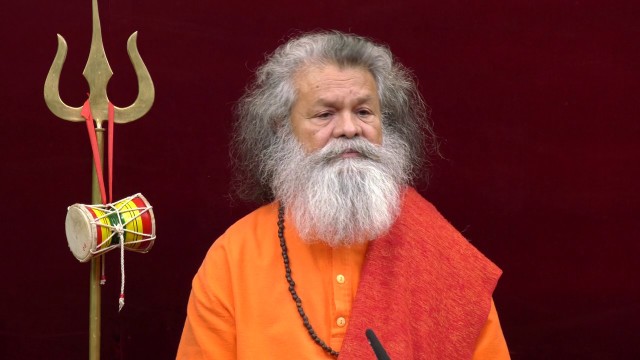
Evening satsang with Vishwaguruji from Strilky Ashram, Czech Republic. In reality, yoga is one but it has many branches and names. Yogis usually gave the names of animals to the positures because they don't want to come back to the world in the body of that animal. There are also many kinds of kriyas, Some of them are hatha yoga kriyas. There is a big misunderstanding in the western world about hatha yoga. Vajra nadi controls our all nerve systems. Practise every day and go step by step. Pranayama has also many technics. Breathing is happening also towards our skin. The story about a France king and girls covered with gold. Explanation and demonstration of one kind of Bhramari pranayama.
Part 1: The Practice of Śalabhāsana and Complementary Āsanas
12:00 - 12:59 (59 min)
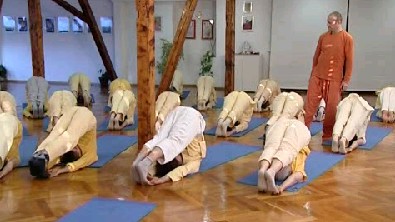
A detailed yoga class instruction covering śalabhāsana, sarvāṅgāsana, and prāṇāyāma.
"Śalabhāsana, being a backward bend that requires strong muscles, works very well on our self-confidence. It strengthens the sense of power and vitality."
"In this posture, simply allow one subtle, extended exhalation. This posture works on unburdening the heart, so less pumping is needed to nourish the brain."
An instructor guides students through a sequence of āsanas, including śalabhāsana (locust pose) variations, sarvāṅgāsana (shoulderstand), and halāsana (plow pose), explaining their physical and energetic benefits. The session incorporates preparatory poses, counterposes, and detailed alignment cues, concluding with instructions for Bhastrikā prāṇāyāma and a collective Oṁ chant.
Filming location: Zagreb, Croatia
Heart and intellect
13:05 - 13:44 (39 min)
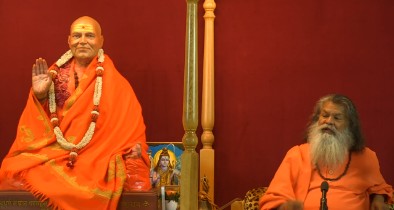
A spiritual discourse on the discipline of mind and the concept of vṛtti (mental fluctuations).
"God has given us a beautiful body and a beautiful inner world, and from that beautiful inner world, more is reflected to the outer world."
"Patañjali said the first word is... discipline. Yoga begins with the discipline."
A teacher explains the nature of vṛtti—the thoughts and attention that stir the consciousness—using examples from Patañjali's Yoga Sūtra and everyday life. He discusses the interplay between the intellect and the heart, the influence of selfishness and desire, and the need for personal discipline (anuśāsanam) to ultimately achieve control of the mind (citta vṛtti nirodhaḥ). The talk references saints like Mīrābāī and includes practical analogies.
Filming location: Vienna, Austria
Do not live a selfish life
13:50 - 14:19 (29 min)
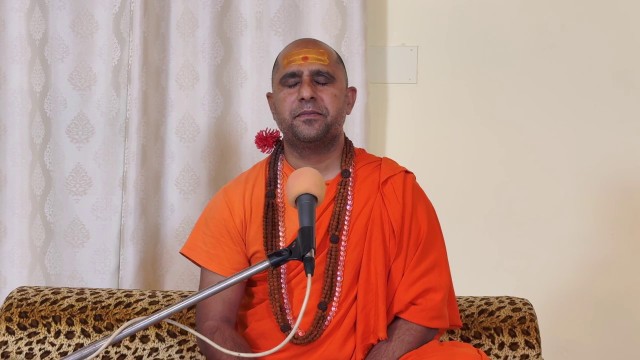
A discourse on the divine origin and essence of the Vedas.
"The Vedas mark the beginning, the dawn of human civilization on this planet. The divine knowledge received at that time to advance human civilization is called the Vedas."
"Ekam Sad Viprā Bahudā Vadanti... The Truth is one, God is one... But wise people... describe God in different ways according to their opinion and knowledge."
A speaker addresses an assembly at the Om Ashram, offering salutations to the guru lineage. He expounds on the Vedas as divine knowledge given for all humanity, explaining their four divisions—Ṛgveda, Yajurveda, Sāmaveda, and Atharvaveda—and their core teachings on oneness, truth, devotion, and humanity's purpose to protect and enhance the world. He emphasizes that the paramparā's bhajans distill this Vedic essence for practical devotion.
Filming location: Jadan, Rajasthan, India
Meditation can help us
14:25 - 15:50 (85 min)
Public lecture with Vishwaguruji from Poprad, Slovakia. Why don’t we have time? Why are we suffering from stress? And even more if we have more money? If we would practice yoga three hours a day we would have happy life. Meditation can help us. Vishwaguruji gives a short and practical insight into the system of Yoga in Daily Life.
Do not live a selfish life
15:55 - 16:24 (29 min)
A discourse on the divine origin and essence of the Vedas.
"The Vedas mark the beginning, the dawn of human civilization on this planet. The divine knowledge received at that time to advance human civilization is called the Vedas."
"Ekam Sad Viprā Bahudā Vadanti... The Truth is one, God is one... But wise people... describe God in different ways according to their opinion and knowledge."
A speaker addresses an assembly at the Om Ashram, offering salutations to the guru lineage. He expounds on the Vedas as divine knowledge given for all humanity, explaining their four divisions—Ṛgveda, Yajurveda, Sāmaveda, and Atharvaveda—and their core teachings on oneness, truth, devotion, and humanity's purpose to protect and enhance the world. He emphasizes that the paramparā's bhajans distill this Vedic essence for practical devotion.
Filming location: Jadan, Rajasthan, India
How to educate the children?
16:30 - 17:33 (63 min)
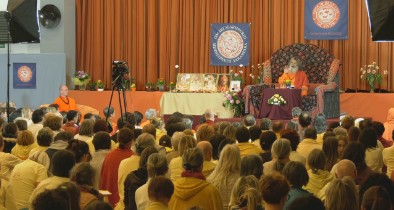
A spiritual discourse on education, habits, health, and yoga.
"Habit is the second nature of man."
"The guru converts his disciple into the guru. That's it. That's the difference."
Swami Maheshwarananda reflects on a lecture about educating children, using personal anecdotes to discuss the role of discipline, society, and fear in shaping youth. He expands into broader themes of health, criticizing modern habits and diseases while advocating for yoga and natural living as paths to long, happy life. The talk weaves together teachings on karma, the guru-disciple relationship, and practical wisdom.
Filming location: Vép, Hungary
Bhajan evening in the Jadan Ashram
17:40 - 18:19 (39 min)
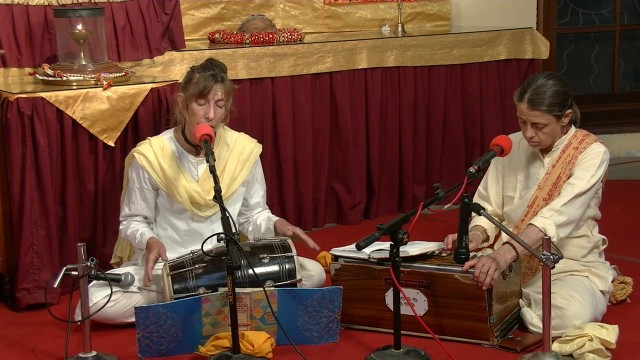
Evening satsang from Jadan Ashram, Rajasthan, India. Bhajan singing.
Bhajan singing in the Jadan Ashram
18:25 - 19:43 (78 min)
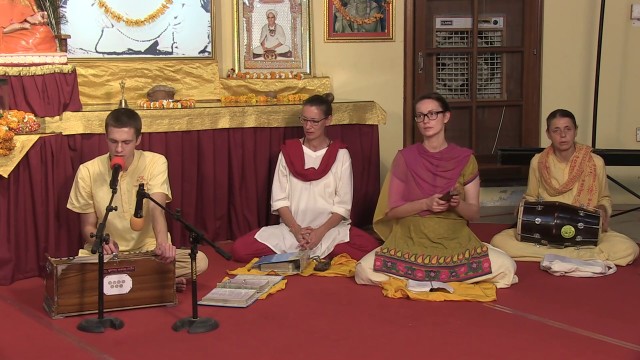
Evening satsang with Vishwaguruji from Jadan Ashram, Rajasthan, India. Bhajan singing evening.
Whole world is one family
19:50 - 21:19 (89 min)
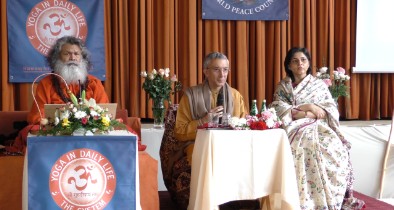
Morning satsang with Vishwaguruji from Vep, Hungary. Firstly Sri Rahul Chabbra Ji, Indian Ambassador to Hungary, speaks about different kinds of pollution that threaten the whole globe and the ways to remove this pollution. Vishwaguruji speaks about the meaning of Shivalingam and chants Mahamrityun Jayamantra.
Do not live a selfish life
21:25 - 21:54 (29 min)
A discourse on the divine origin and essence of the Vedas.
"The Vedas mark the beginning, the dawn of human civilization on this planet. The divine knowledge received at that time to advance human civilization is called the Vedas."
"Ekam Sad Viprā Bahudā Vadanti... The Truth is one, God is one... But wise people... describe God in different ways according to their opinion and knowledge."
A speaker addresses an assembly at the Om Ashram, offering salutations to the guru lineage. He expounds on the Vedas as divine knowledge given for all humanity, explaining their four divisions—Ṛgveda, Yajurveda, Sāmaveda, and Atharvaveda—and their core teachings on oneness, truth, devotion, and humanity's purpose to protect and enhance the world. He emphasizes that the paramparā's bhajans distill this Vedic essence for practical devotion.
Filming location: Jadan, Rajasthan, India
Meditation can help us
22:00 - 23:25 (85 min)
Public lecture with Vishwaguruji from Poprad, Slovakia. Why don’t we have time? Why are we suffering from stress? And even more if we have more money? If we would practice yoga three hours a day we would have happy life. Meditation can help us. Vishwaguruji gives a short and practical insight into the system of Yoga in Daily Life.
Sources of happiness
23:30 - 0:52 (82 min)
A satsang on the foundations of health and happiness through Yoga and Āyurveda.
"Health is not everything, but everything is nothing without health."
"Yoga and Āyurveda are like the two wings of a bird to fly."
Swami Maheshvarananda leads an evening talk, presenting health as the primary wealth and outlining Āyurvedic principles for a harmonious life. He shares a parable about a king and a beggar with a bottomless pot to illustrate the insatiability of human desire. The session includes practical demonstrations of energy-awareness and touch techniques for self-healing, and concludes with a critique of modern diet and lifestyle.
Filming location: New Zealand
American
Australian