
European
Practicing of the system 'Yoga in Daily Life', Level 2 - Part 2
1:00 - 2:11 (71 min)
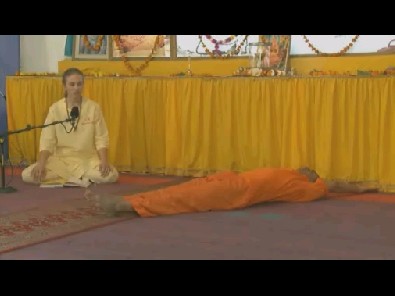
A guided yoga practice session for Level Two of the "Yoga in Daily Life" system.
"This light has been transferred through the centuries from one master to another without any interruption."
"Āsana means, except for other meanings, also comfortable. So āsana should be a comfortable position."
An instructor leads a comprehensive yoga class at Parananda Ashram, systematically guiding practitioners through the second level of the "Yoga in Daily Life" system. The session begins with relaxation and breath awareness (full yoga breath), followed by a series of āsanas including Meru Pṛṣṭhāsana, Catuṣpada Āsana, Cakrāsana, Dvikoṇāsana, Bhūta Āsana, Setu Āsana, Hastapādāṅguṣṭhāsana, Sumeru Āsana, and Meruvakrāsana. Each posture is explained with detailed alignment cues and its physical and energetic benefits. The practice concludes with deep relaxation, a prāṇāyāma (alternate nostril breathing) exercise, and a closing meditation with Oṁ and Śānti chants.
Filming location: Jadan, Rajasthan, India
Parama Guru Swamiji
2:15 - 3:17 (62 min)
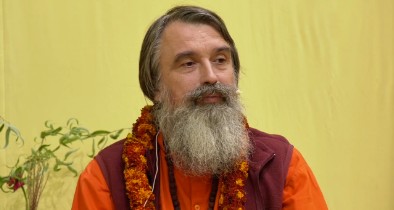
Evening satsang from weekend Yoga seminar in Kranj, Slovenia. Mahamandaleshwar Swami Gyaneshwar Puri explains the importance of the work of the Guru by translating the bhajan, "Parama Guru Swamiji".
The Presence of the Guru
3:20 - 4:03 (43 min)
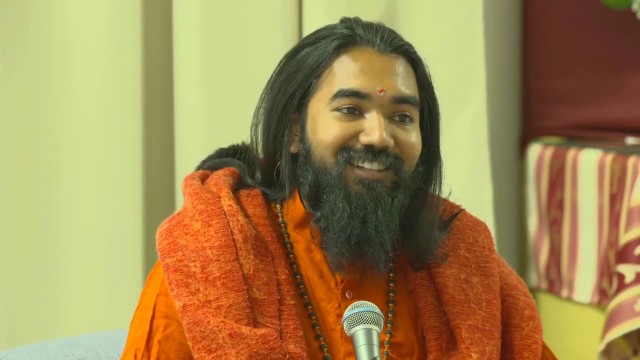
A satsang on devotion, surrender, and relating to the spiritual teacher.
"Gurudev is in the same space, same region, I would say, but we all should know that Gurudev is watching. It doesn’t matter where he is, he is always observing everything."
"If we have that mindset within us, that whatever we are doing, it’s him doing... then nothing is going to stop us in this world."
The lecturer addresses disciples in Slovenia, sharing insights from traveling with Gurudev, Sri Vishwaguru Mahamandaleshwar Paramahamsa Maheshwaranand Puri. He discusses the Guru's omnipresence, the importance of selfless service (seva), and cultivating trust over logic. He advises on etiquette in the Guru's presence, tells a parable about faith, and leads a guided meditation (manasik puja) to feel the Guru's inner presence.
Filming location: Slovenia
The Globe of the Self: Reflections on Ātmā, Jīva, and the One in All
4:10 - 5:12 (62 min)
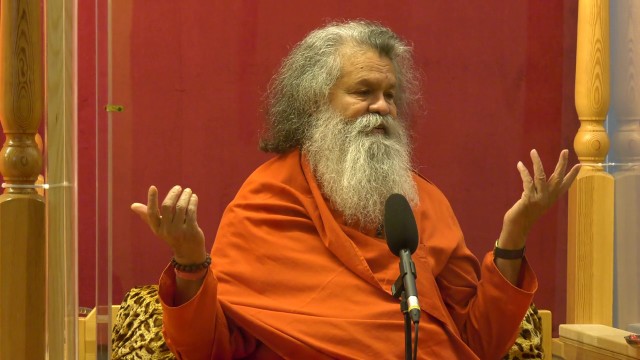
A spiritual discourse and satsang on the nature of the self, consciousness, and existence.
"In this globe, immense of immense, how many jīvas. Jīvā means the soul."
"And that was what Holy Gurujī said: one in all and all in one. One in all and all in one, in which way I am now."
The lecturer leads an evening satsang, offering contemplative reflections on the ātmā (Self), the jīva (individual soul), and the interconnectedness of all life. He explores themes of meditation, the limitations of physical travel versus spiritual expansion, and the relationship between yogic science and worldly science, sharing personal anecdotes including a healing story. The session includes a guided energy exercise and concludes with devotional singing.
Filming location: Vienna, Austria
Ayurvedic medicine for joints
5:20 - 6:14 (54 min)
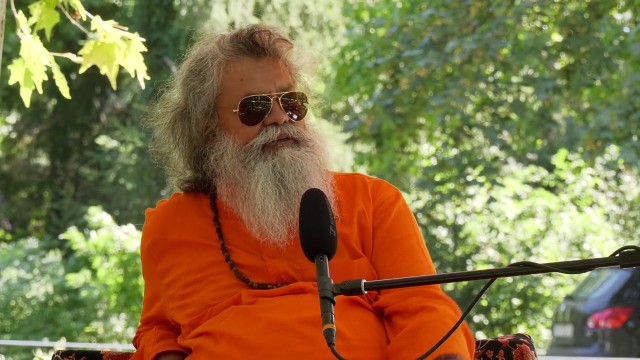
Morning satsang with Vishwaguruji from Vep, Hungary. Bhajan singing. Relaxation. There are some spices which are very good for joints like ginger and garlic. Agnidevi shows an ayurvedic medicine which is good for joints. She speaks about the ingredients and the preparation of that medicine. Vishwaguruji and Agnidevi answered some questions connecting this medicine. We should make it for ourselves and give it further. Its effect appears after two or three months.
We need purity in our minds and souls
6:20 - 7:14 (54 min)
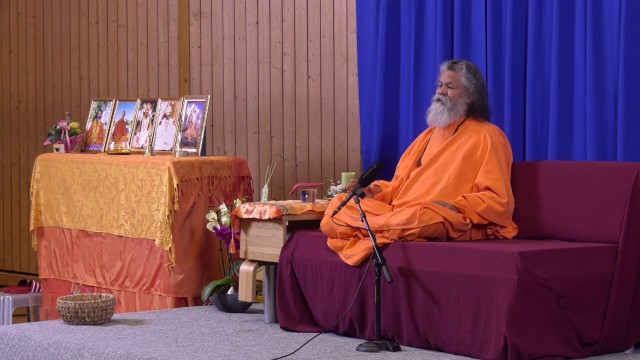
A spiritual discourse on unity, the nature of the soul, and daily practice.
"A very fine drop is also that... This very fine drop will become the whole ocean."
"God is each and every one: your mother and your father are God. Then come the children; they are our gods."
Swami Maheshwarananda (addressed as Guruji) delivers an evening satsang, reflecting on his travels and the global family of Yoga in Daily Life. He explores the metaphor of the individual as a drop merging into the divine ocean, discusses the relationship between science and spirituality, and emphasizes lifelong purification, respect for parents as divine, and integrating spiritual practice into daily life through mantra and humility.
Filming location: Salzburg, Austria
Do not waste your human life
7:20 - 8:20 (60 min)
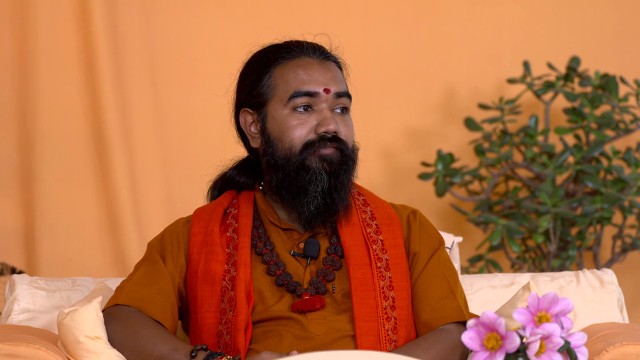
An evening satsang discourse on dharma, grace, and spiritual practice.
"Dharma rakṣati rakṣitaḥ. He who protects dharma, dharma protects him."
"The Guru will show us the right path... But we need to do the effort."
The lecturer leads a satsang exploring the nature of dharma and the four blessings (kṛpā) essential for spiritual progress: divine grace, scripture, the Guru, and one's own initiative. He weaves in teachings from the Bhagavad Gītā, stories from the Mahābhārata, and practical advice for students, emphasizing the necessity of the Guru's guidance and the disciple's personal effort to follow the righteous path and achieve liberation.
Filming location: Strilky, Czech Republic
Webcast from Jadan
8:30 - 9:15 (45 min)
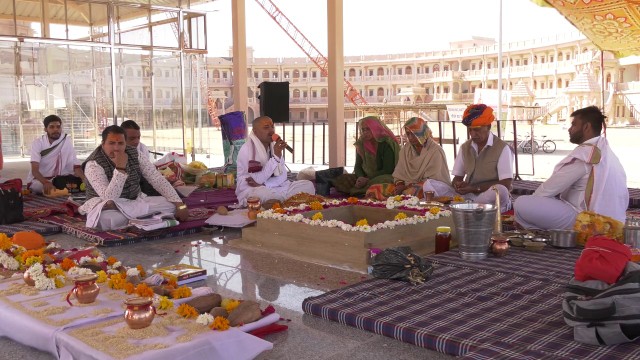
Satsang from Om Ashram, Pali, Rajasthan, India.
Celebration of Mahaprabhujis Mahasamdhi (1/3)
9:00 - 10:34 (94 min)
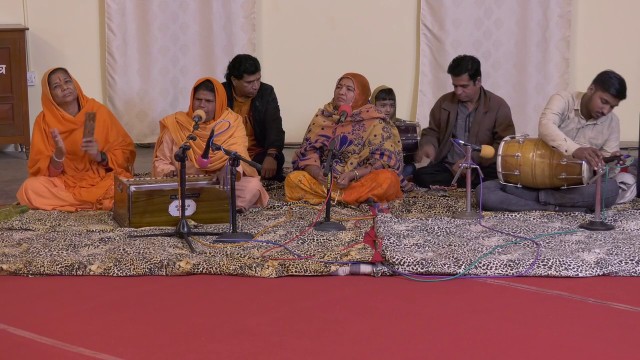
Evening satsang from Jadan Ashram, Rajasthan, India.
Devotion to Nature
9:20 - 9:50 (30 min)

Evening satsang from Jadan Ashram, Rajasthan, India.Emphasizing the vital link between spiritual health and the physical world, Swami Phulpuriji delivers a powerful message regarding the sanctity of our natural surroundings. He creatively defines the environment as our "in-wire" system, describing how nature physically recharges the human body through breath and food. Drawing upon the legacy of Vishwaguruji and the scriptures of the Bhagavad Gita, he reminds us that Lord Krishna exists within the trees, elevating them to the status of the divine. Swami Phulpuriji warns against the destruction caused by human greed, specifically deforestation and the use of harmful pesticides. He advocates for a return to respecting trees as "Neem Narayan," asserting that true mental peace and human survival are inextricably bound to the preservation of Mother Earth.
The value and the aim of humanlife
9:55 - 10:24 (29 min)
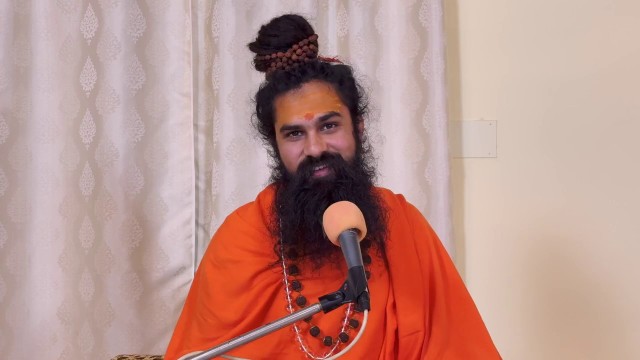
A spiritual discourse on the value of human life and the pursuit of self-realization.
"We do not know the value of a human life. When a merchant comes—like a divine master, a spiritual master such as Viśvagurujī—into your life, you have an experience."
"Our main aim as humans is to work for self-realization, for mokṣa, for jñāna, for brahma jñāna. Yet we are not working."
A speaker from the Oṁ Śrī Alagpuryā Siddha Pīṭha paramparā addresses a gathering at the Yoga and Daily Life center. He uses parables—a diamond mistaken for a stone and a king's exhibition—to illustrate how humans often miss life's supreme spiritual purpose while distracted by worldly attractions. He emphasizes that the aim of human life is self-realization, achievable by following the Guru's teachings, engaging in satsaṅg, and turning inward to discover divine energy and inner joy.
Filming location: Jadan, Rajasthan, India
Celebration of Mahaprabhujis Mahasamdhi (2/3)
10:00 - 11:21 (81 min)
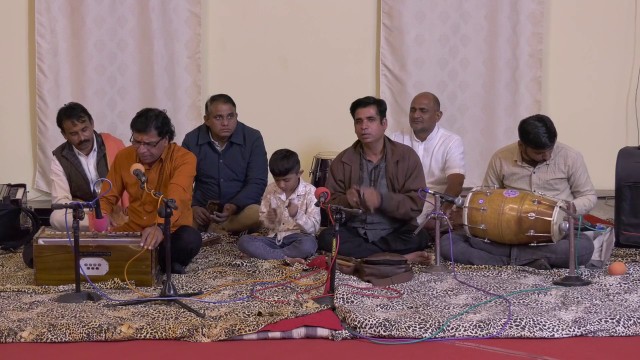
Celebration of Mahaprabhuji Mahasamadhi from Jadan Ashram, Rajasthan, India.
Only your spiritual work will go with you
10:25 - 11:11 (46 min)
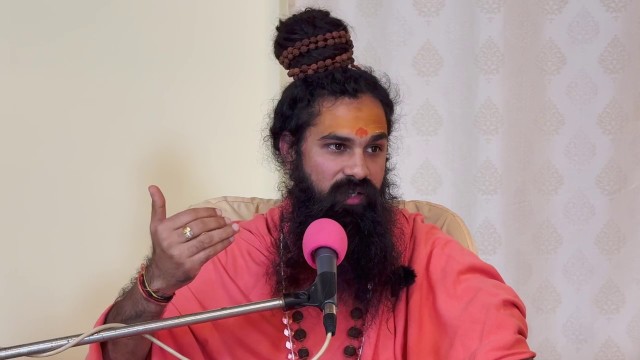
A spiritual discourse on the preciousness and purpose of human life.
"Vishwagurujī is always mentioning that 8.4 million creatures are in this world. And this is one human life. That life, if we get, then we can get liberated."
"If you are human, what should be the difference?... If we have some dharma, if we are doing bhakti, if we are doing spiritual practices, if we are following guru ājñā... then we are the human in human body."
A speaker at Om Ashram addresses a gathering, explaining why human life is a rare opportunity for liberation. He uses an allegory of a man trapped in a well to describe attachment to worldly illusion (māyā) and the need for a guru's guidance. The talk contrasts basic animal instincts with the spiritual duties that define a human being, urging the audience to follow the path of seva, bhakti, and sādhanā.
Filming location: Jadan, Rajasthan, India
Celebration of Mahaprabhujis Mahasamdhi (3/3)
11:00 - 12:30 (90 min)
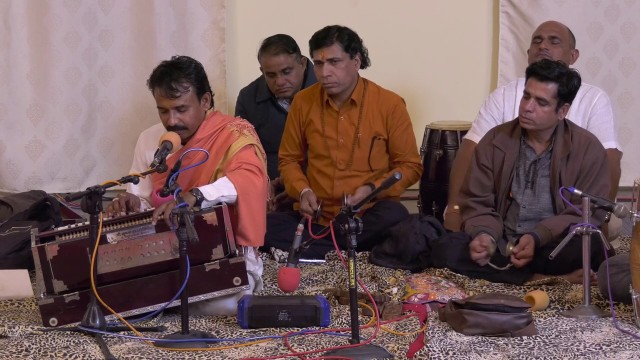
Evening satsang from Jadan Ashram, Rajasthan, India.
The same light lits in all of us
11:15 - 11:59 (44 min)
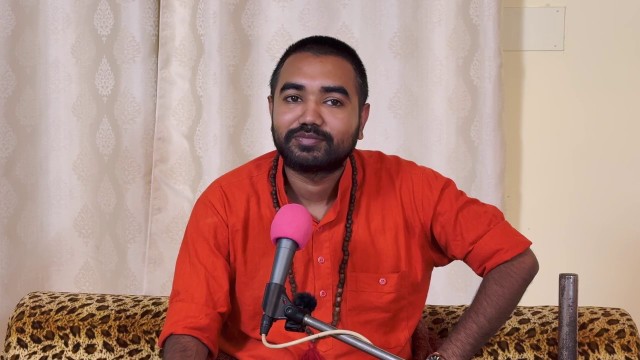
A satsang discourse on the nature of the Guru and the path to inner peace.
"Guru is Brahmā, Guru is Viṣṇu, and Guru is Maheśa. He holds all the qualities, or he is higher than God."
"The ultimate goal for us is mokṣa, self-realization. The help, the guidance, will always come from Gurudev, but the work has to be done by ourselves."
A speaker addresses a gathering, expounding on the supreme position of the Satguru as the embodiment of the divine trinity and the essential guide. He discusses the necessity of personal effort, surrender, and enduring the Guru's disciplining 'hammering' to progress spiritually. Themes include moving from ego to witness consciousness, the importance of faith over expectation, and finding lasting peace within.
Filming location: Jadan, Rajasthan, India
Around the world - Bhajans from Kailash(2/3)
12:00 - 12:34 (34 min)
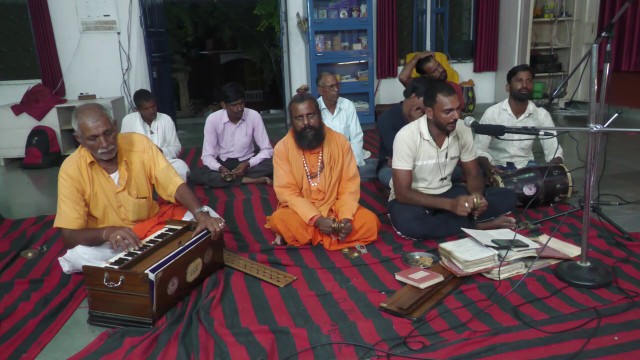
Evening satsang from Kaliash Ashram, Rajasthan, India. Bhajans on the occasion of Sri Devpuriji Mahasamadhi.
The whole world is my family
12:35 - 13:17 (42 min)
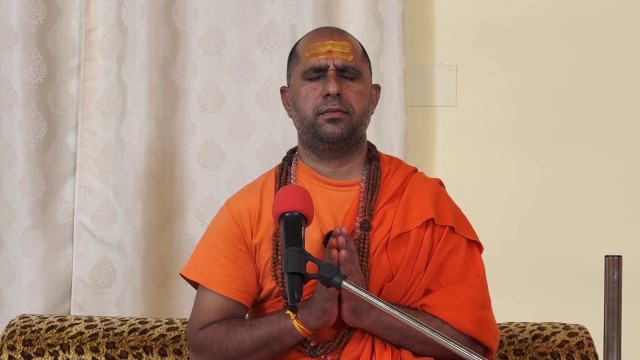
Evening Satsang from Jadan Ashram, Rajasthan, India. Many people in the world practise prayer and meditation, but they don't know the aim of human life. Great rishis are praying for every living being. We should control all of our senses. There is God's light in every creature. Great spiritual personalities blessed the inauguration of the Rupavas temple with their presence. All the Masters of our parampara were taking care of cows, and Vishwaguruji also does. Cows hold an important place in Indian culture. The products of the cow are very valuable. Never kill cows, but take care of them.
The Ocean of Grace
13:20 - 13:29 (9 min)
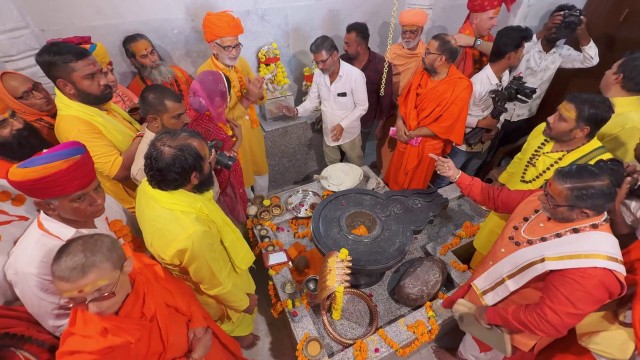
A devotional hymn and a subsequent analytical commentary on its text.
"Guru Devanī Sabke Sarjana Harā Hai, Namo Namo." "Kṛpā Sindhu Nāra Rūpa Harī Jag Meliyā Avatāra Hai, Jīva Kāraṇa Kāraṇa Svāmī."
The video presents a hymn, "The Ocean of Grace," praising Gurudeva Nirañjana as the supreme creator and destroyer. This is followed by a section titled "Remarks on Logical Inconsistencies," which critically analyzes the hymn's grammatical ambiguities, shifting divine address, and conceptual tensions between themes of destruction and divine causation.
Filming location: Jadan, Rajasthan, India
Awaken to Knowledge, O Residents of Bhārat
13:35 - 13:40 (5 min)
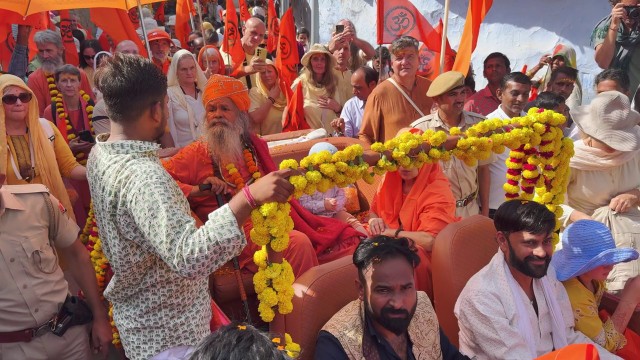
A spiritual address and subsequent analysis of its logical structure.
"Now, awaken to knowledge, all you desirous ones, residents of Bhārat. Do not follow any other religion."
"Do not destroy any doctrine, Jee. All you world-makers, now you awaken to knowledge."
The video presents a poetic, imperative call to the "residents of Bhārat" (India) to awaken to knowledge, learn from all people, and protect doctrines, followed by a critical textual analysis. The analysis highlights contradictions in the address, such as commanding exclusivity while forbidding the destruction of other doctrines, and notes ambiguous, shifting subjects and the unexplained introduction of the term "Nugrojī."
Filming location: Jadan, Rajasthan, India
The Essence of Īśāvāsya: From Ethics to Unity
13:47 - 14:05 (18 min)
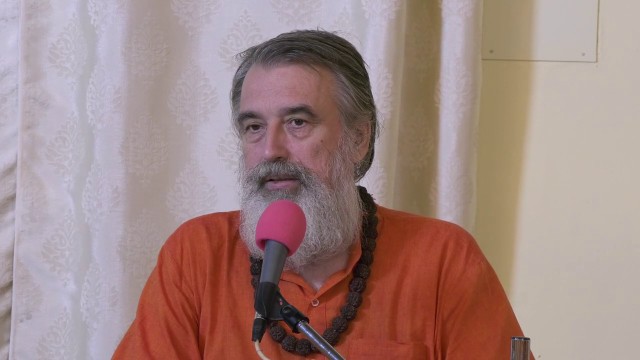
A discourse on the first four mantras of the Īśāvāsya Upaniṣad, explaining ethical principles and the Advaita philosophy of unity.
"God is everywhere. So, if God is everywhere and you have only this, it means you are supposed to have this."
"The one who sees everybody in himself... Once you manage to connect that each and every one of us is connected, then there is no hatred."
A speaker provides a verse-by-verse commentary on the Upaniṣad, beginning with instructions against greed and on performing one's duty. The teaching progresses to the non-dual principle that the divine is all-pervasive, unmoving yet faster than the mind, and inside and outside all beings. The key message is that realizing this unity eliminates hatred and sorrow, but this requires personal practice beyond intellectual understanding.
Filming location: Jadan, Rajasthan, India
The Light of Life and the Path to Liberation
14:15 - 15:08 (53 min)
An evening satsang on the purpose of human life and the path to spiritual liberation.
"Everything in this world is possible easily, but it is rare to come to satsaṅg or spiritual activities."
"Spirituality is purity, clarity, pure consciousness, pure mind, pure thoughts, pure behaviors. Purity is very important."
The lecturer addresses an audience, welcoming them as fortunate souls in the Kali Yuga. He explores the unique value of human birth, urging self-inquiry and the cultivation of divine qualities like love and tolerance over mere intellectual knowledge. He discusses overcoming unhealthy dependencies, the nature of true love, and the ultimate goal of realizing the divine consciousness within, touching on concepts of karma, chakras, and non-duality.
Filming location: Umag, Croatia
The Journey Beyond Duality: Life, Self, and the Path to Oneness
15:15 - 16:27 (72 min)
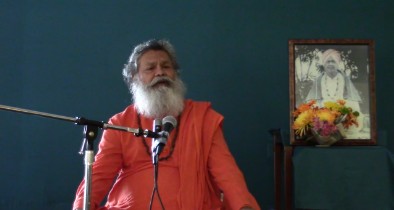
A spiritual discourse on yoga philosophy, the nature of the self, and the path to oneness.
"Our life, as we said, is a destiny and a journey. It is a journey; the destination is still not there."
"In Ātmā, in the self, there are no dualities; there is only oneness. So where there is heaven and hell, there is life and death... that's what we want to come out of, to become one with the highest, with our Self."
Swami Anand Arun delivers an extensive teaching, exploring the journey beyond dualities like life/death and divine/demonic energies. He explains core concepts of Ātmā, karma, and the three guṇas, detailing the system of senses (indriyas), vital energies (prāṇas), and channels (nāḍīs). The talk defines yoga as union, clarifies traditional Haṭha Yoga, and maps the subtle body's chakras, concluding with anecdotes about advanced practices like Khecharī Mudrā and the nectar of immortality.
Filming location: USA
Bhajan singing from Slovenska Vas
16:30 - 17:07 (37 min)
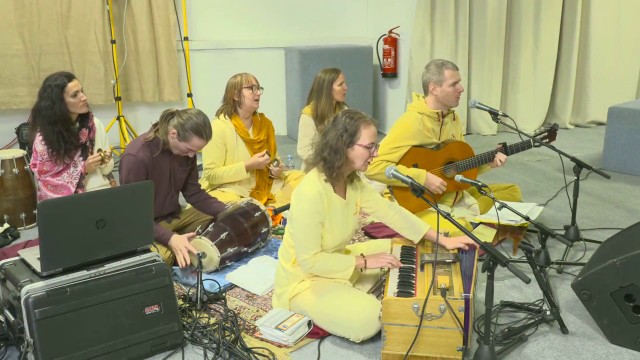
Evening satsang with Vishwaguruji from Slovenska Vas, Slovenia. including Juga Juga Jivo Maheshwarananda, Aba Tuma Gyana Karo
Bhajan singing from Slovenska Vas in the presence of Gurudev
17:15 - 17:36 (21 min)
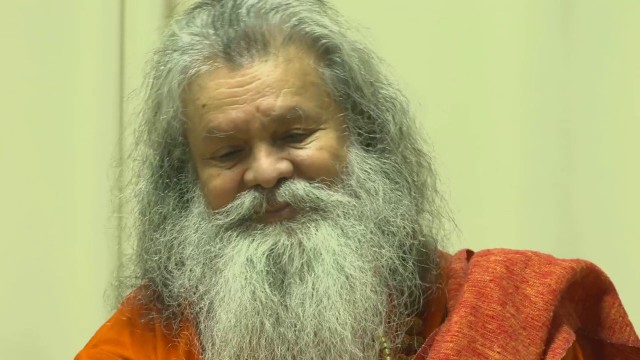
Morning satsang with Vishwaguruji from Slovenska Vas, Slovenia. Bhajan singing in the presence of Gurudev. Inculding Ho Guru Sukha Dama Swami, Sajana Tane Ma Fire Maza Karana, Tum Se Ham Ne Dil Ko Lagaya
The 2nd Sri Swami Maheshwarananda Festival (1/5)
17:40 - 18:40 (60 min)
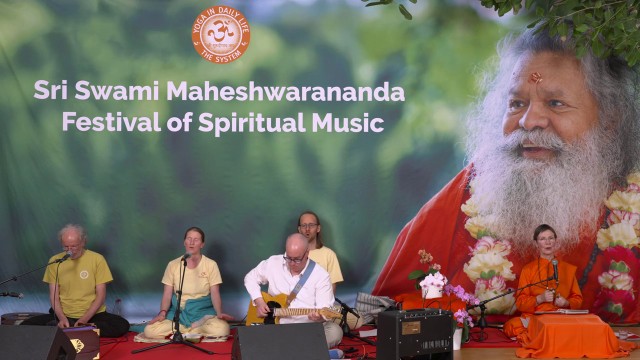
Welcome to the 2nd Sri Swami Maheshwarananda Festival of Spiritual Music from YIDL Ashram in Villach, Austria.
The 2nd Sri Swami Maheshwarananda Festival (2/5)
18:45 - 19:53 (68 min)
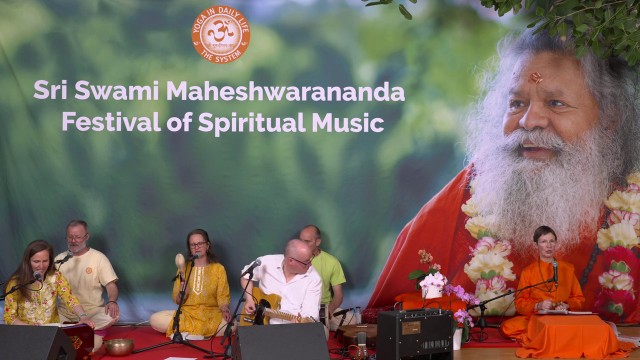
The 2nd Sri Swami Maheshwarananda Festival from Villach, Austria.
The same light lits in all of us
20:00 - 20:44 (44 min)
A satsang discourse on the nature of the Guru and the path to inner peace.
"Guru is Brahmā, Guru is Viṣṇu, and Guru is Maheśa. He holds all the qualities, or he is higher than God."
"The ultimate goal for us is mokṣa, self-realization. The help, the guidance, will always come from Gurudev, but the work has to be done by ourselves."
A speaker addresses a gathering, expounding on the supreme position of the Satguru as the embodiment of the divine trinity and the essential guide. He discusses the necessity of personal effort, surrender, and enduring the Guru's disciplining 'hammering' to progress spiritually. Themes include moving from ego to witness consciousness, the importance of faith over expectation, and finding lasting peace within.
Filming location: Jadan, Rajasthan, India
Explanation of the Isa Upanisad
20:50 - 21:04 (14 min)
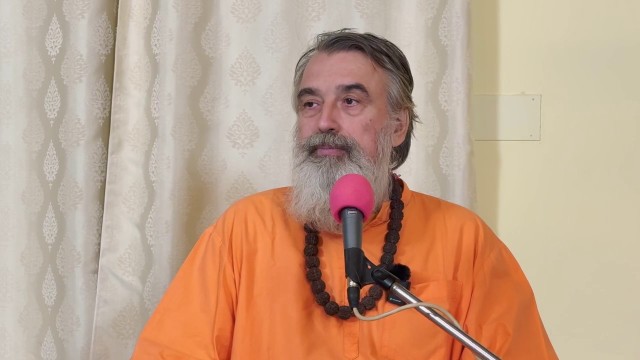
A discourse on the Īśāvāsya Upaniṣad, focusing on the integration of worldly and spiritual knowledge.
"Those who are studying this knowledge [worldly] are going into the darkness... But those who are concentrated only on spiritual knowledge are finishing even in the worst darkness."
"From time immemorial, the Vedas were telling karma yoga and spiritual practice go together. Always go together."
The lecturer explains the sixth mantra, which presents a paradox: exclusive pursuit of either worldly knowledge (avidyā) or spiritual knowledge (vidyā) leads to a form of darkness. He clarifies that the path is to use both together—worldly knowledge for life and spiritual knowledge to transcend death. The teaching emphasizes understanding both the manifest and unmanifest realities to cross beyond attachment and attain liberation.
Filming location: Jadan, Rajasthan, India
The Ocean of Grace
21:10 - 21:19 (9 min)
A devotional hymn and a subsequent analytical commentary on its text.
"Guru Devanī Sabke Sarjana Harā Hai, Namo Namo." "Kṛpā Sindhu Nāra Rūpa Harī Jag Meliyā Avatāra Hai, Jīva Kāraṇa Kāraṇa Svāmī."
The video presents a hymn, "The Ocean of Grace," praising Gurudeva Nirañjana as the supreme creator and destroyer. This is followed by a section titled "Remarks on Logical Inconsistencies," which critically analyzes the hymn's grammatical ambiguities, shifting divine address, and conceptual tensions between themes of destruction and divine causation.
Filming location: Jadan, Rajasthan, India
Awaken to Knowledge, O Residents of Bhārat
21:25 - 21:30 (5 min)
A spiritual address and subsequent analysis of its logical structure.
"Now, awaken to knowledge, all you desirous ones, residents of Bhārat. Do not follow any other religion."
"Do not destroy any doctrine, Jee. All you world-makers, now you awaken to knowledge."
The video presents a poetic, imperative call to the "residents of Bhārat" (India) to awaken to knowledge, learn from all people, and protect doctrines, followed by a critical textual analysis. The analysis highlights contradictions in the address, such as commanding exclusivity while forbidding the destruction of other doctrines, and notes ambiguous, shifting subjects and the unexplained introduction of the term "Nugrojī."
Filming location: Jadan, Rajasthan, India
The Essence of Īśāvāsya: From Ethics to Unity
21:35 - 21:53 (18 min)
A discourse on the first four mantras of the Īśāvāsya Upaniṣad, explaining ethical principles and the Advaita philosophy of unity.
"God is everywhere. So, if God is everywhere and you have only this, it means you are supposed to have this."
"The one who sees everybody in himself... Once you manage to connect that each and every one of us is connected, then there is no hatred."
A speaker provides a verse-by-verse commentary on the Upaniṣad, beginning with instructions against greed and on performing one's duty. The teaching progresses to the non-dual principle that the divine is all-pervasive, unmoving yet faster than the mind, and inside and outside all beings. The key message is that realizing this unity eliminates hatred and sorrow, but this requires personal practice beyond intellectual understanding.
Filming location: Jadan, Rajasthan, India
Webcast from Jadan Ashram
22:00 - 22:38 (38 min)
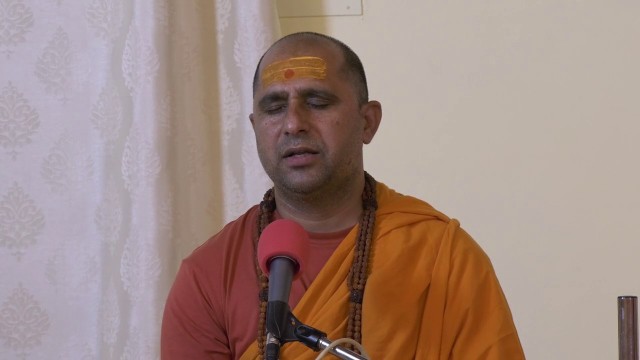
Evening satsang from Jadan Ashram with MM Swami Gyaneshwar Puri, Rajasthan, India.
Webcast from Jadan
22:45 - 23:36 (51 min)
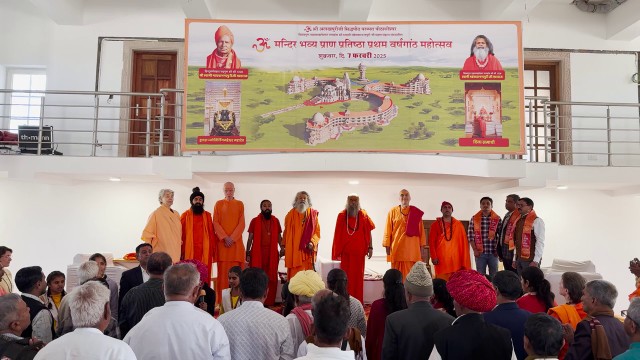
Satsang from Om Ashram, Pali, Rajasthan, India.
Webcast from Jadan
23:40 - 0:25 (45 min)
Satsang from Om Ashram, Pali, Rajasthan, India.
American
Australian