
European
The value and the aim of humanlife
0:15 - 0:44 (29 min)
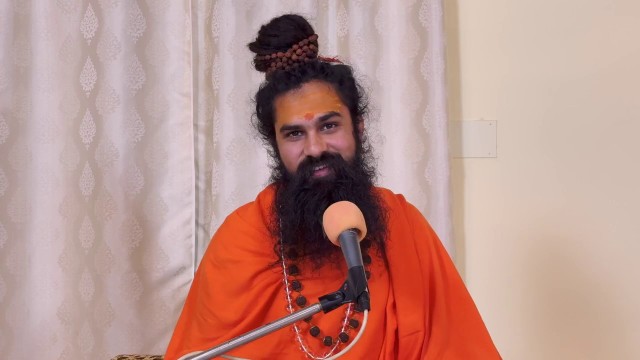
A spiritual discourse on the value of human life and the pursuit of self-realization.
"We do not know the value of a human life. When a merchant comes—like a divine master, a spiritual master such as Viśvagurujī—into your life, you have an experience."
"Our main aim as humans is to work for self-realization, for mokṣa, for jñāna, for brahma jñāna. Yet we are not working."
A speaker from the Oṁ Śrī Alagpuryā Siddha Pīṭha paramparā addresses a gathering at the Yoga and Daily Life center. He uses parables—a diamond mistaken for a stone and a king's exhibition—to illustrate how humans often miss life's supreme spiritual purpose while distracted by worldly attractions. He emphasizes that the aim of human life is self-realization, achievable by following the Guru's teachings, engaging in satsaṅg, and turning inward to discover divine energy and inner joy.
Filming location: Jadan, Rajasthan, India
Only your spiritual work will go with you
0:50 - 1:36 (46 min)
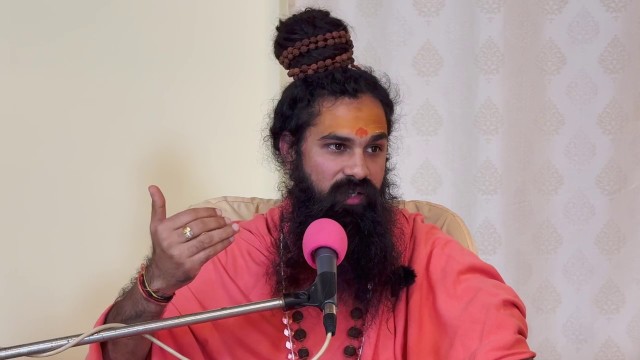
A spiritual discourse on the preciousness and purpose of human life.
"Vishwagurujī is always mentioning that 8.4 million creatures are in this world. And this is one human life. That life, if we get, then we can get liberated."
"If you are human, what should be the difference?... If we have some dharma, if we are doing bhakti, if we are doing spiritual practices, if we are following guru ājñā... then we are the human in human body."
A speaker at Om Ashram addresses a gathering, explaining why human life is a rare opportunity for liberation. He uses an allegory of a man trapped in a well to describe attachment to worldly illusion (māyā) and the need for a guru's guidance. The talk contrasts basic animal instincts with the spiritual duties that define a human being, urging the audience to follow the path of seva, bhakti, and sādhanā.
Filming location: Jadan, Rajasthan, India
The same light lits in all of us
1:40 - 2:24 (44 min)
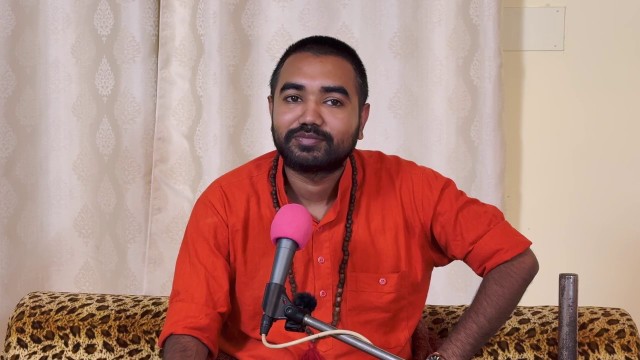
A satsang discourse on the nature of the Guru and the path to inner peace.
"Guru is Brahmā, Guru is Viṣṇu, and Guru is Maheśa. He holds all the qualities, or he is higher than God."
"The ultimate goal for us is mokṣa, self-realization. The help, the guidance, will always come from Gurudev, but the work has to be done by ourselves."
A speaker addresses a gathering, expounding on the supreme position of the Satguru as the embodiment of the divine trinity and the essential guide. He discusses the necessity of personal effort, surrender, and enduring the Guru's disciplining 'hammering' to progress spiritually. Themes include moving from ego to witness consciousness, the importance of faith over expectation, and finding lasting peace within.
Filming location: Jadan, Rajasthan, India
Yoga is spiritual
2:30 - 3:40 (70 min)
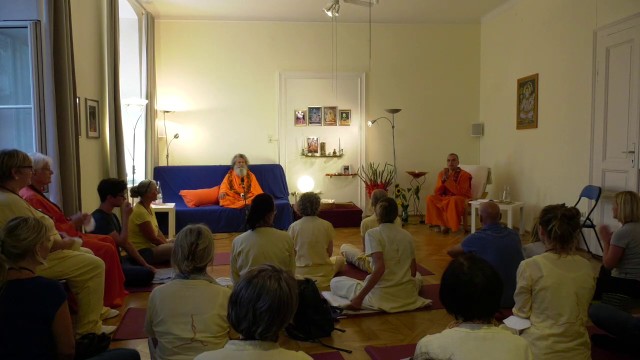
Satsang from Linz, Austria. Translation of the bhajan Sri Madhavanandaji Prabhu Ananda Dijo. This bhajan was written by our Gurudeva many many years ago. He requests Holy Guruji to grant us happiness and accept our service. Explanation and practice of Ashwini mudra, AUM chanting and Bhramari pranayama.
The Presence of the Guru
3:45 - 4:28 (43 min)
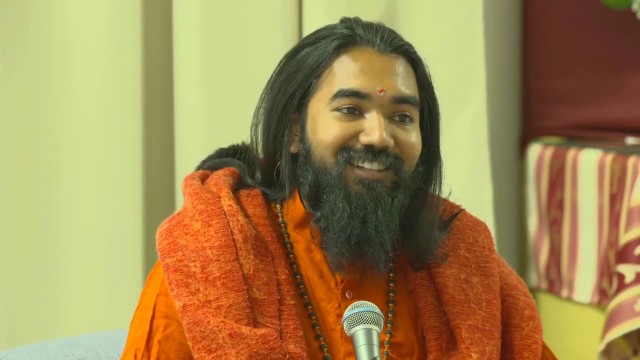
A satsang on devotion, surrender, and relating to the spiritual teacher.
"Gurudev is in the same space, same region, I would say, but we all should know that Gurudev is watching. It doesn’t matter where he is, he is always observing everything."
"If we have that mindset within us, that whatever we are doing, it’s him doing... then nothing is going to stop us in this world."
The lecturer addresses disciples in Slovenia, sharing insights from traveling with Gurudev, Sri Vishwaguru Mahamandaleshwar Paramahamsa Maheshwaranand Puri. He discusses the Guru's omnipresence, the importance of selfless service (seva), and cultivating trust over logic. He advises on etiquette in the Guru's presence, tells a parable about faith, and leads a guided meditation (manasik puja) to feel the Guru's inner presence.
Filming location: Slovenia
Yoga is a science
4:35 - 5:54 (79 min)
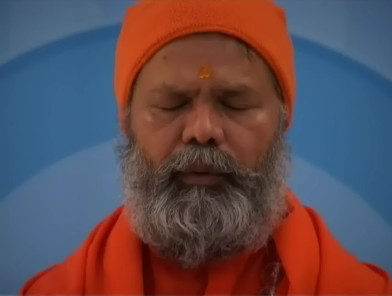
A spiritual lecture on Kuṇḍalinī, chakras, and the purpose of human life.
"Yoga is the science of body, mind, consciousness, and soul. Yoga without spirituality is like a body without a soul."
"Chakra is that which is purifying our body, mind, and consciousness. Chakra has to be purified through practice of mantra, prayers, or some yogic kriyās. Then the kuṇḍalinī will awake."
The teacher continues a multi-day seminar, delving into the nature of human consciousness through the lens of Kuṇḍalinī energy and the chakra system. He explains the five layers of the body (kośas), the persistence of karma using an analogy of salt in water, and the symbolism of the Mūlādhāra chakra—its red color, lotus imagery, and four petals representing the four aims of life: dharma, artha, kāma, and mokṣa. The discourse expands into themes of universal love, friendship, and living in the world with detachment, like a lotus in water.
Filming location: Australia
Good eating
6:00 - 7:13 (73 min)
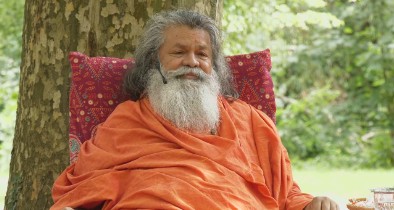
A satsang discourse addressing food purity, vegetarian ethics, and modern dietary challenges.
"If you use pesticide, the urea we call it, then once you give it, it takes 10 to 15 years to purify that earth again." "Sin is that which creatures, beautiful creatures, are there... torturing them, what they call halal, is a pain; the pain is the sin."
Swami Avatarpuri responds to a question about potatoes, expanding into a wide-ranging talk on the dangers of pesticides, hybridized wheat, and refined oils. He discusses the karmic implications of meat consumption and animal cruelty, shares personal anecdotes about contaminated food, and advocates for organic produce, home preservation, and dietary variety. The talk concludes with a mythological story about Shakti and a reference to a breatharian saint.
Filming location: Vép, Hungary
The Globe of the Self: Reflections on Ātmā, Jīva, and the One in All
7:20 - 8:22 (62 min)
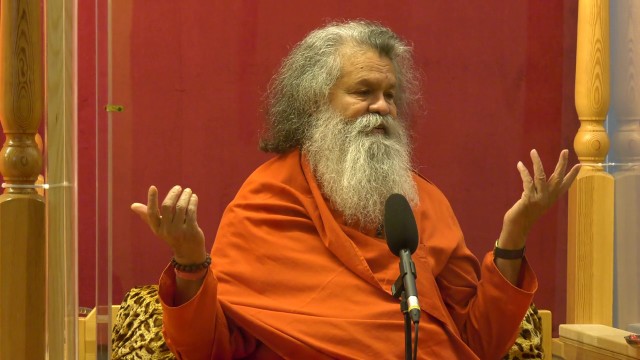
A spiritual discourse and satsang on the nature of the self, consciousness, and existence.
"In this globe, immense of immense, how many jīvas. Jīvā means the soul."
"And that was what Holy Gurujī said: one in all and all in one. One in all and all in one, in which way I am now."
The lecturer leads an evening satsang, offering contemplative reflections on the ātmā (Self), the jīva (individual soul), and the interconnectedness of all life. He explores themes of meditation, the limitations of physical travel versus spiritual expansion, and the relationship between yogic science and worldly science, sharing personal anecdotes including a healing story. The session includes a guided energy exercise and concludes with devotional singing.
Filming location: Vienna, Austria
Explanation of the Isa Upanisad
8:30 - 8:44 (14 min)
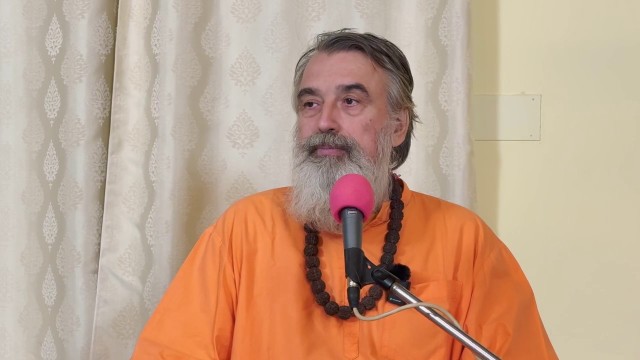
A discourse on the Īśāvāsya Upaniṣad, focusing on the integration of worldly and spiritual knowledge.
"Those who are studying this knowledge [worldly] are going into the darkness... But those who are concentrated only on spiritual knowledge are finishing even in the worst darkness."
"From time immemorial, the Vedas were telling karma yoga and spiritual practice go together. Always go together."
The lecturer explains the sixth mantra, which presents a paradox: exclusive pursuit of either worldly knowledge (avidyā) or spiritual knowledge (vidyā) leads to a form of darkness. He clarifies that the path is to use both together—worldly knowledge for life and spiritual knowledge to transcend death. The teaching emphasizes understanding both the manifest and unmanifest realities to cross beyond attachment and attain liberation.
Filming location: Jadan, Rajasthan, India
The whole world is my family
8:50 - 9:32 (42 min)
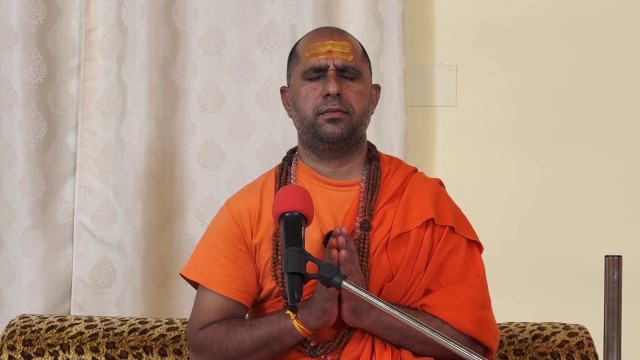
Evening Satsang from Jadan Ashram, Rajasthan, India. Many people in the world practise prayer and meditation, but they don't know the aim of human life. Great rishis are praying for every living being. We should control all of our senses. There is God's light in every creature. Great spiritual personalities blessed the inauguration of the Rupavas temple with their presence. All the Masters of our parampara were taking care of cows, and Vishwaguruji also does. Cows hold an important place in Indian culture. The products of the cow are very valuable. Never kill cows, but take care of them.
The Ocean of Grace
9:40 - 9:49 (9 min)
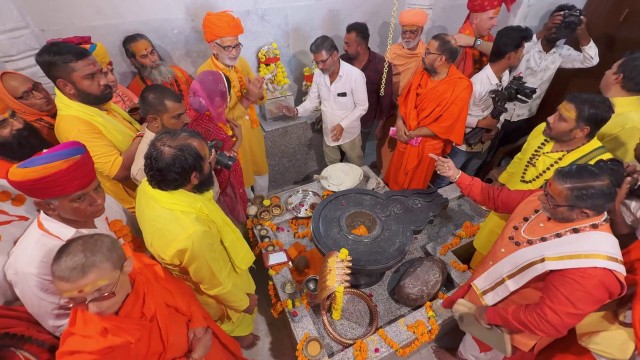
A devotional hymn and a subsequent analytical commentary on its text.
"Guru Devanī Sabke Sarjana Harā Hai, Namo Namo." "Kṛpā Sindhu Nāra Rūpa Harī Jag Meliyā Avatāra Hai, Jīva Kāraṇa Kāraṇa Svāmī."
The video presents a hymn, "The Ocean of Grace," praising Gurudeva Nirañjana as the supreme creator and destroyer. This is followed by a section titled "Remarks on Logical Inconsistencies," which critically analyzes the hymn's grammatical ambiguities, shifting divine address, and conceptual tensions between themes of destruction and divine causation.
Filming location: Jadan, Rajasthan, India
Awaken to Knowledge, O Residents of Bhārat
9:55 - 10:00 (5 min)
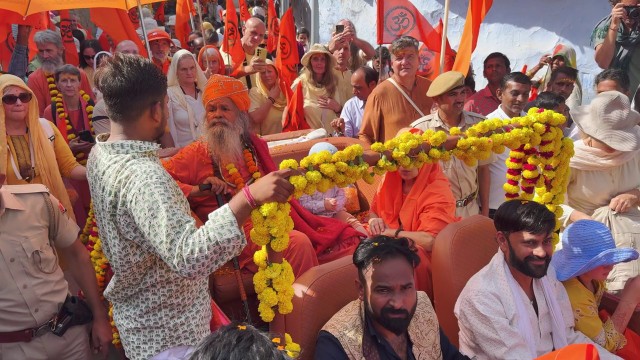
A spiritual address and subsequent analysis of its logical structure.
"Now, awaken to knowledge, all you desirous ones, residents of Bhārat. Do not follow any other religion."
"Do not destroy any doctrine, Jee. All you world-makers, now you awaken to knowledge."
The video presents a poetic, imperative call to the "residents of Bhārat" (India) to awaken to knowledge, learn from all people, and protect doctrines, followed by a critical textual analysis. The analysis highlights contradictions in the address, such as commanding exclusivity while forbidding the destruction of other doctrines, and notes ambiguous, shifting subjects and the unexplained introduction of the term "Nugrojī."
Filming location: Jadan, Rajasthan, India
Do not live a selfish life
10:00 - 10:29 (29 min)
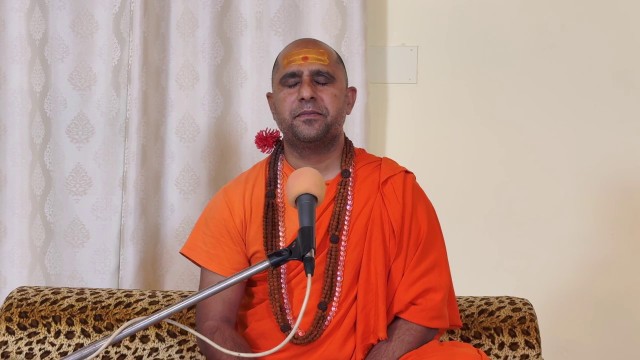
A discourse on the divine origin and essence of the Vedas.
"The Vedas mark the beginning, the dawn of human civilization on this planet. The divine knowledge received at that time to advance human civilization is called the Vedas."
"Ekam Sad Viprā Bahudā Vadanti... The Truth is one, God is one... But wise people... describe God in different ways according to their opinion and knowledge."
A speaker addresses an assembly at the Om Ashram, offering salutations to the guru lineage. He expounds on the Vedas as divine knowledge given for all humanity, explaining their four divisions—Ṛgveda, Yajurveda, Sāmaveda, and Atharvaveda—and their core teachings on oneness, truth, devotion, and humanity's purpose to protect and enhance the world. He emphasizes that the paramparā's bhajans distill this Vedic essence for practical devotion.
Filming location: Jadan, Rajasthan, India
The Essence of Īśāvāsya: From Ethics to Unity
10:05 - 10:23 (18 min)
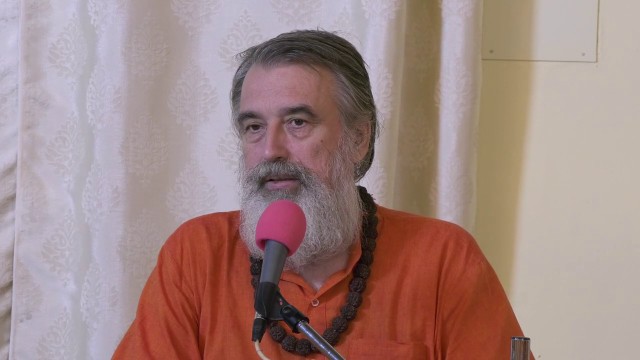
A discourse on the first four mantras of the Īśāvāsya Upaniṣad, explaining ethical principles and the Advaita philosophy of unity.
"God is everywhere. So, if God is everywhere and you have only this, it means you are supposed to have this."
"The one who sees everybody in himself... Once you manage to connect that each and every one of us is connected, then there is no hatred."
A speaker provides a verse-by-verse commentary on the Upaniṣad, beginning with instructions against greed and on performing one's duty. The teaching progresses to the non-dual principle that the divine is all-pervasive, unmoving yet faster than the mind, and inside and outside all beings. The key message is that realizing this unity eliminates hatred and sorrow, but this requires personal practice beyond intellectual understanding.
Filming location: Jadan, Rajasthan, India
Webcast from Jadan Ashram
10:30 - 11:08 (38 min)
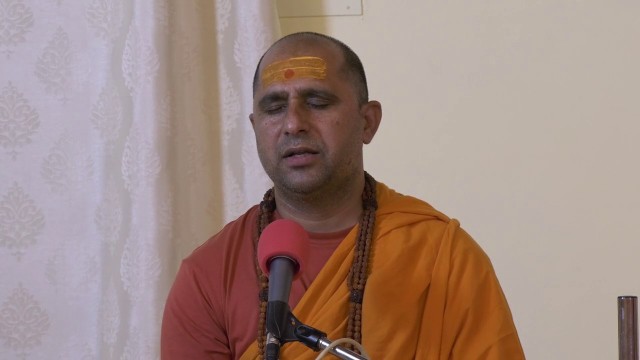
Evening satsang from Jadan Ashram with MM Swami Gyaneshwar Puri, Rajasthan, India.
Pathes of yoga
11:14 - 11:59 (45 min)
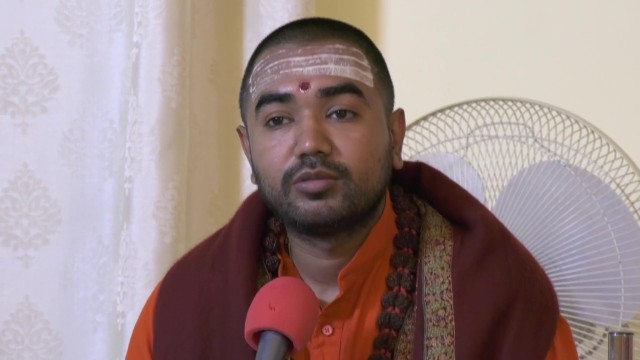
An evening satsang on spiritual practice, seva, and the importance of letting go.
"All the rivers are merging into that same ocean. That ocean is one, but the paths may be different."
"To realize the light, you need to let go of ego, that 'I am something, I am higher than this, this work is too low.'"
A speaker leads a discourse from an ashram, exploring different yoga paths and emphasizing selfless service (karma yoga) as a means to purify the mind and burn karma. He shares illustrative stories, including one about a seeker named Raju who resists humble tasks and another about a monkey clinging to fruit, to teach that spiritual progress requires letting go of ego, attachments, and the need for control to realize the inner light. The talk concludes with logistical announcements for an upcoming temple consecration.
Filming location: Jadan, Rajasthan, India
Part 1: Yoga, Faith, and Integration: A Personal Journey and Panel Discussion
12:00 - 13:04 (64 min)
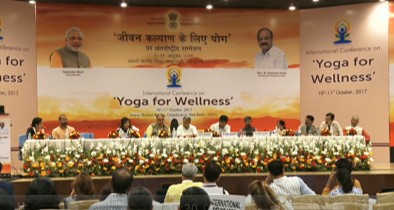
A personal testimony on faith-based yoga healing and a panel discussion on integrating traditional medical systems.
"I refused chemotherapy, radiotherapy, and surgery... I believed those fresh, positive thoughts in my consciousness would bleed down into my nervous system and start to talk to my cells."
"Yoga is not about the āsana. Why not? It is about God. If you allow God's energy to run into your system... God will provide the miracles."
Neil Patel shares his personal journey of using yoga and conscious thought to survive cancer for 18 years after refusing conventional treatment. Following his testimony, a moderated panel featuring practitioners of Homeopathy, Ayurveda, Siddha, and Yoga discusses pathways to integrate these AYUSH systems with modern medicine for holistic wellness. Key themes include treating the whole person, cost-effective care, managing non-communicable diseases, and yoga's role in raising consciousness beyond mere physical health.
Filming location: Delhi, India
Webcast from Jadan
13:05 - 13:50 (45 min)
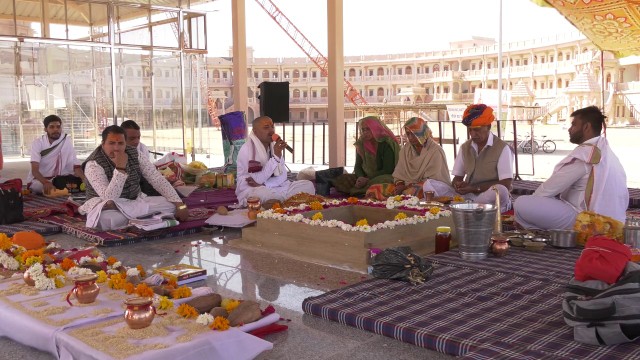
Satsang from Om Ashram, Pali, Rajasthan, India.
Devotion to Nature
13:52 - 14:22 (30 min)

Evening satsang from Jadan Ashram, Rajasthan, India.Emphasizing the vital link between spiritual health and the physical world, Swami Phulpuriji delivers a powerful message regarding the sanctity of our natural surroundings. He creatively defines the environment as our "in-wire" system, describing how nature physically recharges the human body through breath and food. Drawing upon the legacy of Vishwaguruji and the scriptures of the Bhagavad Gita, he reminds us that Lord Krishna exists within the trees, elevating them to the status of the divine. Swami Phulpuriji warns against the destruction caused by human greed, specifically deforestation and the use of harmful pesticides. He advocates for a return to respecting trees as "Neem Narayan," asserting that true mental peace and human survival are inextricably bound to the preservation of Mother Earth.
A Call for Peace and Self-Realization
14:25 - 15:32 (67 min)
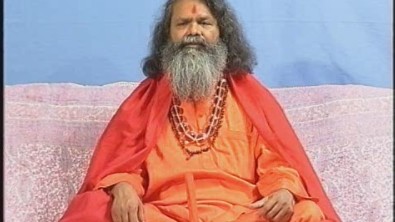
A public lecture on world peace, self-inquiry, and the science of yoga.
"With weapons, with guns, you cannot bring peace. But with flowers, and with love, you can bring peace to the world."
"Nothing belongs to us, says the wise man. The yogīs said, 'Nothing belongs to us. Everything is temporary. Even your body does not belong to you.'"
Swamiji addresses an evening gathering, calling for an end to violence and ignorance through self-realization. He explains the preciousness of human life, the futility of worldly conflict, and the path of yoga as a means to achieve inner and outer peace. The talk covers the nature of the mind, the five bodies, and includes a brief practical demonstration to feel energy in the palms.
Filming location: Croatia
Bhramari practicing from Vep
15:35 - 16:08 (33 min)
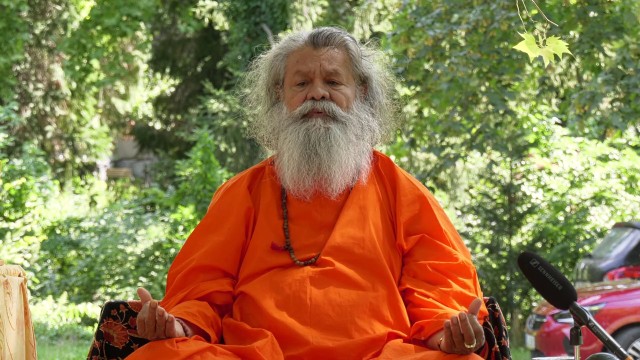
Morning satsang with Vishwaguruji from Vep, Hungary. Practicing Bhramari Pranayama. Vishwaguruji demonstrates how to sit, how to keep our body, how to practice well. Chanting Om.
The same light lits in all of us
16:15 - 16:59 (44 min)
A satsang discourse on the nature of the Guru and the path to inner peace.
"Guru is Brahmā, Guru is Viṣṇu, and Guru is Maheśa. He holds all the qualities, or he is higher than God."
"The ultimate goal for us is mokṣa, self-realization. The help, the guidance, will always come from Gurudev, but the work has to be done by ourselves."
A speaker addresses a gathering, expounding on the supreme position of the Satguru as the embodiment of the divine trinity and the essential guide. He discusses the necessity of personal effort, surrender, and enduring the Guru's disciplining 'hammering' to progress spiritually. Themes include moving from ego to witness consciousness, the importance of faith over expectation, and finding lasting peace within.
Filming location: Jadan, Rajasthan, India
Bhajan evening from Strilky
17:05 - 17:19 (14 min)
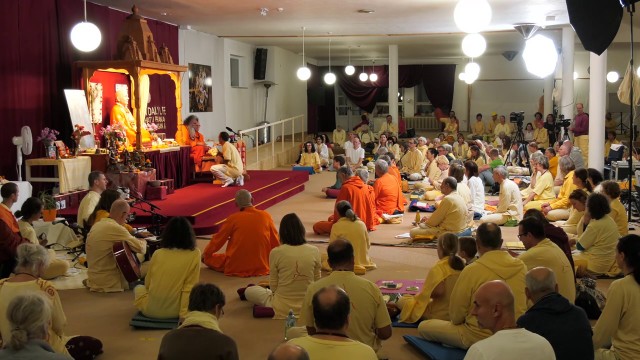
Evening satsang with Vishwaguruji from Strilky Ashram, Czech Republic.
Hymns of Adoration and the Nirvāṇa Ṣaṭkam
17:29 - 17:52 (23 min)
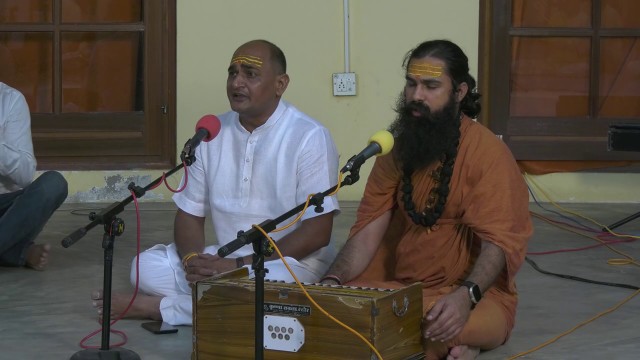
A devotional video featuring the chanting of Sanskrit hymns dedicated to Lord Shiva.
"Na me dveṣa rāgau. Na me lobho, na mādo, neva me neva sāryabhā. Na dharmo, na cārtho, na kāmo, na mokṣaḥ. Cidānanda-rūpaḥ śivo'ham, śivo'ham."
"Brahmā Murārī Surārchitaliṅgam, Nirmalabhāśita Śobhitaliṅgam, Janmajaḍukha Vināśakaliṅgam, Tat praṇamāmi Sadāśivaliṅgam."
The video consists of a continuous recitation of three primary hymns: the Rudrāṣṭakam, the Nirvāṇa Ṣaṭkam (a declaration of the true Self as consciousness and bliss), and the Liṅgāṣṭakam. The chanting is interspersed with and concluded by energetic salutations (jaya) to a lineage of spiritual masters, including Śrī Alakhpurīṣa Mahādeva, Śrī Devapurījī, Śrī Dīp Nārāyaṇa Mahāprabhujī, and others.
Filming location: Jadan, Rajasthan, India
Bhajan singing from Jadan
18:00 - 18:17 (17 min)
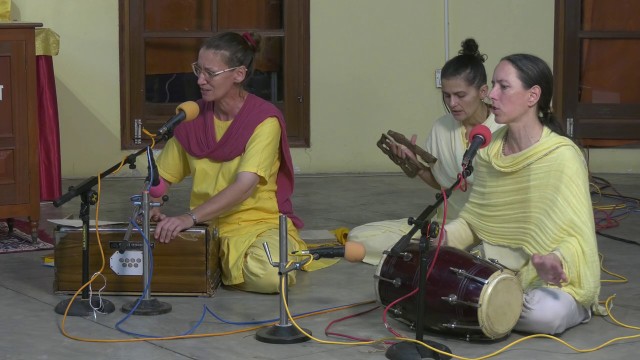
Evening satsang with Vishwaguruji from Jadan Ashram, Rajasthan, India.
Bhajan singing from Strilky Ashram
18:20 - 19:01 (41 min)
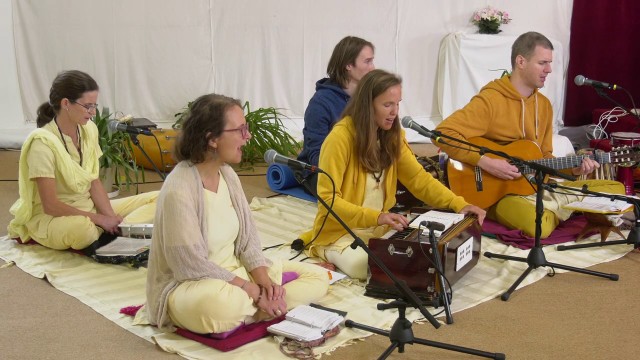
Morning program from Strilky, Czech Republic. Bhajan singing.
Bhajans on the Satsang
19:10 - 20:00 (50 min)
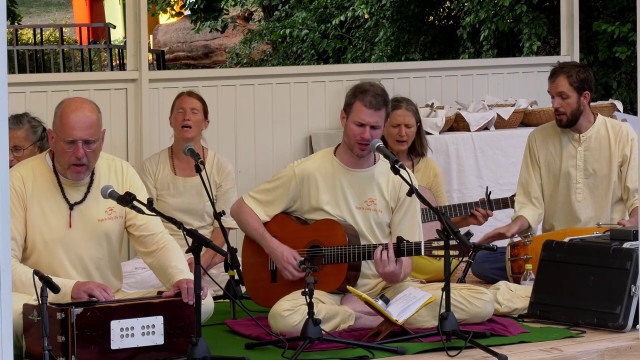
Evening satsang with Vishwaguruji. Bhajan singing.
The Holy Land
20:05 - 20:57 (52 min)
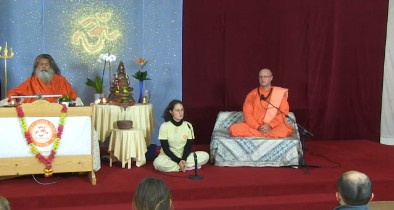
An explanatory discourse on the significance and organization of the Kumbh Mela at Prayagraj.
"Prayāgarāj is considered the king of all holy places, where many ṛṣis reside and numerous yajñas have been performed."
"The Mahāmaṇḍaleśvaras are designated solely to look after all sannyāsīs and ashrams... to solve their problems, protect them, look after them."
The speaker describes the sacred origins of Prayagraj (Allahabad) as a nectar-drop site and a river confluence. He details the annual and quadrennial Kumbh Melas, their timing at Makar Saṅkrānti, and the purposes of pilgrimage, ritual bathing, and societal discourse. The talk concludes with an explanation of the administrative structure established by the monastic orders (akhāṛās), including the role of Mahāmaṇḍaleśvaras as caretakers and a governing committee that selects an Ācārya.
Filming location: Maha Kumbha Mela, India
The lotus of the heart
21:05 - 21:57 (52 min)
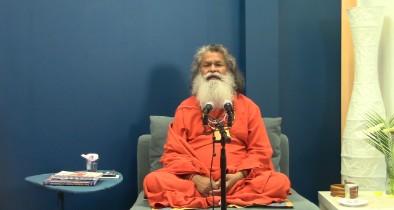
Evening satsang with Vishwaguruji from Vancouver, Canada. The Self, the Atma, is residing in the heart. God is pure love, when it touches our heart the joy and happiness awakens in us. Vishwaguruji explains the nature of love between Master and disciple by translating the bhajan “Prema Ka Pyala Hari Kaba Mera Bharase”.
Devotion to Nature
22:00 - 22:30 (30 min)
Evening satsang from Jadan Ashram, Rajasthan, India.Emphasizing the vital link between spiritual health and the physical world, Swami Phulpuriji delivers a powerful message regarding the sanctity of our natural surroundings. He creatively defines the environment as our "in-wire" system, describing how nature physically recharges the human body through breath and food. Drawing upon the legacy of Vishwaguruji and the scriptures of the Bhagavad Gita, he reminds us that Lord Krishna exists within the trees, elevating them to the status of the divine. Swami Phulpuriji warns against the destruction caused by human greed, specifically deforestation and the use of harmful pesticides. He advocates for a return to respecting trees as "Neem Narayan," asserting that true mental peace and human survival are inextricably bound to the preservation of Mother Earth.
We must now go further
22:35 - 23:04 (29 min)
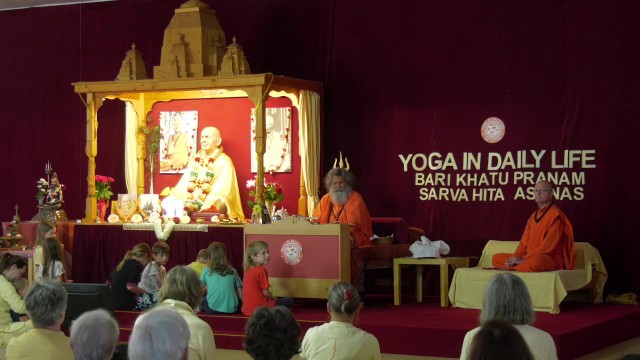
A spiritual talk on integrating practice into daily life and devotion.
"At home and everywhere, when we have the time, we should all be very nice. It is not only sitting and chanting 'om, om, om.' No, be very nice to your family."
"Until the last, until the last time, when you will be in your guru and in your sādhanā, then in the last minutes, then you will go as into Paramatmā."
A spiritual teacher addresses a gathering, emphasizing the importance of continuing yoga practice, prayer, and kindness within the family beyond retreats. The talk weaves personal anecdotes about the global yoga community during the pandemic and shares a story about the devoted passing of a disciple in America, illustrating the ideal of remaining in guru and sādhanā until the end.
Filming location: Strilky, Czech Republic
Only your spiritual work will go with you
23:10 - 23:56 (46 min)
A spiritual discourse on the preciousness and purpose of human life.
"Vishwagurujī is always mentioning that 8.4 million creatures are in this world. And this is one human life. That life, if we get, then we can get liberated."
"If you are human, what should be the difference?... If we have some dharma, if we are doing bhakti, if we are doing spiritual practices, if we are following guru ājñā... then we are the human in human body."
A speaker at Om Ashram addresses a gathering, explaining why human life is a rare opportunity for liberation. He uses an allegory of a man trapped in a well to describe attachment to worldly illusion (māyā) and the need for a guru's guidance. The talk contrasts basic animal instincts with the spiritual duties that define a human being, urging the audience to follow the path of seva, bhakti, and sādhanā.
Filming location: Jadan, Rajasthan, India
American
Australian