
European
Morning Yoga practice, Umag, Croatia (3/9)
0:00 - 1:33 (93 min)
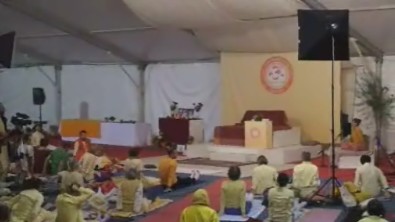
Morning Yoga practice from the international Yoga retreat Umag, Croatia, on the 27 of September
Quality Unites
1:40 - 3:02 (82 min)
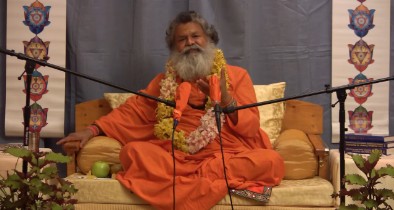
Evening satsang with Vishwaguruji from Alexandria, Virgina, USA. Yoga is the science of body, mind and soul, blesses us with physical, mental, social health. Religion and yoga should not divide us, but should join us. There are spiritual miracles, but a yogi shouldn’t use them. Vishwaguruji reveals and explains in this lecture some secrets of Yoga. When we turn the light of knowledge (gyana) on, darkness will disappear.
We are full of resonance
3:10 - 4:04 (54 min)
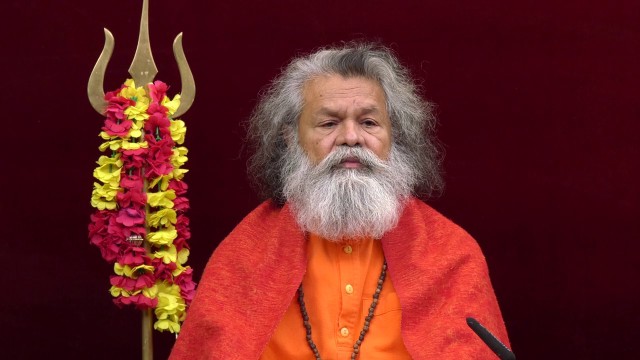
Evening satsang with Vishwaguruji from Strilky Ashram, Czech Republic. There are many Gods but finally, there are all one. Our soul is circling in the universe like water in the earth. The story about how can some seeds öf grain remain unbroken. Who is going to the Satsang they can reach the Supreme. Sometimes we see the karma but don't do that. Man saints past away but their name remained with us. Holiguruji was very lovely and strict for those persons who were around him. Holiguruji knew if somebody criticises him the bad karma went to that man. Diving to the ocean we can hear the beautiful sound and we hear this also if we plug our ears. Viswaguruji blows the conch three times for the honour of Holiguruji.
How to coordinate with the outer world, Vep
4:10 - 5:00 (50 min)
A spiritual discourse on the foundational principles of sādhanā (spiritual practice).
"Practices alone will not help us. They can only be fruitful if we follow physical and mental principles. These are called Śayamit and Niyamit."
"Viveka is that which will divide truth and untruth completely... who has viveka all the time is the happiest and safest person."
The speaker explains the core disciplines for a spiritual life: Śayamit (self-control and setting boundaries) and Niyamit (daily discipline). He details how these practices, along with regular prayer (sandhyā), purify the mind and senses. The discourse emphasizes the critical role of viveka (discrimination) in distinguishing truth from untruth, leading to the discovery of the inner fountain of joy and the immortal Ātmā.
Filming location: Vép, Hungary
The Pearl of Everlasting Bliss
5:05 - 5:26 (21 min)
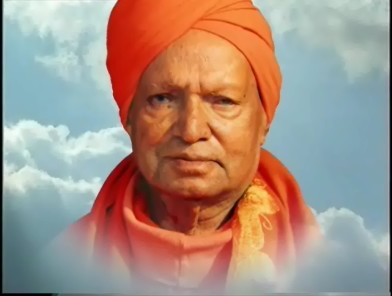
A biographical tribute to the life and legacy of Hindu saint Paramahaṁsa Śrī Svāmī Madhavānandajī.
"My eyes filled with tears, and I fell to my knees. I knew I had found the everlasting light of my life. I was home at last."
"All humans belong to one religion, and that is humanity... ahiṃsā paramo dharma: non-violence is the highest religion."
The narrative chronicles the spiritual journey of Swami Madhavānandaji, from his childhood in Rajasthan and transformative meeting with his guru, Bhagavān Śrīdīp Nārāyaṇa Mahāprabhujī, to his life of devotion, teaching, and global service. It details his initiation, his work establishing ashrams, and his teachings on non-dualism and universal love, culminating in his Mahāsamādhi in 2003 and the continuation of his lineage through his disciple, Swami Māheśvarānandajī.
Filming location: Rajasthan, India; Kathu Ashram, India; Bola Guda Ashram, India; Nepal
The form of God is the vibration
5:30 - 6:30 (60 min)
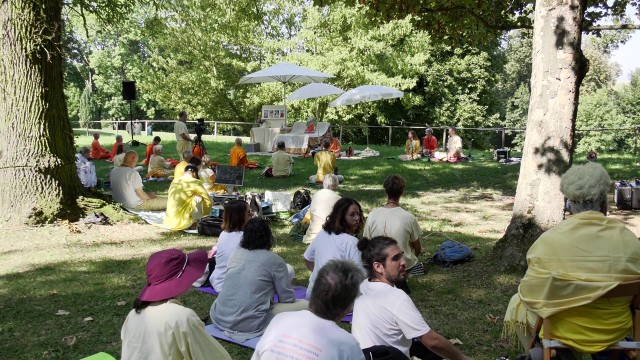
Morning satsang from Summer Yoga Retreat in Strilky, Czech Republic. Lecture by Swami Gajanandji about Om. Om is that on which yogis meditate all the time. Om is the original mantra, every other mantras should contain the Om. Chanting Om all together, and a short meditation on Om. Singing the bhajan about Om.
The evolution of the Universe
6:35 - 7:26 (51 min)
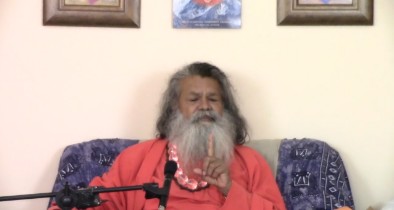
A lecture on the cosmic origins and holistic science of yoga.
"The true beginning of yoga, its reality, its source, and how it came to be—this is the science of body, mind, and soul."
"That yoga... must bring good health, balance, harmony, and oneness of body, mind, and soul."
Swami Anand Arun presents an expansive discourse, tracing yoga's origin to the primordial resonance (Nāda) and the cosmic dance of Śiva. He explains the interconnected principles of creation, the five elements, and the subtle anatomy of chakras and prāṇa. The talk covers practical applications, from walking barefoot for health to a specific prāṇāyāma technique for depression, urging daily practice of postures, breathwork, and chanting.
Filming location: USA
What is God?
7:30 - 8:28 (58 min)
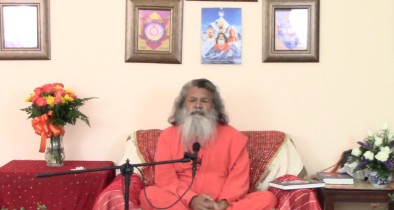
A spiritual discourse on the nature of God, human divinity, and traditional wisdom.
"A child asks a mother or father, 'What is the horizon? How far is it?' Have you ever reached or gone to the horizon?"
"Bhagavān Kṛṣṇa said to Arjuna: both are good, Nirākāra and Sākāra, the formless and with form. But he said, for you, Arjuna, it is easier to worship in form."
Swami Anand Arun explores the concepts of formless (Nirākāra) and personal (Sākāra) divinity, using the analogy of the unreachable horizon. He discusses the path of worship, the significance of divine forms and symbols in Hindu tradition, and the importance of sacred language and human relationships. The talk connects these themes to the science of the cakras, the significance of Vedic rituals like marriage, and the practical application of yoga and speech in daily life.
Filming location: USA
Whole universe is in our body
8:35 - 9:26 (51 min)
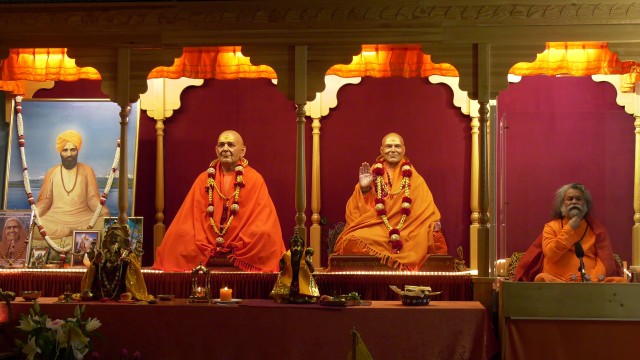
Evening satsang with Vishwaguruji from Vienna, Austria. Silent meditation and prayer with Vishwaguruji.
Mantras and Bhajans
9:30 - 10:10 (40 min)
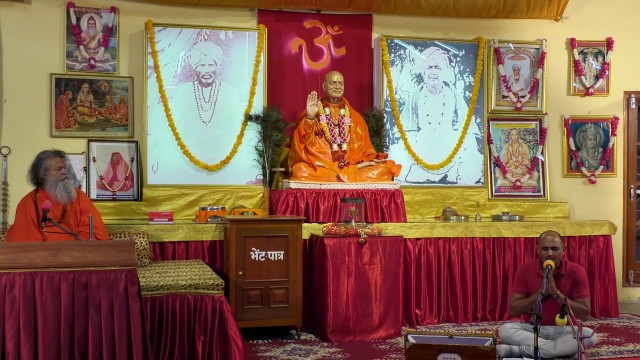
Evening satsang with Vishwaguruji from Jadan Ashram, Rajasthan, India. Singing bhajans and chanting mantras.
Live webcast from Jadan
9:30 - 11:00 (90 min)
Evening satsang from Jadan Ashram, Rajasthan, India.
There is no end of learning
10:15 - 10:56 (41 min)
A devotee shares personal stories of spiritual guidance and grace within the Yoga in Daily Life community.
"Nothing is more beautiful than this ashram. Are you all in agreement? That is why all of you are here."
"Gurudev sent me to China. I realized he sent me there to learn about myself."
A speaker addresses the satsang, expressing deep connection to the ashram and global spiritual family. They recount how inner guidance from Gurudev, Viśvagurujī, directed their service—leading to establishing an ashram in Romania—and guided a pilgrimage through the Himalayan Chārdhām. They also describe how a casual remark from Gurudev inspired scientific research on prāṇāyāma, later fostering a university partnership.
Filming location: Strilky, Czech Republic
The Means Are the End: On Non-Violence, Patience, and Peace
11:00 - 11:14 (14 min)

A keynote address on non-violence, patience, and peace at a World Peace Council conference.
"Wrong means will always fetch wrong ends. We must understand the basic fundamental: it is the means which become the ends."
"Happiness is a peaceful state of mind. If you have a peaceful mind, you live in the present, and when you live in the present, you are happy."
Swapnil Kothari, a teacher from India, delivers a speech exploring non-violence as a conscious philosophy, not just a default position. He argues for the primacy of ethical means over ends, asserting that violence breeds violence while non-violence breeds compassion and inner peace. He uses personal anecdotes, historical references, and a humorous story about marital patience to illustrate the stamina required for this path.
Filming location: Prague, Czech Republic
The Foundations of Consciousness: Understanding the Chakras
11:20 - 11:52 (32 min)
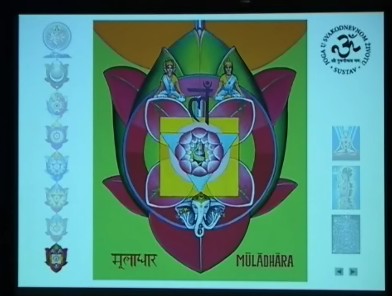
A spiritual discourse on the chakra system and the foundations of consciousness.
"Every chakra, every level of the chakras, has its own kingdom."
"Gu means darkness, and Ru means light. You enter into the light of wisdom, and you cross the border of this darkness."
The lecturer continues his explanation of the body's energy centers, detailing their locations from the feet to the head and their associated kingdoms from earth to divine. He focuses on the meaning of Mūlādhāra as the foundational root, explains the symbolism of its red color and lotus imagery, and clarifies the role of the Ājñā Chakra and the relationship between inner and outer guidance.
Filming location: Umag, Croatia
How to use the mantra
12:00 - 12:38 (38 min)
A spiritual discourse on the power and techniques of mantra chanting.
"The chanting of the name of God, spiritual songs, or a saint’s name brings peace of mind."
"When you chant mantras, it creates a resonance. That resonance spreads into the environment, purifying it."
Swami Ji explains the profound effects of mantra practice on purifying the individual and the environment. He details five techniques: writing (likhit), audible chanting, whispered repetition (upāṁśu), mental repetition (mānasik), and spontaneous repetition (ajapa). The talk connects mantra resonance to the body's chakras, warns against spiritual greed, and concludes with a call to practice and a group chant.
Filming location: Strilky, Czech Republic
Do everything with bhava
12:45 - 13:01 (16 min)
A morning satsang discourse on the significance of Śrāvaṇa month and the power of devotion.
"Bhole Bābā is bholā because he is innocent. You can offer him anything, and he accepts."
"It does not matter how we do it, but with which bhāva, with which feelings, we are doing it."
Swami Veda narrates the story of Lord Śiva drinking the poison to become Nīlakaṇṭha, explaining the symbolism of ritual offerings. He then tells a parable of a devoted boy named Jayaprakāś who performs a flawed but heartfelt abhiṣeka with spoiled milk and pickle water, illustrating that pure intention (bhāva) is more important than ritual perfection. The talk emphasizes that any action done with love and pure feeling becomes fruitful.
Filming location: Strilky, Czech Republic
The Power of Tapasyā: Pārvatī's Resolve
13:15 - 14:03 (48 min)
A spiritual discourse narrating the story of Pārvatī's resolve to perform tapasyā (austerity) and explaining its power.
"Tapasya is the giver of happiness and the remover of all troubles."
"Through the power of tapasyā, Brahmā is able to create this world. Through the power of that tapasyā... Viṣṇu is able to protect the world. And through that power of tapasyā, Śiva, is able to destroy all the negative powers."
The speaker recounts how Pārvatī, consoling her mother Mēnā, describes a dream in which a Brāhmaṇa instructs her to undertake severe spiritual austerity, affirming the truth of sage Nārada's words. The narrative details the immense power of tapasyā, using the examples of the Hindu trinity and Śeṣanāga, and describes Pārvatī's subsequent journey into the forest for a prolonged, extreme penance to attain Lord Śiva. The discourse frequently shifts to address a modern audience directly, exhorting them to cultivate similar willpower in their own sādhanā (practice) to overcome mental obstacles and attachments.
Filming location: Strilky, Czech Republic
The Awakening of Kuṇḍalinī: A Journey to Happiness, Love, and Wisdom
14:10 - 14:38 (28 min)
A spiritual discourse on the awakening of Kuṇḍalinī and the structure of human consciousness.
"The awakening of the Kuṇḍalinī means happiness, universal love, and wisdom." "The soul is not the ātmā. The soul is only the collection of our karmas, destinies, and our qualities."
A teacher explains the nature of Kuṇḍalinī awakening, describing it as a state of bliss and universal love. He details the human energy system, including the five kośas (sheaths) and the chakras, using the metaphor of salt dissolving in water to describe the persistence of karma. The talk covers the etymology of "Kuṇḍalinī," its association with serpentine energy, and the importance of spiritual guidance for a stable awakening.
Filming location: Debrecen, Hungary
There is no end of learning
14:45 - 15:26 (41 min)
A devotee shares personal stories of spiritual guidance and grace within the Yoga in Daily Life community.
"Nothing is more beautiful than this ashram. Are you all in agreement? That is why all of you are here."
"Gurudev sent me to China. I realized he sent me there to learn about myself."
A speaker addresses the satsang, expressing deep connection to the ashram and global spiritual family. They recount how inner guidance from Gurudev, Viśvagurujī, directed their service—leading to establishing an ashram in Romania—and guided a pilgrimage through the Himalayan Chārdhām. They also describe how a casual remark from Gurudev inspired scientific research on prāṇāyāma, later fostering a university partnership.
Filming location: Strilky, Czech Republic
Bhajan singing on the Satsang
15:30 - 15:57 (27 min)
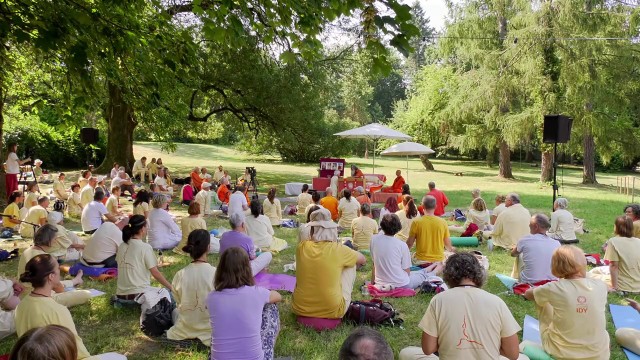
A devotional introduction and singing of a traditional bhajan.
"We can sing a very beautiful bhajan from Swāmī Lālā Nānjī. It is called Manarata Nāma, and it means, 'Oh my mind, repeat the name of God, repeat your mantra.'"
"Give your body and mind to Sāddhā Gurudeva, and he will destroy all your doubts and all your bad qualities. In the holy lotus feet of Satguru Deva reside all holy pilgrimages."
The speaker introduces a lesser-sung bhajan by Swāmī Lālā Nānjī, emphasizing the urgency of spiritual practice in human life. They explain the bhajan's theme of repeating the divine name and extol the glory and essential role of the true Guru in guiding devotees across the ocean of worldly existence. The session includes singing verses from the bhajan and concludes with salutations.
Filming location: Strilky, Czech Republic
Bhajans evening from the Strilky Ashram
16:05 - 17:08 (63 min)
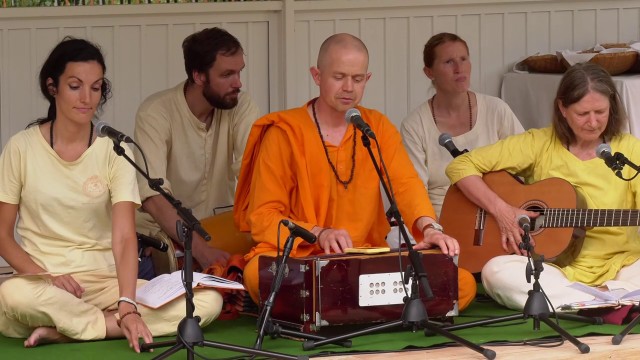
Evening satsang from Strilky Ashram, Czech Republic. Bhajan singing and translation.
Bhajan evening in the Strilky Ashram
17:15 - 18:08 (53 min)
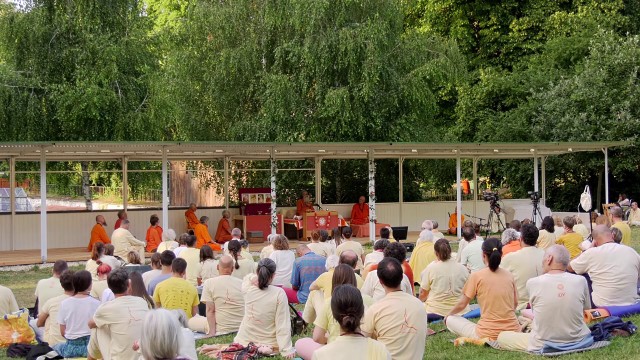
Evening satsang from Strilky Ashram, Czech Republic. Bhajan singing and translations. We shouldn't hold animals in a cage. They feel much pain there. Let them be free. We are also like that bird in the
Bhajan singing from Jadan
18:15 - 18:26 (11 min)
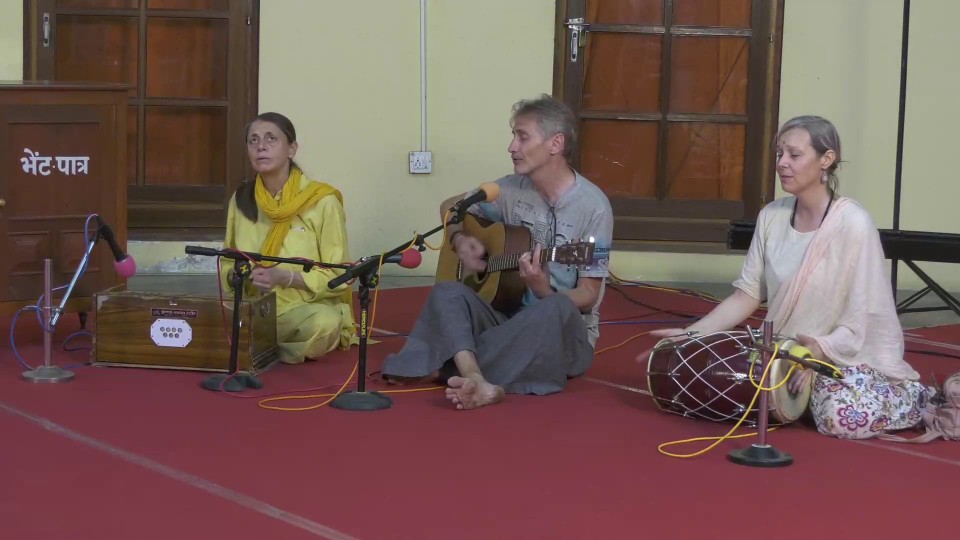
Evening satsang with Vishwaguruji from Jadan Ashram, Rajasthan, India.
The Destiny
18:30 - 19:51 (81 min)
A spiritual workshop on the chakras, destiny, and personal transformation.
"Our whole body is energy. Everything is energy. There is space, energy, and consciousness."
"Destiny is a line on the stone. We can't delete it... but a master or a Trikāl Darśī... can help to monitor our destiny."
A spiritual teacher leads a session exploring the profound nature of the body's energy centers (chakras) and their connection to one's destiny. He explains that destiny, shaped by past actions, is difficult to change, yet can be influenced by mastering internal energies and heeding wise guidance. The talk covers the five negative forces (Kāma, Krodha, Lobha, Moha, Ahaṅkāra) and their positive counterparts (Tyāga, Vairāgya, Bhakti, Jñāna, Viveka), concluding with a practical ritual using Pañcāmṛta to purify energy and uplift consciousness.
Filming location: New York, USA
The way how yoga is helping us
19:55 - 20:58 (63 min)
A lecture on the chakra system and spiritual purification.
"The human birth and human body possess very special abilities and a most powerful tool: the intellect. Through our intellect, we can discover all our hidden powers."
"Before we awake or open the chapter of the chakra... [there are] three negative points to address... mala, vikṣepa, and āvaraṇa."
Swami Paramananda leads an evening satsang from the Yoga and Life Ashram, continuing a series on the chakras. He explains the human body's subtle anatomy, including the 72,000 nerves and the three primary nāḍīs (Iḍā, Piṅgalā, Suṣumṇā). The core teaching focuses on the three obstacles to spiritual awakening: impurities (mala), mental disturbances (vikṣepa), and the veil of ignorance (āvaraṇa). He details methods for purification through Haṭha Yoga techniques, control of the senses, and satsang, weaving in stories and analogies about the mind, karma, and the goal of liberation beyond the cycle of birth and death.
Filming location: New York, USA
Renounce
21:05 - 22:11 (66 min)
Webcast of Swamijis evening Satsang from Strilky Ashram, CZ on May 15th 2010. Enter the kingdom of the Lord through the gate of sacrifice, renounce.
Repeat the mantra
22:15 - 23:18 (63 min)
Swamiji in Sliac, 9th April 2007
The Awakening of Kuṇḍalinī: A Journey to Happiness, Love, and Wisdom
23:25 - 23:53 (28 min)
A spiritual discourse on the awakening of Kuṇḍalinī and the structure of human consciousness.
"The awakening of the Kuṇḍalinī means happiness, universal love, and wisdom." "The soul is not the ātmā. The soul is only the collection of our karmas, destinies, and our qualities."
A teacher explains the nature of Kuṇḍalinī awakening, describing it as a state of bliss and universal love. He details the human energy system, including the five kośas (sheaths) and the chakras, using the metaphor of salt dissolving in water to describe the persistence of karma. The talk covers the etymology of "Kuṇḍalinī," its association with serpentine energy, and the importance of spiritual guidance for a stable awakening.
Filming location: Debrecen, Hungary
American
Australian