
European
Practicing of the system 'Yoga in Daily Life', Level 1 - Part 2
0:00 - 1:04 (64 min)
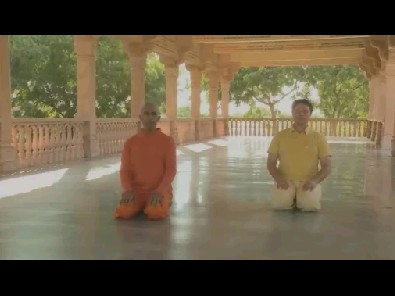
A guided morning yoga class from the Yoga in Daily Life system.
"Relax your whole body from the toes to the top of the head and from the top of the head to the toes."
"Prepare yourself for practicing prāṇāyāma, the breath technique... Breathe twenty times only through your left nostril."
An instructor leads a comprehensive session from the Om Vishwadeep Gurukul ashram. The practice begins with deep relaxation in Ānanda Āsana, followed by a series of gentle stretches, spinal twists, and core exercises like Pavanamuktāsana, all coordinated with conscious breathing. The class transitions to seated postures for spinal extension and flexion, concludes with guided relaxation and a round of Nāḍī Śodhana prāṇāyāma, and ends with a closing mantra.
Filming location: Jadan, Rajasthan, India
Do not kill animals
1:10 - 1:47 (37 min)
A spiritual discourse on purity, diet, and human relationships.
"If we advise others, saying, 'Do not eat this; it is not good,' they may threaten us."
"Early morning, she makes pūjā. Pūjā for whom? For her husband. And always she's in meditation."
A swami shares a meandering talk, beginning with his personal experience defending vegetarianism in India and observing how others eventually adopted the practice. He uses the metaphor of water's cycle to describe spiritual purity and ascent, then discusses themes of marital devotion, conception, and the roles of men and women, often shifting topics without clear transitions. The session concludes with chanting.
Filming location: Rijeka, Croatia
The Eternal Resonance of Sacred Sound
1:55 - 2:54 (59 min)
A satsang discourse on the eternal nature of sacred sound and spiritual lineage.
"Even if someone died a thousand years ago, or five thousand years, or more than that, he or she who wrote this or sang that song, that person is still alive here."
"All they have eaten the cream... But they did not eat the cow. Milk the cow and take the butter."
The speaker explores the ancient origins of the Vedas and yoga, challenging the notion they are only 5,000 years old. Using the story of Dhruva becoming the Pole Star, he illustrates eternal divine justice and the lasting resonance of a true name or sound. He emphasizes the importance of honoring the original authors of bhajans and scriptures, recounting a story where his Guruji advised a disciple to find fresh inspiration from the eternal source, like milking a cow for new butter. The talk concludes with the singing of bhajans.
Filming location: Strilky, Czech Republic
Around the world - Yoga exercises specifically for women
3:00 - 3:36 (36 min)
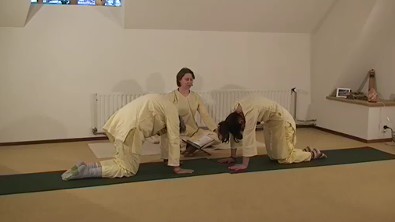
A guided yoga session focused on asanas for menstrual well-being and pelvic health.
"From my own experience, I can confirm it is truly helpful."
"Feel the effect of this exercise; it is also very good to do in the morning for a stiff back."
An instructor leads a gentle sequence designed for menstrual concerns, beginning with relaxation and yogic breathing in Anandāsana. The practice includes apānāsana (for the lower back and pelvic area), marjari (cat pose), hip-opening preparatory poses, and mālāsana (a squatting pose), with a personal anecdote shared about its benefits. The session continues with setu āsana (bridge pose) and a side-lying balance pose, concluding with a short relaxation and a final Om.
Around the world - Practice in Ukraine
3:40 - 4:30 (50 min)
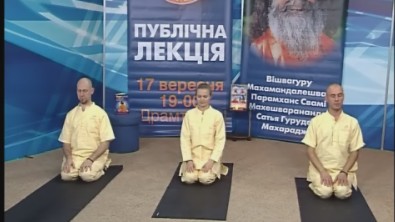
A guided yoga practice session from the Yoga in Daily Life system.
"Physical relaxation leads to spiritual relaxation. Relaxation is an important element for the proper practice of yogic exercises."
"Ānanda Āsana translates as 'the posture of bliss.' Observe how bliss flows throughout your entire body."
An instructor leads a comprehensive sequence of postures (āsanas), breathwork (prāṇāyāma), and relaxation. The practice begins and ends with Ānanda Āsana for deep relaxation, and includes abdominal breathing, spinal twists, stretches, and joint mobility exercises while lying, sitting, and standing. The session concludes with a final relaxation and a moment of gratitude.
Filming location: UK
Around the world - Yoga in Slovakia
4:35 - 6:12 (97 min)
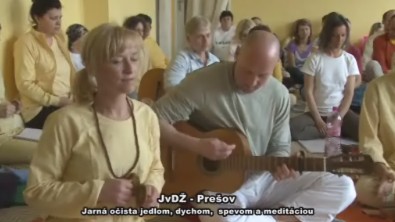
Yoga practice in Slovaka, the city of Presov
Vegetarian cooking lesson 15
5:00 - 5:11 (11 min)

Vegetarian cooking lesson
The Journey of the Soul: From the Ocean to the Drop
5:15 - 6:09 (54 min)
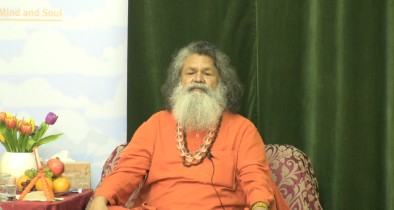
A spiritual discourse using the water cycle as a metaphor for the soul's journey.
"This jīvā, the soul, is on the journey of the eternal."
"When this drop falls into the ocean, the Jīva becomes the Ātmā. This drop becomes the ocean."
Swami Avatarpuri gives a satsang, explaining the soul's separation from and longing to return to the divine source through an extended analogy of evaporation and rainfall. He emphasizes the purifying role of satsang and the Guru, shares anecdotes about introducing mantra in Eastern Europe and criticizes modern chemical pollution and vanity as spiritual impediments, concluding with a call for natural living and collective chanting.
Filming location: London, UK
What have you done for others?
6:15 - 7:00 (45 min)
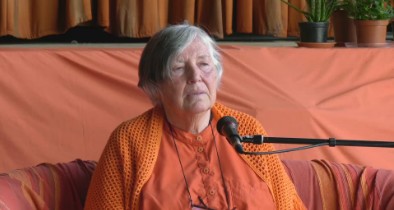
Lecture by Sadhvi Shanti from Summer Yoga Camp in Vep, Hungary. We are climbing to the top of the mountain step by step. To follow the path is very important. At the end of your life, God will ask: "what have you done for others?" There are many things in nature that we can use for our spiritual development. The tree is always ready to accept.
Mantra and Guru
7:05 - 7:58 (53 min)
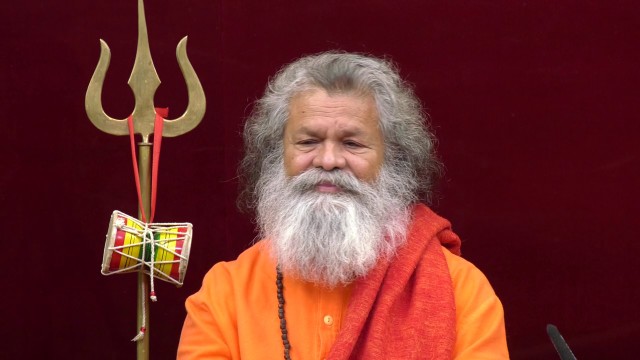
An evening satsang on spiritual practice, the role of the guru, and a morning prayer ritual.
"Early morning is called Brahmamuhūrta... it is said that one of the best nectars is in that time."
"Don't change your gurus. If you are changing, then you will not achieve anything."
Swami Maheshwarananda addresses a global audience, discussing the universal human search for meaning amidst modern confusion. He outlines an ideal morning routine of purification, prayer, and light, and explains the hierarchical concept of the guru, from parents and teachers to one's irreplaceable spiritual master. He concludes by teaching and explaining the lyrics of a devotional Āratī song.
Filming location: Strilky, Czech Republic
Yoga for a Healthier and Happier Life
8:05 - 8:52 (47 min)
A public lecture on yoga as a holistic science for health and peace.
"If you want to know what is Parabrahma, what is God, it is that resonance, that energy."
"Yoga practice is balancing, harmonizing, and keeping health. The practice of āsanas is not a competition."
Swami Maheshwarananda addresses an audience including the Indian Ambassador to the EU and the President of Zagreb. He presents yoga as a divine science originating from Śiva, sharing traditional stories about blessings and longevity, and critiques modern commercialized forms. He emphasizes yoga's role in creating personal health and world peace, concluding with a demonstration of the Kāṭupraṇām exercise.
Filming location: Zagreb, Croatia
Where is our happiness?
9:00 - 9:47 (47 min)
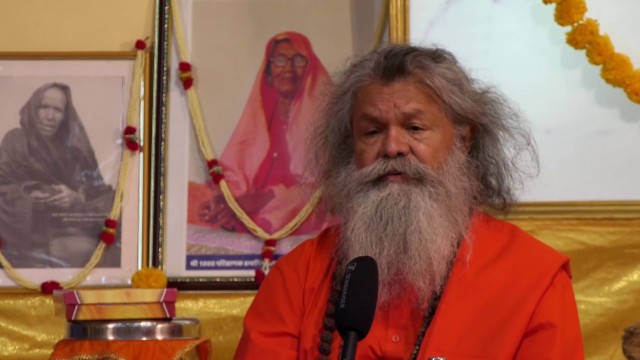
Evening satsang with Vishwaguruji from Jadan Ashram, Rajasthan, India. God can be happy and unhappy also. We can make him happy and unhappy like our parents. Animals also can be happy and we must not kill them to make them unhappy. Every morning we should be thankful to God that we are human. Don't marry before you completely finished your study. We also should be thankful for God before eating. Bhajan singing.
You are the helper of everyone
9:55 - 10:48 (53 min)
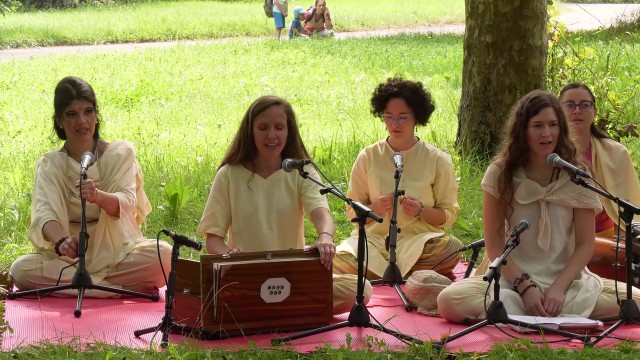
A spiritual discourse on the meaning and practice of a specific mantra.
"Oṃ, the Uncreated Body. It is not referring to the physical body. It is pointing to the body of Consciousness, the body of Awareness, the body of Being."
"When we chant this mantra, we are not invoking something outside of ourselves. We are recognising and affirming our true nature."
A teacher provides a detailed commentary on the mantra "Oṃ Aki Rāchanā Śarīra," explaining its meaning as a pointer to the eternal, unchanging Self or Awareness beyond the physical form. He instructs listeners on how to chant it as a practice of self-recognition and disidentification from the body-mind, describing it as the subjective space of pure knowing.
Filming location: Vép, Hungary
Opening Address: Yoga for World Peace and Non-Violence
11:00 - 11:07 (7 min)
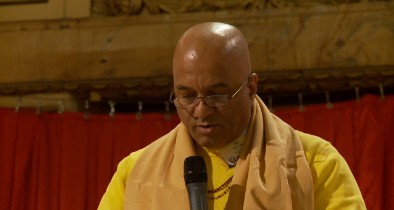
An opening address for the "Yoga for World Peace and Non-Violence" International Conference in Prague.
"Yoga is not a religion. It represents the original balancing principle that promotes nonviolence and peacefulness."
"To achieve peace in the world, we must start by achieving inner peace ourselves."
A representative of the Czech Hindu Religious Society, Vishwaguru Deep Hindu Mandir, welcomes attendees and explains his organization's role in co-organizing the conference. He honors the spiritual lineage of Swami Madhavanandaji and Swami Maheshvaranandaji, detailing global humanitarian projects and drawing a direct connection between yogic principles like non-violence (ahimsa) and the universal pursuit of peace. The speech emphasizes inner peace as the foundation for world peace.
Filming location: Prague, Czech Republic
The Path of Yoga for Universal Peace
11:15 - 11:38 (23 min)
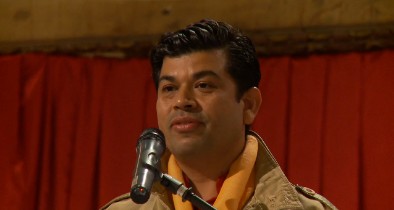
A keynote address advocating for yoga as a universal path to global peace.
"If you want a result in one year, plant crops; in ten years, plant fruit trees; if you want a result forever, practice yoga."
"Yoga is less than 30% physical; it is more than that—it is emotional, mental, and spiritual. For humankind, it is the interconnection from the individual to people, from people to nature, and from nature to the planet."
A speaker from Nepal addresses a World Peace Council conference, framing yoga as a non-religious, practical solution to violence and unrest. He argues for its integration into global education and diplomacy, urging governments to invest in yoga over military spending. The talk blends philosophical teachings from multiple faiths with calls for personal and political action, concluding with a collective peace chant and meditation.
Filming location: Prague, Czech Republic
Suffering makes us strong
11:45 - 12:17 (32 min)
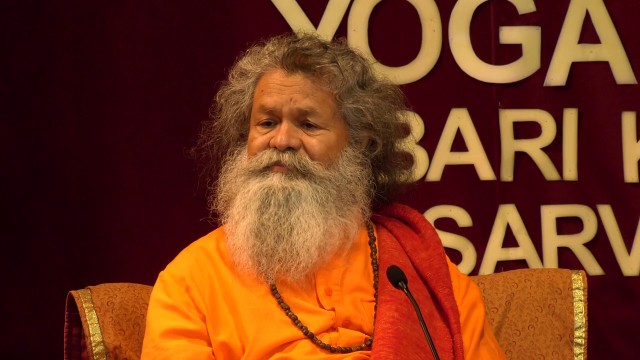
A spiritual discourse on suffering and divine incarnation, referencing Krishna and Jesus.
"In very hard times... those who are whole, suffering will be very strong. That means they are coming very solid, strong."
"Many sādhus, munis... all were suffering. Why are they suffering? They are taking from others our heart, our pain."
An unnamed speaker reflects on the universal nature of suffering in Kali Yuga, asserting that even divine incarnations like Krishna and Jesus endured great pain to absorb the suffering of humanity. The talk includes a personal anecdote about a lonely old man met in Austria, illustrating the impermanence of worldly success and the inevitability of suffering. The themes of divine descent, the purpose of hardship, and the transient nature of the material world are explored in a contemplative, narrative style.
Filming location: Strilky, Czech Republic
Children's program on Gurupurnima
12:25 - 12:54 (29 min)
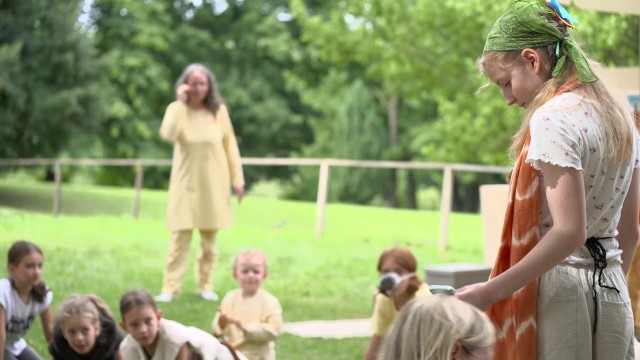
Morning satsang with Vishwaguruji from Strilky Ashram, Czech Republic. Salutation to the lotus feet of Gurudev. Children's program on Gurupurnima.
Suffering makes us strong
13:00 - 13:32 (32 min)
A spiritual discourse on suffering and divine incarnation, referencing Krishna and Jesus.
"In very hard times... those who are whole, suffering will be very strong. That means they are coming very solid, strong."
"Many sādhus, munis... all were suffering. Why are they suffering? They are taking from others our heart, our pain."
An unnamed speaker reflects on the universal nature of suffering in Kali Yuga, asserting that even divine incarnations like Krishna and Jesus endured great pain to absorb the suffering of humanity. The talk includes a personal anecdote about a lonely old man met in Austria, illustrating the impermanence of worldly success and the inevitability of suffering. The themes of divine descent, the purpose of hardship, and the transient nature of the material world are explored in a contemplative, narrative style.
Filming location: Strilky, Czech Republic
Miracles are in our service
13:40 - 14:55 (75 min)
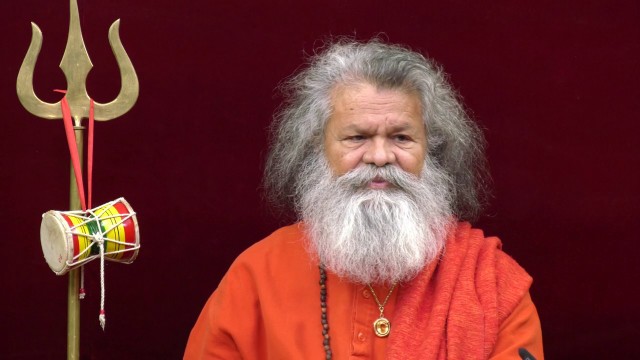
An evening satsang sharing stories of grace and miracles from the Guru lineage.
"Mahāprabhujī said, 'Why are you always thinking, "There is no more food"?' ... He opened the cloth, and the pot was full of halvā soup."
"Mahāprabhujī was singing a very nice bhajan. People sang many, many bhajans. It is said prasāda means enough, more than enough."
The lecturer addresses a global audience, offering blessings and narrating miraculous anecdotes involving his Gurus, Mahāprabhujī and Devpurījī. He recounts tales of multiplying food, fulfilling devotees' desires, and personal experiences of divine light, emphasizing themes of selfless service (seva), contentment (santosh), and faith over the pursuit of miracles. The talk concludes with a parable about a healed leper, known as the "Sonāmukhī Gurujī," whose faith and a simple laxative lead to a series of wondrous events.
Filming location: Strilky, Czech Republic
Bhajan evening in the Jadan Ashram
15:30 - 16:09 (39 min)
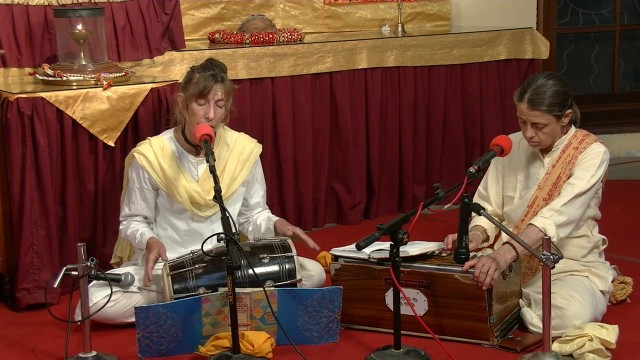
Evening satsang from Jadan Ashram, Rajasthan, India. Bhajan singing.
Bhajan singing in the Jadan Ashram
16:15 - 17:33 (78 min)
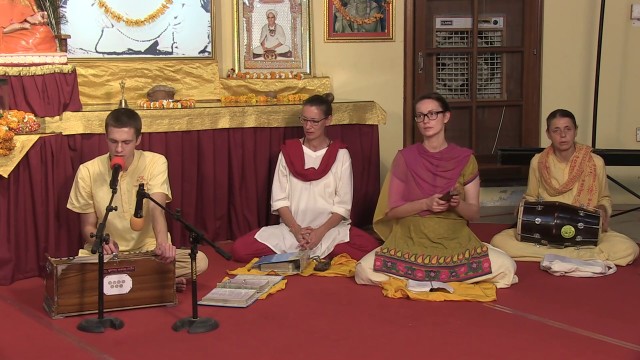
Evening satsang with Vishwaguruji from Jadan Ashram, Rajasthan, India. Bhajan singing evening.
Bhajan evening in Jadan Ashram
17:40 - 18:02 (22 min)
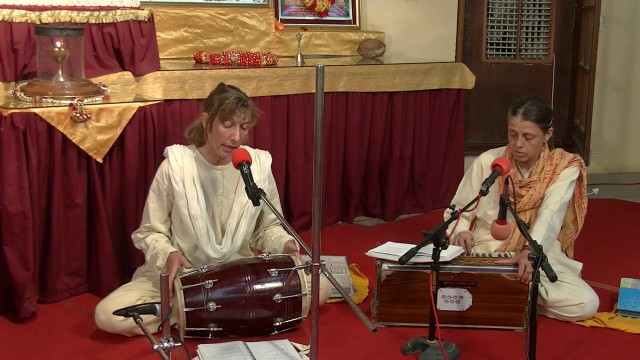
Evening satsang with Vishwaguruji from Jadan Ashram, Rajasthan, India. Bhajan singing.
Bhajan evening from Jadan Ashram
18:10 - 18:47 (37 min)
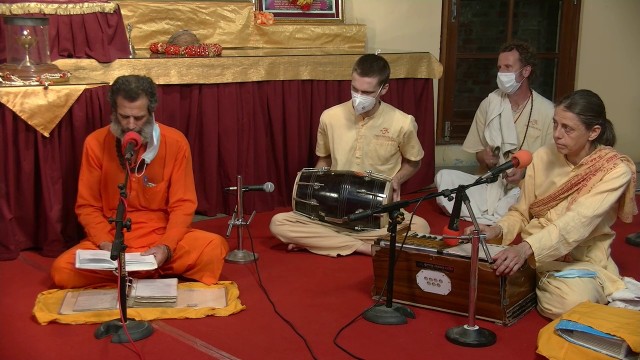
Evening satsang with Vishwaguruji from Jadan Ashram, Rajasthan, India. Bhajan singing.
Chakras in the human
18:55 - 20:05 (70 min)
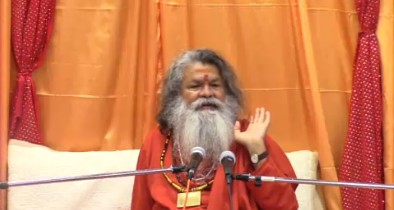
A lecture on the cosmic origin and holistic practice of yoga.
"Yoga is one of the first principles in creation." "That’s called yoga: our physical body, our mental body, and our subtle body. These are three, according to yogic science. Balance, complete."
Swami Paramananda addresses a temple gathering, invited to speak on yoga. He presents a cosmological view of yoga's origin from Anant Brahmāṇḍ (infinite universes), sound (Nāda), and the self-manifested Śiva. He explains the traditional concept of 8.4 million life forms and argues for a vegetarian diet to attain higher consciousness. The talk covers the need for a guru, the 72,000 nerve systems, the five kośas (sheaths), and a detailed, practical guide to the chakras—from the earth chakras in the feet to the higher centers. He concludes with practical techniques like chanting AUM and a stress-relief exercise, ending with a peace mantra.
Filming location: USA
Miracles are in our service
20:10 - 21:25 (75 min)
An evening satsang sharing stories of grace and miracles from the Guru lineage.
"Mahāprabhujī said, 'Why are you always thinking, "There is no more food"?' ... He opened the cloth, and the pot was full of halvā soup."
"Mahāprabhujī was singing a very nice bhajan. People sang many, many bhajans. It is said prasāda means enough, more than enough."
The lecturer addresses a global audience, offering blessings and narrating miraculous anecdotes involving his Gurus, Mahāprabhujī and Devpurījī. He recounts tales of multiplying food, fulfilling devotees' desires, and personal experiences of divine light, emphasizing themes of selfless service (seva), contentment (santosh), and faith over the pursuit of miracles. The talk concludes with a parable about a healed leper, known as the "Sonāmukhī Gurujī," whose faith and a simple laxative lead to a series of wondrous events.
Filming location: Strilky, Czech Republic
Follow the path of Bhakti
21:30 - 22:52 (82 min)
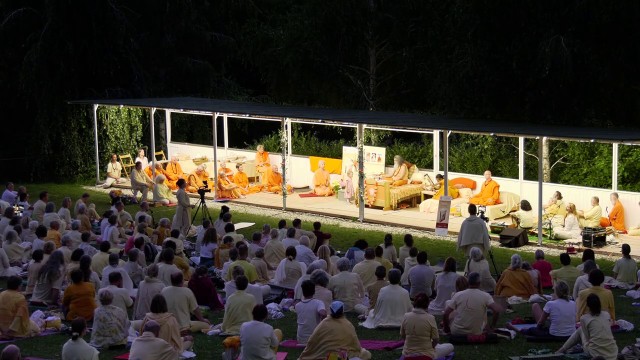
Evening satsang with Vishwaguruji from Strilky, Czech Republic. Lecture by Swami Avatarpuriji. You can't run away from Maya. The story of a sadhu who was living in the Himalayas. Only by following the right path and Gurudev we can cross the ocean of ignorance. Finally, we should follow the path of Bhakti. Explanation of how Gurudev helps us to overcome our troubles. Mind is restless, but using mantra it can be focused. Chanting and learning mantras, including Mahamrityur Jayamantra. Lecture by Mahamandaleshwar Swami Vivekpuriji. The mind is like a horse. Why we are telling stories when we are teaching someone. What is important is the feeling in the heart.
Where is our happiness?
23:00 - 23:47 (47 min)
Evening satsang with Vishwaguruji from Jadan Ashram, Rajasthan, India. God can be happy and unhappy also. We can make him happy and unhappy like our parents. Animals also can be happy and we must not kill them to make them unhappy. Every morning we should be thankful to God that we are human. Don't marry before you completely finished your study. We also should be thankful for God before eating. Bhajan singing.
American
Australian