
European
The Essence of Health and Harmony
0:25 - 1:08 (43 min)
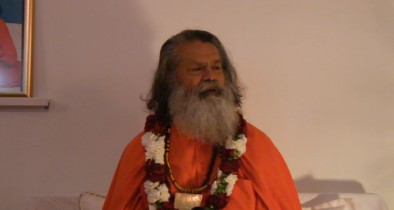
A satsang discourse on holistic health, Ayurveda, and living harmoniously.
"Where there is water, there is God, and where there is God, there is life. Where there is life, there is light, and where there is light, there is good health."
"Health is not everything, but everything is nothing without health."
Swami Maheshwarananda (Swamiji) leads an evening talk, weaving together the arrival of rain, ancient wisdom, and modern life. He explains the Ayurvedic perspective on health as balance, lists sources of happiness like a good partner and neighbor, and offers analogies—like living as a lotus in water or a tongue between teeth—for maintaining detachment and harmony amidst life's challenges. He emphasizes daily yoga practice for all ages as a key to managing stress and well-being.
Filming location: Auckland, New Zealand
Yuga Yuga Jivo Maheshwarananda
1:15 - 1:22 (7 min)
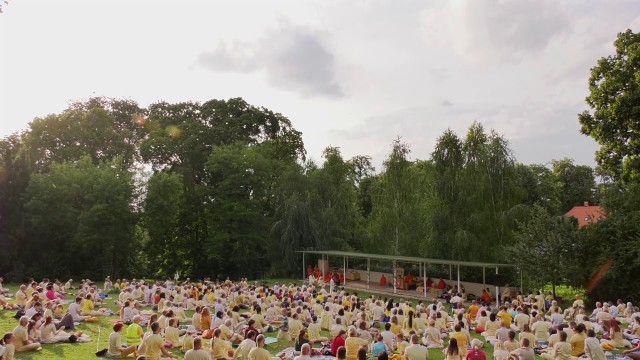
Evening satsang with Vishwaguruji from Strilky Ashram, Czech Republic. Bhajan singing on Gurupurnima satsang.
On Shiva Purana Katha
1:30 - 1:52 (22 min)
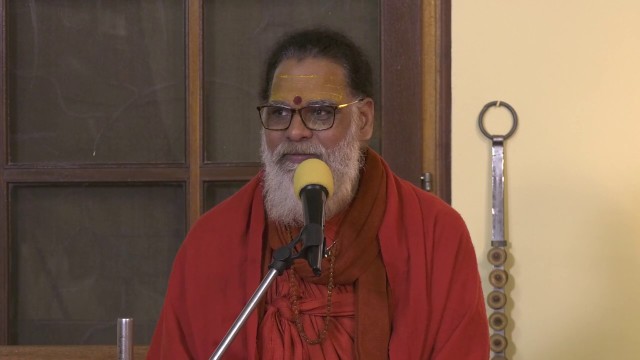
A speech on the two paths of life and the role of the Guru, given at the inauguration of Om Ashram.
"The path of spirituality is called the path of Parmārth. This is the path on which the Jīva attains God."
"The only one who brings us to God is the Sadguru Dev. That’s why we are so lucky if we can come on the path where we meet the true Guru."
Mahāmudāleśwar Swāmī Chidambaranand Saraswatī Ji Mahārāj, with translation by Swāmī Niranjanānandaji, explains the dichotomy between the worldly path of suffering and the spiritual path to bliss. He emphasizes that while family introduces one to the world, only a Sadguru can introduce one to God, the creator. The talk serves as a preamble to the upcoming Śivapurāṇa Kathā and celebrates the divine inauguration of the unique Om Ashram.
Filming location: Jadan, Rajasthan, India
Śaṅkha Prakṣālana and Kunjal Kriyā: Purification of the Intestine and Stomach
2:00 - 2:40 (40 min)

A practical demonstration and instructional lecture on the Haṭha Yoga purification techniques of Śaṅkha Prakṣālana and Kunjal Kriyā.
"Śaṅkha Prakṣālana is a very good exercise, but it has to be done early in the morning, of course, on an empty stomach."
"After Śaṅkha Prakṣālana, after purification, you have to keep a diet for at least, strictly, seven days, one week, and up to one month."
An instructor leads a session at an ashram, detailing the procedures for intestinal and stomach cleansing. He explains the preparation, the specific exercises and drinking process for Śaṅkha Prakṣālana, and the subsequent technique for Kunjal Kriyā (Vaman Dhautī), assisted by two experienced practitioners. Key themes include the importance of timing, dietary restrictions post-practice, and the health benefits of these purification rituals.
Filming location: Strilky, Czech Republic
Vishwaguruji is in all of us
2:45 - 3:50 (65 min)
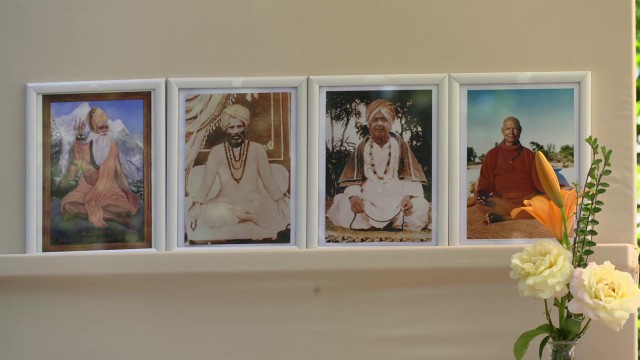
A satsang discourse on contentment, spiritual pitfalls, and the importance of mantra practice.
"A sannyāsī always renounces everything in life... That is how we all should try to be: happy with what we have, content with whatever we have."
"When Gurubhakti, and the devotion, and the spirituality, leave our house, which means us... What we need is always the kṛpā (grace) of Gurudev. That’s the most important thing in the universe."
Following opening prayers, the speaker narrates traditional stories to illustrate key themes: a contented sadhu who refuses Lord Shiva's boon, a greedy man who loses divine favor, and a lesson on not doubting divine wisdom. He warns that ego, greed, and jealousy destroy spiritual progress, emphasizing the need for humility and Guru's grace. The latter part focuses on the practice of Sanskrit mantras, described as an "antivirus program" and "brain gymnastic" that brushes away negative thoughts and brings peace, concluding with a collective chant.
Filming location: Strilky, Czech Republic
Inaguration ceremony of Adyodhya Ram Tempel
3:55 - 4:26 (31 min)
Evening satsang from Jadan Ashram, Rajasthan, India. Mahamandaleshwar Swami Gyaneswar Puriji speaks about inaguration ceremony of Adyodhya Ram Tempel and its meaning for people. There was deep joy in the city due to the deep meaning of the happening.
Live webcast from Strilky
4:30 - 6:00 (90 min)
Morning satsang from Summer Yoga Retreat in Strilky, Czech Republic
After death, everything is counted
4:35 - 5:59 (84 min)
Evening satsang with Vishwaguruji from Debrecen, Hungary. There is God in all of us. It is within our body. There is a flame in our hearts which is the soul. After death, there are eleven points to leave the body. It depends on your qualities. We have immense knowledge. There is modern science and there is yogic science but they are different. The eleventh point in the top of the head and the navel are in connection. Sleeping is very important. Even if you practised yoga and stopped, the memories can awaken in you at any time. Life is the same in every creature. We should work on ourselves. We should complete our life to unite with the Cosmic. Concentration on the vibration of Om Namah Shivaya kirtan. When we die everything is counted as good and bad. Practising ashwini mudra, AUM chanting and bhramari pranayama.
Searching for God
6:05 - 7:03 (58 min)
Vishwaguruji's morning Lecture, Strilky Ashram, Czech Republic. It takes nine months for the human body to be completed in the womb. This body is a place where the God is able to speak. This creation is the creation of God and God is residing in it. During the Kaliyuga (age of darkness), both the devik (positive) and ashuri (negative) shaktis are always present - we should avoid the negative energies. Do your practice, search for God.
Dharma and Satsang
7:10 - 8:19 (69 min)
A satsang discourse on dharma, spiritual practice, and the importance of community.
"We always try to find the shortcuts, and we always try to find the easy way out."
"In the satsaṅg, on the full moon, usually we listen to Guru Gītā. Try to really listen to Guru Gītā. I have listened to Guru Gītā for more than 40 years, and I must say that every time I hear something new inside."
Following traditional invocations, a speaker addresses a gathering, weaving teachings on personal duty (dharma) with illustrative stories, including a sādhu persistently saving a scorpion and Nārada's lesson from Lord Viṣṇu. The talk emphasizes perseverance in one's path, learning from failures, and the critical role of regular satsang and deep, repetitive study of core teachings like the Guru Gītā over seeking novel techniques. A letter from the Indian Prime Minister congratulating the opening of Om Ashram is read. The session includes chanting and concludes with a universal peace mantra and final salutations.
Filming location: Strilky, Czech Republic
Devas and Asuras
8:25 - 9:27 (62 min)
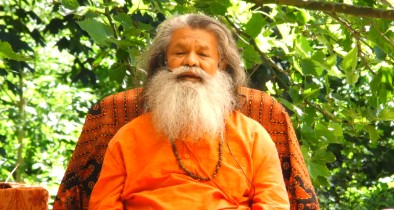
Morning satsang from Summer Retreat in Vep, Hungary. In holy scriptures we are often reading about fighting between devas and asuras. Vishwaguruji reveals the true meaning of these poems. Finally we should remove our bad qualities and live life without fear.
The eternal journey of the Soul
9:35 - 10:31 (56 min)
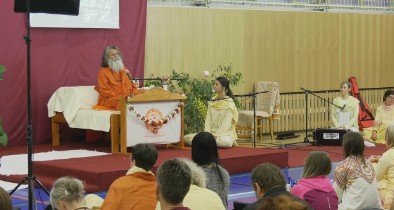
Evening Satsang with Vishwaguruji from Martin, Slovakia. We should ask ourselves: Who am I? From where did I come? Where I am going? In order to have liberation, we need the blessing of the Guru. Only to have a title is nothing. Growing of the ego is a danger for the spiritual aspirant. Know thyself as the Atma. Every life is like a dream, it is your reality. There are three levels of consciousness.
How to think of black magic
10:35 - 11:22 (47 min)
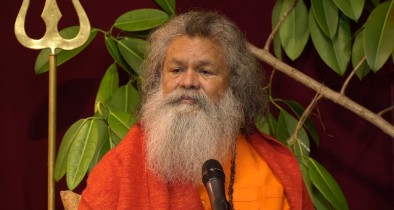
A satsang discourse debunking fear-based beliefs around black magic and ghosts through storytelling.
"People are very much frightened. They speak of ghosts and such things, and many claim they can take away the black magic which is supposedly on you."
"If we believe in God, then believe in God. God will give everything. God will never do anything negative for us."
Swami Ji narrates two cautionary tales to illustrate how fear and superstition are exploited. The first story tells of a village magician who manipulates a grieving widow, and the second describes a 'ghost' that turns out to be a moonlit chimney. He emphasizes that true spiritual practice, such as having a Guru Mantra and faith, offers protection, concluding that it is one's own fear, not external forces, that causes suffering.
Filming location: Strilky, Czech Republic
Respect is important
11:30 - 12:23 (53 min)
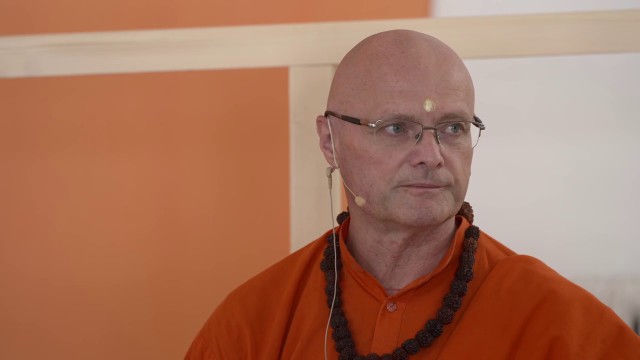
A spiritual discourse and mantra teaching session on the power of language, respect, and energy.
"Spirituality does not mean wholly very slow... But with this different energy inside, just try to be aware of this thing: in which way are we addressing other people?"
"You get from an object only as much as you respect it... If your mālā has some value for you, you will keep it in a safe place... Because of that, you will, from your mālā, get energy when you need it."
A speaker leads a satsang, emphasizing the profound impact of words, gestures, and intention. He discusses how language shapes reality, using examples from addressing others to serving food and respecting spiritual objects like a mala. The talk covers the importance of positive speech, respectful action, and the energy behind our deeds. The session concludes with Swami Avatar Puri teaching and explaining the "Nāma kamala nābhāya" mantra, including its translation and significance.
Filming location: Strilky, Czech Republic
Live webcast from Strilky
12:30 - 14:00 (90 min)
Evening satsang from Summer Yoga Retreat from Strilky, Czech Republic.
Non-violence is the highest principle
12:35 - 14:00 (85 min)
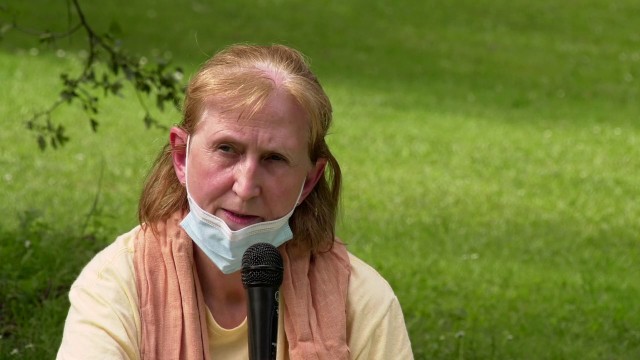
A satsang featuring a medical briefing on the COVID-19 pandemic followed by spiritual commentary.
"In America, in Brazil, in some European countries... the dead bodies were wrapped only in some plastic wrap and were buried together."
"I think that if the virus is very catchy, it's not so lethal. But at present, there is no treatment."
Swami Avatarpuri invites Dr. Věra, a neuro-intensivist, to describe the severe realities of the pandemic from her hospital experience, including patient suffering and safety protocols. Following her talk, Svāmījī emphasizes strict hygiene and mask-wearing, then shifts to spiritual discourse, suggesting a link between ahiṃsā (non-violence), vegetarianism, and resilience against the virus, supported by anecdotal observations from his global community. The session includes prayers and a chant.
Filming location: Strilky, Czech Republic
Guru's Darshan is the most precious
14:05 - 14:21 (16 min)
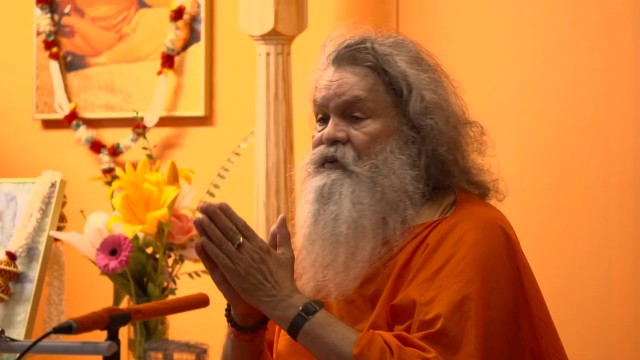
A spiritual discourse sharing a traditional parable about pilgrimage and divine grace.
"All day I am being bathed in by so many thousands and thousands of people. All of their sins come into me... When we come to our guru and we do seva... by the soil which touched his feet—when it touches us, we become pure."
"Gaṅgājī will give you much easier darśan. Whenever you are going on the way, always try to stay only at those houses where the householder has already had Gaṅgā snāna—a bath in the Gaṅgā."
A Swami addresses a satsang, recounting the story of two Brahmins on a pilgrimage to bathe in the Ganga. They follow strict advice on their journey, only to discover the river goddesses themselves—blackened by the sins of devotees—performing seva at a nearby ashram to be purified by their guru's foot-dust. The narrative illustrates that true purification comes from selfless service and guru's grace, not merely ritual.
Filming location: Strilky, Czech Republic
What is excellent against stress
14:26 - 15:19 (53 min)
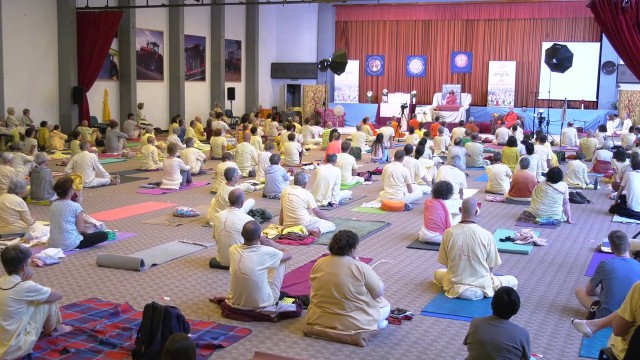
A satsang discourse on overcoming fear and stress through laughter, authenticity, and spiritual practice.
"Never take them seriously. Especially laugh at our own mistakes, problems, and fears."
"Spirituality without love is a terrible thing. I always remember... 'God, please protect me from spirituality without laughter.'"
The teacher shares stories and practical advice for dealing with internal struggles, emphasizing not to suppress fears but to face them with awareness and humor. He recounts the tale of a witch who controlled a village through fear of her rooster, illustrating how confronting false beliefs dispels their power. The talk connects this to daily spiritual practice, advising against empty ritual in favor of authentic feeling, as exemplified in the story of Krishna preferring a banana peel offered with love over a feast offered with pride.
Filming location: Vép, Hungary
Bhajan evening in Jadan Ashram
15:29 - 15:51 (22 min)
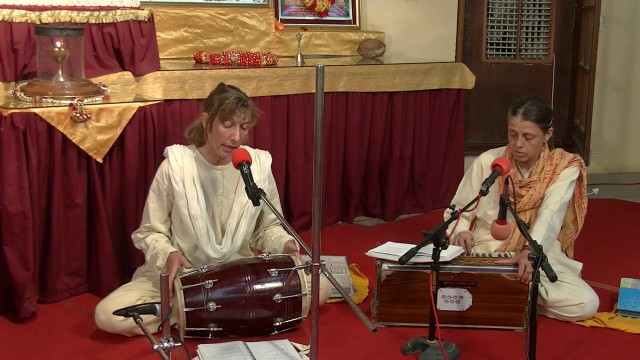
Evening satsang with Vishwaguruji from Jadan Ashram, Rajasthan, India. Bhajan singing.
Bhajan singing from Jadan Ashram
16:00 - 16:35 (35 min)
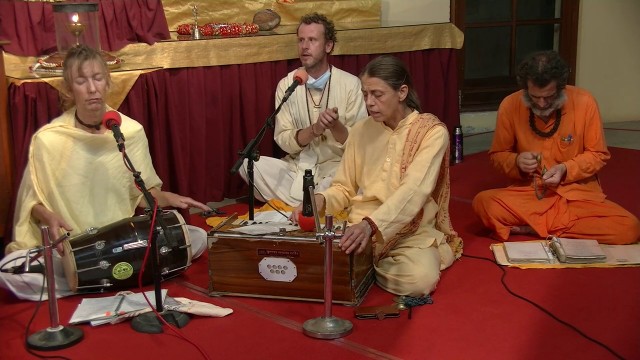
Evening Satsang with Vishwaguruji from Jadan Ashram, Rajasthan, India. Singing bhajans.
Bhajan evening in the Jadan Ashram
16:40 - 17:19 (39 min)
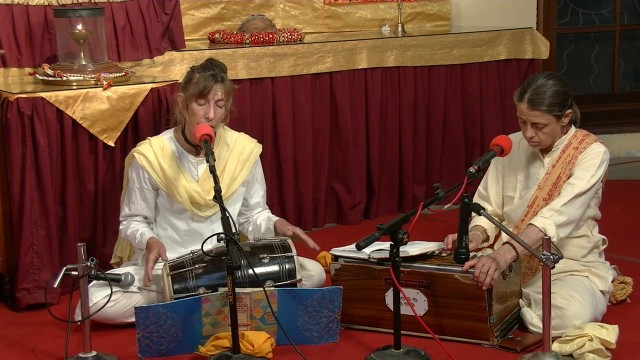
Evening satsang from Jadan Ashram, Rajasthan, India. Bhajan singing.
Bhajan singing in the Jadan Ashram
17:25 - 18:43 (78 min)
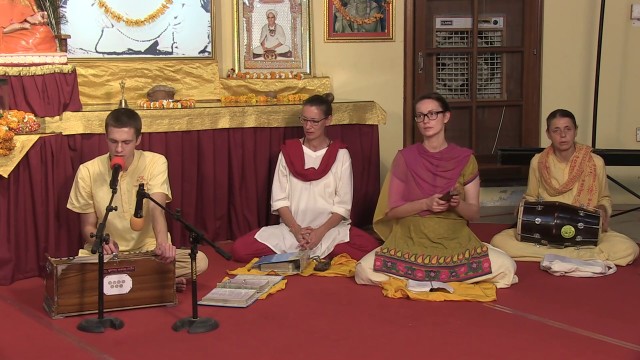
Evening satsang with Vishwaguruji from Jadan Ashram, Rajasthan, India. Bhajan singing evening.
Searching for God
18:50 - 19:48 (58 min)
Vishwaguruji's morning Lecture, Strilky Ashram, Czech Republic. It takes nine months for the human body to be completed in the womb. This body is a place where the God is able to speak. This creation is the creation of God and God is residing in it. During the Kaliyuga (age of darkness), both the devik (positive) and ashuri (negative) shaktis are always present - we should avoid the negative energies. Do your practice, search for God.
On Shiva Purana Katha
19:55 - 20:17 (22 min)
A speech on the two paths of life and the role of the Guru, given at the inauguration of Om Ashram.
"The path of spirituality is called the path of Parmārth. This is the path on which the Jīva attains God."
"The only one who brings us to God is the Sadguru Dev. That’s why we are so lucky if we can come on the path where we meet the true Guru."
Mahāmudāleśwar Swāmī Chidambaranand Saraswatī Ji Mahārāj, with translation by Swāmī Niranjanānandaji, explains the dichotomy between the worldly path of suffering and the spiritual path to bliss. He emphasizes that while family introduces one to the world, only a Sadguru can introduce one to God, the creator. The talk serves as a preamble to the upcoming Śivapurāṇa Kathā and celebrates the divine inauguration of the unique Om Ashram.
Filming location: Jadan, Rajasthan, India
Devas and Asuras
20:25 - 21:27 (62 min)
Morning satsang from Summer Retreat in Vep, Hungary. In holy scriptures we are often reading about fighting between devas and asuras. Vishwaguruji reveals the true meaning of these poems. Finally we should remove our bad qualities and live life without fear.
Dharma and Satsang
21:35 - 22:44 (69 min)
A satsang discourse on dharma, spiritual practice, and the importance of community.
"We always try to find the shortcuts, and we always try to find the easy way out."
"In the satsaṅg, on the full moon, usually we listen to Guru Gītā. Try to really listen to Guru Gītā. I have listened to Guru Gītā for more than 40 years, and I must say that every time I hear something new inside."
Following traditional invocations, a speaker addresses a gathering, weaving teachings on personal duty (dharma) with illustrative stories, including a sādhu persistently saving a scorpion and Nārada's lesson from Lord Viṣṇu. The talk emphasizes perseverance in one's path, learning from failures, and the critical role of regular satsang and deep, repetitive study of core teachings like the Guru Gītā over seeking novel techniques. A letter from the Indian Prime Minister congratulating the opening of Om Ashram is read. The session includes chanting and concludes with a universal peace mantra and final salutations.
Filming location: Strilky, Czech Republic
Vishwaguruji is in all of us
22:50 - 23:55 (65 min)
A satsang discourse on contentment, spiritual pitfalls, and the importance of mantra practice.
"A sannyāsī always renounces everything in life... That is how we all should try to be: happy with what we have, content with whatever we have."
"When Gurubhakti, and the devotion, and the spirituality, leave our house, which means us... What we need is always the kṛpā (grace) of Gurudev. That’s the most important thing in the universe."
Following opening prayers, the speaker narrates traditional stories to illustrate key themes: a contented sadhu who refuses Lord Shiva's boon, a greedy man who loses divine favor, and a lesson on not doubting divine wisdom. He warns that ego, greed, and jealousy destroy spiritual progress, emphasizing the need for humility and Guru's grace. The latter part focuses on the practice of Sanskrit mantras, described as an "antivirus program" and "brain gymnastic" that brushes away negative thoughts and brings peace, concluding with a collective chant.
Filming location: Strilky, Czech Republic
American
Australian