
European
Practising Asanas 1
0:00 - 1:12 (72 min)
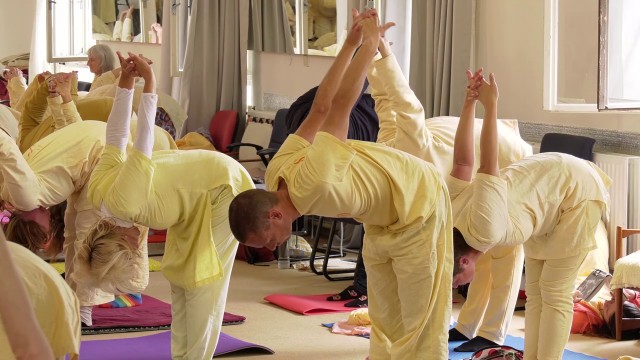
Morning satsang with Vishwaguruji from Strilky Ashram, Czech Republic. Pavanamuktasan, Marjari, Sasanka Asana, Shoulder cycling, Exercises for the foot, Ashva Sanchalanasan, Meru Akaranasan, Bhunamanasan, Meru Prishthasan, Dvikonasan, Setu Asan, Half Butterfly variations, Butterfly. Demonstration and explanation of the benefits of the exercise.
Vishwaguruji is in all of us
1:20 - 2:25 (65 min)
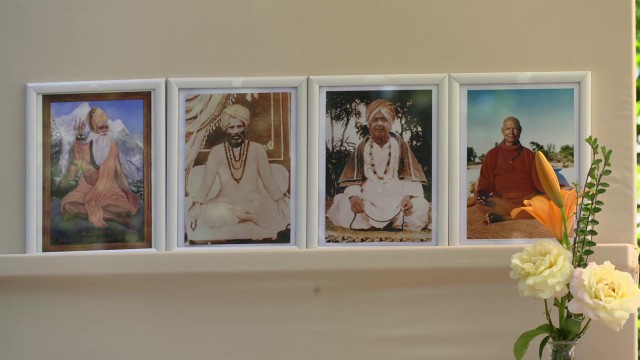
A satsang discourse on contentment, spiritual pitfalls, and the importance of mantra practice.
"A sannyāsī always renounces everything in life... That is how we all should try to be: happy with what we have, content with whatever we have."
"When Gurubhakti, and the devotion, and the spirituality, leave our house, which means us... What we need is always the kṛpā (grace) of Gurudev. That’s the most important thing in the universe."
Following opening prayers, the speaker narrates traditional stories to illustrate key themes: a contented sadhu who refuses Lord Shiva's boon, a greedy man who loses divine favor, and a lesson on not doubting divine wisdom. He warns that ego, greed, and jealousy destroy spiritual progress, emphasizing the need for humility and Guru's grace. The latter part focuses on the practice of Sanskrit mantras, described as an "antivirus program" and "brain gymnastic" that brushes away negative thoughts and brings peace, concluding with a collective chant.
Filming location: Strilky, Czech Republic
The Essence of Health and Harmony
2:30 - 3:13 (43 min)
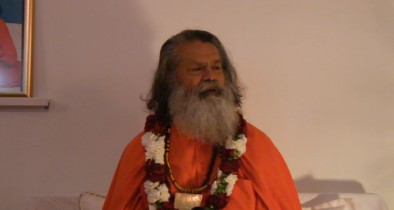
A satsang discourse on holistic health, Ayurveda, and living harmoniously.
"Where there is water, there is God, and where there is God, there is life. Where there is life, there is light, and where there is light, there is good health."
"Health is not everything, but everything is nothing without health."
Swami Maheshwarananda (Swamiji) leads an evening talk, weaving together the arrival of rain, ancient wisdom, and modern life. He explains the Ayurvedic perspective on health as balance, lists sources of happiness like a good partner and neighbor, and offers analogies—like living as a lotus in water or a tongue between teeth—for maintaining detachment and harmony amidst life's challenges. He emphasizes daily yoga practice for all ages as a key to managing stress and well-being.
Filming location: Auckland, New Zealand
How does Guru teach us?
3:20 - 4:22 (62 min)
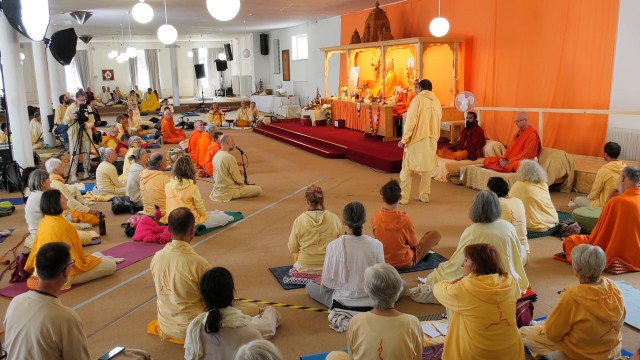
A morning satsang on spiritual discipline, human evolution, and devotion to the guru.
"Start the morning with one thought: 'I am a human.'"
"If you dig in one place, even if you find a big rock, you will come to water. But if you dig in seven different places every day, in the end you are completely confused."
A speaker addresses the assembly, emphasizing the importance of beginning the day with the conscious affirmation of one's humanity. He shares several teaching stories from Vishwaguruji, including a parable about seeing people's true nature through a peacock feather and an allegory about the need for persistence on a single spiritual path. The talk covers themes of non-violence (ahimsa), purifying human qualities, cutting the chain of karma through faith in the guru, and the foundational work required in spiritual life. He also recounts the early struggles of Gurudev (Vishwaguruji) spreading teachings in the West and announces the upcoming Kumbh Mela.
Filming location: Strilky, Czech Republic
The meaning of Bhajan
4:30 - 5:57 (87 min)
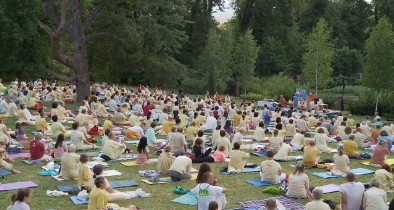
Satsang with Vishwaguruji Maheshwarananda, Summer Retreat in Strilky Ashram, Czech Republic. This satsang is about two powerful bhajans written by Holy Guruji (Sri Deep Niranjan Saba Dukha Bhanjan, Om Brahm Shiva Alakh Anadi). Vishwaguruji gives us introduction to different kinds of Samadhis and explains the topic about spiritual poems, bhajans, mantra and bija mantra. Bhajan singing and translation by Swami Gajanandji.
Dharma and Satsang
6:05 - 7:14 (69 min)
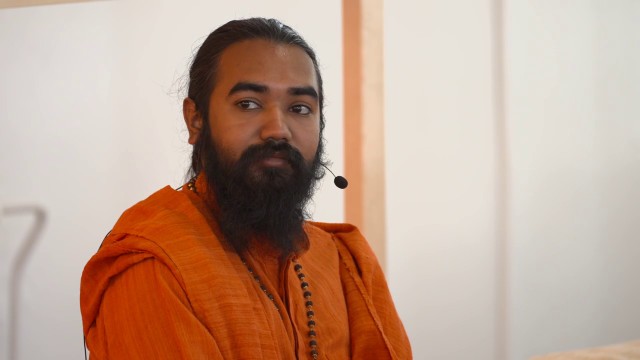
A satsang discourse on dharma, spiritual practice, and the importance of community.
"We always try to find the shortcuts, and we always try to find the easy way out."
"In the satsaṅg, on the full moon, usually we listen to Guru Gītā. Try to really listen to Guru Gītā. I have listened to Guru Gītā for more than 40 years, and I must say that every time I hear something new inside."
Following traditional invocations, a speaker addresses a gathering, weaving teachings on personal duty (dharma) with illustrative stories, including a sādhu persistently saving a scorpion and Nārada's lesson from Lord Viṣṇu. The talk emphasizes perseverance in one's path, learning from failures, and the critical role of regular satsang and deep, repetitive study of core teachings like the Guru Gītā over seeking novel techniques. A letter from the Indian Prime Minister congratulating the opening of Om Ashram is read. The session includes chanting and concludes with a universal peace mantra and final salutations.
Filming location: Strilky, Czech Republic
Atma resides in all creatures
7:20 - 7:49 (29 min)
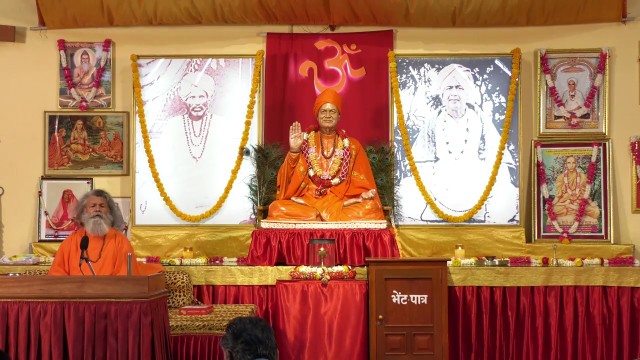
A spiritual discourse on the soul's journey and universal divinity.
"God is not there only once. God is not there only once. God is not there only once, but in our Sanātana Dharma, Where does it happen? It happens in the Paravara Brahma Ātmā."
"A drop of water and the whole ocean are the same inside... Therefore, what we are doing, pūjā, prārthanā, so Father, first, what is a mother? One God comes."
The speaker delivers a satsang, weaving together themes of non-duality, using the metaphor of a drop merging with the ocean to describe the soul's union with the divine. He discusses the human birth, the role of parents and gurus, the cyclical nature of existence, and advocates for compassion towards all beings, concluding with an anecdote about providing water for ants.
Filming location: Jadan, Rajasthan, India
Satsang and Kusang
7:55 - 9:05 (70 min)
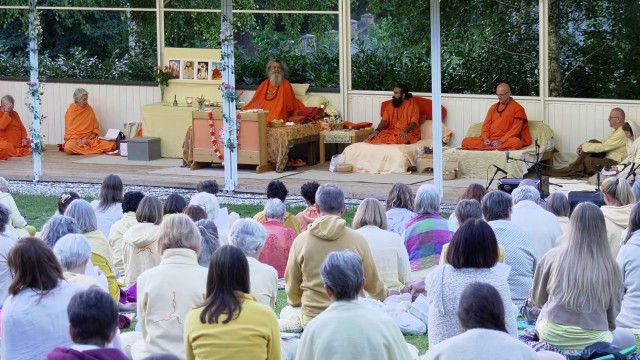
An evening satsang and mantra teaching session on the power of spiritual company and the Guru's grace.
"A spiritual person who was very dedicated towards spirituality can completely change his behavior just because of the food which he eats."
"Guru Kṛpā Hi Kevalaṁ Śāśvika Ānanda Maṅgalam. So, when you have Gurudev's kṛpā, then the śiṣya is always in happiness."
A Swami leads the gathering, first recounting a parable about a king's secretary whose life is ruined after his chef secretly feeds him meat, illustrating how negative influences (kusaṅga) and food can degrade spirituality. He emphasizes the importance of satsaṅga (good company), using the Guru's grace as the ultimate protection and guide. The discourse transitions into a mantra lesson, where the Swami teaches and corrects the pronunciation of a Sanskrit hymn dedicated to Lord Shiva.
Filming location: Strilky, Czech Republic
Always keep the distance
9:10 - 10:02 (52 min)
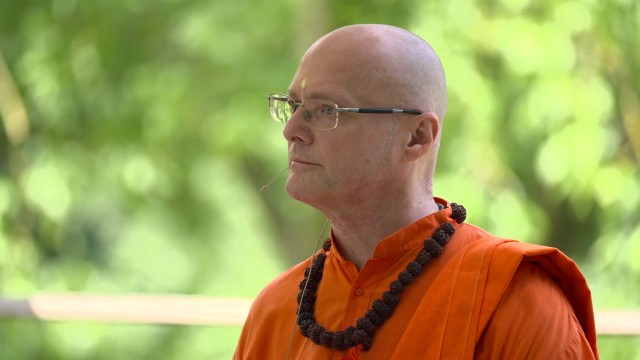
A satsang on using the world as a mirror for self-awareness and spiritual discipline.
"Through that reflection in the mirror—which is what this world means—we are able to correct ourselves."
"Everybody says that your life depends on the quality of your thoughts. Whether you will be in heaven or in hell depends only on the quality of your thoughts."
Swami Maheshvarananda leads a teaching session, exploring how to observe life without judgment. He explains a directive from Vishva Guruji using a parable of a man mistaking a drowning bear for a blanket, illustrating the need for wise detachment. He discusses how our thoughts shape our reality, using examples from daily life and classical texts like the Ramayana and Marcus Aurelius's Meditations, emphasizing disciplined thought transformation as core spiritual practice.
Filming location: Strilky, Czech Republic
Never think that you are a Guru
10:10 - 10:53 (43 min)
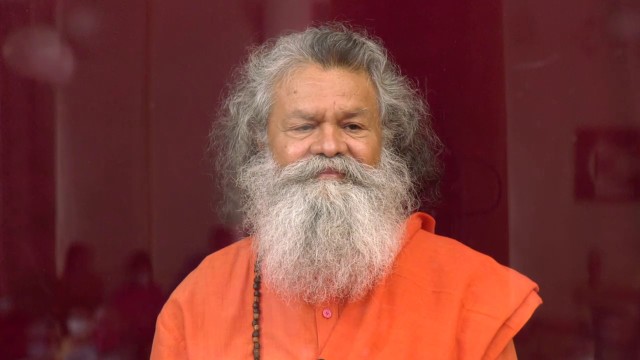
A satsang on the sacred practice of Kriyā and the necessity of the guru's grace.
"If I tell them, 'On the day you give up Guru Kṛpā, all sādhanā will be gone,' these people took the Kriyā and after one or two years they were gone."
"To become a disciple is not easy, not easy, not easy... we are also on that path of God, supreme, highest, and we are now walking on that path."
The lecturer addresses the gathering, emphasizing the gravity of Kriyā Anuṣṭhāna practice and the danger of undertaking it without genuine guru grace. Using metaphors of carrying a flame through a storm and walking a knife's edge, he illustrates the spiritual path's difficulty. He warns against students presuming to teach the technique, comparing it to a nurse performing heart surgery, and stresses that authentic practice comes only through the guru paramparā.
Filming location: Strilky, Czech Republic
Around the World - Nadlac
11:00 - 11:08 (8 min)
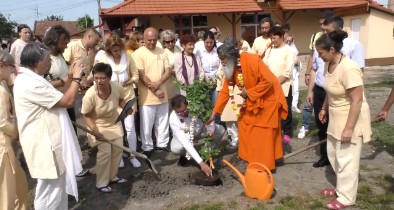
First Vishwagurujis visit to Romania.
World Peace is in Our Hands
11:15 - 11:20 (5 min)

A keynote address on global responsibility and the path to world peace.
"A world without peace will not survive. A world without distributing wealth will not survive. A world without taking care of our beautiful planet will not survive."
"World peace is in our hands... Peace is never achieved without good intentions and cooperation with others. Even more importantly, it requires coherence or balance with one’s self."
The speaker, representing Slovenia, addresses an international conference, arguing that creating resilient societies and active global citizenship is essential for survival. They share Slovenia's initiative to co-create a national vision aligned with the UN Sustainable Development Goals as a model of responsible action. The speech concludes by linking outer peace to inner balance, proposing yoga as a means to achieve it.
Filming location: Prague, Czech Republic
Be happy and feel oneness
11:25 - 12:07 (42 min)
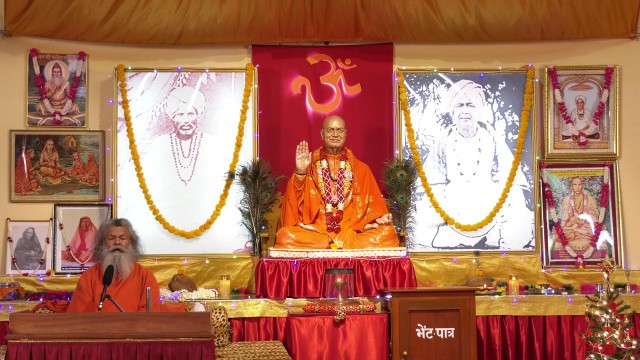
A New Year's reflection on human concepts, oneness, and inner peace.
"Where is the new year? The same sun, moon, and clouds remain, but humans try to make something again, to feel 'I am new.'"
"And when that oneness is realized, then there is nowhere to say 'this' or 'that.'... Everything is in our mental constructs."
The lecturer leads a satsang, questioning the human-made nature of the New Year and other divisions. He reflects on the eternal earth, the illusion of separation, and the conflicts between religions and individuals, urging everyone to realize fundamental oneness, be happy, and avoid making others angry. He uses metaphors like the ocean's surface versus its depths and concludes with travel plans for pilgrimage.
Filming location: Jadan, Rajasthan, India
The spiritual family
13:00 - 13:51 (51 min)
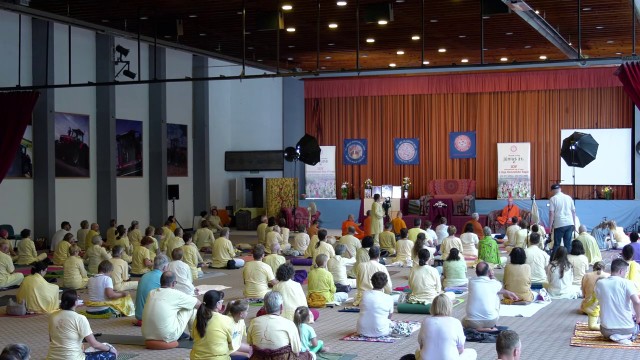
An opening talk at a spiritual seminar addressing the absence of the guru and the purpose of gathering.
"People are always complaining, 'Oh, Kali Yuga is not good, Kali Yuga is a terrible time.' But if you know how to utilize it, Kali Yuga is also excellent."
"We need to be like a Paramahaṁsa... We should be like that. In this world, we have so many things... we should be like the Haṁsa: take the pearls, take the milk, and leave the water."
A senior disciple addresses the assembled spiritual family at the Vép seminar, acknowledging the physical absence of Viśvagurūjī. He reframes the gathering as a vital opportunity to recharge, strengthen spiritual family bonds, and deepen personal practice. Key themes include extracting the essence from the Kali Yuga, the necessity of a supportive community for sādhanā, and using the seminar for introspection, mauna (silence), and focused practice of āsana and prāṇāyāma to calm the mind.
Filming location: Vép, Hungary
Part 1: Yoga in Daily Life: Union, Harmony, and Self-Knowledge
13:15 - 14:32 (77 min)
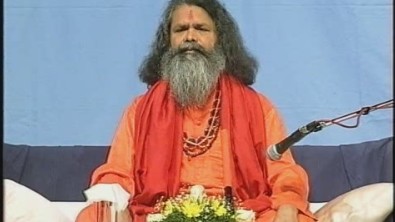
A public lecture on integrating yoga philosophy and practice into daily life, focusing on self-knowledge and chakra awakening.
"Yoga is a balancing principle which balances the entire universe. Where there is balance, there is harmony."
"Unless we change our qualities, we cannot become one with God. Human qualities are love, understanding, kindness, mercifulness, helping, spiritual, and so on."
Swami Paramadvaiti addresses an audience, explaining yoga as a science for achieving harmony and union with the cosmic consciousness. He discusses the nature of human problems, the journey of the individual soul, and the importance of cultivating positive qualities. The lecture then delves into practical yoga techniques for health and stress relief, before providing a detailed teaching on the energy body, focusing on the awakening and purification of the Svādhiṣṭhāna chakra and its associated emotions.
Filming location: Croatia
Sri Deep Narayan Mahaprahuji
14:00 - 14:07 (7 min)
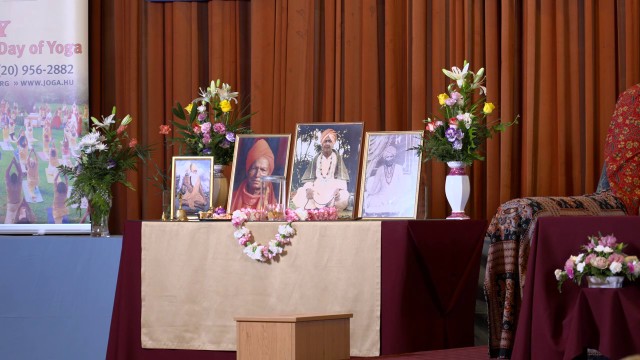
A devotional discourse on the power of the divine name and Guru's grace.
"For the beings of the world—the jīvas and jinn—His name itself is the boat to cross the ocean of existence."
"By always contemplating His name with grace, desire, anger, and greed are cut down."
The speaker offers praise to Śrī Dīp Nārāyaṇa Mahāprabhujī, described as a divine incarnation. The central theme is that constant remembrance and contemplation of this divine name serves as a vehicle for liberation, protecting devotees from worldly afflictions and illusion, and immersing them in divine absorption. The Guru's grace is presented as the essential means for this crossing.
Filming location: Vép, Hungary
Bhajans with Swami Gajanandji
15:30 - 16:09 (39 min)
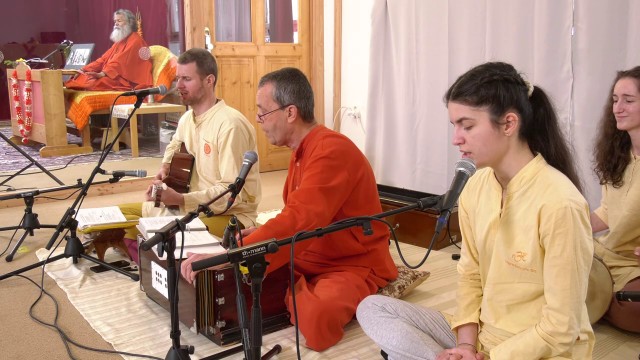
Morning satsang with Vishwaguruji from Strilky Ashram, Czech Republic.
Bhajans from Poprad
16:15 - 16:59 (44 min)
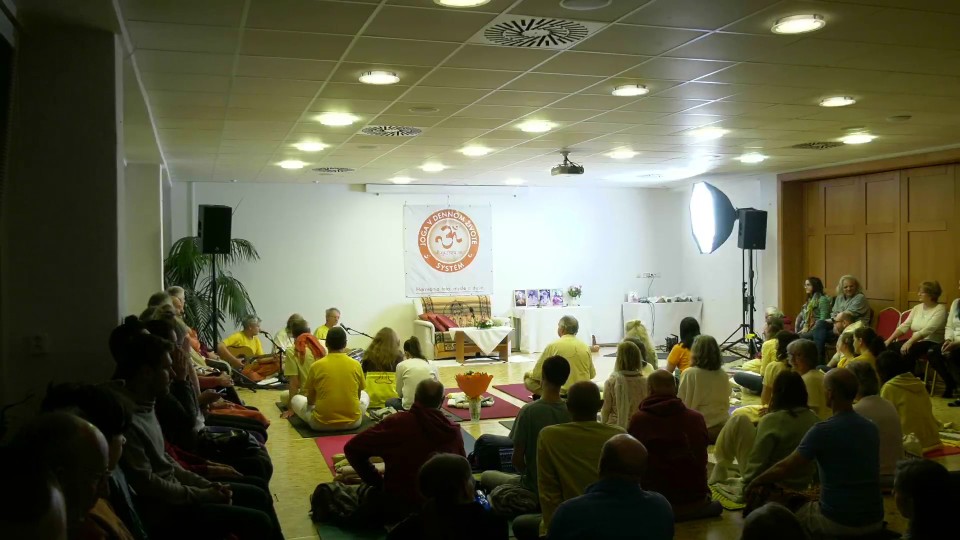
Bhajans from Tatra Hotel, Poprad, Slovakia.
Bhajan evening from Strilky Ashram
17:05 - 17:53 (48 min)
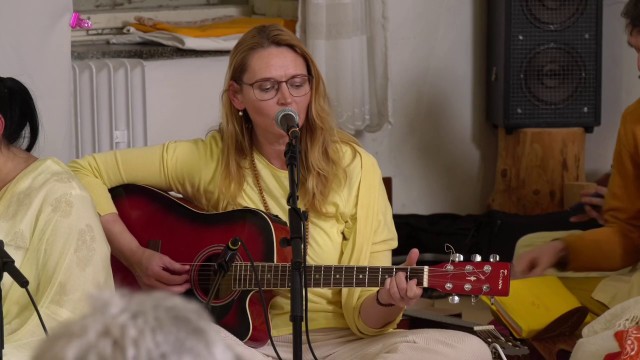
Evening satsang with Vishwaguruji from Strilky Ashram, Czech Republic. Bhajan singing.
The calling of Sri Alakhpuriji
18:00 - 18:11 (11 min)
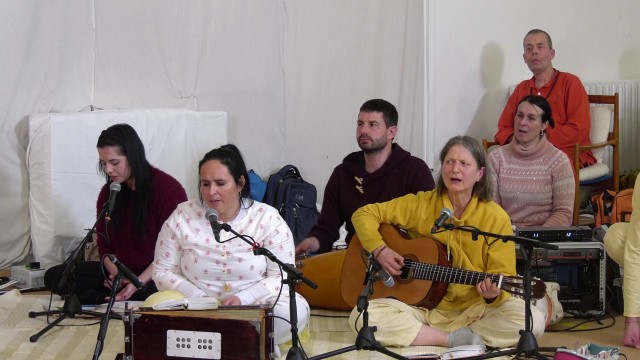
Evening satsang with Vishwaguruji from Strilky Ashram, Czech Republic. Bhajan Sataguru Alakha Puriji Avo.
Bhajans from Oosterhout
18:15 - 19:20 (65 min)
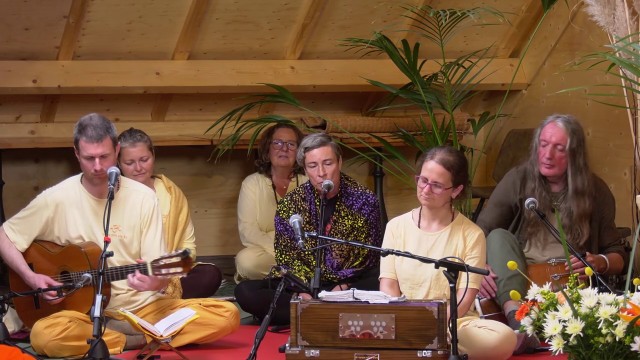
Evening satsang with Vishwaguruji from Oosterhout, Noord-Brabant, The Netherlands.
Remembering of Sri Devpurijis mahasamadhi day
19:25 - 20:44 (79 min)

A satsang gathering commemorating the Mahāsamādhi of Śrī Devpurījī.
"The entire paramparā is not a dead one that requires nothing from us. We have our Gurudev, our living Gurudev, who is the whole paramparā speaking through him to us."
"If you really open your heart and have lots of unconditional love, then you will find miracles are there all the time—but miracles not really meaning only good things."
Multiple devotees share personal reflections, stories, and expressions of gratitude for their Guru and spiritual lineage. A central theme is the living connection to the paramparā (lineage) through the living Guru, Viśva Gurujī, who embodies and transmits the blessings of all previous masters. Speakers discuss faith, obedience, personal transformation, and the experience of divine unity.
Filming location: Strilky, Czech Republic
Mahamrityunjaya Mantra And Swara Yoga
20:50 - 21:59 (69 min)
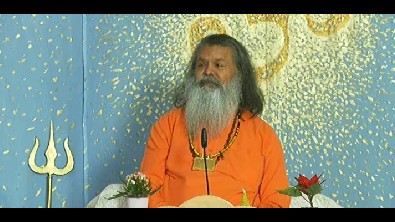
Morning Satsang with Swamiji from Strilky Ashram, Czech Republic. The Mahamrityunjaya mantra is known as the great death - conquering mantra, also called the Tryambakam mantra and is a verse of the Rig Veda. It is addressed to Lord Shiva. This mantra is a great protection and prevention of accidents and negative happenings. Swara Yoga enables us to understand the nature of breath and its influence on the body. Different modes of breathing leads to different types of actions, physical, mental and spiritual. Swara means sound of one's own breath and its fundamental application is to realize the breath as being the medium of the cosmic life force
Swara Yoga
22:05 - 22:42 (37 min)
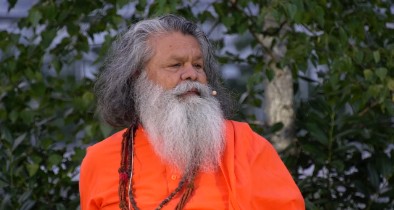
A teaching session on the theory and daily application of Svara Yoga, the yoga of the vital breath.
"Svara Yoga gives indications about your whole life. It provides information about your past and what is happening in the present, and it offers information about the future."
"When you want to see the moon, you should see it. The breath must flow through the right and left nostril. What to do if it is not? You cannot say, 'Moon, stop for a while; I will open my eyes then.' Time does not wait for anyone."
The lecturer explains this ancient science of breath rhythms, relating it to the Ida and Pingala nadis. He details practical techniques, such as checking the active nostril upon waking and stepping forward with the corresponding foot to ensure success in daily activities. The talk covers its predictive potential, warns against suicide, and uses the observation of the new moon as a key practice to harmonize with cosmic cycles for health and clarity.
Filming location: Strilky, Czech Republic
Svargaloka
22:50 - 23:55 (65 min)
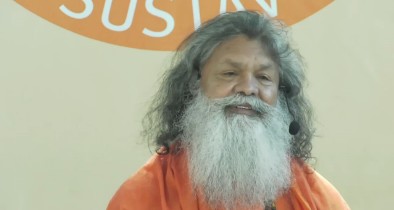
Morning satsang with Vishwaguruji from Rijeka, Croatia. There are only two things: Ayurveda and Yoga. Yoga will be successful through doing karma yoga. Karma means action. In kaliyuga we are have become slaves of money. Good actions lead us to Heaven/ Svarga Loka, while devotion to the master leads us to the highest world of Brahman - Brahma Loka.
American
Australian