
European
Practicing Yoga Asanas
0:00 - 0:41 (41 min)
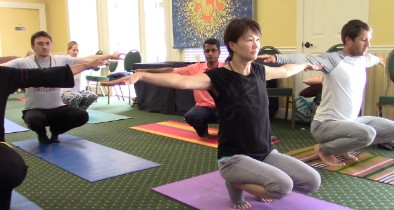
A yoga instruction session focusing on the practice and benefits of Vajrāsana and Vīrāsana.
"This Vajrāsana is designed especially to strengthen or to activate that Vajra Nāḍī."
"This will repair our digestion. This will repair our headache problems, also many, many things. This looks very simple, but it is very powerful."
An instructor guides students through the physical postures of Vajrāsana (thunderbolt pose) and Vīrāsana (hero pose), explaining their effects on the Vajra Nāḍī energy channel, digestion, and sciatic nerve. The session includes detailed alignment instructions, benefits for concentration and alertness, and transitions into other balancing postures and a forward bend before concluding.
Filming location: USA
All disciples are equal for the Guru
0:45 - 1:47 (62 min)
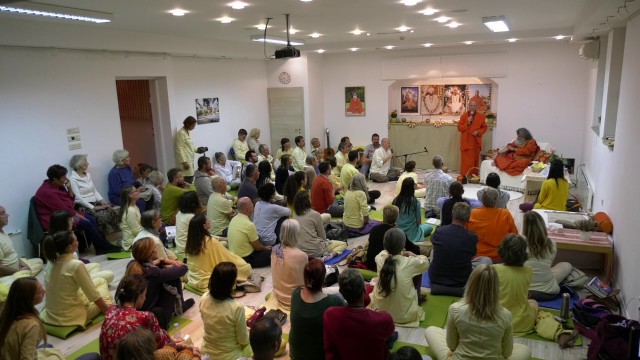
A spiritual gathering and discourse in Split, Croatia.
"Always, we should say, 'Yes, please come.'" and "Everything that we do to others, in fact, we are doing to ourselves."
The lecturer addresses a diverse group, expressing joy at the gathering and respect for all spiritual paths, notably the Hare Krishna movement. He shares parables, including one about a greedy dog losing its bread, to illustrate themes of non-greed, ethical conduct, and the karmic law that our actions return to us. A disciple then elaborates on the profound responsibility of handling donations and spiritual resources, sharing traditional stories about karma, accountability, and seeing the divine in all.
Filming location: Split, Croatia
What is destiny?
1:55 - 2:31 (36 min)
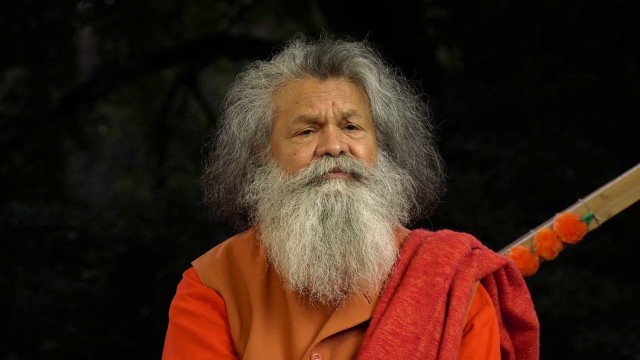
A spiritual discourse exploring the concept of kiśmat (fate/luck) and the value of satsaṅg (spiritual gathering).
"Kiśmat is more like a Muslim word, but it is very nice, very good... Kismet is so vast you cannot think."
"In satsaṅg, they had one guru... Satsaṅg is like this. And ku-saṅg is many things: drinking, going, cleaning, mind."
The speaker delivers an informal talk, weaving together observations on prayer across religions, anecdotes about marriage and village life, and a parable about two boys—one who attends a cinema and one who attends satsaṅg—to illustrate the subtle and protective nature of divine fortune (kiśmat). He emphasizes that true good fortune is aligned with spiritual company and devotion, not merely material gain.
Filming location: Strilky, Czech Republic
Our heart is very great
2:35 - 3:08 (33 min)
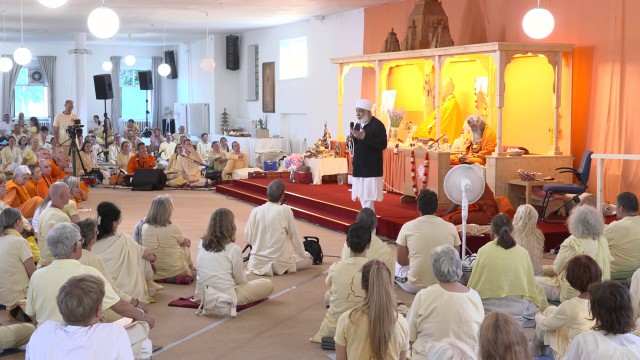
A satsang discourse on the universal sound of Om and the spiritual practice of surrender.
"In India, a name changes with region. In North India, you have Rāma. In Middle India, it becomes Rāma. In South India, it becomes Rāmaṇ."
"The easiest option is to let go, put it down, and allow the mind to become peaceful. The happiest thing is simply to let it be, to release it calmly and let it flow."
A speaker first explains the universality of Om, linking it to the words 'Amen' and 'Amin', and discusses his work promoting Indian traditional sciences in European parliaments. Swami Maheshvaranand then shares a teaching story about a restless monkey to illustrate how surrendering thoughts leads to peace, emphasizing meditation and devotion to the Guru.
Filming location: Strilky, Czech Republic
Monday is the day of Bhagwan Shiva
3:15 - 4:05 (50 min)
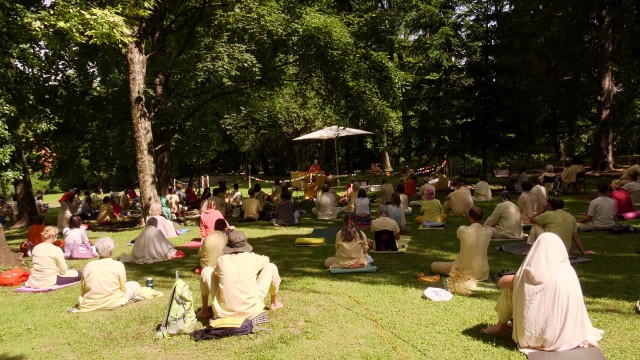
A spiritual discourse on the significance of Monday and the discipline of fasting.
"We worship Śiva on Monday. We call it Somavāra. When Monday coincides with the new moon after Pūrṇimā, it is considered a very auspicious constellation for the coming new year, heralding better times."
"Your economy will be better, yes? You will not buy fruits, bread, drinks, or anything. So three times a week, our economy will be good. See how much money you save nicely in one year."
A teacher addresses a gathering, explaining the astrological and spiritual importance of Monday (Somavāra) as a day dedicated to Lord Śiva and an auspicious time for fasting. He critiques the modern loss of religious discipline, comparing Hindu and Christian practices with the strict fasting observed in Islam. The talk blends spiritual reasoning with practical health and economic benefits, urging attendees, especially Kriyā Yoga practitioners, to adopt the discipline of fasting on Mondays.
Filming location: Strilky, Czech Republic
The opening ceremony of the Om Ashram
4:10 - 4:53 (43 min)
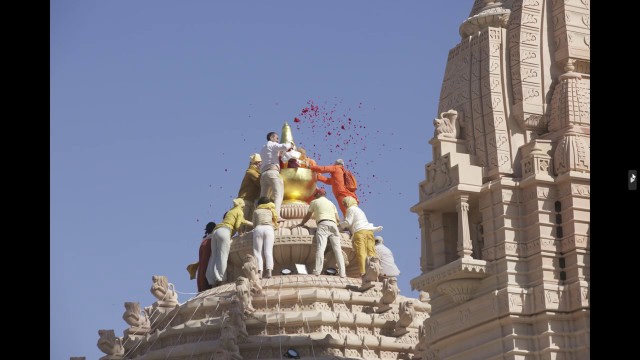
Evening satsang with Vishwaguruji from Strilky Ashram, Czech Republic. Picture presentation about the opening ceremony of the Om Ashram.
We need Gurudev
5:00 - 5:54 (54 min)
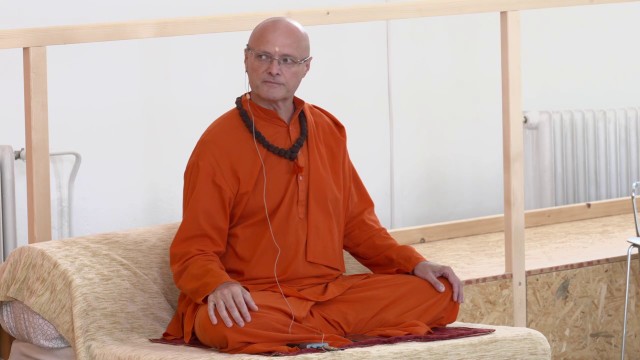
A satsang discourse on the necessity of the guru and the goal of Advaita philosophy.
"The moment you begin to think you have already heard and know everything, in that moment your free fall begins."
"Understand from this that the guru is not the physical body. It is most important to understand that the guru is that Guru-Tattva, the element of the guru."
A speaker leads a satsang, emphasizing the eternal student's attitude and the critical role of the embodied spiritual master (Guru-Tattva) as the essential guide. Using stories and analogies—such as the matchbox with a diamond, the friend with a boat, and the river merging into the ocean—the talk explains the guru's function and explores the ultimate goal of yoga: to transcend the cycle of rebirth and realize the Advaita (non-dual) union of the individual self with the cosmic Self.
Filming location: Strilky, Czech Republic
Body liberation and moksha
6:00 - 7:02 (62 min)
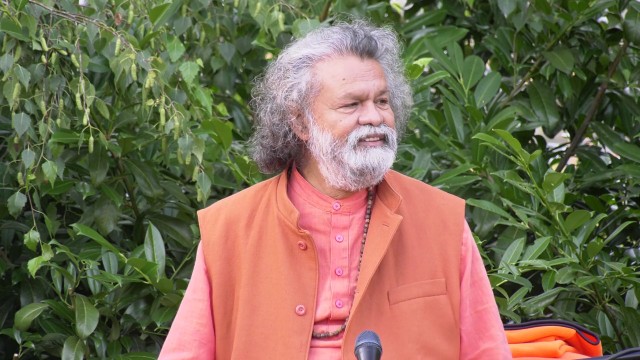
A satsang discourse on transcending body-mind duality through the five sheaths.
"Body and mind have no sense in it. And if you are saying body and mind, then both are wrong."
"We have to go: annamaya kośa, prāṇamaya kośa, manomaya kośa, vijñānamaya kośa, and ānandamaya kośa. Then we are only outside; it is in the body, but it is sending somewhere in different ways."
He argues that true yogic science requires progressing through the five koshas (sheaths) toward Anandamaya kosha and liberation, moving beyond the confusing duality of body and mind.
Filming location: Strilky, Czech Republic
Be happy and feel oneness
7:10 - 7:52 (42 min)
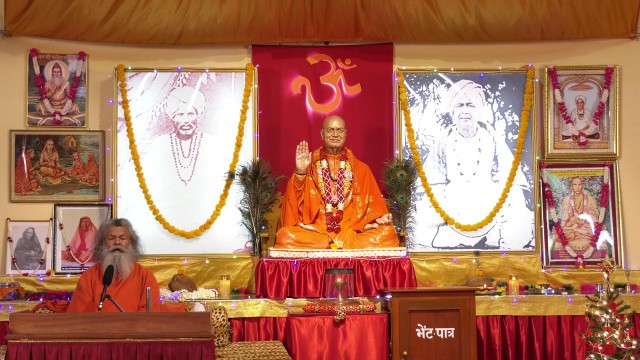
A New Year's reflection on human concepts, oneness, and inner peace.
"Where is the new year? The same sun, moon, and clouds remain, but humans try to make something again, to feel 'I am new.'"
"And when that oneness is realized, then there is nowhere to say 'this' or 'that.'... Everything is in our mental constructs."
The lecturer leads a satsang, questioning the human-made nature of the New Year and other divisions. He reflects on the eternal earth, the illusion of separation, and the conflicts between religions and individuals, urging everyone to realize fundamental oneness, be happy, and avoid making others angry. He uses metaphors like the ocean's surface versus its depths and concludes with travel plans for pilgrimage.
Filming location: Jadan, Rajasthan, India
All pilgrim places are at the lotus feet of Gurudev
8:00 - 8:47 (47 min)
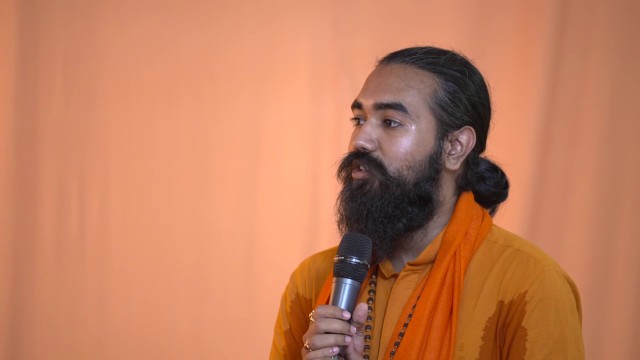
Evening satsang with Vishwaguruji from Strilky Ashram, Czech Republic. The greetings of Mahamandaleshwar Vishwaguruji and Swami Avatarpuriji in the Ashram. Utilize every minute of being here at the seminar. The opening words of Swami Avatarpuriji. Don't waste time, be in the satsang. All pilgrim places are at the lotus feet of Gurudev. If we have His darshan we have nothing to worry about.
The value of Satsang
8:56 - 9:41 (45 min)
A spiritual discourse exploring the mantra "Hari Om" and sharing Puranic stories.
"Hari is the name of Bhagavān Viṣṇu. And Om, Om is Hari."
"72,000 years of sādhanā and one minute of satsaṅg... For one minute of satsaṅg, the whole earth raised up, and when it was 72,000 sādhanās, that was not moving."
The lecturer explains the divine essence of the "Hari Om" mantra, linking it to Vishnu and the primal sound of creation. He narrates the Puranic story of the earth's origin and the serpent Sheshanaga who supports it. The central teaching is conveyed through a parable where the sage Vishvamitra learns that one minute of true satsang (spiritual gathering) outweighs 72,000 years of solitary penance, highlighting the supreme power of devotion and community. The talk concludes with ethical exhortations for spiritual practice.
Filming location: Strilky, Czech Republic
How does Guru teach us?
9:47 - 10:49 (62 min)
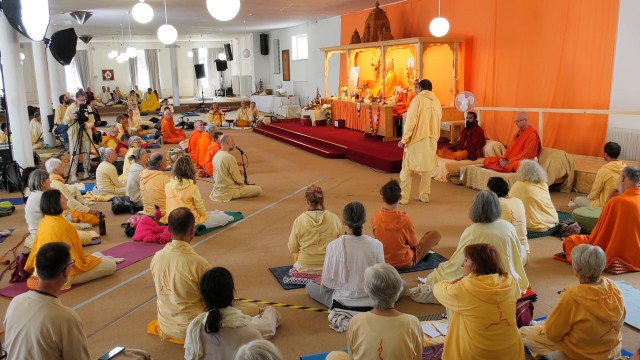
A morning satsang on spiritual discipline, human evolution, and devotion to the guru.
"Start the morning with one thought: 'I am a human.'"
"If you dig in one place, even if you find a big rock, you will come to water. But if you dig in seven different places every day, in the end you are completely confused."
A speaker addresses the assembly, emphasizing the importance of beginning the day with the conscious affirmation of one's humanity. He shares several teaching stories from Vishwaguruji, including a parable about seeing people's true nature through a peacock feather and an allegory about the need for persistence on a single spiritual path. The talk covers themes of non-violence (ahimsa), purifying human qualities, cutting the chain of karma through faith in the guru, and the foundational work required in spiritual life. He also recounts the early struggles of Gurudev (Vishwaguruji) spreading teachings in the West and announces the upcoming Kumbh Mela.
Filming location: Strilky, Czech Republic
Around the world - Yoga against backpain
11:00 - 11:06 (6 min)
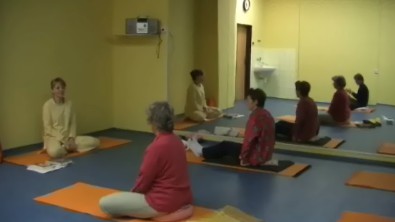
Report about yoga classes organized specifically to address people with backpain from Prague.
Around the world - Yoga camp for Kids Strilky
11:10 - 11:14 (4 min)
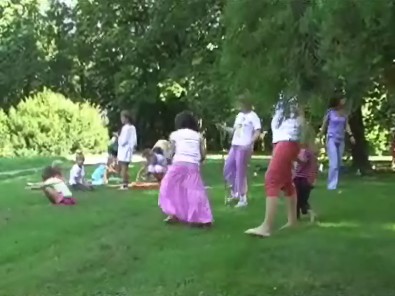
A guided visualization or ritual instruction involving symbolic objects and actions.
"If it shines forth in the darkness, it means you have saved it and that it has been fulfilled. Come and take from it."
"The cup is painted there, shining brightly. Behind that little pond, there is a tree stump. The cup is supposed to stand upon that stump, correct?"
An unseen guide leads participants through a symbolic sequence, identifying a location from a picture featuring a park with a whirlpool and pond. The focus is a brightly painted cup meant to be placed upon a tree stump. The instructions involve using colored pencils, initially to tie the cup but then not completely, before shifting to making the pencils into boats within groups.
Filming location: Strilky, Czech Republic
Celebration of the International Day of Yoga
11:20 - 11:50 (30 min)
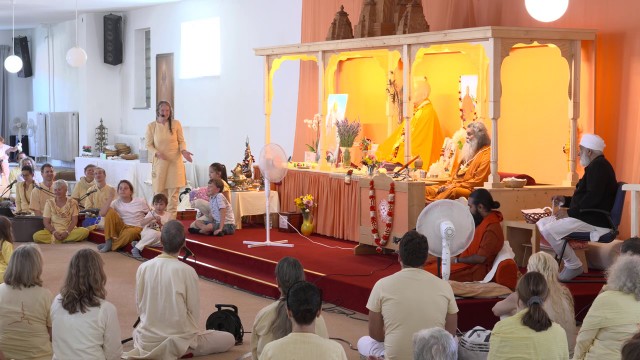
A celebration of International Day of Yoga featuring children demonstrating postures and a story.
"Worldwide, yoga has been recognized. The aim is for humanity to realize the benefits yoga brings to the whole world."
"Each of us carries that sleeping beauty within. It would be a shame not to use this human life to awaken that beauty."
A presenter hosts a Yoga in Daily Life event in the presence of His Holiness Swami Maheshvaranandaji. Children demonstrate yoga postures like Marjari (cat stretch) and Vyaghrasana (tiger posture) to illustrate benefits for spinal health and inner organs, followed by a sponge experiment explaining the cleansing principle of bandha. The event concludes with a performance of the Sleeping Beauty story, presented as an allegory for spiritual awakening.
Filming location: Strilky, Czech Republic
Good eating
11:55 - 13:08 (73 min)
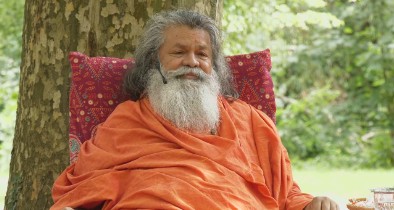
A satsang discourse addressing food purity, vegetarian ethics, and modern dietary challenges.
"If you use pesticide, the urea we call it, then once you give it, it takes 10 to 15 years to purify that earth again." "Sin is that which creatures, beautiful creatures, are there... torturing them, what they call halal, is a pain; the pain is the sin."
Swami Avatarpuri responds to a question about potatoes, expanding into a wide-ranging talk on the dangers of pesticides, hybridized wheat, and refined oils. He discusses the karmic implications of meat consumption and animal cruelty, shares personal anecdotes about contaminated food, and advocates for organic produce, home preservation, and dietary variety. The talk concludes with a mythological story about Shakti and a reference to a breatharian saint.
Filming location: Vép, Hungary
The Power of Tapasyā: Pārvatī's Resolve
13:15 - 14:03 (48 min)
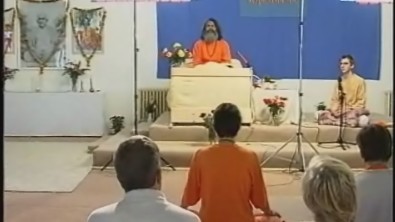
A spiritual discourse narrating the story of Pārvatī's resolve to perform tapasyā (austerity) and explaining its power.
"Tapasya is the giver of happiness and the remover of all troubles."
"Through the power of tapasyā, Brahmā is able to create this world. Through the power of that tapasyā... Viṣṇu is able to protect the world. And through that power of tapasyā, Śiva, is able to destroy all the negative powers."
The speaker recounts how Pārvatī, consoling her mother Mēnā, describes a dream in which a Brāhmaṇa instructs her to undertake severe spiritual austerity, affirming the truth of sage Nārada's words. The narrative details the immense power of tapasyā, using the examples of the Hindu trinity and Śeṣanāga, and describes Pārvatī's subsequent journey into the forest for a prolonged, extreme penance to attain Lord Śiva. The discourse frequently shifts to address a modern audience directly, exhorting them to cultivate similar willpower in their own sādhanā (practice) to overcome mental obstacles and attachments.
Filming location: Strilky, Czech Republic
Avoid manipulated products
14:10 - 15:28 (78 min)
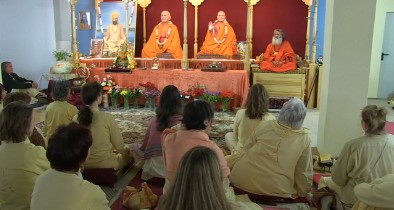
A satsang discourse on the roots of ill health and the supreme value of spiritual community.
"98% of us do not live healthily. So what shall we expect? Our body is suffering. Our mind is suffering."
"Lucky are those who can come to satsaṅg. And unlucky are those who cannot come. Satsaṅg is so pleasant."
The lecturer addresses the gathering, analyzing modern causes of disease from artificial food and polluted water to the manipulation of animals and crops. He stresses the need for disciplined control of the senses, particularly taste. The discourse culminates in a lengthy parable about the ṛṣis Viśvāmitra and Vasiṣṭha, illustrating through a divine test that the blessings of one minute in satsang are more powerful than 62,000 years of solitary tapasyā (austerities).
Filming location: Vienna, Austria
Bhajans for World Peace (2/3)
15:30 - 16:36 (66 min)
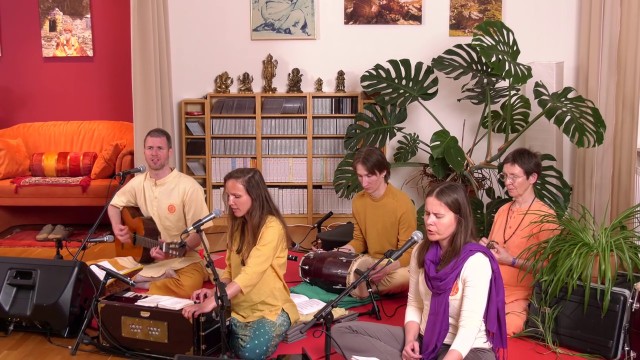
For world peace, first we need to find peace within ourselves. A recording of a live concert for world peace in YIDL center in Villach, Austria. Public concert lasted 6h with uninterrupted Bhajans. The concert was a part of a 24h of Bhajan Anushtana.
Bhajans for World Peace (3/3)
16:40 - 17:55 (75 min)
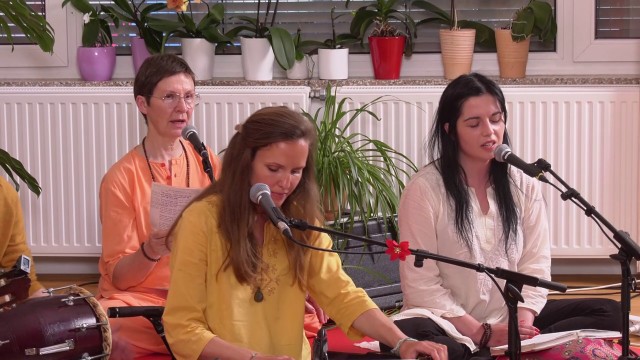
For world peace, first we need to find peace within ourselves. A recording of a live concert for world peace in YIDL center in Villach, Austria. Public concert lasted 6h with uninterrupted Bhajans. The concert was a part of a 24h of Bhajan Anushtana.
Bhajan evening from Vienna 1
18:00 - 18:28 (28 min)
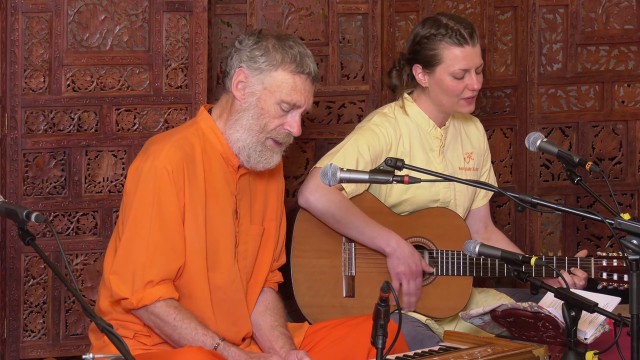
Evening Satsang with H.H.Vishwaguruji from Vienna, Austria. Bhajan singing.
How does Guru teach us?
18:35 - 19:37 (62 min)
A morning satsang on spiritual discipline, human evolution, and devotion to the guru.
"Start the morning with one thought: 'I am a human.'"
"If you dig in one place, even if you find a big rock, you will come to water. But if you dig in seven different places every day, in the end you are completely confused."
A speaker addresses the assembly, emphasizing the importance of beginning the day with the conscious affirmation of one's humanity. He shares several teaching stories from Vishwaguruji, including a parable about seeing people's true nature through a peacock feather and an allegory about the need for persistence on a single spiritual path. The talk covers themes of non-violence (ahimsa), purifying human qualities, cutting the chain of karma through faith in the guru, and the foundational work required in spiritual life. He also recounts the early struggles of Gurudev (Vishwaguruji) spreading teachings in the West and announces the upcoming Kumbh Mela.
Filming location: Strilky, Czech Republic
The meaning of Bhajan
19:45 - 21:12 (87 min)
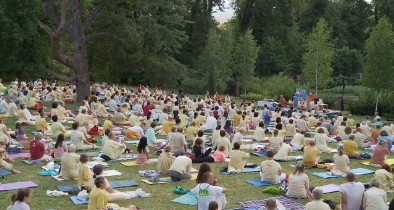
Satsang with Vishwaguruji Maheshwarananda, Summer Retreat in Strilky Ashram, Czech Republic. This satsang is about two powerful bhajans written by Holy Guruji (Sri Deep Niranjan Saba Dukha Bhanjan, Om Brahm Shiva Alakh Anadi). Vishwaguruji gives us introduction to different kinds of Samadhis and explains the topic about spiritual poems, bhajans, mantra and bija mantra. Bhajan singing and translation by Swami Gajanandji.
All disciples are equal for the Guru
21:20 - 22:22 (62 min)
A spiritual gathering and discourse in Split, Croatia.
"Always, we should say, 'Yes, please come.'" and "Everything that we do to others, in fact, we are doing to ourselves."
The lecturer addresses a diverse group, expressing joy at the gathering and respect for all spiritual paths, notably the Hare Krishna movement. He shares parables, including one about a greedy dog losing its bread, to illustrate themes of non-greed, ethical conduct, and the karmic law that our actions return to us. A disciple then elaborates on the profound responsibility of handling donations and spiritual resources, sharing traditional stories about karma, accountability, and seeing the divine in all.
Filming location: Split, Croatia
Satsang from Wellington
22:30 - 23:54 (84 min)
Evening satsang with Vishwaguruji from Wellington Ashram, New Zealand.
American
Australian