
European
Mind and chakras
1:30 - 1:55 (25 min)
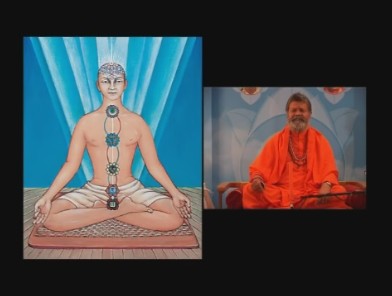
A lecture on the nature of the mind, subconscious impressions, and yogic philosophy.
"Our senses are mostly connected to and work with the consciousness, the awakened state."
"The mind is that principle which functions between the conscious and subconscious, pendling up and down."
The teacher provides a detailed explanation of how sensory impressions become stored desires in the subconscious, using the analogy of an unfulfilled ice cream craving manifesting in a dream. He describes the mind as a pendulum between conscious and subconscious levels, warning against blocking mental energy and instead advocating for directing it through self-discipline. The talk expands into the relationship between emotion, intellect, consciousness, and the nadis (Ida, Pingala, Sushumna), linking psychological concepts to the chakra system and the dormant energy of kundalini.
Filming location: Brisbane, Australia
Practising asanas from Rijeka
2:00 - 2:41 (41 min)
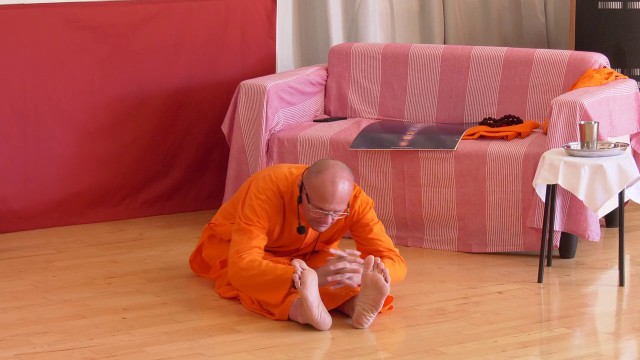
A guided yoga practice focusing on chakra awareness through specific postures and breath.
"Try to understand that the chakra and its location are like a reflection zone... It is the same with some āsanas; they influence and activate a point in our body connected to a cakra."
"If we are concentrated on one point, we will remain without movement. When our mind starts to go here and there, we lose concentration."
An instructor leads a session of āsanas (postures) and mudrās (seals) designed to bring awareness and sensation to the energy centers (chakras) from Mūlādhāra to Sahasrāra. The practice includes Maṇḍūkāsana for the root chakra, rolling movements for Maṇipūra and Viśuddhi, Ākarandanurāsana for Ājñā chakra focus, and Ekapāda Praṇāmāsana for concentration and Anāhata. The teaching connects physical sensation to energetic and mental states, referencing yoga texts and epic stories.
Filming location: Rijeka, Croatia
Mansik Puja, Vienna
2:45 - 3:33 (48 min)
A discourse on the practice and philosophy of Mānasik Pūjā, or mental worship.
"Many people ask questions: how to meditate, what to imagine... So, the best solution is Mānasik Pūjā. When you perform the mental ceremony, you come out of your meditation full of strength, energy, love, and clarity."
"Imagine that you are in the seva of your iṣṭadevatā... For this much time mentally, you are together. You are with it, and then you also get prasāda... This is a beautiful mānasik pūjā."
The lecturer addresses devotees from an ashram in Vienna, explaining the concept and technique of mental worship of one's chosen deity (Iṣṭadevatā). He describes it as a solution to the emptiness that can arise in other forms of meditation, detailing how to mentally perform services like bathing, dressing, and offering food to the divine form. He shares a personal anecdote of his Guruji's disciplined practice and emphasizes that this internal seva cultivates love, dispels negative emotions, and reflects the divine light present in every heart.
Filming location: Vienna, Austria
Yoga in Daily Life Workshop in Villach on 13th of June
3:40 - 5:18 (98 min)
A closing discourse on integrating spiritual awareness into daily life, from sleep to nourishment.
"In deep sleep, you know nothing of being a millionaire or a beggar. In deep sleep, you know nothing of whether you are sick or healthy."
"Therefore, before going to sleep, one says to God: 'What I have done all day... I offer all the fruits of my actions. Lord, forgive me if there was anything not good.'"
Swami Avatarpuri concludes a seminar by guiding attendees through a sacred daily rhythm. He explains the unity experienced in deep sleep, followed by prayers upon waking and mindful practices with water, air, and earth. The talk emphasizes gratitude, the divinity in natural elements, and the importance of offering one's actions. He details a spiritual approach to nourishment, advocating for fresh, whole foods and traditional preparation, linking physical health to inner peace and meditation.
Filming location: Austria
The Aim of Human Life, Melbourne
5:25 - 6:58 (93 min)
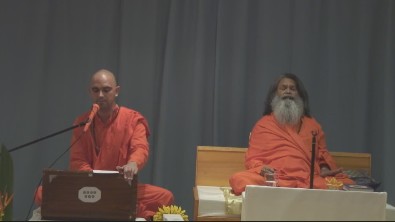
Swamiji introduces MM Swami Jasraj Puri and explaines in great detail what means Mahamandaleshwar and Akkhara. Ashram: A means welcome, Shram means work. Ashram means: Come to work here on your body, mind, consciousness and realisation. Space is the endless glory of God. We don't know where is the beginning or the end. We are limited. The endless space is like a mother, the cosmic consciousness. Between space and consciousness is Yoga shakti. Yoga is balancing, harmonising and uniting. God is manifested in the form of vibration, sound, resonance - OM - Everything comes from that and merges in that. Yogis are meditating on that. The aim of human life is to help, to serve, to support others and selfrealisation. The human life is a precious diamant but we will not get it again and again. Translation of the bhajan: Sadho bhai ab kyu karo the moro. Recorded in Melbourne, Australia.
Enjoy
7:05 - 8:12 (67 min)
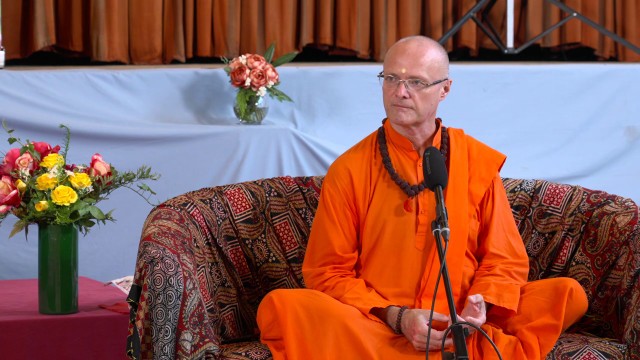
A closing satsang reflecting on the essence of spiritual practice during a summer seminar.
"You know what the best food is? First, when you are hungry, they say hunger is the best cook. Second, the best meal is when you don't have to cook or wash the dishes."
"If you have so many stones in your pocket, you will go down. See this symbolically. If you believe and think that some crystal will save your life and change your destiny, what are we doing? We are believing that that stone is much stronger than Mahāprabhujī."
The lecturer addresses the assembly, weaving personal anecdotes from his decades with Gurudev into teachings on discernment. He critiques an over-reliance on rituals, numbers, and external objects like crystals, emphasizing instead the supreme power of mantra, guru, and inner confidence. Key themes include navigating collective influences, distinguishing real practice from distraction, and cultivating the unwavering, urgent devotion exemplified in a story about Paramahaṁsa Rāmakṛṣṇa. The talk concludes with an emphasis on satsang as a vital support.
Filming location: Vép, Hungary
Gurudev sees our past and future
8:20 - 9:36 (76 min)
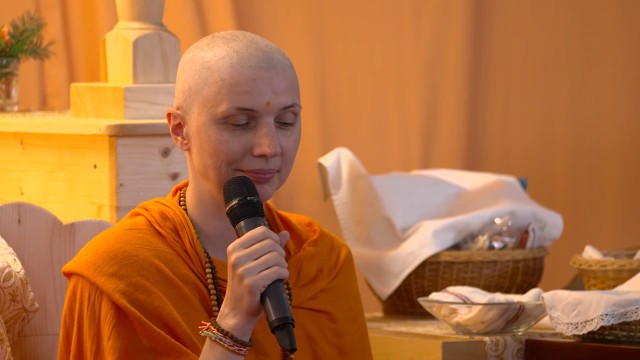
A satsang discourse on the guru's grace, destiny, and the power of surrender.
"Even the guru can change destiny, because there is no higher law than the guru’s law."
"Since the day I told Swāmījī, 'I surrender, do what you want,' I am in peace."
A speaker, likely a senior disciple, addresses the gathering following morning prayers. He discusses the validity of Vedic sciences like astrology (Jyotish) but emphasizes the supreme power of the guru's grace to alter destiny, illustrating this with a traditional parable about a guru changing the fate of two royal children. He shares personal anecdotes of learning to obey the guru's guidance, concluding that true peace comes from complete surrender to the guru's will, allowing him to manage one's life and mitigate karma.
Filming location: Strilky, Czech Republic
The importance of the Om Ashram
9:40 - 10:30 (50 min)
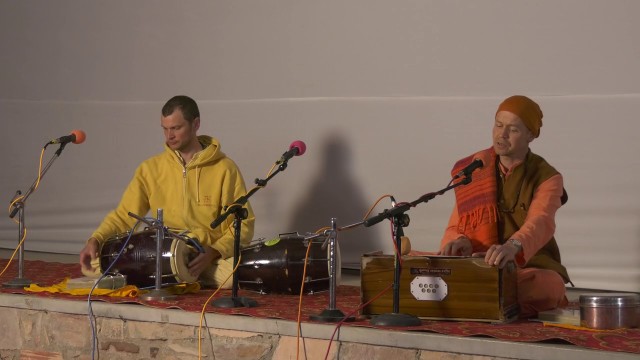
Evening satsang with Vishwaguruji from Jadan Ashram, Rajasthan, India. Welcoming words of Swami Gyaneshwarji, bhajan singing. Short talks about the features and the importance of the Om Ashram. Our eyes now can see our Gurudev and the result of the work done last 30 years. We are lucky ones to be here on this holy place and enjoying the darshan of Gurudev.
Gurudeva hi Kevalam
10:35 - 11:30 (55 min)
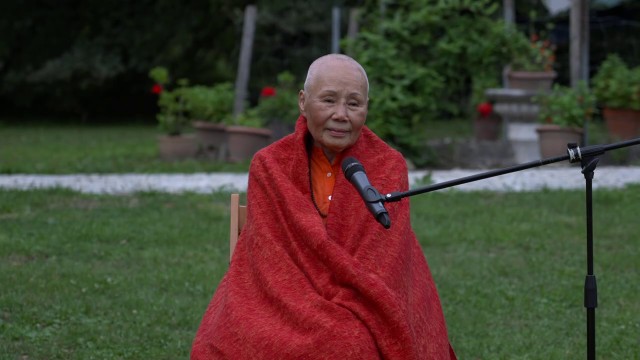
Evening satsang from Yoga Summer Retreat from Strilky, Czech Republic. As we know, things are changing in our lives. What comes shall go. A story of a man, who was a happy person, and used to make others happy. This man time to time went to his Guruji for darshan and advice. Gurudev knows what is going on in our minds. Karma yoga is a help for us. We are all blessed to have Gurudev's guidance. Bansuri flute music. Lecture by Swami Daya Mata, about good and bad things that are transient.
How to practice The System Yoga in Daily Life
11:35 - 12:44 (69 min)
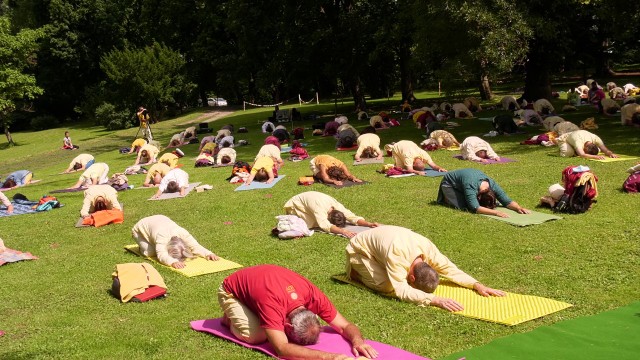
Morning satsang with Vishwaguruji from Strilky Ashram, Czech Republic. You have been practicing many times, many years following Yoga in Daily Life, you now asanas, and the effects. We should not forget the importance of following a system as described in the book. Yoga in Daily Life is a name for a system, but we are not commercial, we are like friends and humble to all other people. You should read the book The Hidden Powers in Humans. Practicing Bari Kathu Pranam
Everything is in our heart
12:45 - 12:58 (13 min)
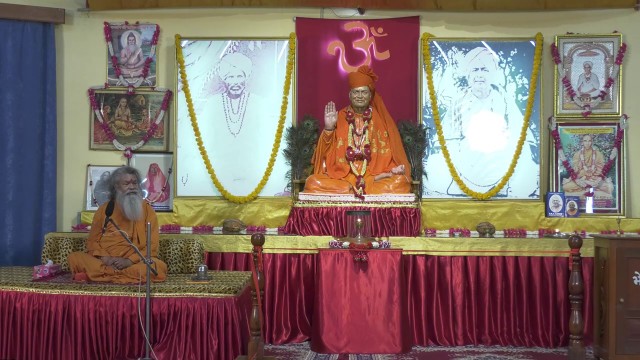
A spiritual discourse reflecting on the grace and presence of the guru through personal anecdotes.
"Please don't, Swāmijī, don't let them take this. Gurujī said, 'Don't worry, let them eat.'"
"What is the guru? What is the sādhu? And what is there, and how it is?"
The lecturer shares a series of recollections and stories involving Mā Prabhujī, Mahāprabhujī, and other spiritual figures, illustrating the mysterious and abundant grace of the guru. He recounts an incident where Gurujī allowed cows to eat from a field, which later resulted in more abundance for the owner. The talk meanders through various memories, highlighting the deep devotion of disciples and the pervasive, guiding presence of the guru in all aspects of life.
Filming location: Jadan, Rajasthan, India
Around the world - Anandpuriji Sannyas
13:00 - 13:04 (4 min)
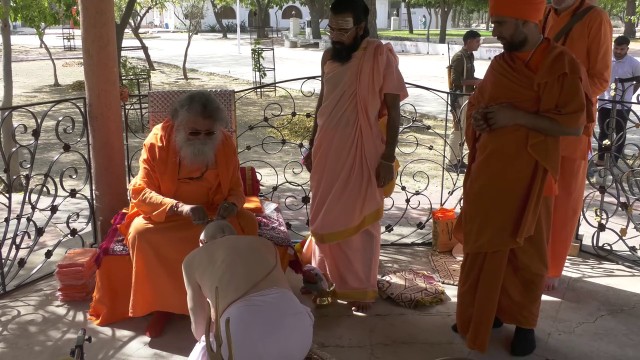
Around the world - Bhajans from India
13:10 - 13:26 (16 min)
Bhajans and pictures from India
Webcast from Auckland
13:30 - 14:13 (43 min)
Evening satsang with Vishwaguruji from Auckland, New Zealand.
Develop your wisdom, do not steal
14:20 - 15:08 (48 min)
A spiritual discourse addressing imitation, authentic wisdom, and the importance of satsaṅg.
"Imitation is stealing. It is not truth, but imitation."
"If the butter has been eaten by all these other writers... they ate only the butter; they did not eat the cow. So, milk the cow."
The lecturer speaks on the prevalence of imitation in the material and spiritual worlds, using examples from currency counterfeiting to plagiarized scriptures. He recounts a parable where a disciple laments that all wisdom has been taken by past saints, and Gurujī's response is to use the intellect (the cow) with devotion to produce fresh wisdom. The talk emphasizes generating original spiritual insight, warns against bad company (ku-saṅga), and concludes with an explanation of a bhajan by Mahāprabhujī about losing one's way by leaving the Guru's shelter.
Filming location: Strilky, Czech Republic
Part 1: The Awakening of Consciousness: Kuṇḍalinī and Cakras
15:15 - 17:09 (114 min)
A lecture on Kundalini, chakras, and the science of yoga.
"Yoga is not a religion, it is not a philosophy, it is not a dogma, but it is the eternal principle in this universe, like the cosmic consciousness itself."
"The awakening of the Kuṇḍalinī is a divine process; you don't feel it as a physical sensation. You feel happy, as if in the lap of the mother."
Swami Maheshwarananda delivers an extensive discourse on the awakening of consciousness through Kundalini and the chakra system. He explains yogic anatomy, including the 72,000 nāḍīs (energy channels) and the major chakras, describing their roles in physical, mental, and spiritual development. The talk covers the interplay of mind, intellect, and subconscious impressions, the importance of dharma, and the ultimate goal of uniting individual consciousness with the Cosmic Consciousness.
Filming location: Zagreb, Croatia
Purity in daily life
17:10 - 17:27 (17 min)
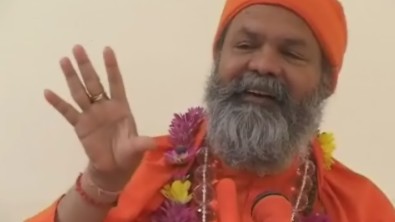
A spiritual discourse on living a pure, harmonious life, beginning with a devotional song.
"Spirituality means purity, happiness, forgiveness, clarity, clear action, clear thoughts, no fear, no fear at all."
"A man who raised the hand on his wife, he has raised the hand on the entire universe—never."
Following a bhajan, the speaker delivers a wide-ranging talk on the essence of spirituality. He defines it as inner purity achieved through satsang, mantra, and meditation, and applies it to daily life—advocating for vegetarianism, harmonious family life free from aggression, and a tolerant worldview. He warns against the negative energy of keeping dead animals for food and encourages self-love and spiritual practice.
Filming location: Perth, Australia
Bhajan evening from Strilky Ashram
17:30 - 18:18 (48 min)
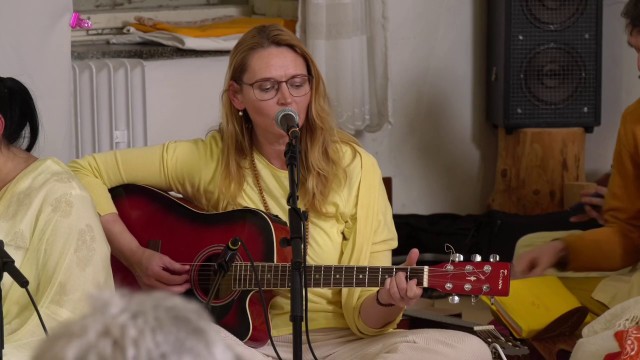
Evening satsang with Vishwaguruji from Strilky Ashram, Czech Republic. Bhajan singing.
The calling of Sri Alakhpuriji
18:25 - 18:36 (11 min)
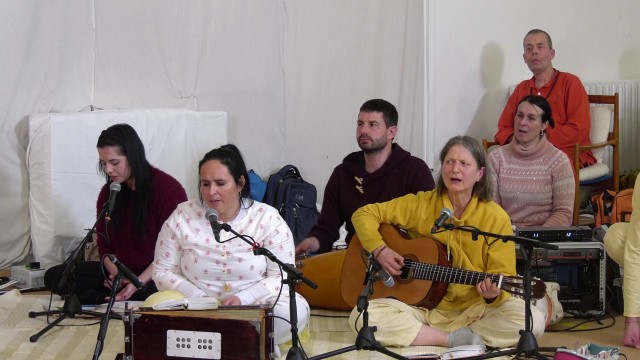
Evening satsang with Vishwaguruji from Strilky Ashram, Czech Republic. Bhajan Sataguru Alakha Puriji Avo.
Bhajans from Oosterhout
18:40 - 19:45 (65 min)
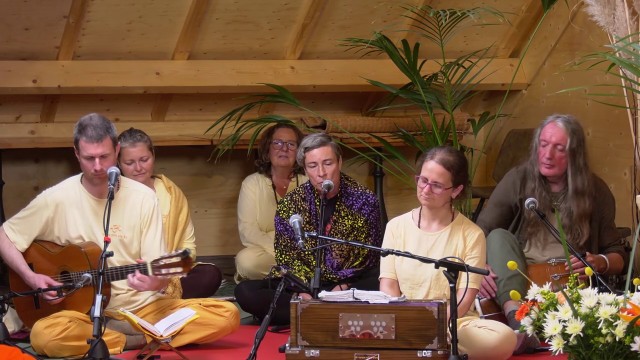
Evening satsang with Vishwaguruji from Oosterhout, Noord-Brabant, The Netherlands.
Bhajans for World Peace (1/3)
19:50 - 21:47 (117 min)
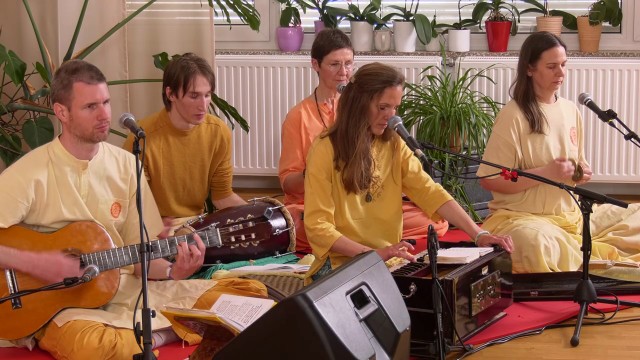
For world peace, first we need to find peace within ourselves. A recording of a live concert for world peace in YIDL center in Villach, Austria. Public concert lasted 6h with uninterrupted Bhajans. The concert was a part of a 24h of Bhajan Anushtana.
The Imperative of Daily Practice
21:55 - 22:34 (39 min)
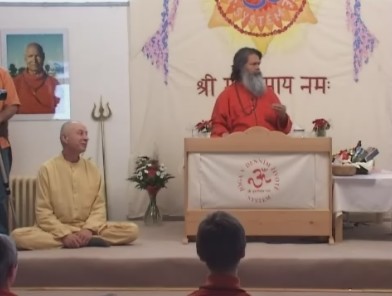
A direct address to yoga students on the necessity of disciplined daily practice for physical and mental purification.
"Practicing means at home—here you only learn. Practicing for just one week is ineffective; it must be a continuous, daily process."
"We must become sāttvic. Where the body is sāttvic, there is no vikāra. Vikāra exists in the mind as well."
Swami Avatarpuri (Swāmījī) leads a satsang, critiquing the lack of consistent practice among attendees. He stresses that health through daily āsana, prāṇāyāma, and seasonal cleansing techniques like Śaṅkha Prakṣālana is the essential foundation for spirituality. He expands on the concepts of vikāra (impurity/illness) and the guṇas, urging a transformation in diet (āhār), recreation (vihār), behavior (ācār), and thought (vicār). The talk includes practical instructions, responses to questions about cleansing practices, and a call for teachers to become examples of yogic health.
Filming location: Strilky, Czech Republic
If you don’t accept, you will lose the chance
22:40 - 23:18 (38 min)
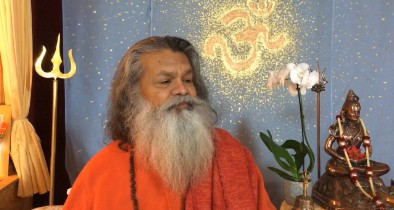
A discourse on the spiritual message of the Satguru, using a bhajan for reflection.
"Only the disciple whose antahkaraṇa (inner instrument) is pure will understand the indications Gurudev gives."
"Whatever is said by the Guru comes to truth."
A spiritual teacher unpacks the bhajan "Sandeśa," explaining how a Satguru's guidance, though sometimes difficult to accept, is a divine message meant for the disciple's ultimate liberation. He uses analogies of medicine, social education, and protection from negative influences (Ku-saṅga) to describe the process of purifying one's qualities to receive and understand the Guru's word (Guruvākya), which awakens the soul.
Filming location: Strilky, Czech Republic
The essence is always the same
23:25 - 0:03 (38 min)
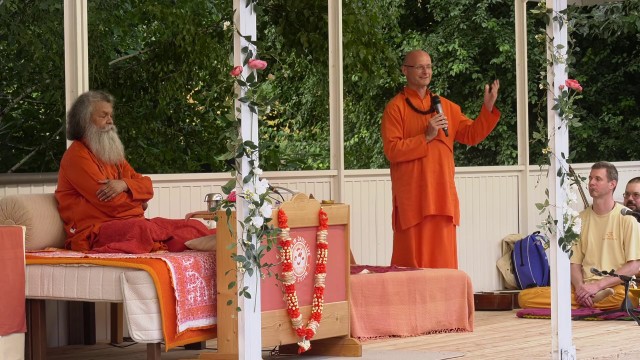
A satsang talk reflecting on spiritual transformation and the grace of the Guru.
"In yoga, it is very important to understand the concepts of Kāla and Deśa. This means that each era has its own appropriate way of behavior, and each place is different."
"What we learn from Viśva Gurujī is not only āsanas... but that we need to be flexible in our hearts and minds."
A speaker addresses the gathering after a Guru Purnima celebration, exploring how the essence of yoga remains constant while adapting across time and place. He shares stories illustrating the Guru's foresight, like predicting currency changes in Croatia, and emphasizes the transformative power of dedicated practice and being physically present in the ashram's energy. The talk uses metaphors like a spoon in honey to describe receptivity to grace and lighthouses for the role of ashrams.
Filming location: Strilky, Czech Republic
American
Australian