
European
Practicing led by Vishwaguruji
1:00 - 1:39 (39 min)
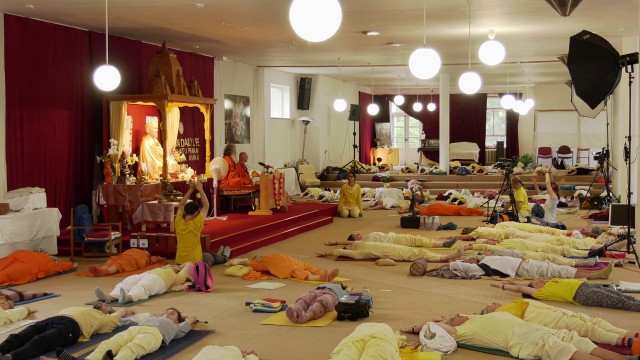
Morning satsang from Strilky Ashram, Czech Republic.
Develop the quality
1:45 - 2:26 (41 min)
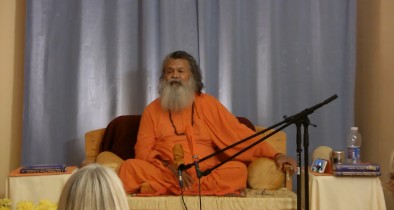
A spiritual discourse on the five koshas and the necessity of inner purity.
"Billions of people strive intensely for that Brahma Jñāna, for that self-realization. My dear, it is not so simple."
"You must purify your physical, mental, emotional, and intellectual energies; you have to clean them all."
The lecturer continues teachings on the five bodies (koshas), emphasizing the arduous pursuit of pure quality in one's energy and practice. He explains how impurity leads to confusion after death, using parables like the fly leaving sandalwood for filth to illustrate how aspirants reject sublime teachings. The talk covers the roles of mind, intellect, and senses, stressing renunciation of negative tendencies to attain higher consciousness.
Filming location: Alexandria, USA
What have you done for others?
2:30 - 3:15 (45 min)
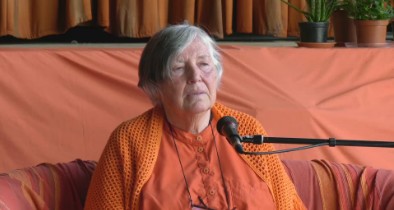
Lecture by Sadhvi Shanti from Summer Yoga Camp in Vep, Hungary. We are climbing to the top of the mountain step by step. To follow the path is very important. At the end of your life, God will ask: "what have you done for others?" There are many things in nature that we can use for our spiritual development. The tree is always ready to accept.
Live your days spiritually
3:20 - 3:55 (35 min)
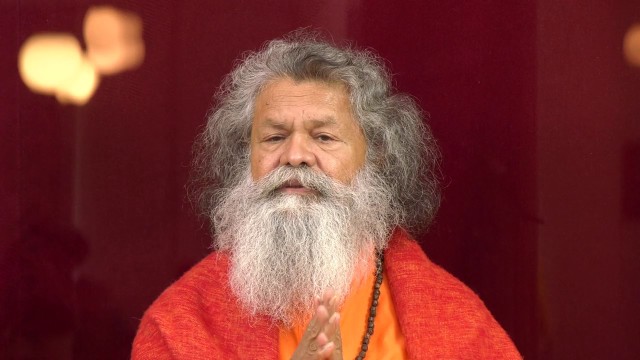
Morning satsang with Vishwaguruji from Strilky Ashram, Czech Republic. We should practise our spiritual exercises every day to save us from the negative effects of Kali Yuga. We should feel that we are human. We have two mothers - our birth mother and Mother Earth. We should respect our father and mother till the end of our life. We should respect the prana, air and water also. We should respect our gurus and every animal also. Fire and water cannot exist without each other. We should do puja every morning. Mantras and prayers protect us in a spiritual way. Swami Daya Mataji tells that Swamiji TV has great importance for us in our spiritual development, all over the world. She suggested that everybody who can, to give some donations to support the webcasting.
Part 1: The Practice of Śalabhāsana and Complementary Āsanas
4:00 - 4:59 (59 min)
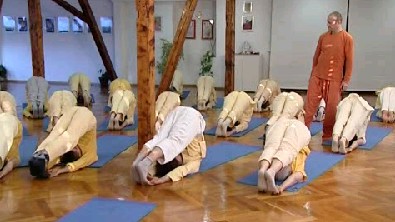
A detailed yoga class instruction covering śalabhāsana, sarvāṅgāsana, and prāṇāyāma.
"Śalabhāsana, being a backward bend that requires strong muscles, works very well on our self-confidence. It strengthens the sense of power and vitality."
"In this posture, simply allow one subtle, extended exhalation. This posture works on unburdening the heart, so less pumping is needed to nourish the brain."
An instructor guides students through a sequence of āsanas, including śalabhāsana (locust pose) variations, sarvāṅgāsana (shoulderstand), and halāsana (plow pose), explaining their physical and energetic benefits. The session incorporates preparatory poses, counterposes, and detailed alignment cues, concluding with instructions for Bhastrikā prāṇāyāma and a collective Oṁ chant.
Filming location: Zagreb, Croatia
Around the world - Yoga Class of Level 6, Zagreb
5:00 - 6:01 (61 min)
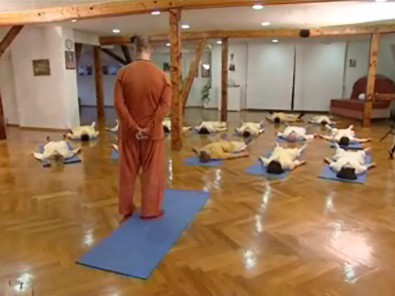
Yoga in Daily Life Class of Level 6 at Sri Devpuriji Ashram, Zagreb, Croatia.
Vegetarian cooking lesson 12, Indian Upma
6:02 - 6:09 (7 min)

A cooking demonstration for preparing Upma, a simple semolina dish.
"Ghee greatly improves the entire body, helps create more bodily tissues, and is very beneficial for our brain, aiding in good memory."
"This is a very simple dish that will be ready in about ten minutes... it is really done very quickly."
Hemmati, a participant from Croatia, demonstrates how to make Upma at a yoga seminar. She explains the benefits of ingredients like ghee and roasted semolina, fries vegetables, adds a spice mixture, and combines everything with boiling water. The tutorial emphasizes the dish's simplicity, speed, and versatility for a light meal.
Filming location: Vép, Hungary
Do not kill animals
6:15 - 6:52 (37 min)
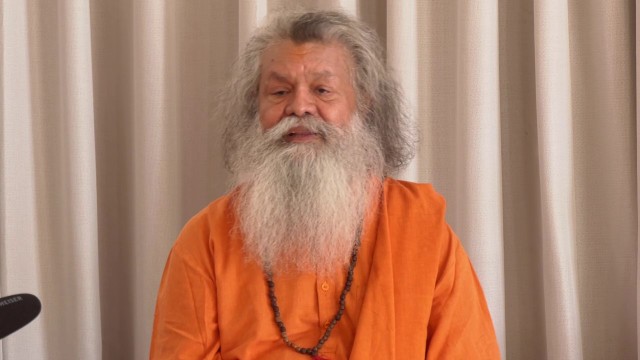
A spiritual discourse on purity, diet, and human relationships.
"If we advise others, saying, 'Do not eat this; it is not good,' they may threaten us."
"Early morning, she makes pūjā. Pūjā for whom? For her husband. And always she's in meditation."
A swami shares a meandering talk, beginning with his personal experience defending vegetarianism in India and observing how others eventually adopted the practice. He uses the metaphor of water's cycle to describe spiritual purity and ascent, then discusses themes of marital devotion, conception, and the roles of men and women, often shifting topics without clear transitions. The session concludes with chanting.
Filming location: Rijeka, Croatia
Children's program on Gurupurnima
7:00 - 7:29 (29 min)
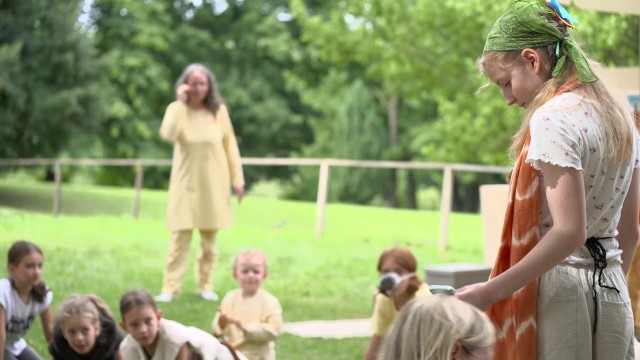
Morning satsang with Vishwaguruji from Strilky Ashram, Czech Republic. Salutation to the lotus feet of Gurudev. Children's program on Gurupurnima.
Suffering makes us strong
7:35 - 8:07 (32 min)
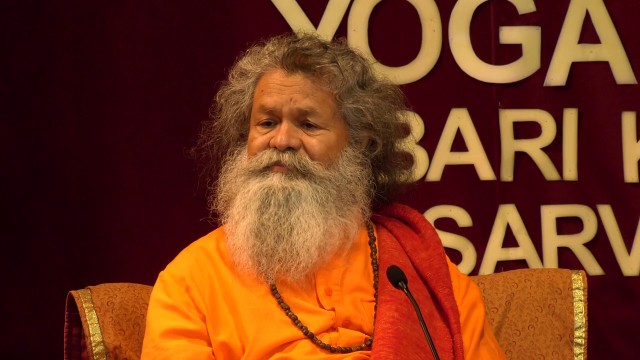
A spiritual discourse on suffering and divine incarnation, referencing Krishna and Jesus.
"In very hard times... those who are whole, suffering will be very strong. That means they are coming very solid, strong."
"Many sādhus, munis... all were suffering. Why are they suffering? They are taking from others our heart, our pain."
An unnamed speaker reflects on the universal nature of suffering in Kali Yuga, asserting that even divine incarnations like Krishna and Jesus endured great pain to absorb the suffering of humanity. The talk includes a personal anecdote about a lonely old man met in Austria, illustrating the impermanence of worldly success and the inevitability of suffering. The themes of divine descent, the purpose of hardship, and the transient nature of the material world are explored in a contemplative, narrative style.
Filming location: Strilky, Czech Republic
The Power of Mantra and the Significance of Śarad Pūrṇimā
8:15 - 9:02 (47 min)
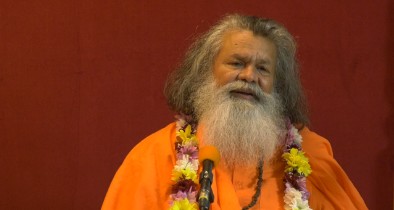
A satsang on the power of mantra and the significance of Śarad Pūrṇimā.
"The Gāyatrī Mantra is the mantra which purifies the atmosphere, the energy in our body, in our mind, in our thinking, in our whole family."
"Today, the moonlight, this moonlight, is very, very special because today, in this full moon, is radiating the energy of immortality."
A spiritual teacher leads a gathering, explaining the purifying power of the ancient Gāyatrī Mantra and its benefits for the individual's five bodies and environment. He then elaborates on the special astrological and spiritual significance of Śarad Pūrṇimā, describing the traditional practice of preparing milk rice charged by the moon's nectarous rays. The talk also honors the divine feminine, the guru principle, and Guruji's sannyāsa initiation anniversary, concluding with a group chanting of the Gāyatrī Mantra.
Filming location: Vienna, Austria
Bhajans and Practicing form Vep
9:10 - 9:59 (49 min)
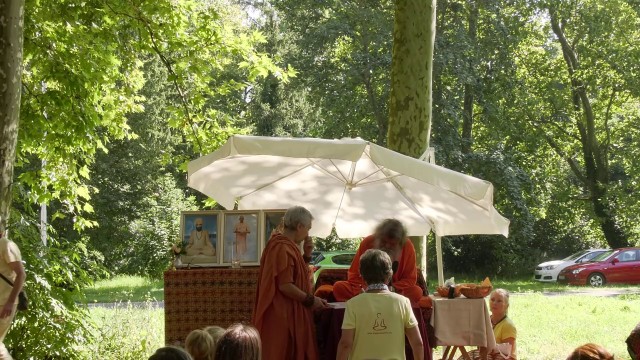
Morning program with Vishwaguruji from Vep, Hungary. Bhajan singing including Gurudeva Mere Jaba Pas Khare, Moye Lagi Lagana Guru Caranana Ki. Practicing Yoga Asanas with Gurudev.
The Oneness of Ātmā
10:05 - 10:57 (52 min)
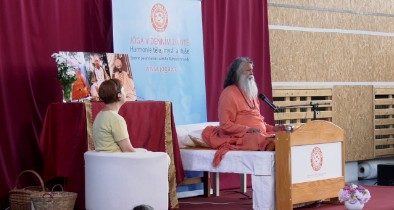
A spiritual discourse on the oneness of the soul and the nature of life.
"Our Gurudev, Holy Gurujī Madhavānandajī, said: 'One in all and all in one.'"
"Water is water; it does not matter which quality. Now, there are some machines, and they are purifying the water."
The lecturer leads a satsang exploring the non-difference between Paramātmā, ātmā, and jīvātmā, using the metaphor of seeds from a single cherry tree. He discusses the proliferation of life in water, on land, and in the air (Jalchar, Thalchar, Nabchar), the inherent violence in nature, and the unique human capacity for mercy and the dharma of non-violence (Ahiṃsā). The talk covers the purification of consciousness, the pitfalls of negative qualities in the chakras, and concludes with an intention to sing a bhajan and meditate.
Filming location: Prague, Czech Republic
Where is our happiness?
11:05 - 11:52 (47 min)
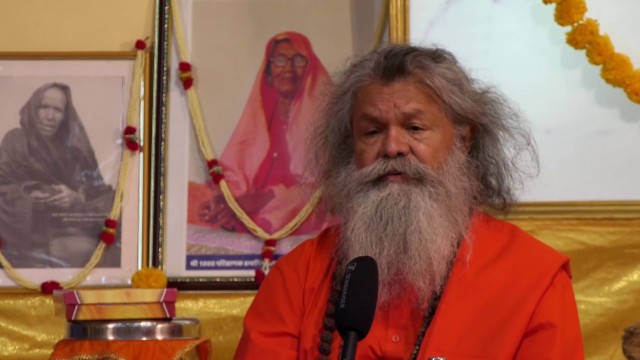
Evening satsang with Vishwaguruji from Jadan Ashram, Rajasthan, India. God can be happy and unhappy also. We can make him happy and unhappy like our parents. Animals also can be happy and we must not kill them to make them unhappy. Every morning we should be thankful to God that we are human. Don't marry before you completely finished your study. We also should be thankful for God before eating. Bhajan singing.
Around the world - Bhajans from Kailash(3/3)
12:00 - 12:47 (47 min)
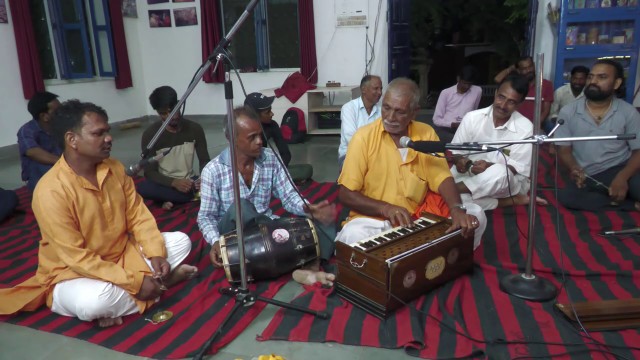
Evening satsang from Kaliash Ashram, Rajasthan, India. Bhajans on the occasion of Sri Devpuriji Mahasamadhi.
Suffering makes us strong
12:55 - 13:27 (32 min)
A spiritual discourse on suffering and divine incarnation, referencing Krishna and Jesus.
"In very hard times... those who are whole, suffering will be very strong. That means they are coming very solid, strong."
"Many sādhus, munis... all were suffering. Why are they suffering? They are taking from others our heart, our pain."
An unnamed speaker reflects on the universal nature of suffering in Kali Yuga, asserting that even divine incarnations like Krishna and Jesus endured great pain to absorb the suffering of humanity. The talk includes a personal anecdote about a lonely old man met in Austria, illustrating the impermanence of worldly success and the inevitability of suffering. The themes of divine descent, the purpose of hardship, and the transient nature of the material world are explored in a contemplative, narrative style.
Filming location: Strilky, Czech Republic
The Journey of the Soul: From the Ocean to the Drop
13:35 - 14:29 (54 min)
A spiritual discourse using the water cycle as a metaphor for the soul's journey.
"This jīvā, the soul, is on the journey of the eternal."
"When this drop falls into the ocean, the Jīva becomes the Ātmā. This drop becomes the ocean."
Swami Avatarpuri gives a satsang, explaining the soul's separation from and longing to return to the divine source through an extended analogy of evaporation and rainfall. He emphasizes the purifying role of satsang and the Guru, shares anecdotes about introducing mantra in Eastern Europe and criticizes modern chemical pollution and vanity as spiritual impediments, concluding with a call for natural living and collective chanting.
Filming location: London, UK
Children's program on Gurupurnima
14:35 - 15:04 (29 min)
Morning satsang with Vishwaguruji from Strilky Ashram, Czech Republic. Salutation to the lotus feet of Gurudev. Children's program on Gurupurnima.
We are in a blessed place
15:10 - 16:24 (74 min)
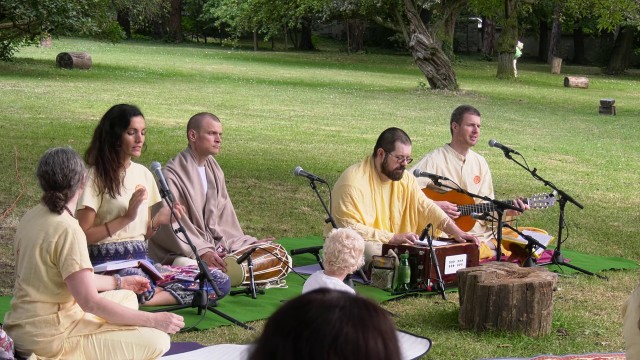
Morning satsang from Strilky Ashram, Czech Republic. Singing bhajans. Vishwaguruji tells a story about a huge satsang organized by Holy Guruji. Many people came there, including one Sadhu. Vishwaguruji showed the place in the ashram, where Holy Guruji was sitting. When we come here we are so happy, we feel the protection of our God. We humans like God, but we kill animals. Practicing anulom-vilom pranayama, led by Vishwaguruji.
Bhajan evening from Vep
16:30 - 17:25 (55 min)
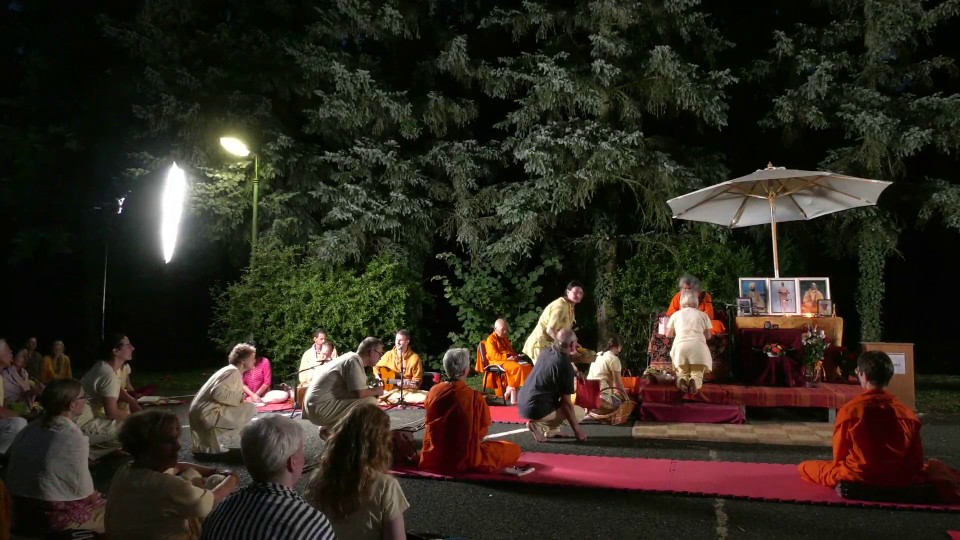
Evening satsang with Vishwaguruji from Vep, Hungary. Bhajan singing.
Bhajan singing from Vep
17:30 - 18:21 (51 min)
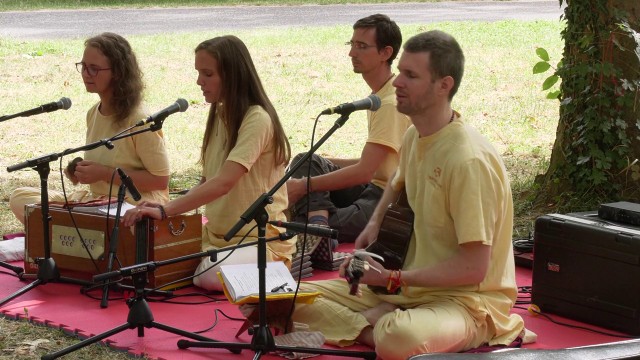
Morning satsang with Vishwaguruji from Vep, Hungary. Bhajan singing.
Bhajans from Strilky Ashram
18:25 - 19:59 (94 min)
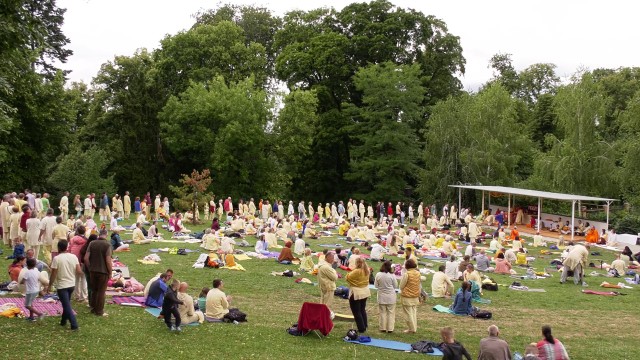
Morning satsang from Strilky Ashram, Czech Republic.
Quality of yoga is missing
20:05 - 21:05 (60 min)
A morning satsang on the purpose of human life and authentic spiritual practice.
"Human life is rare. It is the last milestone for divine realization or becoming one with God."
"Yoga practice is good for our health, but then we should do the system scientifically. Never torture your body, never force your body."
The lecturer addresses a global audience, contrasting superficial modern yoga with the deep, enduring practice of true tapasyā (austerity). He discusses the rarity of human birth, the cycle of karma, and the need to cultivate qualities that lead to light, using examples from scripture, anecdotes of ancient sādhus, and everyday situations to illustrate the principles of endurance, forgiveness, and connecting to cosmic energy.
Filming location: USA
The Oneness of Ātmā
21:10 - 22:02 (52 min)
A spiritual discourse on the oneness of the soul and the nature of life.
"Our Gurudev, Holy Gurujī Madhavānandajī, said: 'One in all and all in one.'"
"Water is water; it does not matter which quality. Now, there are some machines, and they are purifying the water."
The lecturer leads a satsang exploring the non-difference between Paramātmā, ātmā, and jīvātmā, using the metaphor of seeds from a single cherry tree. He discusses the proliferation of life in water, on land, and in the air (Jalchar, Thalchar, Nabchar), the inherent violence in nature, and the unique human capacity for mercy and the dharma of non-violence (Ahiṃsā). The talk covers the purification of consciousness, the pitfalls of negative qualities in the chakras, and concludes with an intention to sing a bhajan and meditate.
Filming location: Prague, Czech Republic
Vegetarianism is spreading
22:10 - 23:11 (61 min)
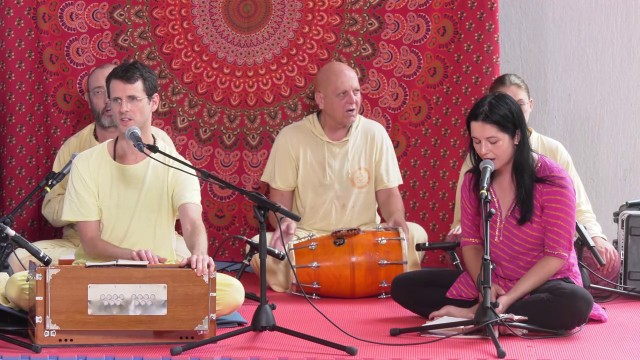
Morning program with Vishwaguruji from Vep, Hungary. Practice led by Vishwaguruji. Short lectures about the advantages of being vegetarian and consuming bioproducts. How diet can make us healthy.
Develop the quality
23:15 - 23:56 (41 min)
A spiritual discourse on the five koshas and the necessity of inner purity.
"Billions of people strive intensely for that Brahma Jñāna, for that self-realization. My dear, it is not so simple."
"You must purify your physical, mental, emotional, and intellectual energies; you have to clean them all."
The lecturer continues teachings on the five bodies (koshas), emphasizing the arduous pursuit of pure quality in one's energy and practice. He explains how impurity leads to confusion after death, using parables like the fly leaving sandalwood for filth to illustrate how aspirants reject sublime teachings. The talk covers the roles of mind, intellect, and senses, stressing renunciation of negative tendencies to attain higher consciousness.
Filming location: Alexandria, USA
American
Australian