
European
Morning practice from Strilky
1:00 - 2:05 (65 min)
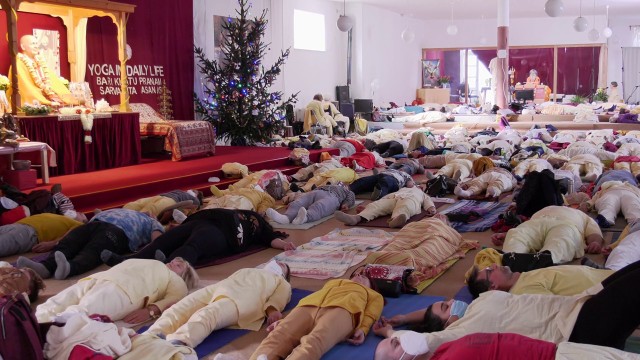
Morning satsang with Vishwaguruji from Strilky Ashram, Czech Republic. Practice.
A good education is important
2:10 - 3:10 (60 min)
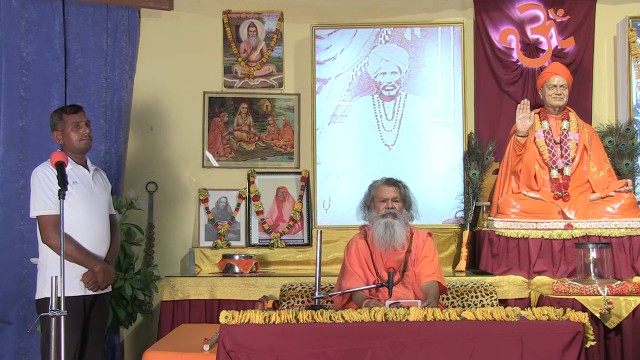
A satsang addressing community discipline, the importance of Hindi, and educational updates.
"If any bus is destroyed, the teachers have to pay the money... The trust means we are trusting you to keep our things okay."
"The Hindi language is the heart of Hindustan. And this Hindi language was born from Sanskrit."
The lecturer speaks to the ashram community, expressing concern over the careless treatment of property like school buses and furniture, instituting a system of financial responsibility. He then introduces the school principal, who delivers a discourse on the origins and significance of the Hindi language, tracing it from Sanskrit and explaining the etymology of the word 'Hindu'. The session includes translations, a financial appeal for the school, and concludes with a devotional song about the value of education.
Filming location: Jadan, Rajasthan, India
Satsang from Vienna
3:15 - 4:16 (61 min)
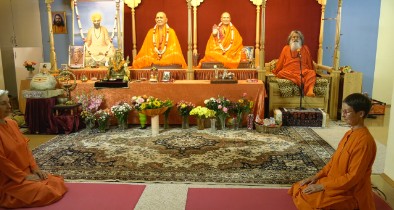
Satsang with H.H. Vishwaguruji Maheshwarananda from Guruji Ashram, Vienna, Austria
Protecting Nature
4:20 - 5:09 (49 min)
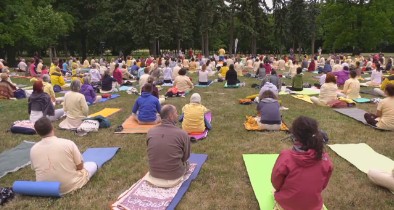
Morning satsang with Vishwaugurji from Voderady, Slovak Republic. The human is not the best creature on Earth. Humans have destroyed so much of nature and have created an immense amount of pollution. We have to go back to the natural way of life and to our real, original nature.
Use your common sense!
5:15 - 6:33 (78 min)
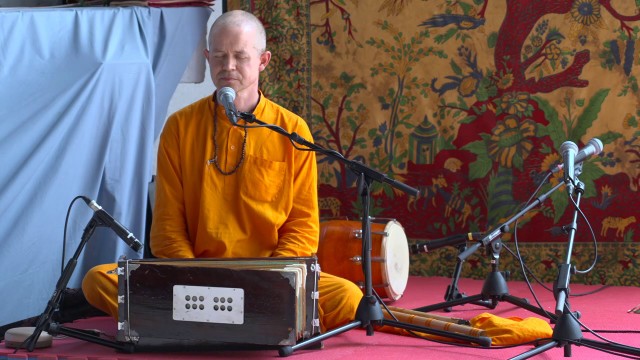
Morning satsang from Summer Yoga Retreat in Vep, Hungary.Lecture about Guruvakya and common sence. Personal guruvakya is ment only for the person who receive it, guruvaky also depend on specific situation. Nada yoga and relaxation. You can be your own therapist with Nada Yoga, chanting mantras.
The Pranas in practice
6:40 - 7:44 (64 min)
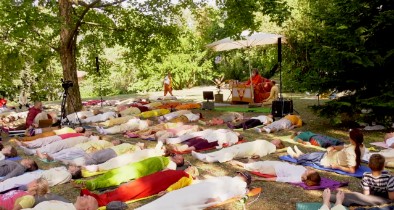
A guided yoga session focusing on Ānandāsana and the importance of Vajranāḍī for vitality.
"There is no existing Śavāsana. Śavāsana is a dead body’s posture, and you are living; you are not dead. Therefore, it is called Ānandāsana."
"Vajrāsana is one of the most powerful postures. It is strengthening first our Vajranāḍī, and Vajranāḍī is like the trunk of this body."
A yoga teacher instructs a large group through a series of postures and exercises, beginning with Ānandāsana and including twists and swings. He explains the physiological and energetic benefits, particularly for digestion and the apāna śakti, and details the role of the Vajranāḍī channel. The session incorporates chanting, demonstrations by students, and concludes with a collective prayer.
Filming location: Strilky, Czech Republic
A good education is important
7:50 - 8:50 (60 min)
A satsang addressing community discipline, the importance of Hindi, and educational updates.
"If any bus is destroyed, the teachers have to pay the money... The trust means we are trusting you to keep our things okay."
"The Hindi language is the heart of Hindustan. And this Hindi language was born from Sanskrit."
The lecturer speaks to the ashram community, expressing concern over the careless treatment of property like school buses and furniture, instituting a system of financial responsibility. He then introduces the school principal, who delivers a discourse on the origins and significance of the Hindi language, tracing it from Sanskrit and explaining the etymology of the word 'Hindu'. The session includes translations, a financial appeal for the school, and concludes with a devotional song about the value of education.
Filming location: Jadan, Rajasthan, India
Nadis and pranayama
8:55 - 9:59 (64 min)
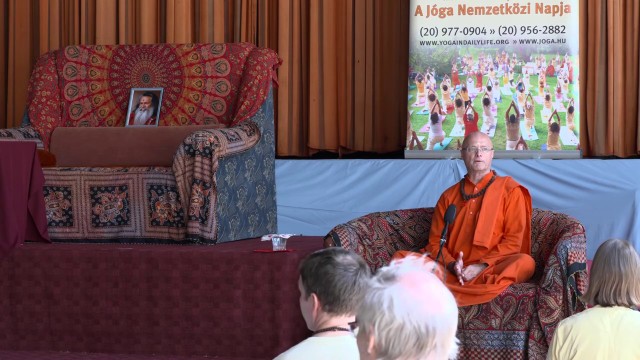
Morning satsang from Summer Yoga Retreat in Vep, Hungary. Lecture by M. M. Swami Vivekpuriji. If you are in good atmosphere you bring good atmosphere everywhere you come. Why we are starting pranayama with the right nostril? Try to inhale the divine, cosmic energy and trough positive thouhts and feelings exhale. Meditative bamboo flute music by Swami Madhuram.
The Power of Mantra and the Significance of Śarad Pūrṇimā
10:05 - 10:52 (47 min)
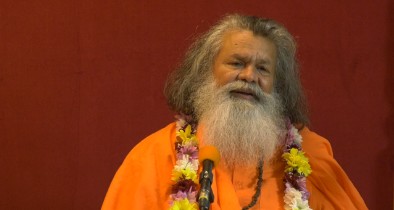
A satsang on the power of mantra and the significance of Śarad Pūrṇimā.
"The Gāyatrī Mantra is the mantra which purifies the atmosphere, the energy in our body, in our mind, in our thinking, in our whole family."
"Today, the moonlight, this moonlight, is very, very special because today, in this full moon, is radiating the energy of immortality."
A spiritual teacher leads a gathering, explaining the purifying power of the ancient Gāyatrī Mantra and its benefits for the individual's five bodies and environment. He then elaborates on the special astrological and spiritual significance of Śarad Pūrṇimā, describing the traditional practice of preparing milk rice charged by the moon's nectarous rays. The talk also honors the divine feminine, the guru principle, and Guruji's sannyāsa initiation anniversary, concluding with a group chanting of the Gāyatrī Mantra.
Filming location: Vienna, Austria
Bhajans and Practicing form Vep
11:00 - 11:49 (49 min)
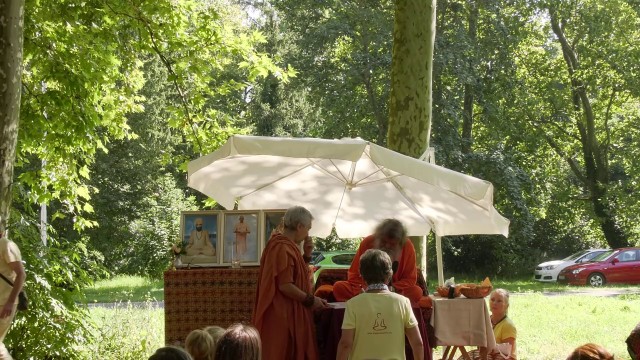
Morning program with Vishwaguruji from Vep, Hungary. Bhajan singing including Gurudeva Mere Jaba Pas Khare, Moye Lagi Lagana Guru Caranana Ki. Practicing Yoga Asanas with Gurudev.
The Healing Bridge: Integrating Yoga into Modern Medicine
12:00 - 12:09 (9 min)
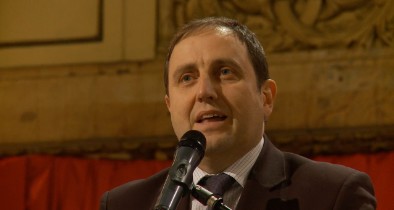
A medical doctor shares his experience integrating the Yoga in Daily Life system into his clinical practice.
"After each surgery I perform... a quiet question always arises within me: 'What more could I have done for these patients beforehand?'"
"I advise them: 'Practice the Yoga in Daily Life system as a complete system.'... By engaging with the system as a whole, they resolve their own issues."
An orthopedic surgeon and yoga teacher addresses a spiritual gathering, explaining how he applies yogic principles on three levels: as preventive healthcare, as a supportive adjunct to surgery, and as a primary treatment for psychosomatic conditions. He argues that the modern world's rapid, restless pace creates ailments that a holistic yoga system can effectively address, sharing anecdotal evidence from his patients and expressing deep gratitude to the spiritual teachers who brought the system to his country.
Filming location: Prague, Czech Republic
The Silent Revolution: Yoga as the Antidote to Mind Pollution and Failed Leadership
12:15 - 12:38 (23 min)
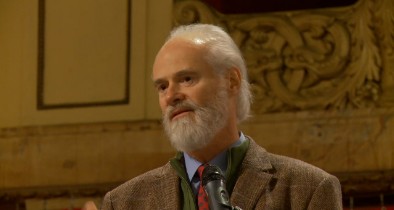
A keynote address proposing yoga as a solution to global leadership crises and mind pollution.
"The most dangerous threat to humanity today is not violence or terrorism, as the media suggests. The greatest damage comes from what I call mind pollution."
"Yoga is a systematic, conscious science of human development. Its main technique is gaining mastery over the mind, stopping the internal dialogue."
The speaker diagnoses widespread leadership failures—citing a lack of self-awareness and emotional intelligence—and argues that media sensationalism creates disproportionate fear. Presenting comparative mortality statistics, he contends that "mind pollution" is a greater threat than terrorism. He defines yoga as a holistic science for mastering the mind and accelerating human evolution, concluding with a call to integrate comprehensive yoga systems into global education and leadership training to foster peace.
Filming location: Prague, Czech Republic
Sattvic food and healthy body
12:45 - 13:13 (28 min)
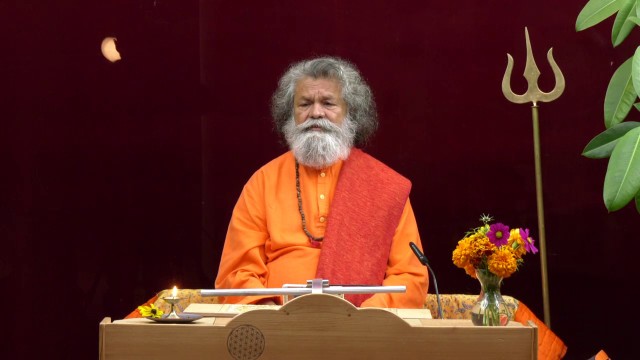
A satsang on integrating yoga and spirituality into daily life, focusing on health and cleansing practices.
"God said, Bhagavān Kṛṣṇa said that everything is within you. Your ātmā, your soul, your consciousness, everything is in us, and therefore we shall take care of our living God."
"Our body is our temple, and God is our ātmā, our soul in our body. We respect everyone, that you are that great person in the world."
The lecturer addresses a global audience, welcoming practitioners of Yoga in Daily Life. He discusses the increased turn towards sattvic food and spirituality during the pandemic, and the benefits of family time. He emphasizes the body as a temple and details two Haṭha Yoga cleansing techniques, jala-dhauti and sūtra-dhauti, explaining their procedures and benefits for the digestive system. He concludes with blessings for health and happiness.
Filming location: Strilky, Czech Republic
The Viśuddhi Cakra and the Journey of Consciousness
13:20 - 14:06 (46 min)
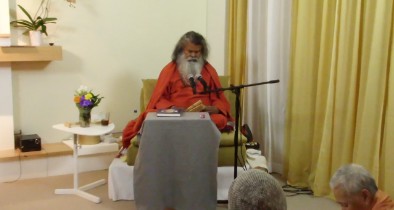
A spiritual discourse on the Viśuddhi (throat) chakra, consciousness, and karma.
"According to this philosophy, there is karma, and karma is action. Action is day and night continuing. Everything we do with body and mind, with our emotion and our intellect, is collecting in a particular part of the body."
"Therefore, many yoga practitioners are not successful. Either they will learn a little bit from me, a little from the Prema Purī, a little from the Svānāmukī, and then after go to the Dayāmātā. It’s nothing. You are cutting here, here."
The teacher explains the Viśuddhi chakra as an energy center affecting body, mind, and consciousness, framing it within the cycle of karma (action and reaction). He discusses higher states of samādhi, using the metaphor of mountain tunnels to warn against fragmented spiritual practice. He narrates the story of the bandit Vālmīki's transformation through mantra repetition to illustrate the purification of karma, and concludes by advising steadfastness on one spiritual path.
Filming location: Vancouver, Canada
Awakening of muladhar
14:15 - 14:57 (42 min)
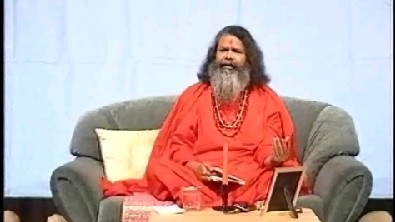
A lecture on the Mūlādhāra chakra, karma, and associated yoga practices.
"Prārabdha, or karma prārabdha, first your destiny is created, and then your body."
"The awakening of the Kuṇḍalinī means wisdom. You become very wise, you become self-confident."
The speaker delivers an in-depth explanation of the root (Mūlādhāra) energy center, linking it to one's karma, destiny, and foundational consciousness. He describes its symbolism—the red color, four-petaled lotus, elephant, and coiled serpent representing past karmas—and clarifies the nature of a true Kuṇḍalinī awakening. The session includes practical guidance, with demonstrators showing postures like Bhujaṅgāsana and Śalabhāsana to activate and regulate this chakra.
Filming location: Croatia
Develop the quality
15:05 - 15:46 (41 min)
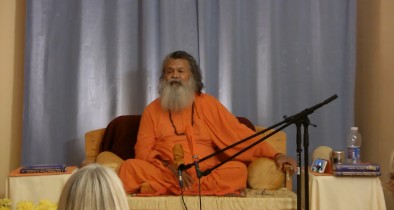
A spiritual discourse on the five koshas and the necessity of inner purity.
"Billions of people strive intensely for that Brahma Jñāna, for that self-realization. My dear, it is not so simple."
"You must purify your physical, mental, emotional, and intellectual energies; you have to clean them all."
The lecturer continues teachings on the five bodies (koshas), emphasizing the arduous pursuit of pure quality in one's energy and practice. He explains how impurity leads to confusion after death, using parables like the fly leaving sandalwood for filth to illustrate how aspirants reject sublime teachings. The talk covers the roles of mind, intellect, and senses, stressing renunciation of negative tendencies to attain higher consciousness.
Filming location: Alexandria, USA
Sattvic food and healthy body
15:50 - 16:18 (28 min)
A satsang on integrating yoga and spirituality into daily life, focusing on health and cleansing practices.
"God said, Bhagavān Kṛṣṇa said that everything is within you. Your ātmā, your soul, your consciousness, everything is in us, and therefore we shall take care of our living God."
"Our body is our temple, and God is our ātmā, our soul in our body. We respect everyone, that you are that great person in the world."
The lecturer addresses a global audience, welcoming practitioners of Yoga in Daily Life. He discusses the increased turn towards sattvic food and spirituality during the pandemic, and the benefits of family time. He emphasizes the body as a temple and details two Haṭha Yoga cleansing techniques, jala-dhauti and sūtra-dhauti, explaining their procedures and benefits for the digestive system. He concludes with blessings for health and happiness.
Filming location: Strilky, Czech Republic
Bhajan singing in the Strilky Ashram
16:30 - 17:05 (35 min)
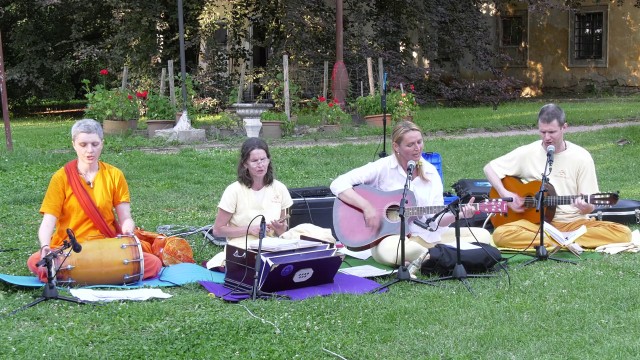
Evening satsang with Vishwaguruji from Strilky Ashram, Czech Republic.
Bhajan singing from Jadan Ashram
17:10 - 17:45 (35 min)
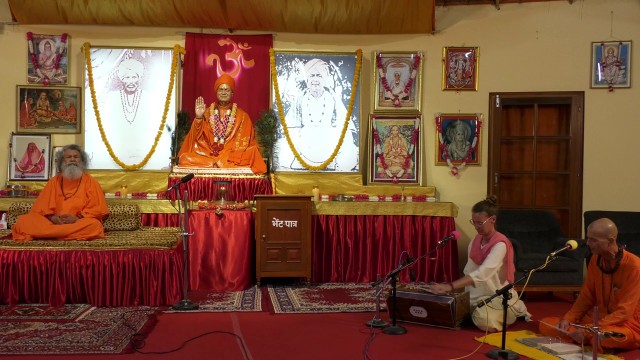
Evening satsang with Vishwaguruji from Jadan Ashram, Rajasthan, India. Singing bhajans.
Bhajan evening in Jadan Ashram
17:50 - 18:25 (35 min)
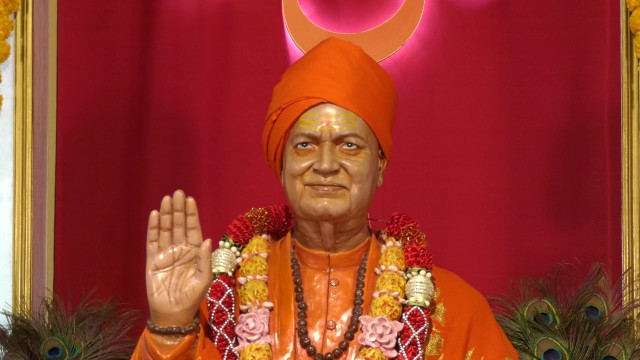
Evening satsang in Jadan Ashram, Distr. Pali, Rajasthan, India. Bhajan singing.
Bhajan singing from Villach
18:30 - 19:13 (43 min)
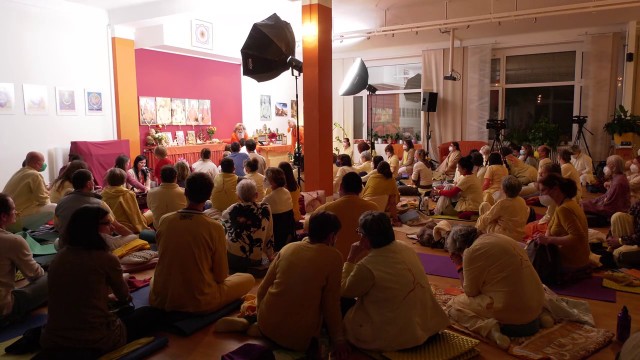
Evening program with Vishwaguruji from Villach, Austria. Bhajans.
Nadis and pranayama
19:20 - 20:24 (64 min)
Morning satsang from Summer Yoga Retreat in Vep, Hungary. Lecture by M. M. Swami Vivekpuriji. If you are in good atmosphere you bring good atmosphere everywhere you come. Why we are starting pranayama with the right nostril? Try to inhale the divine, cosmic energy and trough positive thouhts and feelings exhale. Meditative bamboo flute music by Swami Madhuram.
The value of Gurudev
20:30 - 21:37 (67 min)
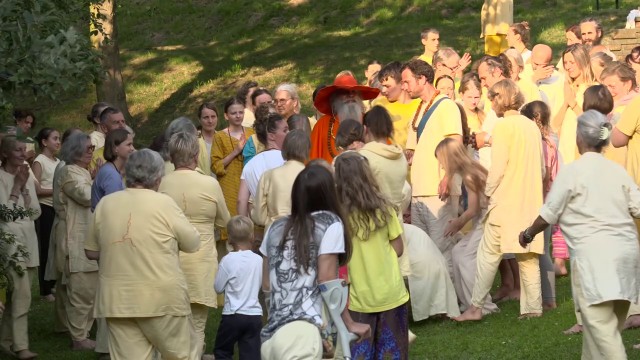
A satsang on the grace of the Guru and lessons from the Rāmāyaṇa.
"Even by the glance of the Guru towards you, that energy is more than enough to give you that push in your life."
"When you have Gurudev's kṛpā, his blessings, then the disciple's life is filled with happiness and joy."
A speaker addresses the assembly, weaving together a teaching on Guru's grace with a story from the Rāmāyaṇa about Hanumān's despair and renewal. He emphasizes that the Guru's presence and blessings are the ultimate source of happiness, surpassing material wealth. The discourse includes personal anecdotes, a bhajan, and chanting of the Guru Paduka Stotra, concluding with a commentary on the deeper, allegorical meaning of Rāma's defeat of Vālī from the Rāmāyaṇa.
Filming location: Strilky, Czech Republic
The Viśuddhi Cakra and the Journey of Consciousness
21:45 - 22:31 (46 min)
A spiritual discourse on the Viśuddhi (throat) chakra, consciousness, and karma.
"According to this philosophy, there is karma, and karma is action. Action is day and night continuing. Everything we do with body and mind, with our emotion and our intellect, is collecting in a particular part of the body."
"Therefore, many yoga practitioners are not successful. Either they will learn a little bit from me, a little from the Prema Purī, a little from the Svānāmukī, and then after go to the Dayāmātā. It’s nothing. You are cutting here, here."
The teacher explains the Viśuddhi chakra as an energy center affecting body, mind, and consciousness, framing it within the cycle of karma (action and reaction). He discusses higher states of samādhi, using the metaphor of mountain tunnels to warn against fragmented spiritual practice. He narrates the story of the bandit Vālmīki's transformation through mantra repetition to illustrate the purification of karma, and concludes by advising steadfastness on one spiritual path.
Filming location: Vancouver, Canada
The Pranas in practice
22:35 - 23:39 (64 min)
A guided yoga session focusing on Ānandāsana and the importance of Vajranāḍī for vitality.
"There is no existing Śavāsana. Śavāsana is a dead body’s posture, and you are living; you are not dead. Therefore, it is called Ānandāsana."
"Vajrāsana is one of the most powerful postures. It is strengthening first our Vajranāḍī, and Vajranāḍī is like the trunk of this body."
A yoga teacher instructs a large group through a series of postures and exercises, beginning with Ānandāsana and including twists and swings. He explains the physiological and energetic benefits, particularly for digestion and the apāna śakti, and details the role of the Vajranāḍī channel. The session incorporates chanting, demonstrations by students, and concludes with a collective prayer.
Filming location: Strilky, Czech Republic
Jivatma and anandamaya kosha
23:45 - 0:56 (71 min)
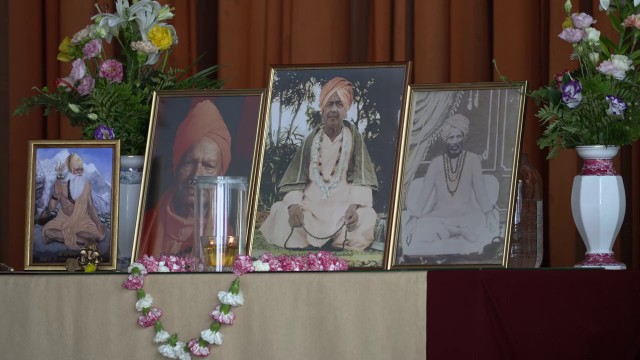
Morning satsang from Summer Yoga Retreat in Vep, Hungary. Lecture by M.M. Swami Vivekpuriji. Explanation of five koshas and the connection between them. Purification of the koshas. Lecture by Swami Madhuram. The love for our Gurudev brings all of us here. We water this seed day by day using different techniques. Playing a meditative raga on bansuri flute awakes the devotion. How to cook good sabji from dried vegetables (like gunda, babool, sangri).
American
Australian