
European
Satsang from Wellington
0:00 - 1:24 (84 min)
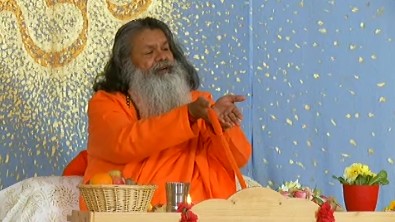
Evening satsang with Vishwaguruji from Wellington Ashram, New Zealand.
Live webcast from Strilky
1:30 - 3:00 (90 min)
Morning satsang with Vishwaguruji from Strilky Ashram, Czech Republic.
Sing Bhajans Always
1:35 - 2:55 (80 min)
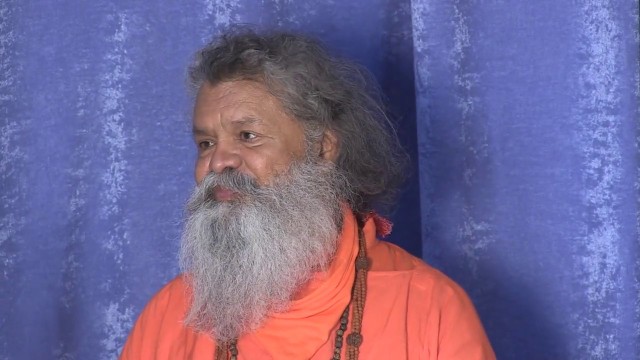
Evening satsang with Vishwaguruji from Jadan Ashram, Rajasthan, India. Lectures can not be compared to Bhajans. Bhajan brings balance, harmony amongst all five tattvas. We should always sing Bhajans. Proudness is the source of Ego, expanding Ego destroys spiritual feelings, happiness, and joy.
Experiencing Gurupurnima
3:05 - 4:25 (80 min)
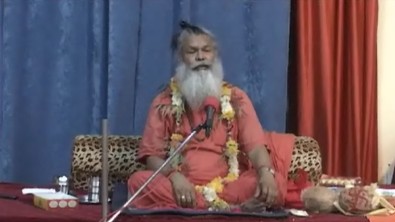
Satsang from Jadan. Various bhaktas from around the world, disciples of the Yoga in Daily Life system have taken part in the Gurupurnima festivities in Jadan Ashram in India. The day after they expressed their experiences which are messages of thankfulness, love and happiness in different languages. Swamiji remembers to let go past burdens and mistakes, to refresh the spiritual practice and to take a new shankalpa, a vow, for the spiritual progress. To do seva, the selfless service not only to humans but to plants or animals as well, is the best tool which will help to develop spirituality.
Body liberation and moksha
4:30 - 5:32 (62 min)
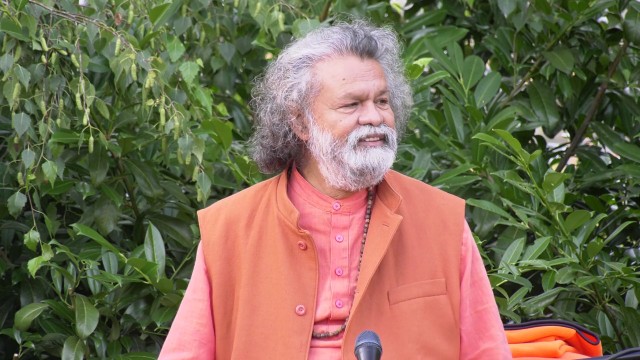
A satsang discourse on transcending body-mind duality through the five sheaths.
"Body and mind have no sense in it. And if you are saying body and mind, then both are wrong."
"We have to go: annamaya kośa, prāṇamaya kośa, manomaya kośa, vijñānamaya kośa, and ānandamaya kośa. Then we are only outside; it is in the body, but it is sending somewhere in different ways."
He argues that true yogic science requires progressing through the five koshas (sheaths) toward Anandamaya kosha and liberation, moving beyond the confusing duality of body and mind.
Filming location: Strilky, Czech Republic
The Essence of Kumbh Melā and Cultural Understanding
5:40 - 6:05 (25 min)
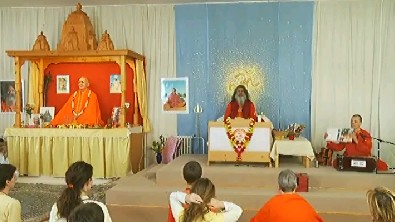
A morning discourse on the cultural and spiritual significance of the Kumbh Melā.
"Kumbh Melā originally was a meeting of intellectual people. It meant speaking about humanity, dharma, culture, ethics, spiritual principles."
"The tradition of the Kumbh Melā, as well as the Nāgabābā, is highly respected and seen as renunciation."
Swami Satyananda Saraswati addresses the assembly, explaining the deep symbolism of the Kumbh Melā's rivers and its original purpose as a gathering of learned sages. He defends the Nāgabābā tradition against sensationalist media portrayals, framing their renunciation as a historical, protective force. The talk broadens into a plea for cross-cultural understanding, using examples from global indigenous cultures to argue against judging differing ways of life.
Final Essence Of The Teachings
6:10 - 7:54 (104 min)
Evening satsang of Maha Shivaratri weekend seminar in Strilky, Czech Republic. Shiva is the first in the entire Universe. Shiva is the Lord of Yoga. All science comes from Shiva. The spirituality of yoga, the bandhas, mantras, yantras, tantras - all spiritual science is his manifestation. If we have a look to the final essence of all teachings as well as to the Holy Scriptures, it is very short explained: If you give someone happiness, you will get happiness. If you give someone troubles, you will get troubles. If you are good than the whole world is good.
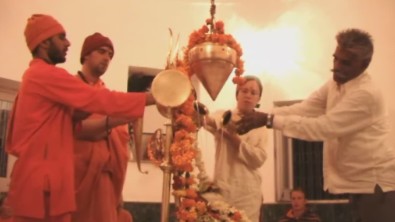
Around the world - Shivaratri at Jadan Ashram
8:00 - 8:07 (7 min)
World Peace is in Our Hands
8:15 - 8:20 (5 min)

A keynote address on global responsibility and the path to world peace.
"A world without peace will not survive. A world without distributing wealth will not survive. A world without taking care of our beautiful planet will not survive."
"World peace is in our hands... Peace is never achieved without good intentions and cooperation with others. Even more importantly, it requires coherence or balance with one’s self."
The speaker, representing Slovenia, addresses an international conference, arguing that creating resilient societies and active global citizenship is essential for survival. They share Slovenia's initiative to co-create a national vision aligned with the UN Sustainable Development Goals as a model of responsible action. The speech concludes by linking outer peace to inner balance, proposing yoga as a means to achieve it.
Filming location: Prague, Czech Republic
Our heart is very great
8:25 - 8:58 (33 min)
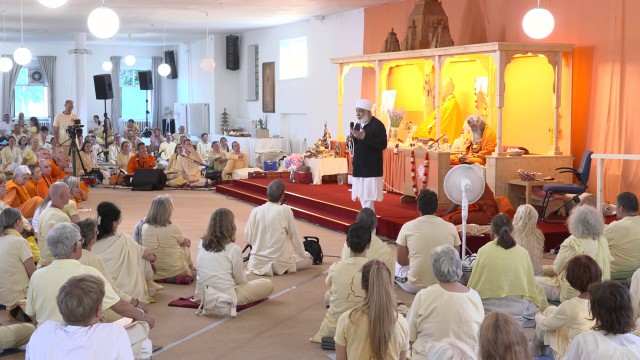
A satsang discourse on the universal sound of Om and the spiritual practice of surrender.
"In India, a name changes with region. In North India, you have Rāma. In Middle India, it becomes Rāma. In South India, it becomes Rāmaṇ."
"The easiest option is to let go, put it down, and allow the mind to become peaceful. The happiest thing is simply to let it be, to release it calmly and let it flow."
A speaker first explains the universality of Om, linking it to the words 'Amen' and 'Amin', and discusses his work promoting Indian traditional sciences in European parliaments. Swami Maheshvaranand then shares a teaching story about a restless monkey to illustrate how surrendering thoughts leads to peace, emphasizing meditation and devotion to the Guru.
Filming location: Strilky, Czech Republic
Program from Vep -11
9:05 - 9:51 (46 min)
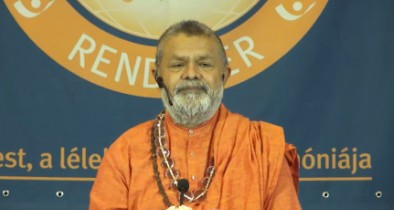
Evening satsang with Swamiji from Yoga Summer Seminar in Vep, Hungary.
Satsaṅg with Moojī
10:00 - 10:10 (10 min)
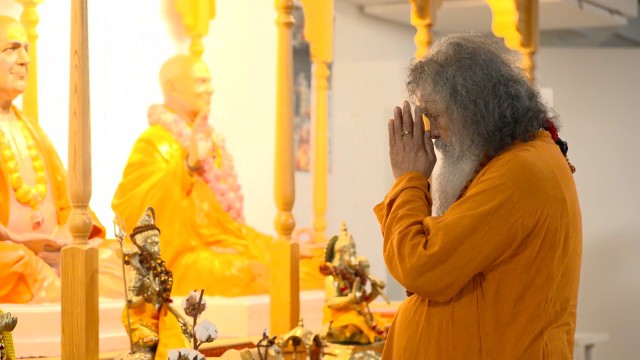
"The question is: 'What is the difference between the Self and the Ātman?' There is no difference."
"It is the one that is ever-present, unborn, undying, unchanging. It is the one that is the substratum of all that appears."
He repeatedly describes this singular, non-dual reality using a litany of synonymous attributes—the witness, the essence, the source, the goal, and the absolute peace, bliss, love, light, silence, and freedom that underlies all existence.
Filming location: Vienna, Austria
Part 1: The Awakening of Consciousness: Kuṇḍalinī and Cakras
10:15 - 12:09 (114 min)
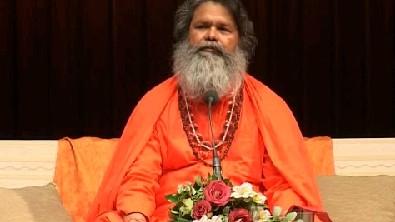
A lecture on Kundalini, chakras, and the science of yoga.
"Yoga is not a religion, it is not a philosophy, it is not a dogma, but it is the eternal principle in this universe, like the cosmic consciousness itself."
"The awakening of the Kuṇḍalinī is a divine process; you don't feel it as a physical sensation. You feel happy, as if in the lap of the mother."
Swami Maheshwarananda delivers an extensive discourse on the awakening of consciousness through Kundalini and the chakra system. He explains yogic anatomy, including the 72,000 nāḍīs (energy channels) and the major chakras, describing their roles in physical, mental, and spiritual development. The talk covers the interplay of mind, intellect, and subconscious impressions, the importance of dharma, and the ultimate goal of uniting individual consciousness with the Cosmic Consciousness.
Filming location: Zagreb, Croatia
The drop returns to the ocean
12:15 - 12:29 (14 min)
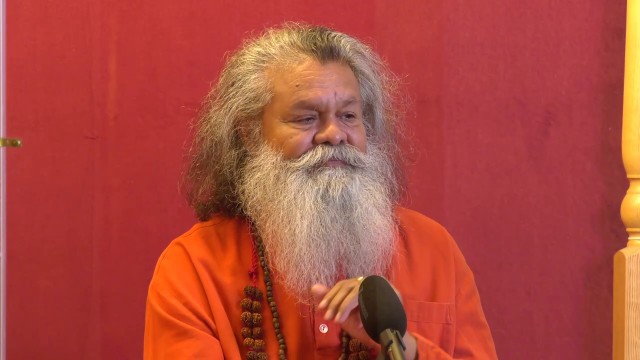
A spiritual talk on the practice of Brahmari pranayama and the nature of human life.
"Brahmari is very great. It is for the soul. And the whole brain—the whole brain—and it comes out the other side."
"Practice is where we are practicing, really, really... These Brahmari practices and these few things must be very, very, very good, everything."
A teacher addresses a gathering, offering guidance on the correct, pressure-free method for the humming bee breath (Brahmari), warning against overly long sessions. He shares personal reflections on inconsistent practice due to travel, then expands into broader themes of impermanence, using metaphors of birth, death, and a drop returning to the ocean to illustrate the soul's journey and the pursuit of purity.
Filming location: Vienna, Austria
Bhajans evening from the Strilky Ashram
12:30 - 13:33 (63 min)
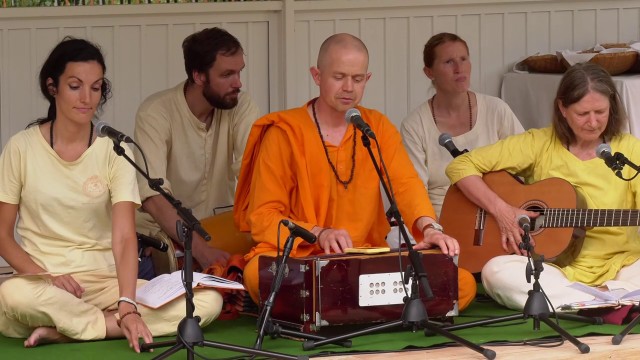
Evening satsang from Strilky Ashram, Czech Republic. Bhajan singing and translation.
Bhajan evening in the Strilky Ashram
13:40 - 14:33 (53 min)
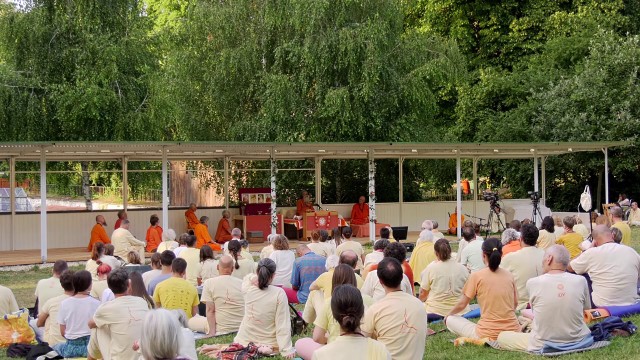
Evening satsang from Strilky Ashram, Czech Republic. Bhajan singing and translations. We shouldn't hold animals in a cage. They feel much pain there. Let them be free. We are also like that bird in the
Bhajan singing from Jadan
14:40 - 14:51 (11 min)
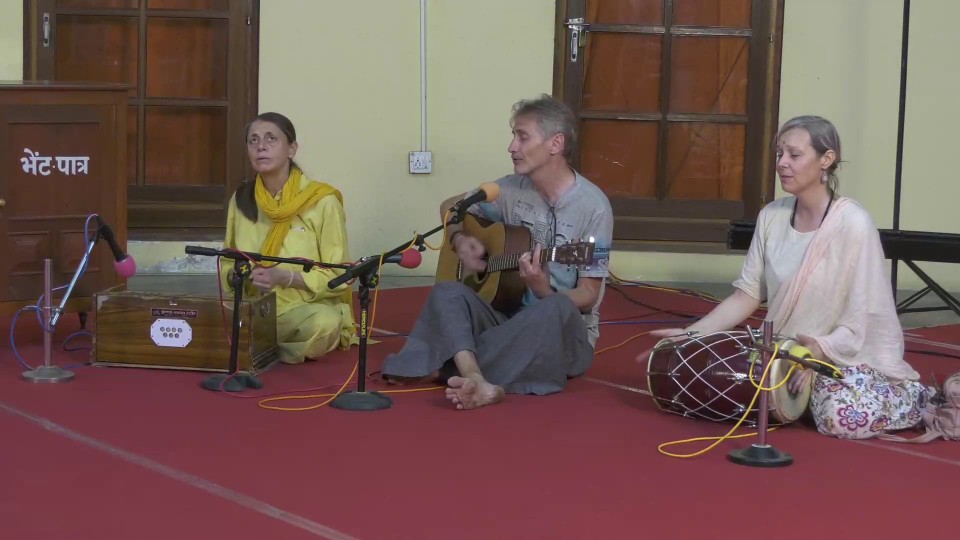
Evening satsang with Vishwaguruji from Jadan Ashram, Rajasthan, India.
Singing bhajans by Swami Gajanandji
14:55 - 15:32 (37 min)
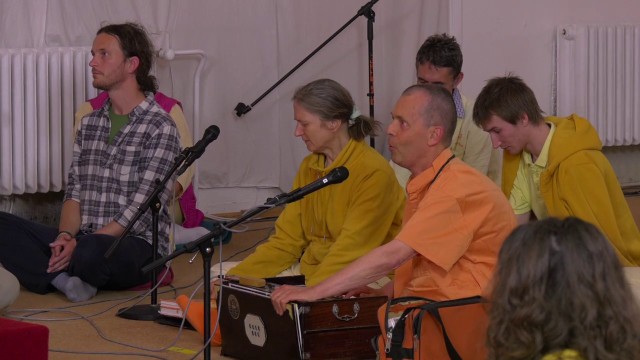
Evening satsang with Vishwaguruji from Strilky Ashram, Czech Republic. Singing bhajans by Swami Gajanandji.
Have A Feeling For Your Meditation
15:40 - 16:34 (54 min)
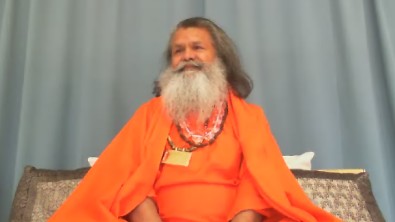
Satsang from Melbourne. It is said: When you are doing selfless work, the seva, God loves you, when you pray, God has a personal consultation with you, when you meditate, you are sitting in the heart or on the lap of God. Meditation is the most powerful technique to develop spirituality and to achieve the goal. Spirituality needs your discipline and continuity. Don't do it only occasionally. Prepare a place for it and have the inner feelings for your meditation. It is a path for you and meditation with the mantra is the light. After the introduction, Swamiji guides a meditation.
Body liberation and moksha
16:40 - 17:42 (62 min)
A satsang discourse on transcending body-mind duality through the five sheaths.
"Body and mind have no sense in it. And if you are saying body and mind, then both are wrong."
"We have to go: annamaya kośa, prāṇamaya kośa, manomaya kośa, vijñānamaya kośa, and ānandamaya kośa. Then we are only outside; it is in the body, but it is sending somewhere in different ways."
He argues that true yogic science requires progressing through the five koshas (sheaths) toward Anandamaya kosha and liberation, moving beyond the confusing duality of body and mind.
Filming location: Strilky, Czech Republic
Experiencing Gurupurnima
17:50 - 19:10 (80 min)
Satsang from Jadan. Various bhaktas from around the world, disciples of the Yoga in Daily Life system have taken part in the Gurupurnima festivities in Jadan Ashram in India. The day after they expressed their experiences which are messages of thankfulness, love and happiness in different languages. Swamiji remembers to let go past burdens and mistakes, to refresh the spiritual practice and to take a new shankalpa, a vow, for the spiritual progress. To do seva, the selfless service not only to humans but to plants or animals as well, is the best tool which will help to develop spirituality.
The Path of Conscious Living and Mercy
19:15 - 19:55 (40 min)
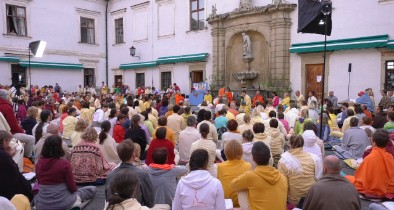
A satsang on spiritual development, karma, and conscious living.
"True spirituality purifies negative karmas and frees the soul. We are covered by vibrations, karmic influences, and ignorance."
"As humans among 8.4 million life forms, we possess intellect, vivekā, and karuṇā (mercy) in our hearts... Life is dear to everyone."
Swami Gajānandji addresses a global gathering at the ashram, discussing the distinction between religion and soul purification. He explains how unconscious actions, particularly harming life for food, create karmic burdens that obscure the soul. Using a bhajan by Saint Sūradāsa and teachings from the Bhagavad Gītā, he emphasizes the need for conscious action, discriminative wisdom (vivekā), and extending mercy to all beings to achieve liberation.
Filming location: Strilky, Czech Republic
The eternal journey of the Soul
20:00 - 20:56 (56 min)
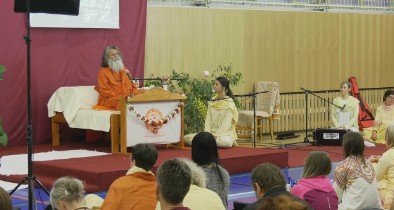
Evening Satsang with Vishwaguruji from Martin, Slovakia. We should ask ourselves: Who am I? From where did I come? Where I am going? In order to have liberation, we need the blessing of the Guru. Only to have a title is nothing. Growing of the ego is a danger for the spiritual aspirant. Know thyself as the Atma. Every life is like a dream, it is your reality. There are three levels of consciousness.
Morning Yoga practice, Umag, Croatia (7/9)
21:00 - 22:54 (114 min)
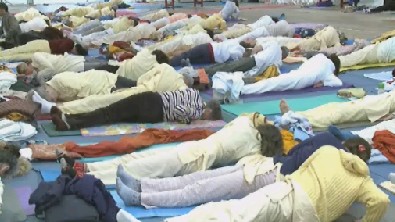
Morning Yoga practice from the international Yoga retreat Umag, Croatia on 1st of October
The Journey Beyond the Three States
23:00 - 23:14 (14 min)
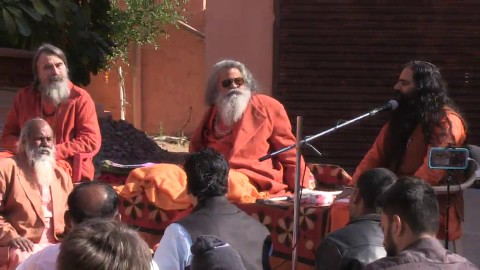
A philosophical exposition on the fourth state of consciousness, Turīya, based on Upanishadic teachings.
"The one who experiences these three states is the Jīva, the individual soul."
"Turīya is the witness of all three states. It is the silent, unchanging consciousness that illuminates the waking, dreaming, and sleeping experiences."
The narration explains the three common states of consciousness—waking, dreaming, and deep sleep—and introduces Turīya as the transcendent witness behind them. It cites the Bṛhadāraṇyaka Upaniṣad and uses the analogy of two birds from the Muṇḍaka Upaniṣad to distinguish the experiencing individual soul (Jīva) from the witnessing Self. The goal is presented as realizing one's identity as Turīya through hearing, reflection, and meditation, culminating in the recognition of the great declaration "Tat Tvam Asi" (That thou art).
Filming location: Khatu, Rajasthan, India
Our heart is very great
23:20 - 23:53 (33 min)
A satsang discourse on the universal sound of Om and the spiritual practice of surrender.
"In India, a name changes with region. In North India, you have Rāma. In Middle India, it becomes Rāma. In South India, it becomes Rāmaṇ."
"The easiest option is to let go, put it down, and allow the mind to become peaceful. The happiest thing is simply to let it be, to release it calmly and let it flow."
A speaker first explains the universality of Om, linking it to the words 'Amen' and 'Amin', and discusses his work promoting Indian traditional sciences in European parliaments. Swami Maheshvaranand then shares a teaching story about a restless monkey to illustrate how surrendering thoughts leads to peace, emphasizing meditation and devotion to the Guru.
Filming location: Strilky, Czech Republic
American
Australian