
European
Spirituality and religion (1/4)
0:15 - 1:22 (67 min)
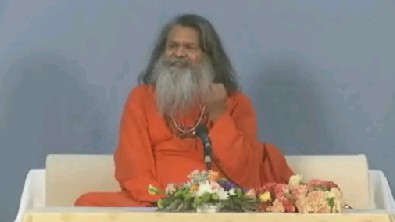
Evening Satsang with Swamiji, from Vep, Hungary on 22nd of May 2010.
Bhajan evening in the Jadan Ashram
1:30 - 2:09 (39 min)
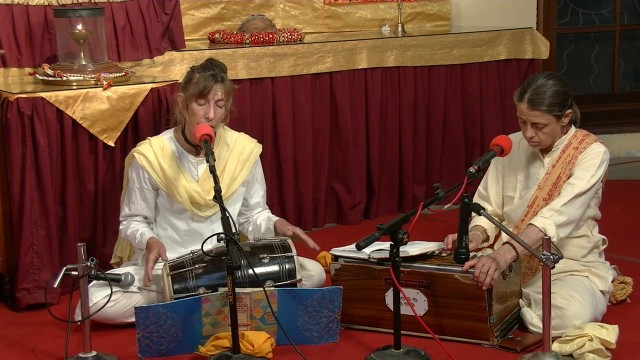
Evening satsang from Jadan Ashram, Rajasthan, India. Bhajan singing.
Bhajan singing in the Jadan Ashram
2:15 - 3:33 (78 min)
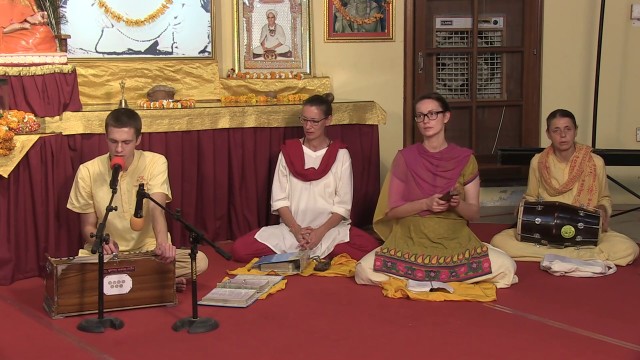
Evening satsang with Vishwaguruji from Jadan Ashram, Rajasthan, India. Bhajan singing evening.
Bhajan evening in Jadan Ashram
3:40 - 4:02 (22 min)
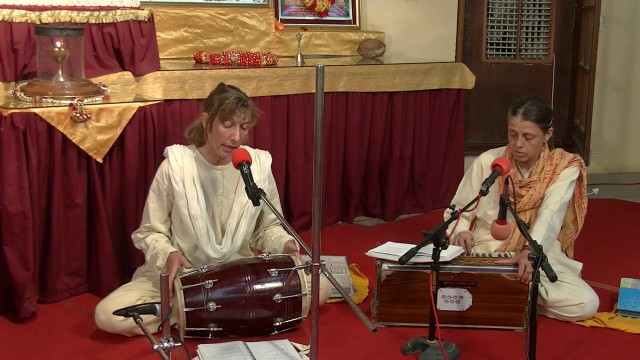
Evening satsang with Vishwaguruji from Jadan Ashram, Rajasthan, India. Bhajan singing.
Bhajan evening from Jadan Ashram
4:10 - 4:47 (37 min)
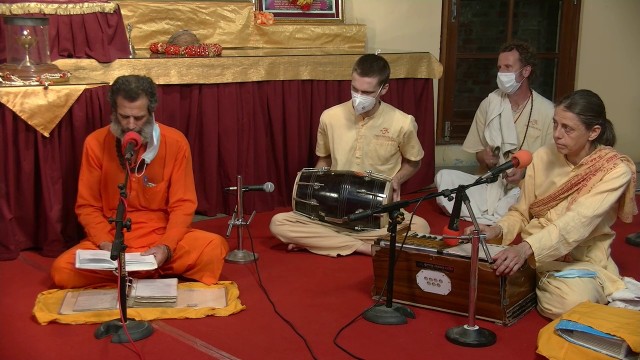
Evening satsang with Vishwaguruji from Jadan Ashram, Rajasthan, India. Bhajan singing.
Anahata chakra
4:55 - 5:41 (46 min)
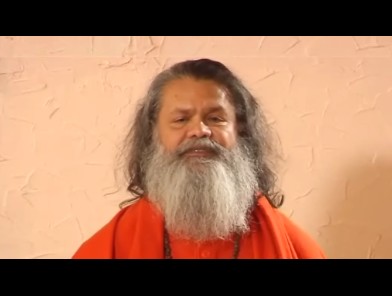
Satsang from Yoga Center in Prague on 1st December 2008.
Do everything with bhava
5:45 - 6:01 (16 min)
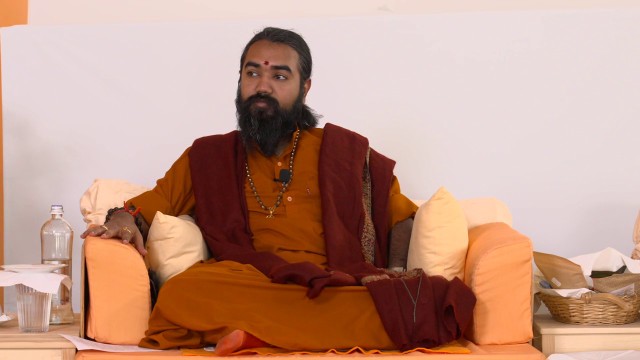
Morning satsang from Strilky Ashram, Czech Republic.Shravan month is for Lord Siva. The story of one of Siva's names nilkant. In this case, Siva symbolises our Gurudev. Siva is a merciful God.
We will go one day
6:05 - 6:48 (43 min)
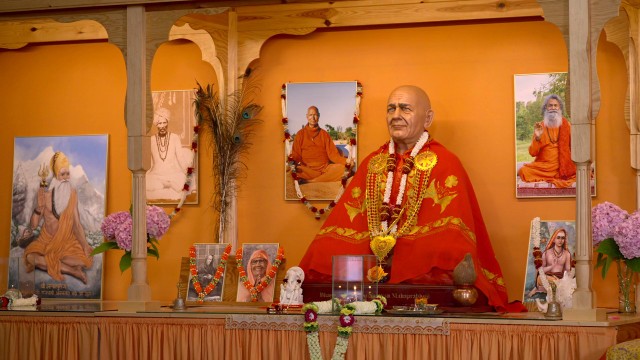
Evening satsang from Strilky Ashram, Czech Republic. We always worry about death. Death is a universal law. Our mind is always restless. We can train it by mantra. Manas is the storehouse of memories. Yogis are not attached to things. Only the bond between the disciple and the Guru is permanent. The story of a man who planned that when Yama came, he would hide somewhere. We should meditate always not only when we are in trouble. We should remember God every day, at least a little bit. Unfortunately present Indian generation is beginning to forget their roots. Birth and death come and go, but remember the name of God.
Symbolical stories about Tat Tvam Asi and Ganesha
6:55 - 7:33 (38 min)
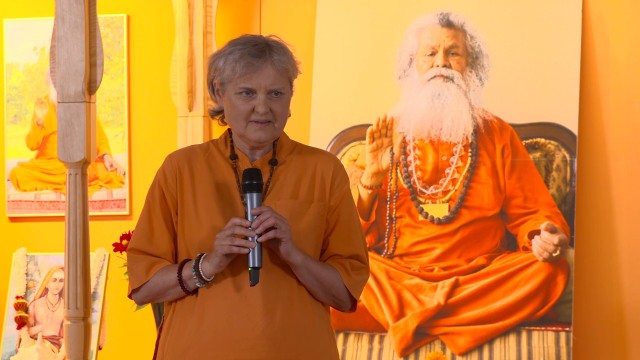
A satsang discourse weaving Upanishadic teachings with personal reflection on a spiritual name.
"The father explained that everything in the space comes from one cause. That cause is Brahma, or the Absolute."
"Gaṇeśa is the lord of these elements... What does it mean if someone is ruling over the elements? It means he is able to control, to balance, to harmonize all the elements."
Following opening prayers, the speaker narrates the Upanishadic story of a father teaching his son Śvetaketu the Mahāvākya "Tat Tvam Asi" (You are That), using analogies of clay, seeds, salt in water, and rivers in the ocean to illustrate the all-pervading Brahma. The discourse then shifts to a personal exploration of the speaker's name, Gajanant (Gaṇeśa), explaining its symbolism through Purāṇic stories, its role in bhajans as an invocation of the guru, and finally, its deepest meaning as the yogic principle that harmonizes the elements.
Filming location: Strilky, Czech Republic
We will go one day
7:40 - 8:23 (43 min)
Evening satsang from Strilky Ashram, Czech Republic. We always worry about death. Death is a universal law. Our mind is always restless. We can train it by mantra. Manas is the storehouse of memories. Yogis are not attached to things. Only the bond between the disciple and the Guru is permanent. The story of a man who planned that when Yama came, he would hide somewhere. We should meditate always not only when we are in trouble. We should remember God every day, at least a little bit. Unfortunately present Indian generation is beginning to forget their roots. Birth and death come and go, but remember the name of God.
There is one Soul
8:30 - 9:53 (83 min)
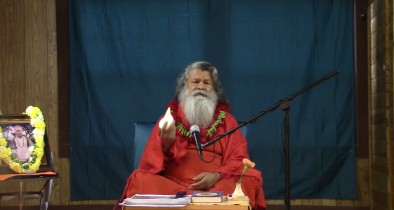
Evening satsang with Vishwaguruji from retreat at Mt. Shasta, Washington State, USA. The ocean is the origin, the creation. Nada is the resonance, it is the Supreme. Vishwaguruji creates a sound from the sea-shell. The elements were emerging from the sound of the creation. There are uncountable Souls in the body like the cells. Humans are fighting in vain, there is one Earth, each of the drops are from the same origin and will dissolve again. Similarly, there is one Soul. Real yoga is to love and understand the body, like when we are practicing Yoga in Daily Life.
A Gentle Yoga Practice
10:00 - 11:07 (67 min)
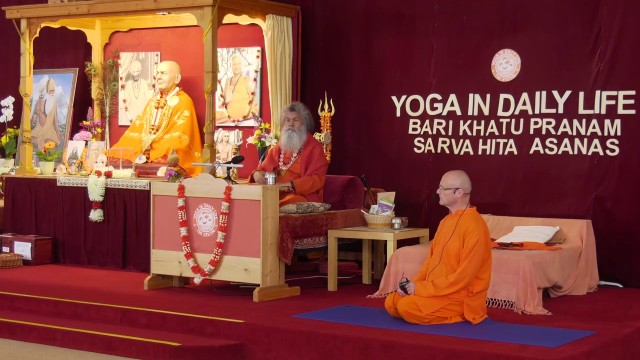
A guided gentle yoga class focusing on breath and alignment.
"Pavanamuktāsana is excellent for digestion." "When we start to breathe a little deeper, we immediately have more energy and less tension."
An instructor leads a group through a sequence of postures, including Pavanamuktāsana on the back and standing, Uttānāsana, and balancing poses like Ekapāda Uttānāsana. The guidance emphasizes anatomical awareness, the benefits for circulation and focus, and connects the physical practice to the cleansing of the nāḍīs for prāṇic flow. The session concludes with Bhujaṅgāsana and relaxation.
Filming location: Strilky, Czech Republic
Symbolical stories about Tat Tvam Asi and Ganesha
11:15 - 11:53 (38 min)
A satsang discourse weaving Upanishadic teachings with personal reflection on a spiritual name.
"The father explained that everything in the space comes from one cause. That cause is Brahma, or the Absolute."
"Gaṇeśa is the lord of these elements... What does it mean if someone is ruling over the elements? It means he is able to control, to balance, to harmonize all the elements."
Following opening prayers, the speaker narrates the Upanishadic story of a father teaching his son Śvetaketu the Mahāvākya "Tat Tvam Asi" (You are That), using analogies of clay, seeds, salt in water, and rivers in the ocean to illustrate the all-pervading Brahma. The discourse then shifts to a personal exploration of the speaker's name, Gajanant (Gaṇeśa), explaining its symbolism through Purāṇic stories, its role in bhajans as an invocation of the guru, and finally, its deepest meaning as the yogic principle that harmonizes the elements.
Filming location: Strilky, Czech Republic
Śaṅkha Prakṣālana and Kunjal Kriyā: Purification of the Intestine and Stomach
12:00 - 12:40 (40 min)

A practical demonstration and instructional lecture on the Haṭha Yoga purification techniques of Śaṅkha Prakṣālana and Kunjal Kriyā.
"Śaṅkha Prakṣālana is a very good exercise, but it has to be done early in the morning, of course, on an empty stomach."
"After Śaṅkha Prakṣālana, after purification, you have to keep a diet for at least, strictly, seven days, one week, and up to one month."
An instructor leads a session at an ashram, detailing the procedures for intestinal and stomach cleansing. He explains the preparation, the specific exercises and drinking process for Śaṅkha Prakṣālana, and the subsequent technique for Kunjal Kriyā (Vaman Dhautī), assisted by two experienced practitioners. Key themes include the importance of timing, dietary restrictions post-practice, and the health benefits of these purification rituals.
Filming location: Strilky, Czech Republic
There is only one reality
12:45 - 14:01 (76 min)
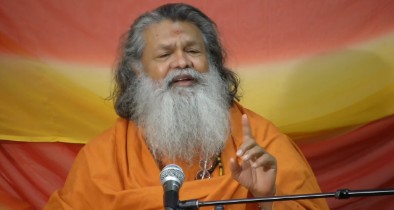
A spiritual discourse on the origins and essence of yoga.
"Yoga is beyond any religion. Yoga is not a part of religion, but all religion is a part of yoga."
"Yoga is that science of body, mind, and soul. Keep the harmony between body, mind, and soul."
Swami Avatarpuri Ji gives an introductory talk at a temple, offering a glimpse into yoga's cosmic beginnings. He describes the primordial state of endless space (śūnyākāśa) and consciousness, the emergence of divine energy (yoga), and the manifestation of creation through sound and light. He explains the human role within the 8.4 million life forms, the law of karma, and presents yoga as a practical science for harmonizing body, mind, and soul to realize the divine self.
Filming location: New York, USA
Spirituality and religion (1/4)
14:05 - 15:12 (67 min)
Evening Satsang with Swamiji, from Vep, Hungary on 22nd of May 2010.
Do not waste your human life
15:20 - 16:20 (60 min)
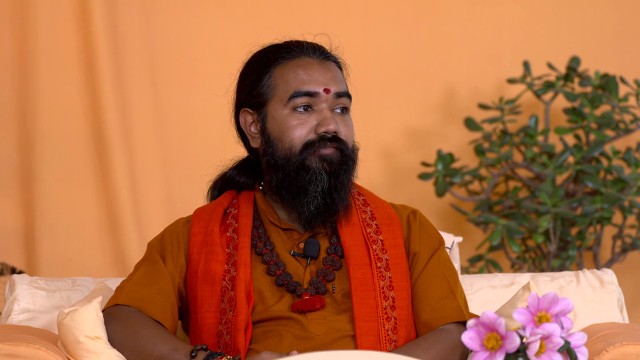
An evening satsang discourse on dharma, grace, and spiritual practice.
"Dharma rakṣati rakṣitaḥ. He who protects dharma, dharma protects him."
"The Guru will show us the right path... But we need to do the effort."
The lecturer leads a satsang exploring the nature of dharma and the four blessings (kṛpā) essential for spiritual progress: divine grace, scripture, the Guru, and one's own initiative. He weaves in teachings from the Bhagavad Gītā, stories from the Mahābhārata, and practical advice for students, emphasizing the necessity of the Guru's guidance and the disciple's personal effort to follow the righteous path and achieve liberation.
Filming location: Strilky, Czech Republic
Moon and Mind
16:25 - 17:33 (68 min)
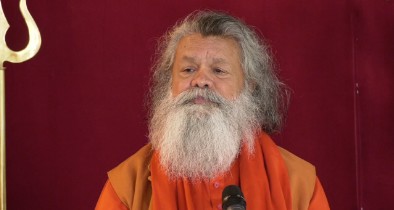
Morning satsang with Vishwaguruji from Strilky Ashram, Czech Republic. In reality, there is no sunrise or sunset - only the Earth is moving. It is said that the Moon is balancing the Earth. There are many different constellations. The Moon has a strong effect on nature. Sometimes, if someone goes on the wrong way it can influence others. We have to practice pranayama systematically. The master of the mind is the Moon; the principle of the Moon is water and water means movement. It is balancing our whole body.
The real meditation
17:40 - 18:29 (49 min)
A spiritual discourse on meditation, mantra, and the guru principle.
"Without a Guru Mantra, meditation is like a statue without life in it."
"Gu means darkness, and ru means light. He is the one who removes the darkness of ignorance and leads us to the light of wisdom, freedom, and mokṣa."
The lecturer delivers an evening satsang, explaining mantra as the essential seed of meditation. He details the importance of a guru-given mantra, describes the guru as a divine principle beyond form, and outlines a five-stage practice for perfecting mantra repetition, from writing to silent, automatic resonance.
Filming location: UK
This time will not come back
18:35 - 19:33 (58 min)
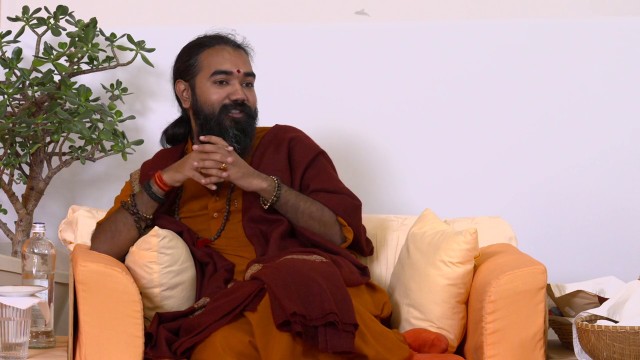
Evening satsang from Strilky Ashram, Czech Republic. We should begin everything at the basis. Climbing up is hard, but the goal is beautiful. To give up is easy, but not a solution. Good and bad things follow each other in our lives. We are full of expectations. There should be mutual understanding between partners. We listen many times the same story to understand more and more. We can reach peace if we are contented. At firsz we should accept ourselves and than we can accept other people. Go forward on the way Gurudev is inside with you. Things happening in our lives make us stronger. The knowledge is flowing from generation to generation in a parampara. Short explanation of yama and niyama rules.
The Thread of Love and the Roots of Devotion
19:40 - 20:50 (70 min)
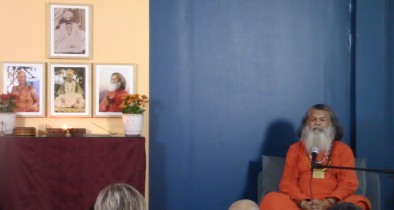
A satsang commemorating the incarnation day of Satguru Swāmī Madhavānandjī, focusing on devotion, family, and spiritual roots.
"Every breath was a remembrance of Mahāprabhujī: every inhalation and exhalation, I repeat thy name."
"O Rahim Dās, the thread of love is fragile—do not break it with a little misunderstanding. Once broken, it cannot be joined seamlessly; a knot will remain."
The lecturer addresses attendees at a seminar and retreat. He begins by honoring his Guru's incarnation day, describing the saint's devotion and miracles. The talk emphasizes traditional family values, the sacred roles within Indian kinship, and the power of forgiveness, illustrated by a story of a long-married couple. He explains the importance of a genuine guru-disciple relationship and concludes by describing his journey to the Himalayan cave of Alagpurījī, the root of his spiritual lineage.
Filming location: Vancouver, Canada
The meaning of Bhajan
20:55 - 22:22 (87 min)
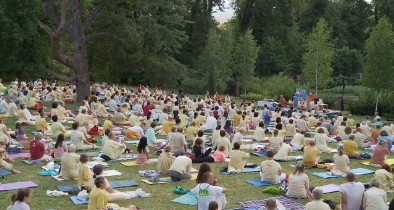
Satsang with Vishwaguruji Maheshwarananda, Summer Retreat in Strilky Ashram, Czech Republic. This satsang is about two powerful bhajans written by Holy Guruji (Sri Deep Niranjan Saba Dukha Bhanjan, Om Brahm Shiva Alakh Anadi). Vishwaguruji gives us introduction to different kinds of Samadhis and explains the topic about spiritual poems, bhajans, mantra and bija mantra. Bhajan singing and translation by Swami Gajanandji.
The living heart of God
22:30 - 22:51 (21 min)
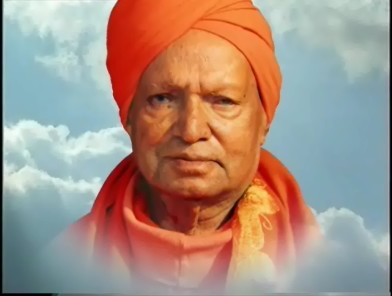
In Memory of His Holines Hindu Dharmasamrat Paramhansa Swami Madhavananda Puri.
Atma is king of the body
22:55 - 0:00 (65 min)
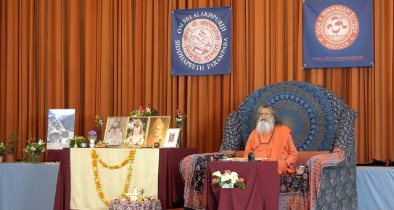
A spiritual discourse on perseverance, self-knowledge, and the inner faculties.
"It is not easy for anyone to remain steadfast on one path. This is true for everybody; it doesn't matter who you are. But when one has a single target, one can achieve it."
"He learned a lesson: if the ant cannot give up, why should I give up my sādhanā? I am sure one day I will achieve my goal. I may fall down many times, but I will get up again."
The speaker shares a parable about an ant persevering to carry a grain of rice, using it to illustrate the necessity of steadfastness on the spiritual path. He expands into an extended metaphor of the body as a coach, with the ten indriyas (faculties) as horses and the Ātmā as the king within. He emphasizes the crucial role of Viveka (discriminative intellect) as the king's advisor to guard against inner thieves like lust, anger, and greed, concluding that the Guru's word is the weapon that dispels them.
Filming location: Vép, Hungary
American
Australian