
European
Live webcast from Vienna Ashram
0:00 - 1:30 (90 min)
Evening satsang from Vienna Ashram, Austria.
Part 1: The Science of Yoga and the Awakening of Inner Energy
0:40 - 1:55 (75 min)
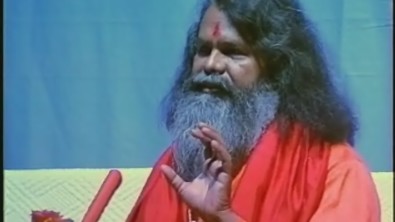
A lecture on the science of Kundalini yoga, consciousness, and world peace.
"Yoga is a balancing principle that harmonizes our body, mind, consciousness, emotions, and intellect."
"The most terrible tragedy that can befall a human is to die without God-realization. But God-realization cannot take place unless you realize yourself."
Swami Maheshwarananda delivers an extensive discourse, beginning with the cosmic origins of yoga and the nature of consciousness. He explains the human energy system, including the 72,000 nadis and eight main chakras, and leads a brief practical demonstration to awaken energy in the palms. The talk covers karma, destiny, the goal of liberation, and concludes with a call for religious tolerance and global harmony, announcing a film from the United Nations.
Filming location: Zagreb, Croatia
Explanation of the Isa Upanisad
2:00 - 2:14 (14 min)
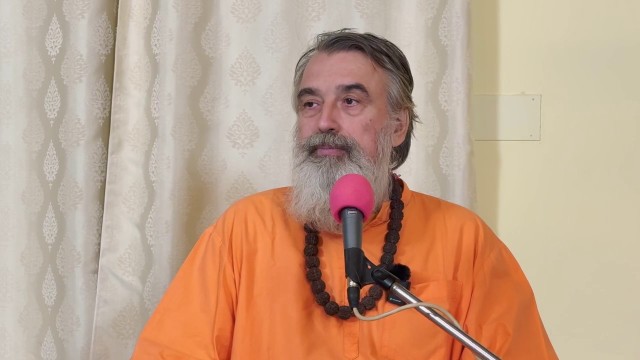
A discourse on the Īśāvāsya Upaniṣad, focusing on the integration of worldly and spiritual knowledge.
"Those who are studying this knowledge [worldly] are going into the darkness... But those who are concentrated only on spiritual knowledge are finishing even in the worst darkness."
"From time immemorial, the Vedas were telling karma yoga and spiritual practice go together. Always go together."
The lecturer explains the sixth mantra, which presents a paradox: exclusive pursuit of either worldly knowledge (avidyā) or spiritual knowledge (vidyā) leads to a form of darkness. He clarifies that the path is to use both together—worldly knowledge for life and spiritual knowledge to transcend death. The teaching emphasizes understanding both the manifest and unmanifest realities to cross beyond attachment and attain liberation.
Filming location: Jadan, Rajasthan, India
Bhajan singing on the Satsang
2:15 - 2:42 (27 min)
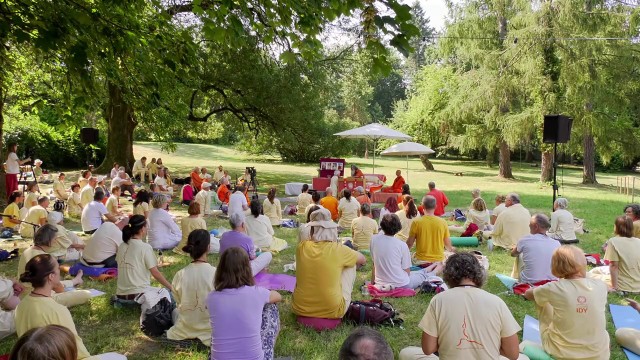
A devotional introduction and singing of a traditional bhajan.
"We can sing a very beautiful bhajan from Swāmī Lālā Nānjī. It is called Manarata Nāma, and it means, 'Oh my mind, repeat the name of God, repeat your mantra.'"
"Give your body and mind to Sāddhā Gurudeva, and he will destroy all your doubts and all your bad qualities. In the holy lotus feet of Satguru Deva reside all holy pilgrimages."
The speaker introduces a lesser-sung bhajan by Swāmī Lālā Nānjī, emphasizing the urgency of spiritual practice in human life. They explain the bhajan's theme of repeating the divine name and extol the glory and essential role of the true Guru in guiding devotees across the ocean of worldly existence. The session includes singing verses from the bhajan and concludes with salutations.
Filming location: Strilky, Czech Republic
Bhajan evening in the Strilky Ashram
2:45 - 3:38 (53 min)
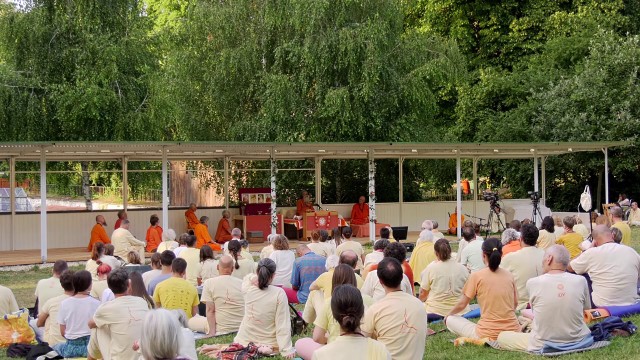
Evening satsang from Strilky Ashram, Czech Republic. Bhajan singing and translations. We shouldn't hold animals in a cage. They feel much pain there. Let them be free. We are also like that bird in the
Yoga is spiritual
3:45 - 4:55 (70 min)
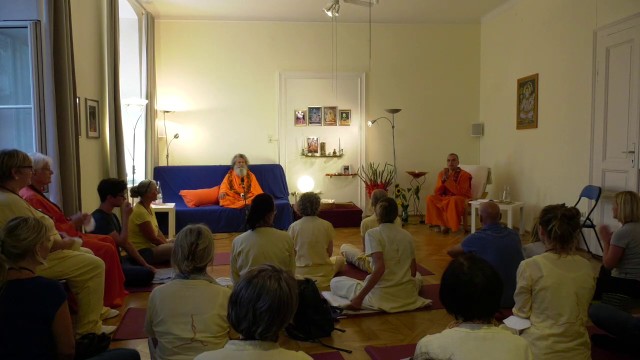
Satsang from Linz, Austria. Translation of the bhajan Sri Madhavanandaji Prabhu Ananda Dijo. This bhajan was written by our Gurudeva many many years ago. He requests Holy Guruji to grant us happiness and accept our service. Explanation and practice of Ashwini mudra, AUM chanting and Bhramari pranayama.
Yoga is a science
5:00 - 6:19 (79 min)
A spiritual lecture on Kuṇḍalinī, chakras, and the purpose of human life.
"Yoga is the science of body, mind, consciousness, and soul. Yoga without spirituality is like a body without a soul."
"Chakra is that which is purifying our body, mind, and consciousness. Chakra has to be purified through practice of mantra, prayers, or some yogic kriyās. Then the kuṇḍalinī will awake."
The teacher continues a multi-day seminar, delving into the nature of human consciousness through the lens of Kuṇḍalinī energy and the chakra system. He explains the five layers of the body (kośas), the persistence of karma using an analogy of salt in water, and the symbolism of the Mūlādhāra chakra—its red color, lotus imagery, and four petals representing the four aims of life: dharma, artha, kāma, and mokṣa. The discourse expands into themes of universal love, friendship, and living in the world with detachment, like a lotus in water.
Filming location: Australia
Divine knowledge
6:25 - 8:15 (110 min)
Johannesburg, South Africa in September 2004. Followed by "YIDL Lineage", "Unity in diversity". "Kundalini and Chakras". Finally follows a Lecture about Yoga Nidra followed by Awakening of the Healing powers.
Bring people to oneness
8:20 - 9:21 (61 min)
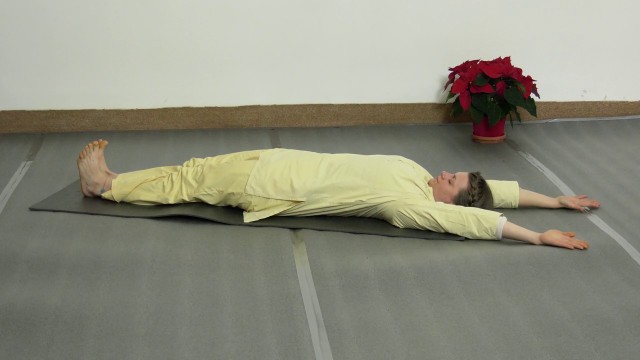
A spiritual discourse and yoga session on universal oneness and seasonal traditions.
"We need our world, our humans, to be in oneness." "One in all and all in one. That's all."
Swami delivers a message of interfaith unity, reflecting on December traditions like St. Nicholas Day and Christmas as expressions of shared human spirituality. He explains the core teaching of "one in all and all in one" from his guru, connecting it to the philosophy of Yoga in Daily Life. The session transitions into a guided Sarvahita Asana practice, beginning with relaxation and including gentle stretches and a torsion exercise.
Filming location: Strilky, Czech Republic
The Pearl of Everlasting Bliss
9:25 - 9:46 (21 min)
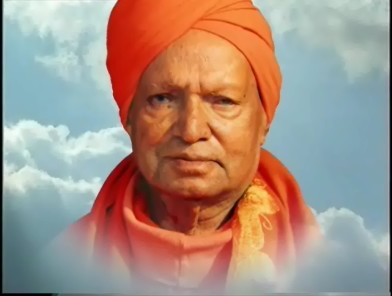
A biographical tribute to the life and legacy of Hindu saint Paramahaṁsa Śrī Svāmī Madhavānandajī.
"My eyes filled with tears, and I fell to my knees. I knew I had found the everlasting light of my life. I was home at last."
"All humans belong to one religion, and that is humanity... ahiṃsā paramo dharma: non-violence is the highest religion."
The narrative chronicles the spiritual journey of Swami Madhavānandaji, from his childhood in Rajasthan and transformative meeting with his guru, Bhagavān Śrīdīp Nārāyaṇa Mahāprabhujī, to his life of devotion, teaching, and global service. It details his initiation, his work establishing ashrams, and his teachings on non-dualism and universal love, culminating in his Mahāsamādhi in 2003 and the continuation of his lineage through his disciple, Swami Māheśvarānandajī.
Filming location: Rajasthan, India; Kathu Ashram, India; Bola Guda Ashram, India; Nepal
The Globe of the Self: Reflections on Ātmā, Jīva, and the One in All
9:50 - 10:52 (62 min)
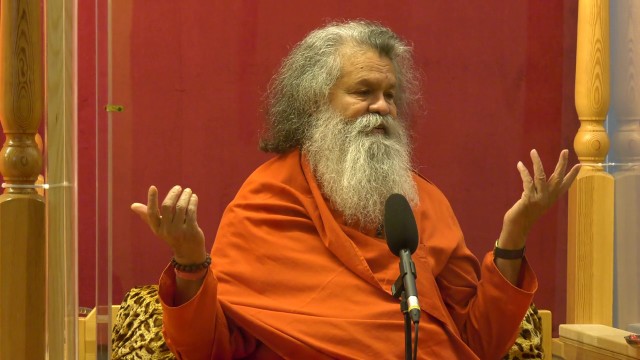
A spiritual discourse and satsang on the nature of the self, consciousness, and existence.
"In this globe, immense of immense, how many jīvas. Jīvā means the soul."
"And that was what Holy Gurujī said: one in all and all in one. One in all and all in one, in which way I am now."
The lecturer leads an evening satsang, offering contemplative reflections on the ātmā (Self), the jīva (individual soul), and the interconnectedness of all life. He explores themes of meditation, the limitations of physical travel versus spiritual expansion, and the relationship between yogic science and worldly science, sharing personal anecdotes including a healing story. The session includes a guided energy exercise and concludes with devotional singing.
Filming location: Vienna, Austria
Practicing of the system 'Yoga in Daily Life', Level 1 - Part 6
11:00 - 12:05 (65 min)
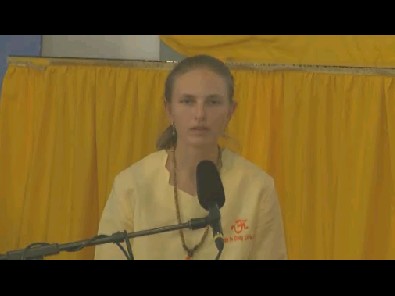
Practicing of the system "Yoga in Daily Life", Level 1 - Part 6, in Om Vishwa Deep Gurukul Swami Maheshwaranand Ashram, Jadan, Rajasthan, India on 24th of October 2009.
Find God within
12:10 - 13:02 (52 min)
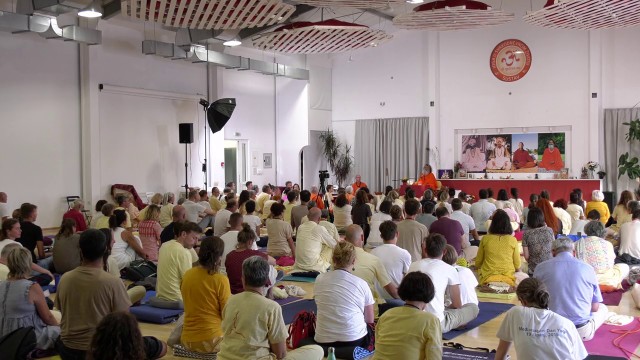
Evening satsang with Vishwaguruji from Rijeka Ashram, Croatia. Nowadays, people lose their teeth quickly.We should get back to nature again. There are many things in nature that can improve the health of teeth as well. Violin music and singing for the soul. We must find God within ourselves. The story of an American practitioner and the very beginning of the OM Ashram.
We will go one day
13:10 - 13:53 (43 min)
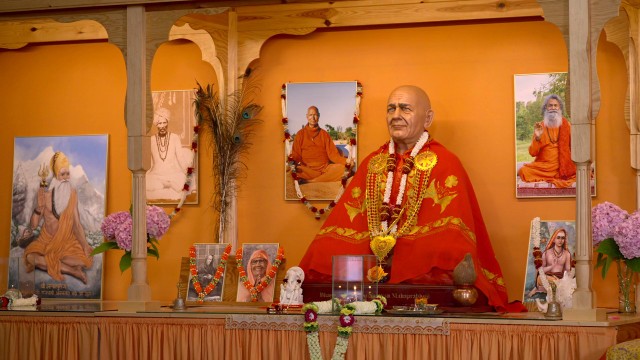
Evening satsang from Strilky Ashram, Czech Republic. We always worry about death. Death is a universal law. Our mind is always restless. We can train it by mantra. Manas is the storehouse of memories. Yogis are not attached to things. Only the bond between the disciple and the Guru is permanent. The story of a man who planned that when Yama came, he would hide somewhere. We should meditate always not only when we are in trouble. We should remember God every day, at least a little bit. Unfortunately present Indian generation is beginning to forget their roots. Birth and death come and go, but remember the name of God.
The Presence of the Guru
14:00 - 14:43 (43 min)
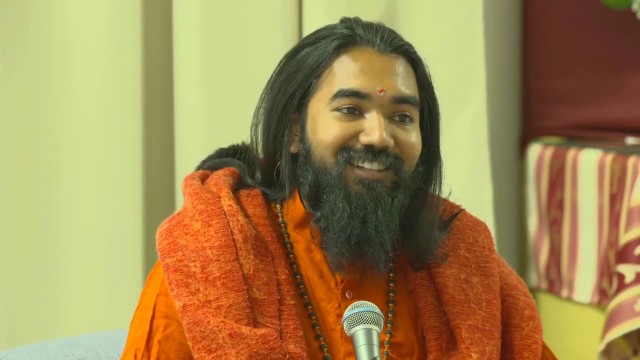
A satsang on devotion, surrender, and relating to the spiritual teacher.
"Gurudev is in the same space, same region, I would say, but we all should know that Gurudev is watching. It doesn’t matter where he is, he is always observing everything."
"If we have that mindset within us, that whatever we are doing, it’s him doing... then nothing is going to stop us in this world."
The lecturer addresses disciples in Slovenia, sharing insights from traveling with Gurudev, Sri Vishwaguru Mahamandaleshwar Paramahamsa Maheshwaranand Puri. He discusses the Guru's omnipresence, the importance of selfless service (seva), and cultivating trust over logic. He advises on etiquette in the Guru's presence, tells a parable about faith, and leads a guided meditation (manasik puja) to feel the Guru's inner presence.
Filming location: Slovenia
God is the giver
14:50 - 15:28 (38 min)
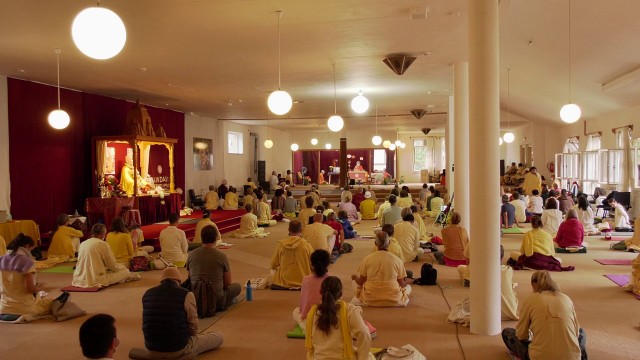
A spiritual discourse following bhajans for Guru Pūrṇimā.
"If you have no time for practicing yoga or anything, then it means you also have no time for eating."
"God knows everything: when, how, and where He is acting. So do not be proud of yourself."
A speaker addresses a gathering, reflecting on the recent bhajans and the attendees' spiritual practice (anuṣṭhāna). The talk emphasizes the necessity of sādhanā, comparing it to the essential need for food, and explores themes of divine grace, humility, and the interconnectedness of all life. Using analogies of rain, a water well, and a caged parrot, the speaker advises constant prayer, mantra repetition, and cultivating goodwill for all creatures to ultimately realize oneness.
Filming location: Strilky, Czech Republic
We need purity in our minds and souls
15:35 - 16:29 (54 min)
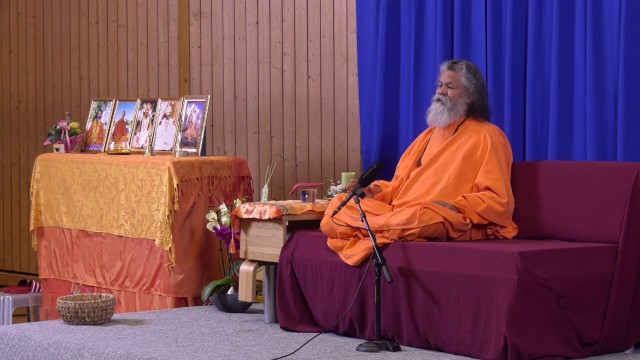
A spiritual discourse on unity, the nature of the soul, and daily practice.
"A very fine drop is also that... This very fine drop will become the whole ocean."
"God is each and every one: your mother and your father are God. Then come the children; they are our gods."
Swami Maheshwarananda (addressed as Guruji) delivers an evening satsang, reflecting on his travels and the global family of Yoga in Daily Life. He explores the metaphor of the individual as a drop merging into the divine ocean, discusses the relationship between science and spirituality, and emphasizes lifelong purification, respect for parents as divine, and integrating spiritual practice into daily life through mantra and humility.
Filming location: Salzburg, Austria
The Nature of Kuṇḍalinī, Śiva, and Śakti
16:35 - 17:15 (40 min)
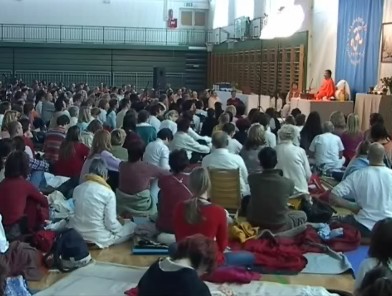
A spiritual discourse on the nature of Kuṇḍalinī, Śiva, and Śakti.
"Śiva means consciousness, not a physical form. It is the entire consciousness that dwells in the universe."
"Śakti is also that energy which dwells in the entire universe, and it resides in our body as well—Paraśakti, Mahāśakti, Śakti, whatever you call it."
The teacher continues a lesson on Kuṇḍalinī, explaining it as the divine energy and consciousness within. He elaborates on Śiva as pure, liberating consciousness and Śakti as the active energy governing karma, whose union leads to Self-realization. He stresses the necessity of a master's guidance and years of sāttvic practice for the safe, gradual awakening of this energy, warning against attempting it without proper preparation.
Filming location: Kranj, Slovenia
Ayurvedic medicine for joints
17:20 - 18:14 (54 min)
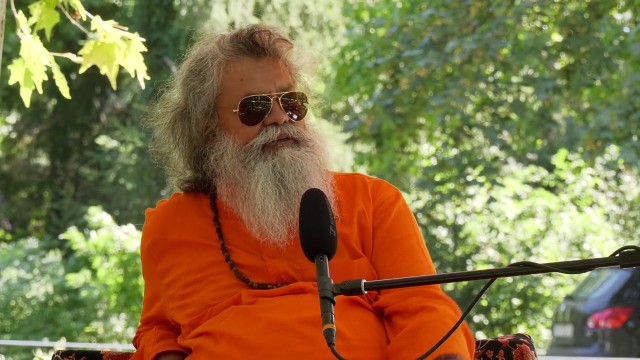
Morning satsang with Vishwaguruji from Vep, Hungary. Bhajan singing. Relaxation. There are some spices which are very good for joints like ginger and garlic. Agnidevi shows an ayurvedic medicine which is good for joints. She speaks about the ingredients and the preparation of that medicine. Vishwaguruji and Agnidevi answered some questions connecting this medicine. We should make it for ourselves and give it further. Its effect appears after two or three months.
Pathes of yoga
18:30 - 19:15 (45 min)
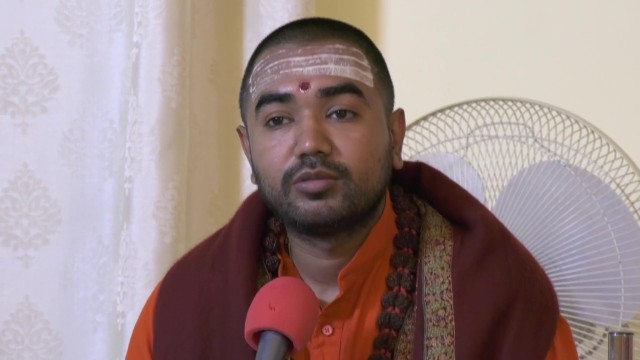
An evening satsang on spiritual practice, seva, and the importance of letting go.
"All the rivers are merging into that same ocean. That ocean is one, but the paths may be different."
"To realize the light, you need to let go of ego, that 'I am something, I am higher than this, this work is too low.'"
A speaker leads a discourse from an ashram, exploring different yoga paths and emphasizing selfless service (karma yoga) as a means to purify the mind and burn karma. He shares illustrative stories, including one about a seeker named Raju who resists humble tasks and another about a monkey clinging to fruit, to teach that spiritual progress requires letting go of ego, attachments, and the need for control to realize the inner light. The talk concludes with logistical announcements for an upcoming temple consecration.
Filming location: Jadan, Rajasthan, India
Webcast from Jadan
19:20 - 20:11 (51 min)
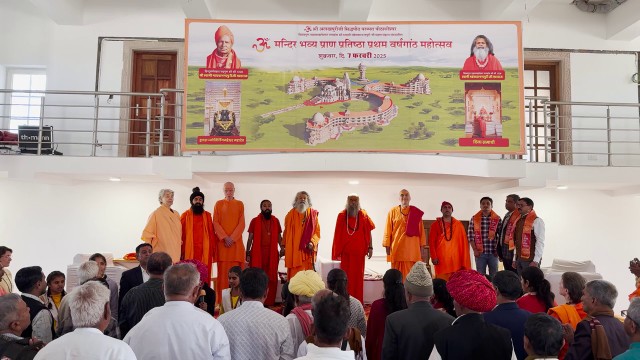
Satsang from Om Ashram, Pali, Rajasthan, India.
Webcast from Jadan
20:15 - 21:00 (45 min)
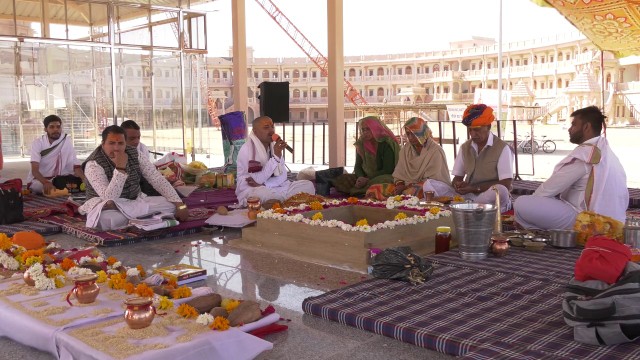
Satsang from Om Ashram, Pali, Rajasthan, India.
Devotion to Nature
21:05 - 21:35 (30 min)

Evening satsang from Jadan Ashram, Rajasthan, India.Emphasizing the vital link between spiritual health and the physical world, Swami Phulpuriji delivers a powerful message regarding the sanctity of our natural surroundings. He creatively defines the environment as our "in-wire" system, describing how nature physically recharges the human body through breath and food. Drawing upon the legacy of Vishwaguruji and the scriptures of the Bhagavad Gita, he reminds us that Lord Krishna exists within the trees, elevating them to the status of the divine. Swami Phulpuriji warns against the destruction caused by human greed, specifically deforestation and the use of harmful pesticides. He advocates for a return to respecting trees as "Neem Narayan," asserting that true mental peace and human survival are inextricably bound to the preservation of Mother Earth.
The value and the aim of humanlife
21:40 - 22:09 (29 min)
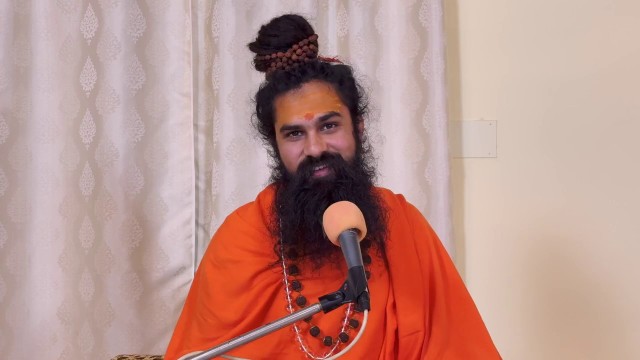
A spiritual discourse on the value of human life and the pursuit of self-realization.
"We do not know the value of a human life. When a merchant comes—like a divine master, a spiritual master such as Viśvagurujī—into your life, you have an experience."
"Our main aim as humans is to work for self-realization, for mokṣa, for jñāna, for brahma jñāna. Yet we are not working."
A speaker from the Oṁ Śrī Alagpuryā Siddha Pīṭha paramparā addresses a gathering at the Yoga and Daily Life center. He uses parables—a diamond mistaken for a stone and a king's exhibition—to illustrate how humans often miss life's supreme spiritual purpose while distracted by worldly attractions. He emphasizes that the aim of human life is self-realization, achievable by following the Guru's teachings, engaging in satsaṅg, and turning inward to discover divine energy and inner joy.
Filming location: Jadan, Rajasthan, India
Around the world - Bhajans from India
22:00 - 22:16 (16 min)
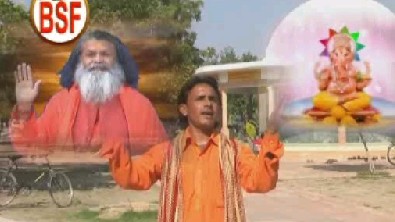
Bhajans and pictures from India
Only your spiritual work will go with you
22:15 - 23:01 (46 min)
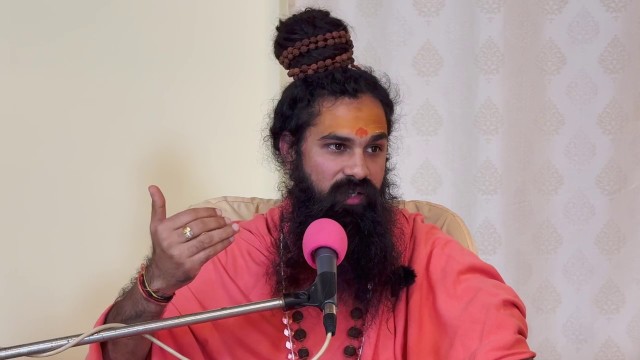
A spiritual discourse on the preciousness and purpose of human life.
"Vishwagurujī is always mentioning that 8.4 million creatures are in this world. And this is one human life. That life, if we get, then we can get liberated."
"If you are human, what should be the difference?... If we have some dharma, if we are doing bhakti, if we are doing spiritual practices, if we are following guru ājñā... then we are the human in human body."
A speaker at Om Ashram addresses a gathering, explaining why human life is a rare opportunity for liberation. He uses an allegory of a man trapped in a well to describe attachment to worldly illusion (māyā) and the need for a guru's guidance. The talk contrasts basic animal instincts with the spiritual duties that define a human being, urging the audience to follow the path of seva, bhakti, and sādhanā.
Filming location: Jadan, Rajasthan, India
The same light lits in all of us
23:05 - 23:49 (44 min)
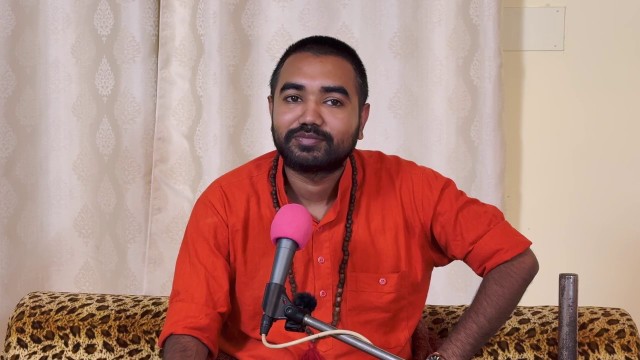
A satsang discourse on the nature of the Guru and the path to inner peace.
"Guru is Brahmā, Guru is Viṣṇu, and Guru is Maheśa. He holds all the qualities, or he is higher than God."
"The ultimate goal for us is mokṣa, self-realization. The help, the guidance, will always come from Gurudev, but the work has to be done by ourselves."
A speaker addresses a gathering, expounding on the supreme position of the Satguru as the embodiment of the divine trinity and the essential guide. He discusses the necessity of personal effort, surrender, and enduring the Guru's disciplining 'hammering' to progress spiritually. Themes include moving from ego to witness consciousness, the importance of faith over expectation, and finding lasting peace within.
Filming location: Jadan, Rajasthan, India
Explanation of the Isa Upanisad
23:55 - 0:09 (14 min)
A discourse on the Īśāvāsya Upaniṣad, focusing on the integration of worldly and spiritual knowledge.
"Those who are studying this knowledge [worldly] are going into the darkness... But those who are concentrated only on spiritual knowledge are finishing even in the worst darkness."
"From time immemorial, the Vedas were telling karma yoga and spiritual practice go together. Always go together."
The lecturer explains the sixth mantra, which presents a paradox: exclusive pursuit of either worldly knowledge (avidyā) or spiritual knowledge (vidyā) leads to a form of darkness. He clarifies that the path is to use both together—worldly knowledge for life and spiritual knowledge to transcend death. The teaching emphasizes understanding both the manifest and unmanifest realities to cross beyond attachment and attain liberation.
Filming location: Jadan, Rajasthan, India
American
Australian