
European
Mahaprabhuji is endless joy
0:15 - 0:34 (19 min)
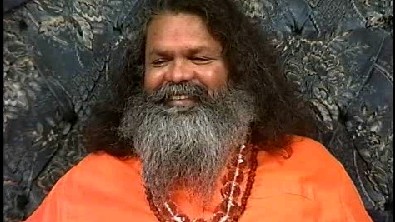
Lecture by Swamiji from Vep, Hungary, December 2000
Science of chakras
0:40 - 1:56 (76 min)
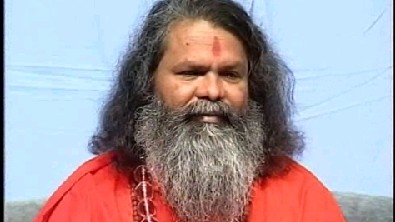
Lecture by Swamiji from Cakovec, Croatia, September 2000
How shall we go further?
2:00 - 3:00 (60 min)
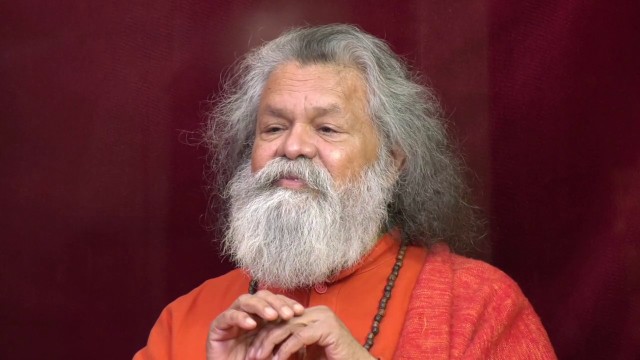
Evening satsang with Vishwaguruji from Strilky Ashram, Czech Republic. Yoga is yoga in every yoga centre but all Gurus give a name to their centre. In this Kali Yuga, all yogis try to reach God. We should feel each other like brothers and sisters. When we die nothing will go with us. There are two paths one to the Parabrahma and one is back to this Earth. God has given everything and not us. Every yoga path is good. We should be humble and love everyone. Our body is temporary our Atma will go further towards the Paramatma. The lectures and bhajans of Indian yogis are unbelievable. Explanation of bhajan Guruvara Mai Calu Sa Una Des. Bhajans are for all. Explanation of bhajan Divana Ssataguru Nam Ka Mastana Heli
Vishwaguruji's first visits to Czechoslovakia
3:05 - 3:58 (53 min)
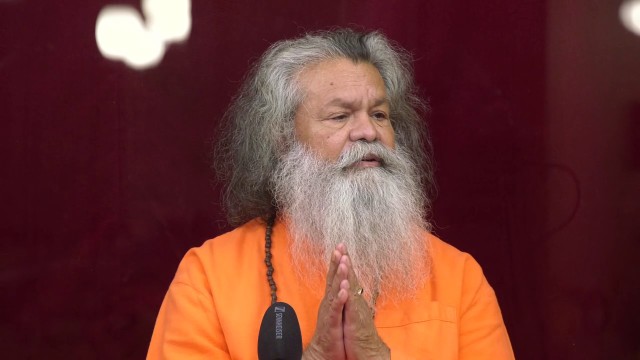
Evening satsang with Vishwaguruji from Strilky Ashram, Czech Republic. The first time I went to Czechoslovakia, it was still a communist country, and the devotees in Vienna were afraid of me and told me not to go. But I wanted to go and some people from Vienna went with me. At that time there was a lot of snow. People came from different countries, different religions and they asked me to teach them yoga. Three people came with me on all my trips, one of them was Lalita. They took the yoga forward, and that was the beginning of the development and expansion of the Yoga in Daily Life all over the world.
Why yoga is more than physical exercises
4:05 - 4:53 (48 min)
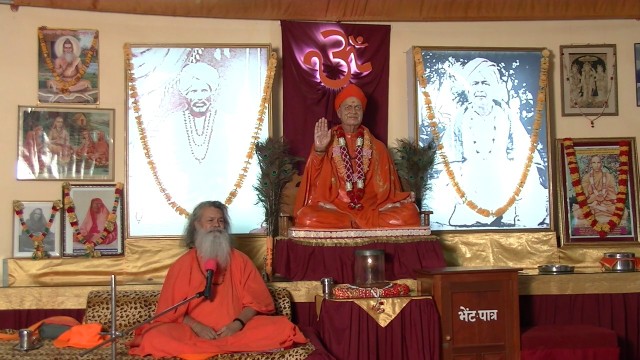
Evening satsang with Vishwaguruji from Jadan Ashram, Rajasthan, India. Deep means light, prakash. Prakash means spiritual awakening, knowledge. Even a blind person can see the inner light. Explanation of the bhiksha tradition - asking for food. Things can go in the best way or in a negative way. Yoga is not only asana and pranayama. We have to develop that quality.
Why yoga is more than physical exercises
5:00 - 5:48 (48 min)
Evening satsang with Vishwaguruji from Jadan Ashram, Rajasthan, India. Deep means light, prakash. Prakash means spiritual awakening, knowledge. Even a blind person can see the inner light. Explanation of the bhiksha tradition - asking for food. Things can go in the best way or in a negative way. Yoga is not only asana and pranayama. We have to develop that quality.
The Vedas
5:55 - 6:40 (45 min)
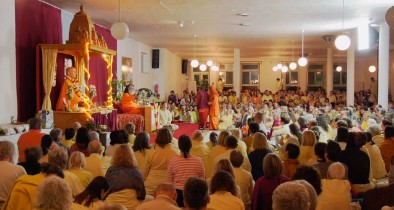
A spiritual talk during a Christmas gathering, focusing on the origin of the Vedas and the importance of family.
"I simply wish to invite you all to come here for the darśana of our Gurudeva and to celebrate this day with him together."
"The Vedas are the holy scriptures. 'Holy' signifies that which is good, that which is divine. This knowledge was always taught by the master to the student."
Swami Ji addresses the community, extending Christmas greetings and emphasizing family. He presents the annual gift, a photo from a Himalayan cave. The talk centers on the story of Vedavyāsa transcribing the Vedas with Lord Gaṇeśa as the scribe, explaining the loss of Gaṇeśa's tusk and the subterranean flow of the Saraswatī River. He connects this to the names of the fellowship president's family, discusses the vastness of Vedic knowledge through a parable of a Himalayan ṛṣi, and concludes with a message for peace during the Christmas season.
Filming location: Strilky, Czech Republic
Comparison of India and Australia
6:45 - 7:03 (18 min)
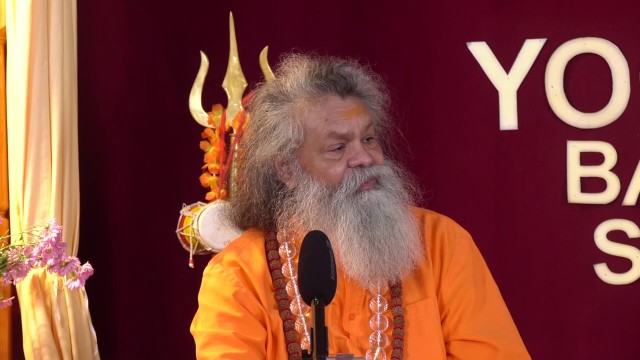
A personal account of traveling in the Australian outback and reflections on Aboriginal culture.
"Before I went, I thought it was a desert like the sands of Arabia. But it's actually not really like that."
"I'm not really accepted in the Western culture because I'm black. And if he visits his Aboriginal parents, they say, 'Oh, you talk like a white fella,' and they don't really accept him there either."
The speaker recounts a desert trip with Swāmījī, describing the vast, empty landscape and improvised camping. He shares an encounter with an Aboriginal man drawn to Swāmījī and discusses the complex, often painful position of Aboriginal people in Australian society, touching on cultural destruction, forced assimilation, and lingering identity struggles.
Filming location: Strilky, Czech Republic
How shall we go further?
7:10 - 8:10 (60 min)
Evening satsang with Vishwaguruji from Strilky Ashram, Czech Republic. Yoga is yoga in every yoga centre but all Gurus give a name to their centre. In this Kali Yuga, all yogis try to reach God. We should feel each other like brothers and sisters. When we die nothing will go with us. There are two paths one to the Parabrahma and one is back to this Earth. God has given everything and not us. Every yoga path is good. We should be humble and love everyone. Our body is temporary our Atma will go further towards the Paramatma. The lectures and bhajans of Indian yogis are unbelievable. Explanation of bhajan Guruvara Mai Calu Sa Una Des. Bhajans are for all. Explanation of bhajan Divana Ssataguru Nam Ka Mastana Heli
You are like bees
8:15 - 8:57 (42 min)
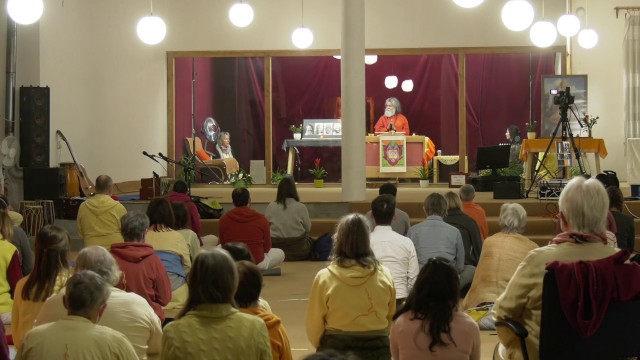
Evening satsang with Vishwaguruji from Strilky, Czech Republic. There are many Gurus and many more disciples in the world. We are not our body, we are Atma. Never be negative with anyone. Bhajan is like honey coming from our throat. I bless you and work for you. The corona will pass away sooner or later. We are all like bees. Singing Bhajans.
Vishwaguruji's first visits to Czechoslovakia
9:05 - 9:58 (53 min)
Evening satsang with Vishwaguruji from Strilky Ashram, Czech Republic. The first time I went to Czechoslovakia, it was still a communist country, and the devotees in Vienna were afraid of me and told me not to go. But I wanted to go and some people from Vienna went with me. At that time there was a lot of snow. People came from different countries, different religions and they asked me to teach them yoga. Three people came with me on all my trips, one of them was Lalita. They took the yoga forward, and that was the beginning of the development and expansion of the Yoga in Daily Life all over the world.
Remembering on the Gurupurnima Satsang
10:05 - 10:55 (50 min)
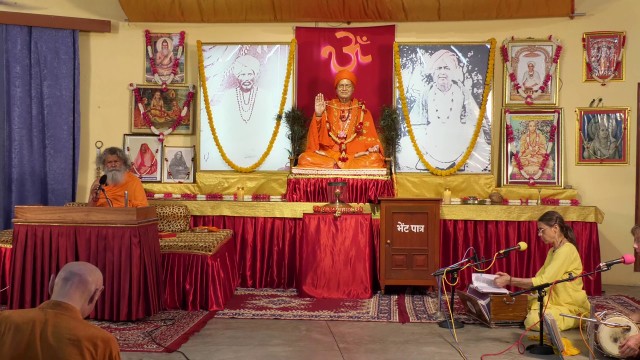
Evening satsang with Vishwaguruji from Jadan Ashram, Rajasthan, India. Singing bhajans. Vishwaguruji's talk about Sri Mangilaljji Maheshwari and Sri Mahapraphuji. Remembering on the Gurupurnima Satsang.
Practising fifth level of Yoga in Daily Life System
11:00 - 12:26 (86 min)
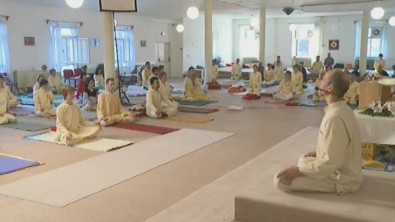
Morning practising. Fifth level of the System" Yoga in Daily Life" from Mahaprabhudeep Ashram, Strilky, Czech Republic on 9th of July 2010.
We are never old for yoga
12:30 - 12:43 (13 min)
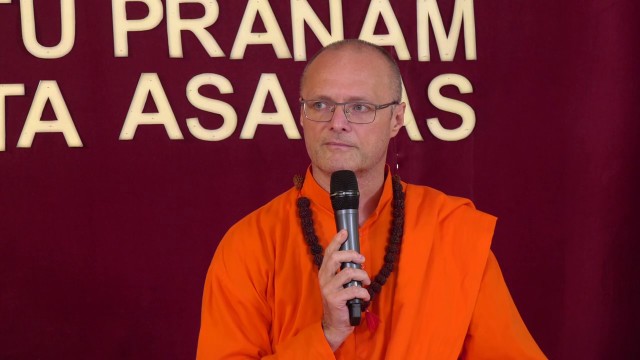
A closing address summarizing a weekend spiritual seminar.
"One topic was our vegetarian food... from Viśvagurujī, we learn the main reason: ahiṃsā paramodharma."
"What we learned from Viśva Gurujī is that it is very important to know how to say 'No' to ourselves."
A speaker concludes a seminar, sharing insights from Viśvagurujī. Key themes include the spiritual principle of non-violence (ahiṃsā) behind vegetarianism, the subtle dangers of the Kali Yuga era, and the importance of steadfast spiritual practice, likened to receiving a protective vaccination. The talk also looks forward to the opening of Om Āśram, emphasizing the need for inner spiritual readiness over mere external form.
Filming location: Strilky, Czech Republic
Selfless action and bhajans
12:50 - 13:22 (32 min)
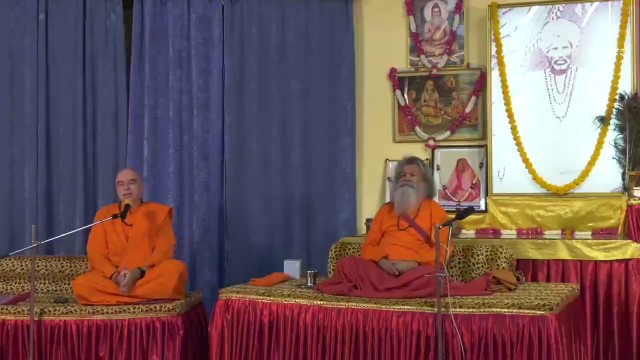
Evening satsang with Vishwaguruji from Jadan Ashram, Rajasthan, India. Swami Gyaneshwar's report from Jadan. You know, I've been living in India for a while now. If you come to Jadan from Jaipur, you will feel the special atmosphere, the peace of the place. In the minds of Indian sages, secular and spiritual knowledge go hand in hand. Karma yoga is selfless help. In Jadan, there is always the possibility to continue the work. In the West, people are used to being alone at any time, so it is difficult to work together with others. Chanting bhajans creates the emotional basis for karma yoga.
Practise faithfully and continuously
13:30 - 14:11 (41 min)
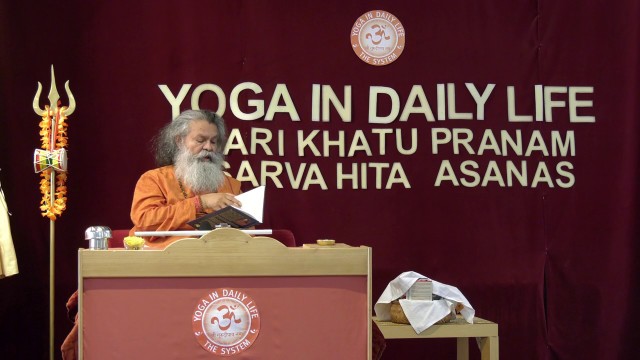
A spiritual teacher instructs students on a daily sādhanā (practice) and leads a bhajan.
"You know the complete process: going there fully, coming here from there, and proceeding."
"Každý môže byť najväčší z najväčších, keď bude robiť tieto cvičenia... každý môže byť najväčším."
The teacher outlines a core daily practice starting from the Mūlādhāra Chakra, emphasizing purity and perseverance. He discusses scriptures, the unity of Śiva and Śakti, and the importance of not abandoning the practice, using a mix of English and Slovak. The session concludes with the singing of the bhajan "Yogī Jano Kī Yoga Nindrā."
Filming location: Strilky, Czech Republic
Human and God
14:15 - 14:48 (33 min)
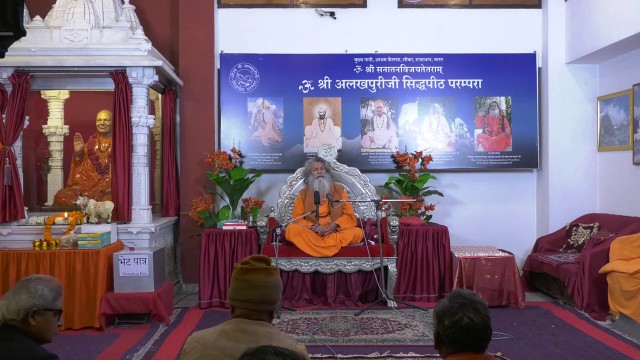
A spiritual discourse expressing concern for the decline of Sanātana Dharma and traditional values.
"Now we don’t know what is happening. We have started eating all kinds of food."
"In our Sanātana Dharma, please show mercy and look after our children."
The speaker, reflecting on years spent abroad and returning to India, delivers an impassioned monologue on perceived spiritual and cultural decay. Key themes include the loss of devotional practices like bhajan, the adoption of non-vegetarian diets, and the neglect of children's traditional education. The talk moves between personal anecdotes, critiques of modern habits, and a call for a return to conscientious living and connection with the divine.
Filming location: Jaipur, Rajasthan, India
The relation between Guru and disciple
14:55 - 15:59 (64 min)
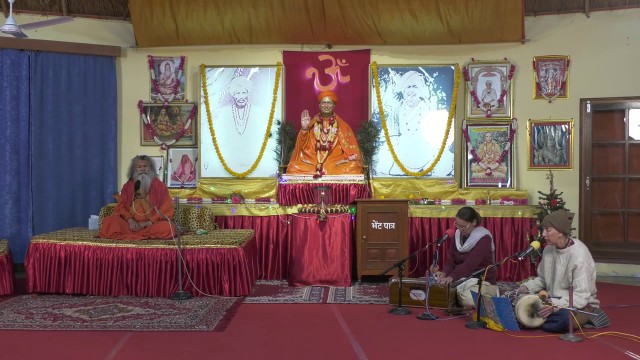
Evening satsang with Vishwaguruji from Jadan Ashram, Rajasthan, India. Holy Guruji and Sri Mahaprabhuji meeting in Jodhpur. How bhajans are performed in India and around the world. Guru and disciple are always in connection with each other. Just as the relationship between mother and child is forever, even if they are not physically in the same place.
There are very much good people everywhere
16:05 - 16:31 (26 min)
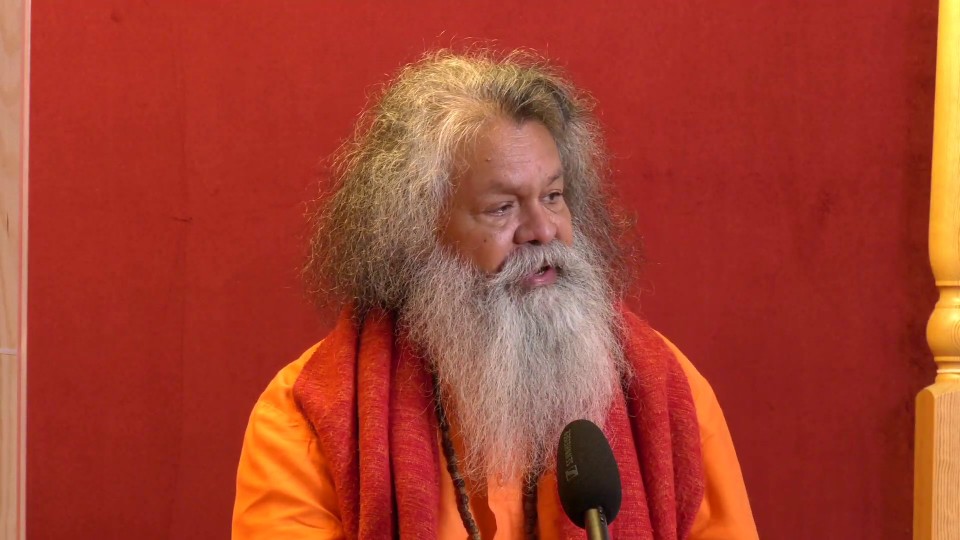
A spiritual teacher shares reflections on community, practice, and universal respect.
"One thing is for us: that we have only two things, that is God and you, yes. We are here for all of you."
"We tell them, 'Give them water. If they are hungry or something, you can give them food,' and respect them like this."
The speaker, likely a Swami, addresses a gathering, weaving personal anecdotes from travels in Europe with core principles of Sanātana Dharma. He emphasizes inclusivity, service, and maintaining the sanctity of the ashram space, while contemplating deep questions of peace, equality, and life's purpose. The talk circles themes of welcoming all visitors without imposing religious views.
Filming location: Vienna, Austria
Shiva is the first
16:35 - 17:00 (25 min)
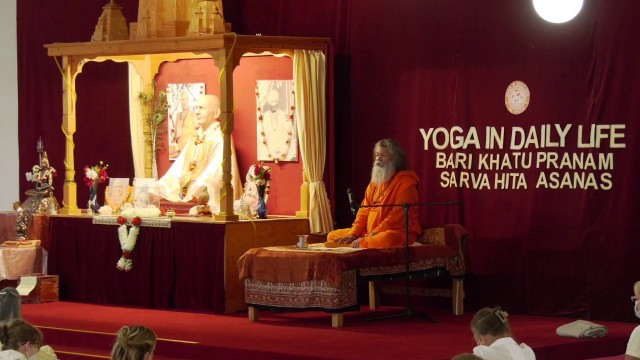
Morning satsang with Vishwaguruji from Strilky Ashram, Czech Republic. The prinviple of Guru is above Brahma Visnu and Siva. Many children are suffering from parents today. Bhajan singing.
Donate to handicapped people if you can
17:05 - 17:45 (40 min)
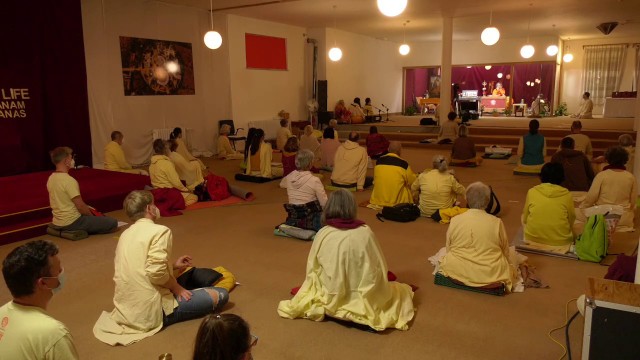
Evening satsang with Vishwaguruji from Strilky, Czech Republic. Vishwaguruji speaks about his next travel to India where he renewed a temple near Mahaprabhuji's birth péace. There will be very beautiful programmes. It will be also Holiguruji's Mahasamadhi day. Many people will come there from all over the world for these occasions. UNO also remembers Holiguruji. They collect bring and give a donation to poor and handicapped people. We should also donate some money to them if we can. We should come back to healthy food. Bhajan singing.
Practise every morning
17:50 - 18:31 (41 min)
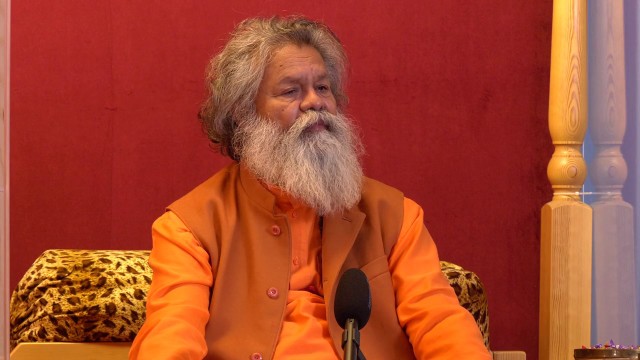
A morning satsang on the universal human spiritual identity and practice.
"Early in the morning, they also give mantra. Among them, there are those who can do it and those who should not."
"So therefore, let's see, we can do morning that open our eyes and say, 'I am human.'"
A speaker leads a morning discourse, reflecting on the common spiritual seeking found across all religions and peoples, using the dedicated prayer practices of Muslims as a primary example. The talk explores the meaning of being human, observing the nature of animals and birds, and emphasizes a morning practice of self-recognition and connection to the earth as a mother. The session concludes with a critique of chemical agriculture and a blessing.
Filming location: Jadan, Rajasthan, India
About the thousand names of Vishnu
18:35 - 19:05 (30 min)
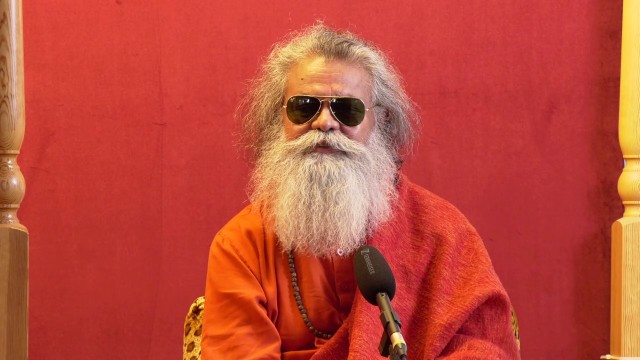
Evening satsang with Vishwaguruji from Guruji Ashram, Vienna, Austria.
Selfless action and bhajans
19:10 - 19:42 (32 min)
Evening satsang with Vishwaguruji from Jadan Ashram, Rajasthan, India. Swami Gyaneshwar's report from Jadan. You know, I've been living in India for a while now. If you come to Jadan from Jaipur, you will feel the special atmosphere, the peace of the place. In the minds of Indian sages, secular and spiritual knowledge go hand in hand. Karma yoga is selfless help. In Jadan, there is always the possibility to continue the work. In the West, people are used to being alone at any time, so it is difficult to work together with others. Chanting bhajans creates the emotional basis for karma yoga.
The relation between Guru and disciple
19:50 - 20:54 (64 min)
Evening satsang with Vishwaguruji from Jadan Ashram, Rajasthan, India. Holy Guruji and Sri Mahaprabhuji meeting in Jodhpur. How bhajans are performed in India and around the world. Guru and disciple are always in connection with each other. Just as the relationship between mother and child is forever, even if they are not physically in the same place.
Vishwaguruji's first visits to Czechoslovakia
21:00 - 21:53 (53 min)
Evening satsang with Vishwaguruji from Strilky Ashram, Czech Republic. The first time I went to Czechoslovakia, it was still a communist country, and the devotees in Vienna were afraid of me and told me not to go. But I wanted to go and some people from Vienna went with me. At that time there was a lot of snow. People came from different countries, different religions and they asked me to teach them yoga. Three people came with me on all my trips, one of them was Lalita. They took the yoga forward, and that was the beginning of the development and expansion of the Yoga in Daily Life all over the world.
Around the world - Opening of new YIDL center in Murska Sobota, Slovenia
22:00 - 22:42 (42 min)
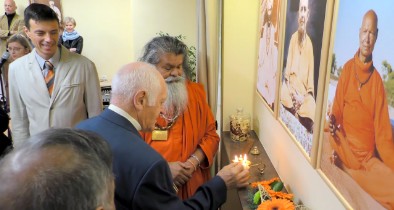
We are never old for yoga
22:50 - 23:03 (13 min)
A closing address summarizing a weekend spiritual seminar.
"One topic was our vegetarian food... from Viśvagurujī, we learn the main reason: ahiṃsā paramodharma."
"What we learned from Viśva Gurujī is that it is very important to know how to say 'No' to ourselves."
A speaker concludes a seminar, sharing insights from Viśvagurujī. Key themes include the spiritual principle of non-violence (ahiṃsā) behind vegetarianism, the subtle dangers of the Kali Yuga era, and the importance of steadfast spiritual practice, likened to receiving a protective vaccination. The talk also looks forward to the opening of Om Āśram, emphasizing the need for inner spiritual readiness over mere external form.
Filming location: Strilky, Czech Republic
How shall we go further?
23:10 - 0:10 (60 min)
Evening satsang with Vishwaguruji from Strilky Ashram, Czech Republic. Yoga is yoga in every yoga centre but all Gurus give a name to their centre. In this Kali Yuga, all yogis try to reach God. We should feel each other like brothers and sisters. When we die nothing will go with us. There are two paths one to the Parabrahma and one is back to this Earth. God has given everything and not us. Every yoga path is good. We should be humble and love everyone. Our body is temporary our Atma will go further towards the Paramatma. The lectures and bhajans of Indian yogis are unbelievable. Explanation of bhajan Guruvara Mai Calu Sa Una Des. Bhajans are for all. Explanation of bhajan Divana Ssataguru Nam Ka Mastana Heli
American
Australian