
European
Sanyas Diksha of Swami Chandrapuriji
0:04 - 0:14 (10 min)
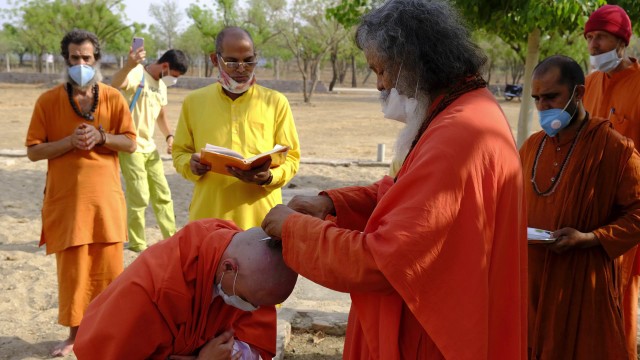
A devotional satsang featuring invocations, chants, and poetic verses.
"Śiva-śakti nahī̃ thā, liṅga nahī̃ thā, bhaga nahī̃ thā. Nakha cīr ke liṅga banāyā, kamar cīr ke bhaga banāyā."
"Kaun Guru Ne Kaata Kes, Kaun Purush Ne Diya Updes? Alakh Purush Ne Kaata Kes, Satguru Ne Diya Updes."
The session opens with a call for a spiritual journey and a collective resolve. It proceeds with a series of Sanskrit mantras and salutations to deities and gurus, including Guru Brahma and Śrī Durgā. A poetic verse describes a primordial creation myth, followed by a devotional dialogue between Ganesh and Mahesh (Shiva) inquiring about divine actions and teachings. The gathering concludes with triumphant praises to various manifestations of the divine and the eternal dharma.
The River of Selfless Service
0:15 - 0:47 (32 min)
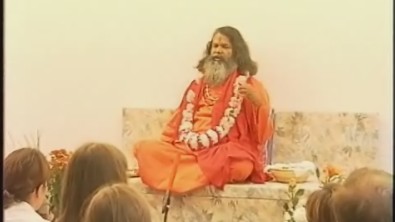
A satsang discourse on karma yoga, selfless service, and spiritual practice.
"Work is the beauty of life, but this work should be positive, selfless service."
"All that he did is for himself, for his soul, for his liberation."
The lecturer addresses ashram residents, praising their recent karma yoga efforts. He explores the nature of selfless service, using the example of Hanuman from the Ramayana to illustrate that all spiritual work ultimately benefits the doer's own soul. He outlines the threefold path of svādhyāya (self-study), manan (contemplation), and abhyāsa (practice), urging attendees to overcome personal likes and dislikes to foster inner harmony and continue flowing like a river in service.
Filming location: Zagreb, Croatia
At the roots of our Parampara
0:55 - 2:27 (92 min)
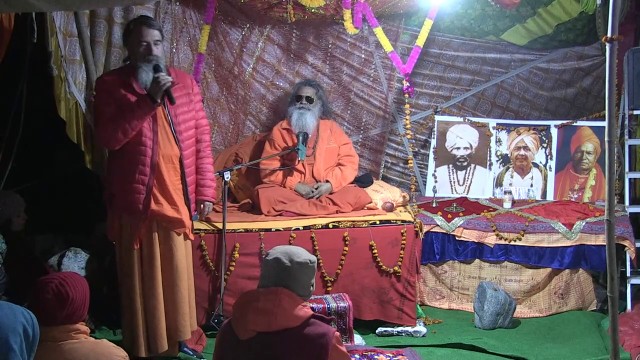
Evening satsang from Himalaya. Swami Dyaneswarpuri said that we should use our name Yoga in Daily Lide otherwise somebody else will do it. It is a big oportunity to visit in Badrinath with Vishwaguruji which is a very importana pilgrimage place in India. Sadwi shanti has felt love for her childhood towards mountens. She speaks about her journey in the Himalayas. She many times came back there and feel like her home. She tells her experiences in Sri Devpuriji's cave. Vishwaguruji's family had a brass plate which was special. There is difference between piano and harmonium. There are different customs when a girl or a boy is born in a willage. Vishwaguruji tells some stories from his childhood. Vishwaguruji has a rishi parampara in his family. Ravana was lerned but he has ego and desire. The story of Ravana and Vidhata Ravanas daughter and her husband. Furudev can change zhe desteny. Guru and disciple is one. In India there is living God. The story of Guruji and one of his discipe who w
Practise faithfully and continuously
2:35 - 3:16 (41 min)
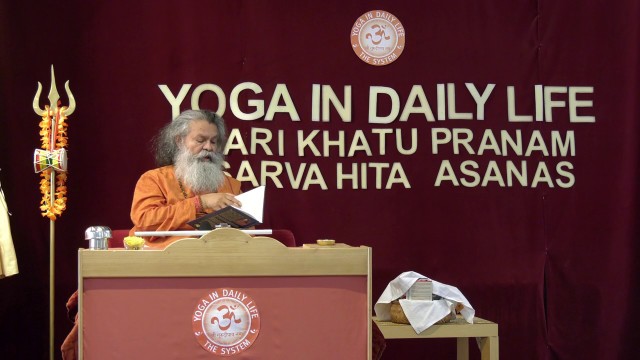
A spiritual teacher instructs students on a daily sādhanā (practice) and leads a bhajan.
"You know the complete process: going there fully, coming here from there, and proceeding."
"Každý môže byť najväčší z najväčších, keď bude robiť tieto cvičenia... každý môže byť najväčším."
The teacher outlines a core daily practice starting from the Mūlādhāra Chakra, emphasizing purity and perseverance. He discusses scriptures, the unity of Śiva and Śakti, and the importance of not abandoning the practice, using a mix of English and Slovak. The session concludes with the singing of the bhajan "Yogī Jano Kī Yoga Nindrā."
Filming location: Strilky, Czech Republic
At the roots of our Parampara
3:20 - 4:52 (92 min)
Evening satsang from Himalaya. Swami Dyaneswarpuri said that we should use our name Yoga in Daily Lide otherwise somebody else will do it. It is a big oportunity to visit in Badrinath with Vishwaguruji which is a very importana pilgrimage place in India. Sadwi shanti has felt love for her childhood towards mountens. She speaks about her journey in the Himalayas. She many times came back there and feel like her home. She tells her experiences in Sri Devpuriji's cave. Vishwaguruji's family had a brass plate which was special. There is difference between piano and harmonium. There are different customs when a girl or a boy is born in a willage. Vishwaguruji tells some stories from his childhood. Vishwaguruji has a rishi parampara in his family. Ravana was lerned but he has ego and desire. The story of Ravana and Vidhata Ravanas daughter and her husband. Furudev can change zhe desteny. Guru and disciple is one. In India there is living God. The story of Guruji and one of his discipe who w
We should have roots
5:00 - 5:59 (59 min)
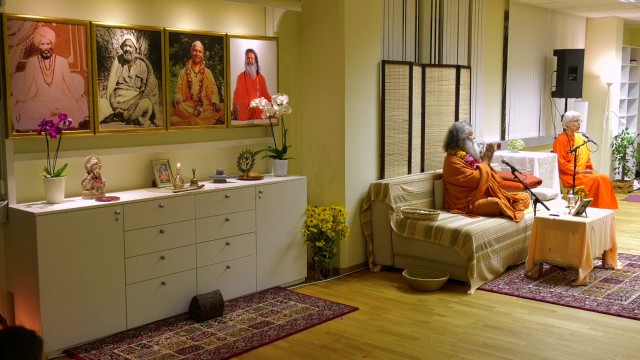
A spiritual discourse on yoga teaching, tradition, and the importance of roots.
"We must always create slightly different techniques for everyone. And all of you should become good teachers, our yoga teachers."
"Where are the roots of your village, your city, and your parents?... So where is the root for you?"
An elder teacher addresses a gathering, emphasizing the need for personalized yoga instruction and for students to become qualified teachers themselves. He critiques superficial academic approaches to yoga while paradoxically advocating for establishing yoga in universities. Using metaphors of children, families, and falling leaves, he stresses the importance of spiritual lineage (parampara) and staying connected to one's roots, ultimately pointing toward the soul's journey and liberation.
Filming location: Slovenia
The stone will melt
6:05 - 6:57 (52 min)
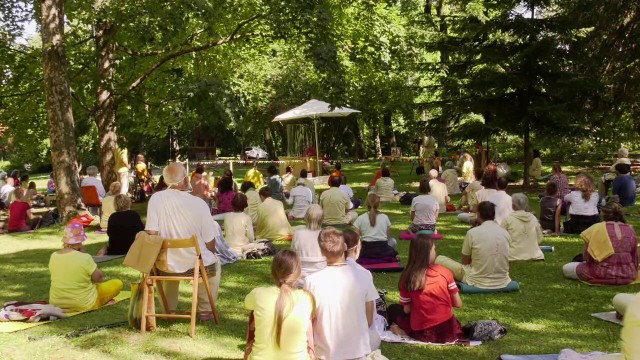
A spiritual discourse and bhajan session on realizing the self as the infinite sky.
"Until we do not achieve that sky, we have not achieved. And that achievement is that it is very easy and very difficult."
"One who has some kind of doubt is like a stone. We would like to have the stone in a nice way, but it is not."
A spiritual teacher addresses a gathering, using the metaphor of the sky to describe the pure, limitless Self (Ātmā). He explains that doubt hardens the heart like a stone, preventing merger with this divine reality, and urges listeners to melt their inner rigidity through surrender and devotion. The discourse references saints like Mahāprabhujī and includes the singing of a lengthy, devotional bhajan that celebrates the Guru as the Soul of all moving and non-moving creation.
Filming location: Strilky, Czech Republic
We have to go on that path
7:05 - 8:02 (57 min)
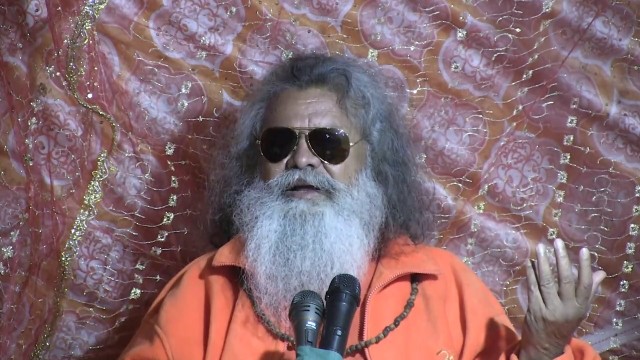
Evening satsang with Vishwaguruji from Himalaya. Sri Alakhpuriji Cave. Here is the place of peace and happiness. Alakhpuriji has given us his carana amrit. Bhagirati's disciple was Ganga and Alakhpuriji's disciple was Nanda Devi. Singing and explanation of bhajan or arati Sri Guru Atma Paramatma. Alakh means we can not write we can not speak about. In reality, Alakhpuruji created this arati through Sivanandji and he brought it to us Vishwaguruji. We have to follow Alkhpuriji's path with concentration. This path drives us to Brahma Loka. We are those souls who can give this blessing and energy. Singing bhajan Sabda Sanehi Mhari Jatra, Guru carano me, Manv Dhire Dhire and Sataguru Satasangi.
At the roots of our Parampara
8:10 - 9:42 (92 min)
Evening satsang from Himalaya. Swami Dyaneswarpuri said that we should use our name Yoga in Daily Lide otherwise somebody else will do it. It is a big oportunity to visit in Badrinath with Vishwaguruji which is a very importana pilgrimage place in India. Sadwi shanti has felt love for her childhood towards mountens. She speaks about her journey in the Himalayas. She many times came back there and feel like her home. She tells her experiences in Sri Devpuriji's cave. Vishwaguruji's family had a brass plate which was special. There is difference between piano and harmonium. There are different customs when a girl or a boy is born in a willage. Vishwaguruji tells some stories from his childhood. Vishwaguruji has a rishi parampara in his family. Ravana was lerned but he has ego and desire. The story of Ravana and Vidhata Ravanas daughter and her husband. Furudev can change zhe desteny. Guru and disciple is one. In India there is living God. The story of Guruji and one of his discipe who w
AUM and Chakras
9:50 - 10:55 (65 min)
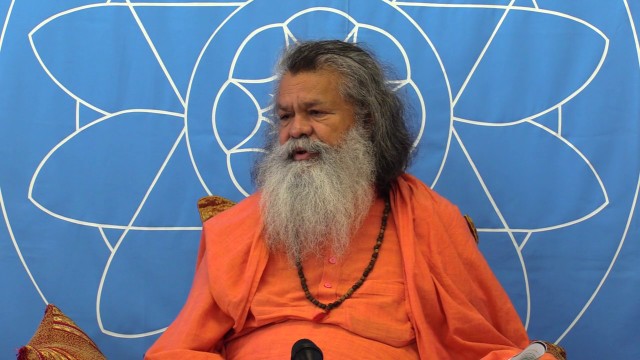
A yoga and prāṇāyāma workshop focusing on the subtle body, breath, and sound.
"These three nāḍīs—the left, right, and center—are coming till the end of these chakras... balancing our whole body, our awareness, our concentration."
"OM is that resonance... this is a very important mantra. It is not a mantra as a resonance, but we have to say it."
An instructor leads a detailed session on yogic anatomy, explaining the nāḍīs (energy channels), the lunar and solar influences on the body, and the therapeutic effects of sound. He provides instructions for several prāṇāyāma techniques, including Nāḍī Śodhana and the chanting of OM, emphasizing their role in purification, balance, and healing for the nervous system and organs.
Filming location: Sydney, Australia
Practicing of the system 'Yoga in Daily Life', Level 3 - Part 1
11:00 - 12:00 (60 min)
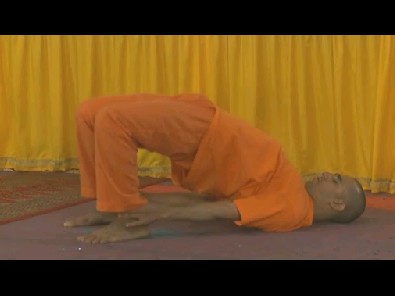
Practicing of the system "Yoga in Daily Life", Level 3 - Part 1, in Om Vishwa Deep Gurukul Swami Maheshwaranand Ashram, Jadan, Rajasthan, India on 27th of October 2009.
Eat pure healthy food
12:05 - 12:52 (47 min)
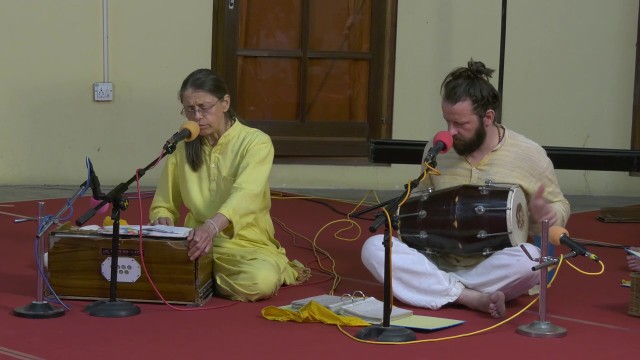
Evening satsang with Vishwaguruji from Jadan Ashram, Rajasthan, India. Bhajan singing. The story of first time Czech people met Vishwaguruji and his first visit in Czechoslovakia. The other story of Vishwaguruji's next coming to Europe and founded his first Ashram there. After that he traveled by train to Hungary first time and after then to other countries also. Many people began to understand the essence of Vishwaguruji's teaching. That brings peace and harmony for the people. To eat meat and eggs will be the cause of many illnesses for us. We usually don't know exactly what is inside in our meal. Newly initiated Swami Anandpuri tells something about his life and his spiritual path.
Practise faithfully and continuously
13:00 - 13:41 (41 min)
A spiritual teacher instructs students on a daily sādhanā (practice) and leads a bhajan.
"You know the complete process: going there fully, coming here from there, and proceeding."
"Každý môže byť najväčší z najväčších, keď bude robiť tieto cvičenia... každý môže byť najväčším."
The teacher outlines a core daily practice starting from the Mūlādhāra Chakra, emphasizing purity and perseverance. He discusses scriptures, the unity of Śiva and Śakti, and the importance of not abandoning the practice, using a mix of English and Slovak. The session concludes with the singing of the bhajan "Yogī Jano Kī Yoga Nindrā."
Filming location: Strilky, Czech Republic
Yoga is One
13:45 - 14:16 (31 min)
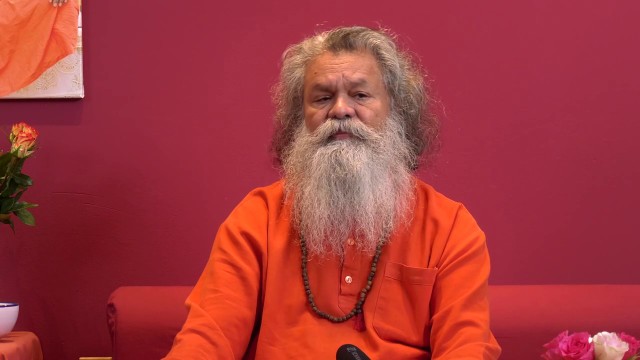
A spiritual talk on the principles and practice of yoga in daily life.
"Yoga is the yoga. It’s the yoga, that’s all then. There’s nothing else."
"Yoga in daily life... means we should practice every day. That’s all. And that is for everyone, whether they are Hindus, Muslims, Christians, or anybody."
The speaker addresses a group, holding up the system's foundational book. He emphasizes that true yoga requires daily practice according to these teachings, not just theoretical knowledge. He discusses the importance of ethical living, notably vegetarianism, criticizes the dilution of yoga by other systems, and urges a return to disciplined, foundational practice. The talk meanders through topics including dietary rules, the global spread of yoga, and personal anecdotes.
Filming location: Austria
Try to be nirmohi
14:20 - 14:56 (36 min)
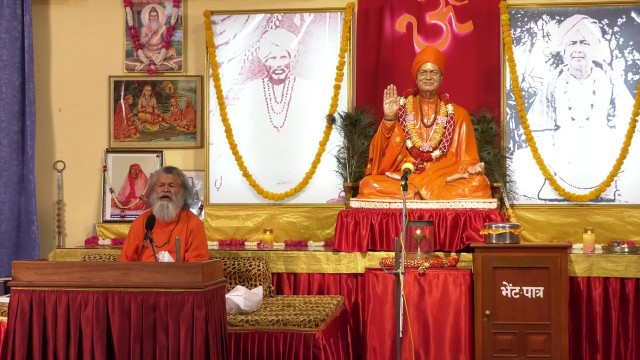
A satsang discourse addressing environmental degradation and spiritual detachment.
"If we do not respect that mother, we will suffer, and the mother will not say anything. But now she is suffering."
"Mohais attachment towards things, attachment towards materialistic stuff... We need to… it is very hard. And how to get rid of this attachment is by attending satsaṅg and by attaining the knowledge of a guru."
Following an opening on ecological harm to Earth and seeds, The lecturer speaks on overcoming attachment (moha). He narrates a parable of a detached king (Nirmohī Rājā) tested by a sage, illustrating the ideal of non-attachment for self-realization. Another speaker expands on how karma and the senses bind us, emphasizing satsang and guiding the mind as a path to wisdom.
Filming location: Jadan, Rajasthan, India
At the roots of our Parampara
15:00 - 16:32 (92 min)
Evening satsang from Himalaya. Swami Dyaneswarpuri said that we should use our name Yoga in Daily Lide otherwise somebody else will do it. It is a big oportunity to visit in Badrinath with Vishwaguruji which is a very importana pilgrimage place in India. Sadwi shanti has felt love for her childhood towards mountens. She speaks about her journey in the Himalayas. She many times came back there and feel like her home. She tells her experiences in Sri Devpuriji's cave. Vishwaguruji's family had a brass plate which was special. There is difference between piano and harmonium. There are different customs when a girl or a boy is born in a willage. Vishwaguruji tells some stories from his childhood. Vishwaguruji has a rishi parampara in his family. Ravana was lerned but he has ego and desire. The story of Ravana and Vidhata Ravanas daughter and her husband. Furudev can change zhe desteny. Guru and disciple is one. In India there is living God. The story of Guruji and one of his discipe who w
The Vedas
16:40 - 17:25 (45 min)
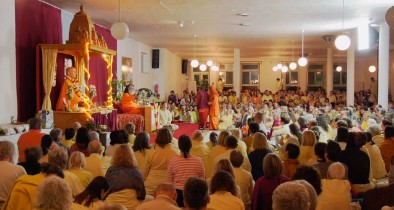
A spiritual talk during a Christmas gathering, focusing on the origin of the Vedas and the importance of family.
"I simply wish to invite you all to come here for the darśana of our Gurudeva and to celebrate this day with him together."
"The Vedas are the holy scriptures. 'Holy' signifies that which is good, that which is divine. This knowledge was always taught by the master to the student."
Swami Ji addresses the community, extending Christmas greetings and emphasizing family. He presents the annual gift, a photo from a Himalayan cave. The talk centers on the story of Vedavyāsa transcribing the Vedas with Lord Gaṇeśa as the scribe, explaining the loss of Gaṇeśa's tusk and the subterranean flow of the Saraswatī River. He connects this to the names of the fellowship president's family, discusses the vastness of Vedic knowledge through a parable of a Himalayan ṛṣi, and concludes with a message for peace during the Christmas season.
Filming location: Strilky, Czech Republic
We are all disciples
17:30 - 18:00 (30 min)
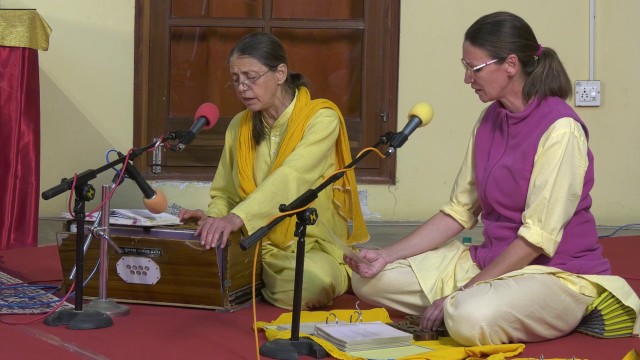
Evening satsang with Vishwaguruji from Jadan Ashram, Rajasthan, India. We are all disciples. No matter what country we live in. The story of Mangilalji and Sri Mahaprabhuji. Singing of bhajans.
Selfless action and bhajans
18:05 - 18:37 (32 min)
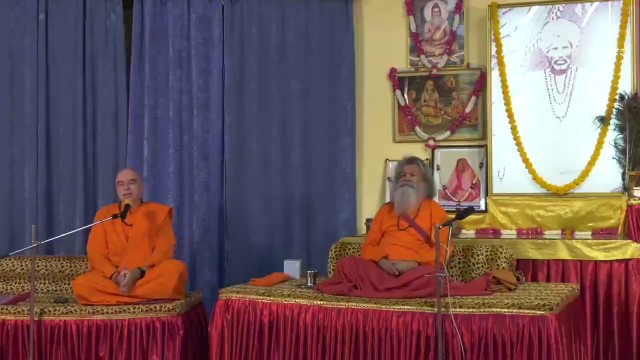
Evening satsang with Vishwaguruji from Jadan Ashram, Rajasthan, India. Swami Gyaneshwar's report from Jadan. You know, I've been living in India for a while now. If you come to Jadan from Jaipur, you will feel the special atmosphere, the peace of the place. In the minds of Indian sages, secular and spiritual knowledge go hand in hand. Karma yoga is selfless help. In Jadan, there is always the possibility to continue the work. In the West, people are used to being alone at any time, so it is difficult to work together with others. Chanting bhajans creates the emotional basis for karma yoga.
We are different but we are one
18:45 - 19:33 (48 min)
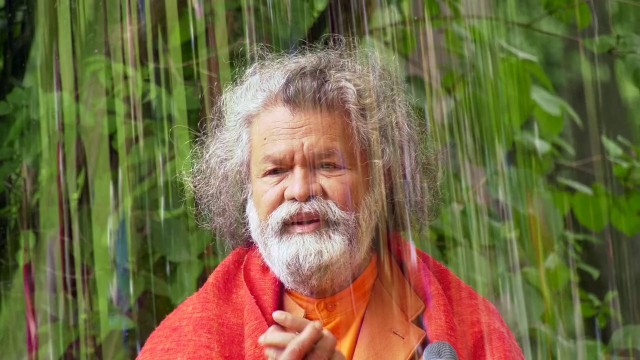
A spiritual talk on ancient lineage, ṛṣis, and living masters.
"Our ṛṣi paramparā comes from Śiva—Alak Purīdhī, Satya Yoga. We are so blessed to have received blessings from that time, from the Satyuga."
"And so the ṛṣis were very great, and they gave us all as that: we are different, but we are one."
Swami Maheshwarananda offers a praṇām to the lineage, tracing it from Śiva and the Satyuga through the saptarṣis. He describes the ancient, natural lifestyle, the role of incarnations like Vārāha, and the unifying wisdom of the ṛṣis for all humanity. He shares personal experiences, including visions of Ālakpurījī in the Himalayas and miraculous accounts of Devapurījī, concluding with a poignant story about a banyan tree as a witness, told to him by his Guruji.
Filming location: Strilky, Czech Republic
Why yoga is more than physical exercises
19:40 - 20:28 (48 min)
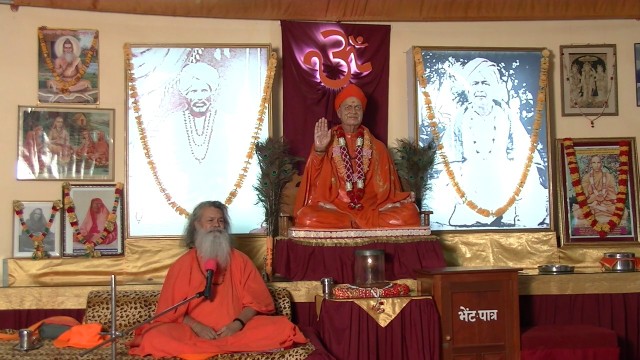
Evening satsang with Vishwaguruji from Jadan Ashram, Rajasthan, India. Deep means light, prakash. Prakash means spiritual awakening, knowledge. Even a blind person can see the inner light. Explanation of the bhiksha tradition - asking for food. Things can go in the best way or in a negative way. Yoga is not only asana and pranayama. We have to develop that quality.
How to release stress
20:30 - 21:27 (57 min)
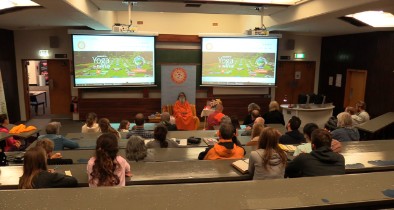
Public lecture of Vishwaguruji from Victoria University in Wellington, New Zealand. Our psychological problems are often connected to a certain fear. Yoga is a solution for removing fear and stress. Vishwaguruji explains the proper chanting of AUM and how to balance the two hemispheres of the brain/nervous system.
Bhajans from Rijeka
21:30 - 21:58 (28 min)
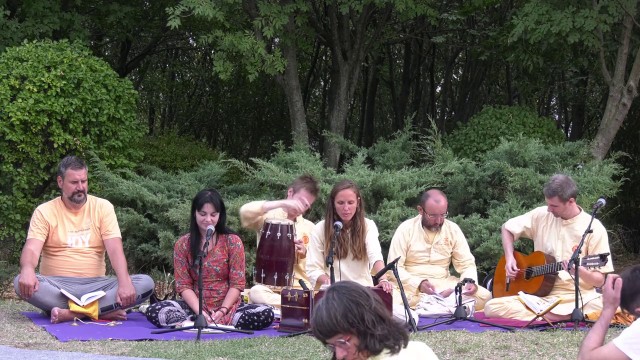
Evening satsang with Vishwaguruji from Rijeka Ashram, Croatia.
Part 1: The Role of Yoga and Meditation in Improving Quality of Life for Cancer Patients
22:00 - 23:07 (67 min)
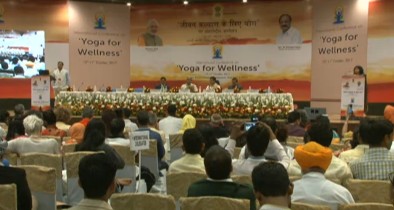
A medical lecture on the role of yoga and meditation as supportive care for cancer patients.
"We must note which specific yogic and meditative techniques were used, as these vary widely."
"Please do not give false hope that cancer will be cured... If a practitioner claims that prāṇāyāma, dhyāna, and some Ayurvedic herbs... can cure cancer, they are committing a grave sin against society."
A doctor from AIIMS Delhi presents a detailed analysis of scientific studies on yogic interventions for cancer patients, emphasizing they are complementary to standard treatments like chemotherapy. He strongly warns against practitioners falsely claiming yoga can cure cancer, shares data on benefits for quality of life and stress, and proposes a large-scale research trial combining yoga, meditation, and herbal products for cancer prevention and care.
Filming location: Delhi, India
Mother and father
23:15 - 23:45 (30 min)
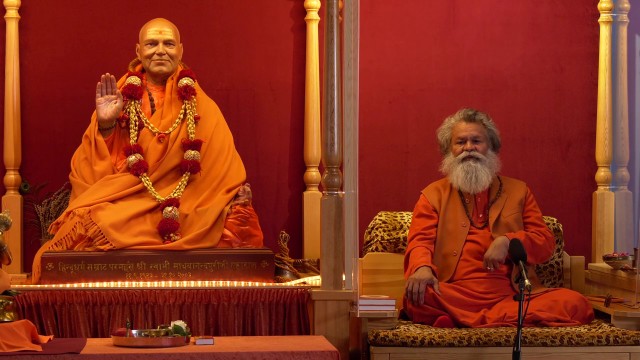
Morning satsang with Vishwaguruji from Guruji Ashram, Austria. Bhajan singing. We respect first the woman, the mother. Vishwaguruji tells the story of his parents. It is very good if we have children and they also practice yoga. Father is also very good because he works much. Yoga in Daily Life gives peace and understanding to the world. Our energy is based on our navel. The seed of our life is coming from the father.
Sri Alakhpuriji and the Himalayas
23:46 - 0:14 (28 min)
A spiritual discourse on the sacredness of the Earth and the Himalayas.
"Our Earth is a living planet, a Living Earth. If God incarnates, if God comes on this earth, God performs His miraculous things here."
"That place is indescribable... Between these beautiful, mighty mountains is a beautiful valley where Ālakpurījī is always residing."
Swami Maheshvarananda delivers a talk, venerating the Earth as a living, holy creation and detailing the profound spirituality of the Himalayas. He describes the region as the abode of divine incarnations like Śiva and great Siddhas such as Ālakpurījī, sharing anecdotes from pilgrimages and emphasizing the need for inner purity to experience this divine reality. The discourse concludes with a blessing for the journey.
Filming location: Vép, Hungary
American
Australian