
European
Everything is in our heart
0:00 - 0:13 (13 min)
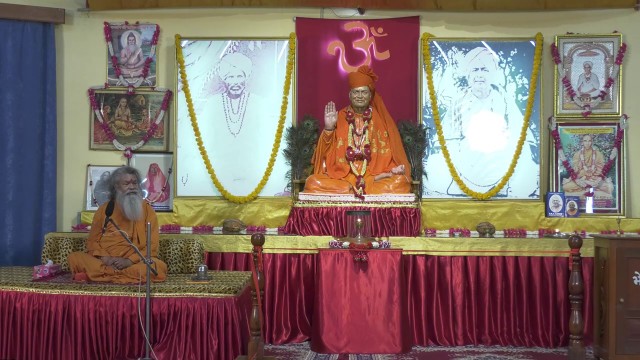
A spiritual discourse reflecting on the grace and presence of the guru through personal anecdotes.
"Please don't, Swāmijī, don't let them take this. Gurujī said, 'Don't worry, let them eat.'"
"What is the guru? What is the sādhu? And what is there, and how it is?"
The lecturer shares a series of recollections and stories involving Mā Prabhujī, Mahāprabhujī, and other spiritual figures, illustrating the mysterious and abundant grace of the guru. He recounts an incident where Gurujī allowed cows to eat from a field, which later resulted in more abundance for the owner. The talk meanders through various memories, highlighting the deep devotion of disciples and the pervasive, guiding presence of the guru in all aspects of life.
Filming location: Jadan, Rajasthan, India
In the bliss of bhajans
0:15 - 1:26 (71 min)
Bhajans from different ashrams in India
The Glory of Gurudeva's Name
1:30 - 1:49 (19 min)
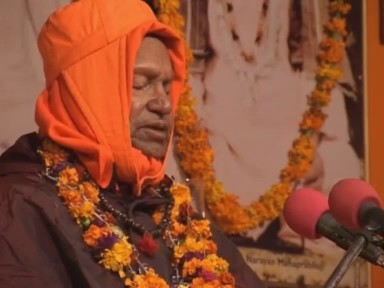
A satsang discourse on the essential role of the true Guru for liberation and bliss.
"Until today, no one in this world has attained the Ātmā-Paramātmā without Gurudev, and no one ever will." "If one chants the Guru's name with faith, one will surely reach the shore."
A speaker addresses the assembly, asserting that true happiness and Self-knowledge come only through grace of a Satguru. He illustrates this with stories of the powerful ascetic Sanghdev, who was liberated by Sant Gyaneshwar, and the egoistic tantric Bhaskarananda, who was humbled by Bhagavan Shri Dip Narayana Mahaprabhuji. The talk emphasizes that rituals and powers are insufficient without the Guru, who alone can dispel ignorance and bestow the bliss of liberation.
Filming location: Bari Khatu, Rajasthan, India
The Pearl of Everlasting Bliss
1:55 - 2:16 (21 min)
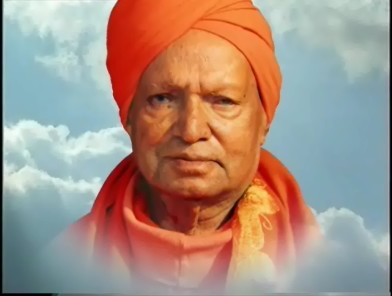
A biographical tribute to the life and legacy of Hindu saint Paramahaṁsa Śrī Svāmī Madhavānandajī.
"My eyes filled with tears, and I fell to my knees. I knew I had found the everlasting light of my life. I was home at last."
"All humans belong to one religion, and that is humanity... ahiṃsā paramo dharma: non-violence is the highest religion."
The narrative chronicles the spiritual journey of Swami Madhavānandaji, from his childhood in Rajasthan and transformative meeting with his guru, Bhagavān Śrīdīp Nārāyaṇa Mahāprabhujī, to his life of devotion, teaching, and global service. It details his initiation, his work establishing ashrams, and his teachings on non-dualism and universal love, culminating in his Mahāsamādhi in 2003 and the continuation of his lineage through his disciple, Swami Māheśvarānandajī.
Filming location: Rajasthan, India; Kathu Ashram, India; Bola Guda Ashram, India; Nepal
Introduction of the Strilky Ashram
2:20 - 2:29 (9 min)
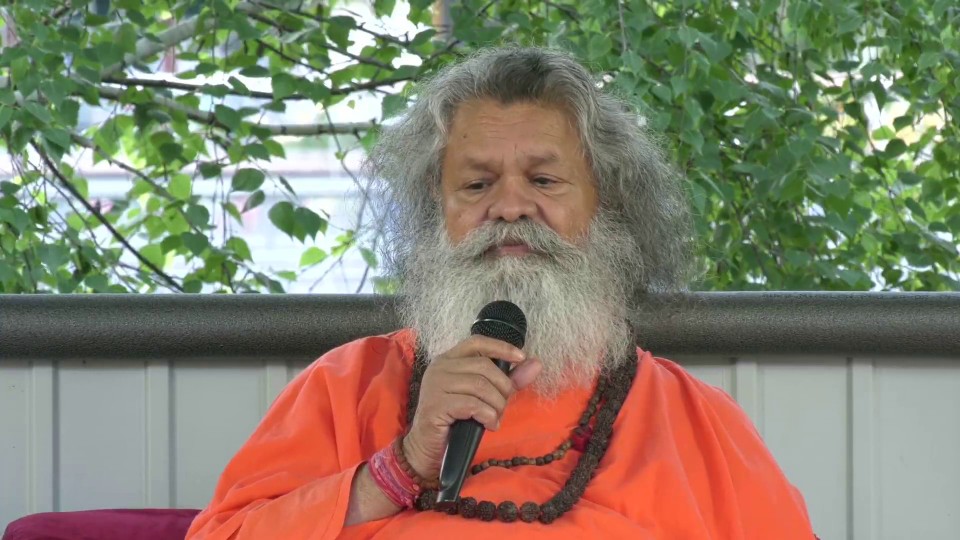
A spiritual leader inaugurates and blesses a new sacred grove for satsang.
"Our yoga people have been in many, many countries: from India, from here in Europe. And from Europe, many of our bhaktas went to other countries."
"I tell you that anytime, if you desire something, if you need something, if something happens, you should come to this place and pray with our mantra. Everything will return to peace and harmony."
The speaker, likely Swami Madhavanandji, addresses a gathering at a newly prepared forest satsang site. He emphasizes the sanctity of the place, its rules of entry, and its power for prayer. He reflects on the ashram's history, its global community of devotees, and the transformative impact of their yoga practice, which leads many to give up meat and alcohol. The talk transitions into a search for the ancient saint Alak Puriji, briefly touching upon associated mythology involving Shiva.
Filming location: Strilky, Czech Republic
Bhajan singing from Strilky Ashram
2:30 - 3:03 (33 min)
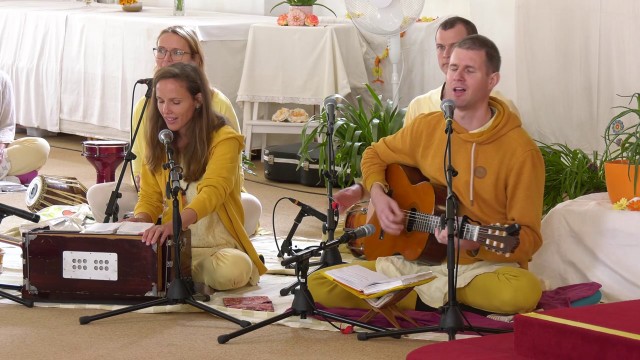
Morning satsang with Vishwaguruji from Strilky Ashram, Czech Republic.
Bhajan evening from Strilky
3:10 - 3:24 (14 min)
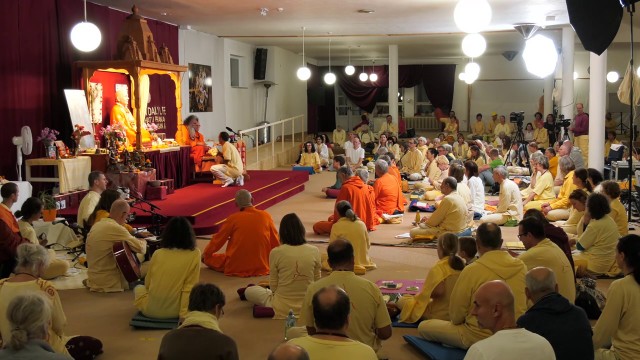
Evening satsang with Vishwaguruji from Strilky Ashram, Czech Republic.
Hymns of Adoration and the Nirvāṇa Ṣaṭkam
3:30 - 3:53 (23 min)
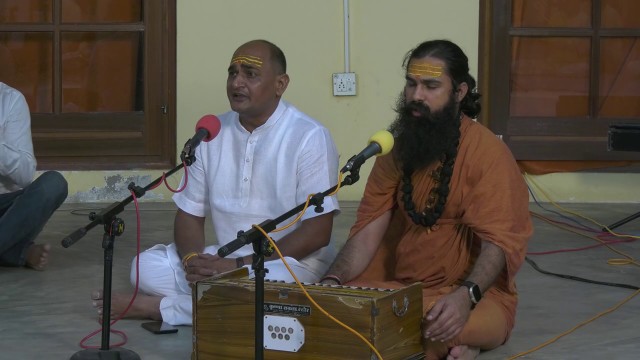
A devotional video featuring the chanting of Sanskrit hymns dedicated to Lord Shiva.
"Na me dveṣa rāgau. Na me lobho, na mādo, neva me neva sāryabhā. Na dharmo, na cārtho, na kāmo, na mokṣaḥ. Cidānanda-rūpaḥ śivo'ham, śivo'ham."
"Brahmā Murārī Surārchitaliṅgam, Nirmalabhāśita Śobhitaliṅgam, Janmajaḍukha Vināśakaliṅgam, Tat praṇamāmi Sadāśivaliṅgam."
The video consists of a continuous recitation of three primary hymns: the Rudrāṣṭakam, the Nirvāṇa Ṣaṭkam (a declaration of the true Self as consciousness and bliss), and the Liṅgāṣṭakam. The chanting is interspersed with and concluded by energetic salutations (jaya) to a lineage of spiritual masters, including Śrī Alakhpurīṣa Mahādeva, Śrī Devapurījī, Śrī Dīp Nārāyaṇa Mahāprabhujī, and others.
Filming location: Jadan, Rajasthan, India
Bhajan singing from Jadan
4:00 - 4:17 (17 min)
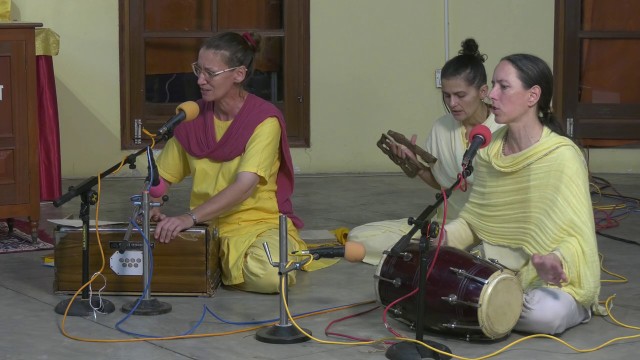
Evening satsang with Vishwaguruji from Jadan Ashram, Rajasthan, India.
Bhajan singing from Strilky Ashram
4:25 - 5:06 (41 min)
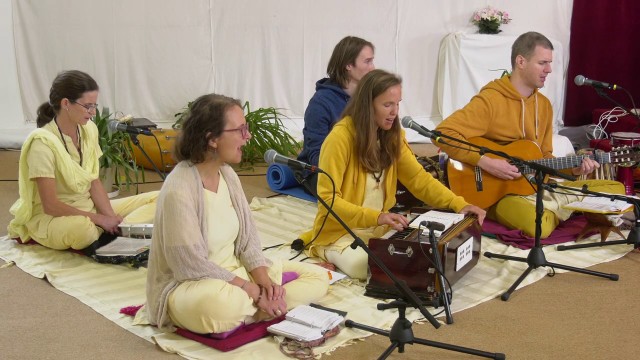
Morning program from Strilky, Czech Republic. Bhajan singing.
Bhajans on the Satsang
5:10 - 6:00 (50 min)
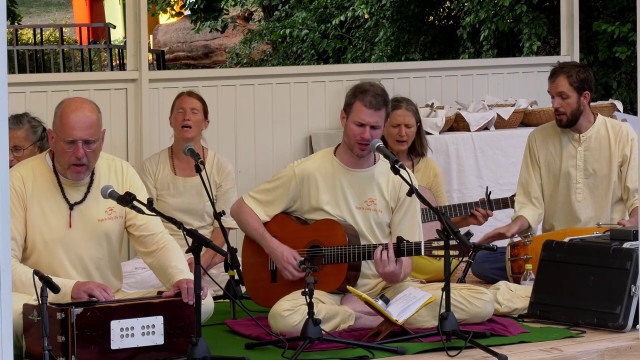
Evening satsang with Vishwaguruji. Bhajan singing.
Success in Yoga
6:05 - 7:20 (75 min)
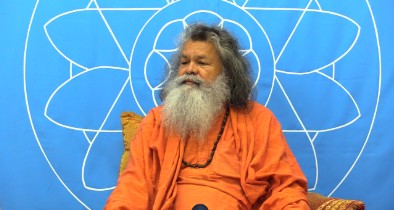
A spiritual discourse on the essence of yoga, cosmology, and the path to liberation.
"If you practice yoga or pursue any goal in life, you need a master to achieve it."
"Yoga is a lifelong journey... Yoga is ancient, the very first element in creation, given by God, by Śiva."
The speaker delivers an extensive teaching, weaving together the origins of yoga from Śiva, the divine trinity of Brahmā, Viṣṇu, and Śiva, and the symbolic journey of the Kuṇḍalinī through the chakras. He uses stories from the Mahāśivapurāṇa, analogies from nature, and personal anecdotes to illustrate the necessity of a true Satguru, the perils of wrong association (ku-saṅgha), and the disciplined, lifelong commitment required for authentic spiritual practice.
Filming location: Sydney, Australia
In the service of Life
7:25 - 8:09 (44 min)
India, Summer 2005. Report about the Swamijis activities.
Shiva and the Chakras
8:15 - 9:40 (85 min)
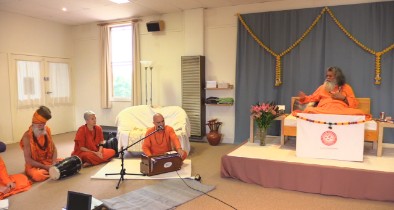
Evening satsang with Vishwaguruji from Melbourne, Australia. One of the best ways to memorize something is to create a little story about it. This is similar with songs. Vishwaguruji explains the meaning of the ancient story about the nectar of immortality rising from the churning of the ocean. The first lower chakras in the feet are the so-called earth chakras; chakras further up in the legs are connected with vegetation; and then continur up to the animal qualities.
Anahat chakra and spirituality
9:45 - 10:53 (68 min)
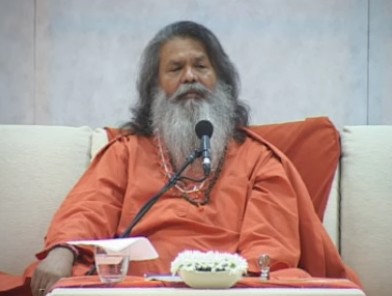
In the city of Celje, Slovenija in the blue hall of the fair center, Swamiji had a lecture on the topic of Anahat chakra and Spirituality on the 5th October 2008.
Practising sarva hitta asanas
11:00 - 11:44 (44 min)
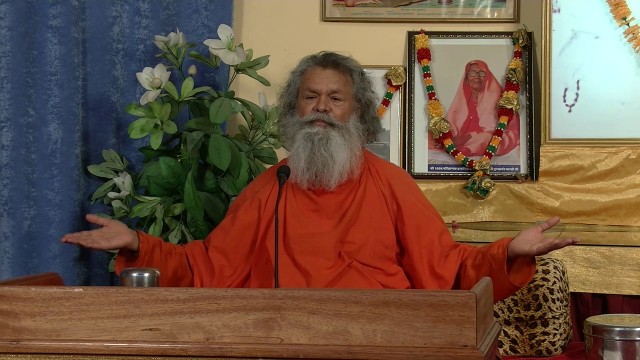
Evening satsang with Vishwaguruji from Jadan Ashram, Rajasthan, India. Practising sarva hita asanas in standing position.
Release your bad qualities
11:50 - 12:42 (52 min)
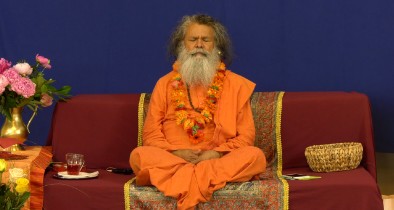
Morning satsang with Vishwaguruji from weekend Yoga seminar in Salzburg, Austria. Traditions are important and more or less similar in the whole world. The Austrian culture is very rich and beautiful. Many books of ancient Indian culture was destroyed by Moguls. We can digest everything except the truth. Tell honestly yourself your negative qualities. Remain natural as it is. Culture and education we should get from our parents. Short meditation how to turn negative to positive.
The origin of Jyotir Linga
12:50 - 13:43 (53 min)
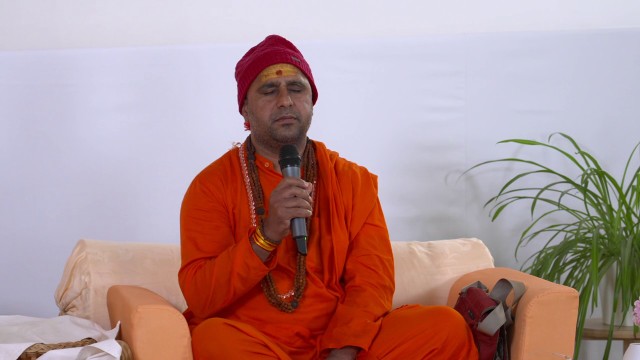
A satsang session featuring personal reflections and scriptural discourse.
"It’s not so much about what the voice is telling you. It’s more about how the voice is speaking with you."
"According to Śiva Purāṇa, Śiva was the creator of Brahmā and Viṣṇu... and that is the beginning."
Nārāyaṇa Purī, a life coach and childhood friend of the swamis, shares insights on managing the inner voice during high-pressure situations like sports, relating it to mantra practice. Swami Phulpuri then answers questions from devotees, explaining the origin of the Śivaliṅga according to the Śiva Purāṇa and affirming the Mahābhārata and Rāmāyaṇa as real historical texts offering lessons on overcoming negative thoughts.
Filming location: Strilky, Czech Republic
Jadan Ashram sets an example
13:50 - 14:37 (47 min)
A spiritual discourse on environmental restoration and inner transformation at an ashram in Rajasthan.
"Slowly, slowly, the forests were disappearing, and the deserts were appearing."
"We are pumping the blood of Mother Earth... No jungle, no forest, no rain."
A speaker recounts the 25-year journey of the Jadan ashram, founded by Swāmījī (Gurudev Viśwa Gurujī), to regenerate a degraded landscape. He describes how human attachment and greed led to environmental decline, placing the story within the context of Kali Yuga. The talk details the practical methods used to capture rainwater, raise the water table, and reforest the land with native species, transforming the site into a thriving ecosystem that attracts wildlife. He parallels this physical transformation with the disciples' inner spiritual journey, facilitated by the Master's guidance and seva, turning a "spiritual desert" into a flourishing state.
Filming location: Jadan, Rajasthan, India
Vishwagurujis speech at peace conference in Prague
14:45 - 15:24 (39 min)
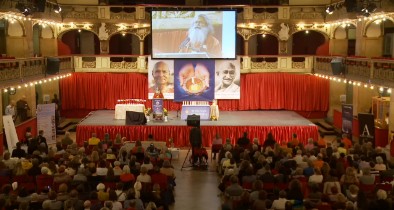
A satsang on the spiritual lineage and core principles of Yoga in Daily Life.
"I waited a long time—about 51 years—because... until I could find the roots, I did not speak more about it."
"When compassion awakens in your heart, you become a mother. That womb of the mother is the heart. You feel the pain, the pity, the suffering of others—not only humans, but every creature."
Swami Maheshwarananda (Swamiji) addresses a gathering, revealing the ancient Himalayan roots of his yoga tradition stemming from the saint Ālakapurījī. He explains the foundational role of compassion and non-violence (ahiṁsā) in spiritual practice, describing the journey from individual soul to universal Ātmā. He shares anecdotes about introducing yoga to Czechoslovakia, praising the peaceful adoption of the practice and its role in fostering personal and social harmony.
Filming location: Prague, Czech Republic
The Glory of Gurudeva's Name
15:30 - 15:49 (19 min)
A satsang discourse on the essential role of the true Guru for liberation and bliss.
"Until today, no one in this world has attained the Ātmā-Paramātmā without Gurudev, and no one ever will." "If one chants the Guru's name with faith, one will surely reach the shore."
A speaker addresses the assembly, asserting that true happiness and Self-knowledge come only through grace of a Satguru. He illustrates this with stories of the powerful ascetic Sanghdev, who was liberated by Sant Gyaneshwar, and the egoistic tantric Bhaskarananda, who was humbled by Bhagavan Shri Dip Narayana Mahaprabhuji. The talk emphasizes that rituals and powers are insufficient without the Guru, who alone can dispel ignorance and bestow the bliss of liberation.
Filming location: Bari Khatu, Rajasthan, India
Beauty is in our heart
15:55 - 16:43 (48 min)
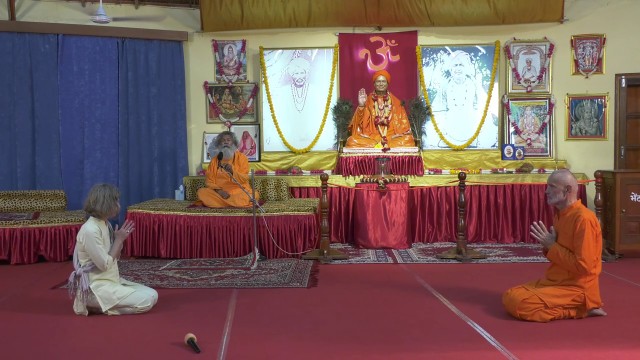
Evening satsang with Vishwaguruji from Jadan Ashram, Rajasthan, India. Yogis don't eat meat and don't drink alcohol. Nowadays there are many people in the world who don't eat meat. Practising Bari Khatu Pranam, relaxation, concentration om tha navel, bhramari pranayama and concentration on the heart. Beauty is in our heart.
Be aware of the importance of your life!
16:50 - 17:31 (41 min)
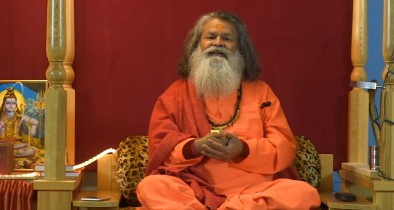
Evening satsang with Vishwaguruji from Vienna, Austria. The full moon affects us whether we are aware of it or not. We are searching for our aim, but we have many complications in this world. Finally we have to leave with empty hands. By practicing yoga vidya we can awaken our awareness.
Time according to Vedas and Puranas I part
17:35 - 18:30 (55 min)
A lecture on the Vedic and Purāṇic concept of cyclical time.
"The concept of time, as understood by the Vedas and those ancient scriptures, is cyclical. Everything moves in a circle."
"One thousand Mahāyugas form one Kalpa... A Kalpa lasts 4.32 billion years. It is either Brahmā’s day or Brahmā’s night."
A speaker at a yoga retreat in Střílky explains the vast, cyclical time scales of Hindu cosmology. He details the durations of the four yugas, the Mahāyuga, and the Kalpa, describing the periodic dissolutions (Laya, Pralaya) and the roles of Brahmā, Viṣṇu, and Śiva. He draws parallels to modern scientific concepts like the expanding universe and the cosmological singularity, and shares a story about Indra to illustrate the transience of even divine positions.
Filming location: Strilky, Czech Republic
Mantra and Mala
18:35 - 19:13 (38 min)
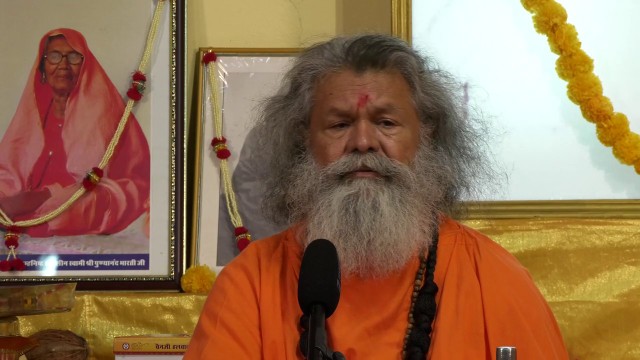
A spiritual discourse on the use of prayer beads (mala) and the practice of mantra.
"Life is everything. Whether it is a human, a cow, a buffalo, a goat, or any being... its soul, that Ātmā, is to see our Self."
"One mala means for us one step toward God. One step to God. This mala goes with mantra."
A speaker delivers a teaching on spiritual practice, emphasizing reverence for all life and the importance of constant remembrance of God. He explains the purpose of the mala as a tool for mantra repetition, detailing two methods: one with a guru bead for seated practice and another for constant, walking remembrance (sumaran). He shares anecdotes about devotion, including a story about Hanuman, and concludes by describing the ultimate goal of merging with divine light.
Filming location: Jadan, Rajasthan, India
We need Gurudev
19:20 - 20:14 (54 min)
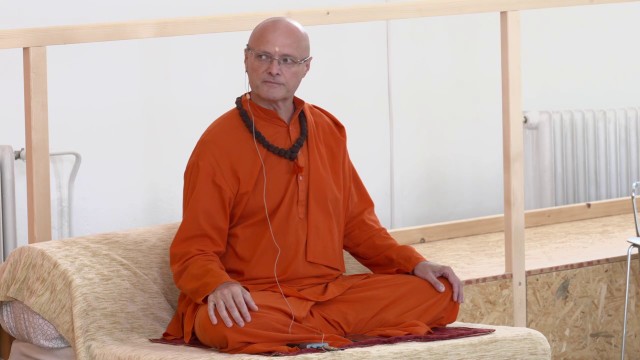
A satsang discourse on the necessity of the guru and the goal of Advaita philosophy.
"The moment you begin to think you have already heard and know everything, in that moment your free fall begins."
"Understand from this that the guru is not the physical body. It is most important to understand that the guru is that Guru-Tattva, the element of the guru."
A speaker leads a satsang, emphasizing the eternal student's attitude and the critical role of the embodied spiritual master (Guru-Tattva) as the essential guide. Using stories and analogies—such as the matchbox with a diamond, the friend with a boat, and the river merging into the ocean—the talk explains the guru's function and explores the ultimate goal of yoga: to transcend the cycle of rebirth and realize the Advaita (non-dual) union of the individual self with the cosmic Self.
Filming location: Strilky, Czech Republic
The Pearl of Everlasting Bliss
20:20 - 20:41 (21 min)
A biographical tribute to the life and legacy of Hindu saint Paramahaṁsa Śrī Svāmī Madhavānandajī.
"My eyes filled with tears, and I fell to my knees. I knew I had found the everlasting light of my life. I was home at last."
"All humans belong to one religion, and that is humanity... ahiṃsā paramo dharma: non-violence is the highest religion."
The narrative chronicles the spiritual journey of Swami Madhavānandaji, from his childhood in Rajasthan and transformative meeting with his guru, Bhagavān Śrīdīp Nārāyaṇa Mahāprabhujī, to his life of devotion, teaching, and global service. It details his initiation, his work establishing ashrams, and his teachings on non-dualism and universal love, culminating in his Mahāsamādhi in 2003 and the continuation of his lineage through his disciple, Swami Māheśvarānandajī.
Filming location: Rajasthan, India; Kathu Ashram, India; Bola Guda Ashram, India; Nepal
The Youth for Sustainable Future
20:45 - 21:19 (34 min)
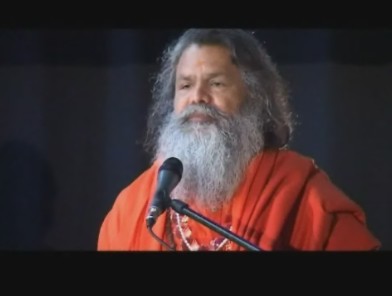
The 4th International Conference of Children and Youth in Zlin 2005 (CZ), The Youth for Sustainable Future.
The Guru can change our destiny
21:25 - 21:47 (22 min)
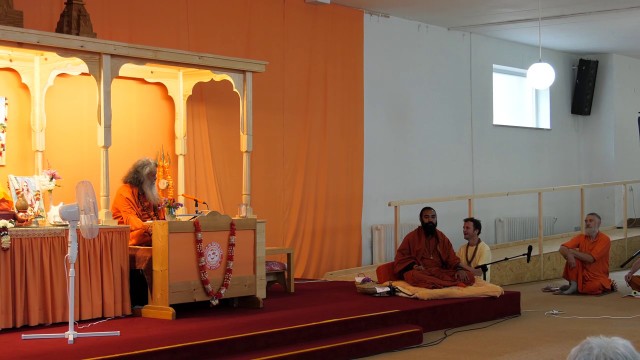
A spiritual discourse on the guru's power to transform destiny.
"Everything depends on our karmas... What is written for you, what is written in your destiny, that is what is going to happen."
"Guru Kṛpāhi Kevalam... So this is Guru Kṛpā. The guru is the one who can actually change your destiny if he wants."
The lecturer narrates a traditional story from Holī Gurujī about a king's guru and the Vedāntā, the deity who writes destiny. The tale illustrates how a guru's compassion and clever guidance can alter the seemingly fixed fate of two princes, demonstrating the supreme grace of the guru. The discourse emphasizes the guru's equal love for all, regardless of status.
Filming location: Strilky, Czech Republic
The wish-tree Puja
21:50 - 21:58 (8 min)
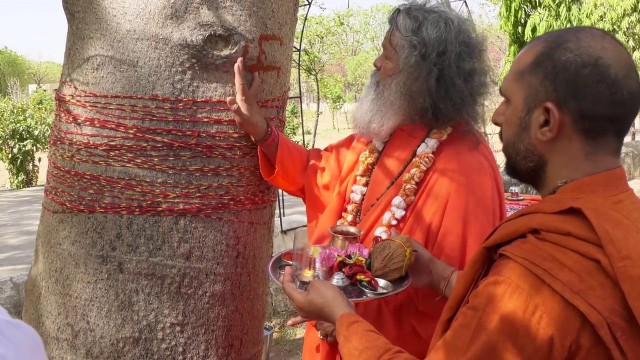
The wish-tree Puja from Jadan Ashram, Rajasthan, India.
The Essence of Yoga in Daily Life
22:00 - 22:35 (35 min)
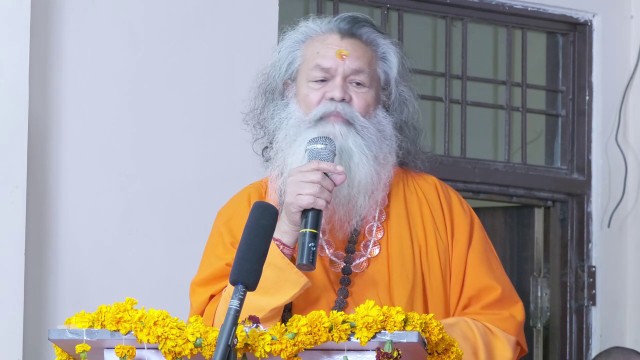
A spiritual discourse and award ceremony on integrating yoga and Sanātana Dharma into daily life.
"You should know why you have come to this world." "Yoga in daily life means in the whole world, in the whole world."
A speaker, referencing Gurudev and Swami Madhavanand, delivers a wide-ranging talk emphasizing the purpose of human life, the principles of yoga, and the protection of animals and Indian culture. He shares anecdotes about teaching yoga abroad, insists on vegetarianism for practitioners, and discusses the global spread of both meat-eating and veganism. The event includes the presentation of awards for promoting Indian culture and peace, with thanks given to organizing institutions like Apex University and the Yoga in Daily Life Foundation.
Filming location: Jaipur, Rajasthan, India
Yoga and Ayurveda for wellbeing
22:40 - 0:05 (85 min)
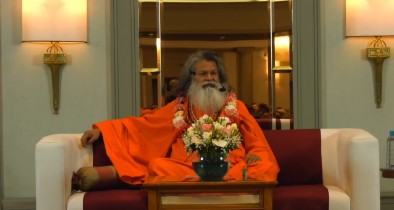
Public lecture of Vishwaguruji from Hotel Sheraton in Zagreb, Croatia.
American
Australian