
European
Part 1: The Awakening of Consciousness: Kuṇḍalinī and Cakras
0:15 - 2:09 (114 min)
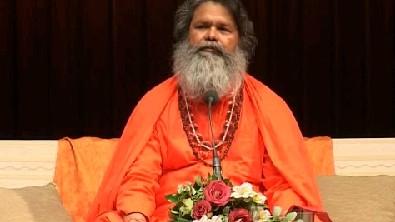
A lecture on Kundalini, chakras, and the science of yoga.
"Yoga is not a religion, it is not a philosophy, it is not a dogma, but it is the eternal principle in this universe, like the cosmic consciousness itself."
"The awakening of the Kuṇḍalinī is a divine process; you don't feel it as a physical sensation. You feel happy, as if in the lap of the mother."
Swami Maheshwarananda delivers an extensive discourse on the awakening of consciousness through Kundalini and the chakra system. He explains yogic anatomy, including the 72,000 nāḍīs (energy channels) and the major chakras, describing their roles in physical, mental, and spiritual development. The talk covers the interplay of mind, intellect, and subconscious impressions, the importance of dharma, and the ultimate goal of uniting individual consciousness with the Cosmic Consciousness.
Filming location: Zagreb, Croatia
Feel oneness and protect all creatures
2:15 - 2:45 (30 min)
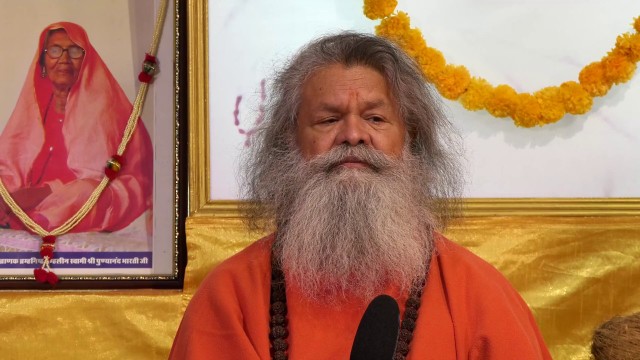
A spiritual discourse on compassion, the divine essence, and universal unity.
"God itself is present within this body. And God has given humans to us as God itself."
"Sooner or later, we will be one with that water, the ocean. This means God."
A spiritual teacher addresses a global audience, reflecting on the sanctity of life and the sin of killing animals for food. He contemplates the nature of divine suffering through the example of Jesus and uses the metaphor of a water drop returning to the ocean to describe the soul's journey to union with God. The talk expands into a message of peace and reconciliation for the Christmas season, emphasizing oneness beyond all divisions.
Filming location: Jadan, Rajasthan, India
The materialized OM
2:50 - 3:12 (22 min)
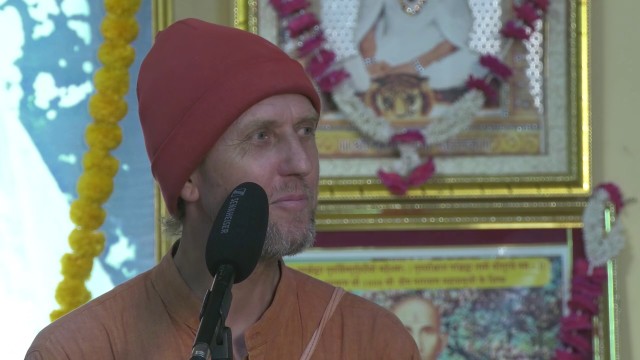
An address to the ashram community about the final push to complete the Omāśram temple.
"Four months will pass like the blinking of an eye."
"It is a part of our work to make it happen that this crown will now be presented to Swāmījī."
A speaker addresses the gathered residents and volunteers, emphasizing the imminent opening ceremony of the home temple. He describes the transformative energy brought by Gurudev's presence and the accelerated pace of work, urging everyone to participate and to invite skilled helpers from abroad. The talk reflects on the ashram's profound growth over decades and frames the project as a divine vision materializing for the benefit of future generations.
Filming location: Jadan, Rajasthan, India
At the roots of our Parampara
3:20 - 4:52 (92 min)
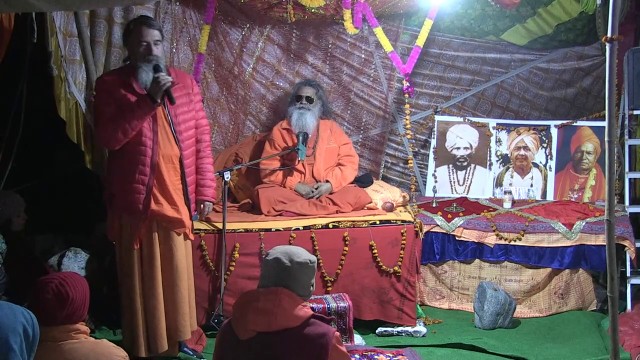
Evening satsang from Himalaya. Swami Dyaneswarpuri said that we should use our name Yoga in Daily Lide otherwise somebody else will do it. It is a big oportunity to visit in Badrinath with Vishwaguruji which is a very importana pilgrimage place in India. Sadwi shanti has felt love for her childhood towards mountens. She speaks about her journey in the Himalayas. She many times came back there and feel like her home. She tells her experiences in Sri Devpuriji's cave. Vishwaguruji's family had a brass plate which was special. There is difference between piano and harmonium. There are different customs when a girl or a boy is born in a willage. Vishwaguruji tells some stories from his childhood. Vishwaguruji has a rishi parampara in his family. Ravana was lerned but he has ego and desire. The story of Ravana and Vidhata Ravanas daughter and her husband. Furudev can change zhe desteny. Guru and disciple is one. In India there is living God. The story of Guruji and one of his discipe who w
We have to become united in Oneness
5:00 - 6:17 (77 min)
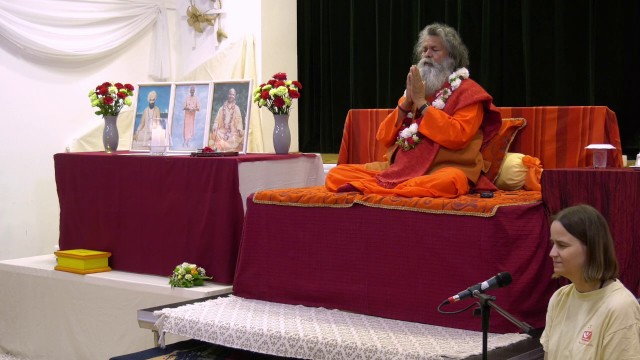
Evening program with Vishwaguruji from Szeged, Hungary. We have our destiny in which it is written when and where we are. The story of a boat in the ocean and a bird. It is in our fate that we want to reach God. We are like a bird coming and going. Life is only temporary. Every living creature has its fate and life. Become one with all. At the end, a drop of water arrives at the ocean and becomes one with it. When we die, our soul goes from the body, which is like a stone falling down. Some of us go towards the pure Light and others come back again. There is only one door when we leave our bodies. Nowadays children don't accept the advice of their parents. Don't kill anyone and don't speak negative words. Practising AUM chanting, bhramari pranayama and some simple asanas.
Eat healthy food and live as a human
6:25 - 7:08 (43 min)
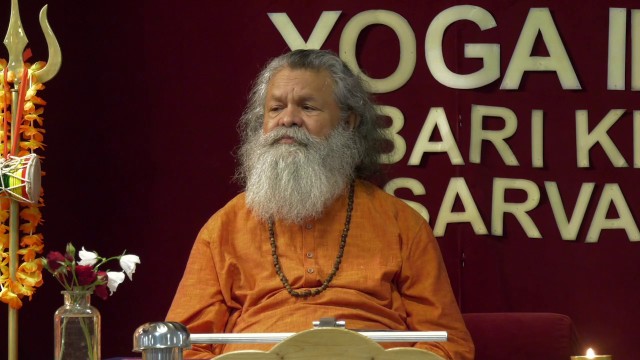
A spiritual discourse on prayer, lifestyle, and simple daily remembrance.
"Morning, midday, evening—always the whole family, women, men, and children. When they sat at the table to eat, they would pray."
"When we open our eyes, then tell, 'I am human.'... And then, second, don't look at animals and this and that first. Mother, mother. So see our mother."
The lecturer reflects on the decline of traditional prayer across religions and its connection to modern societal problems. He discusses dietary shifts, including the rise of veganism, and critiques modern agriculture's impact on the earth. He concludes with a simple daily practice: upon waking, remember "I am human," honor Mother Earth, and reverence water as life.
Filming location: Strilky, Czech Republic
Where can we see God?
7:15 - 8:26 (71 min)
A spiritual discourse on seeking God and the science of yoga within the human body.
"Where can I see God? We have here self-realized masters. We can say that they are, for me, my God, but still not that which we are searching for."
"God is within us. God is within us and in every creature."
Swami Madhvanaji delivers a talk exploring the omnipresence of the divine in creation, from water to human beings. He shares parables, including one about a bamboo sacrificed to become Krishna's flute, to illustrate surrender and God's will. The discourse then shifts to the human body as a divine instrument, explaining the network of 72,000 nerves, the five elements, and the practice of pranayama to purify nadis and balance chakras for physical and mental health. He cautions against forceful yoga and emphasizes a natural, moderate lifestyle.
Filming location: New Zealand
Be vegetarian or vegan
8:30 - 9:40 (70 min)
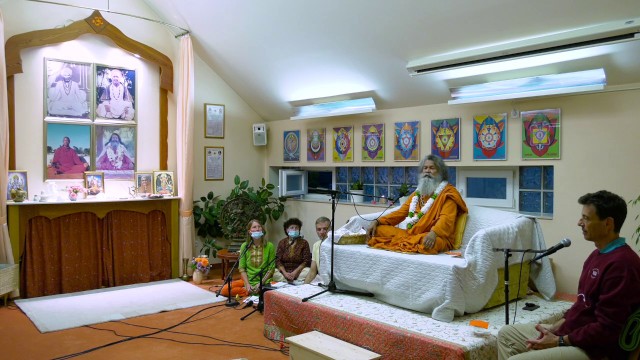
Evening satsang with Vishwaguruji from Maribor, Slovenia. We should practise continuously so God will see that we want to reach the cosmic self. Yoga is not only an exercise but a spiritual thing. There is more water on the earth than land. Water is life. Many creatures are living in the water in the earth and in the air. In Kali Yuga humans are suffering. Yoga in Daily Life people is not affected too much by corona. The karma of killing many animals is coming back to the human. Many cancers are because by chemicals. All the meals that we have are not healthy. We do bad things with the calves and bees also. The centre of our life is the navel. Practising OM chanting and bhramari pranayama.
Christmas Time
9:45 - 10:52 (67 min)
A spiritual talk on seasonal festivals, well-being, and Ayurvedic principles.
"This month is the month of happiness. And if you become unhappy, then all this unhappiness comes to you."
"The first happiness is a healthy body, the second happiness is having wealth at home."
Swamiji addresses a gathering, weaving together themes of Christmas, other religious festivals, and the importance of joy during the winter season. He discusses the Ayurvedic pillars of well-being, emphasizing diet, pranayama, and harmonious relationships, while sharing illustrative stories about figures like Jesus and Krishna. The talk concludes with practical advice for health and seasonal greetings.
Filming location: Salzburg, Austria
Practising asanas with Vishwaguruji
11:00 - 12:13 (73 min)
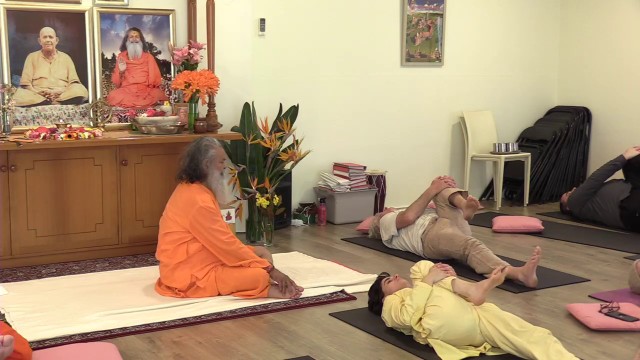
Morning program with Vishwaguruji from Sydney Ashram, Australia. Practising asanas and relaxation with Vishwaguruji.
Where can we find God?
12:20 - 13:21 (61 min)
Evening satsang with Vishwaguruji from Budapest, Hungary. Three practices that are good for our body, mind and spiritual development, to help us reach God. Where do we look for God? When the soul leaves the body it leaves as fast as a shooting star moves across the sky. God is with us all. Ashwini mudra, AUM chanting and bhramari pranayama.
Try to be nirmohi
13:25 - 14:01 (36 min)
A satsang discourse addressing environmental degradation and spiritual detachment.
"If we do not respect that mother, we will suffer, and the mother will not say anything. But now she is suffering."
"Mohais attachment towards things, attachment towards materialistic stuff... We need to… it is very hard. And how to get rid of this attachment is by attending satsaṅg and by attaining the knowledge of a guru."
Following an opening on ecological harm to Earth and seeds, The lecturer speaks on overcoming attachment (moha). He narrates a parable of a detached king (Nirmohī Rājā) tested by a sage, illustrating the ideal of non-attachment for self-realization. Another speaker expands on how karma and the senses bind us, emphasizing satsang and guiding the mind as a path to wisdom.
Filming location: Jadan, Rajasthan, India
We should have roots
14:05 - 15:04 (59 min)
A spiritual discourse on yoga teaching, tradition, and the importance of roots.
"We must always create slightly different techniques for everyone. And all of you should become good teachers, our yoga teachers."
"Where are the roots of your village, your city, and your parents?... So where is the root for you?"
An elder teacher addresses a gathering, emphasizing the need for personalized yoga instruction and for students to become qualified teachers themselves. He critiques superficial academic approaches to yoga while paradoxically advocating for establishing yoga in universities. Using metaphors of children, families, and falling leaves, he stresses the importance of spiritual lineage (parampara) and staying connected to one's roots, ultimately pointing toward the soul's journey and liberation.
Filming location: Slovenia
The Interconnection of Yoga and Āyurveda: A Discourse on Mind, Body, and Soul
15:10 - 16:14 (64 min)
A lecture on the interconnection of Yoga and Āyurveda from an ancient Indian philosophical perspective.
"Yoga is an instrument to control your cittavṛtti—the fluctuations of the mind, the thoughts that continuously arise."
"From Maharṣi Caraka’s viewpoint... Ātmā sthe manasi sthire: when the mind is stable and controlled in the Ātmā. This is Yoga."
A retired Vice-Chancellor of Āyurvedic universities delivers a lecture on International Yoga Day, exploring how Āyurveda and Yoga are complementary sciences for controlling the mind and body. He explains Maharṣi Caraka's philosophical framework, the role of the soul and mind in karma, and the eightfold yogic path leading to samādhi and potential supernormal powers (aiśvarya). The session includes translation and concludes with remarks on the guru's global work.
Filming location: Jaipur, Rajasthan, India
Darshan and dhan
16:20 - 17:17 (57 min)
Evening satsang with Vishwaguruji from Strilky Ashram, Czech Republic. Bhajan singing and translation. Dhana is property. But our property is a knowledge that we get from Gurudev. Husband and wife should be together for their whole life. Darshan dhana what I see is a God. Now we are humans. Either we can go back or to heaven. The story of a mother who gave a ring to her child. Bhajan singing and translation.
Follow the words of the Guru continuously
17:25 - 18:19 (54 min)
Evening satsang with Vishwaguruji from Jadan Ashram, Rajasthan, India. Swami Sudarsanpuri speaks some words about Guru vakya and Guru seva. We should find the correct way to the seva and the practice. There are many people in Europe and India also who are very disciplined and practise very seriously. Many people from many countries would like to follow Yoga in Daily Life. There are many great saints and Gurus in India. They all are very good. It is very good when families are living together and love children very much. The first Guru was Bhagavan Siva. The story of Siva Parvati and a merchant. Husband and wife should be one. Vishwaguruji organized the next day's work in the Ashram.
Our life is a chance
18:25 - 19:15 (50 min)
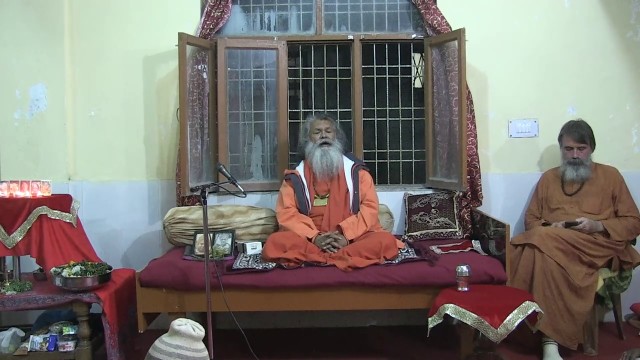
An evening satsang discourse on the human condition, karma, and reincarnation.
"O human, that animals can do too. Eating, drinking, and enjoying, animals can also do. Oh, man, men, humans. If you are doing only this, then what is the difference between you and animals?"
"Life will eat life: 8.4 million different creatures... But one animal is a human, and they should not eat that living animal."
Swami Ji addresses the gathering, contrasting human life with animal existence. He explains that while all creatures possess consciousness, the human birth is a rare opportunity endowed with discernment (viveka). He narrates a mythological account of creation, describes the law of jīva jīva bhakṣate (life eating life), and warns of the karmic consequences of harming other beings, sharing a story from a sage in Fiji. The talk covers themes of karma, non-violence, and the soul's sovereignty over the body.
Filming location: Fiji Islands
At the roots of our Parampara
19:20 - 20:52 (92 min)
Evening satsang from Himalaya. Swami Dyaneswarpuri said that we should use our name Yoga in Daily Lide otherwise somebody else will do it. It is a big oportunity to visit in Badrinath with Vishwaguruji which is a very importana pilgrimage place in India. Sadwi shanti has felt love for her childhood towards mountens. She speaks about her journey in the Himalayas. She many times came back there and feel like her home. She tells her experiences in Sri Devpuriji's cave. Vishwaguruji's family had a brass plate which was special. There is difference between piano and harmonium. There are different customs when a girl or a boy is born in a willage. Vishwaguruji tells some stories from his childhood. Vishwaguruji has a rishi parampara in his family. Ravana was lerned but he has ego and desire. The story of Ravana and Vidhata Ravanas daughter and her husband. Furudev can change zhe desteny. Guru and disciple is one. In India there is living God. The story of Guruji and one of his discipe who w
We can change the world together
21:00 - 21:56 (56 min)
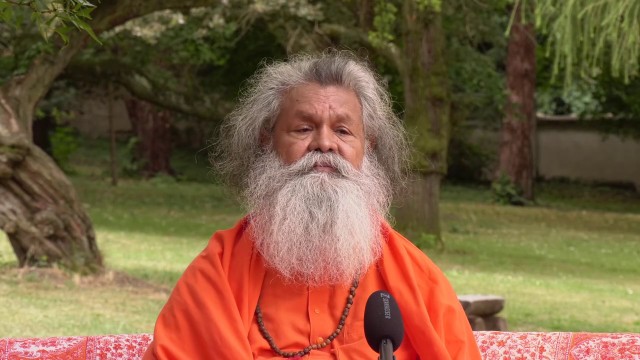
A satsang addressing the consumption of insects in food and advocating for consumer awareness and unity.
"They have decided in the whole world, and they also give to India. Some said, 'Good, it is very good,' and some said, 'No, we will not.'"
"The best food for our health is no-label food. What does 'eat at home' mean? Prepare your bread, prepare your chapati, roti, or falahari diet."
Following a personal anecdote about a health issue, a speaker discusses the global introduction of insects into the food supply. A representative from the Czech Republic explains local regulations requiring ingredient labeling, while a devotee from London shares efforts to lobby in the UK and EU parliaments. The discussion expands to cover the spiritual and health implications of diet, referencing Ayurvedic concepts like prāṇa. The final speaker calls for collective action, endurance, and self-reliance in food preparation, drawing inspiration from historical figures like Mahatma Gandhi.
Filming location: Strilky, Czech Republic
A Message of Peace from Prague
22:00 - 22:07 (7 min)

A Czech parliamentarian delivers a message of peace at a conference, drawing on spiritual and historical themes.
"There is only one God, the universal God, only one religion, humanity, and only one nation, humankind."
"Peace among nations is dependent on peace in human beings."
The speaker, a member of Parliamentarians for Nuclear Non-Proliferation and Disarmament (PNND), opens by quoting from Swamiji's Yoga in Daily Life. He shares an observation of harmony at Prague's Christmas market as a model for the world, then outlines diplomatic efforts for nuclear disarmament and addresses global conflicts. He conveys greetings from the Czech Prime Minister and concludes by thanking those who seek inner peace through yoga.
Filming location: Prague, Czech Republic
The Means Are the End: On Non-Violence, Patience, and Peace
22:15 - 22:29 (14 min)
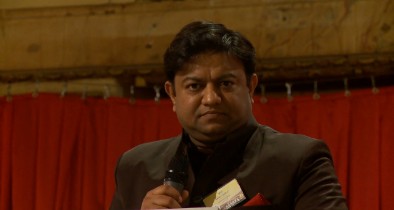
A keynote address on non-violence, patience, and peace at a World Peace Council conference.
"Wrong means will always fetch wrong ends. We must understand the basic fundamental: it is the means which become the ends."
"Happiness is a peaceful state of mind. If you have a peaceful mind, you live in the present, and when you live in the present, you are happy."
Swapnil Kothari, a teacher from India, delivers a speech exploring non-violence as a conscious philosophy, not just a default position. He argues for the primacy of ethical means over ends, asserting that violence breeds violence while non-violence breeds compassion and inner peace. He uses personal anecdotes, historical references, and a humorous story about marital patience to illustrate the stamina required for this path.
Filming location: Prague, Czech Republic
Ganesji Doha
22:35 - 23:14 (39 min)
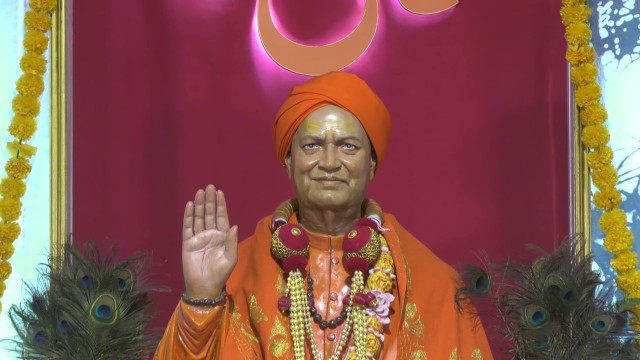
Evening satsang from Jadan Ashram, Rajasthan, India. Bhajan singing. Mahamandaleshwar Swami Gyaneshwarpuri speaks about bhajans and bhajan translation which is very hard. Explanation of bhajan Ganeshji doha. The story of Siva Ganesha and Kartikeya. Ganesha is sitting in the muladhara chakra on our previous karmas.
Yoga in Daily Life in India
23:20 - 23:53 (33 min)
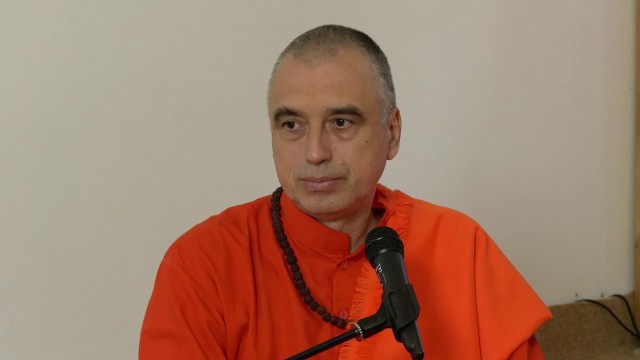
Evening satsang with Mahamandaleshwar Swami Gyaneshwarpuriji.from Strilky Ashram, Czech Republic. Sharing a few things about Yoga in Daily Life in India. Yoga classes are held in Ashrams, now we want to introduce Yoga in Daily Life for everyday life. When they hear the name of Vishwaguruji, everything turns to good. We are conducting seminars in more and more universities in India. We are publishing a magazine called Vishwa Deep Divya Sandesh, each month.
We are one family
23:55 - 0:12 (17 min)
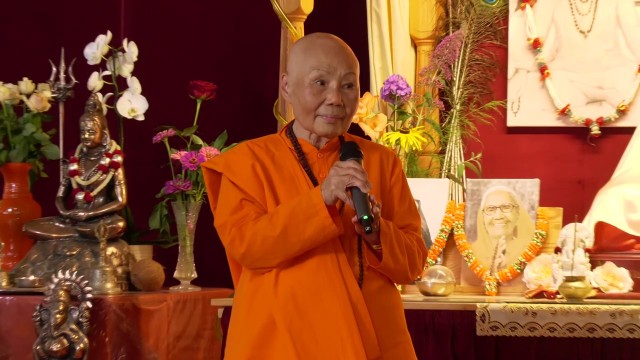
A satsang on spiritual family, surrender, and practice within a guru-disciple lineage.
"This is our Gurudeva, our father and mother. So spiritually, we have our home here."
"If you have complete faith, if you have one hundred percent trust, that is what matters. And that faith, the number one rule, is surrendering."
A spiritual teacher addresses a gathering, welcoming both longtime and new disciples. She describes the ashram as a spiritual home and the guru as a parental figure, contrasting these eternal bonds with temporary worldly family ties born of karma. She emphasizes the necessity of complete faith and surrender to the guru for solving life's problems, linking this to the need for inner purification through mantra, prayer, and satsang. The talk concludes with a call to sing the surrender mantra Nāhaṁ Karatā and the Guru Brahma prayer.
Filming location: Strilky, Czech Republic
American
Australian