
European
The importance of bhajans
0:25 - 1:07 (42 min)
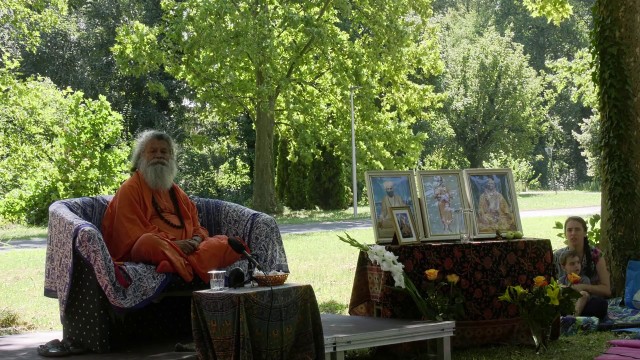
A spiritual discourse and guided practice focusing on devotional music and a breathing technique.
"Bhajan is one of the best in everything... When they sing beautiful bhajans like this, it goes in the whole body."
"So many people are only making bhajans... 'Kṛṣṇa, Kṛṣṇa,' and 'Hare, Hare.' But what is good, very good? But they don't understand."
The speaker leads a session beginning with devotional chanting in English and Hungarian. He discusses the deep, often misunderstood impact of devotional singing (bhajan), using an ambiguous parable about ants and a bee (Brahmari) to illustrate different levels of engagement. He then gives instructions for a breathing practice, likening its gradual mastery to learning to drive or pilot an aircraft.
Filming location: Vép, Hungary
A Prayer for the Immortal Soul
1:15 - 1:57 (42 min)
A satsang dedicated to a prayer for the departed.
"Let me sing day and night this name of thine."
"At the end of my life, when I renounce this body, I have only one wish, that you are standing in front of me."
The lecturer leads a prayer satsang in Prague for the late Milena Hypsmanova, recounting her final trip to South Africa. He reflects on the mystery of destiny, time, and mortality, using the story of Oedipus to illustrate how fate unfolds. The discourse explores how spiritual practice and remembrance of God's name prepare the soul for the final transition from life to death.
Filming location: Prague, Czech Republic
The Miraculous Heart
2:05 - 2:26 (21 min)
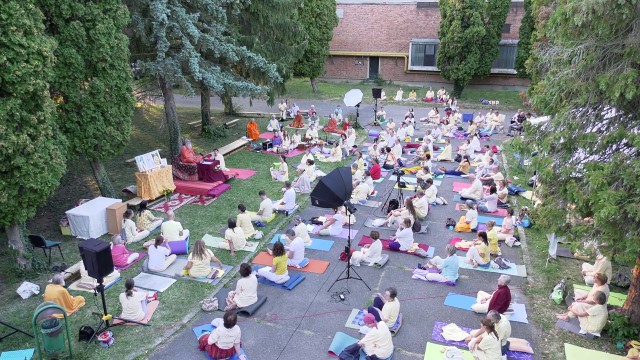
Evening satsang with Vishwaugurji from Vep, Hungary
Why are we making war?
2:30 - 3:53 (83 min)
Evening satsang with Vishwaguruji from Strilky Ashram, Czech Republic. Why do we come here, sometimes from very far distances? Because we want to become better humans. We shouldn't be fighting wars and killing. This is also the teaching of Jesus. Many people do not understand this and follow their own will. The explanation of the meaning of the traditional welcoming hand gesture when the two palms meet.
Come to the path of the Masters
4:00 - 5:04 (64 min)
A spiritual discourse on Kuṇḍalinī yoga, consciousness, and the necessity of an authentic master.
"Pūrṇālīnī Yoga is a pure spiritual science. It leads an aspirant to enlightenment, to the reality of realization... to awaken one's inner knowledge."
"The Sanskrit word Guru means the remover of darkness. It is that one who removes the darkness of our ignorance and kindles in us the light of wisdom."
A spiritual teacher addresses a gathering, explaining the awakening of inner potential through the purification of cosmic energy in the chakras. He emphasizes the critical role of a genuine guru in a legitimate lineage, warning against modern, commercialized yoga practices. The talk covers states of consciousness (waking, dreaming, deep sleep), the importance of purifying the nervous system, and uses analogies from medicine and travel to illustrate the need for proper guidance on the spiritual path.
Filming location: New Zealand
The world needs Yoga in Daily Life
5:10 - 6:14 (64 min)
A spiritual gathering at a sacred ashram featuring discourses and personal testimonies.
"You know that you are here from where you were placed. Do you know from how many different places you had to travel?"
"I asked Mahāprabhujī, 'Please, she is this silver girl.' I know that she has some blocks in her face, in her destiny. But I asked Mahāprabhujī, please, just remove it."
A speaker describes the holiness and history of the grove, noting visits from gurus. A disciple then shares his spiritual journey to Swāmījī, recounting miraculous events like the stopping of rain. Another disciple, Joseph, testifies to the healing power of prāṇāyāma after a brain cyst and details his work using yogic techniques to help athletes, including an Olympic swimmer, achieve gold medals. The themes are the necessity of a living guru, the power of blessing, and applying yoga in daily life.
Filming location: Strilky, Czech Republic
The teaching of a Guru is for ever
6:20 - 7:36 (76 min)
Guru Purnima celebration from Vienna, Austria. Siva was the first living being in the Earth. The story of a photograph what shows a Rishi in the Himalayas. Australian inhabitants are originated from India. British people were very cruel to them. Explanation of bhajan Sataguru Alakapurijji avo. The story of a boy and a girl who married but they had a problem with the hard part of the bread. The story of the river Alakhananda. Practising bhramari and bhujangini pranayama.
The Practice of Vajranāḍī: Cultivating Balance and Surrender
7:40 - 8:36 (56 min)
A guided yoga session on the Vajranāḍī posture for physical and mental balance.
"If we can master this, then all kinds of anger, hate, depression, and imbalance will be gone."
"Vajranāḍī is the root of the tree... You should have that kind of energy and solidity in your Vajranāḍī; then you will never be unbalanced in your mind."
An instructor leads practitioners through the precise physical steps of the Vajranāḍī pose, a balancing posture performed on the toes. He explains its power to stabilize the body, emotions, and mind by working from the "roots" in the feet. The session blends detailed physical instruction with philosophical discourse on surrender, ego, and learning from nature, illustrated by a poetic story about a date palm tree.
Filming location: Auckland, New Zealand
The teaching of a Guru is for ever
8:40 - 9:56 (76 min)
Guru Purnima celebration from Vienna, Austria. Siva was the first living being in the Earth. The story of a photograph what shows a Rishi in the Himalayas. Australian inhabitants are originated from India. British people were very cruel to them. Explanation of bhajan Sataguru Alakapurijji avo. The story of a boy and a girl who married but they had a problem with the hard part of the bread. The story of the river Alakhananda. Practising bhramari and bhujangini pranayama.
Practising with Vishwaguruji
10:00 - 10:57 (57 min)
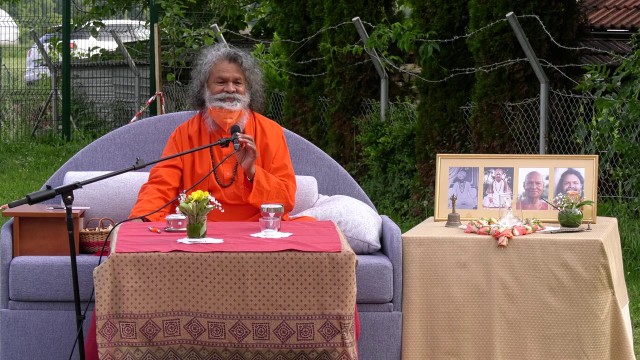
Evening Satsang with Vishwaguruji from Slovenia. Relaxation and bhajan singing. Vajra nadi gives the power of our whole body. Vajra nadi is like a tree it has a root and some branches. Practising sarva hita asanas and bhramari pranayama. If we practise asanas lifelong we will die very easy without pain.
Advice for practicing Yoga
11:05 - 11:56 (51 min)
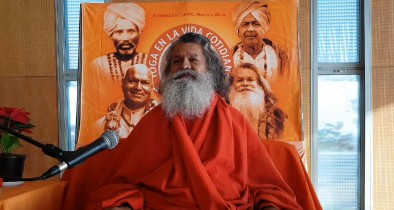
Satsang with Vishwaguruji from Barcelona, Spain. The body consists of five elements. These element are present within us and outside as well. There are different techniques to purify and balance the elements. We should take care of the body while practicing Yoga. Pranayama is also important to practice. It is said that every breath is counted.
Hatha Yoga Kriyas (2/3)
12:00 - 12:27 (27 min)
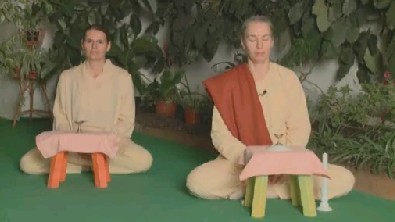
Hatha Yoga Kriyas, with Swamiji and Uma Puri, from Strilky Ashram, (CZ) on 14th November 2009.
Public lecture from Split
12:35 - 14:03 (88 min)
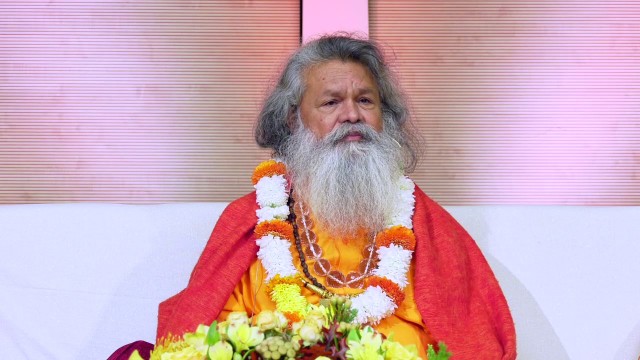
A commemorative event celebrating 35 years of the Yoga in Everyday Life system in Croatia, featuring addresses and a practical yoga session.
"Yoga is infinite, eternal, and endless. Yoga is a consciousness that never sleeps, a life that never dies."
"If you want to systematically learn yoga, then you should come to Europe. In India we also have it, but they are losing it."
The event includes a historical video presentation on the system's growth in Croatia since 1984, followed by speeches from the local center president, Swami Vivekpuri, and an AYUSH Europe representative. Paramahamsa Swamiji Maheshvarananda (Vishvaguruji) then leads the gathering, offering a discourse on the role of a guru, the five koshas, and the importance of daily practice. He concludes by teaching simple, seated exercises and a Sanskrit mantra technique for health and meditation.
Filming location: Split, Croatia
Why are we making war?
14:10 - 15:33 (83 min)
Evening satsang with Vishwaguruji from Strilky Ashram, Czech Republic. Why do we come here, sometimes from very far distances? Because we want to become better humans. We shouldn't be fighting wars and killing. This is also the teaching of Jesus. Many people do not understand this and follow their own will. The explanation of the meaning of the traditional welcoming hand gesture when the two palms meet.
A Guru gives everything that we need
15:40 - 16:41 (61 min)
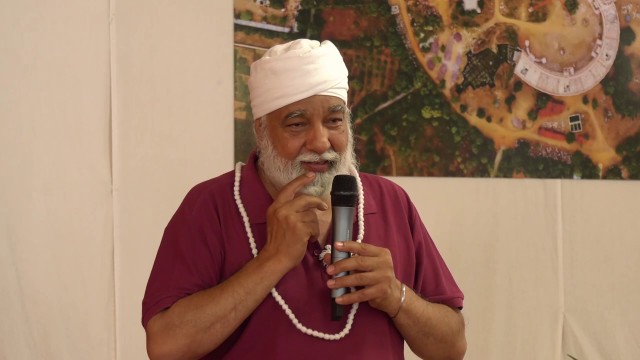
Evening satsang from Strilky Ashram, Czech Republic. The story of Krishna and Vidura's wife. Explanation and sing of bhajan Prabhu Prema Bina Nahi Ave. Strilky Ashram is a heaven on earth. We should know what Guru really means. Our biggest problems are our ego and jealousy. The real Guru mantra can liberate our minds. Our yoga name helps us to go towards our aims. We have to do seva (selfless service) in order to get the blessing. Miracles can happen to each of us. Karma is happening to every country. Yoga has become an industry in the world. There are some institutes which want to control yoga and ayurveda also. It should create a universal benchmark for yoga and ayurveda. In Britain, many people can legally use yoga and ayurveda as medicine. Bhajan explanation and singing Prabhu Mere Avaguna Chita Na Caro.
The Principles and Power of Sādhanā
16:45 - 17:30 (45 min)
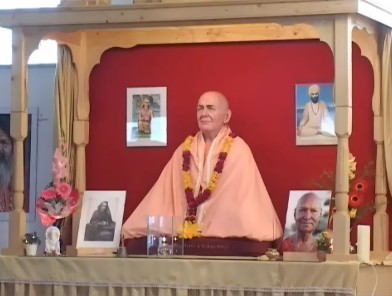
A spiritual discourse on the principles of sādhanā and the significance of the Maṇipūra Chakra.
"Any kind of sādhanā requires perfect technique and discipline. One must follow the principles."
"That energy, which is located in the maṇipūra cakra, is called hara-śakti. That is the life force, the energy that keeps you moving."
A teacher explains the necessity of disciplined practice, using the analogy of fueling a car correctly. He delves into the esoteric importance of the Maṇipūra Chakra as the seat of life force (hara-śakti) and the junction of vital energies, connecting its functions to immunity, sound resonance (nāda), and mythological symbolism involving Vishnu. The talk covers related practices like Śabda Sañjālan and Khaṭupranām, emphasizing that authentic practice requires devotion, a spiritual lineage, and following a master's instructions to awaken inner energy and burn karmic seeds.
Filming location: Strilky, Czech Republic
I am Thine
17:35 - 18:19 (44 min)
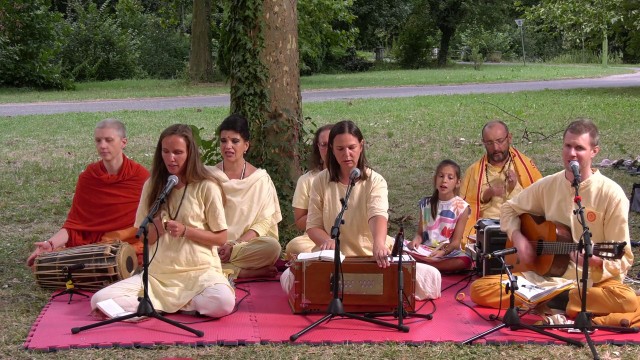
Evening satsang with Vishwaugurji from Vep, Hungary. Singing bhajans Sajjana vali lage sa, Kya tum jano hala hamara. Singing and translation of bhajan Prema ka pyala hari kaba mera bharase. Mahapraphuji say many times, that he will fill the heart of Bhaktas. Singing bhajan Ceta Ceta, ab jiva agyani.
How the worm becomes Bhramari
18:25 - 19:09 (44 min)
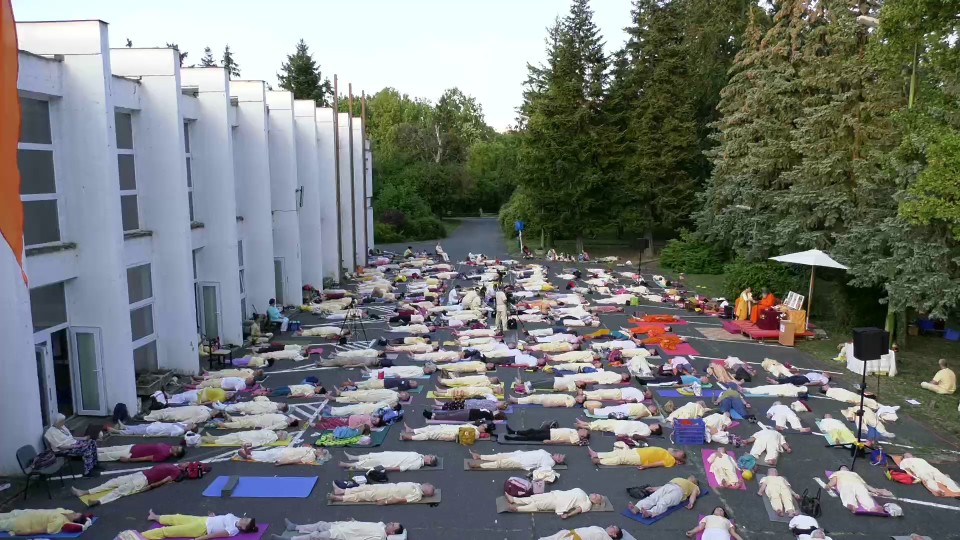
Evening satsang with Vishwaugurji from Vep, Hungary. Relaxation. Concentration on the navel and the heart. There are three different forms of bhramari. They have the same voice. One of them lives on the earth the second builds their nest in our house. They can bite us. The nest of bhramari is very comfortable. they bring worms there. Slowly slowly the worm transforms into a bhramari. We should practise bhramari only for short time.
The importance of bhajans
19:15 - 19:57 (42 min)
A spiritual discourse and guided practice focusing on devotional music and a breathing technique.
"Bhajan is one of the best in everything... When they sing beautiful bhajans like this, it goes in the whole body."
"So many people are only making bhajans... 'Kṛṣṇa, Kṛṣṇa,' and 'Hare, Hare.' But what is good, very good? But they don't understand."
The speaker leads a session beginning with devotional chanting in English and Hungarian. He discusses the deep, often misunderstood impact of devotional singing (bhajan), using an ambiguous parable about ants and a bee (Brahmari) to illustrate different levels of engagement. He then gives instructions for a breathing practice, likening its gradual mastery to learning to drive or pilot an aircraft.
Filming location: Vép, Hungary
The materialized OM
20:00 - 20:22 (22 min)
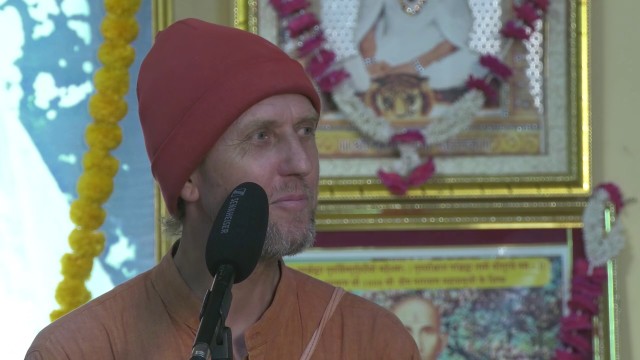
An address to the ashram community about the final push to complete the Omāśram temple.
"Four months will pass like the blinking of an eye."
"It is a part of our work to make it happen that this crown will now be presented to Swāmījī."
A speaker addresses the gathered residents and volunteers, emphasizing the imminent opening ceremony of the home temple. He describes the transformative energy brought by Gurudev's presence and the accelerated pace of work, urging everyone to participate and to invite skilled helpers from abroad. The talk reflects on the ashram's profound growth over decades and frames the project as a divine vision materializing for the benefit of future generations.
Filming location: Jadan, Rajasthan, India
A Prayer for the Immortal Soul
20:05 - 20:47 (42 min)
A satsang dedicated to a prayer for the departed.
"Let me sing day and night this name of thine."
"At the end of my life, when I renounce this body, I have only one wish, that you are standing in front of me."
The lecturer leads a prayer satsang in Prague for the late Milena Hypsmanova, recounting her final trip to South Africa. He reflects on the mystery of destiny, time, and mortality, using the story of Oedipus to illustrate how fate unfolds. The discourse explores how spiritual practice and remembrance of God's name prepare the soul for the final transition from life to death.
Filming location: Prague, Czech Republic
We should awake
20:55 - 21:37 (42 min)
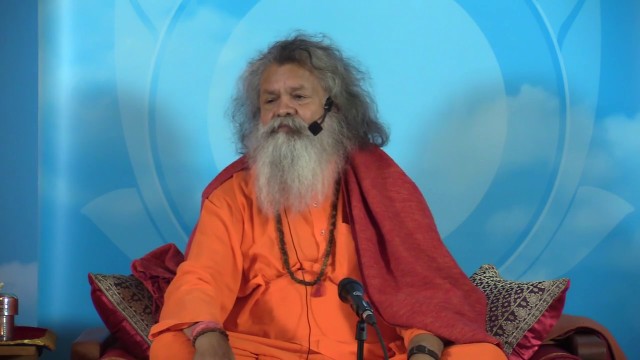
A spiritual discourse exploring states of consciousness, reality, and human identity.
"Sleeping is very great. They cannot sleep, not access this bill like that."
"And when we sleep, then there is no light, no thoughts, nothing. That time we became very quick."
A spiritual teacher delivers an extemporaneous talk, weaving together themes of deep sleep, awakening, and the nature of reality. He uses personal anecdotes, analogies of cars and airplanes, and references to lineage gurus like Mahāprabhujī to discuss the journey from individual awareness to a unified state. The talk emphasizes self-reminders like "I am awakened" and "I am human," and concludes by praising the purity of satsang.
Filming location: Brisbane, Australia
The Miraculous Heart
21:45 - 22:06 (21 min)
Evening satsang with Vishwaugurji from Vep, Hungary
A Spiritual Journey: Lessons from the Himalayan Lakes and Caves
22:10 - 22:30 (20 min)
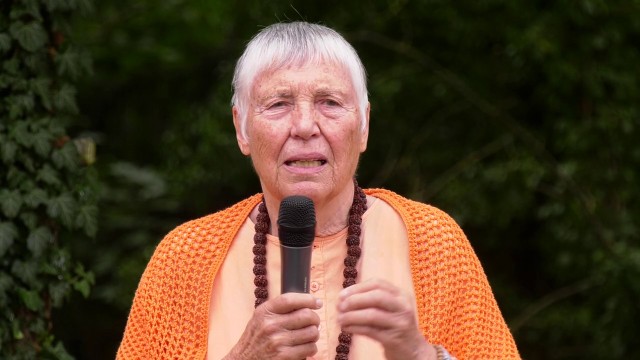
A satsang sharing spiritual lessons from Himalayan pilgrimage.
"I never give up. You also should never give up." "When things should be, they will be. You must agree with this."
Swami Shantipuri addresses the gathering on his Sannyasa birthday, recounting his journey to the Satopant Lake in the Himalayas after his Guruji's Mahasamadhi. He describes a profound meditation experience there, from which he received three core spiritual lessons symbolized by the lake: to accept life's events like the shore accepts waves, to cultivate inner calm by having no expectations, and to give freely from one's inner reservoir of wisdom like a flowing stream.
Filming location: Vép, Hungary
We are one family
22:35 - 22:52 (17 min)
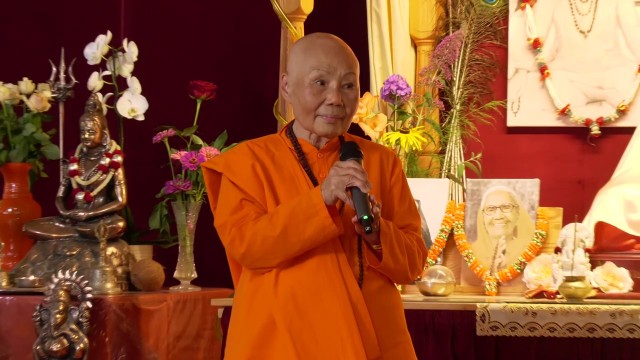
A satsang on spiritual family, surrender, and practice within a guru-disciple lineage.
"This is our Gurudeva, our father and mother. So spiritually, we have our home here."
"If you have complete faith, if you have one hundred percent trust, that is what matters. And that faith, the number one rule, is surrendering."
A spiritual teacher addresses a gathering, welcoming both longtime and new disciples. She describes the ashram as a spiritual home and the guru as a parental figure, contrasting these eternal bonds with temporary worldly family ties born of karma. She emphasizes the necessity of complete faith and surrender to the guru for solving life's problems, linking this to the need for inner purification through mantra, prayer, and satsang. The talk concludes with a call to sing the surrender mantra Nāhaṁ Karatā and the Guru Brahma prayer.
Filming location: Strilky, Czech Republic
The teaching of a Guru is for ever
23:00 - 0:16 (76 min)
Guru Purnima celebration from Vienna, Austria. Siva was the first living being in the Earth. The story of a photograph what shows a Rishi in the Himalayas. Australian inhabitants are originated from India. British people were very cruel to them. Explanation of bhajan Sataguru Alakapurijji avo. The story of a boy and a girl who married but they had a problem with the hard part of the bread. The story of the river Alakhananda. Practising bhramari and bhujangini pranayama.
American
Australian