
European
The infinite love and blessing of Vishwaguruji
0:05 - 0:14 (9 min)
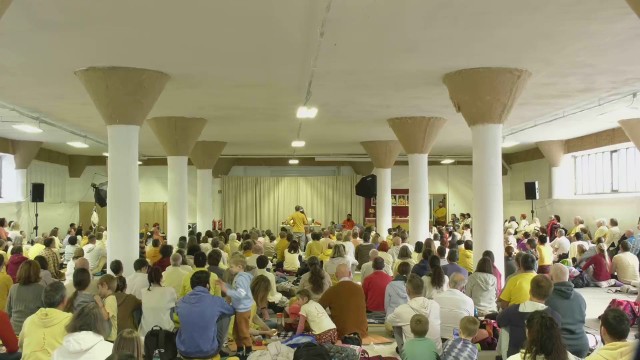
A spiritual discourse on divine grace and the Guru-disciple relationship.
"I am not the Guru; Swāmījī is the Guru. He is our Swāmījī—he is the same."
"I do not do anything; you do everything. All of you, thank you to all. Everything is very good."
The speaker, in a state of devotional surrender, addresses a gathering, shifting between speaking as a humble devotee and as a channel for divine blessings. They emphasize that true guidance comes from Swāmījī and God, who resides within everyone, and repeatedly offers blessings for happiness, knowledge, and fulfillment to all present, concluding with a reference to the teachings of the Bhagavad Gītā.
Filming location: Slovenia
A Call for Peace and Self-Realization
0:15 - 1:22 (67 min)
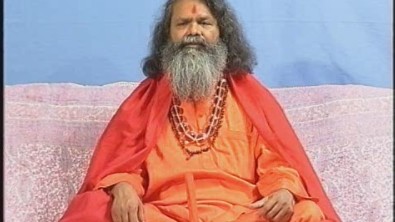
A public lecture on world peace, self-inquiry, and the science of yoga.
"With weapons, with guns, you cannot bring peace. But with flowers, and with love, you can bring peace to the world."
"Nothing belongs to us, says the wise man. The yogīs said, 'Nothing belongs to us. Everything is temporary. Even your body does not belong to you.'"
Swamiji addresses an evening gathering, calling for an end to violence and ignorance through self-realization. He explains the preciousness of human life, the futility of worldly conflict, and the path of yoga as a means to achieve inner and outer peace. The talk covers the nature of the mind, the five bodies, and includes a brief practical demonstration to feel energy in the palms.
Filming location: Croatia
How to use the mantra
1:30 - 2:08 (38 min)
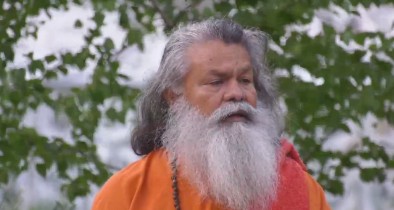
A spiritual discourse on the power and techniques of mantra chanting.
"The chanting of the name of God, spiritual songs, or a saint’s name brings peace of mind."
"When you chant mantras, it creates a resonance. That resonance spreads into the environment, purifying it."
Swami Ji explains the profound effects of mantra practice on purifying the individual and the environment. He details five techniques: writing (likhit), audible chanting, whispered repetition (upāṁśu), mental repetition (mānasik), and spontaneous repetition (ajapa). The talk connects mantra resonance to the body's chakras, warns against spiritual greed, and concludes with a call to practice and a group chant.
Filming location: Strilky, Czech Republic
Try to open the lock
2:10 - 2:29 (19 min)
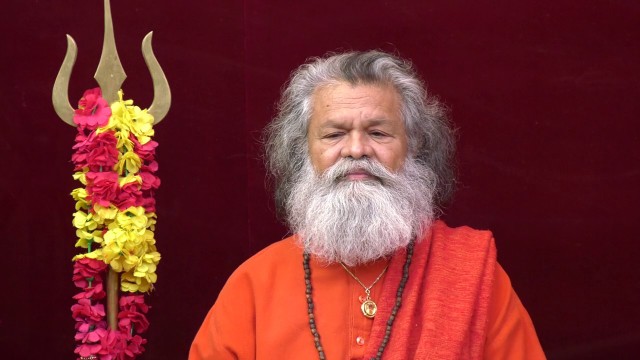
A universal invocation and spiritual discourse on divine names and unity.
"Today, we shall all begin again to be one together and bring divine energy, peace, and harmony to the whole world for everyone, without making differences of any religions or countries."
"So, let us go to the name of that God of our gods... Rām, Rām... Kṛṣṇa, Kṛṣṇa... Śiva, Śiva... Jesus, Jesus... That is the best name."
The speaker addresses yogis and practitioners worldwide, calling for universal harmony. He narrates a parable where humans, having received everything from God, declare independence, leading to negativity and trouble. Using metaphors of a locked treasure and a mala's Sumeru bead, he explains that the key to overcoming this is found in sincerely repeating the short, potent names of God, which transcend all religions. The talk concludes with a chant of "Guru Dīpā."
Filming location: Strilky, Czech Republic
Bhajan singing from Vep
2:30 - 3:12 (42 min)
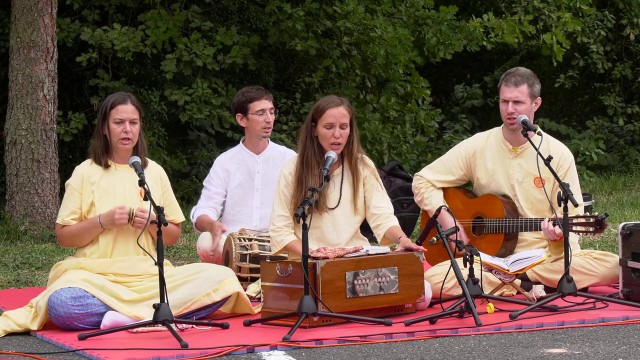
Morning program from Vep, Hungary. Singing bhajans in the presence of Gurudev.
Bhajan singing from Vep
3:20 - 3:52 (32 min)
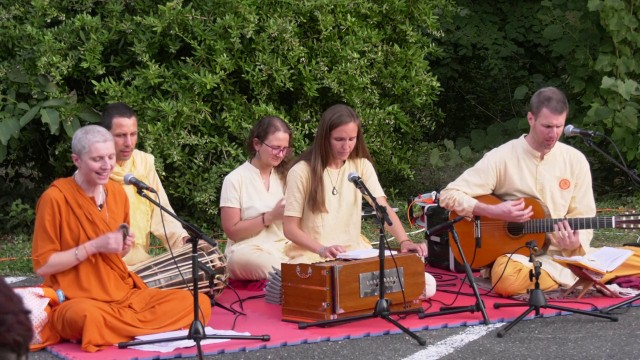
Evening satsang with Vishwaugurji from Vep, Hungary. Singing bhajans, including Guru sa bina, Bacana vale lage sa, Guruvara me cal
Bhajan evening in Jadan Ashram
4:00 - 4:39 (39 min)
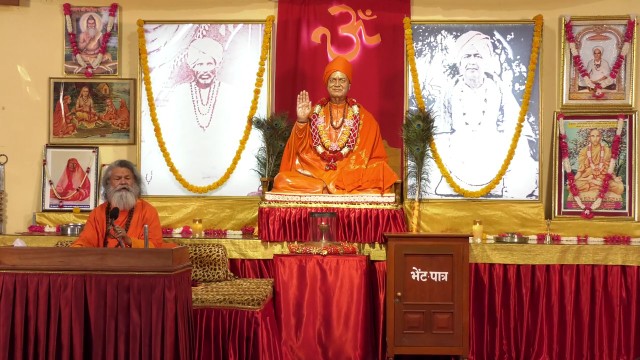
Evening satsang with Vishwaguruji from Jadan Ashram, Rajasthan, India. Bhajan singing.
Bhajans from Slovenska Vas
4:45 - 5:24 (39 min)
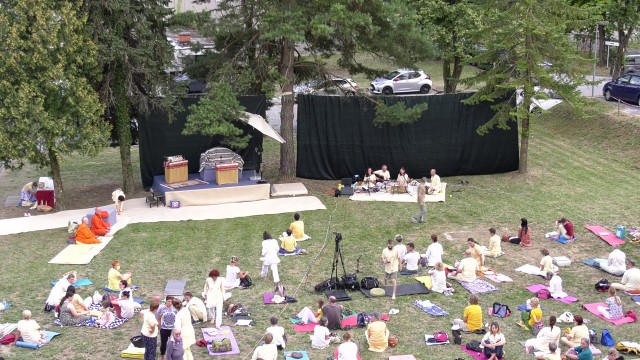
Evening satsang from Slovenska Vas, Slovenia.
Be joyful
5:30 - 5:57 (27 min)
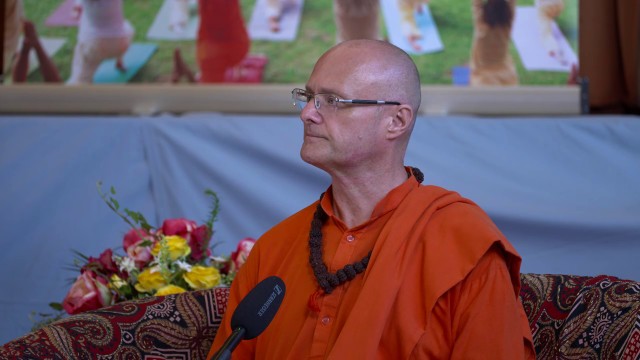
A satsang discourse on the spiritual significance of a guru's birthday, drawing parallels to Christmas.
"I recall Swāmījī saying, 'I was observing one person who was practicing Kriyā under the tree.'"
"For us, the day of incarnation of Mahāprabhujī, the day of incarnation of Swāmījī, Gurujī, is Christmas. But even more than Christmas, because that is our guru."
A spiritual teacher addresses a gathering, explaining why the birthday of a guru is a sacred celebration akin to Christmas. He emphasizes the necessity of a living guru for correct spiritual practice and describes the Guru Tattva (the essence of the guru) as a pure, divine light within a physical form. He explains how devotees can connect to this energy through satsang, devotion, and bhajans, transforming their own energy and creating a joyful spiritual life. The talk includes practical advice on using prayer, song, and positive thinking to change one's internal state and the surrounding atmosphere.
Filming location: Vép, Hungary
Renounce
6:05 - 7:11 (66 min)
Webcast of Swamijis evening Satsang from Strilky Ashram, CZ on May 15th 2010. Enter the kingdom of the Lord through the gate of sacrifice, renounce.
The way how yoga is helping us
7:15 - 8:18 (63 min)
A lecture on the chakra system and spiritual purification.
"The human birth and human body possess very special abilities and a most powerful tool: the intellect. Through our intellect, we can discover all our hidden powers."
"Before we awake or open the chapter of the chakra... [there are] three negative points to address... mala, vikṣepa, and āvaraṇa."
Swami Paramananda leads an evening satsang from the Yoga and Life Ashram, continuing a series on the chakras. He explains the human body's subtle anatomy, including the 72,000 nerves and the three primary nāḍīs (Iḍā, Piṅgalā, Suṣumṇā). The core teaching focuses on the three obstacles to spiritual awakening: impurities (mala), mental disturbances (vikṣepa), and the veil of ignorance (āvaraṇa). He details methods for purification through Haṭha Yoga techniques, control of the senses, and satsang, weaving in stories and analogies about the mind, karma, and the goal of liberation beyond the cycle of birth and death.
Filming location: New York, USA
Anahat chakra and spirituality
8:25 - 9:33 (68 min)
In the city of Celje, Slovenija in the blue hall of the fair center, Swamiji had a lecture on the topic of Anahat chakra and Spirituality on the 5th October 2008.
Success in Yoga
9:40 - 10:55 (75 min)
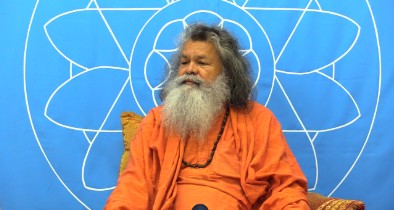
A spiritual discourse on the essence of yoga, cosmology, and the path to liberation.
"If you practice yoga or pursue any goal in life, you need a master to achieve it."
"Yoga is a lifelong journey... Yoga is ancient, the very first element in creation, given by God, by Śiva."
The speaker delivers an extensive teaching, weaving together the origins of yoga from Śiva, the divine trinity of Brahmā, Viṣṇu, and Śiva, and the symbolic journey of the Kuṇḍalinī through the chakras. He uses stories from the Mahāśivapurāṇa, analogies from nature, and personal anecdotes to illustrate the necessity of a true Satguru, the perils of wrong association (ku-saṅgha), and the disciplined, lifelong commitment required for authentic spiritual practice.
Filming location: Sydney, Australia
Practice from Auckland with MM Vivekpuri
11:00 - 12:00 (60 min)
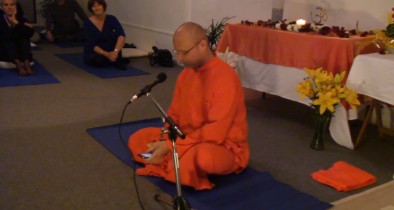
Auckland, New Zealand
Release your bad qualities
12:05 - 12:57 (52 min)
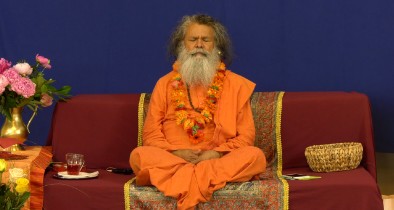
Morning satsang with Vishwaguruji from weekend Yoga seminar in Salzburg, Austria. Traditions are important and more or less similar in the whole world. The Austrian culture is very rich and beautiful. Many books of ancient Indian culture was destroyed by Moguls. We can digest everything except the truth. Tell honestly yourself your negative qualities. Remain natural as it is. Culture and education we should get from our parents. Short meditation how to turn negative to positive.
Whole universe is in our body
13:05 - 13:56 (51 min)
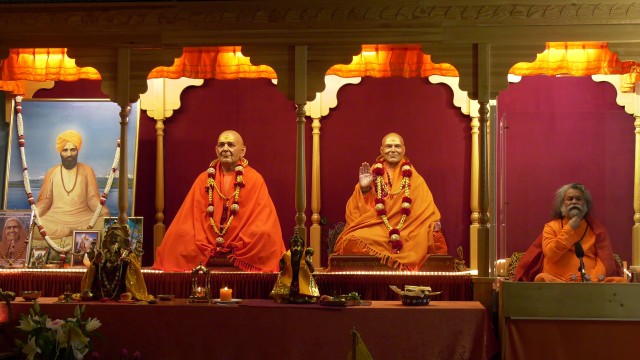
Evening satsang with Vishwaguruji from Vienna, Austria. Silent meditation and prayer with Vishwaguruji.
We need Gurudev
14:00 - 14:54 (54 min)
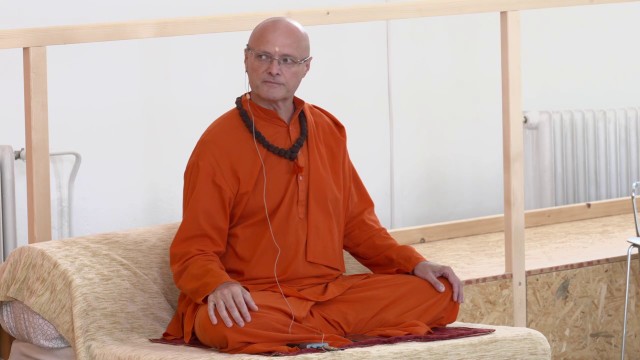
A satsang discourse on the necessity of the guru and the goal of Advaita philosophy.
"The moment you begin to think you have already heard and know everything, in that moment your free fall begins."
"Understand from this that the guru is not the physical body. It is most important to understand that the guru is that Guru-Tattva, the element of the guru."
A speaker leads a satsang, emphasizing the eternal student's attitude and the critical role of the embodied spiritual master (Guru-Tattva) as the essential guide. Using stories and analogies—such as the matchbox with a diamond, the friend with a boat, and the river merging into the ocean—the talk explains the guru's function and explores the ultimate goal of yoga: to transcend the cycle of rebirth and realize the Advaita (non-dual) union of the individual self with the cosmic Self.
Filming location: Strilky, Czech Republic
Beauty is in our heart
15:00 - 15:48 (48 min)
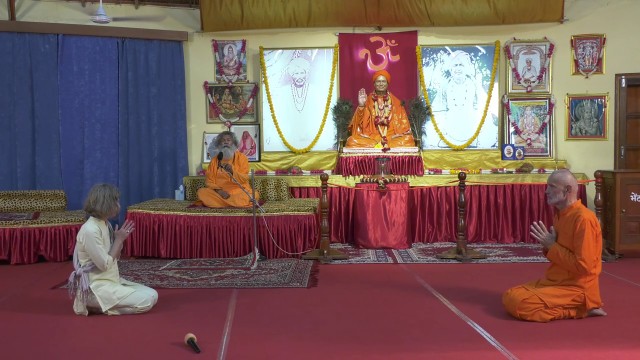
Evening satsang with Vishwaguruji from Jadan Ashram, Rajasthan, India. Yogis don't eat meat and don't drink alcohol. Nowadays there are many people in the world who don't eat meat. Practising Bari Khatu Pranam, relaxation, concentration om tha navel, bhramari pranayama and concentration on the heart. Beauty is in our heart.
Mantras and Bhajans
15:55 - 16:35 (40 min)
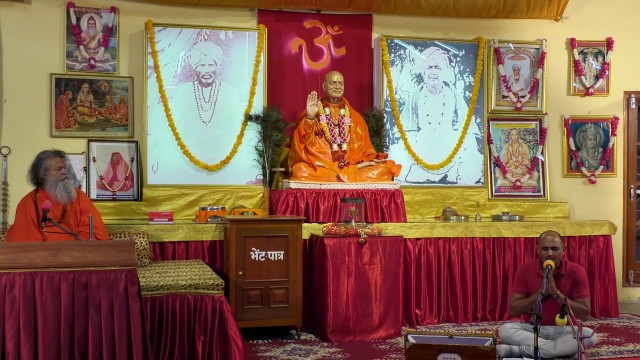
Evening satsang with Vishwaguruji from Jadan Ashram, Rajasthan, India. Singing bhajans and chanting mantras.
The form of God is the vibration
16:40 - 17:40 (60 min)
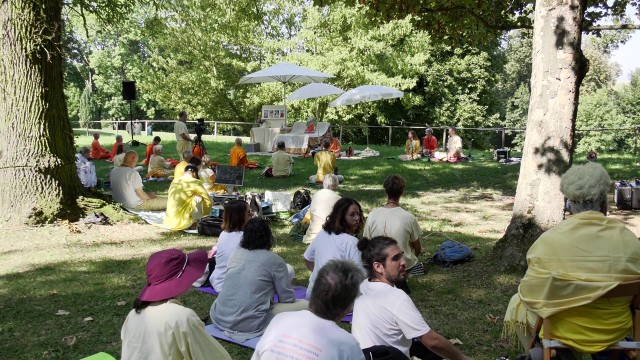
Morning satsang from Summer Yoga Retreat in Strilky, Czech Republic. Lecture by Swami Gajanandji about Om. Om is that on which yogis meditate all the time. Om is the original mantra, every other mantras should contain the Om. Chanting Om all together, and a short meditation on Om. Singing the bhajan about Om.
How to use the mantra
17:45 - 18:23 (38 min)
A spiritual discourse on the power and techniques of mantra chanting.
"The chanting of the name of God, spiritual songs, or a saint’s name brings peace of mind."
"When you chant mantras, it creates a resonance. That resonance spreads into the environment, purifying it."
Swami Ji explains the profound effects of mantra practice on purifying the individual and the environment. He details five techniques: writing (likhit), audible chanting, whispered repetition (upāṁśu), mental repetition (mānasik), and spontaneous repetition (ajapa). The talk connects mantra resonance to the body's chakras, warns against spiritual greed, and concludes with a call to practice and a group chant.
Filming location: Strilky, Czech Republic
How to coordinate with the outer world, Vep
18:30 - 19:20 (50 min)
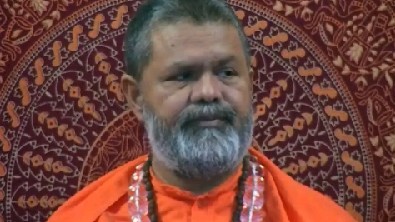
A spiritual discourse on the foundational principles of sādhanā (spiritual practice).
"Practices alone will not help us. They can only be fruitful if we follow physical and mental principles. These are called Śayamit and Niyamit."
"Viveka is that which will divide truth and untruth completely... who has viveka all the time is the happiest and safest person."
The speaker explains the core disciplines for a spiritual life: Śayamit (self-control and setting boundaries) and Niyamit (daily discipline). He details how these practices, along with regular prayer (sandhyā), purify the mind and senses. The discourse emphasizes the critical role of viveka (discrimination) in distinguishing truth from untruth, leading to the discovery of the inner fountain of joy and the immortal Ātmā.
Filming location: Vép, Hungary
Shiva and the Chakras
19:25 - 20:50 (85 min)
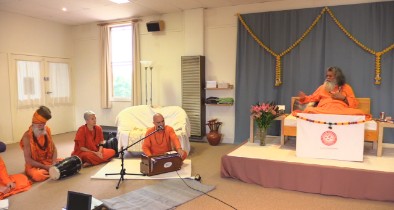
Evening satsang with Vishwaguruji from Melbourne, Australia. One of the best ways to memorize something is to create a little story about it. This is similar with songs. Vishwaguruji explains the meaning of the ancient story about the nectar of immortality rising from the churning of the ocean. The first lower chakras in the feet are the so-called earth chakras; chakras further up in the legs are connected with vegetation; and then continur up to the animal qualities.
Time according to Vedas and Puranas I part
20:55 - 21:50 (55 min)
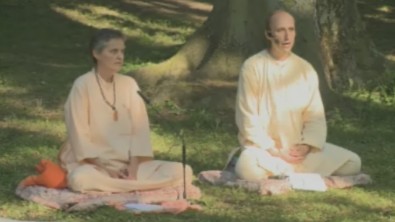
A lecture on the Vedic and Purāṇic concept of cyclical time.
"The concept of time, as understood by the Vedas and those ancient scriptures, is cyclical. Everything moves in a circle."
"One thousand Mahāyugas form one Kalpa... A Kalpa lasts 4.32 billion years. It is either Brahmā’s day or Brahmā’s night."
A speaker at a yoga retreat in Střílky explains the vast, cyclical time scales of Hindu cosmology. He details the durations of the four yugas, the Mahāyuga, and the Kalpa, describing the periodic dissolutions (Laya, Pralaya) and the roles of Brahmā, Viṣṇu, and Śiva. He draws parallels to modern scientific concepts like the expanding universe and the cosmological singularity, and shares a story about Indra to illustrate the transience of even divine positions.
Filming location: Strilky, Czech Republic
Around the world - Yoga for Kids from Hungary
22:00 - 22:05 (5 min)
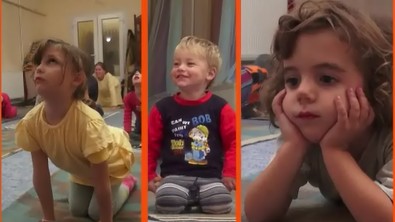
A family yoga program for children and parents at a Budapest sports club.
"Through the practice of yoga, a child gains not only flexibility, agility, and the ability to concentrate, but the practice of āsanas also helps keep many illnesses at bay."
"We practice based on the Paramhanszámi Mahasrananda Yoga Children's Kecsmi book. Using this, both children and adults can participate in playful yoga sessions."
The host, Kirām, welcomes participants to a monthly family yoga session, explaining its inclusive nature and benefits for children's holistic development. The practice uses a specific children's yoga book, connecting postures with animals and plants. The session includes storytelling, craft activities like candle decorating for upcoming festivals, and watching a short animated film about Hanumān.
Filming location: Hungary
Part 1: The Role of Yoga and Meditation in Improving Quality of Life for Cancer Patients
22:10 - 23:17 (67 min)
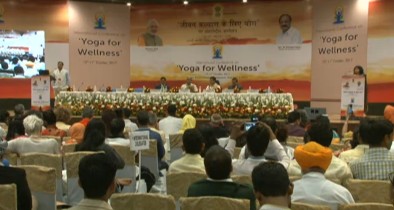
A medical lecture on the role of yoga and meditation as supportive care for cancer patients.
"We must note which specific yogic and meditative techniques were used, as these vary widely."
"Please do not give false hope that cancer will be cured... If a practitioner claims that prāṇāyāma, dhyāna, and some Ayurvedic herbs... can cure cancer, they are committing a grave sin against society."
A doctor from AIIMS Delhi presents a detailed analysis of scientific studies on yogic interventions for cancer patients, emphasizing they are complementary to standard treatments like chemotherapy. He strongly warns against practitioners falsely claiming yoga can cure cancer, shares data on benefits for quality of life and stress, and proposes a large-scale research trial combining yoga, meditation, and herbal products for cancer prevention and care.
Filming location: Delhi, India
Mantra and Mala
23:25 - 0:03 (38 min)
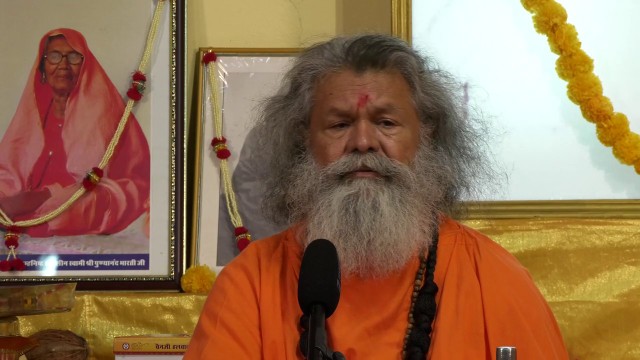
A spiritual discourse on the use of prayer beads (mala) and the practice of mantra.
"Life is everything. Whether it is a human, a cow, a buffalo, a goat, or any being... its soul, that Ātmā, is to see our Self."
"One mala means for us one step toward God. One step to God. This mala goes with mantra."
A speaker delivers a teaching on spiritual practice, emphasizing reverence for all life and the importance of constant remembrance of God. He explains the purpose of the mala as a tool for mantra repetition, detailing two methods: one with a guru bead for seated practice and another for constant, walking remembrance (sumaran). He shares anecdotes about devotion, including a story about Hanuman, and concludes by describing the ultimate goal of merging with divine light.
Filming location: Jadan, Rajasthan, India
American
Australian