
European
Proper practising of Bhramari
0:15 - 0:15 (0 min)
Morning program with Vishwaguruji from Brisbane, Australia. Moodiji brought India and the whole world towards spirituality. We should practise bhramari regularly but not too much at one time. Explanation and demonstration of different bhramari pranayama technics.
We should live in real love
1:00 - 1:48 (48 min)
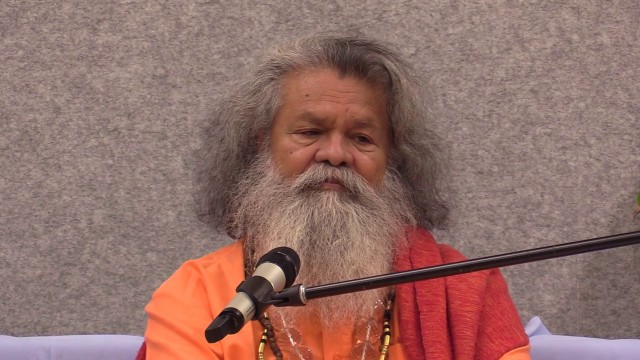
Morning satsang with Vishwaguruji from Trentwood Community Hub, Melbourne, Australia. Marriage means merge. It is a very beautiful ceremony. The story of a boy and a girl who married but they had a problem with the hard part of the bread. Married couples should live whole life happy together but kali yuga changed many things. Love is that where we are all happy healthy and helping each other. Explanation and singing of bhajan Sataguru satasangi and Sobavo satasangari.
The living God
1:55 - 2:53 (58 min)
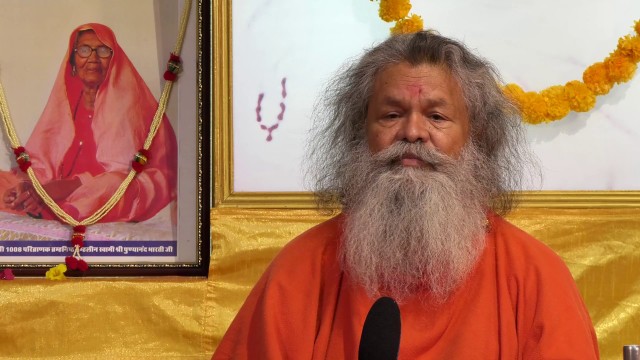
Evening satsang from Jadan Ashram, Rajasthan, India. Science is developing, which is good. Yoga is the science of the human being.The story of the professor who met a yogi while walking in the park. Where can we find God? Have you seen God? According to the teachings of Sanatana Dharma and Yoga, God lives here among us. Everyone has seen God. Each and every one of us is the living God, just like the ocean water is present in the raindrop. The same life is in all living beings. That is why we should not kill animals.
Proper practising of Bhramari
3:00 - 3:00 (0 min)
Morning program with Vishwaguruji from Brisbane, Australia. Moodiji brought India and the whole world towards spirituality. We should practise bhramari regularly but not too much at one time. Explanation and demonstration of different bhramari pranayama technics.
We keep the light in our hearts
3:45 - 4:34 (49 min)
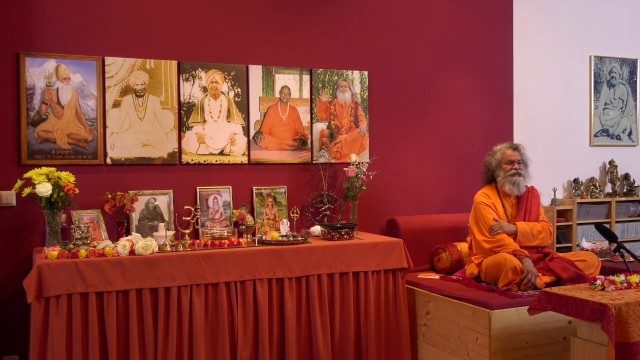
from Villach, Austria. We are lucky to meet in this city. I came to Vienna for the first time in Austria. Back then, not so many people practiced yoga. Some people thought that yogis slept on beds with nails. After Vienna I was invited to Linz. That's how I came to this area. And the seeds that were planted began to grow. Light is life, darkness is death. How long does the light in the lamp burn? How much oil is in it? After a while, the divine light of life goes out, whatever we do. We keep this light in our hearts.
Bhajan evening in Strilky Ashram
4:40 - 5:26 (46 min)
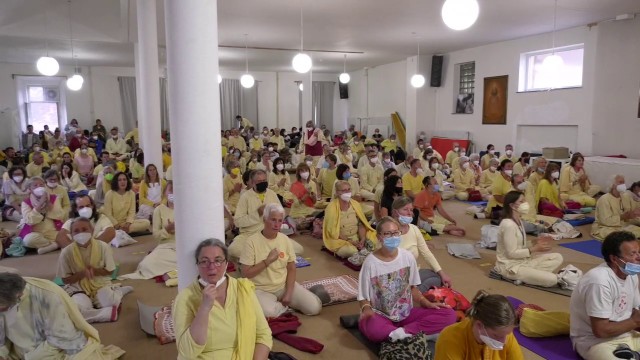
Evening satsang with Vishwaguruji from Strilky Ashram, Czech Republic. Bhajan singing.
Live as a Human
5:30 - 6:04 (34 min)
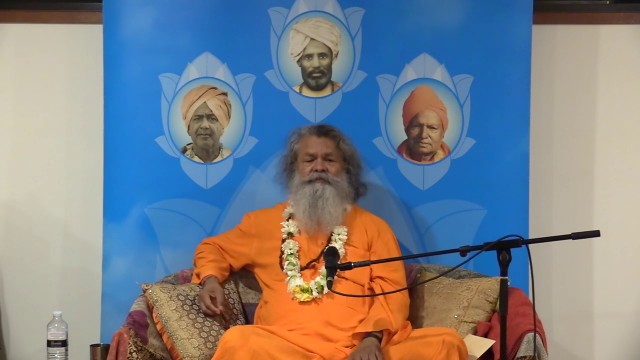
A spiritual discourse on non-violence, divine oneness, and the sanctity of all life.
"We are like other Swamis; we are the same. But we are working for everyone, every time, everywhere."
"Jīvā means life, life, and in that life there are all creatures: a little ant, this little ant, and humans, and all are all equal, what is living, living."
A Swami addresses a gathering, weaving together cosmology, ethics, and personal anecdote. He speaks of Bhagavān Śiva as the primordial source and emphasizes the fundamental equality of all life (Jīva). The core teaching is the practice of ahimsa (non-violence), advocating for a vegan lifestyle and abstaining from alcohol, framed as a recognition of our shared humanity. He instructs listeners to begin each day with the affirmation "I am human" to cultivate this awareness, and concludes with a bhajan.
Filming location: Gold Coast, Australia
We should awake
6:10 - 6:52 (42 min)
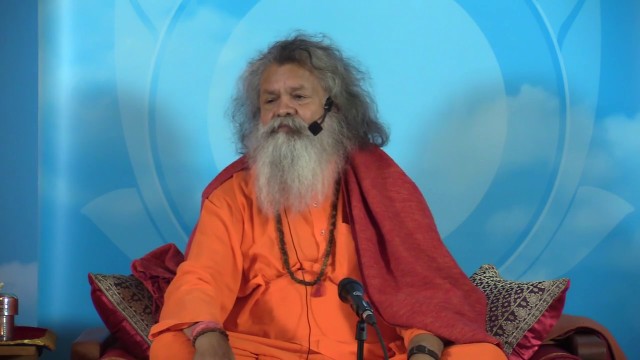
A spiritual discourse exploring states of consciousness, reality, and human identity.
"Sleeping is very great. They cannot sleep, not access this bill like that."
"And when we sleep, then there is no light, no thoughts, nothing. That time we became very quick."
A spiritual teacher delivers an extemporaneous talk, weaving together themes of deep sleep, awakening, and the nature of reality. He uses personal anecdotes, analogies of cars and airplanes, and references to lineage gurus like Mahāprabhujī to discuss the journey from individual awareness to a unified state. The talk emphasizes self-reminders like "I am awakened" and "I am human," and concludes by praising the purity of satsang.
Filming location: Brisbane, Australia
Morning Yoga practice, Umag, Croatia (1/9)
7:00 - 8:37 (97 min)
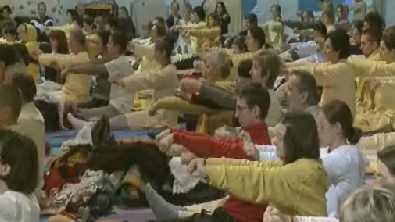
Morning Yoga practice from the international Yoga retreat Umag, Croatia on the 25th of September 2010
Karma Yoga
8:45 - 9:19 (34 min)
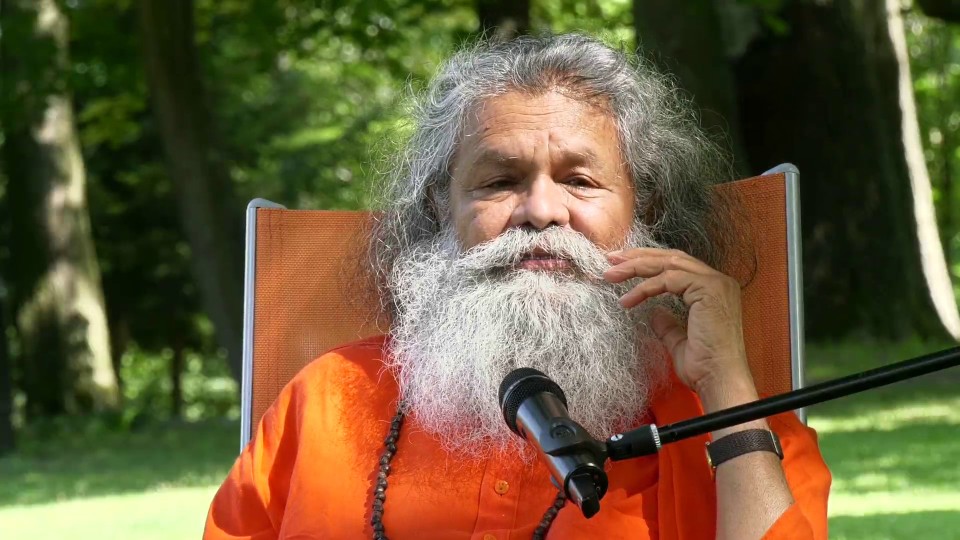
Morning satsang with Vishwaguruji from Strilky Ashram, Czech Republic. The Bhagavad Gita says that yoga is fulfilled through work. Doing something good or bad is also karma. God has given us to be born in this human form. We have to act in such a way that we attain cosmic light. Practising Asana and Bhramari pranayama.
In your body is God inside
9:25 - 9:56 (31 min)
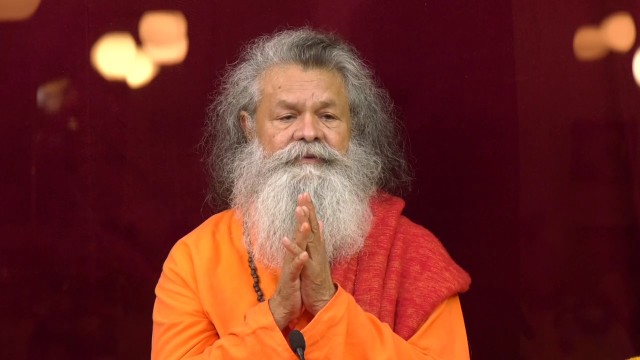
An evening satsang on spiritual awakening, veganism, and navigating the Kali Yuga.
"Kali Yuga begins very strongly here in this world. But at the same time, like the sunrise, we see from the dark and the rise coming up."
"And that is what they call them, that is vegan. Now veganism has begun around the whole world."
The teacher addresses the gathering, expressing joy at their presence and connecting it to the lineage of Alakpuriji. He discusses the global rise of veganism as a sign of a new, compassionate consciousness emerging alongside the darkness of Kali Yuga. He speaks on the soul's suffering, the equality of all beings, and the need for harmony, urging everyone to walk a path of non-violence and recognize the divine within.
Filming location: Strilky, Czech Republic
Part 1: Iyengar Yoga During Pregnancy: A Synthesis of Tradition and Experience
10:00 - 11:42 (102 min)
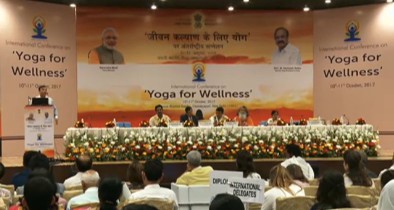
A lecture on applying Iyengar Yoga to pregnancy, blending scientific and experiential perspectives.
"Yoga is one, like God is one; different people call it by different names. There is nothing like Iyengar Yoga."
"Āsanas are descriptions, not prescriptions... the practice must be partly individualized within that framework under the guidance of an experienced teacher."
Dr. Rajiv Mehta, a scientist and longtime Iyengar student, explains the methodology's use of props for precision and safety. She details how tailored yoga can address pregnancy's physical and emotional challenges—like back pain, stress, and hormonal changes—by strengthening the body, calming the mind, and preparing for delivery, while strongly emphasizing the need for expert guidance and collaboration with modern medicine.
Filming location: Delhi, India
Planting of peace tree in Gyor
11:45 - 11:59 (14 min)
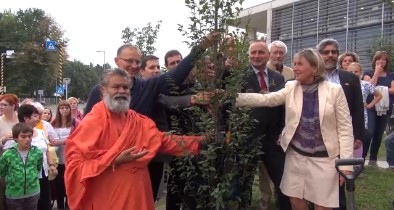
Planting of peace tree in Gyor, Hungary.
Vegetarian kitchen in praxis (part 1)
12:00 - 12:53 (53 min)
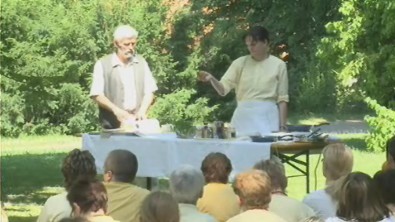
A practical cooking seminar on making vegetarian food appealing.
"Scientifically, vegetarianism is the best path. But in practice, it is not so simple. We must contemplate how to make it appealing."
"A simple way is to slice tofu and fry it in oil... When the tofu or seitan gets a golden crust from roasting, put it into the sauce to gain flavor."
Following an introductory talk on the health and environmental rationale for vegetarianism, the speaker's wife leads a practical cooking demonstration. She shows how to prepare flavorful, meat-like dishes using tofu and seitan (wheat gluten), focusing on techniques like pressing tofu, creating spice-infused oils, and using marinades to make the dishes appealing, especially to those accustomed to meat-centric cuisine. The session concludes with a Q&A on food storage and preparation.
Filming location: Strilky, Czech Republic
I am for everyone
13:00 - 13:58 (58 min)
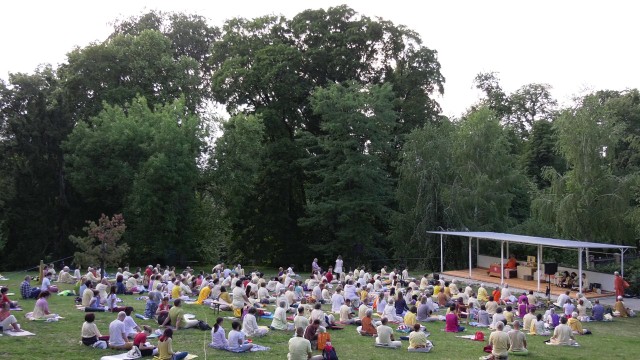
Evening satsang with Vishwaguruji from Strilky Ashram, Czech Republic. Bhajan singing. People didn't meet Vishwaguruji personally for some years but they did their sadhana and they were with him. We love equally any people and any religion. A drop of the ocean is one with the ocean. We should know that we are humans. Kali Yuga is the last but it can turn to Satya Yuga also.
Our soul is one
14:05 - 14:44 (39 min)
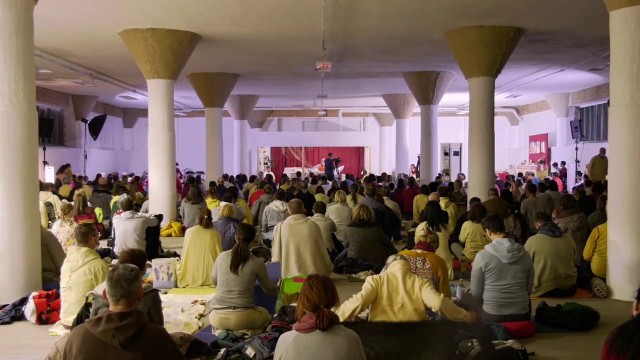
A spiritual discourse on the nature of life, non-violence, and the soul's journey, using the metaphor of a flame.
"God has given something special to the humans... a true human is the only one who does not say, 'I will live here, I will eat food, but I will not act in a way that causes pain to any humans, or animals, or birds, or anything.'"
"This life is yours, everyone's, and mine. My lamp is, I don't know how far it is, but I also have this lamp, and one day my lamp will be gone."
A swami addresses a gathering, explaining the preciousness of human life and the principle of non-violence (ahimsā) as the key to spiritual progress. He describes the soul (ātmā) as a flame that ultimately unites with the divine, contrasting it with the ego and the physical body. He concludes with practical guidance, urging daily maintenance of a lamp in one's home or ashram as a form of seva (service) and sādhanā (practice) to honor this inner light.
Filming location: Slovenia
Bhramari Pranayama
14:50 - 15:31 (41 min)
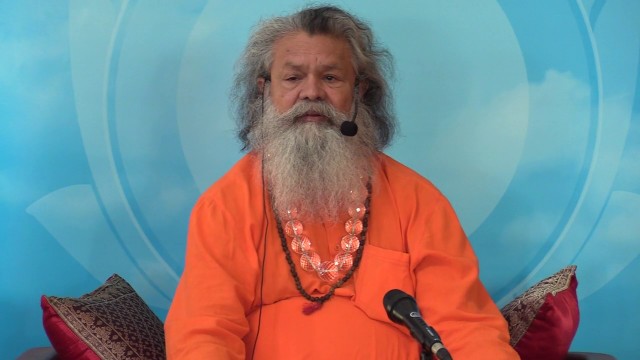
Evening satsang with Vishwaguruji from Brisbane Ashram, Australia.
Who and how can become a saint
15:35 - 16:09 (34 min)
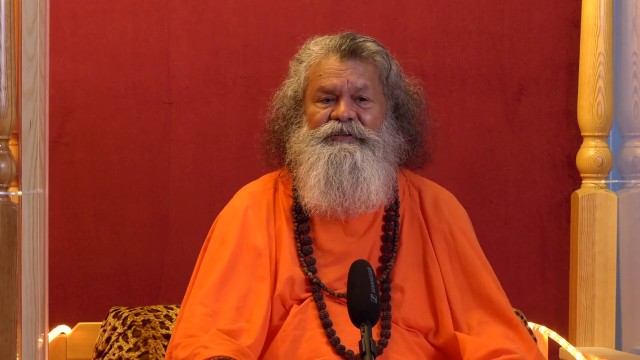
A spiritual discourse on the nature of the guru's grace and discipleship, using metaphorical teachings.
"When a single draft comes, if we can catch that one draft, we are already in the ocean." "Once you have that guru, a real guru, then you, we all will be there."
The teacher, returning after some time, delivers a satsang weaving together parables and metaphors—including the lifecycle of a wasp (Brahmari), the process of childbirth, and a story about a dog losing its chapati—to illustrate the elusive nature of true spiritual attainment and the singular, irrevocable bond with an authentic guru. He emphasizes purity, complete surrender, and warns against the distracted mind that seeks many things.
Filming location: Vienna, Austria
God resides in every living being
16:15 - 16:45 (30 min)
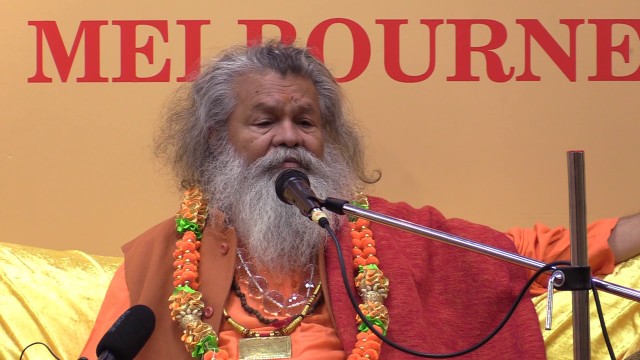
A spiritual discourse on universal unity and human identity.
"When the soul leaves this body... then tell me, what is on top of the skin? It is all there—whether one is Hindu or Muslim, that is what it is."
"See, we are human beings, we are human beings... So, O sādhus, what difference is there between you and them?"
A speaker delivers an impassioned, stream-of-consciousness talk on transcending religious and national divisions to recognize a shared human and spiritual essence. He discusses the soul's journey, advocates for non-violence and prayer, and reflects on karmic consequences, while expressing gratitude for his disciples and the spiritual heritage of India. The talk concludes with a blessing.
Filming location: Melbourne, Australia
Let me come to You
16:50 - 17:23 (33 min)
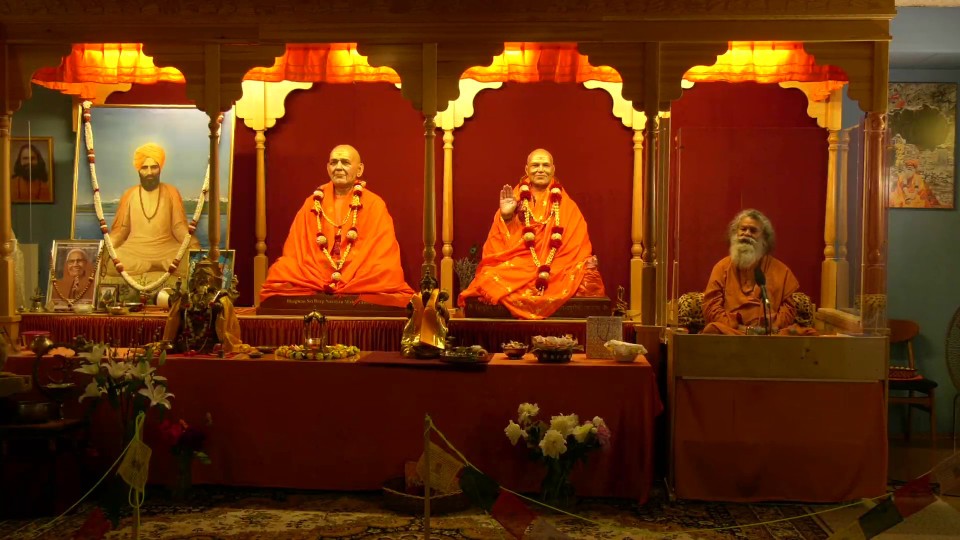
A spiritual discourse on the science of the soul and universal connection.
"To see you all, I know, is a matter of science. It doesn't matter what we think; it is about techniques—the techniques, the science."
"Our body is mortal, and our body will die. In our body, we have our ātmā, our soul. But in our body, there is not only one soul. Many souls are inside, very tiny, even in a cell of our body."
Swami Ji addresses a gathering, explaining yogic science as a means of direct, non-physical communication, as mastered by ancient ṛṣis. He explores the nature of the soul, using metaphors of telephones, honeybees, and fruit trees to describe multiplicity within unity and the spiritual connection between a guru and disciples globally. He touches on the challenges of Kali Yuga, the pandemic, and concludes with a personal anecdote about healing.
Filming location: Vienna, Austria
Oneness
17:25 - 17:57 (32 min)
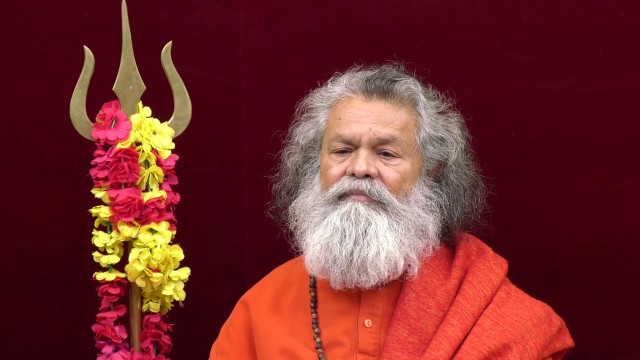
A year-end satsang on religious harmony, yoga traditions, and the necessity of the Guru.
"We should not believe that all other religions and their dates, their months and their observances, should be deleted."
"Without Gurudev, who can let us cross the ocean of that saṃsāra?"
The lecturer addresses the global Yoga in Daily Life community as the year closes. He emphasizes respecting all religions, cultures, and their calendars, warning against efforts to erase traditions. He explains the unity of yoga beneath different school names, using the analogy of a nation and its citizens. The core teaching is the indispensable role of the Satguru in guiding the soul beyond physical and mental practices toward liberation, ultimately paying homage to the lineage of Gurudev Swami Madhavanandaji.
Filming location: Strilky, Czech Republic
The Means Are the End: On Non-Violence, Patience, and Peace
18:00 - 18:14 (14 min)
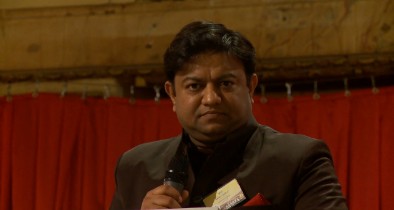
A keynote address on non-violence, patience, and peace at a World Peace Council conference.
"Wrong means will always fetch wrong ends. We must understand the basic fundamental: it is the means which become the ends."
"Happiness is a peaceful state of mind. If you have a peaceful mind, you live in the present, and when you live in the present, you are happy."
Swapnil Kothari, a teacher from India, delivers a speech exploring non-violence as a conscious philosophy, not just a default position. He argues for the primacy of ethical means over ends, asserting that violence breeds violence while non-violence breeds compassion and inner peace. He uses personal anecdotes, historical references, and a humorous story about marital patience to illustrate the stamina required for this path.
Filming location: Prague, Czech Republic
Sat sanga
18:20 - 18:47 (27 min)
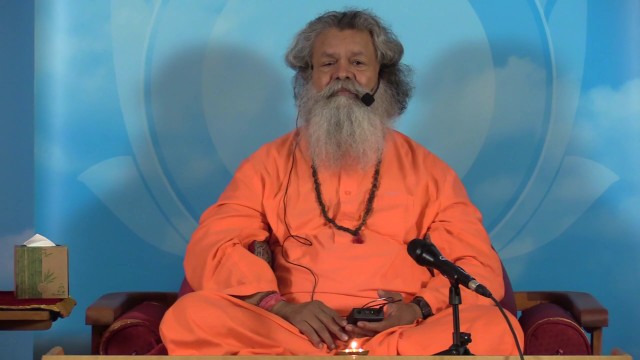
A spiritual discourse on the meaning and power of satsaṅga.
"It was very hard, very hard. I think in your country it was also, no? It was very much."
"Sat means truth. Satsaṅga, truth. Each and every word should be such that we should know the truth."
The lecturer addresses a gathering, reflecting on the global difficulties of the past years, including pandemic-related travel disruptions. He explores the concept of satsaṅga, defining "sat" as truth and emphasizing the importance of truthful company and spiritual practice. The talk meanders through themes of guru lineages, the impermanence of the body compared to the lasting nature of one's name, and the unifying principle of truth amidst worldly distinctions.
Filming location: Brisbane, Australia
We keep the light in our hearts
18:55 - 19:44 (49 min)
from Villach, Austria. We are lucky to meet in this city. I came to Vienna for the first time in Austria. Back then, not so many people practiced yoga. Some people thought that yogis slept on beds with nails. After Vienna I was invited to Linz. That's how I came to this area. And the seeds that were planted began to grow. Light is life, darkness is death. How long does the light in the lamp burn? How much oil is in it? After a while, the divine light of life goes out, whatever we do. We keep this light in our hearts.
Don't kill and don't eat meat
19:50 - 20:36 (46 min)
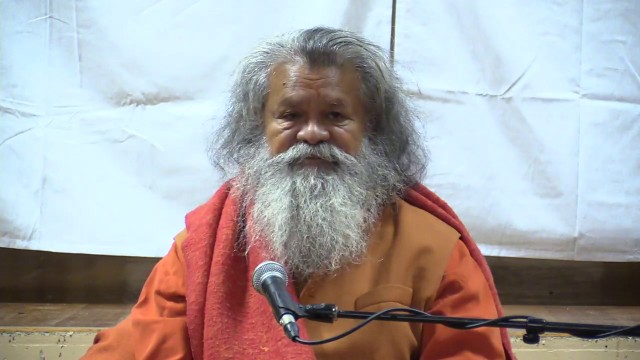
Evening satsang with Vishwaguruji from Launceston. Tasmania, Australia. We can become really human if we don't kill any creatures. Ant and elephant are different only in their bodies. Many years ago people generally didn't eat meat not like now. In China, people eat cats and they kill them very cruelly. Be peaceful and happy eating good but not meat and eggs. We should say every morning that "I am human" and we should feel the greatness of our Earth and water. The story of a blind man in a room that had only one door. Singing and explaining the bhajan Prabhu mere avaguna cit na dharo.
We should awake
20:40 - 21:22 (42 min)
A spiritual discourse exploring states of consciousness, reality, and human identity.
"Sleeping is very great. They cannot sleep, not access this bill like that."
"And when we sleep, then there is no light, no thoughts, nothing. That time we became very quick."
A spiritual teacher delivers an extemporaneous talk, weaving together themes of deep sleep, awakening, and the nature of reality. He uses personal anecdotes, analogies of cars and airplanes, and references to lineage gurus like Mahāprabhujī to discuss the journey from individual awareness to a unified state. The talk emphasizes self-reminders like "I am awakened" and "I am human," and concludes by praising the purity of satsang.
Filming location: Brisbane, Australia
I am for everyone
21:30 - 22:28 (58 min)
Evening satsang with Vishwaguruji from Strilky Ashram, Czech Republic. Bhajan singing. People didn't meet Vishwaguruji personally for some years but they did their sadhana and they were with him. We love equally any people and any religion. A drop of the ocean is one with the ocean. We should know that we are humans. Kali Yuga is the last but it can turn to Satya Yuga also.
Bhajan evening in Strilky Ashram
22:35 - 23:21 (46 min)
Evening satsang with Vishwaguruji from Strilky Ashram, Czech Republic. Bhajan singing.
Live as a Human
23:25 - 23:59 (34 min)
A spiritual discourse on non-violence, divine oneness, and the sanctity of all life.
"We are like other Swamis; we are the same. But we are working for everyone, every time, everywhere."
"Jīvā means life, life, and in that life there are all creatures: a little ant, this little ant, and humans, and all are all equal, what is living, living."
A Swami addresses a gathering, weaving together cosmology, ethics, and personal anecdote. He speaks of Bhagavān Śiva as the primordial source and emphasizes the fundamental equality of all life (Jīva). The core teaching is the practice of ahimsa (non-violence), advocating for a vegan lifestyle and abstaining from alcohol, framed as a recognition of our shared humanity. He instructs listeners to begin each day with the affirmation "I am human" to cultivate this awareness, and concludes with a bhajan.
Filming location: Gold Coast, Australia
American
Australian