
European
Do not eat meat, eggs and alcohol!
0:55 - 1:44 (49 min)
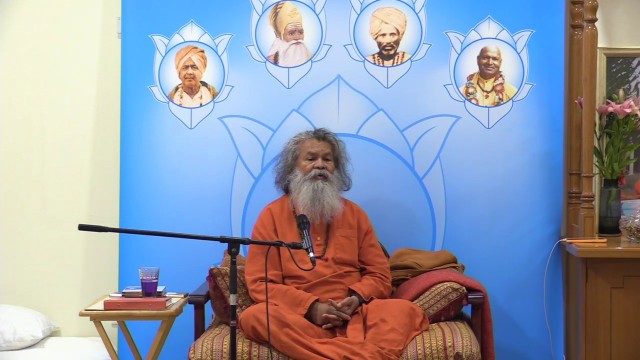
A spiritual discourse by a motherly figure on diet, family, and divine principles.
"And you know that my disciples, they are not eating meat, alcohol, and something more. Eggs."
"Bhagavān Śiva said that no one will be able to eat the meat of anyone; it will remain as it is."
The speaker, addressing her disciples, shares teachings on a sattvic lifestyle, emphasizing abstinence from meat, eggs, and alcohol. She uses the metaphor of a bird nurturing its eggs to discuss motherhood and creation, encourages having many children, and speaks of Lord Śiva's compassion for all life. The talk meanders through themes of human responsibility, the current Kali Yuga, and the sacredness of the mother.
Filming location: Sydney, Australia
I am for everyone
1:50 - 2:48 (58 min)
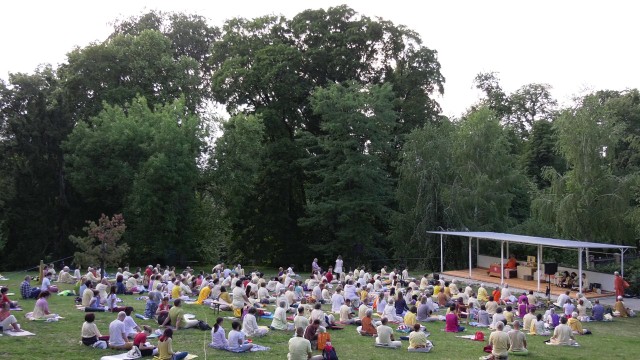
Evening satsang with Vishwaguruji from Strilky Ashram, Czech Republic. Bhajan singing. People didn't meet Vishwaguruji personally for some years but they did their sadhana and they were with him. We love equally any people and any religion. A drop of the ocean is one with the ocean. We should know that we are humans. Kali Yuga is the last but it can turn to Satya Yuga also.
We keep the light in our hearts
2:55 - 3:44 (49 min)
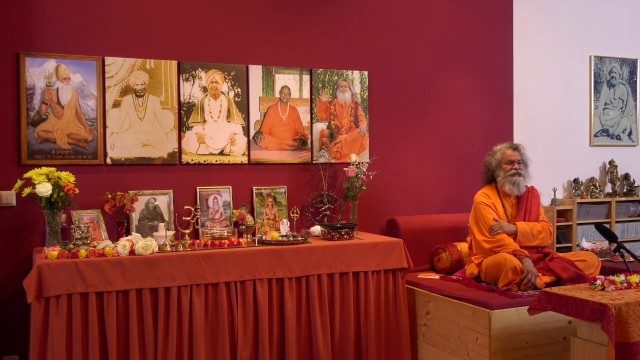
from Villach, Austria. We are lucky to meet in this city. I came to Vienna for the first time in Austria. Back then, not so many people practiced yoga. Some people thought that yogis slept on beds with nails. After Vienna I was invited to Linz. That's how I came to this area. And the seeds that were planted began to grow. Light is life, darkness is death. How long does the light in the lamp burn? How much oil is in it? After a while, the divine light of life goes out, whatever we do. We keep this light in our hearts.
Bhramari pranayama
3:50 - 4:38 (48 min)
Morning program with Vishwaguruji from Sydney Ashram, Australia.
The living God
4:45 - 5:43 (58 min)
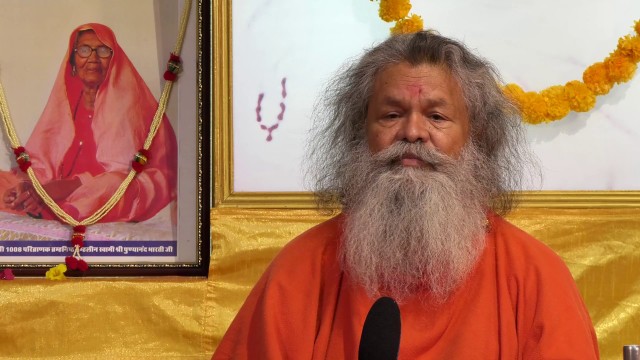
Evening satsang from Jadan Ashram, Rajasthan, India. Science is developing, which is good. Yoga is the science of the human being.The story of the professor who met a yogi while walking in the park. Where can we find God? Have you seen God? According to the teachings of Sanatana Dharma and Yoga, God lives here among us. Everyone has seen God. Each and every one of us is the living God, just like the ocean water is present in the raindrop. The same life is in all living beings. That is why we should not kill animals.
We should feel that we are one
5:50 - 6:53 (63 min)
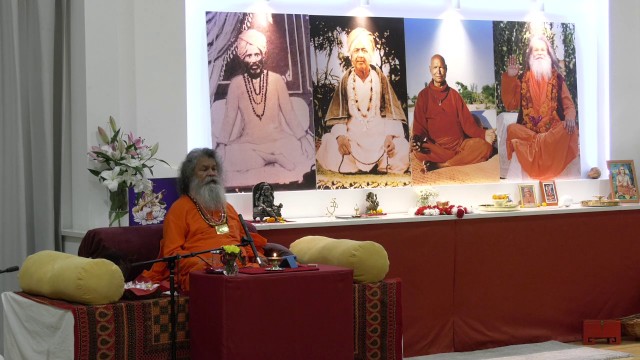
Evening satsang with Vishwaguruji from Rijeka, Croatia. Atma is everywhere and always with us. We came to this world to do good things and be in oneness. Many of us understand it and many don't. Bhajan singing Sadhana Cyara. The story of goats and a tiger baby.Bhajan singing Sri guru Atma Paramatma. In our hearts, we know that we are one and go to the supreme. Practising ashwini mudra, Om chanting and bhramari pranayama.
Practicing of the system 'Yoga in Daily Life', Level 2 - Part 1
7:00 - 8:03 (63 min)
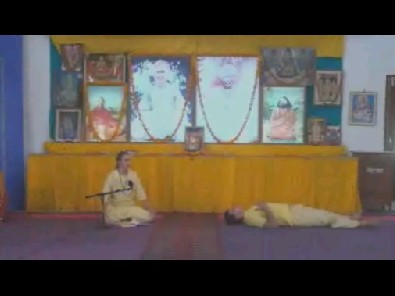
A guided yoga practice session for Level 2 of the Yoga in Daily Life system.
"The difference between the first level and the second level is significant. In the second level, we engage with the real āsanas."
"The breathing can guide you very deep inside towards your inner self."
An instructor leads a comprehensive session at the ashram, beginning with deep relaxation and the full yoga breath before progressing through several Level 2 āsanas such as Śaśāṅkāsana and Meru Ākaraṇa Āsana. The practice emphasizes precise movement linked to breath, detailed relaxation techniques, and concludes with prāṇāyāma and OṂ chanting.
Filming location: Jadan, Rajasthan, India
Karma Yoga
8:10 - 8:44 (34 min)
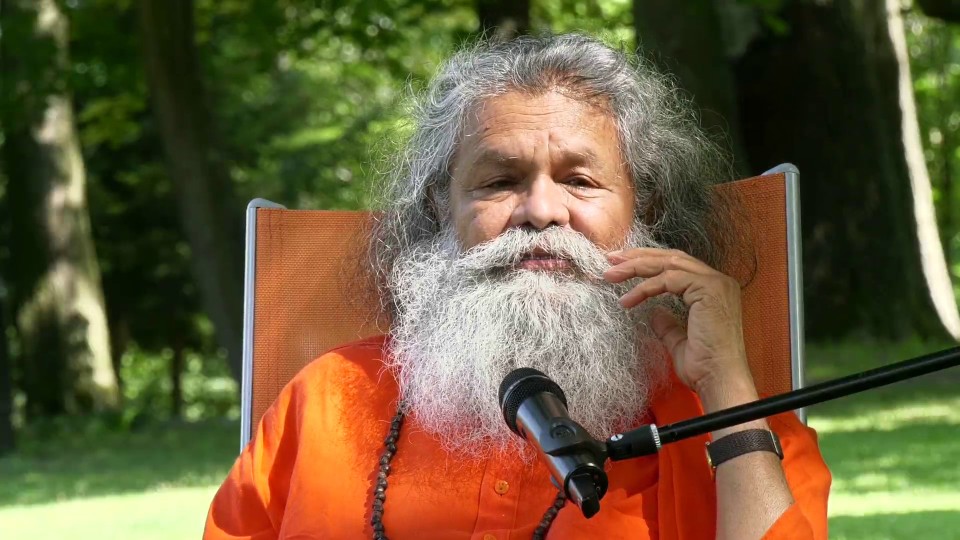
Morning satsang with Vishwaguruji from Strilky Ashram, Czech Republic. The Bhagavad Gita says that yoga is fulfilled through work. Doing something good or bad is also karma. God has given us to be born in this human form. We have to act in such a way that we attain cosmic light. Practising Asana and Bhramari pranayama.
Our soul is one
8:50 - 9:29 (39 min)
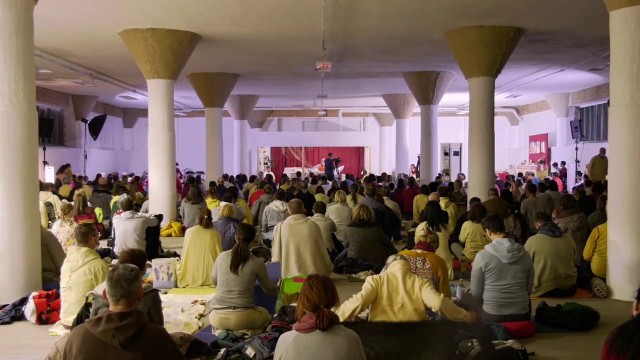
A spiritual discourse on the nature of life, non-violence, and the soul's journey, using the metaphor of a flame.
"God has given something special to the humans... a true human is the only one who does not say, 'I will live here, I will eat food, but I will not act in a way that causes pain to any humans, or animals, or birds, or anything.'"
"This life is yours, everyone's, and mine. My lamp is, I don't know how far it is, but I also have this lamp, and one day my lamp will be gone."
A swami addresses a gathering, explaining the preciousness of human life and the principle of non-violence (ahimsā) as the key to spiritual progress. He describes the soul (ātmā) as a flame that ultimately unites with the divine, contrasting it with the ego and the physical body. He concludes with practical guidance, urging daily maintenance of a lamp in one's home or ashram as a form of seva (service) and sādhanā (practice) to honor this inner light.
Filming location: Slovenia
Gurudev is for all of us
9:35 - 9:56 (21 min)
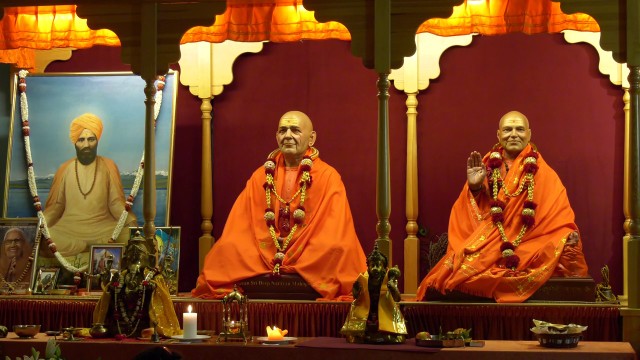
A spiritual discourse on unity, humility, and conduct within a community.
"Humans and our heart—we should be, and that is the best one, and that should have to be so."
"I'm not that God, but I'm only a servant, and a servant is for all."
A spiritual teacher addresses a gathering, emphasizing the oneness of the heart beyond physical or cultural differences. He discusses the need for humility, encouraging long-time attendees to make space for newcomers, and shares parables about compassion and containing anger. A listener interjects to agree and seek clarification on a practical ritual, to which the teacher responds by reiterating the core message of openness and inclusion.
Filming location: Vienna, Austria
Part 1: The Role of Yoga and Meditation in Improving Quality of Life for Cancer Patients
10:00 - 11:07 (67 min)
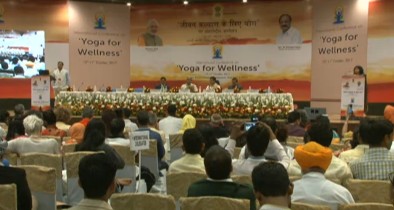
A medical lecture on the role of yoga and meditation as supportive care for cancer patients.
"We must note which specific yogic and meditative techniques were used, as these vary widely."
"Please do not give false hope that cancer will be cured... If a practitioner claims that prāṇāyāma, dhyāna, and some Ayurvedic herbs... can cure cancer, they are committing a grave sin against society."
A doctor from AIIMS Delhi presents a detailed analysis of scientific studies on yogic interventions for cancer patients, emphasizing they are complementary to standard treatments like chemotherapy. He strongly warns against practitioners falsely claiming yoga can cure cancer, shares data on benefits for quality of life and stress, and proposes a large-scale research trial combining yoga, meditation, and herbal products for cancer prevention and care.
Filming location: Delhi, India
Part 1: Welcoming Address and Valedictory Session on Yoga for Wellness
11:15 - 12:23 (68 min)
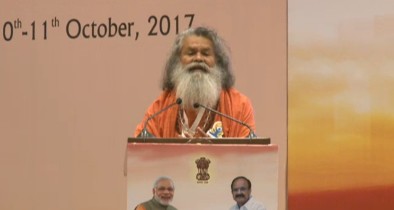
A valedictory session for a conference on "Yoga for Wellness," featuring addresses by government ministers and spiritual leaders.
"Yoga for wellness is this year’s subject. It is not just about the practice of yoga, but also about using it in the lives of every human being for achieving better health and wellness."
"Our method of treatment does not have any side effects. That is why we develop research about it, develop websites, develop programming, develop its videos."
The session opens with a welcome address emphasizing yoga's global role and the need to integrate traditional and modern medicine. Union Minister Nitin Gadkari delivers a valedictory address, sharing his personal health transformation through yoga and proposing structured training and research to professionalize the field. Following remarks from other ministers, Professor H.R. Nagendra gives a speech contrasting the multidimensional approach of yoga with modern medicine's limitations for non-communicable diseases. Swami Maheshvarananda and actress Anu Agarwal also share perspectives, with Agarwal recounting her recovery from a major accident through yoga.
Filming location: Delhi, India
Remain in the boat
12:25 - 13:41 (76 min)
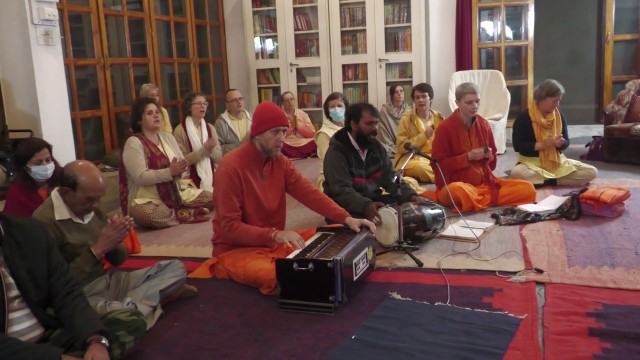
Evening satsang from Jaipur Ashram, Rajasthan, India. Bhajan singing. The story of a bird who was travelling in a boat in the ocean. Humans are also in a symbolic boat to cross the ocean of life. Sometimes people also lost that boat and don't know what to do. Only Gurudev can bring us to the shore. Every Guru is very good but we should have only one who will lead us to God. Have we ever seen God? Our God is in our heart which is our Atma. Remain where you are. During meditation as we can go deeper and deeper in ourselves, we are closer and closer to God. Practising one-minute meditation to reach our hearts. Every morning we should be thankful that we were born as a human and show respect to our Earth and water. We shouldn't kill any creatures. Mala is very important. Explanation of the influence of bhramari pranayama.
In your body is God inside
13:45 - 14:16 (31 min)
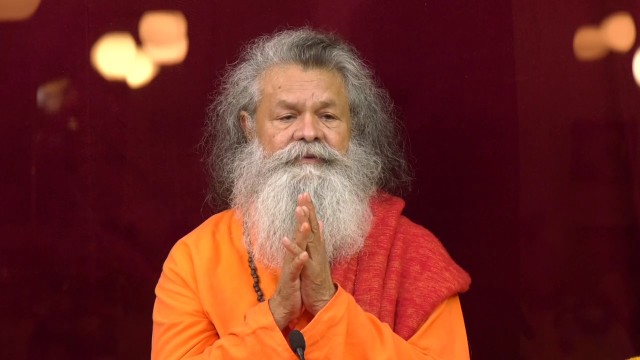
An evening satsang on spiritual awakening, veganism, and navigating the Kali Yuga.
"Kali Yuga begins very strongly here in this world. But at the same time, like the sunrise, we see from the dark and the rise coming up."
"And that is what they call them, that is vegan. Now veganism has begun around the whole world."
The teacher addresses the gathering, expressing joy at their presence and connecting it to the lineage of Alakpuriji. He discusses the global rise of veganism as a sign of a new, compassionate consciousness emerging alongside the darkness of Kali Yuga. He speaks on the soul's suffering, the equality of all beings, and the need for harmony, urging everyone to walk a path of non-violence and recognize the divine within.
Filming location: Strilky, Czech Republic
We should live in real love
14:20 - 15:08 (48 min)
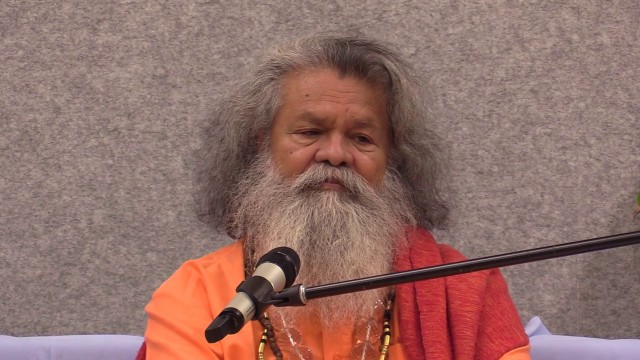
Morning satsang with Vishwaguruji from Trentwood Community Hub, Melbourne, Australia. Marriage means merge. It is a very beautiful ceremony. The story of a boy and a girl who married but they had a problem with the hard part of the bread. Married couples should live whole life happy together but kali yuga changed many things. Love is that where we are all happy healthy and helping each other. Explanation and singing of bhajan Sataguru satasangi and Sobavo satasangari.
Remain in the boat
15:15 - 16:31 (76 min)
Evening satsang from Jaipur Ashram, Rajasthan, India. Bhajan singing. The story of a bird who was travelling in a boat in the ocean. Humans are also in a symbolic boat to cross the ocean of life. Sometimes people also lost that boat and don't know what to do. Only Gurudev can bring us to the shore. Every Guru is very good but we should have only one who will lead us to God. Have we ever seen God? Our God is in our heart which is our Atma. Remain where you are. During meditation as we can go deeper and deeper in ourselves, we are closer and closer to God. Practising one-minute meditation to reach our hearts. Every morning we should be thankful that we were born as a human and show respect to our Earth and water. We shouldn't kill any creatures. Mala is very important. Explanation of the influence of bhramari pranayama.
God resides in every living being
16:35 - 17:05 (30 min)
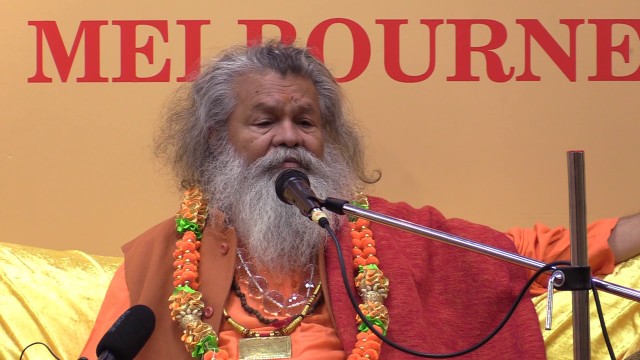
A spiritual discourse on universal unity and human identity.
"When the soul leaves this body... then tell me, what is on top of the skin? It is all there—whether one is Hindu or Muslim, that is what it is."
"See, we are human beings, we are human beings... So, O sādhus, what difference is there between you and them?"
A speaker delivers an impassioned, stream-of-consciousness talk on transcending religious and national divisions to recognize a shared human and spiritual essence. He discusses the soul's journey, advocates for non-violence and prayer, and reflects on karmic consequences, while expressing gratitude for his disciples and the spiritual heritage of India. The talk concludes with a blessing.
Filming location: Melbourne, Australia
Let me come to You
17:10 - 17:43 (33 min)
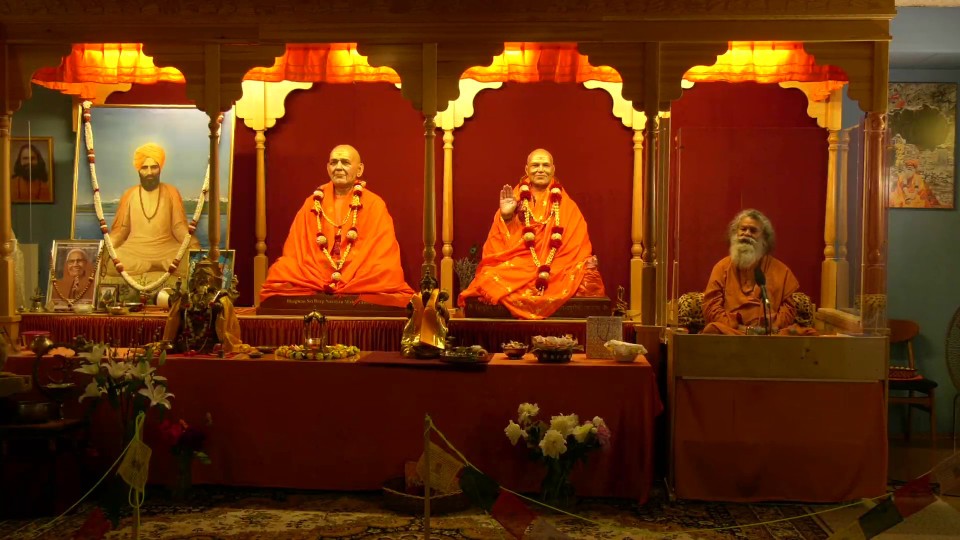
A spiritual discourse on the science of the soul and universal connection.
"To see you all, I know, is a matter of science. It doesn't matter what we think; it is about techniques—the techniques, the science."
"Our body is mortal, and our body will die. In our body, we have our ātmā, our soul. But in our body, there is not only one soul. Many souls are inside, very tiny, even in a cell of our body."
Swami Ji addresses a gathering, explaining yogic science as a means of direct, non-physical communication, as mastered by ancient ṛṣis. He explores the nature of the soul, using metaphors of telephones, honeybees, and fruit trees to describe multiplicity within unity and the spiritual connection between a guru and disciples globally. He touches on the challenges of Kali Yuga, the pandemic, and concludes with a personal anecdote about healing.
Filming location: Vienna, Austria
The Inner States: Jagrat, Svapna, Suṣupti, and Beyond
17:45 - 17:59 (14 min)
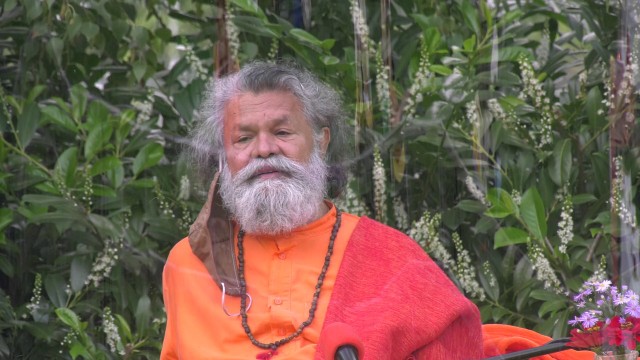
A spiritual discourse on the states of consciousness and the importance of sleep.
"First, we are Jāgrat. Jagrat means awake... This is whatever we see now: we were cooking, we are eating, we are drinking, we are shopping—anything we are doing. This is from outside to inside."
"What this sleep means is that we are 100% aware about our Self, and so it is very comfortable, relaxed, and peaceful. That is your life."
Swami Madhvānandaji addresses the community, explaining the three common states of waking (Jagrat), dreaming (Svapna), and deep sleep (Suṣupta). He emphasizes the divine quality of sleep as a time to be with the inner Self (Ātmā) and introduces the higher state of Yoga Nidrā, described as a conscious sleep where yogis are awake to the Supreme. The talk concludes with a transition to the Sandhyā prayer, marking the junction of day and night.
Filming location: Strilky, Czech Republic
Around the world - Surya Namaskar, Zagreb, CRO
18:00 - 18:36 (36 min)
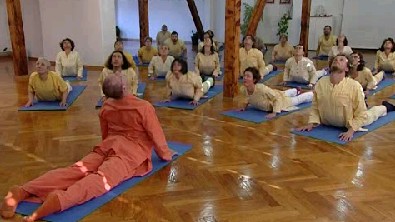
A guided instructional session on the Sūrya Namaskāra (Sun Salutation) practice, integrating physical postures, cakra concentration, and mantra.
"It is said that daily morning practice of Sūrya Namaskāra makes your body and self like the sun."
"While performing Sūrya Namaskāra with cakra concentration, we focus on the physical location but can also become aware of the positive qualities of each cakra."
An instructor at Śrīdhara Purījī Āśrama leads a comprehensive practice, beginning with detailed alignment instructions for each posture, emphasizing safety and quality of movement. The session then layers in concentration on specific cakras (like Viśuddhi at the throat and Anāhata at the heart) during the sequence, and finally integrates the practice with the silent repetition of the twelve Sūrya mantras, chanted by a companion. The teaching covers the spiritual significance of the sun and aims to unify movement, breath, and awareness.
Filming location: Zagreb, Croatia
Marriage has its proper time and order
18:40 - 20:19 (99 min)
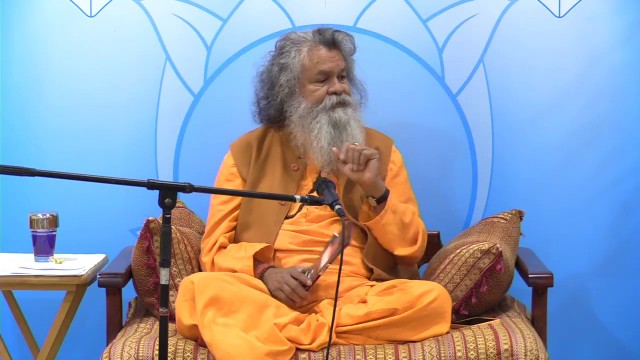
Evening satsang with Vishwaguruji from Sydney Ashram, Australia. Bhajan singing and explanation. Swami Jasraj Puri introduces our Masters and our parampara and their Ashrams and that territory of India. Indian people know many bhajans. There are many languages in India. Everything has its proper time to do. Marriage also has its proper time. In India, a boy and a girl should marry only if the family and a pandit also agreed with that. If you married in a church you should be faithful your whole life to your partner. Nowadays many people leave their partner and it brings many problems for children. The story of a boy and a girl who loved each other but they had a problem with the bread. Practising some simple exercises and bhramari pranayama.
We should awake
20:25 - 21:07 (42 min)
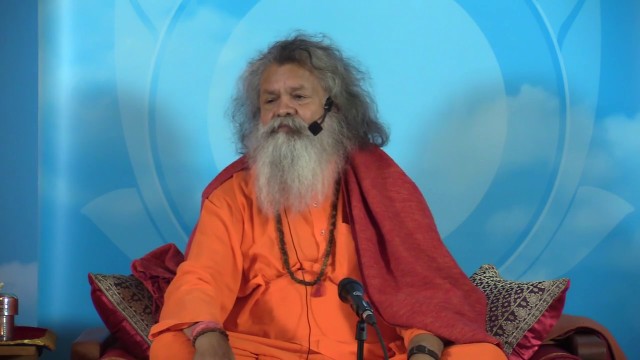
A spiritual discourse exploring states of consciousness, reality, and human identity.
"Sleeping is very great. They cannot sleep, not access this bill like that."
"And when we sleep, then there is no light, no thoughts, nothing. That time we became very quick."
A spiritual teacher delivers an extemporaneous talk, weaving together themes of deep sleep, awakening, and the nature of reality. He uses personal anecdotes, analogies of cars and airplanes, and references to lineage gurus like Mahāprabhujī to discuss the journey from individual awareness to a unified state. The talk emphasizes self-reminders like "I am awakened" and "I am human," and concludes by praising the purity of satsang.
Filming location: Brisbane, Australia
Proper practising of Bhramari
21:15 - 21:15 (0 min)
Morning program with Vishwaguruji from Brisbane, Australia. Moodiji brought India and the whole world towards spirituality. We should practise bhramari regularly but not too much at one time. Explanation and demonstration of different bhramari pranayama technics.
Bhramari Pranayama
22:00 - 22:41 (41 min)
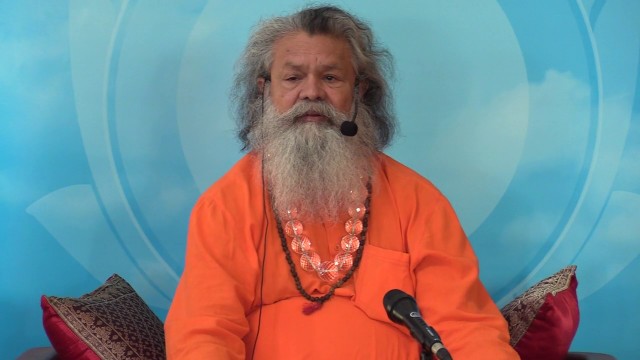
Evening satsang with Vishwaguruji from Brisbane Ashram, Australia.
Live as a Human
22:45 - 23:19 (34 min)
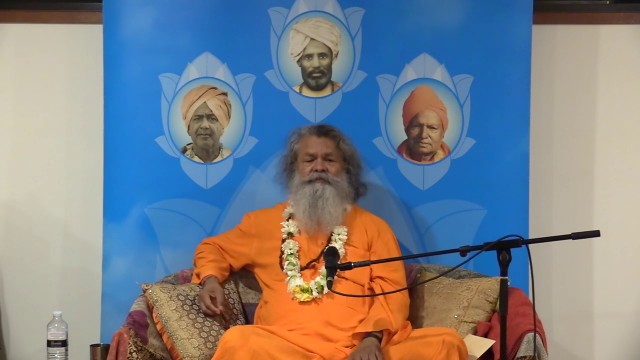
A spiritual discourse on non-violence, divine oneness, and the sanctity of all life.
"We are like other Swamis; we are the same. But we are working for everyone, every time, everywhere."
"Jīvā means life, life, and in that life there are all creatures: a little ant, this little ant, and humans, and all are all equal, what is living, living."
A Swami addresses a gathering, weaving together cosmology, ethics, and personal anecdote. He speaks of Bhagavān Śiva as the primordial source and emphasizes the fundamental equality of all life (Jīva). The core teaching is the practice of ahimsa (non-violence), advocating for a vegan lifestyle and abstaining from alcohol, framed as a recognition of our shared humanity. He instructs listeners to begin each day with the affirmation "I am human" to cultivate this awareness, and concludes with a bhajan.
Filming location: Gold Coast, Australia
Sat sanga
23:25 - 23:52 (27 min)
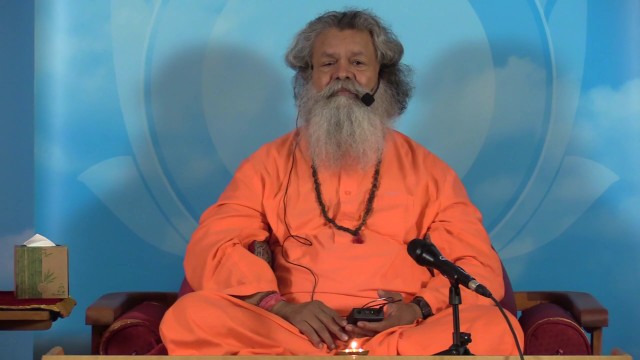
A spiritual discourse on the meaning and power of satsaṅga.
"It was very hard, very hard. I think in your country it was also, no? It was very much."
"Sat means truth. Satsaṅga, truth. Each and every word should be such that we should know the truth."
The lecturer addresses a gathering, reflecting on the global difficulties of the past years, including pandemic-related travel disruptions. He explores the concept of satsaṅga, defining "sat" as truth and emphasizing the importance of truthful company and spiritual practice. The talk meanders through themes of guru lineages, the impermanence of the body compared to the lasting nature of one's name, and the unifying principle of truth amidst worldly distinctions.
Filming location: Brisbane, Australia
American
Australian