
European
Remain in the boat
1:00 - 2:16 (76 min)
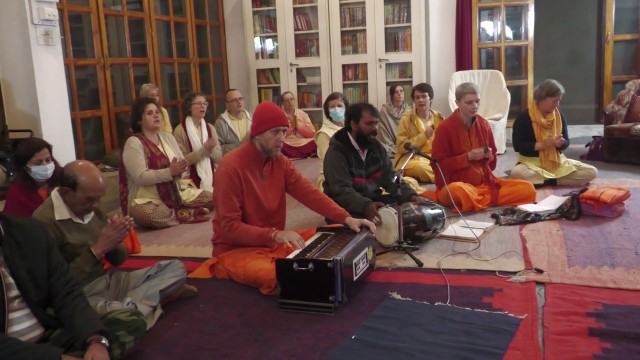
Evening satsang from Jaipur Ashram, Rajasthan, India. Bhajan singing. The story of a bird who was travelling in a boat in the ocean. Humans are also in a symbolic boat to cross the ocean of life. Sometimes people also lost that boat and don't know what to do. Only Gurudev can bring us to the shore. Every Guru is very good but we should have only one who will lead us to God. Have we ever seen God? Our God is in our heart which is our Atma. Remain where you are. During meditation as we can go deeper and deeper in ourselves, we are closer and closer to God. Practising one-minute meditation to reach our hearts. Every morning we should be thankful that we were born as a human and show respect to our Earth and water. We shouldn't kill any creatures. Mala is very important. Explanation of the influence of bhramari pranayama.
Bindu Chakra
2:20 - 3:32 (72 min)
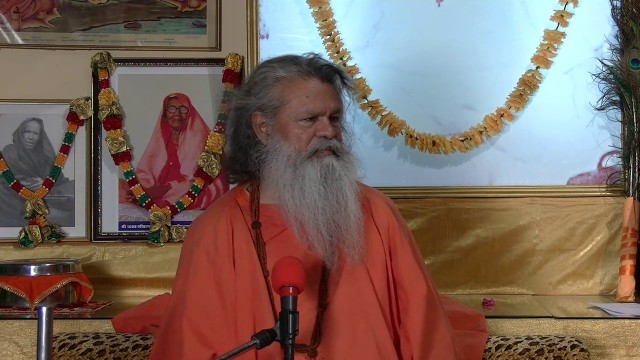
Evening satsang with Vishwaguruji from Jadan Ashram, Rajasthan, India. There are three kinds of disciple. The best quality is when the disciple quickly follows Gurudev with Bhakti. Bindu and Sahasrar are close to each other at the top of the head. The completeness comes only from Guru Kripa it can't be achieved within some months. The first meeting between Holy Guruji and Vishwaguruji. Vishwaguruji is telling how he met Sri Bodhanandaji. Guru and his disciples are like one family.
The relation between humans and God
3:40 - 5:00 (80 min)
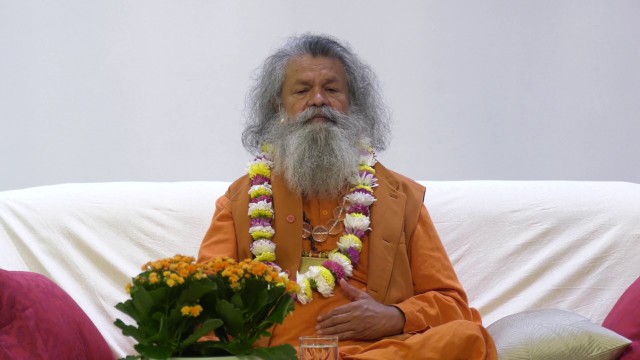
Evening satsang with Vishwaguruji from Split, Croatia. We must respect all elderly people. There is only one God. On the other hand, we are all gods. Water is the same in our bodies and in the ocean. Water can be clean or polluted, but it is still the same water. The impact of good words and negative actions can be far reaching. So we should be very soft. When we die, we all pass through the same door and we move on based on our actions.
Don't change the Master
5:05 - 6:12 (67 min)
A spiritual discourse on the chakra system, kuṇḍalinī, and the yogic path to self-realization.
"Everything is in our body and is developing... yet, we have not yet discovered the process of the body in its safest place, which is within the body of the mother."
"Yoga is the science of humans. For the human brain, for human thoughts, there is a lot, a lot written in the Patañjali Yoga Sūtras, and by different other yogīs."
The lecturer delivers a satsang, explaining the universe's reflection within the human body through the chakras and nāḍīs. He discusses the journey of the soul, the importance of a single spiritual master, and the practical science of yoga for purifying the mind and body. The talk covers the iḍā, piṅgalā, and suṣumṇā channels, the significance of the haṁsa (swan), and the need for consistent, systematic practice over seeking quick experiences.
Filming location: Melbourne, Australia
Karma Yoga
6:20 - 6:54 (34 min)
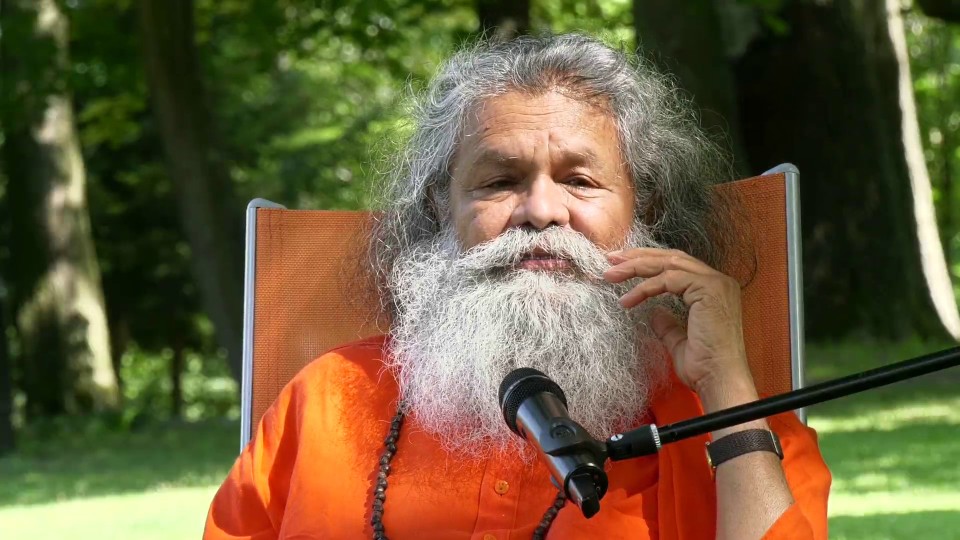
Morning satsang with Vishwaguruji from Strilky Ashram, Czech Republic. The Bhagavad Gita says that yoga is fulfilled through work. Doing something good or bad is also karma. God has given us to be born in this human form. We have to act in such a way that we attain cosmic light. Practising Asana and Bhramari pranayama.
Practice with Swamiji
7:00 - 8:07 (67 min)
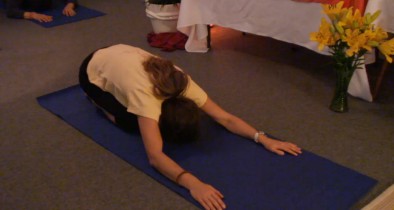
Practice with Swamiji from Auckland, New Zealand.
People are good everywhere in the world
8:15 - 9:17 (62 min)
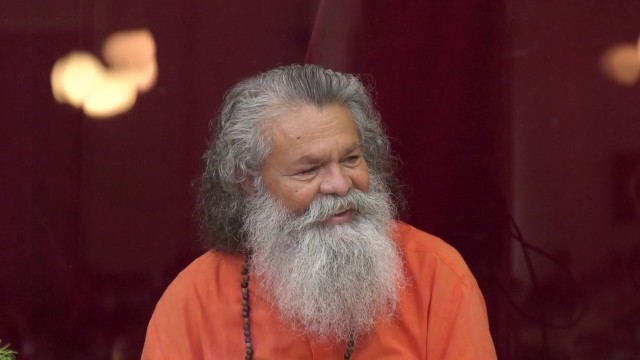
Morning satsang with Vishwaguruji from Strilky Ashram, Czech Republic. We have an international organization and very many ver very good and friendly people we are. But one drop of lemon can destroy the whole cup of milk. The story of Vishwaguruji and a Czechoslovakian ambassador and his family to take a trip in Algeria and their adventures there. We should respect everybody and every different culture. For long years we have got very much knowledge and spirituality through our yoga life. We have many great Swamis and many spiritually developed people. The story of Swami Hridayakamal in Fiji and in other countries. We should become free from attachment. Many people is born in different countries from their origin but it is good because in the end we also go to one place.
Don't kill and don't eat meat
9:25 - 10:11 (46 min)
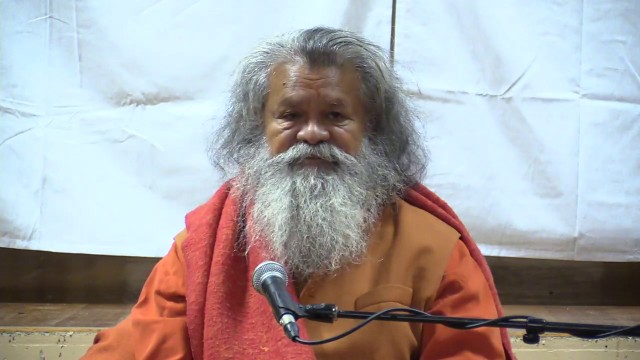
Evening satsang with Vishwaguruji from Launceston. Tasmania, Australia. We can become really human if we don't kill any creatures. Ant and elephant are different only in their bodies. Many years ago people generally didn't eat meat not like now. In China, people eat cats and they kill them very cruelly. Be peaceful and happy eating good but not meat and eggs. We should say every morning that "I am human" and we should feel the greatness of our Earth and water. The story of a blind man in a room that had only one door. Singing and explaining the bhajan Prabhu mere avaguna cit na dharo.
Working for the Liberation
10:15 - 11:08 (53 min)
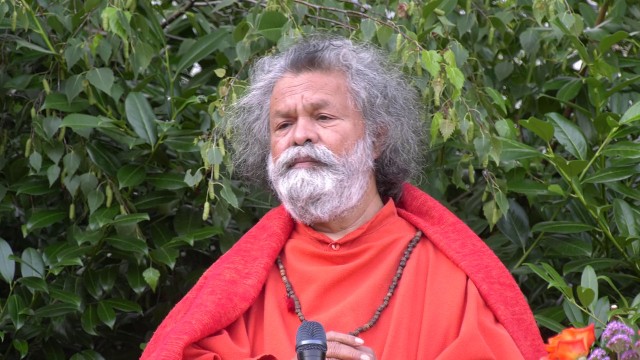
A spiritual discourse on finding inner truth versus external pursuits, delivered with personal anecdotes.
"Everything is within us. But we have to awaken that. If we are searching outside, it is not our property."
"We are all in that one wheel. What is that wheel? It is the circulation—the circulation between birth and death for every creature."
Swami narrates a satsang, teaching that eternal happiness and liberation from life's cycle are found within, not through external techniques. He contrasts this with humorous stories about sunbathing and sauna experiences, ultimately emphasizing disciplined inner practice like Kriyā Anuṣṭhāna to awaken the true Self.
Filming location: Strilky, Czech Republic
Satsang with Vishwaguruji
11:15 - 11:58 (43 min)
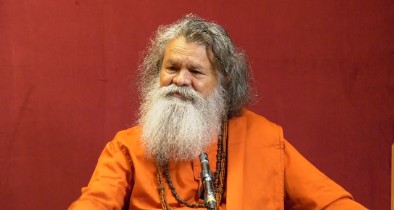
Satsang in honor of 15th year anniversary of Sri Holy Guruji Hindu Dharmsamrat Paramhans Sri Swami Madhavanand's Mahasamadhi, commemorated in Vienna.
Sat sanga
12:00 - 12:27 (27 min)
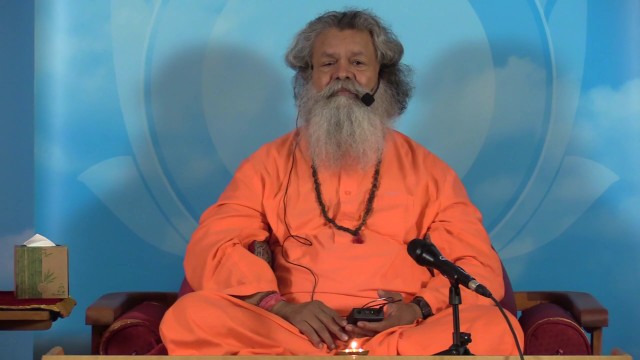
A spiritual discourse on the meaning and power of satsaṅga.
"It was very hard, very hard. I think in your country it was also, no? It was very much."
"Sat means truth. Satsaṅga, truth. Each and every word should be such that we should know the truth."
The lecturer addresses a gathering, reflecting on the global difficulties of the past years, including pandemic-related travel disruptions. He explores the concept of satsaṅga, defining "sat" as truth and emphasizing the importance of truthful company and spiritual practice. The talk meanders through themes of guru lineages, the impermanence of the body compared to the lasting nature of one's name, and the unifying principle of truth amidst worldly distinctions.
Filming location: Brisbane, Australia
Yoga and health
12:05 - 13:11 (66 min)
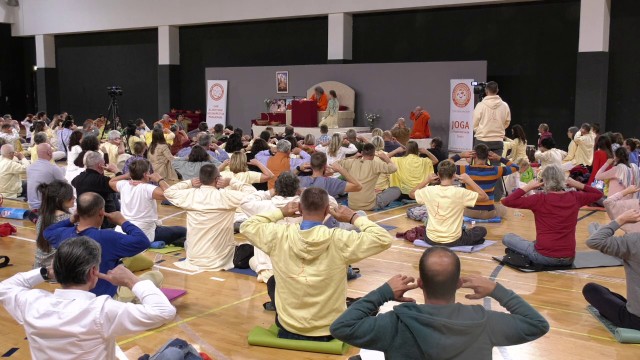
Evening satsang with Vishwaguruji from Zagreb, Croatia. We need to take care of our body to stay healthy. Every cell wakes up when we touch the water, and the nervous system calms down. A single drop balances the nerves. Yoga can cure many diseases, makes us healthy and long-lived. Family should be a real family. God is in every cell of the body. Human beings have all the abilities to attain cosmic consciousness. Om chanting and Brahmari Pranayama.
Marriage has its proper time and order
13:15 - 14:54 (99 min)
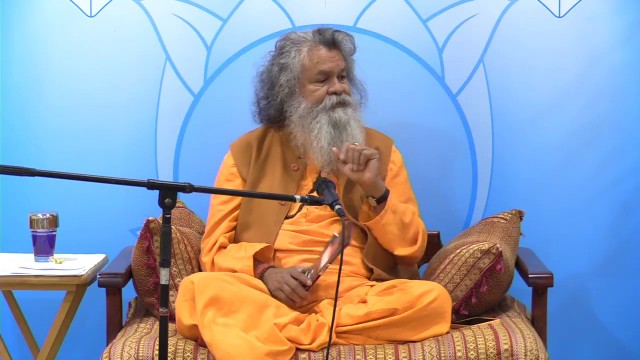
Evening satsang with Vishwaguruji from Sydney Ashram, Australia. Bhajan singing and explanation. Swami Jasraj Puri introduces our Masters and our parampara and their Ashrams and that territory of India. Indian people know many bhajans. There are many languages in India. Everything has its proper time to do. Marriage also has its proper time. In India, a boy and a girl should marry only if the family and a pandit also agreed with that. If you married in a church you should be faithful your whole life to your partner. Nowadays many people leave their partner and it brings many problems for children. The story of a boy and a girl who loved each other but they had a problem with the bread. Practising some simple exercises and bhramari pranayama.
We can achieve the Paramatma
15:00 - 15:49 (49 min)
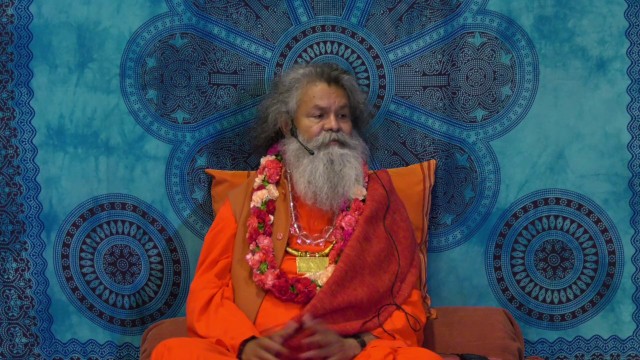
A spiritual talk reflecting on a return to Hungary, the pandemic, and the nature of the self.
"Now, we all know that it is only for the humans, not animals. Why only this disease for humans?"
"And so, but some are different. They said, 'Yes, I am good,' but backside this, backside that. So we have to clean ourselves."
The lecturer addresses a gathering, sharing memories of past visits and the loss of a devotee, Krishṇānand. He contemplates the COVID-19 pandemic as a divine response to human actions, using allegories of the water cycle and fire to illustrate the interconnectedness of life and the importance of humility, authentic practice, and overcoming ego on the spiritual path.
Filming location: Budapest, Hungary
Do not eat meat, eggs and alcohol!
15:55 - 16:44 (49 min)
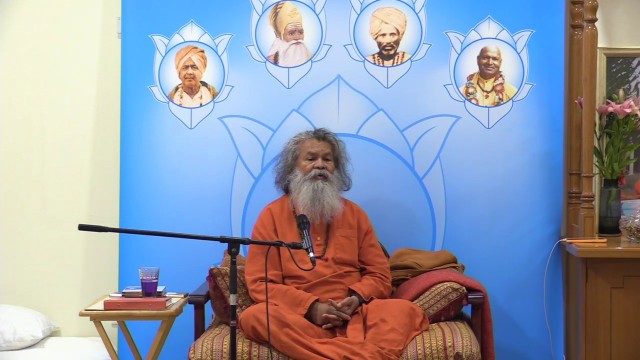
A spiritual discourse by a motherly figure on diet, family, and divine principles.
"And you know that my disciples, they are not eating meat, alcohol, and something more. Eggs."
"Bhagavān Śiva said that no one will be able to eat the meat of anyone; it will remain as it is."
The speaker, addressing her disciples, shares teachings on a sattvic lifestyle, emphasizing abstinence from meat, eggs, and alcohol. She uses the metaphor of a bird nurturing its eggs to discuss motherhood and creation, encourages having many children, and speaks of Lord Śiva's compassion for all life. The talk meanders through themes of human responsibility, the current Kali Yuga, and the sacredness of the mother.
Filming location: Sydney, Australia
Bhramari pranayama
16:50 - 17:38 (48 min)
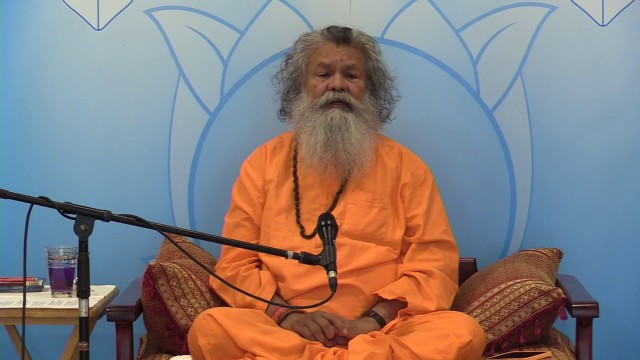
Morning program with Vishwaguruji from Sydney Ashram, Australia.
Candle meditation - Tratak
17:40 - 17:58 (18 min)
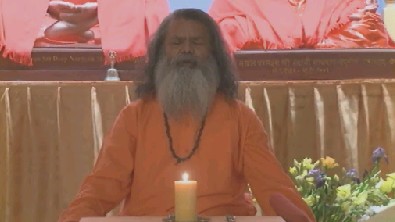
Candle meditation - Tratak. A very effective technique for stress release and improving the eye sight. Specially for the people spending a lot of time in the front of the computer. With explanation and practice. Recorded on 18th May 2010 in Vienna, Austria.
Around the world - Mataji's experiences with Holy Guruji and Swamiji
18:00 - 18:48 (48 min)
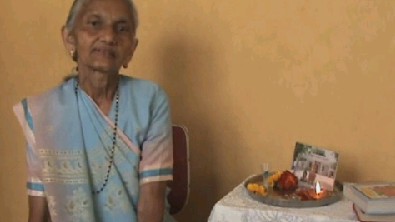
A devotee recounts her spiritual journey, from a divine call to finding her Guru.
"I turned to my right side, and I could see Śrī Kṛṣṇa in my heart, holding a small bowl... and asking for kheer." "He looked into my eyes and said, 'You are looking for a true guru, haven’t you?'"
Rukhswani, an Indian woman living in New Zealand, describes a 1992 vision of Lord Krishna compelling her to make a milk pudding, which leads her to a satsang with Swāmī Śrī Māheśvarañjī. She expresses her search for a true guru and later travels to India, where she meets Holy Gurujī, receives mantra-dīkṣā, and undertakes translation work for him. She shares stories of divine grace, obedience, and her profound emotional connection to her Guru over subsequent years.
Filming location: Wellington, New Zealand
You will get what you have given
18:55 - 19:34 (39 min)
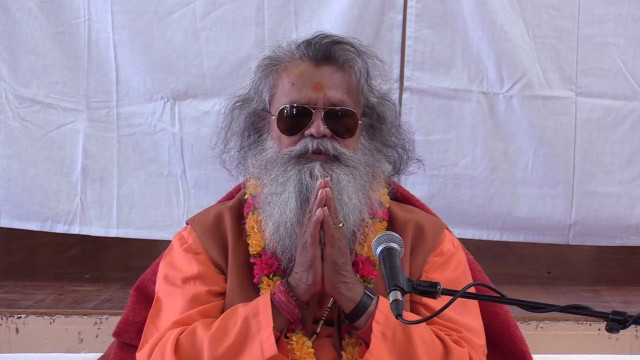
A spiritual discourse on ahimsa (non-violence), karma, and universal consciousness.
"Jīva jīva bhakṣyate. The living being consumes the living being. They live, and they kill, because they have no knowledge."
"O human, you are now human. We have knowledge... do not kill any creatures—birds, many birds, many things, the fish in the water, everywhere."
The speaker delivers a passionate plea for non-violence and conscious living, explaining the karmic cycle where killing leads to being killed. Using the metaphor of a drop merging into the ocean, he describes the soul's journey toward liberation (Paramātmā). He advises giving up meat, eggs, and alcohol, shares an anecdote about Swami Maheśvarānanda, and concludes with a Sanskrit prayer for peace.
Filming location: Australia
Gurudev is for all of us
19:40 - 20:01 (21 min)
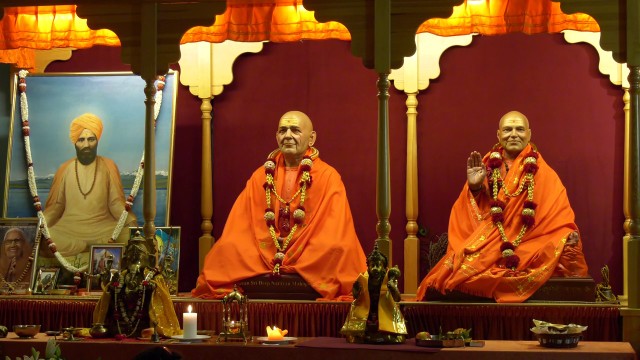
A spiritual discourse on unity, humility, and conduct within a community.
"Humans and our heart—we should be, and that is the best one, and that should have to be so."
"I'm not that God, but I'm only a servant, and a servant is for all."
A spiritual teacher addresses a gathering, emphasizing the oneness of the heart beyond physical or cultural differences. He discusses the need for humility, encouraging long-time attendees to make space for newcomers, and shares parables about compassion and containing anger. A listener interjects to agree and seek clarification on a practical ritual, to which the teacher responds by reiterating the core message of openness and inclusion.
Filming location: Vienna, Austria
Om Ashram
20:05 - 20:14 (9 min)
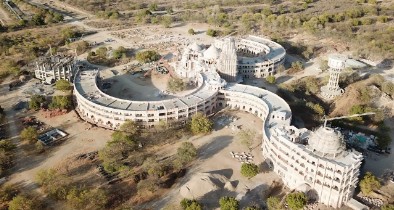
A promotional video about the Omkara Mahavira, a large-scale world peace monument and humanitarian complex under construction in Rajasthan.
"Since 1993, this structure has been under construction for the welfare of humanity, the protection of animals and nature, for teaching yoga, meditation, and philosophy."
"To bring this vision to full fruition, it needs everybody’s contribution. You are not a drop in the ocean. You are the entire ocean in a single drop."
The video details the vision of yogi Paramahamsa Swami Maheshvarananda to build the world's largest Om symbol, which will contain 108 residential compartments. It highlights the existing, operational facets of the site including a free school and college, a hospital, and a large artificial lake for water conservation. The narrative connects this to the global activities of the "Yoga in Daily Life" system, such as tree planting and animal shelters, framing the entire project as a holistic effort for peace, health, and environmental revival. It concludes with a call for donations to complete the monument.
Filming locations: Jhadan, Rajasthan, India.
The River of Selfless Service
20:15 - 20:47 (32 min)
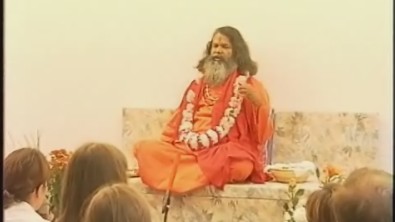
A satsang discourse on karma yoga, selfless service, and spiritual practice.
"Work is the beauty of life, but this work should be positive, selfless service."
"All that he did is for himself, for his soul, for his liberation."
The lecturer addresses ashram residents, praising their recent karma yoga efforts. He explores the nature of selfless service, using the example of Hanuman from the Ramayana to illustrate that all spiritual work ultimately benefits the doer's own soul. He outlines the threefold path of svādhyāya (self-study), manan (contemplation), and abhyāsa (practice), urging attendees to overcome personal likes and dislikes to foster inner harmony and continue flowing like a river in service.
Filming location: Zagreb, Croatia
Gurudev is for all of us
20:55 - 21:16 (21 min)
A spiritual discourse on unity, humility, and conduct within a community.
"Humans and our heart—we should be, and that is the best one, and that should have to be so."
"I'm not that God, but I'm only a servant, and a servant is for all."
A spiritual teacher addresses a gathering, emphasizing the oneness of the heart beyond physical or cultural differences. He discusses the need for humility, encouraging long-time attendees to make space for newcomers, and shares parables about compassion and containing anger. A listener interjects to agree and seek clarification on a practical ritual, to which the teacher responds by reiterating the core message of openness and inclusion.
Filming location: Vienna, Austria
Attributes of Shiva
21:20 - 21:28 (8 min)
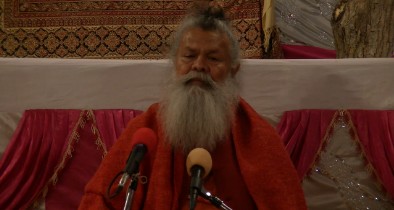
Evening satsang with Vishwaguruji from Khatu, Rajasthan, India. Shiva is the creator as well as the liberator; he is the merciful one.
The Earth of Sandalwood
21:30 - 21:56 (26 min)
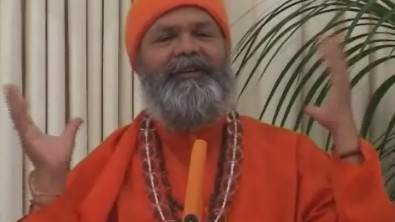
A spiritual discourse on meditation, self-inquiry, and navigating modern life.
"Your consciousness is a peaceful, beautiful lake. And suddenly, some thought comes in your mind. Bang!"
"Meditation will give us the strength, so meditation is the way. Meditation is asking."
The speaker guides listeners through the challenges of calming the mind's fluctuations (citta-vṛtti) in the modern world. He contrasts theoretical spiritual knowledge with practical reality, emphasizing the need for devotion, a spiritual guide, and self-inquiry focused on correcting one's behavior. The talk covers accepting natural law, digesting life's difficult truths, and the ultimate goal of realizing the fearless, immortal Self.
Filming location: Sydney, Australia
Marriage has its proper time and order
22:00 - 23:39 (99 min)
Evening satsang with Vishwaguruji from Sydney Ashram, Australia. Bhajan singing and explanation. Swami Jasraj Puri introduces our Masters and our parampara and their Ashrams and that territory of India. Indian people know many bhajans. There are many languages in India. Everything has its proper time to do. Marriage also has its proper time. In India, a boy and a girl should marry only if the family and a pandit also agreed with that. If you married in a church you should be faithful your whole life to your partner. Nowadays many people leave their partner and it brings many problems for children. The story of a boy and a girl who loved each other but they had a problem with the bread. Practising some simple exercises and bhramari pranayama.
Don't change the Master
23:45 - 0:52 (67 min)
A spiritual discourse on the chakra system, kuṇḍalinī, and the yogic path to self-realization.
"Everything is in our body and is developing... yet, we have not yet discovered the process of the body in its safest place, which is within the body of the mother."
"Yoga is the science of humans. For the human brain, for human thoughts, there is a lot, a lot written in the Patañjali Yoga Sūtras, and by different other yogīs."
The lecturer delivers a satsang, explaining the universe's reflection within the human body through the chakras and nāḍīs. He discusses the journey of the soul, the importance of a single spiritual master, and the practical science of yoga for purifying the mind and body. The talk covers the iḍā, piṅgalā, and suṣumṇā channels, the significance of the haṁsa (swan), and the need for consistent, systematic practice over seeking quick experiences.
Filming location: Melbourne, Australia
American
Australian