
European
Message of the Deepak
0:25 - 0:55 (30 min)
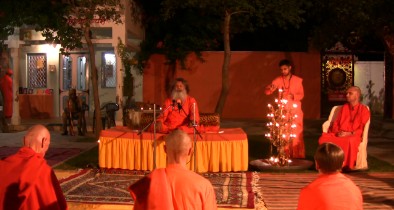
A spiritual discourse on the significance of Diwali (Dīpāvalī).
"This light is the truth, and we light these lights in everyone's heart. If we forget the sins of people, forgive them, and accept them, it means we light the candle again in their heart."
"Therefore, Dīvalī is not only for one day; Dīvalī is every day. When you open your eyes, you get the light, you see the light."
The speaker delivers a satsang on the festival of Diwali, explaining its origin in Lord Rama's return to Ayodhya and its deeper spiritual meaning as the inner light of Brahman. The talk explores the symbolism of the oil lamp—comparing the body to the pot, prana to the oil, the self to the wick, and the flame to the atman—and emphasizes themes of forgiveness, love (prem), non-violence (ahiṃsā), and daily spiritual practice. The discourse includes philosophical reflections, mantra chanting, and a critique of ritual animal sacrifice.
Filming location: Jadan, Rajasthan, India
Hatha Yoga and Kapalabathi
1:00 - 1:38 (38 min)
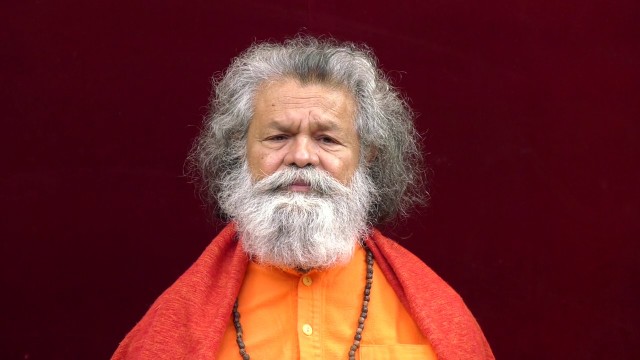
An online satsang on the definition and practice of Haṭha Yoga.
"Haṭha Yoga is Anuśāsanam. The first practice is to begin immediately. 'Ata' means just now—not tomorrow, not in an hour, but immediately."
"Kapālabhāti is a very powerful prāṇāyāma technique, which is why it is called Haṭha Yoga—it requires some power."
Swami Maheshwarananda addresses a global audience, clarifying that true Haṭha Yoga consists of cleansing techniques like netī and kapālabhāti, not merely āsanas. He explains the meaning of 'haṭha' as disciplined effort, details the kapālabhāti breathing technique, and gives a crucial safety warning to avoid forceful prāṇāyāma like kapālabhāti during the coronavirus pandemic. He concludes with blessings for world peace.
Filming location: Strilky, Czech Republic
Morning Satsang from Strilky
1:45 - 2:18 (33 min)
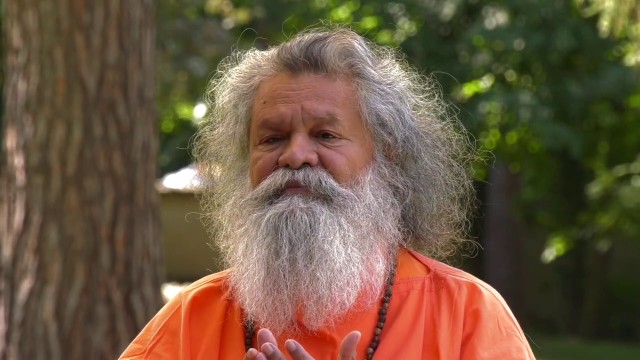
Morning satsang with Vishwaguruji from Strilky Ashram, Czech Republic.
Maya and Naham Karata
2:25 - 3:05 (40 min)
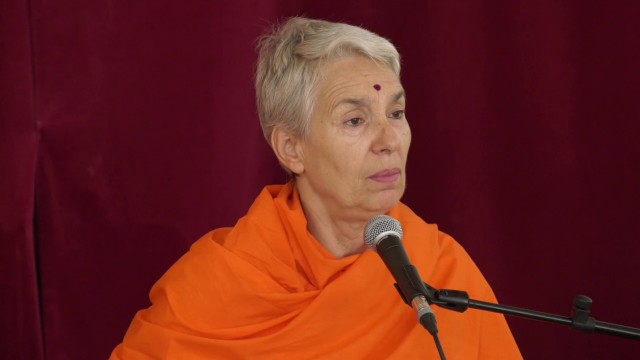
Morning satsang with Vishwaguruji from Strilky Ashram, Czech Republic. Swami Umapuri explains the meaning of the bhajan Ghana din bhataki re. We should leave desires. They are fires which burn us and can kill us also. Anusthan can help to overcome them. The story of Visnu and a yogi who didn't understand Visnu's maya. Maya is very dangerous for us. We should work and do karma yoga to escape from it. Explanation and singing bhajan Maya maha thagini ham jani. Swami Mataji speaks about her experiences with naham karata. We should do our duty serving which is our karma. She explained how to practise bhajan singing with Chinees people.
Lecture from Westin Hotel in Zagreb
4:00 - 5:16 (76 min)
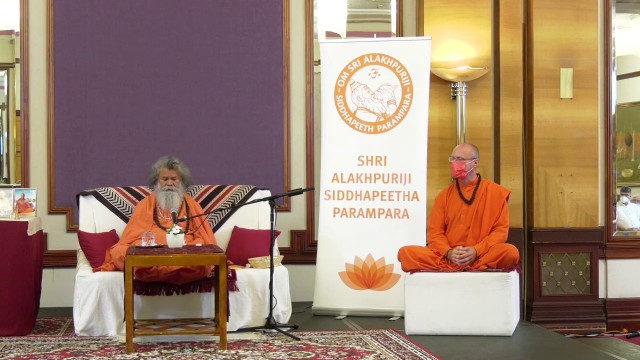
Public Lecture from Westin Hotel, Zagreb, Croatia.
What is spirituality?
5:20 - 6:26 (66 min)
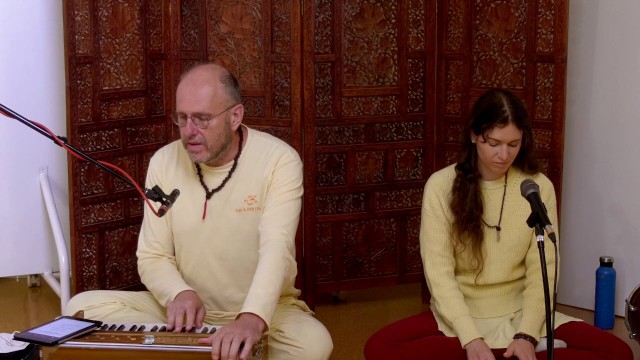
Evening satsang with Vishwaguruji from Vienna Ashram, Austria. We are all like the bird that thirsts and longs for raindrops from the sky. We are the same. We have the longing, but we have not yet got what we want. We want to achieve good things. Even if we have something negative in our hearts, we will get over it one day. Without practice we will not reach our goal. This also means meditation, concentration, karma yoga, not just physical exercises.
Shiva is the first
6:30 - 6:55 (25 min)
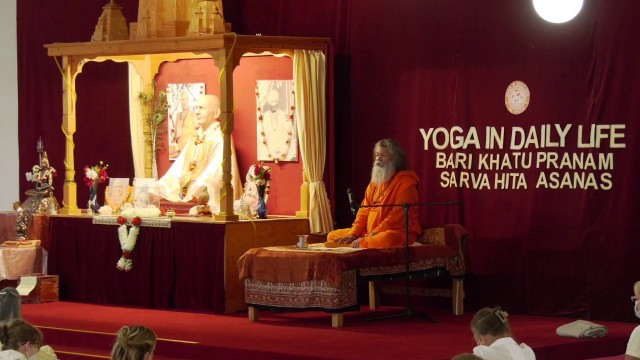
Morning satsang with Vishwaguruji from Strilky Ashram, Czech Republic. The prinviple of Guru is above Brahma Visnu and Siva. Many children are suffering from parents today. Bhajan singing.
Practicing Khatu Pranam
7:00 - 7:44 (44 min)
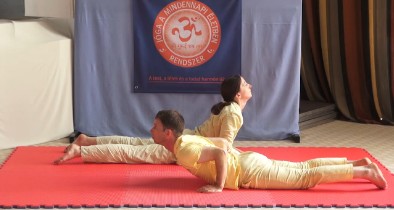
Satsang with Vishwaguruji from Vep, Hungary. Introduction to the second, extended version of Khatu Pranam.
A Sadhu is a worker
7:50 - 8:35 (45 min)
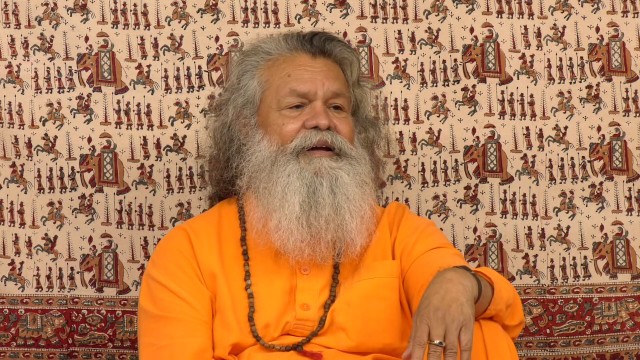
A satsang discourse on health, spiritual practice, and community.
"All our Yoga in Daily Life people, they were really very healthy."
"I never said from which country you are coming, or what you are. No, you are a human."
The lecturer addresses attendees, reflecting on health during the pandemic and attributing wellness to the Yoga in Daily Life system. He discusses plans for upcoming practice sessions, emphasizes selfless service (seva), and explains the guru-disciple relationship using the analogy of a mother and child, advocating for a living tradition while honoring one's primary guru.
Filming location: Strilky, Czech Republic
Evening practice from Strilky
8:40 - 9:39 (59 min)
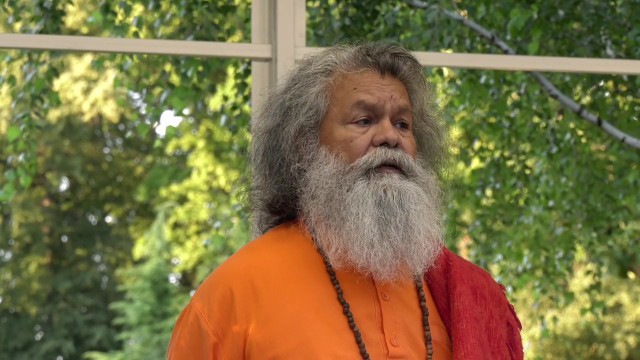
Evening satsang with Vishwaguruji from Strilky Ashram, Czech Republic. Practicing relaxation and asanas led by Vishwaguruji
Our relationship with the Guru
9:45 - 10:25 (40 min)
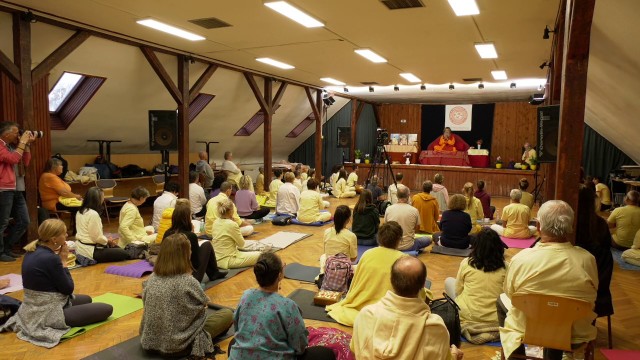
A spiritual discourse on the guru lineage and the nature of truth in the current age.
"Paramparā means one after another. So when that will sit, given here to sit, it’s not that you come and sit down. It will be when our Gurujī said, 'I am going now,' and he gives this place now."
"So in your life, I wish you should be very great and practice, practice, practice. Always only heart, and in the heart is a very little, tiny, tiny something, like a light."
The lecturer addresses a gathering on the 30th anniversary of his mission. He traces the spiritual lineage (paramparā) from Bhagavān Śiva through the Satya Yuga to the present gurus, including Śrī Devpurījī, Mahāprabhujī, and his own guru, Swami Madhavānand. He explains his role in this succession and discusses the loss of universal truth in the Kali Yuga, urging disciples toward spiritual practice rooted in the heart. The talk blends history, analogy, and personal reflection.
Filming location: Debrecen, Hungary
A Sadhu is a worker
10:30 - 11:15 (45 min)
A satsang discourse on health, spiritual practice, and community.
"All our Yoga in Daily Life people, they were really very healthy."
"I never said from which country you are coming, or what you are. No, you are a human."
The lecturer addresses attendees, reflecting on health during the pandemic and attributing wellness to the Yoga in Daily Life system. He discusses plans for upcoming practice sessions, emphasizes selfless service (seva), and explains the guru-disciple relationship using the analogy of a mother and child, advocating for a living tradition while honoring one's primary guru.
Filming location: Strilky, Czech Republic
Yoga in Daily Life is everywhere in the world
11:20 - 13:18 (118 min)
A satsang gathering featuring testimonies on the global spread of the Yoga in Daily Life system.
"Through Yoga in Daily Life, we are bringing everybody together. I think I need all of your help, perhaps to expand hospitality to Asia."
"Before meeting Yoga in Daily Life, I had a very strong desire in my heart... I thought about if there was a yoga system with a master where we could find the truth of life."
Swami Avatarpuri (Gurudev) hosts a session where disciples share their experiences. Dayāmātā (Matajī) speaks about introducing the system to China, facing a market dominated by gymnastic yoga. Her student, Chandra, shares her emotional journey from China to Europe and the transformative love found in the community. Other teachers from New Zealand, the USA, and Brazil also offer brief reflections. Gurudev concludes with teachings on connecting with the earth, practical yoga techniques like Agniṣār Kriyā, and a warning against the dangers of drugs and disconnection from nature.
Filming location: Strilky, Czech Republic
Do good and be human
13:25 - 14:07 (42 min)
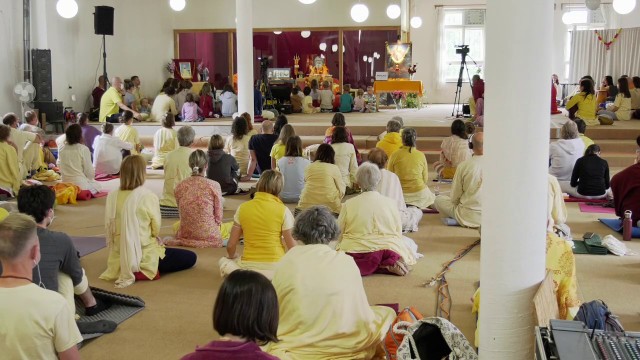
Morning satsang with Vishwaguruji from Strilky Ashram, Czech Republic. We should feel every morning that we are human. The ocean and the drop of water is the same. Human should be like God. WE should do only things that are good for all. Bhajan singing.
First is the Guru
14:15 - 15:07 (52 min)
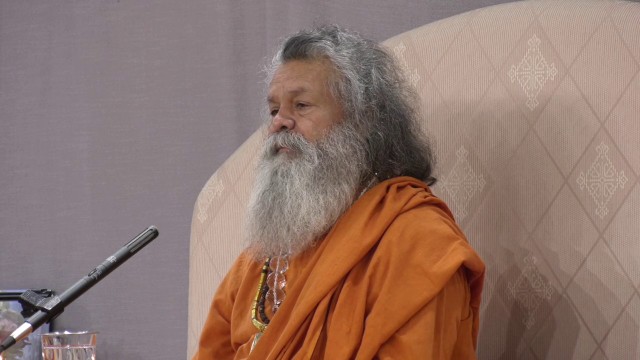
Evening satsang with Vishwaguruji from Zagreb, Croatia. In ancient times, rishis in their ashrams had many cows and their disciples had a job in the ashram. A Guru can notice if a disciple is a real follower or not. The story of Abhimanyu a very young disciple and his Guru and God. It is more than a simple story. In a satsang we all get energy. First is the Guru and then God. The story of Paramhansa Yoganand and his Guru when Yoganand went from India to America.
Sri Devapuriji
15:15 - 16:11 (56 min)
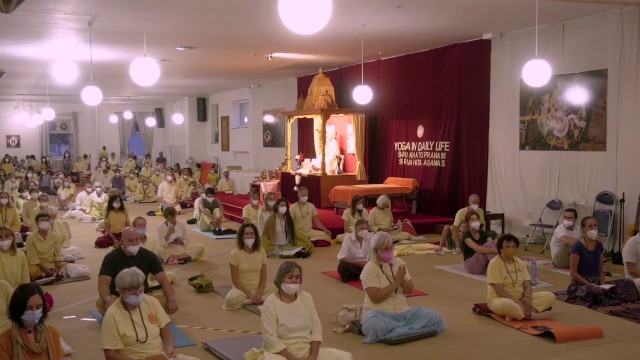
Evening satsang with Vishwaguruji from Strilky Ashram, Czech Republic. Many people do not know Sri Devapuriji. Sri Devapuriji has promised to send a great yogi from Satyaloka to Earth, this great yogi is our Master Vishwaguruji. Sri Devapuriji's physical body is not present, but his presence is felt by many. Wherever the Guru is present, the fruits will come. The taste and shape of the ripe fruits are the same. If the Guru is not present, these qualities do not appear.
Spirituality leads you to God
16:15 - 16:56 (41 min)
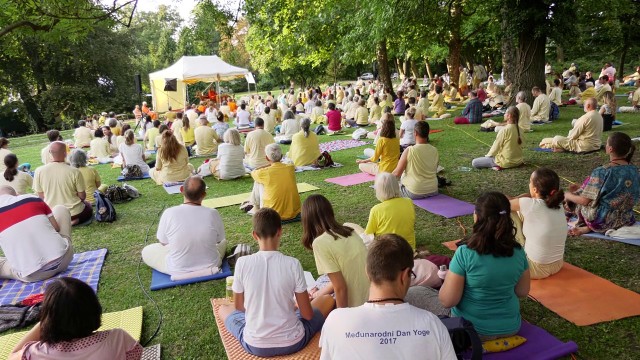
A spiritual discourse on faith, knowledge, and the lineage of teachings.
"Next to God is the doctor. Next to God. Next to God is the doctor."
"If you believe in God. God is also making tests. It is not that always God will say, 'OK.' God will say, 'No, no, no.'"
A swami addresses a gathering, tracing a spiritual lineage from Shiva and the Satya Yuga to the present. He discusses the preservation of knowledge in the Vedas, the relationship between modern science and spirituality, and the necessity of faith. He illustrates this with a parable about a mountain climber bargaining with God, concluding that belief is essential.
Filming location: Strilky, Czech Republic
We can achieve the Paramatma
17:00 - 17:49 (49 min)
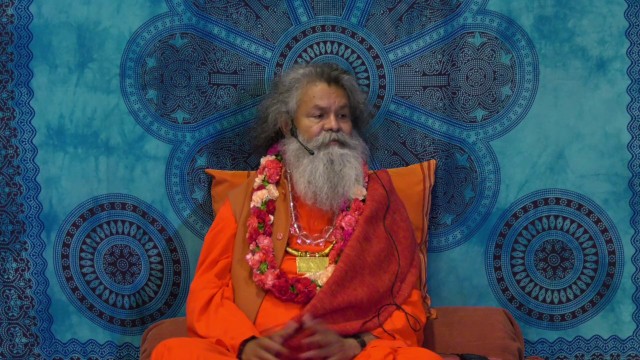
A spiritual talk reflecting on a return to Hungary, the pandemic, and the nature of the self.
"Now, we all know that it is only for the humans, not animals. Why only this disease for humans?"
"And so, but some are different. They said, 'Yes, I am good,' but backside this, backside that. So we have to clean ourselves."
The lecturer addresses a gathering, sharing memories of past visits and the loss of a devotee, Krishṇānand. He contemplates the COVID-19 pandemic as a divine response to human actions, using allegories of the water cycle and fire to illustrate the interconnectedness of life and the importance of humility, authentic practice, and overcoming ego on the spiritual path.
Filming location: Budapest, Hungary
The Means Are the End: On Non-Violence, Patience, and Peace
18:00 - 18:14 (14 min)
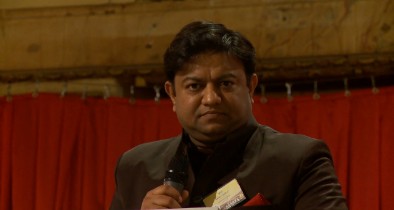
A keynote address on non-violence, patience, and peace at a World Peace Council conference.
"Wrong means will always fetch wrong ends. We must understand the basic fundamental: it is the means which become the ends."
"Happiness is a peaceful state of mind. If you have a peaceful mind, you live in the present, and when you live in the present, you are happy."
Swapnil Kothari, a teacher from India, delivers a speech exploring non-violence as a conscious philosophy, not just a default position. He argues for the primacy of ethical means over ends, asserting that violence breeds violence while non-violence breeds compassion and inner peace. He uses personal anecdotes, historical references, and a humorous story about marital patience to illustrate the stamina required for this path.
Filming location: Prague, Czech Republic
Without Gurudev, there is no right path
18:20 - 19:02 (42 min)
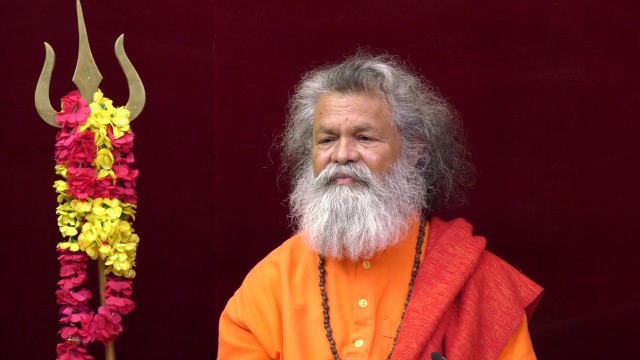
A spiritual discourse and yoga session on the necessity of a guide for the spiritual path.
"Without Gurudeva, no work is accomplished. Gurujī is the one who leads us to the correct path."
"We can do thousands of techniques here and there... But they will not give you anything. We become more and more entangled in the thorny bushes and cannot emerge."
The lecturer addresses practitioners, emphasizing that while a single divine path exists universally, individuals become lost without a true guide or Guru. He explains that external rituals, techniques, and pilgrimages alone are insufficient, using the metaphor of needing a captain to cross the ocean. The discourse transitions into a practical yoga session led by Swami Umapuri, focusing on relaxation, breathwork, and stretches for the lower back.
Filming location: Bari Khatu, Rajasthan, India
What is destiny?
19:10 - 19:46 (36 min)
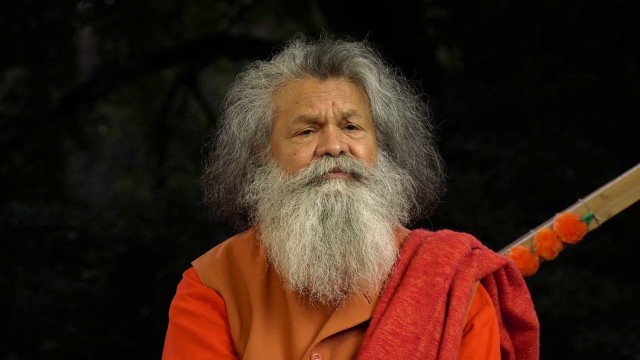
A spiritual discourse exploring the concept of kiśmat (fate/luck) and the value of satsaṅg (spiritual gathering).
"Kiśmat is more like a Muslim word, but it is very nice, very good... Kismet is so vast you cannot think."
"In satsaṅg, they had one guru... Satsaṅg is like this. And ku-saṅg is many things: drinking, going, cleaning, mind."
The speaker delivers an informal talk, weaving together observations on prayer across religions, anecdotes about marriage and village life, and a parable about two boys—one who attends a cinema and one who attends satsaṅg—to illustrate the subtle and protective nature of divine fortune (kiśmat). He emphasizes that true good fortune is aligned with spiritual company and devotion, not merely material gain.
Filming location: Strilky, Czech Republic
Our body is a miracle
19:55 - 20:15 (20 min)
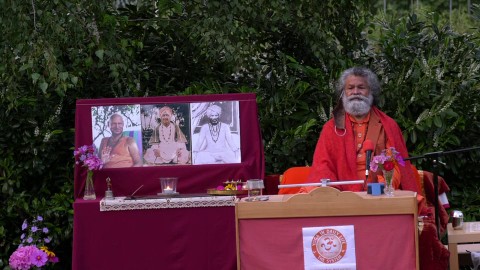
An evening satsang on the five sheaths (kośas) and holistic well-being.
"Our entire being becomes very pure—our body, our energy, our mind, our knowledge, and our peace and harmony."
"We must understand all five kośas. The first is just our physical body. We must keep this body very clean."
A spiritual teacher addresses a gathering at an ashram, introducing the concept of the five sheaths that constitute human existence. He begins with the Annamaya Kośa (the physical sheath), emphasizing the importance of pure nourishment, a sattvic diet, and maintaining bodily purity for a long and healthy life. The talk connects physical purity to managing emotions like anger, which harm the body, and invites attendees to meditate and absorb the divine energy of the place.
Filming location: Strilky, Czech Republic
The River of Selfless Service
20:15 - 20:47 (32 min)
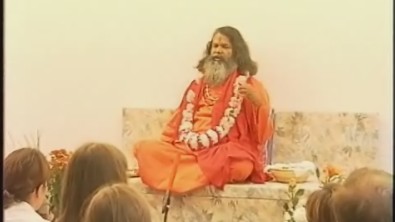
A satsang discourse on karma yoga, selfless service, and spiritual practice.
"Work is the beauty of life, but this work should be positive, selfless service."
"All that he did is for himself, for his soul, for his liberation."
The lecturer addresses ashram residents, praising their recent karma yoga efforts. He explores the nature of selfless service, using the example of Hanuman from the Ramayana to illustrate that all spiritual work ultimately benefits the doer's own soul. He outlines the threefold path of svādhyāya (self-study), manan (contemplation), and abhyāsa (practice), urging attendees to overcome personal likes and dislikes to foster inner harmony and continue flowing like a river in service.
Filming location: Zagreb, Croatia
Prasad is given to us by God
20:30 - 21:35 (65 min)
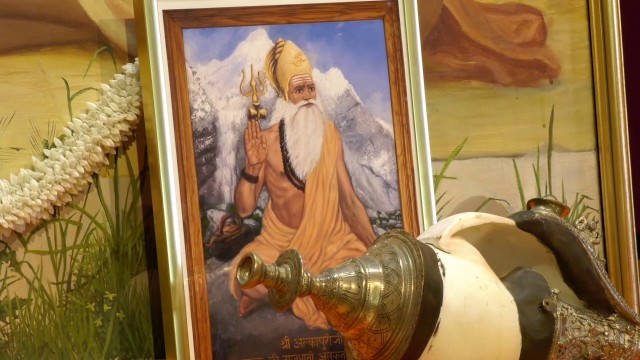
Evening satsang with Vishwaguruji from Vienna. Speech by Swami Premanandaji. This Ashram is a great blessing for all of us. It is rare when a saint comes, establishes an Ashram and blesses it with his personal presence. It is very important to understand how to approach Gurudeva. Holy Guruji was very strict, but the respect was based on a deep understanding of human nature. Vishwaguruji's speech. Why do we take prasad? What is the importance of prasad? Prasad is given to us by God.
We are life itself
20:55 - 21:34 (39 min)
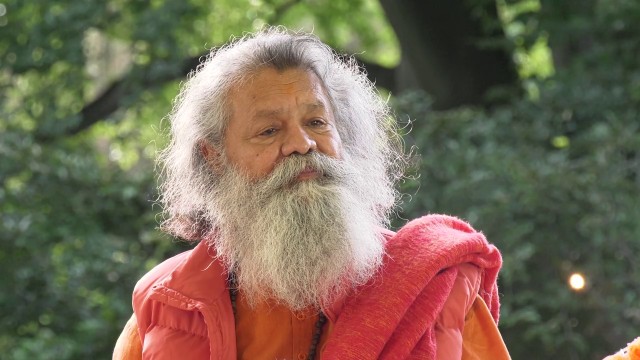
A spiritual discourse on the living nature of the Earth and the path to oneness.
"Therefore, our earth is living earth. So we are not something like other kinds of this, what they call, but life; Earth is the life."
"And I am in you, and you are in me. I am in the water, and the water is in me."
Swami Ji addresses a gathering, contemplating the sacred atmosphere of the place and the pervasive presence of life within the Earth, the elements, and even the human body. He teaches that recognizing this interconnected life leads to the understanding that the individual self is nothing but the universal Ātmā. Using metaphors like a balloon for desire, he discusses spiritual ascent, the cycle of rebirth, and the ultimate goal of melting all distinctions into oneness through dedicated sādhanā and yoga practice.
Filming location: Strilky, Czech Republic
Hatha Yoga and Kapalabathi
21:40 - 22:18 (38 min)
An online satsang on the definition and practice of Haṭha Yoga.
"Haṭha Yoga is Anuśāsanam. The first practice is to begin immediately. 'Ata' means just now—not tomorrow, not in an hour, but immediately."
"Kapālabhāti is a very powerful prāṇāyāma technique, which is why it is called Haṭha Yoga—it requires some power."
Swami Maheshwarananda addresses a global audience, clarifying that true Haṭha Yoga consists of cleansing techniques like netī and kapālabhāti, not merely āsanas. He explains the meaning of 'haṭha' as disciplined effort, details the kapālabhāti breathing technique, and gives a crucial safety warning to avoid forceful prāṇāyāma like kapālabhāti during the coronavirus pandemic. He concludes with blessings for world peace.
Filming location: Strilky, Czech Republic
Morning Satsang from Strilky
22:25 - 22:58 (33 min)
Morning satsang with Vishwaguruji from Strilky Ashram, Czech Republic.
Don't change the Master
23:05 - 0:12 (67 min)
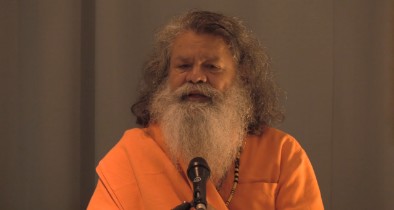
A spiritual discourse on the chakra system, kuṇḍalinī, and the yogic path to self-realization.
"Everything is in our body and is developing... yet, we have not yet discovered the process of the body in its safest place, which is within the body of the mother."
"Yoga is the science of humans. For the human brain, for human thoughts, there is a lot, a lot written in the Patañjali Yoga Sūtras, and by different other yogīs."
The lecturer delivers a satsang, explaining the universe's reflection within the human body through the chakras and nāḍīs. He discusses the journey of the soul, the importance of a single spiritual master, and the practical science of yoga for purifying the mind and body. The talk covers the iḍā, piṅgalā, and suṣumṇā channels, the significance of the haṁsa (swan), and the need for consistent, systematic practice over seeking quick experiences.
Filming location: Melbourne, Australia
American
Australian