
European
Yoga is for the whole Earth
0:25 - 0:58 (33 min)
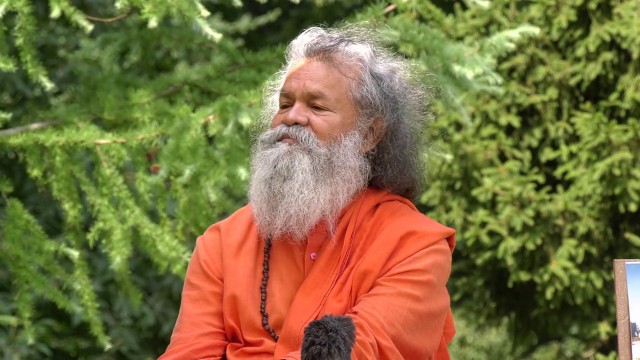
A personal narrative blending a medical emergency with reflections on yoga and human nature.
"My doctor said, 'Swāmījī, I will not take money from you, I will give you everything.'"
"Yoga is not only my country or your country, or my religion or your religion. No. Yoga is life, the whole earth."
Swami Maheshvaranand recounts a detailed story of falling ill in Jodhpur, India, and the complex, caring international effort involving his disciples and Austrian health insurance to safely return him to Vienna. He uses this experience to transition into a discourse on the essence of yoga as a universal practice connecting all life, the challenges of the current age (Kali Yuga), and the importance of seeing beyond divisions of religion and nationality to our shared humanity.
Filming location: Delhi, India
Being a human
1:05 - 1:36 (31 min)
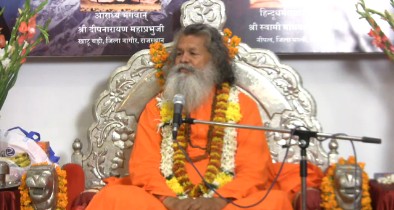
A spiritual discourse on human life, discipline, and the sacred culture of Jaipur.
"When it was established, about four or five hundred meters away, there was a small village called Sodala. From there, you could see a very small cottage, and then there was nothing—only sand and sand and sand."
"In the same way, when the human soul enters into the human body, God gives us freedom, but then we become bound to karma. And that karma is what we call action."
A spiritual teacher addresses devotees at the Shyamnagar ashram in Jaipur. He describes the ashram's founding and extols Jaipur as a sacred city of wisdom and festivals, specifically mentioning the upcoming Śrāvaṇī festival. He discusses the human journey, the importance of following traditional principles (saṃskāras) and discipline, and the inescapable nature of karma and divine awareness, illustrating points with a parable about a disciple, a pigeon, and a story about a king debating diet.
Filming location: Jaipur, Rajasthan, India
The main points of yoga practicing
1:40 - 3:28 (108 min)
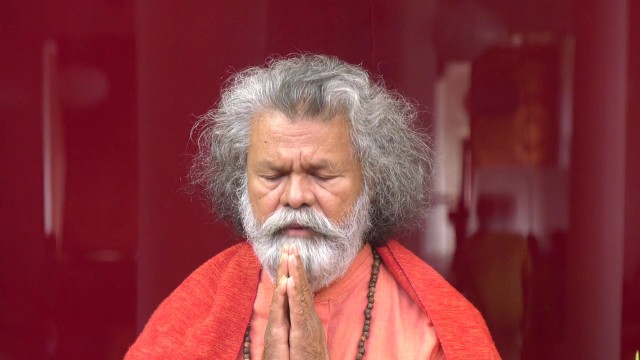
A satsang discourse on the festival of Raksha Bandhan, yoga practice, and holistic living.
"This is the day of sisters and brothers, so remember your sisters, no matter where they are."
"One should not overdo anything. Therefore, the practice should be peaceful."
Swami Madhvanand begins the morning satsang on a full moon day, explaining the origins and significance of Raksha Bandhan, the festival celebrating the bond between brothers and sisters. He then transitions into a wide-ranging talk on traditional living, emphasizing the importance of seasonal food for health before detailing the core practices of the "Yoga in Daily Life" system. He explains the gradual progression through āsanas, the critical importance of correct prāṇāyāma technique, and illustrates the concept of "Jugaad" through a story about ingenious problem-solving.
Filming location: Strilky, Czech Republic
Juga Juga Jivo - Gurupurnima 2016
3:35 - 3:41 (6 min)
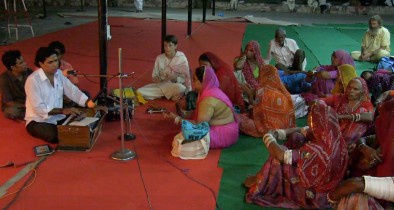
The real Guru is in oneness
3:45 - 4:46 (61 min)
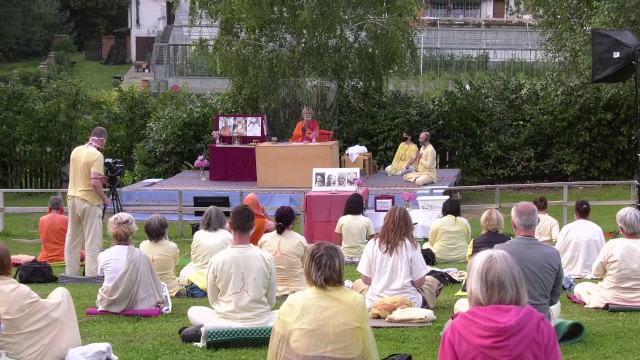
A spiritual discourse on universal oneness and the nature of the divine path.
"If a God says, 'Do not worship that God,' then neither is that God right, nor are you good. We have to come to oneness."
"The drop is not there. I am not a drop. I am the ocean. Similarly, we are in that condition. But you are still not near the beach of the ocean."
The speaker, likely a spiritual teacher, leads a satsang exploring the essential unity of all spiritual paths and deities. He emphasizes that a true guru or God would never forbid the worship of another, advocating for a non-sectarian devotion. Using metaphors like a drop merging into the ocean and the irreversible flight of an airplane, he discusses the preciousness of time, the journey of the soul, and the nature of prana (life force) as both a suffering entity and a divine connection. The talk weaves between philosophical points, practical advice, and anecdotal reflections, concluding with a call for inner purity and an end to religious duality.
Filming location: Strilky, Czech Republic
The Beauty of Unity: A Gathering in Strilky
4:50 - 5:49 (59 min)
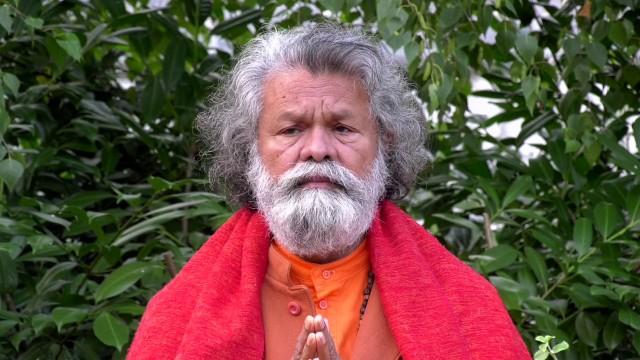
A spiritual address at an ashram gathering.
"I have been around the world... I asked around the world, all yoga-in-life people and other yoga people, those who do not eat meat. How many of them were affected by the coronavirus?"
"We should respect each other... So we are sitting here from different countries, different faces, etc. But we are here, together. That is beauty. Therefore, it is Sanātana Dharma."
A spiritual teacher addresses a diverse international group at an ashram. He shares observations on the COVID-19 pandemic, suggesting a link between a sattvic lifestyle and well-being, and emphasizes the importance of unity, respecting all spiritual paths, and maintaining a positive inner state. The talk includes personal anecdotes, an invitation for shared laughter, and an outline of the upcoming spiritual program.
Filming location: Strilky, Czech Republic
Great Saints set an example
5:55 - 6:55 (60 min)
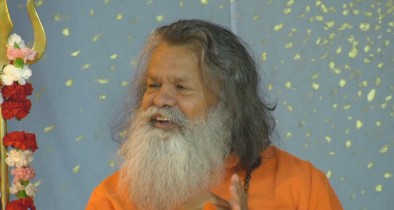
A spiritual discourse on dharma, sādhanā, and the essence of scripture.
"Dharma means rightness—the dharma of humans, animals, nature, seasons, husband, wife, children, friends, and neighbors. It is not about worshipping separate gods."
"The essence of all these scriptures is contained in just two words: 'Śuk diyā śuk hot hai, aur duk diyā duk hoī.' If you give pleasure to others, you will receive pleasure. If you give trouble to others, you will receive trouble."
Swami Satyāśāntānanda delivers a teaching, contrasting superficial yoga techniques with the higher path of sādhanā. He defines true dharma as universal righteousness beyond religious division, emphasizing satsaṅg and the study of saints' lives. Using parables and references to historical figures—from Jesus and Guru Gobind Singh's sons to a self-sacrificing ṛṣi—he illustrates the power of commitment to dharma and the inner study of the self (svādhyāya).
Filming location: Strilky, Czech Republic
Morning Yoga practice, Umag, Croatia (3/9)
7:00 - 8:33 (93 min)
Morning Yoga practice from the international Yoga retreat Umag, Croatia, on the 27 of September
Sound and resonance
8:40 - 9:36 (56 min)
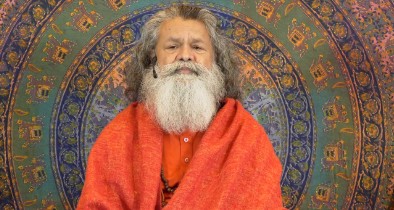
Morning Satsang with Vishwaguruji from Vep, Hungary. Regardless whether you understand bhajans or not, the resonance awakens spirituality in you. The resonance of the songs is reflected in our ten indriyas (organs of perception and action). Swami Sivananda said in his bhajan: those are my friends who understand my words. Shabda means sound, words. In the Gurukul, the warrior students learnt all mantras for archery. By the power of these mantras the arrow goes straight to where the sound of the tiger came from. Vishwaguruji explains the karmic sin of King Dasharatha, father of God Rama.
Knowledge is given to give further
9:40 - 10:39 (59 min)
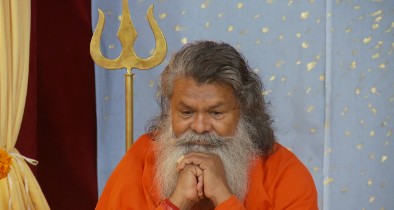
Satsang with Vishwaguru Mahamandaleshwar Paramhans Swami Maheshwarananda, Strilky Ashram, Czech Republic. Vishwaguruji explains what knowledge is, and how to utilize and preserve it in a good way. If we are not using the knowledge, we will lose the ability of using it. Remain with discipline, follow your master lifelong. The words of the Gurudev are for you the highest mantra.
Mother Earth
10:45 - 11:21 (36 min)
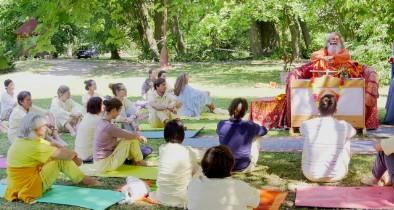
A guided outdoor yoga session focusing on connecting with the earth, followed by a spiritual discourse and ceremony.
"Feel like you are touching your mother's body. It is our mother."
"The clay says to the potter, 'Why are you tormenting me?' One day will come, that I will torment you within myself."
A yoga instructor guides participants through grounding postures, encouraging them to touch the clean soil and feel its healing energy. He shares a parable of a potter and the speaking clay, a German anecdote about allergy relief from farm life, and reflections on environmental harm. The session transitions into a celebration for Gurudev's birthday and Janmāṣṭamī, involving prayers, mantras, and a collective pūjā.
Filming location: Strilky, Czech Republic
Bhajan singing from Vep
11:30 - 12:21 (51 min)
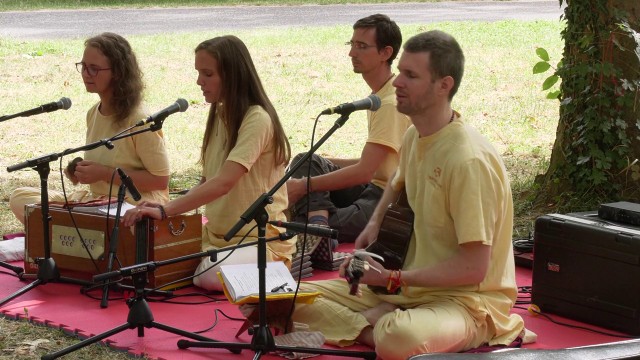
Morning satsang with Vishwaguruji from Vep, Hungary. Bhajan singing.
Foundations of Yoga in Daily Life
11:35 - 12:28 (53 min)
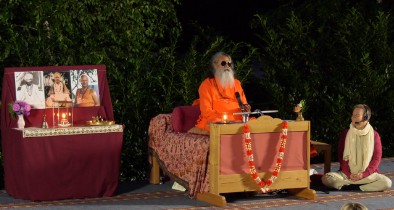
An evening satsang on integrating yoga into daily existence.
"Yoga in Daily Life is not only these two or three exercises; there is the flow of the nectar of the Gaṅgā."
"Don't depend on anyone. Depend on thyself. And thyself means that which gives us our life."
Swamiji welcomes attendees to the third seminar at the ashram, reflecting on the history of Střekov Castle. He shares personal stories of dietary experiments and spiritual tests to illustrate the practical application of yoga, emphasizing self-reliance, non-violence (ahiṃsā), and the unity of all spiritual paths. The talk blends personal anecdotes, philosophical points from Patañjali, and encouragement for consistent daily practice.
Filming locations: Střekov Castle, Ústí nad Labem, Czech Republic.
The spiritual frame of our days
12:35 - 13:03 (28 min)
A discourse on the spiritual and practical significance of the Sandhyā rituals at dawn and dusk.
"Sandhyā means connection. It refers to the juncture when the sun sets and night arrives—the joining of day and night."
"In Brahma Muhūrta, all good things happen. If you let it pass, it is not good... This is not merely a religious thing. It is for our body, our life, a lifelong healthy life."
The speaker explains the concept of Sandhyā as a sacred time for connection and prayer. He describes the balancing roles of Sūrya (sun) and Chandra (moon), and details a morning ritual involving waking at Brahma Muhūrta, cleansing with water, and offering prayers to the divine or one's guru. The talk emphasizes how aligning with these natural cycles promotes health, peace, and wakefulness, integrating this practice into daily life.
Filming location: Strilky, Czech Republic
I will be Thine
13:05 - 14:04 (59 min)
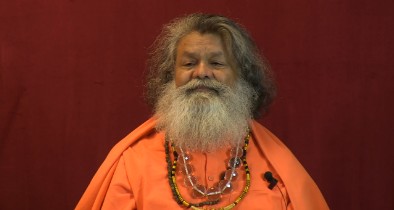
Evening satsang with Vishwaguruji from Vienna, Austria (in German and English language). God is everywhere. Where there is devotion and love, there is no distance. Fear comes out of ignorance. Jealousy awakens because of this fear, and jealousy creates separation. In this lecture Vishwaguruji explores the inner obstacles on the spiritual path to Liberation, or Atma Gyana. He points out solutions for us as well: sadhana, mantra, awareness of God, satsang.
We should have roots
14:10 - 15:09 (59 min)
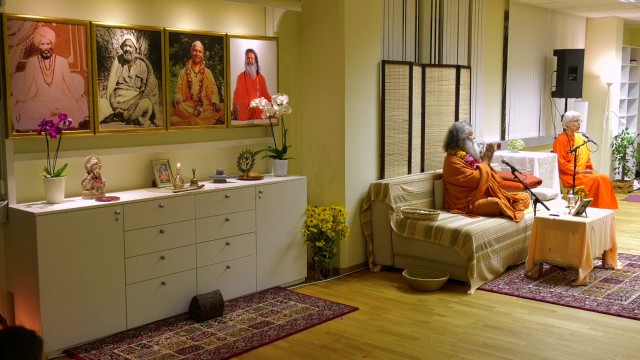
A spiritual discourse on yoga teaching, tradition, and the importance of roots.
"We must always create slightly different techniques for everyone. And all of you should become good teachers, our yoga teachers."
"Where are the roots of your village, your city, and your parents?... So where is the root for you?"
An elder teacher addresses a gathering, emphasizing the need for personalized yoga instruction and for students to become qualified teachers themselves. He critiques superficial academic approaches to yoga while paradoxically advocating for establishing yoga in universities. Using metaphors of children, families, and falling leaves, he stresses the importance of spiritual lineage (parampara) and staying connected to one's roots, ultimately pointing toward the soul's journey and liberation.
Filming location: Slovenia
I will be Thine
15:15 - 16:14 (59 min)
Evening satsang with Vishwaguruji from Vienna, Austria (in German and English language). God is everywhere. Where there is devotion and love, there is no distance. Fear comes out of ignorance. Jealousy awakens because of this fear, and jealousy creates separation. In this lecture Vishwaguruji explores the inner obstacles on the spiritual path to Liberation, or Atma Gyana. He points out solutions for us as well: sadhana, mantra, awareness of God, satsang.
The Primacy of the Name in the Kali Yuga
16:20 - 16:54 (34 min)
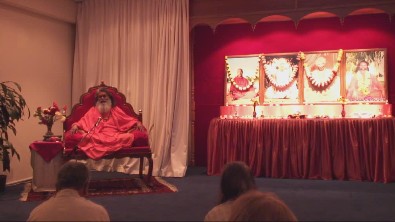
A discourse on the nature of the Kali Yuga and the power of the divine name.
"Kali Yuga is Kriyā Yuga. Kriyā Yuga means Karma Yuga. Karma is primary."
"Kali yuga kevala nāma ādhāra, sumira sumira nara hoi bhava pāra. (In the Kali Yuga, the name alone is the foundation; by repeating, repeating, a person crosses the ocean of existence.)"
Swami Maheshwarananda explains that the Kali Yuga is an age dominated by action (karma), but its true foundation is the repetition of God's name, as stated by Tulsidas. He shares a personal memory of his Guru appearing to him at the Strelky ashram and narrates a Puranic story about the sage Vishvamitra to illustrate the supreme value of satsang. The talk emphasizes that diligent spiritual practice (purushartha) is essential, yet liberation comes from anchoring oneself in the divine name.
Filming location: Wellington, New Zealand
What Incarnation means
17:00 - 17:54 (54 min)
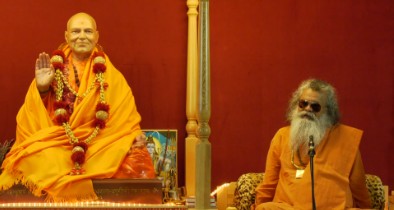
A spiritual discourse on the nature of the soul, creation, and Śiva.
"There is one who is not born from a mother and not from a father. Only that one can be called an incarnation, and that one is called Svayambhū."
"We all are one. It doesn't matter, the human or reptilian or the birds or any. There is a soul, jīva. Life, they are all one."
The lecturer speaks at the Yogandī Life center in Vienna on the anniversary of Gurudev Swami Madhavānandajī. He contemplates the concept of incarnation, explaining Śiva as the unmanifest Svayambhū who willed multiplicity into being through the five elements. Using the metaphor of the ocean and water cycle, he describes the singular soul within all life forms, discusses karma, and emphasizes the power of speech through a parable about the tongue and teeth.
Filming location: Vienna, Austria
Around the world - Pranayama practice from Mexico City
18:00 - 18:31 (31 min)
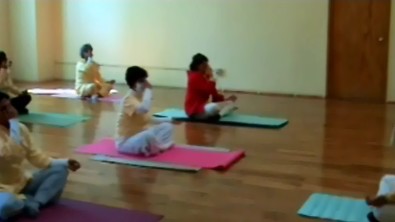
Pranayama practice.
When sataguru comes to our door
18:35 - 19:07 (32 min)
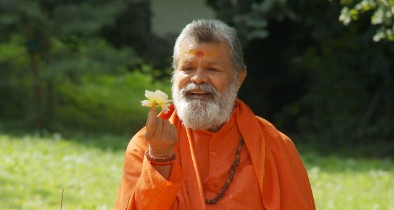
A satsang exploring the devotional bhajan "Kali Kali Āraṣavatahe Hari" and the nature of spiritual joy.
"If love is pure and selfless, it is limitless. If there is selfishness, then it is limited."
"Your one word expresses the entire universe... That is called Gagar me Sāgara in India."
Swami Maheshvarananda explains the bhajan written by Swami Lālā Nānjī upon the arrival of his Guru, Mahāprabhujī. He describes the immeasurable joy of a devotee using the analogy of plants reviving after rain, and expands on themes of pure love, the art of condensing vast wisdom into a few words (Gagar me Sāgara), and finding contentment. The talk includes personal anecdotes, a Hungarian joke about comparison, and a call to protect nature and cultivate happiness.
Filming location: Strilky, Czech Republic
Life of the Saints
19:15 - 20:08 (53 min)
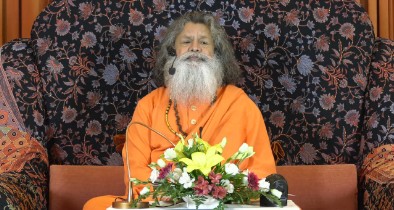
Evening satsang with Vishwaguruji from weekend seminar in Vep, Hungary. Remembering the life of the great Saints we are worshipping the entire being of the Paramatma. The consciousness of these Saints is untouchable but they have to live with nature. If there is a connection between the light and the candle it is possible to give the flame further. Bring love with you; remove negative thoughts from your mind.
Build your intellect supportive
20:15 - 21:31 (76 min)
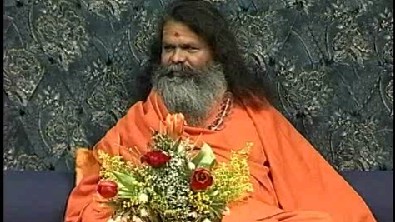
A spiritual discourse on maintaining clarity of purpose and guarding against negative influences.
"Your aim should be clear. Nothing can change me. The sun and moon can change their direction, but I will not change my direction."
"One stupid thought, one stupid person can destroy all your spiritual sādhanā, which you made years and years long with great confidence and with great love."
Swami Ji addresses the community, explaining how a lack of clear aim allows the intellect to be distracted and how negative gossip and jealousy can spoil one's spiritual practice, like lemon curdling milk. He narrates the story of Nārada creating doubt between Śiva and Pārvatī to illustrate the destructive power of negative talk, and emphasizes the need for humility, love, and avoiding harmful company to protect one's spiritual progress.
Filming location: Vép, Hungary
How the worm becomes Bhramari
20:30 - 21:14 (44 min)
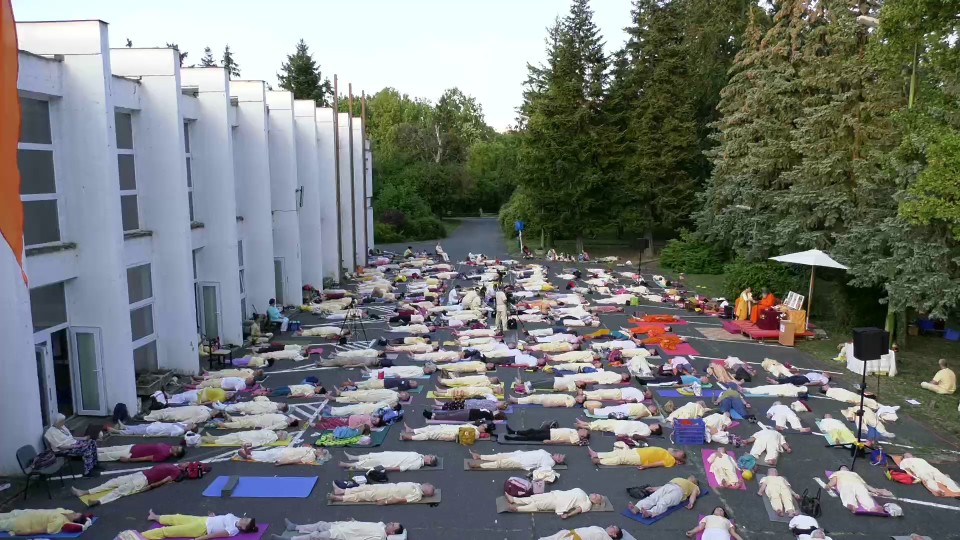
Evening satsang with Vishwaugurji from Vep, Hungary. Relaxation. Concentration on the navel and the heart. There are three different forms of bhramari. They have the same voice. One of them lives on the earth the second builds their nest in our house. They can bite us. The nest of bhramari is very comfortable. they bring worms there. Slowly slowly the worm transforms into a bhramari. We should practise bhramari only for short time.
Foundations of Yoga in Daily Life
20:35 - 21:28 (53 min)
An evening satsang on integrating yoga into daily existence.
"Yoga in Daily Life is not only these two or three exercises; there is the flow of the nectar of the Gaṅgā."
"Don't depend on anyone. Depend on thyself. And thyself means that which gives us our life."
Swamiji welcomes attendees to the third seminar at the ashram, reflecting on the history of Střekov Castle. He shares personal stories of dietary experiments and spiritual tests to illustrate the practical application of yoga, emphasizing self-reliance, non-violence (ahiṃsā), and the unity of all spiritual paths. The talk blends personal anecdotes, philosophical points from Patañjali, and encouragement for consistent daily practice.
Filming locations: Střekov Castle, Ústí nad Labem, Czech Republic.
The spiritual frame of our days
21:35 - 22:03 (28 min)
A discourse on the spiritual and practical significance of the Sandhyā rituals at dawn and dusk.
"Sandhyā means connection. It refers to the juncture when the sun sets and night arrives—the joining of day and night."
"In Brahma Muhūrta, all good things happen. If you let it pass, it is not good... This is not merely a religious thing. It is for our body, our life, a lifelong healthy life."
The speaker explains the concept of Sandhyā as a sacred time for connection and prayer. He describes the balancing roles of Sūrya (sun) and Chandra (moon), and details a morning ritual involving waking at Brahma Muhūrta, cleansing with water, and offering prayers to the divine or one's guru. The talk emphasizes how aligning with these natural cycles promotes health, peace, and wakefulness, integrating this practice into daily life.
Filming location: Strilky, Czech Republic
Discipline and respect are important
22:05 - 22:58 (53 min)
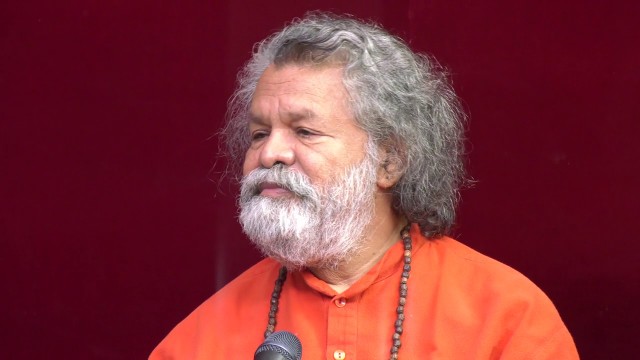
Evening satsang from Strilky Ashram, Czech Republic. Too much eating can cause laziness. We shouldn't disturb each other with unnecessary talking. This means respect for food and eating. We are learning from ourselves during the seminar, how to behave in the present situation, but we shouldn't feel suppressed. Sing bhajans happily.
Bhajan evening from Vep
23:00 - 23:55 (55 min)
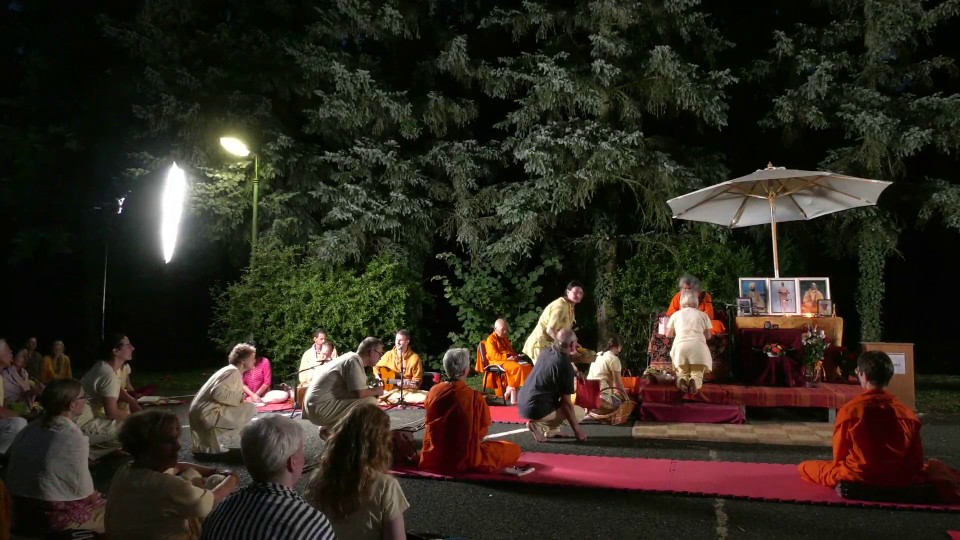
Evening satsang with Vishwaguruji from Vep, Hungary. Bhajan singing.
Guru is here for the whole world
23:05 - 23:57 (52 min)
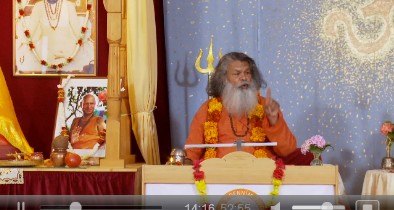
Satsang with Vishwaguruji, Summer Retreat in Strilky Ashram, Czech Republic. Social festivals are observed to maintain and protect society. Every human needs respect, understanding and kindness, regardless the culture. Guru is not only part of the Indian culture. According to the guru principle there is the leader for every creature. It is not the body of the Guru, but the Light of Knowledge.
American
Australian