
European
Singing bhajans by Swami Gajanandji
0:15 - 0:52 (37 min)
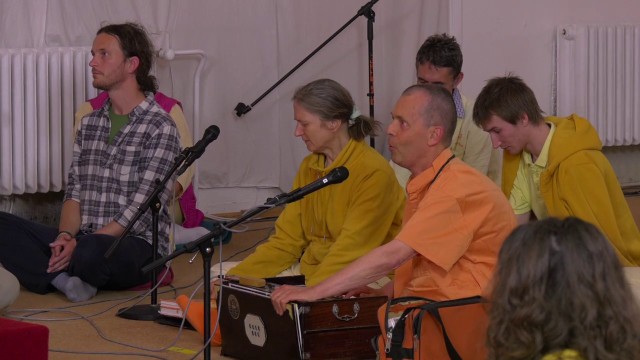
Evening satsang with Vishwaguruji from Strilky Ashram, Czech Republic. Singing bhajans by Swami Gajanandji.
Follow the path faithfully
1:00 - 1:37 (37 min)
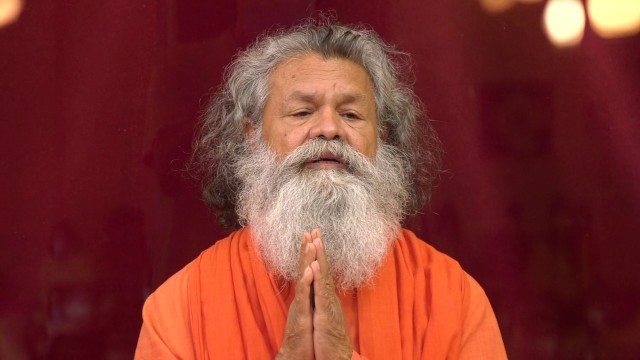
Evening satsang with Vishwaguruji from Strilky Ashram, Czech Republic. During last year people could practise yoga individually. Meditation without mala and mantra is not good. We should follow our path. There are many paths but all comes together. Every creature have a path and they know that God has given them everything. Our yoga path is very clear. God gave everything to humans but we lost it. God is sitting in us. We should become one with God. We are human but we completely confused and don't know clearly our path. Mantra is very important which is always with us and show our path
How did yoga begin in Czechoslovakia?
1:45 - 2:16 (31 min)
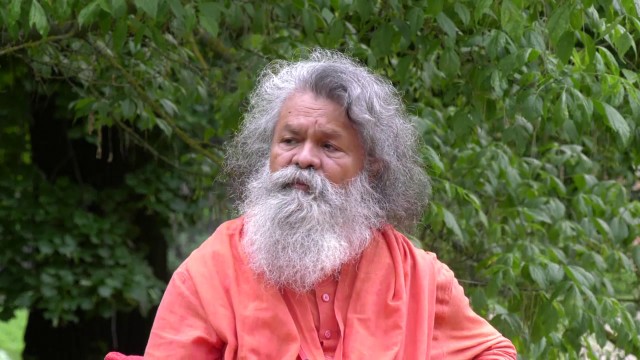
A spiritual teacher shares memories and reflections on introducing yoga and bhajans to Czechoslovakia during the communist era.
"Concentrate not only on the sound; you know what it means. Because if we know exactly what it means, then we have in our heart, in our brain, in our mind, it is the reality."
"They said that our workers should be healthy again thanks to yoga. But what you are singing, something we don’t understand, this is not yoga. I said, yes, it is called sound yoga."
Swami Avatarpuri recounts his early experiences teaching yoga and leading bhajan sessions in Czechoslovakia, emphasizing the importance of understanding the devotional songs' meaning. He narrates anecdotes about winter travels, friendly police interactions, and the three rules given to him: not to deal with money/gold, religion, or politics. A disciple interjects to recall the first seminar at the Kopná chalet, noting its spiritual history.
Filming location: Strilky, Czech Republic
We must now go further
2:20 - 2:49 (29 min)
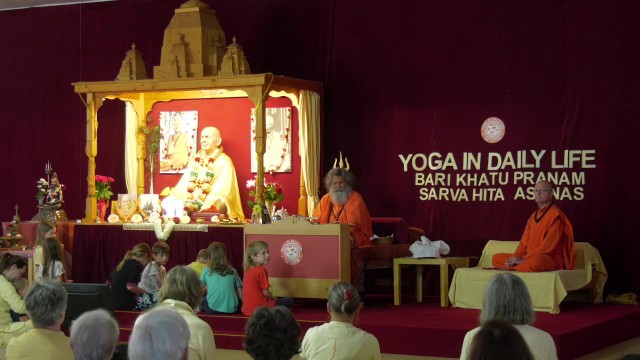
A spiritual talk on integrating practice into daily life and devotion.
"At home and everywhere, when we have the time, we should all be very nice. It is not only sitting and chanting 'om, om, om.' No, be very nice to your family."
"Until the last, until the last time, when you will be in your guru and in your sādhanā, then in the last minutes, then you will go as into Paramatmā."
A spiritual teacher addresses a gathering, emphasizing the importance of continuing yoga practice, prayer, and kindness within the family beyond retreats. The talk weaves personal anecdotes about the global yoga community during the pandemic and shares a story about the devoted passing of a disciple in America, illustrating the ideal of remaining in guru and sādhanā until the end.
Filming location: Strilky, Czech Republic
How did yoga begin in Czechoslovakia?
2:55 - 3:26 (31 min)
A spiritual teacher shares memories and reflections on introducing yoga and bhajans to Czechoslovakia during the communist era.
"Concentrate not only on the sound; you know what it means. Because if we know exactly what it means, then we have in our heart, in our brain, in our mind, it is the reality."
"They said that our workers should be healthy again thanks to yoga. But what you are singing, something we don’t understand, this is not yoga. I said, yes, it is called sound yoga."
Swami Avatarpuri recounts his early experiences teaching yoga and leading bhajan sessions in Czechoslovakia, emphasizing the importance of understanding the devotional songs' meaning. He narrates anecdotes about winter travels, friendly police interactions, and the three rules given to him: not to deal with money/gold, religion, or politics. A disciple interjects to recall the first seminar at the Kopná chalet, noting its spiritual history.
Filming location: Strilky, Czech Republic
Satsang for Holiguruji's birthday
3:30 - 4:38 (68 min)
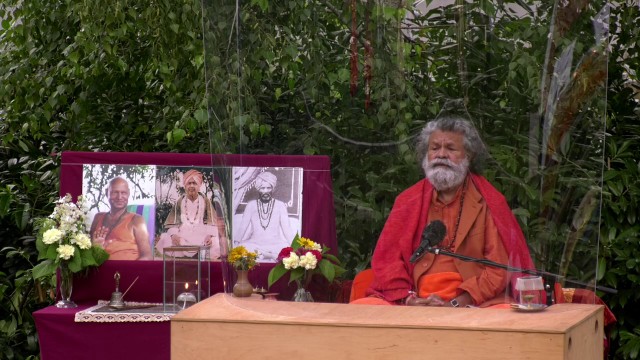
A satsang discourse on destiny, astrology, and divine will.
"God sent us, but it is said, no... it was not in your hands, but in God's hands."
"My dear, kismat will not let anyone free. So, something which is in your luck, you will get that."
A spiritual teacher leads an evening satsang on the occasion of his Satguru's incarnation day. He explores the concepts of destiny (kismat) and astrology (Jyotiṣ), explaining how planetary positions influence individual lives. Through stories from the lives of Lord Rama, Daśaratha, and Śravaṇa, as well as Swami Vivekananda and Ramakrishna, he illustrates that even divine incarnations face predestined suffering, emphasizing humility and acceptance of God's ultimate will.
Filming location: Strilky, Czech Republic
Just go ahead
4:45 - 5:46 (61 min)
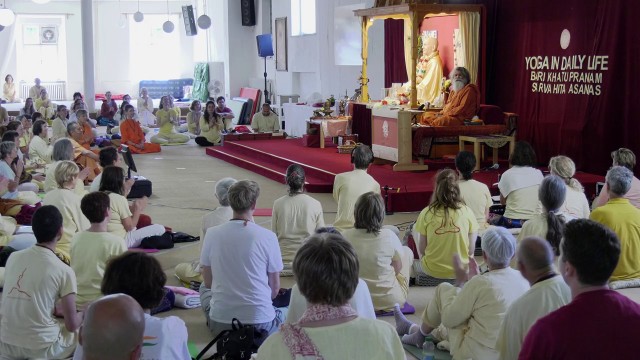
Morning program from Strilky Ashram, Czech Republic. Life eats life. There are many creatures living in the water on the earth and in the air. There are many living beings everywhere. Humans shouldn't kill and eat animals according to their dharma. The story of Buddha and how he received bhiksa. Buddhist people eat only good pure food. Water is life. There is no life without love. There are many very good people but Gurus are very rare. Muslim people are very good they are practising very strictly and faithfully. The story of Hoiigurujis and Vihwagurujis visit at Sankaracharya. Yoga in Daily Life people practised very well during corona time. It can be a female Guru also. A great sadhu keeps every child of God in his heart. Bhajan singing.
Selfless service
5:50 - 6:54 (64 min)
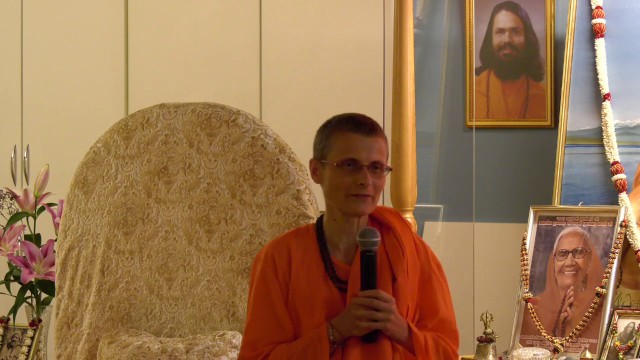
Evening satsang with Vishwaguruji from Vienna, Austria.
Practicing of the system 'Yoga in Daily Life', Level 3 - Part 2
7:00 - 8:07 (67 min)
Practicing of the system "Yoga in Daily Life", Level 3 - Part 2, in Om Vishwa Deep Gurukul Swami Maheshwaranand Ashram, Jadan, Rajasthan, India on 27th of October 2009.
We must now go further
8:15 - 8:44 (29 min)
A spiritual talk on integrating practice into daily life and devotion.
"At home and everywhere, when we have the time, we should all be very nice. It is not only sitting and chanting 'om, om, om.' No, be very nice to your family."
"Until the last, until the last time, when you will be in your guru and in your sādhanā, then in the last minutes, then you will go as into Paramatmā."
A spiritual teacher addresses a gathering, emphasizing the importance of continuing yoga practice, prayer, and kindness within the family beyond retreats. The talk weaves personal anecdotes about the global yoga community during the pandemic and shares a story about the devoted passing of a disciple in America, illustrating the ideal of remaining in guru and sādhanā until the end.
Filming location: Strilky, Czech Republic
Power of our words
8:50 - 9:41 (51 min)
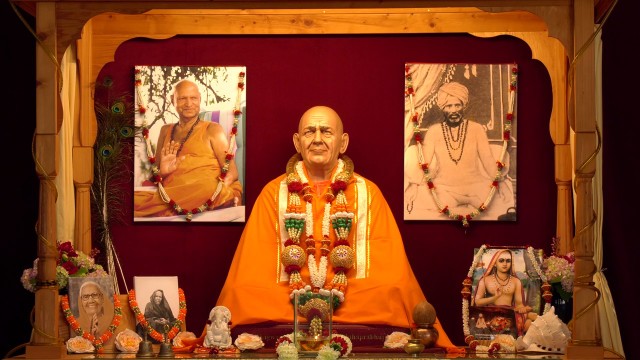
Morning satsang with Vishwaguruji from Strilky Ashram, Czech Republic. n the Ashram the atmosphere is divine. We are happy and believe that coronavirus will go. People can visit countries according to the rules that government says. We can also learn something from remaining home when this rule is applying. Holy scriptures like Bhagavad Gita keeps the strength of the words of Saint's. Shabda means not only our words but sounds of all living beings and nature. Good and bad words can change the atmosphere. We have an ocean of words. Mantra practicing and bhajan singing.
Respect the life of other creatures
9:45 - 10:33 (48 min)
A satsang discourse on compassion, non-violence, and spiritual practice.
"All who are sitting with us are already in satsaṅg. 'Sat' is truth, peace, harmony, goodness—everything."
"Jīva jīva bhakṣate. Every animal eats animals, but we humans should not."
The lecturer addresses the gathering, explaining the essence of satsang as communion in truth. He uses metaphors of a ship and an airplane to illustrate the unity of all life, emphasizing that the soul (ātmā) is in every creature. The core teaching is a call for ahimsa (non-violence), urging humans to not kill other beings for food, contrasting human potential with animal nature. He discusses the challenges of Kali Yuga, advises against alcohol misuse, and clarifies protocols for offering garlands to guru photographs.
Filming location: Salzburg, Austria
Do good things and be happy
10:40 - 11:26 (46 min)
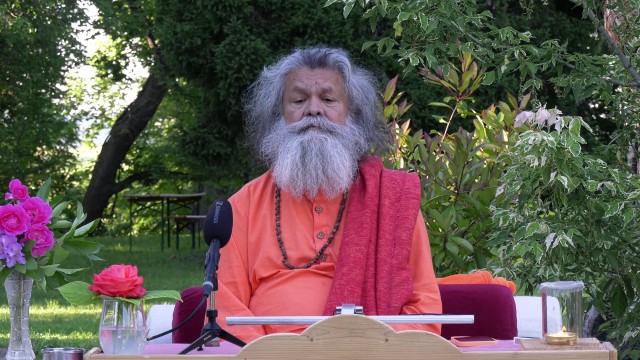
Evening satsang with Vishwaguruji from Strilky Ashram, Czech Republic. Bhajan singing. Bhajans are one of the best things in the world. When we sing good words come from our hearts and make other people happy. Sometimes people are happy also when they do bad things. The story of a sadhu and a tree. We should be peaceful and positive so we can go to God. Om Ashram is for the future generation. Half of iva was a woman and the other half was a man.
What does Yoga in Daily Life mean?
11:30 - 11:56 (26 min)
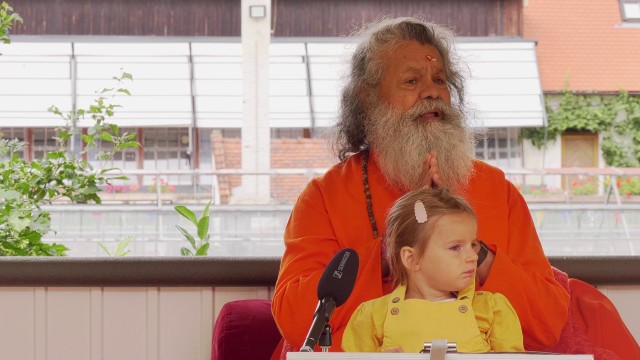
A spiritual discourse on the legacy of "Yoga in Daily Life" and the significance of a sacred chair.
"Holy Gurujī said, 'My servant, I give you this place, this place where we are sitting here on this chair.'"
"One in all, and all in one. These were the words given to our holy Gurujī."
The lecturer addresses a gathering, reflecting on the origins and global spread of the Yoga in Daily Life system from its beginnings in Czechoslovakia. He discusses receiving the spiritual "Chair of Oneness" from his guru, linking it to a lineage of masters like Ālagpurījī and Devapurījī. The talk weaves personal anecdotes, including a story about installing a Nandi statue, with teachings on practice, unity, and the guru-disciple relationship.
Filming location: Strilky, Czech Republic
Negative thoughts can destroy everything
11:35 - 12:30 (55 min)
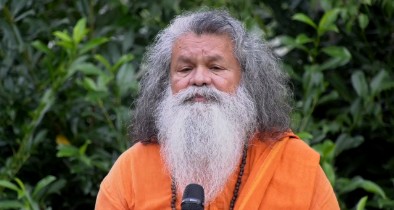
An evening satsang on Haṭha Yoga and the teachings of Ṛṣi Patañjali, set in a forest.
"The speciality of Ṛṣi Patañjali is 'Ahiṃsā paramodharma.' Ahiṃsā means non-violence. So the greatest dharma is respecting everyone; it is non-violence."
"If you have good vṛttis, good thoughts, it does not matter even if you are not practicing. Your positive thinking brings you higher and higher towards Brahman."
The speaker delivers a discourse weaving together the wisdom of Patañjali, emphasizing non-violence and the cultivation of positive mental impressions (vṛttis). He uses an anecdote from the Mahākumbha Melā and an analogy of a blighted chestnut tree to illustrate how negative influences, like bad company (kuśaṅga), can attack from the outside. The talk connects these themes to the need for inner purity in spiritual practice and concludes with a group bhajan and a brief mention of Haṭha Yoga techniques like Nauli.
Filming location: Strilky, Czech Republic
Bhajans from Strilky Ashram
12:00 - 13:34 (94 min)
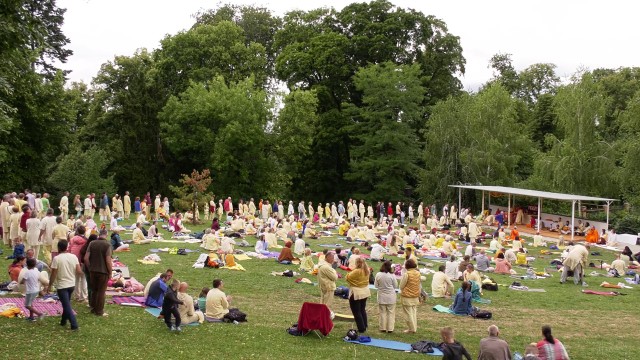
Morning satsang from Strilky Ashram, Czech Republic.
God is within us
12:35 - 13:04 (29 min)
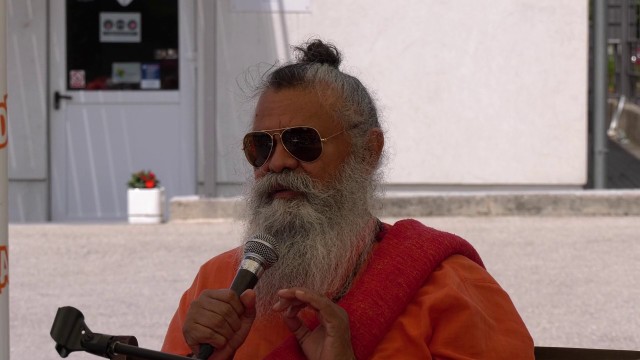
Morning satsang with Vishaguruji from Rijeka, Croatia. Karma yoga is the best yoga. How should we begin our day? Live happy healthy. Feel that I am a human so I don't harm any creatures. We search for God everywhere but we never look within ourselves. We should do our yoga practice regularly day by day. Vajra nadi is the base of our life. Practising bhramari pranayama.
Eat healthy food and live as a human
13:05 - 13:48 (43 min)
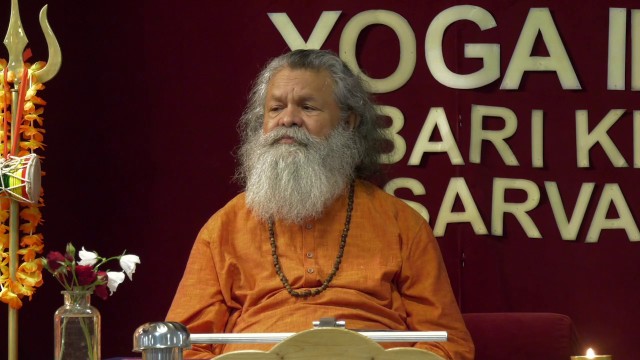
A spiritual discourse on prayer, lifestyle, and simple daily remembrance.
"Morning, midday, evening—always the whole family, women, men, and children. When they sat at the table to eat, they would pray."
"When we open our eyes, then tell, 'I am human.'... And then, second, don't look at animals and this and that first. Mother, mother. So see our mother."
The lecturer reflects on the decline of traditional prayer across religions and its connection to modern societal problems. He discusses dietary shifts, including the rise of veganism, and critiques modern agriculture's impact on the earth. He concludes with a simple daily practice: upon waking, remember "I am human," honor Mother Earth, and reverence water as life.
Filming location: Strilky, Czech Republic
We can go altogether to God
13:55 - 14:40 (45 min)
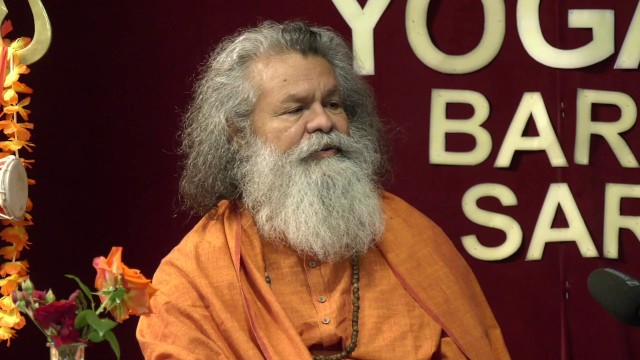
A spiritual discourse on the nature of the guru, learning, and ultimate unity.
"Everyone will arrive at one point. One master, or guru, comes from this side, so there is a different teaching, a different path. From the north, it is different. We are all coming from various directions, but we are descending to the same summit."
"So, what should we do? We should eat well, exercise, and then work, so everything. Then we will live a little more. But with that spirituality, then we come to God."
The speaker explores the universal student-teacher relationship, emphasizing that the terms guru and master point to the same truth. Using a parable of two brothers—one highly educated and one a simple devotee of Shiva—he illustrates that formal learning and spiritual devotion are different paths, with the latter granting profound grace, as shown by the younger brother walking on water. The talk weaves in themes of the five elements, the humility of birth and death, and the ultimate unity of all religions and beings, like drops merging into an ocean.
Filming location: Strilky, Czech Republic
How did Yoga in Daily Life begin in Europe?
14:45 - 15:27 (42 min)
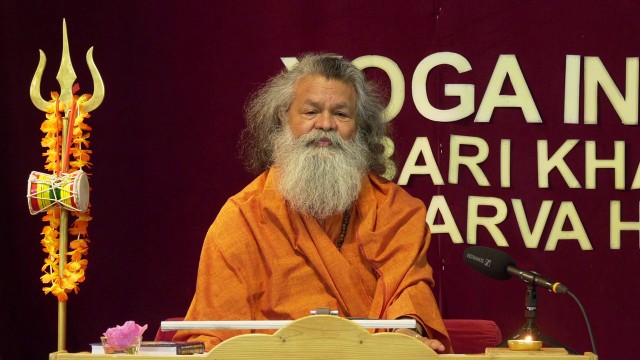
Evening satsang with Vishwaguruji from Strilky Ashram, Czech Republic. When Vishwaguruji in his young age first time arrived in Europe very few people heard about yoga and many people ate meat. At that time Vishwaguruji went back to India. But some Austrian people invite him again to come to Europe. The story of Vishwaguruji's first visit tö Czechoslovakia. Many Czech people are with Vishwaguruji from that time till now. The story of a grandmother in Czechoslovakia who didn't want that her grandchild becomes a vegetarian. Satsang bhajans and prayer were also very new for people at that time. We have to take care of our family. At that time people prayed before eating but now they do not.
We can go altogether to God
15:35 - 16:20 (45 min)
A spiritual discourse on the nature of the guru, learning, and ultimate unity.
"Everyone will arrive at one point. One master, or guru, comes from this side, so there is a different teaching, a different path. From the north, it is different. We are all coming from various directions, but we are descending to the same summit."
"So, what should we do? We should eat well, exercise, and then work, so everything. Then we will live a little more. But with that spirituality, then we come to God."
The speaker explores the universal student-teacher relationship, emphasizing that the terms guru and master point to the same truth. Using a parable of two brothers—one highly educated and one a simple devotee of Shiva—he illustrates that formal learning and spiritual devotion are different paths, with the latter granting profound grace, as shown by the younger brother walking on water. The talk weaves in themes of the five elements, the humility of birth and death, and the ultimate unity of all religions and beings, like drops merging into an ocean.
Filming location: Strilky, Czech Republic
Practise faithfully and continuously
16:25 - 17:06 (41 min)
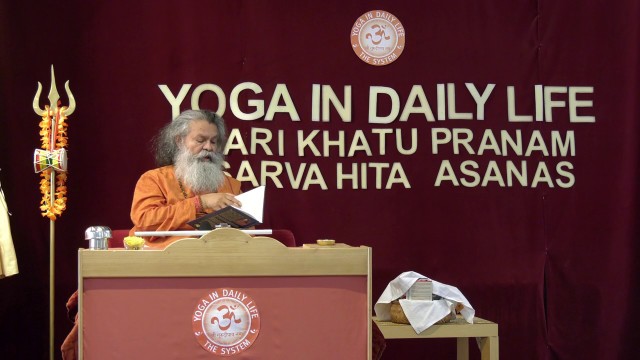
A spiritual teacher instructs students on a daily sādhanā (practice) and leads a bhajan.
"You know the complete process: going there fully, coming here from there, and proceeding."
"Každý môže byť najväčší z najväčších, keď bude robiť tieto cvičenia... každý môže byť najväčším."
The teacher outlines a core daily practice starting from the Mūlādhāra Chakra, emphasizing purity and perseverance. He discusses scriptures, the unity of Śiva and Śakti, and the importance of not abandoning the practice, using a mix of English and Slovak. The session concludes with the singing of the bhajan "Yogī Jano Kī Yoga Nindrā."
Filming location: Strilky, Czech Republic
Webcast from Vienna
17:10 - 17:52 (42 min)
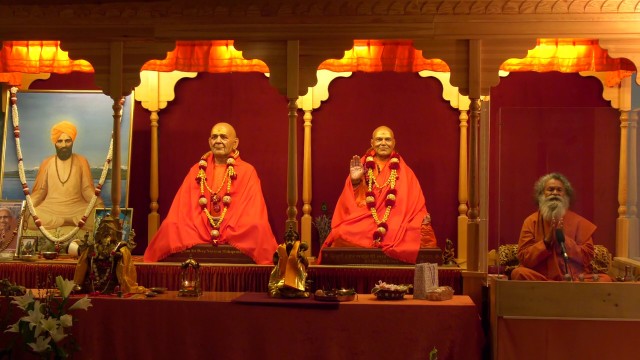
Satsang with Vishwaguruji from Vienna, Austria.
The Healing Bridge: Integrating Yoga into Modern Medicine
18:00 - 18:09 (9 min)

A medical doctor shares his experience integrating the Yoga in Daily Life system into his clinical practice.
"After each surgery I perform... a quiet question always arises within me: 'What more could I have done for these patients beforehand?'"
"I advise them: 'Practice the Yoga in Daily Life system as a complete system.'... By engaging with the system as a whole, they resolve their own issues."
An orthopedic surgeon and yoga teacher addresses a spiritual gathering, explaining how he applies yogic principles on three levels: as preventive healthcare, as a supportive adjunct to surgery, and as a primary treatment for psychosomatic conditions. He argues that the modern world's rapid, restless pace creates ailments that a holistic yoga system can effectively address, sharing anecdotal evidence from his patients and expressing deep gratitude to the spiritual teachers who brought the system to his country.
Filming location: Prague, Czech Republic
The Silent Revolution: Yoga as the Antidote to Mind Pollution and Failed Leadership
18:15 - 18:38 (23 min)
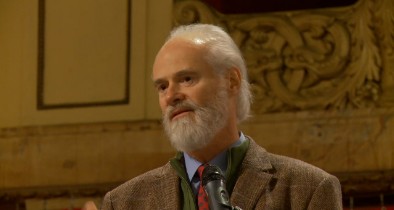
A keynote address proposing yoga as a solution to global leadership crises and mind pollution.
"The most dangerous threat to humanity today is not violence or terrorism, as the media suggests. The greatest damage comes from what I call mind pollution."
"Yoga is a systematic, conscious science of human development. Its main technique is gaining mastery over the mind, stopping the internal dialogue."
The speaker diagnoses widespread leadership failures—citing a lack of self-awareness and emotional intelligence—and argues that media sensationalism creates disproportionate fear. Presenting comparative mortality statistics, he contends that "mind pollution" is a greater threat than terrorism. He defines yoga as a holistic science for mastering the mind and accelerating human evolution, concluding with a call to integrate comprehensive yoga systems into global education and leadership training to foster peace.
Filming location: Prague, Czech Republic
Singing bhajans by Swami Gajanandji
18:45 - 19:22 (37 min)
Evening satsang with Vishwaguruji from Strilky Ashram, Czech Republic. Singing bhajans by Swami Gajanandji.
Buddha
19:30 - 20:08 (38 min)
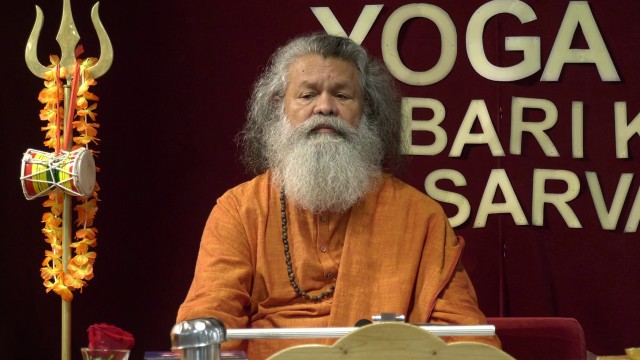
A spiritual discourse on the value of the present moment, weaving in personal anecdotes and stories of Buddha.
"Every second is irretrievably gone. So it is that we should always... be now with ourselves."
"The present is very great. The present is great. And the future we do not know. The past is gone."
The speaker, likely a swami, gives an unstructured talk emphasizing the importance of living fully in the present. He uses the metaphor of chewing food to illustrate savoring the moment, then recounts various stories: a legendary queen who disfigured her face to discourage admirers, details of Buddha's ascetic life, and a personal story about a banyan tree sapling from Bodhgaya being planted in central Australia. The themes revolve around mindfulness, detachment, and spiritual lineage.
Filming location: Strilky, Czech Republic
In the bliss of bhajans
20:15 - 21:26 (71 min)
Bhajans from different ashrams in India
Live as a Yogi
21:30 - 22:06 (36 min)
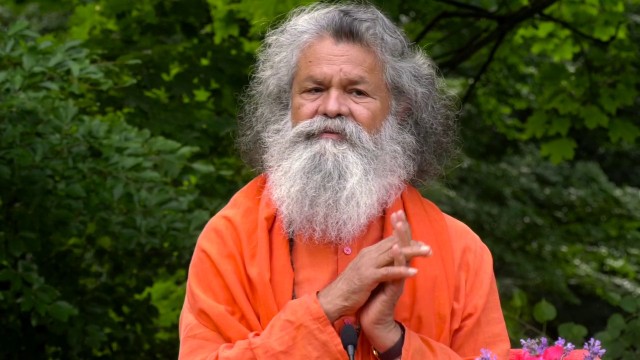
A global address on adopting a yogic lifestyle for health and longevity.
"Paradoxically, the more doctors there are, the more people seem to fall ill."
"The best medicine is often found in our grandmothers' kitchens. This means we humans must return to a natural way."
A spiritual teacher speaks to a worldwide audience, advocating for a return to natural living as an antidote to modern disease. He critiques contemporary eating habits, over-reliance on chemical medicine, and the loss of traditional daily rhythms, emphasizing that the body itself is one's primary religion. He calls on all listeners, regardless of their faith, to become yogis by dedicating themselves to holistic practice and self-care, thereby achieving a long, peaceful, and healthy life.
Filming location: Strilky, Czech Republic
Practise and think positive
22:10 - 22:42 (32 min)
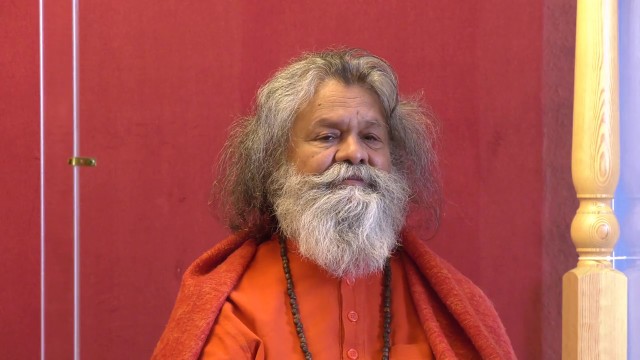
A spiritual discourse on the soul's journey, karma, and daily practice.
"If we tell that this person is not good, it means first, I am not good."
"When you were born, you brought it, and when you will go, your hand is open, nothing is there."
The speaker delivers a wide-ranging talk, moving from the classification of life forms to the soul's ultimate destination beyond heaven and hell. Key themes include the danger of negative speech, the purification of karma through daily life, and the ideal of self-surrender to the guru. The discourse incorporates analogies of cleaning a dress and references to ascetic practices, concluding with a focus on yoga as more than physical exercise.
Filming location: Vienna, Austria
Feel your heart and be merciful for all
22:50 - 23:46 (56 min)
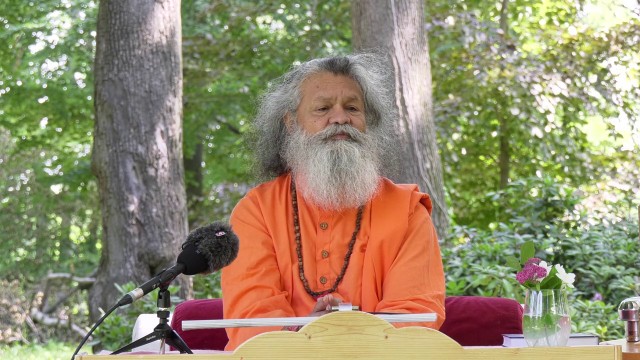
Morning satsang with Vishwaguruji from Stirlky Ashram, Czech Republic, Yoga was given to humans by Siva. He created asanas by observing the movements of the animals. All living beings are the creatures of God. Like humans with different colours of their skin are all one. The story of a rakshasa who wants to live forever. We should be peaceful and humble. We should read holy books and do our sadhana day by day. We shouldn't be like a monkey jumping here and there. Meditation on the heart.
Introduction of the Strilky Ashram
23:50 - 23:59 (9 min)
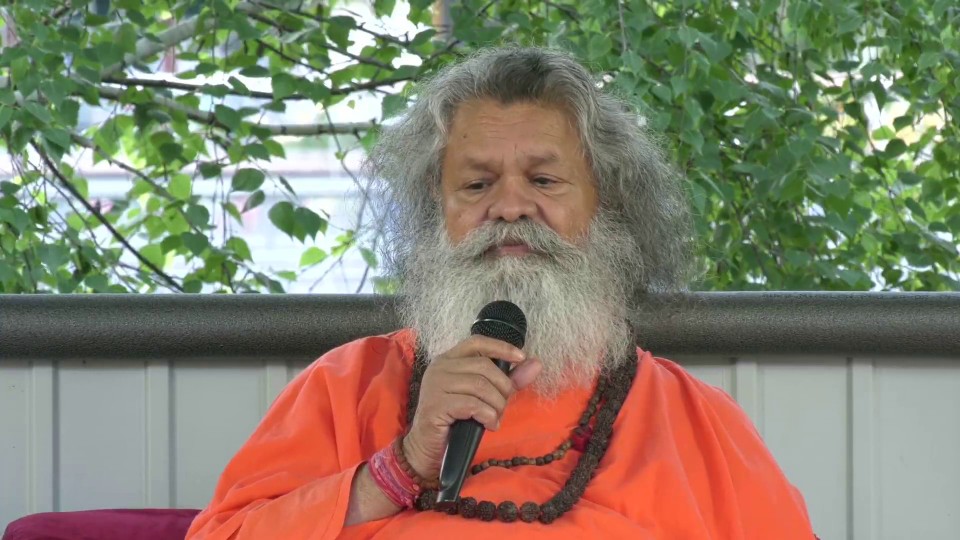
A spiritual leader inaugurates and blesses a new sacred grove for satsang.
"Our yoga people have been in many, many countries: from India, from here in Europe. And from Europe, many of our bhaktas went to other countries."
"I tell you that anytime, if you desire something, if you need something, if something happens, you should come to this place and pray with our mantra. Everything will return to peace and harmony."
The speaker, likely Swami Madhavanandji, addresses a gathering at a newly prepared forest satsang site. He emphasizes the sanctity of the place, its rules of entry, and its power for prayer. He reflects on the ashram's history, its global community of devotees, and the transformative impact of their yoga practice, which leads many to give up meat and alcohol. The talk transitions into a search for the ancient saint Alak Puriji, briefly touching upon associated mythology involving Shiva.
Filming location: Strilky, Czech Republic
American
Australian