
European
How did yoga begin in Czechoslovakia?
0:15 - 0:46 (31 min)
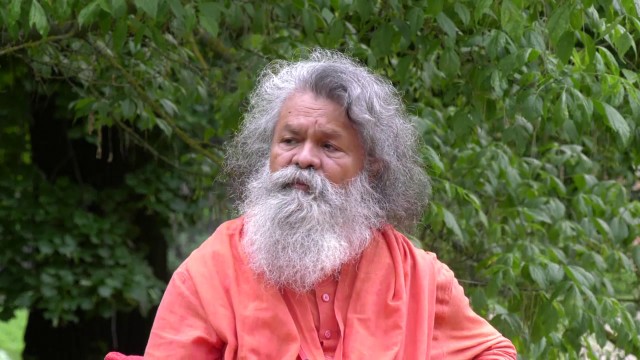
A spiritual teacher shares memories and reflections on introducing yoga and bhajans to Czechoslovakia during the communist era.
"Concentrate not only on the sound; you know what it means. Because if we know exactly what it means, then we have in our heart, in our brain, in our mind, it is the reality."
"They said that our workers should be healthy again thanks to yoga. But what you are singing, something we don’t understand, this is not yoga. I said, yes, it is called sound yoga."
Swami Avatarpuri recounts his early experiences teaching yoga and leading bhajan sessions in Czechoslovakia, emphasizing the importance of understanding the devotional songs' meaning. He narrates anecdotes about winter travels, friendly police interactions, and the three rules given to him: not to deal with money/gold, religion, or politics. A disciple interjects to recall the first seminar at the Kopná chalet, noting its spiritual history.
Filming location: Strilky, Czech Republic
Respect the life of other creatures
0:50 - 1:38 (48 min)
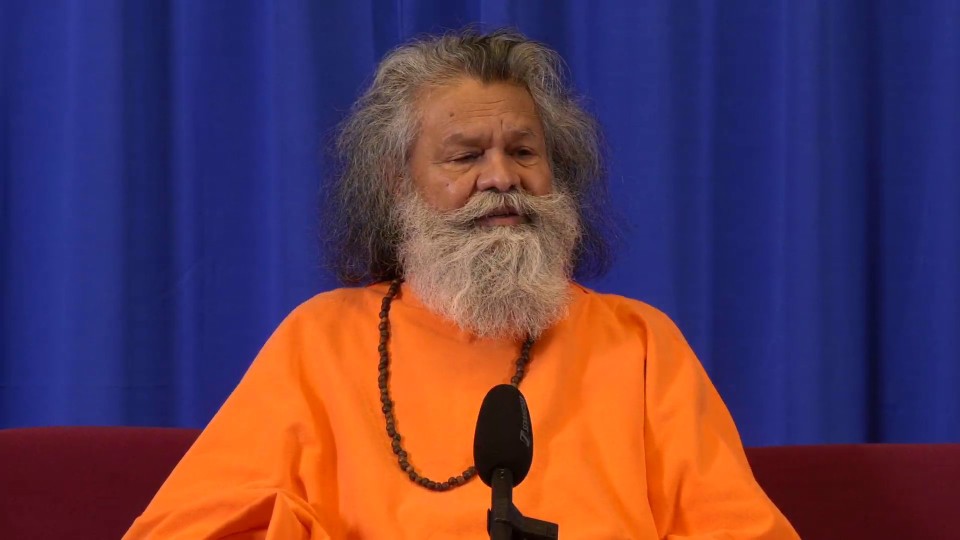
A satsang discourse on compassion, non-violence, and spiritual practice.
"All who are sitting with us are already in satsaṅg. 'Sat' is truth, peace, harmony, goodness—everything."
"Jīva jīva bhakṣate. Every animal eats animals, but we humans should not."
The lecturer addresses the gathering, explaining the essence of satsang as communion in truth. He uses metaphors of a ship and an airplane to illustrate the unity of all life, emphasizing that the soul (ātmā) is in every creature. The core teaching is a call for ahimsa (non-violence), urging humans to not kill other beings for food, contrasting human potential with animal nature. He discusses the challenges of Kali Yuga, advises against alcohol misuse, and clarifies protocols for offering garlands to guru photographs.
Filming location: Salzburg, Austria
Practise and think positive
1:45 - 2:17 (32 min)
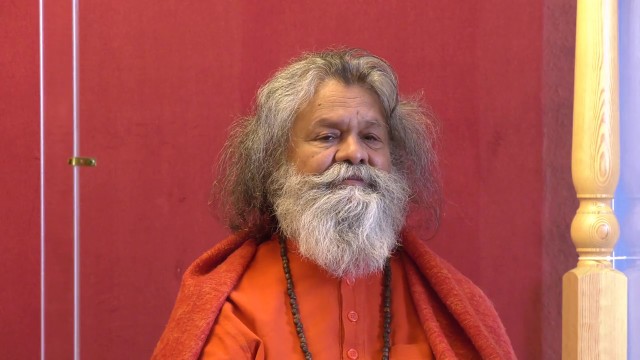
A spiritual discourse on the soul's journey, karma, and daily practice.
"If we tell that this person is not good, it means first, I am not good."
"When you were born, you brought it, and when you will go, your hand is open, nothing is there."
The speaker delivers a wide-ranging talk, moving from the classification of life forms to the soul's ultimate destination beyond heaven and hell. Key themes include the danger of negative speech, the purification of karma through daily life, and the ideal of self-surrender to the guru. The discourse incorporates analogies of cleaning a dress and references to ascetic practices, concluding with a focus on yoga as more than physical exercise.
Filming location: Vienna, Austria
How did Yoga in Daily Life begin in Europe?
2:25 - 3:07 (42 min)
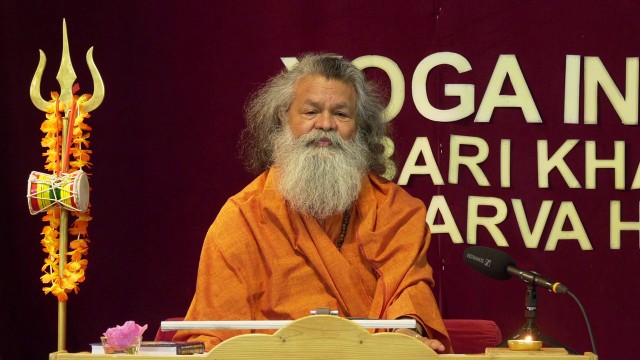
Evening satsang with Vishwaguruji from Strilky Ashram, Czech Republic. When Vishwaguruji in his young age first time arrived in Europe very few people heard about yoga and many people ate meat. At that time Vishwaguruji went back to India. But some Austrian people invite him again to come to Europe. The story of Vishwaguruji's first visit tö Czechoslovakia. Many Czech people are with Vishwaguruji from that time till now. The story of a grandmother in Czechoslovakia who didn't want that her grandchild becomes a vegetarian. Satsang bhajans and prayer were also very new for people at that time. We have to take care of our family. At that time people prayed before eating but now they do not.
Singing bhajans by Swami Gajanandji
3:15 - 3:52 (37 min)
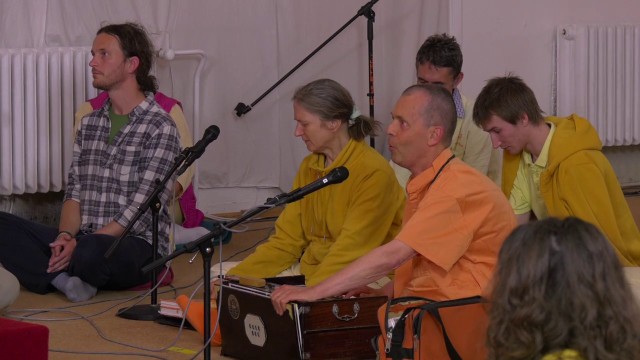
Evening satsang with Vishwaguruji from Strilky Ashram, Czech Republic. Singing bhajans by Swami Gajanandji.
Eat healthy food and live as a human
4:00 - 4:43 (43 min)
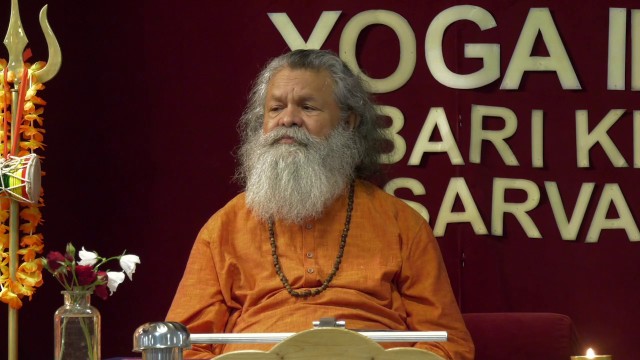
A spiritual discourse on prayer, lifestyle, and simple daily remembrance.
"Morning, midday, evening—always the whole family, women, men, and children. When they sat at the table to eat, they would pray."
"When we open our eyes, then tell, 'I am human.'... And then, second, don't look at animals and this and that first. Mother, mother. So see our mother."
The lecturer reflects on the decline of traditional prayer across religions and its connection to modern societal problems. He discusses dietary shifts, including the rise of veganism, and critiques modern agriculture's impact on the earth. He concludes with a simple daily practice: upon waking, remember "I am human," honor Mother Earth, and reverence water as life.
Filming location: Strilky, Czech Republic
Introduction of the Strilky Ashram
4:50 - 4:59 (9 min)
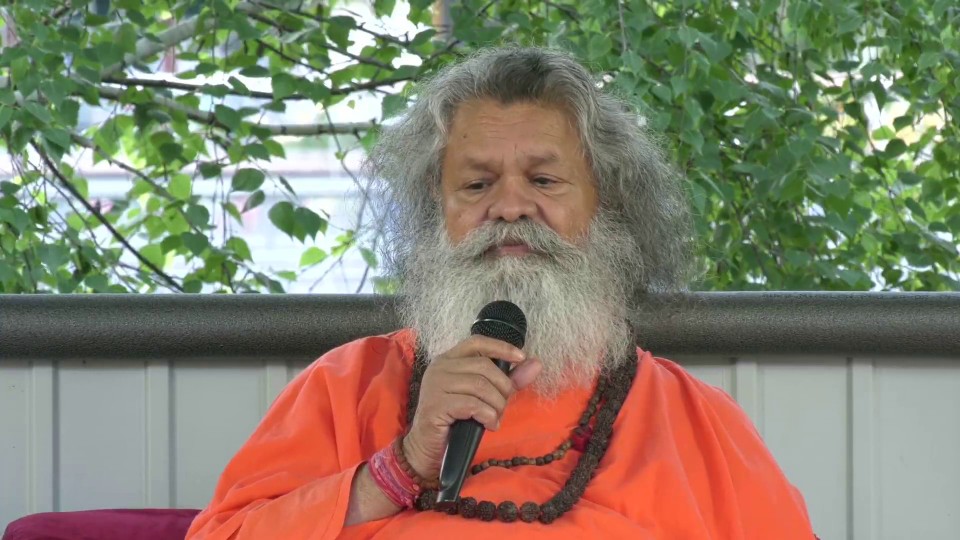
A spiritual leader inaugurates and blesses a new sacred grove for satsang.
"Our yoga people have been in many, many countries: from India, from here in Europe. And from Europe, many of our bhaktas went to other countries."
"I tell you that anytime, if you desire something, if you need something, if something happens, you should come to this place and pray with our mantra. Everything will return to peace and harmony."
The speaker, likely Swami Madhavanandji, addresses a gathering at a newly prepared forest satsang site. He emphasizes the sanctity of the place, its rules of entry, and its power for prayer. He reflects on the ashram's history, its global community of devotees, and the transformative impact of their yoga practice, which leads many to give up meat and alcohol. The talk transitions into a search for the ancient saint Alak Puriji, briefly touching upon associated mythology involving Shiva.
Filming location: Strilky, Czech Republic
How to practise mantra and kriya
5:05 - 6:14 (69 min)
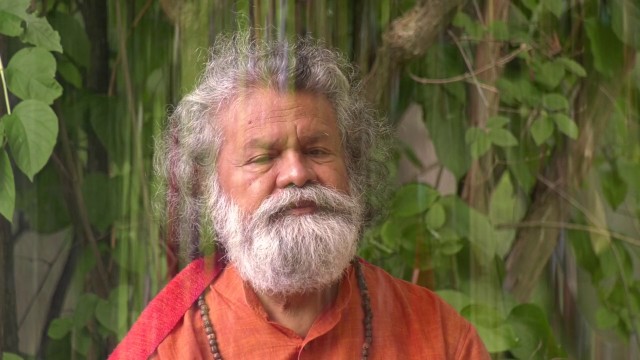
A satsang on mantra initiation and the science of kriya yoga.
"Today we received Mantra Dīkṣā... mantra is words for everything."
"Kriyā Śakti, Kriyā on what we are doing, minimum 25 minutes. And only once a day. During the practice, 25 times, 27 times, we should not break."
Following a day of mantra initiation, the teacher elaborates on the profound practice of mantra and kriya. He explains the five stages of mantra practice—from writing (likhita) to silent, inward repetition (udāsī)—and details the disciplined, daily routine of kriya yoga, which involves moving energy through the chakras with the breath. He warns against the misuse of spiritual science and emphasizes purity, consistent practice, and overcoming fear.
Filming location: Strilky, Czech Republic
Live as a Yogi
6:20 - 6:56 (36 min)
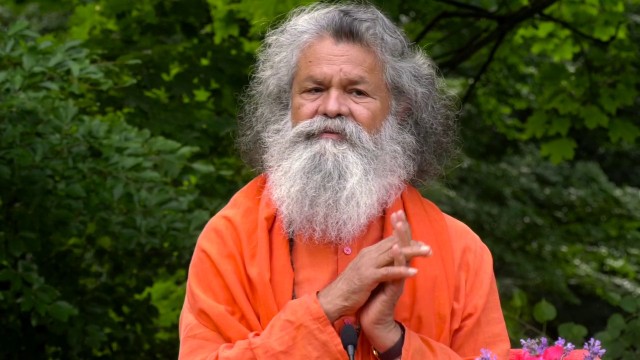
A global address on adopting a yogic lifestyle for health and longevity.
"Paradoxically, the more doctors there are, the more people seem to fall ill."
"The best medicine is often found in our grandmothers' kitchens. This means we humans must return to a natural way."
A spiritual teacher speaks to a worldwide audience, advocating for a return to natural living as an antidote to modern disease. He critiques contemporary eating habits, over-reliance on chemical medicine, and the loss of traditional daily rhythms, emphasizing that the body itself is one's primary religion. He calls on all listeners, regardless of their faith, to become yogis by dedicating themselves to holistic practice and self-care, thereby achieving a long, peaceful, and healthy life.
Filming location: Strilky, Czech Republic
Practicing of the system 'Yoga in Daily Life', Level 1 - Part 6
7:00 - 8:05 (65 min)
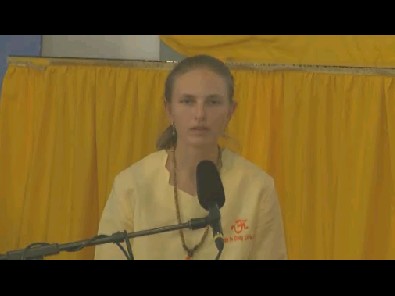
Practicing of the system "Yoga in Daily Life", Level 1 - Part 6, in Om Vishwa Deep Gurukul Swami Maheshwaranand Ashram, Jadan, Rajasthan, India on 24th of October 2009.
Satsang from Strilky
8:10 - 9:01 (51 min)
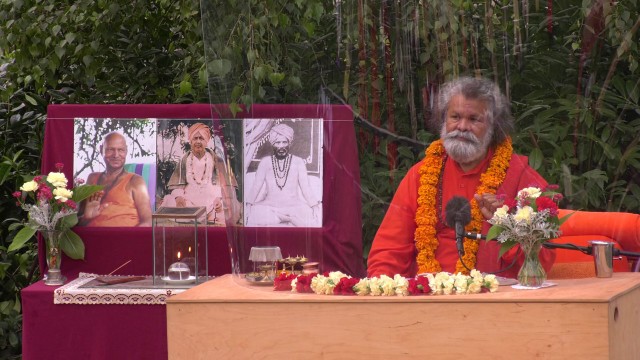
Evening satsang with Vishwaguruji from Strilky Ashram, Czech Republic.
Selfless service
9:05 - 10:09 (64 min)
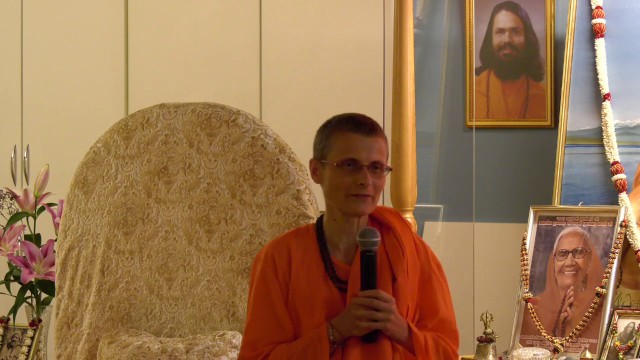
Evening satsang with Vishwaguruji from Vienna, Austria.
Satsang for Holiguruji's birthday
10:15 - 11:23 (68 min)
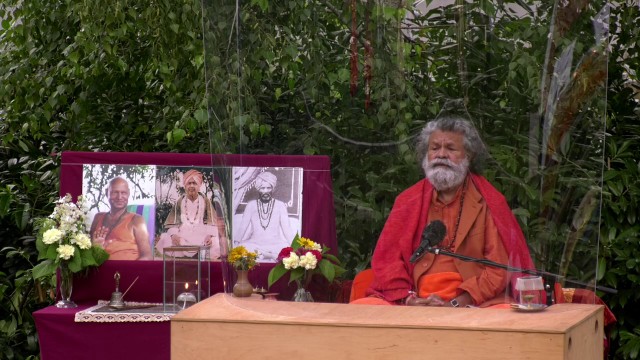
A satsang discourse on destiny, astrology, and divine will.
"God sent us, but it is said, no... it was not in your hands, but in God's hands."
"My dear, kismat will not let anyone free. So, something which is in your luck, you will get that."
A spiritual teacher leads an evening satsang on the occasion of his Satguru's incarnation day. He explores the concepts of destiny (kismat) and astrology (Jyotiṣ), explaining how planetary positions influence individual lives. Through stories from the lives of Lord Rama, Daśaratha, and Śravaṇa, as well as Swami Vivekananda and Ramakrishna, he illustrates that even divine incarnations face predestined suffering, emphasizing humility and acceptance of God's ultimate will.
Filming location: Strilky, Czech Republic
Unity in spirituality
11:25 - 12:08 (43 min)
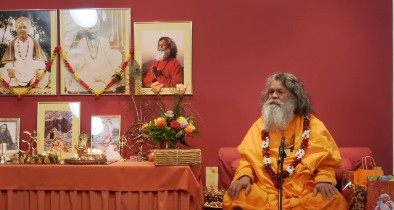
A Christmas satsang reflecting on spiritual unity and personal mission.
"Meine Mission oder meine Aufgabe von dem höheren und höchsten Gott, durch meinen Meister, einen Botschaften, ohne irgendwelchen Dualismus, alle Religionen, alle spirituellen Organisationen, etc., alles ist eins."
"Religion means to realize your relation to God; this is called religion. Realize, realize your relation to God."
The lecturer addresses a diverse European gathering during the Christmas season. He shares stories from his early days of teaching yoga across Austria and Eastern Europe, including travels by train and experiences in communist Czechoslovakia. He reflects on the life of Jesus and Mother Mary to illustrate themes of faith, societal judgment, and the universal message of oneness among all religions and peoples. The talk weaves personal anecdotes with spiritual philosophy, concluding with blessings for Christmas and the New Year.
Filming location: Austria
Live webcast from Strilky
11:30 - 13:00 (90 min)
Morning satsang with Vishwaguruji from Strilky Ashram, Czech Republic.
Atmadarshan
12:15 - 12:57 (42 min)
A satsang discourse on the grace and vision of the Guru, continuing a series on the bhajan "Gurudev Darśan Dhan Ho."
"Jasī dṛṣṭi, vasī sṛṣṭi. The creation you see corresponds to your feelings and perception—your dṛṣṭi shapes your sṛṣṭi."
"Gurudev darśan dāna ho... When you have the darśan of Gurudeva, then all holy pilgrim places are accomplished."
The speaker explores the profound concept of darśan (vision/sight), distinguishing between uplifting and fearful sights. He explains how our perception shapes our reality and extends the principle to the grace found in seeing the Guru, the Guru principle (Guru Tattva), and each other. The talk includes warnings about the pitfalls of miracle-working (siddhis) as a form of māyā, and culminates in singing and explaining verses from the devotional bhajan, emphasizing the Guru's role as the embodiment of all pilgrimage and divine blessing.
Filming location: Strilky, Czech Republic
Only Guru Kripa can liberate us
13:05 - 14:06 (61 min)
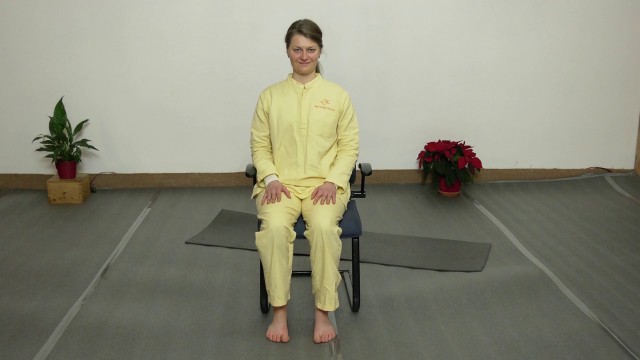
A spiritual discourse and yoga session beginning with a parable about Guru's grace.
"Spiritual development exists everywhere, in every country, and yet it also does not. Therefore, we must know where we stand."
"Guru Kṛpāhi Kevalam—only the blessing of the Gurudeva. Disciples will be very peaceful, heavy with knowledge, and everything."
Swami Madhavananda opens with prayers and a teaching on the necessity of the Guru's grace for liberation. He narrates a detailed parable about three Gujarati pilgrims who, after a long journey, learn that the holy rivers Ganga, Yamuna, and Saraswati themselves seek purification at the feet of a true saint. The discourse emphasizes that ultimate cleansing comes from the Guru. The session then transitions into a gentle Sarvahita Asana practice led by Swami Umapuri, focusing on active relaxation and joint-nourishing cycling movements for all abilities.
Filming location: Strilky, Czech Republic
Memories and experiences on the yoga path
14:10 - 14:58 (48 min)
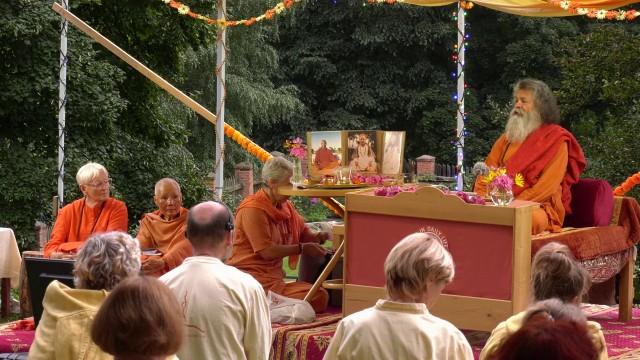
Raksha Bandhan Evening satsang with Vishwaguruji from Strilky Ashram, Czech Republic. Swami Prempuja from the USA tells some words about her experiences and memories in her 25 years long yoga path. Swami Mantrapuri tells some words about her connection to Vishwaguruji. Amrit Sagar tells about her feelings and memories connecting to yoga and Vishwaguruji.
Power of our words
15:05 - 15:56 (51 min)
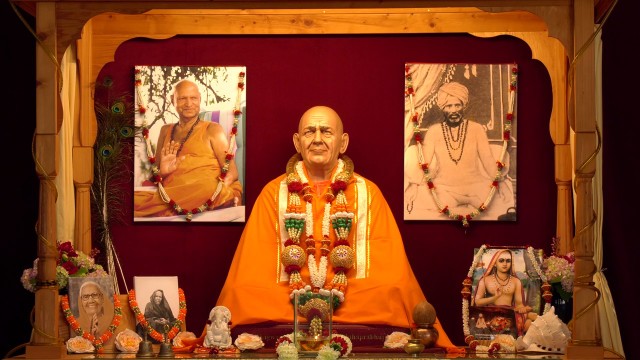
Morning satsang with Vishwaguruji from Strilky Ashram, Czech Republic. n the Ashram the atmosphere is divine. We are happy and believe that coronavirus will go. People can visit countries according to the rules that government says. We can also learn something from remaining home when this rule is applying. Holy scriptures like Bhagavad Gita keeps the strength of the words of Saint's. Shabda means not only our words but sounds of all living beings and nature. Good and bad words can change the atmosphere. We have an ocean of words. Mantra practicing and bhajan singing.
Just go ahead
16:00 - 17:01 (61 min)
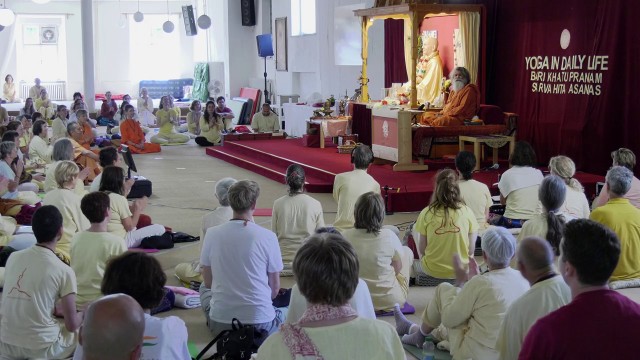
Morning program from Strilky Ashram, Czech Republic. Life eats life. There are many creatures living in the water on the earth and in the air. There are many living beings everywhere. Humans shouldn't kill and eat animals according to their dharma. The story of Buddha and how he received bhiksa. Buddhist people eat only good pure food. Water is life. There is no life without love. There are many very good people but Gurus are very rare. Muslim people are very good they are practising very strictly and faithfully. The story of Hoiigurujis and Vihwagurujis visit at Sankaracharya. Yoga in Daily Life people practised very well during corona time. It can be a female Guru also. A great sadhu keeps every child of God in his heart. Bhajan singing.
Respect the life of other creatures
17:05 - 17:53 (48 min)
A satsang discourse on compassion, non-violence, and spiritual practice.
"All who are sitting with us are already in satsaṅg. 'Sat' is truth, peace, harmony, goodness—everything."
"Jīva jīva bhakṣate. Every animal eats animals, but we humans should not."
The lecturer addresses the gathering, explaining the essence of satsang as communion in truth. He uses metaphors of a ship and an airplane to illustrate the unity of all life, emphasizing that the soul (ātmā) is in every creature. The core teaching is a call for ahimsa (non-violence), urging humans to not kill other beings for food, contrasting human potential with animal nature. He discusses the challenges of Kali Yuga, advises against alcohol misuse, and clarifies protocols for offering garlands to guru photographs.
Filming location: Salzburg, Austria
Around The World - Vegetarianism and top sport, Part 2
18:00 - 18:33 (33 min)
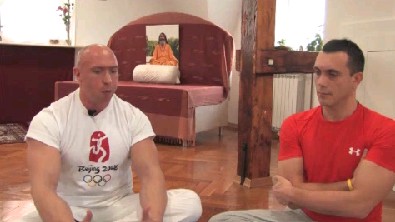
A dialogue between two vegetarian athletes about diet, discipline, and performance.
"The distrust was great. I wasn't 100% sure whether it would affect my development. Specifically, I have been practicing bodybuilding for the past 17 years."
"In our race, we do not have such results... we all do it for ourselves, for our own pleasure, for our own enjoyment, for pushing the boundaries."
Hanuman Purī, a bodybuilder, and Govind Purī, a yoga instructor and Ironman triathlete, discuss their journeys to vegetarianism—one through yoga and ethics, the other initially for athletic performance. They detail the practical challenges of plant-based nutrition for sports, addressing protein sourcing, meal timing, and the mental discipline required, while debunking myths about meat being essential for strength or muscle development.
Filming location: Zagreb, Croatia
We can go altogether to God
18:40 - 19:25 (45 min)
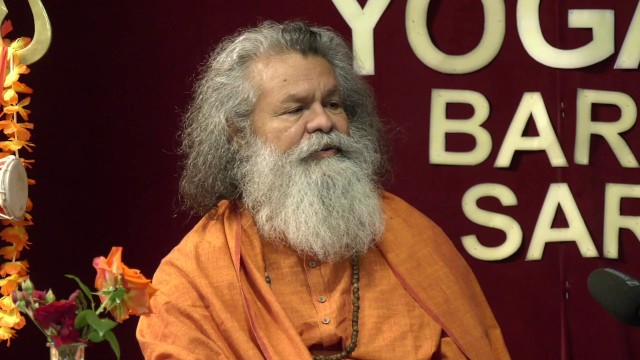
A spiritual discourse on the nature of the guru, learning, and ultimate unity.
"Everyone will arrive at one point. One master, or guru, comes from this side, so there is a different teaching, a different path. From the north, it is different. We are all coming from various directions, but we are descending to the same summit."
"So, what should we do? We should eat well, exercise, and then work, so everything. Then we will live a little more. But with that spirituality, then we come to God."
The speaker explores the universal student-teacher relationship, emphasizing that the terms guru and master point to the same truth. Using a parable of two brothers—one highly educated and one a simple devotee of Shiva—he illustrates that formal learning and spiritual devotion are different paths, with the latter granting profound grace, as shown by the younger brother walking on water. The talk weaves in themes of the five elements, the humility of birth and death, and the ultimate unity of all religions and beings, like drops merging into an ocean.
Filming location: Strilky, Czech Republic
Bhajans from Strilky
19:30 - 19:54 (24 min)
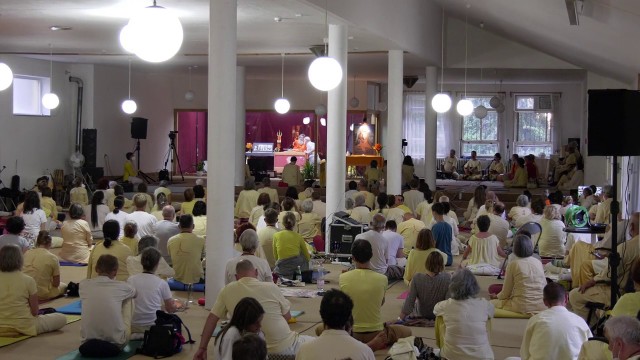
Evening satsang with Vishwaguruji from Strilky Ashram, Czech Republic.
Always be ready to learn, Vienna
19:30 - 20:14 (44 min)
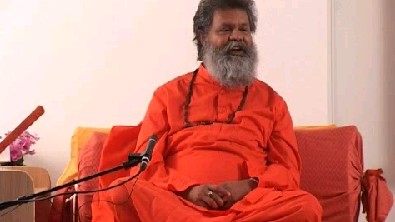
A satsang discourse for yoga teachers and practitioners on conduct, humility, and creating harmony.
"If he will think that I am sad, then he will not become a thief."
"The heart needs another heart; the heart does not need another intellect."
Swami Ji addresses the assembly, using a story of Gurujī's stolen watch to introduce themes of awareness and self-protection. He critiques selfish behavior in spiritual gatherings and urges yoga teachers to be examples of humility, respect, and heart-centered understanding, free from ego and sectarianism. He shares the story of Krishna cooking for his guru to illustrate accepting correction, and concludes with a bhajan about making the heart deep to receive grace.
Filming location: Vienna, Austria
The Light of Life and the Path to Liberation
20:15 - 21:08 (53 min)
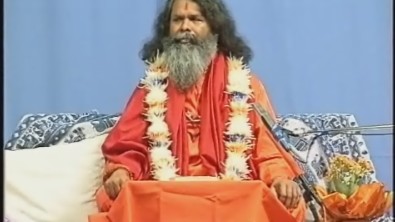
An evening satsang on the purpose of human life and the path to spiritual liberation.
"Everything in this world is possible easily, but it is rare to come to satsaṅg or spiritual activities."
"Spirituality is purity, clarity, pure consciousness, pure mind, pure thoughts, pure behaviors. Purity is very important."
The lecturer addresses an audience, welcoming them as fortunate souls in the Kali Yuga. He explores the unique value of human birth, urging self-inquiry and the cultivation of divine qualities like love and tolerance over mere intellectual knowledge. He discusses overcoming unhealthy dependencies, the nature of true love, and the ultimate goal of realizing the divine consciousness within, touching on concepts of karma, chakras, and non-duality.
Filming location: Umag, Croatia
We can go altogether to God
21:15 - 22:00 (45 min)
A spiritual discourse on the nature of the guru, learning, and ultimate unity.
"Everyone will arrive at one point. One master, or guru, comes from this side, so there is a different teaching, a different path. From the north, it is different. We are all coming from various directions, but we are descending to the same summit."
"So, what should we do? We should eat well, exercise, and then work, so everything. Then we will live a little more. But with that spirituality, then we come to God."
The speaker explores the universal student-teacher relationship, emphasizing that the terms guru and master point to the same truth. Using a parable of two brothers—one highly educated and one a simple devotee of Shiva—he illustrates that formal learning and spiritual devotion are different paths, with the latter granting profound grace, as shown by the younger brother walking on water. The talk weaves in themes of the five elements, the humility of birth and death, and the ultimate unity of all religions and beings, like drops merging into an ocean.
Filming location: Strilky, Czech Republic
Eat healthy food and live as a human
22:05 - 22:48 (43 min)
A spiritual discourse on prayer, lifestyle, and simple daily remembrance.
"Morning, midday, evening—always the whole family, women, men, and children. When they sat at the table to eat, they would pray."
"When we open our eyes, then tell, 'I am human.'... And then, second, don't look at animals and this and that first. Mother, mother. So see our mother."
The lecturer reflects on the decline of traditional prayer across religions and its connection to modern societal problems. He discusses dietary shifts, including the rise of veganism, and critiques modern agriculture's impact on the earth. He concludes with a simple daily practice: upon waking, remember "I am human," honor Mother Earth, and reverence water as life.
Filming location: Strilky, Czech Republic
How did Yoga in Daily Life begin in Europe?
22:55 - 23:37 (42 min)
Evening satsang with Vishwaguruji from Strilky Ashram, Czech Republic. When Vishwaguruji in his young age first time arrived in Europe very few people heard about yoga and many people ate meat. At that time Vishwaguruji went back to India. But some Austrian people invite him again to come to Europe. The story of Vishwaguruji's first visit tö Czechoslovakia. Many Czech people are with Vishwaguruji from that time till now. The story of a grandmother in Czechoslovakia who didn't want that her grandchild becomes a vegetarian. Satsang bhajans and prayer were also very new for people at that time. We have to take care of our family. At that time people prayed before eating but now they do not.
Webcast from Vienna
23:45 - 0:27 (42 min)
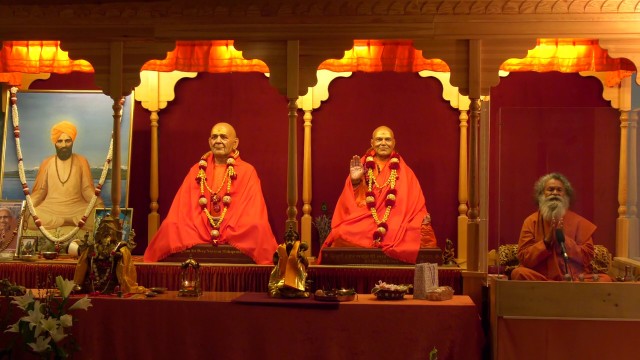
Satsang with Vishwaguruji from Vienna, Austria.
American
Australian