
European
Mahaprabhuji is endless joy
0:15 - 0:34 (19 min)
Lecture by Swamiji from Vep, Hungary, December 2000
Science of chakras
0:40 - 1:56 (76 min)
Lecture by Swamiji from Cakovec, Croatia, September 2000
The way to God
2:00 - 2:34 (34 min)
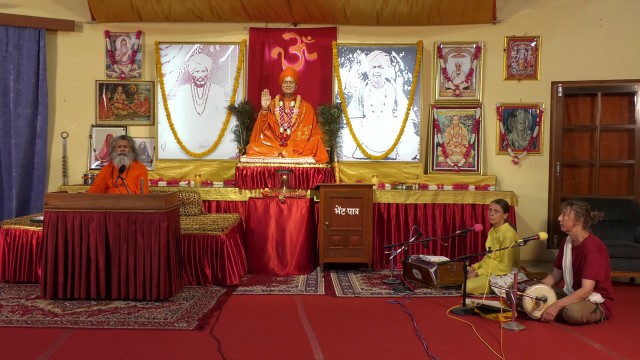
Evening satsang with Vishwaguruji from Jadan Ashram, Rajasthan, India. The Atma of all living beings is one. A small drop of water is like the ocean. The small spark is the same as the great fire. There is one God. Only through the mercy of the Guru can we reach God. Those who go for satsang, are humble and sing bhajans will be taken to heaven. Bhajan on Yoga Nidra.
Clear nourishment is very important
2:40 - 3:35 (55 min)
A satsang on traditional nourishment, conscious eating, and spiritual living.
"In India, the village people still make all these things. In big cities, people have moved more towards European ways."
"According to what we do in this life, we go back to the space, to God, and it will come back for whom what you have done."
The lecturer addresses the gathering, discussing the benefits of traditional foods like jaggery, nuts, and specific preparations for prenatal health. He emphasizes pure, organic nourishment and connects dietary choices to the laws of karma and reincarnation, sharing anecdotes from Fiji. The talk includes a testimony on Manuka honey and concludes with practical steps for obtaining these traditional items.
Filming location: Fiji Islands
Non-violence
3:40 - 4:54 (74 min)
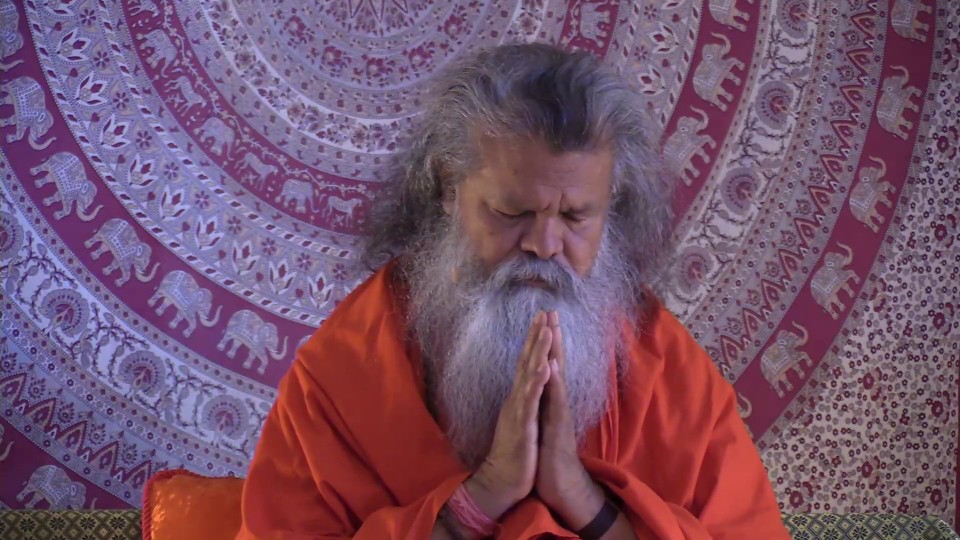
A spiritual discourse on non-violence, the soul, and the discipline of yoga.
"God has given that soul again the life to go further... we should not make a difference between a tiny creature and a big elephant."
"Ahiṃsā means non-violence... the highest, the highest, but called the, very good, everybody, you know that."
The lecturer delivers a morning satsang, exploring the principle of ahiṃsā (non-violence) and its profound challenges. He questions the ethics of everyday actions, from consuming dairy to cutting flowers, and discusses the nature of the soul across all life. The talk weaves in teachings from Patañjali's Yoga Sūtras, personal stories about animals, and a call for spiritual discipline and prayer to address unavoidable harm.
Filming location: Auckland, New Zealand
Webcast from Auckland
5:00 - 5:40 (40 min)
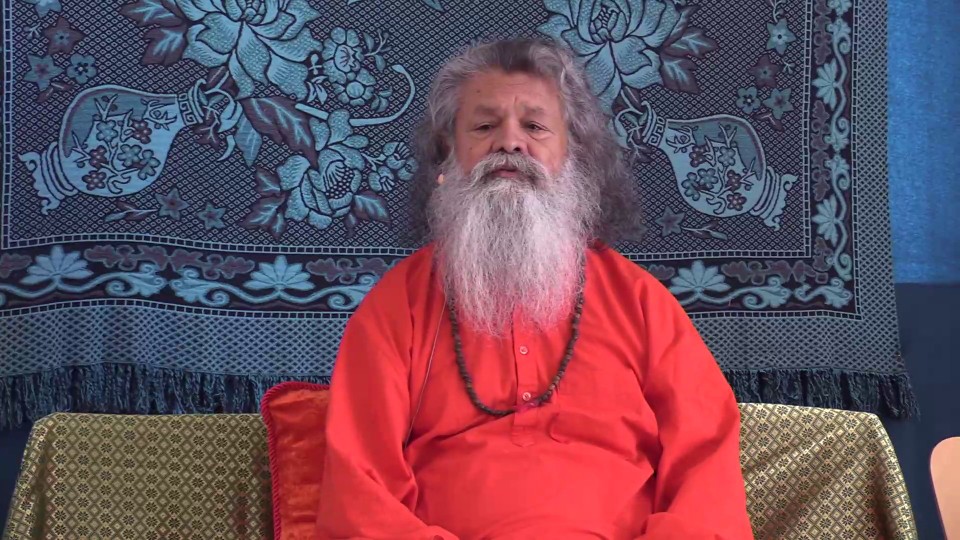
Morning satsang with Vishwaguruji from Auckland, New Zealand.
Non-violence
5:45 - 6:59 (74 min)
A spiritual discourse on non-violence, the soul, and the discipline of yoga.
"God has given that soul again the life to go further... we should not make a difference between a tiny creature and a big elephant."
"Ahiṃsā means non-violence... the highest, the highest, but called the, very good, everybody, you know that."
The lecturer delivers a morning satsang, exploring the principle of ahiṃsā (non-violence) and its profound challenges. He questions the ethics of everyday actions, from consuming dairy to cutting flowers, and discusses the nature of the soul across all life. The talk weaves in teachings from Patañjali's Yoga Sūtras, personal stories about animals, and a call for spiritual discipline and prayer to address unavoidable harm.
Filming location: Auckland, New Zealand
Yoga and Life
7:05 - 8:15 (70 min)
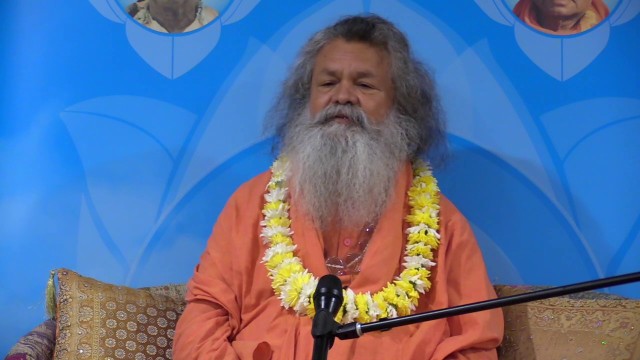
Evening satsang with Vishwaguruji from Gold Coast, Australia. Yoga is the science of humans. Yoga is the cosmic power. Physical exercise is a part of the yogic science for achieving good health. The soul should enter into the cosmic light during this life. Water is life. We should respect the water and avoid wasting it. Explanation and demonstration of chanting OM.
Practice with concentration
8:20 - 9:34 (74 min)
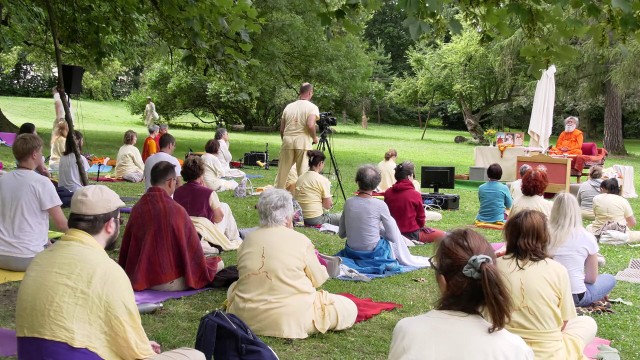
Morning satsang with Vishwaguruji from Strilky Ashram, Czech Republic. Practising Bari Khatu Pranam relaxation. Explanation of the sound and movement of bhramari. The story of how a bhramari makes a worm to bhramari. Many things we learnt from nature. Practising bhramari pranayama. We can feel the vibration of bhramari in the Sanskrit language. During bhramari we can feel the vibration in the navel in our head and the chest. We were informed about the last 12 months' program of the International Madhawananda World Peace Council.
The Eternal Dharma and the Legacy of Alak Purī
9:40 - 10:54 (74 min)
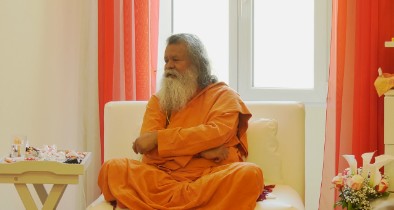
A satsang discourse on the eternal dharma, spiritual lineage, and parables.
"Sanātana Dharma is not one person's religion. Sanātana is not only from the humans. It is everything: the trees, the animals, the entire balance of our earth—harmony, understanding, and creation."
"Human consciousness and the human mind are always changing. But we have to go to the very ancient roots, to the roots of our spirituality, which we have come back to, which is from the Satya Yuga."
The lecturer addresses the community in a newly established ashram, blessing its beginnings. He speaks on the timeless nature of Sanatana Dharma, the spiritual history of the location, and the lineage from Alak Purī through Devpurī to the present. He shares a lengthy parable about a merchant's son misinterpreting his father's testament to illustrate the need for wisdom over literal understanding, and recounts stories connecting the Alaknanda River, the Himalayas, and figures like Vedavyasa and Shiva to this spiritual heritage.
Filming location: Slovenia
A Guided Yoga Practice
11:00 - 11:21 (21 min)
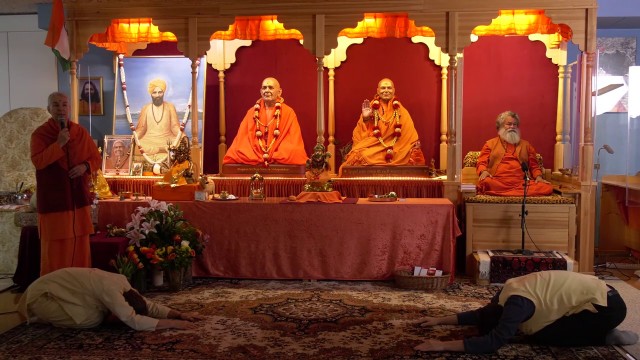
A guided yoga practice with instructions for postures and movement.
"Please, vajrāsana, vajrāsana. And very slowly, do not go quickly."
"Everybody has to know his or her body, so according to this, we should practice."
An instructor leads a group through a slow, detailed yoga sequence, calling out numbered steps and offering posture adjustments. The guidance emphasizes slow movement, stretching the back and legs, and adapting poses for individual limitations like back pain or high blood pressure. The session concludes with relaxation instructions.
Filming location: Khatu, Rajasthan, India
We have to make our food
11:25 - 12:18 (53 min)
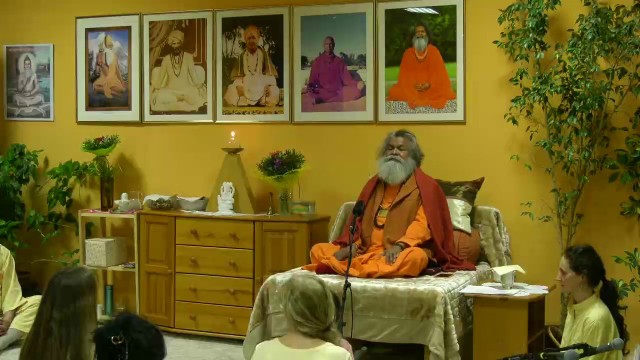
Evening satsang with Vishwaguruji from Jogacentrum, Levoca, Slovakia. There was a time when people couldn't come to yoga but now again everybody can come. But yoga people practised during the hard times and now also. Yoga In Daily Life is in many countries and many people practise Yoga in Daily Life. These people don't eat meat and don't drink alcohol. So people can become purer and purer. Nowadays many young people who become vegan don't eat any products by animals. We got vaccination against corona but unfortunately it has bad consequences also. Vishwaguruji also feels some of them. People want to eat insects and other little animals as an ingredient in many kinds of meals. So it will be killed many animals. These bad things first of all destroy our brains. A sad story of an Austrian family. Bhajan singing.
I am not the doer
12:25 - 12:47 (22 min)
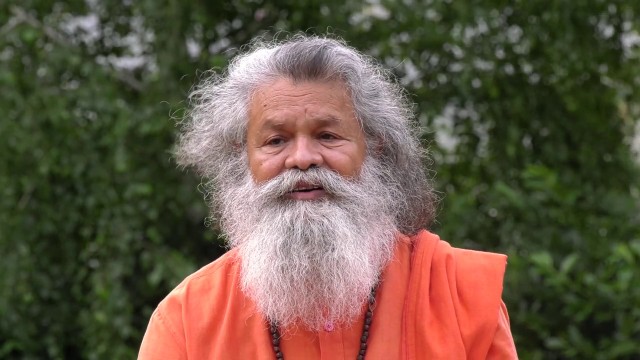
Evening satsang with Vishwaguruji from Strilky Ashram, Czech Republic. Bhajan singing. Chanting mantras. We are not the doer. During all of our life a Supreme leads us and does everything. We are swiming in the ocean of life. Our spiritual life should be happy. The story of a bird on the boat in the ocean.
Yoga unites people
12:55 - 13:39 (44 min)
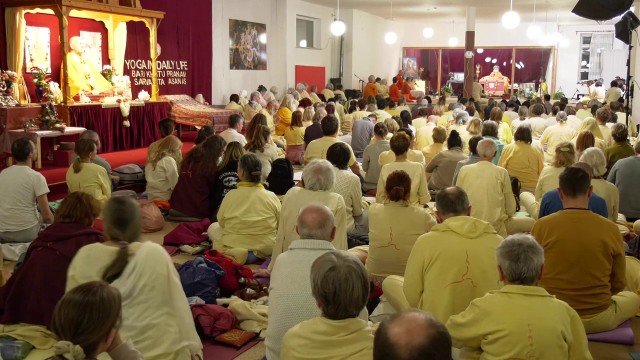
A satsang discourse on the universal essence of religious practice and human unity.
"I see everybody. I see everyone. And with that, it has come by so many things to have good things for me."
"In our heart, what is in our heart? Heart. Now everyone knows that it is that heart."
A spiritual teacher observes and compares morning rituals across Christianity, Islam, and Hinduism, noting the common structure of prayer, contribution, and community. He expresses concern over the perceived decline in traditional practice, using anecdotes from travels in Europe, and argues for a fundamental unity beyond religious labels, illustrated by the impartial care in a hospital. The talk concludes with an emphasis on shared humanity and the importance of personal spiritual practice.
Filming location: Strilky, Czech Republic
Everything is within thyself
13:45 - 14:11 (26 min)
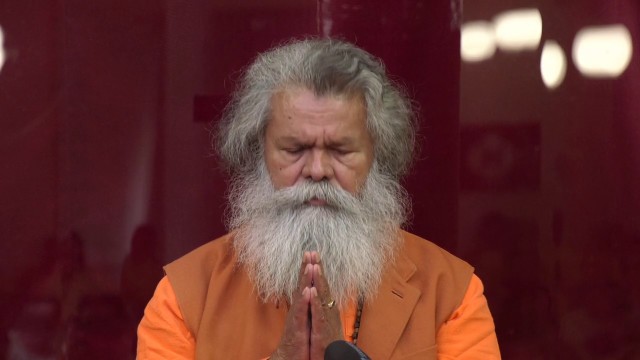
Morning satsang with Vishwaguruji from Strilky Ashram, Czech Republic. Practising simple asanas with concentration. we will become one day only one. Every morning we should know that we are human. We should greet water also every morning. Relaxation.
Love is unity
14:15 - 14:54 (39 min)
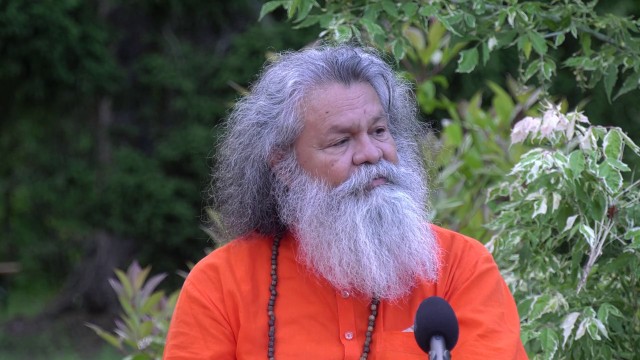
A spiritual discourse on the guru-disciple relationship, divine unity, and an allegorical story.
"Many, many bhaktas, they don’t know me, but they have become great, and they’re telling, 'We would like to see Mahāmaṇḍeśvar, Vaiśvarānanda.'"
"It is not a color, not this, not that. But take your heart inside, and each and every part of our body that we can give it further... This is a sādhanā."
Mahāmaṇḍeśvar Vaiśvarānanda addresses a gathering, speaking on the ever-present connection between guru and disciple beyond physical proximity. He discusses the symbolism of a sannyāsin's robes, the nature of Bhagavān Śiva, and tells an extended, allegorical story involving Vishnu and Shakti to illustrate spiritual tests and the importance of inner commitment over external offerings.
Filming location: Strilky, Czech Republic
Always we should know that we are human
15:00 - 15:54 (54 min)
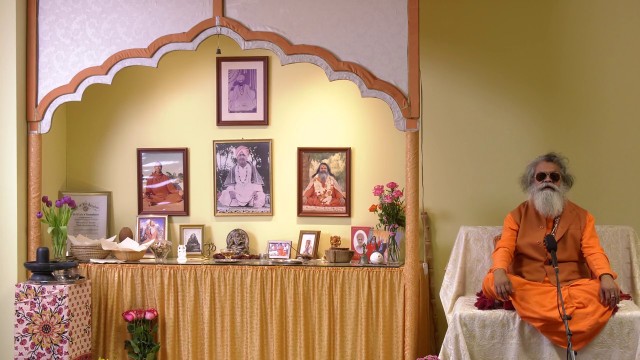
A spiritual discourse on human divinity, non-violence, and conscious living.
"We come from this and said, 'We should now make human, human.' And you should all become real humans."
"So, my dears, we can do something, kill, but not properly. For that, morning, midday, and night, say, 'Bhagavān, give me that I have a mistake.'"
A speaker delivers a teaching on the sacred origin of humans from Śiva and the imperative to live as "real humans." The talk emphasizes ahimsa (non-killing), advocating for a vegan lifestyle and repentance for unavoidable harm. It covers themes of oneness, the cycle of rebirth influenced by actions, and includes practical advice for daily spiritual practice, such as affirming "I am human" and honoring the elements.
Filming location: Bratislava, Slovakia
Yoga is for tho whole world
16:00 - 16:43 (43 min)
A satsang discourse on yoga's global role and a specific yogic practice.
"Yoga has nothing to do with religion. Yoga is for the whole body, five. Life elements, harmonies, health, balance, concentrations, and happiness."
"Badi Khatu Pranam is not only exercise. But it is going to all the Vedas, mantras, nāmas, everything that is."
He discusses the United Nations' recognition of yoga, emphasizing its non-religious nature while acknowledging debates over practices like Aum and Surya Namaskar. The focus shifts to explaining the origin and spiritual significance of the Badi Khatu Pranam sequence, linking its 108 postures to mala beads and bodily systems. He contrasts past and modern education, advocating for concentration and criticizing over-reliance on tuition. The talk concludes with a bhajan and remarks on preserving one's mother tongue.
Filming location: Bari Khatu, Rajasthan, India
Clear nourishment is very important
16:50 - 17:45 (55 min)
A satsang on traditional nourishment, conscious eating, and spiritual living.
"In India, the village people still make all these things. In big cities, people have moved more towards European ways."
"According to what we do in this life, we go back to the space, to God, and it will come back for whom what you have done."
The lecturer addresses the gathering, discussing the benefits of traditional foods like jaggery, nuts, and specific preparations for prenatal health. He emphasizes pure, organic nourishment and connects dietary choices to the laws of karma and reincarnation, sharing anecdotes from Fiji. The talk includes a testimony on Manuka honey and concludes with practical steps for obtaining these traditional items.
Filming location: Fiji Islands
If you want to go to God don't eat meat
17:50 - 18:30 (40 min)
A spiritual discourse on purity, diet, and the global reach of Yoga in Daily Life.
"I give that yoga in Delhi life: Yoga in Daily Life. So no one can say, 'I am this or I am not this.'"
"If we want to go to God, that one, then we go there. Otherwise, you say they go in people all like this, or in the earth like this, but how long will they stay?"
The lecturer addresses a gathering, reflecting on nearly fifty years of teaching. He connects the principle of non-violence and dietary purity to spiritual progress, advocating for a vegetarian or vegan lifestyle to avoid negative rebirth. He shares anecdotes about the expansion of his teachings worldwide and the personal transformations of his disciples, emphasizing health and spiritual practice as a path to divinity.
Filming location: Slovakia
The way to God
18:35 - 19:09 (34 min)
Evening satsang with Vishwaguruji from Jadan Ashram, Rajasthan, India. The Atma of all living beings is one. A small drop of water is like the ocean. The small spark is the same as the great fire. There is one God. Only through the mercy of the Guru can we reach God. Those who go for satsang, are humble and sing bhajans will be taken to heaven. Bhajan on Yoga Nidra.
A New World Begins
19:15 - 19:54 (39 min)
A spiritual address announcing a new beginning for humanity.
"It is already here; it has already happened. I am happy to tell you."
"Every morning when you stand up... Open your eyes: 'I am human.' Only this one word."
A speaker addresses an audience, sharing a vision for a new world rooted in purity and a reaffirmed human identity. He urges daily writing, spreading the message, and returning to pure food, water, and local temples. The talk blends practical instructions with spiritual calls for purity, concluding with a morning ritual affirmation of being human and chants.
Filming location: Slovakia
Always we should know that we are human
20:00 - 20:54 (54 min)
A spiritual discourse on human divinity, non-violence, and conscious living.
"We come from this and said, 'We should now make human, human.' And you should all become real humans."
"So, my dears, we can do something, kill, but not properly. For that, morning, midday, and night, say, 'Bhagavān, give me that I have a mistake.'"
A speaker delivers a teaching on the sacred origin of humans from Śiva and the imperative to live as "real humans." The talk emphasizes ahimsa (non-killing), advocating for a vegan lifestyle and repentance for unavoidable harm. It covers themes of oneness, the cycle of rebirth influenced by actions, and includes practical advice for daily spiritual practice, such as affirming "I am human" and honoring the elements.
Filming location: Bratislava, Slovakia
Clear nourishment is very important
21:00 - 21:55 (55 min)
A satsang on traditional nourishment, conscious eating, and spiritual living.
"In India, the village people still make all these things. In big cities, people have moved more towards European ways."
"According to what we do in this life, we go back to the space, to God, and it will come back for whom what you have done."
The lecturer addresses the gathering, discussing the benefits of traditional foods like jaggery, nuts, and specific preparations for prenatal health. He emphasizes pure, organic nourishment and connects dietary choices to the laws of karma and reincarnation, sharing anecdotes from Fiji. The talk includes a testimony on Manuka honey and concludes with practical steps for obtaining these traditional items.
Filming location: Fiji Islands
Protect me from negative words and actions
21:20 - 22:03 (43 min)
Evening satsang with Vishwaguruji from Jadan Ashram, Rajasthan, India.
Around the world - Satsang YC Blanicka
22:00 - 22:06 (6 min)
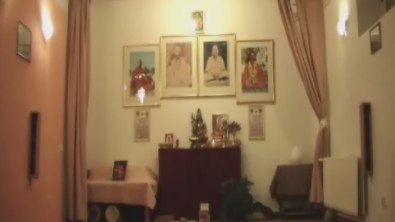
New Year satsang from Blanicka Yoga Centre Prague.
Around the world - Shivaratri at Jadan Ashram
22:10 - 22:17 (7 min)
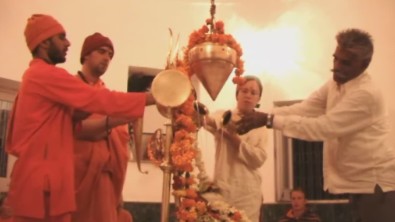
Just go ahead
22:25 - 23:26 (61 min)
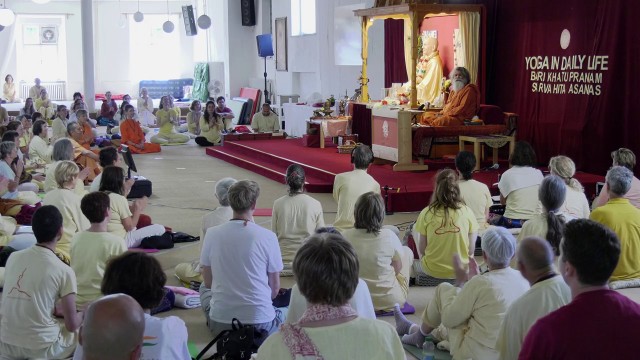
Morning program from Strilky Ashram, Czech Republic. Life eats life. There are many creatures living in the water on the earth and in the air. There are many living beings everywhere. Humans shouldn't kill and eat animals according to their dharma. The story of Buddha and how he received bhiksa. Buddhist people eat only good pure food. Water is life. There is no life without love. There are many very good people but Gurus are very rare. Muslim people are very good they are practising very strictly and faithfully. The story of Hoiigurujis and Vihwagurujis visit at Sankaracharya. Yoga in Daily Life people practised very well during corona time. It can be a female Guru also. A great sadhu keeps every child of God in his heart. Bhajan singing.
Destiny is very mysterious
23:30 - 0:12 (42 min)
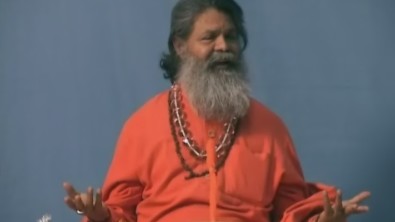
Satsang from Prague, Czech Republic, October 2005
American
Australian