
European
All disciples are equal for the Guru
0:00 - 1:02 (62 min)
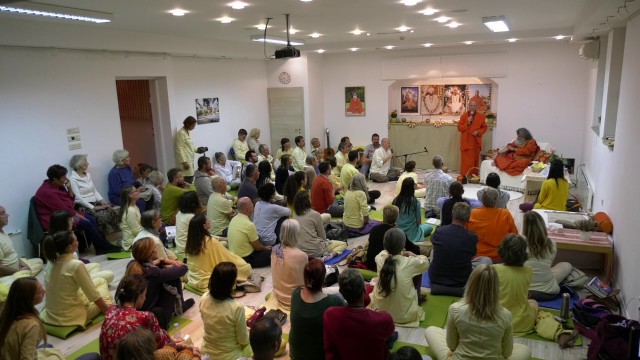
A spiritual gathering and discourse in Split, Croatia.
"Always, we should say, 'Yes, please come.'" and "Everything that we do to others, in fact, we are doing to ourselves."
The lecturer addresses a diverse group, expressing joy at the gathering and respect for all spiritual paths, notably the Hare Krishna movement. He shares parables, including one about a greedy dog losing its bread, to illustrate themes of non-greed, ethical conduct, and the karmic law that our actions return to us. A disciple then elaborates on the profound responsibility of handling donations and spiritual resources, sharing traditional stories about karma, accountability, and seeing the divine in all.
Filming location: Split, Croatia
Build your intellect supportive
0:15 - 1:31 (76 min)
Lecture by Swamiji from Vep, Hungary, February 2001
The relation between mother and child
1:35 - 1:52 (17 min)
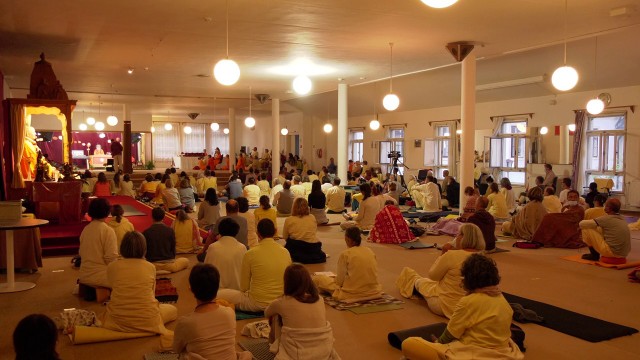
A spiritual discourse on compassion, the heart, and yoga in daily life.
"Further is not there, so that purity is that as much as we can, we do not let animals be killed."
"Yoga is our heart. And in our heart is the, how to call it, the hymn."
The speaker reflects on the universal, protective love seen in nature, from a mother's warmth to animals caring for their young, urging this compassion to extend to all creatures. He connects this to spiritual practice, stating that true yoga must reside in the heart and inform daily actions, including kindness and dietary choices. The talk concludes with evening blessings.
Filming location: Strilky, Czech Republic
Suffering makes us strong
2:00 - 2:32 (32 min)
A spiritual discourse on suffering and divine incarnation, referencing Krishna and Jesus.
"In very hard times... those who are whole, suffering will be very strong. That means they are coming very solid, strong."
"Many sādhus, munis... all were suffering. Why are they suffering? They are taking from others our heart, our pain."
An unnamed speaker reflects on the universal nature of suffering in Kali Yuga, asserting that even divine incarnations like Krishna and Jesus endured great pain to absorb the suffering of humanity. The talk includes a personal anecdote about a lonely old man met in Austria, illustrating the impermanence of worldly success and the inevitability of suffering. The themes of divine descent, the purpose of hardship, and the transient nature of the material world are explored in a contemplative, narrative style.
Filming location: Strilky, Czech Republic
We should be worthy to be a human
2:40 - 3:44 (64 min)
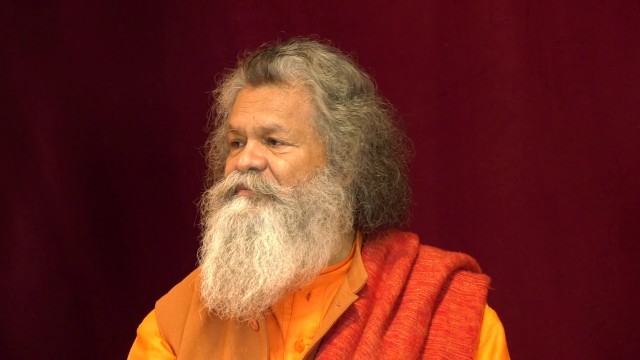
Evening satsang with Vishwaguruji from Strilky Ashram, Czech Republic. God gave spirituality to humans. There is God in the water, earth, air and food also. All creatures got their life from God. The story of Buddha, who dedicated his life to God. The story of a young Indian princess who wants to continue her father's spiritual work. We are like a God but unfortunately, we have lost our way. God gave us much beauty but now we use much makeup. We should know and respect the value of life. There are some people in the world who tortured cats and dogs. But the cat and dog can reborn as a human and vice versa. There are also many very good people in the world. In prayer, we go to God. Be always humble and peaceful. Nowadays many foods are not healthy, some are not even edible.
Amrit Sagar
3:50 - 4:54 (64 min)
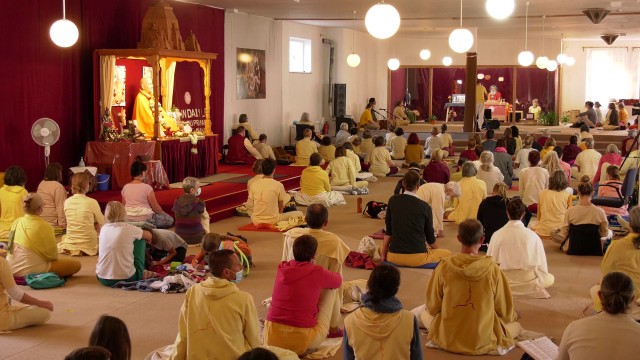
A satsang discourse on the spiritual significance of a devotional bhajan and the nature of divine light.
"All the names I have given to you are beautiful, beautiful names. For example, Amṛt Sāgar."
"This bhajan is not only beautiful, but it is the whole cosmos, everything in one."
Swami Māheśvarānanda leads a gathering, reflecting on a recent trip to Vienna and the previous day's program led by a disciple named Amṛt Sāgar. He explains the profound meaning of her name—"Ocean of Nectar"—and the cosmic significance of a bhajan composed by his guru, Satguru Svāmī Madhavānandjī. He shares stories of his guru's compassion and the journey of the disciple Amṛtsāgar, while elucidating the bhajan's key words: prakāś (light), amṛt (nectar), and sāgar (ocean), describing them as metaphors for the soul, immortality, and divine consciousness that permeates the universe.
Filming location: Strilky, Czech Republic
We should be worthy to be a human
5:00 - 6:04 (64 min)
Evening satsang with Vishwaguruji from Strilky Ashram, Czech Republic. God gave spirituality to humans. There is God in the water, earth, air and food also. All creatures got their life from God. The story of Buddha, who dedicated his life to God. The story of a young Indian princess who wants to continue her father's spiritual work. We are like a God but unfortunately, we have lost our way. God gave us much beauty but now we use much makeup. We should know and respect the value of life. There are some people in the world who tortured cats and dogs. But the cat and dog can reborn as a human and vice versa. There are also many very good people in the world. In prayer, we go to God. Be always humble and peaceful. Nowadays many foods are not healthy, some are not even edible.
Give yoga further!
6:10 - 7:04 (54 min)
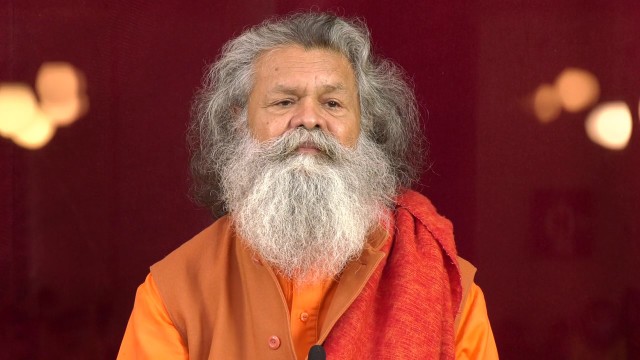
A satsang on spiritual teaching and holistic health.
"Now, it is you. I am already old... But you will now bring it to the whole world."
"So, the first thing is nourishment. Only nourishment."
Swami Maheshwarananda addresses a gathering, emphasizing that all students must now become teachers to spread the knowledge of Yoga in Daily Life globally. He stresses the importance of a vegetarian lifestyle, family unity, and spiritual harmony. He then shares a personal experiment in health, detailing a specific regimen of salads, seeds, and natural sugars that he credits for his improved well-being, while advising against white sugar and excessive alcohol.
Filming location: Strilky, Czech Republic
Amrit Sagar
7:10 - 8:14 (64 min)
A satsang discourse on the spiritual significance of a devotional bhajan and the nature of divine light.
"All the names I have given to you are beautiful, beautiful names. For example, Amṛt Sāgar."
"This bhajan is not only beautiful, but it is the whole cosmos, everything in one."
Swami Māheśvarānanda leads a gathering, reflecting on a recent trip to Vienna and the previous day's program led by a disciple named Amṛt Sāgar. He explains the profound meaning of her name—"Ocean of Nectar"—and the cosmic significance of a bhajan composed by his guru, Satguru Svāmī Madhavānandjī. He shares stories of his guru's compassion and the journey of the disciple Amṛtsāgar, while elucidating the bhajan's key words: prakāś (light), amṛt (nectar), and sāgar (ocean), describing them as metaphors for the soul, immortality, and divine consciousness that permeates the universe.
Filming location: Strilky, Czech Republic
Manva Dhire Dhire Cal
8:20 - 9:31 (71 min)
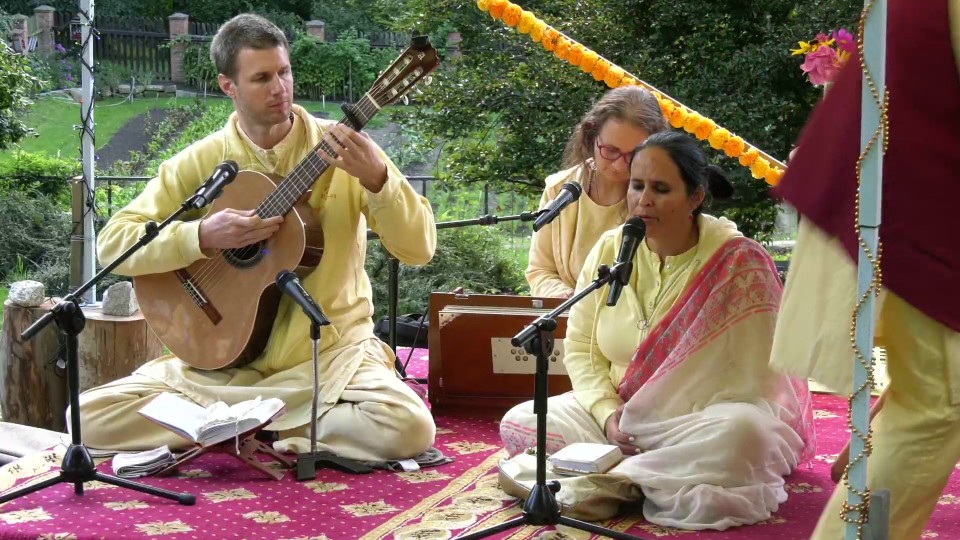
Evening satsang with Vishwaguruji from Strilky Ashram, Czech Republic. Bhajan singing from Strilky.
Shiva and Shakti
9:35 - 10:30 (55 min)
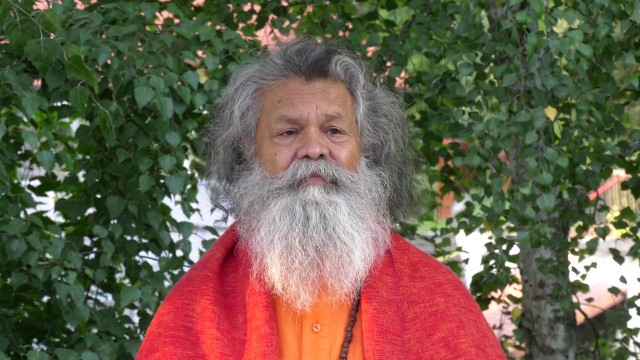
Evening satsang with Vishwaguruji from Strilky Ashram, Czech Republic. In this Kaliyuga (the dark age) a black cloud covers the world. Lord Shiva created the world, Shakti means power. The two are actually in unity. The story about Vishnu who practised Anusthan (intense practice) and made a Shankalpa (resolve). Lord Vishnu finally offered one of his eyes to complete Anusthan. A mother does everything for her child, even while they are in her womb.
The relation between mother and child
10:35 - 10:52 (17 min)
A spiritual discourse on compassion, the heart, and yoga in daily life.
"Further is not there, so that purity is that as much as we can, we do not let animals be killed."
"Yoga is our heart. And in our heart is the, how to call it, the hymn."
The speaker reflects on the universal, protective love seen in nature, from a mother's warmth to animals caring for their young, urging this compassion to extend to all creatures. He connects this to spiritual practice, stating that true yoga must reside in the heart and inform daily actions, including kindness and dietary choices. The talk concludes with evening blessings.
Filming location: Strilky, Czech Republic
Morning Yoga practice, Umag, Croatia (2/9)
11:00 - 12:42 (102 min)
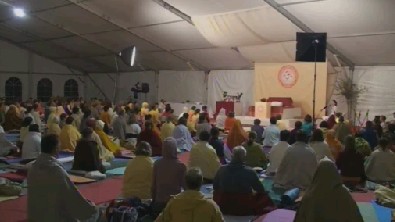
Morning Yoga practice from the international Yoga retreat Umag, Croatia on the 26th of September
Practising with Vishwaguruji
12:50 - 13:39 (49 min)
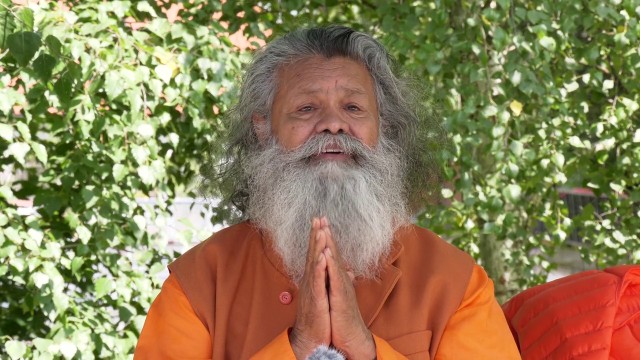
Morning satsang with Vishwaguruji from Strilky, Czech Republic. Practising Bari Khatu Pranam and nadi shodhan pranayama.
Vishuddi Chakra and thyroid gland
13:40 - 13:58 (18 min)
A spiritual discourse on the viśuddhi chakra and the symbolism of swallowed poison.
"Wish means poison. Wish means poison."
"Śiva did not swallow it down; he held this poison in his throat here, and he digested it there... Similarly, we say this: in our throat, there is a poison."
The teacher narrates the myth of Śiva drinking the ocean's poison to become Nīlakaṇṭha, using it as a metaphor for the emotional poison swallowed in daily life, such as unexpressed anger or harsh words. This is linked to the viśuddhi (throat) chakra, its purification, and its symbols—the elephant of strength and Brahmā with the Vedas. The talk connects this to broader concepts of the chakra system, kuṇḍalinī, and the necessity of consistent practice over contradictory advice.
Filming location: Vancouver, Canada
Around the world - Yoga Class of Level 3, Zagreb, CRO
14:00 - 14:59 (59 min)
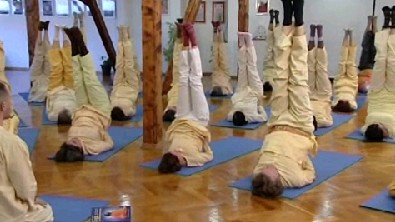
Yoga in Daily Life Class of Level 3 at Sri Devpuriji Ashram, Zagreb, Croatia, January 2011
Around the world - Yoga Class of Level 5, Zagreb, CRO (1/2)
15:05 - 15:43 (38 min)
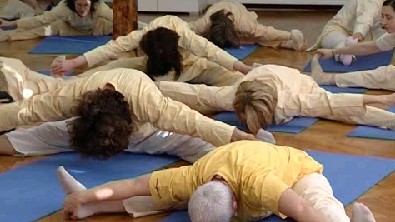
Yoga in Daily Life Class of Level 5 at Sri Devpuriji Ashram, Zagreb, Croatia, January 2011
Sri SatGuru Chalisa
15:45 - 15:58 (13 min)
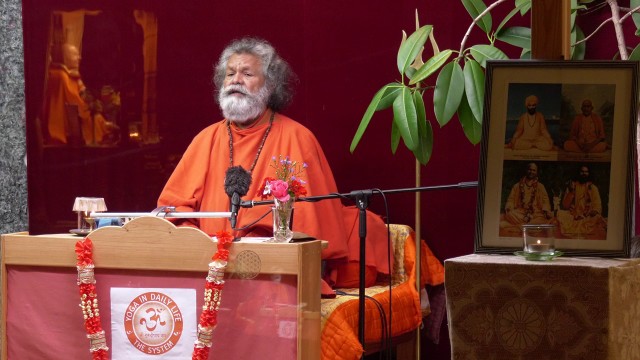
A commentary and translation of the Ātāśrī Satguru Chalīsā, a devotional hymn.
"You are the creator for everyone. You are present outside and inside. You are the Supreme Divine incarnate."
"Those who will read the Satguru Chalīsā... shall concentrate, meditate, and chant His name. Janam maraṇa bhava dukha mithi... You will be free from the fear of birth and death."
A speaker provides a line-by-line English translation and explanation of the Satguru Chalīsā's introductory poem and first verses. He describes the Guru as the omnipresent creator and protector, and explains the benefits of reciting the hymn, which include liberation from the cycle of birth and death, the destruction of sins, and the attainment of spiritual perfection and wishes.
Filming location: Strilky, Czech Republic
Vegetarian cooking lesson 11, Kadhi soup, Okra and chapatis
16:00 - 16:14 (14 min)

A cooking demonstration on preparing Marwa-style gāṭṭā kadhi, chapati, and regional vegetables.
"When I was thinking about how to explain or show the gāṭṭā... it came to my mind that it is like the attachment of this world. When we touch the besan dough, it sticks very quickly. Then we use the oil of wisdom, which gets rid of the attachment."
"The Marwa kitchen has very, very delicious food—spicy, tasty, healthy, and very natural. The people living there eat only regional food. They know the leaves and fruits growing in their area."
The speaker guides viewers through making kadhi with chickpea flour dumplings (gāṭṭā), using the sticky dough as a metaphor for worldly attachment. The process includes preparing the dough with yogurt and spices, boiling and testing the gāṭṭā, and making chapati. The talk highlights regional Marwa cuisine, mentioning local ingredients like guṇḍā and the health benefits of bitter gourd, which is promised for a future lesson.
Filming location: Vép, Hungary
Regular yoga practice leads to good health
16:20 - 17:04 (44 min)
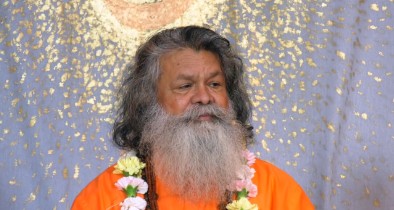
A year-end discourse on health, diet, and yogic living.
"Pahala sukha nirogi kaya. The first happiness is good health. Not money, property, or fine clothes. The best wealth is good health."
"If you have no time for cooking, you have no time for living; you are rushing toward death. We must first care for our body and life, not just run after professions."
Swami Maheshwarananda concludes the year 2018 with a webcast satsang, advocating for a vegan diet and yogic practice as foundations for personal and global peace. He links modern diseases to meat and alcohol consumption, prescribes prāṇāyāma as a universal remedy, and offers specific dietary advice on chilies, garlic, and seasonal eating. He encourages self-reflection and a resolve (saṅkalpa) for the new year, emphasizing health as the primary wealth.
Filming location: Strilky, Czech Republic
Prayer will reach our chakras
17:10 - 17:56 (46 min)
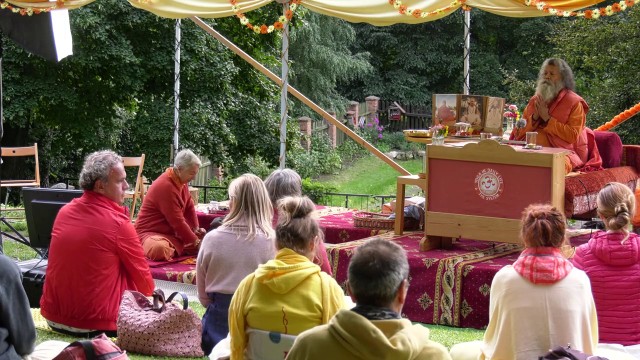
A spiritual discourse on the human body as an instrument, chakras, and daily practice.
"Our instruments in our body, and the instruments we use all day long, then we go to sleep. That is where we are going; we go to sleep."
"First, I am human. When we think really, really, then the whole day we will not do anything wrong to other humans."
Swami Ji addresses the morning gathering, using the fragility of translation equipment and a personal childhood story about a horse to illustrate the need for careful handling of all 'instruments'—including the human body. He outlines an ideal morning routine of gratitude, starting with recognizing one's humanity and honoring parents and the Earth. The talk introduces a long-term study of chakras and kuṇḍalinī, while cautioning against fear and emphasizing that everyone is already divine and should proceed naturally under a true guru's guidance.
Filming location: Strilky, Czech Republic
Our fate can always change
18:00 - 18:41 (41 min)
A spiritual discourse on destiny, the subtle body, and yogic techniques.
"Over about 10 or 15 years, it changes your life. We have to understand that this is the constellation. The constellation, which is connected to our palms, also changes in the foot soles."
"Sometimes it happens without warning; that is kismet. So it happens, say, 'Thank you, God.'"
Satguru Svāmī Madhavānandajī Bhagavān leads a teaching session, weaving together concepts of destiny (kismet), the diagnostic and spiritual significance of the palms and foot soles, and practical yogic techniques. He shares an anecdote about an elderly Austrian man who lost his wealth and social connections to illustrate the unpredictable flow of destiny. The talk also touches on subtle body practices, including a method for addressing bedwetting in children and the correct foot to step with when leaving the house based on nostril breath flow.
Filming location: Strilky, Czech Republic
Bhajan evening in Strilky Ashram
18:45 - 19:26 (41 min)
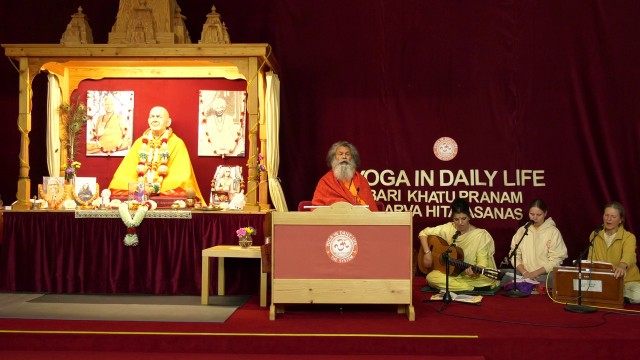
Sri Krishna Jayanti - Evening satsang with Vishwaguruji from Strilky Ashram, Czech Republic. Kirtan and bhajan singing.
Roots are different
19:30 - 20:15 (45 min)
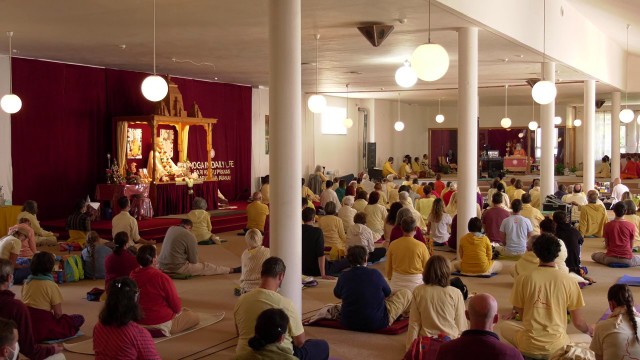
Morning satsang with Vishwaguruji from Strilky Ashram, Czech Republic. Fasting one day a week has a very good effect. Ahimsa means not doing anything to harm others. In getting angry, we destroy our spirituality. The story of a young boy who dies in an accident. Anger has many different types. Sometimes it is not very deep in our hearts. In some cases, it exists till the end of life. Practising kriya anusthan is very good for people. Guru is like a mother, disciples are like children. It is strongly prohibited to give these techniques further. The teaching of every guru is different, so don't mix them. There is one boat and one captain but many people can be in a boat. The story of a minister who attended Vishwaguruji's yoga class.
The Purpose of Human Life
20:20 - 21:09 (49 min)
A spiritual discourse on chakras, consciousness, and modern life.
"Chakra means centers. In a particular place within us, there are these centers—something like a very tiny point, akin to the tip of a needle. Within that point, everything exists."
"Our consciousness is very pure and gentle at that time. Waking up to meditate at that pure time allows us to achieve our spiritual or other goals most effectively."
The speaker explains the symbolism of the lotus flower and its connection to the body's chakras and the ideal time for spiritual practice (Brahma Muhurta). He expands the discussion to critique modern food production and chemicals, linking physical health to spiritual vitality. The talk covers the nature of the soul, karma, and the ultimate goal of consciousness merging with the cosmic self, weaving in personal anecdotes and practical suggestions.
Filming location: Sunshine Coast, Australia
Our fate can always change
21:15 - 21:56 (41 min)
A spiritual discourse on destiny, the subtle body, and yogic techniques.
"Over about 10 or 15 years, it changes your life. We have to understand that this is the constellation. The constellation, which is connected to our palms, also changes in the foot soles."
"Sometimes it happens without warning; that is kismet. So it happens, say, 'Thank you, God.'"
Satguru Svāmī Madhavānandajī Bhagavān leads a teaching session, weaving together concepts of destiny (kismet), the diagnostic and spiritual significance of the palms and foot soles, and practical yogic techniques. He shares an anecdote about an elderly Austrian man who lost his wealth and social connections to illustrate the unpredictable flow of destiny. The talk also touches on subtle body practices, including a method for addressing bedwetting in children and the correct foot to step with when leaving the house based on nostril breath flow.
Filming location: Strilky, Czech Republic
Around the world -- 2011 Satsang tour of Mahamandaleshwar Swami Jasraj Puri Ji in Hungary
22:00 - 22:07 (7 min)
Around the world - 2011 Satsang tour of Mahamandaleshwar Swami Jasraj Puri Ji in Hungary.
Around the world -- Yoga against diabetes from Czech Republic
22:15 - 22:22 (7 min)

Around the world -- Yoga against diabetes from Czech Republic, led by dr. Jitka Stissova, CSc, PhD
Sri Alakhpuriji and the Himalayas
22:30 - 22:58 (28 min)
A spiritual discourse on the sacredness of the Earth and the Himalayas.
"Our Earth is a living planet, a Living Earth. If God incarnates, if God comes on this earth, God performs His miraculous things here."
"That place is indescribable... Between these beautiful, mighty mountains is a beautiful valley where Ālakpurījī is always residing."
Swami Maheshvarananda delivers a talk, venerating the Earth as a living, holy creation and detailing the profound spirituality of the Himalayas. He describes the region as the abode of divine incarnations like Śiva and great Siddhas such as Ālakpurījī, sharing anecdotes from pilgrimages and emphasizing the need for inner purity to experience this divine reality. The discourse concludes with a blessing for the journey.
Filming location: Vép, Hungary
Our uniform is important
23:05 - 23:45 (40 min)
A spiritual discourse reflecting on a group retreat and imparting yogic teachings.
"Each and every second is very, very precious. Even for one second, one can live life."
"In our seminars, we live so relaxed. We don’t care about anything."
The lecturer addresses attendees after several peaceful days of communal spiritual practice. He speaks on the preciousness of time, the joy of spiritual fellowship, and the sacredness of a holy tree at the site. He emphasizes family, raising children with good values, and the importance of wearing the prescribed yoga uniform as a symbol of discipline and path. The talk includes answers to disciples' questions and concludes with instructions for daily practices like Aśvinī Mudrā and prāṇāyāma.
Filming location: Strilky, Czech Republic
Live your days spiritually
23:50 - 0:25 (35 min)
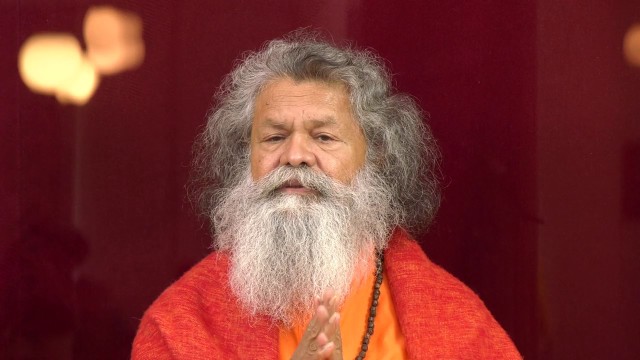
Morning satsang with Vishwaguruji from Strilky Ashram, Czech Republic. We should practise our spiritual exercises every day to save us from the negative effects of Kali Yuga. We should feel that we are human. We have two mothers - our birth mother and Mother Earth. We should respect our father and mother till the end of our life. We should respect the prana, air and water also. We should respect our gurus and every animal also. Fire and water cannot exist without each other. We should do puja every morning. Mantras and prayers protect us in a spiritual way. Swami Daya Mataji tells that Swamiji TV has great importance for us in our spiritual development, all over the world. She suggested that everybody who can, to give some donations to support the webcasting.
American
Australian