
European
The Nāḍīs, Cakras, and the Mūlādhāra Foundation
0:15 - 1:12 (57 min)
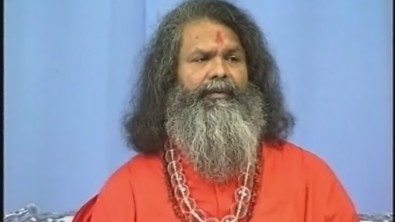
A spiritual lecture on the nāḍīs, cakras, and the foundational Mūlādhāra Cakra.
"The Mūlādhāra Cakra is at the bottom of the spinal column. It is a border between animal and human consciousness."
"Destiny was created first, and destiny is created individually. We should blame no one. We are ourselves responsible for our destiny."
The speaker continues a discourse from the previous day, focusing on the Mūlādhāra Cakra as the seat of destiny (prārabdha) and divine energy. He explains how this foundational energy influences life and can be purified through the threefold practice of svādhyāya (self-study), manana (contemplation), and abhyāsa (persistent practice), which remove the obstacles of impurity, distraction, and veils. The talk connects these concepts to Kuṇḍalinī Śakti, the role of Kriyā Yoga, and concludes with a symbolic discussion of the tilak mark.
Filming location: Umag, Croatia
Manva Dhire Dhire Cal
1:20 - 2:31 (71 min)
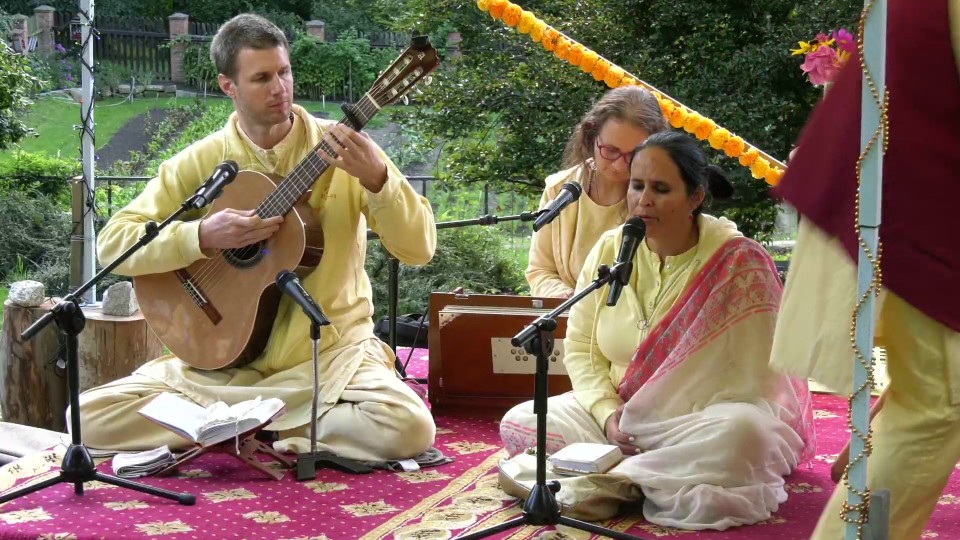
Evening satsang with Vishwaguruji from Strilky Ashram, Czech Republic. Bhajan singing from Strilky.
We can easily destroy our good karma
2:35 - 3:44 (69 min)
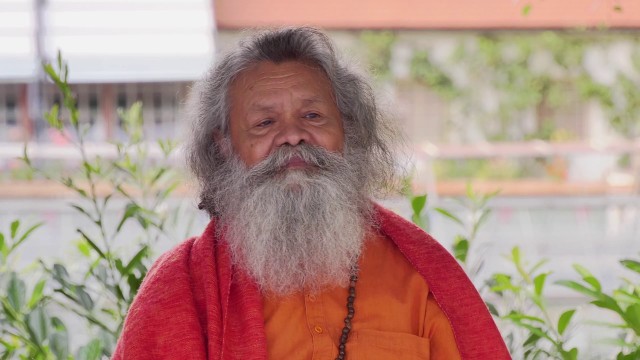
Evening satsang with Vishwaguruji from Strilky Ashram, Czech Republic. The story of Vishwaguruji at the time he began to learn the German language. Vasant tells some words about the latest project in Strilky. The story of a very good young man who recently died in an accident. There are paths in front of us, good and bad, and we choose the path on which we go. Sometimes we destroy our good deeds with one bad thought. Dharamraj observes our all karmas before he decides on our fate. Vishwaguruji tells how ashwini mudra is functioning. In speaking the Sanskrit language, we use both hemispheres of our brain. Bhramari pranayam is also using the two hemispheres.
Amrit Sagar
3:50 - 4:54 (64 min)
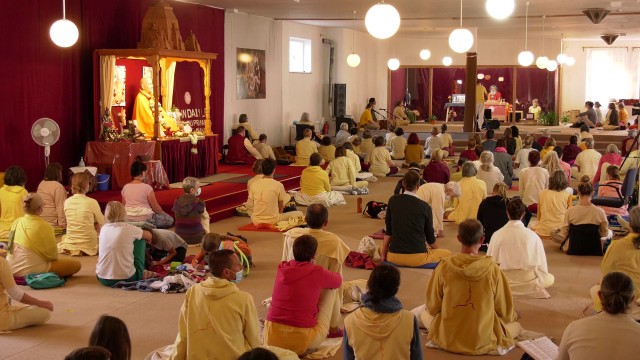
A satsang discourse on the spiritual significance of a devotional bhajan and the nature of divine light.
"All the names I have given to you are beautiful, beautiful names. For example, Amṛt Sāgar."
"This bhajan is not only beautiful, but it is the whole cosmos, everything in one."
Swami Māheśvarānanda leads a gathering, reflecting on a recent trip to Vienna and the previous day's program led by a disciple named Amṛt Sāgar. He explains the profound meaning of her name—"Ocean of Nectar"—and the cosmic significance of a bhajan composed by his guru, Satguru Svāmī Madhavānandjī. He shares stories of his guru's compassion and the journey of the disciple Amṛtsāgar, while elucidating the bhajan's key words: prakāś (light), amṛt (nectar), and sāgar (ocean), describing them as metaphors for the soul, immortality, and divine consciousness that permeates the universe.
Filming location: Strilky, Czech Republic
Shiva and Shakti
5:00 - 5:55 (55 min)
Evening satsang with Vishwaguruji from Strilky Ashram, Czech Republic. In this Kaliyuga (the dark age) a black cloud covers the world. Lord Shiva created the world, Shakti means power. The two are actually in unity. The story about Vishnu who practised Anusthan (intense practice) and made a Shankalpa (resolve). Lord Vishnu finally offered one of his eyes to complete Anusthan. A mother does everything for her child, even while they are in her womb.
Give everything, so not to hold
6:00 - 6:50 (50 min)
A spiritual discourse on the path of discipleship, austerity, and selfless service.
"Gurujī said, 'I have my spiritualities, my jñāna, my knowledge, everything. What do I want from others?'"
"To go on the path is not easy. One path is with torrents. Another path is very hot, with sand. And there is a knife on the side of the knife. On that, you have to go."
The speaker shares memories of austere early days with his Guru in a simple Jaipur ashram, illustrating the saint's path of inner richness over material possession. He uses parables, like that of a greedy rich man, and metaphors, like the firing of a clay pot, to teach the value of seva (selfless service), detachment, and rigorous spiritual training. The talk contrasts this with modern distractions and concludes with a focus on foundational spiritual practices.
Filming location: Strilky, Czech Republic
Sri Devpuriji Mahasamadhi Anniversary
6:55 - 8:04 (69 min)
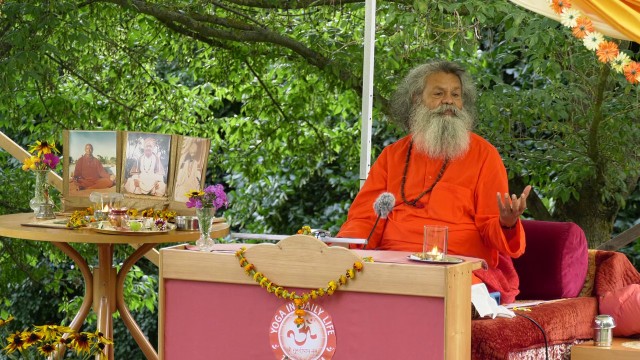
Sri Devpuriji Mahasamadhi Anniversary - evening satsang with Vishwaguruji from Strilky Ashram, Czech Republic. Alakhpuriji was in Shiva's time but he is also living now everywhere, in his astral form. At that time human life was completely different. That time yogis did tapasya - austerities. The development of humans was very quick in many aspects. At that time, there was also good and bad, like now. We don't know why covid only attacks humans. At that time were the seven rishis - the seven stars (of the Great Bear/Big Dipper constellation). They are seeing us and protecting us. Alakhpuriji and Devpuriji come from the area of Lake Mansarovar. It was very strange when Devpuriji appeared. The story of Devpuriji cut the silver money into many pieces. We are very lucky that our parampara is originated from the Satya Yuga Siva time.
We should overcome fear
8:10 - 9:05 (55 min)
A satsang discourse on spiritual qualities and overcoming fear.
"You will open, not with just a few words. You have to tell how yoga in daily life is around the world."
"Where the sugandha is there, there is no negativity... Sugandh means also that we should become very clean, pure, spiritual, and great saint."
Following remarks from a disciple about the international work of Yoga in Daily Life, The lecturer begins the satsang by explaining the meaning of "Sugandha" (fragrance) as a metaphor for purity and spiritual goodness that dispels negativity. He uses humorous observations and a long, illustrative story about a man terrified by a ghost that turned out to be moonlight on bedclothes to teach that fear is a creation of the mind. The key message is to dispel inner fear to achieve happiness and spiritual progress, briefly touching on the topics of diet, chakras, and kuṇḍalinī.
Filming location: Strilky, Czech Republic
Guru is the first
9:10 - 9:46 (36 min)
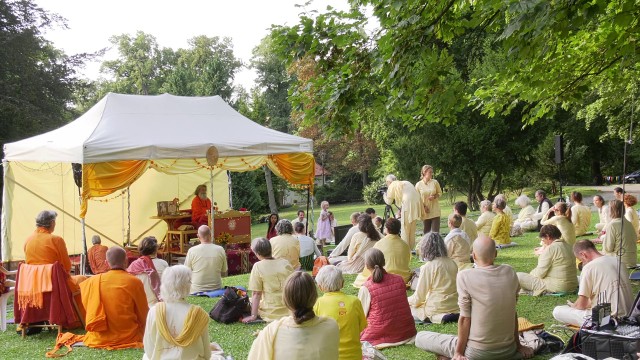
A spiritual discourse on the continuity of sādhanā and the centrality of the Guru.
"Your sādhanā was very beautiful, very good. Many experienced beautiful powers, feelings, and even incarnations. Yes, we should continue this until the end of our life."
"Holy Gurujī, our Swamījī Madhavānandajī Bhagavān, he always said that Seva is all the time with us. We are going, as all goes, to the Cosmic Self."
A teacher addresses students after a spiritual retreat, using the metaphor of a stone creating eternal ripples in a pond to describe the lasting impact of their practice. He emphasizes selfless service (Seva) and explains the Guru's paramount importance, stating all spiritual activities must follow devotion to the Guru. The talk covers the meaning of mantra, the significance of the prayer mala, and outlines the traditional four stages of life (āśramas).
Filming location: Strilky, Czech Republic
Amrit Sagar
9:50 - 10:54 (64 min)
A satsang discourse on the spiritual significance of a devotional bhajan and the nature of divine light.
"All the names I have given to you are beautiful, beautiful names. For example, Amṛt Sāgar."
"This bhajan is not only beautiful, but it is the whole cosmos, everything in one."
Swami Māheśvarānanda leads a gathering, reflecting on a recent trip to Vienna and the previous day's program led by a disciple named Amṛt Sāgar. He explains the profound meaning of her name—"Ocean of Nectar"—and the cosmic significance of a bhajan composed by his guru, Satguru Svāmī Madhavānandjī. He shares stories of his guru's compassion and the journey of the disciple Amṛtsāgar, while elucidating the bhajan's key words: prakāś (light), amṛt (nectar), and sāgar (ocean), describing them as metaphors for the soul, immortality, and divine consciousness that permeates the universe.
Filming location: Strilky, Czech Republic
Practicing of the system 'Yoga in Daily Life', Level 3 - Part 1
11:00 - 12:00 (60 min)
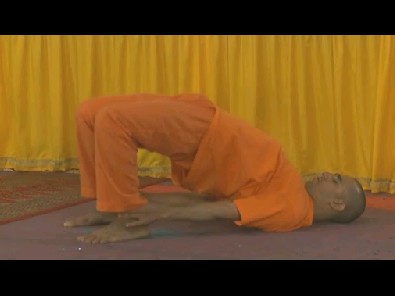
Practicing of the system "Yoga in Daily Life", Level 3 - Part 1, in Om Vishwa Deep Gurukul Swami Maheshwaranand Ashram, Jadan, Rajasthan, India on 27th of October 2009.
Roots are different
12:05 - 12:50 (45 min)
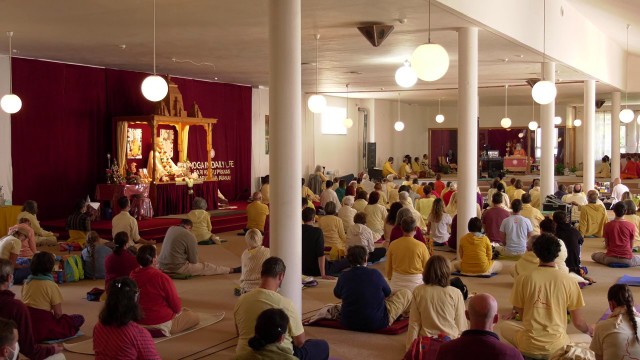
Morning satsang with Vishwaguruji from Strilky Ashram, Czech Republic. Fasting one day a week has a very good effect. Ahimsa means not doing anything to harm others. In getting angry, we destroy our spirituality. The story of a young boy who dies in an accident. Anger has many different types. Sometimes it is not very deep in our hearts. In some cases, it exists till the end of life. Practising kriya anusthan is very good for people. Guru is like a mother, disciples are like children. It is strongly prohibited to give these techniques further. The teaching of every guru is different, so don't mix them. There is one boat and one captain but many people can be in a boat. The story of a minister who attended Vishwaguruji's yoga class.
Live your days spiritually
12:55 - 13:30 (35 min)
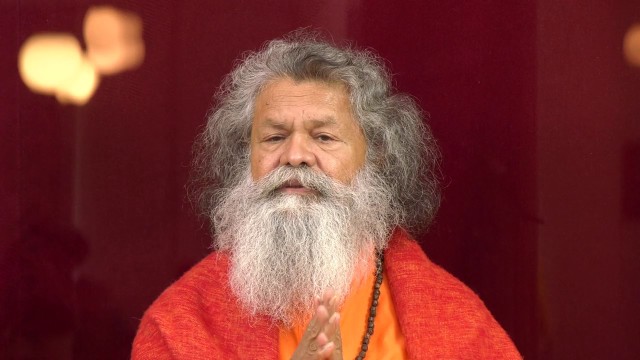
Morning satsang with Vishwaguruji from Strilky Ashram, Czech Republic. We should practise our spiritual exercises every day to save us from the negative effects of Kali Yuga. We should feel that we are human. We have two mothers - our birth mother and Mother Earth. We should respect our father and mother till the end of our life. We should respect the prana, air and water also. We should respect our gurus and every animal also. Fire and water cannot exist without each other. We should do puja every morning. Mantras and prayers protect us in a spiritual way. Swami Daya Mataji tells that Swamiji TV has great importance for us in our spiritual development, all over the world. She suggested that everybody who can, to give some donations to support the webcasting.
Listen to Vishwaguruji in your language
13:35 - 14:14 (39 min)
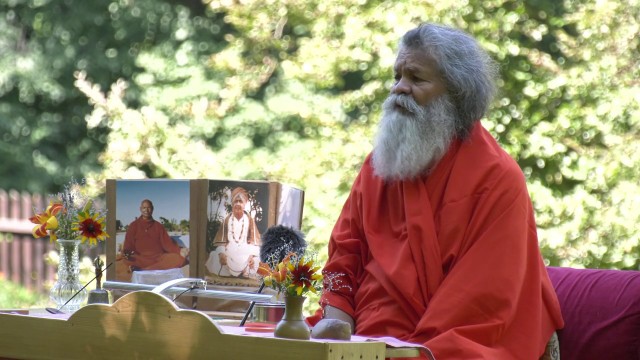
Morning satsang with Vishwaguruji from Strilky Ashram, Czech Republic. It is a plan to buy a machine that can automatically translate Vishwaguruji's words into 20 different languages. This instrument is very sensible we must take care of it very much. Many people gave a selfless donation to our system. They want to be completely sure that their donation goes exactly to those people whom they want to help. We are working for humans animals forests and waters. Be polite and don't be greedy. Do something at least for yourself.
Roots are different
14:20 - 15:05 (45 min)
Morning satsang with Vishwaguruji from Strilky Ashram, Czech Republic. Fasting one day a week has a very good effect. Ahimsa means not doing anything to harm others. In getting angry, we destroy our spirituality. The story of a young boy who dies in an accident. Anger has many different types. Sometimes it is not very deep in our hearts. In some cases, it exists till the end of life. Practising kriya anusthan is very good for people. Guru is like a mother, disciples are like children. It is strongly prohibited to give these techniques further. The teaching of every guru is different, so don't mix them. There is one boat and one captain but many people can be in a boat. The story of a minister who attended Vishwaguruji's yoga class.
Practising yoga helps us to overcome difficulties
15:10 - 15:57 (47 min)
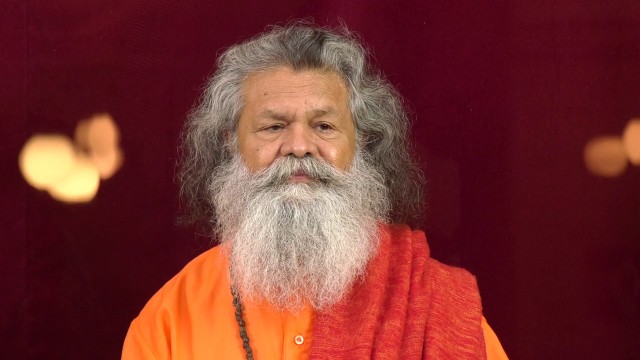
Morning satsang with Vishwaguruji from Strilky, Czech Republic. We are now in Kaliyuga (the dark age), where we are facing many difficulties. Practising yoga can help us to overcome them. Practitioners of yoga are not fighting, they are good friends; they are humble and do not harm animals. Eggs are life. At a wedding ceremony, everyone is kind, they pray; while for dinner, animals are killed. As humans we should understand fear. No one is good or bad. We should know how to live, how to create harmony in our homes. Practising bhramari pranayama.
Prayer will reach our chakras
16:05 - 16:51 (46 min)
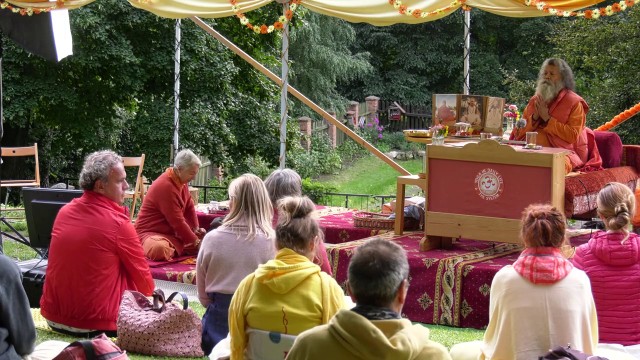
A spiritual discourse on the human body as an instrument, chakras, and daily practice.
"Our instruments in our body, and the instruments we use all day long, then we go to sleep. That is where we are going; we go to sleep."
"First, I am human. When we think really, really, then the whole day we will not do anything wrong to other humans."
Swami Ji addresses the morning gathering, using the fragility of translation equipment and a personal childhood story about a horse to illustrate the need for careful handling of all 'instruments'—including the human body. He outlines an ideal morning routine of gratitude, starting with recognizing one's humanity and honoring parents and the Earth. The talk introduces a long-term study of chakras and kuṇḍalinī, while cautioning against fear and emphasizing that everyone is already divine and should proceed naturally under a true guru's guidance.
Filming location: Strilky, Czech Republic
The relation between mother and child
16:55 - 17:12 (17 min)
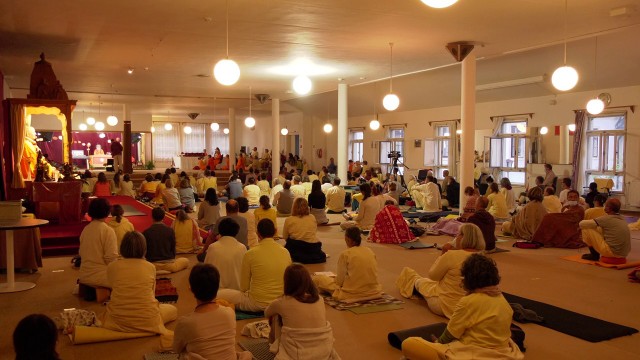
A spiritual discourse on compassion, the heart, and yoga in daily life.
"Further is not there, so that purity is that as much as we can, we do not let animals be killed."
"Yoga is our heart. And in our heart is the, how to call it, the hymn."
The speaker reflects on the universal, protective love seen in nature, from a mother's warmth to animals caring for their young, urging this compassion to extend to all creatures. He connects this to spiritual practice, stating that true yoga must reside in the heart and inform daily actions, including kindness and dietary choices. The talk concludes with evening blessings.
Filming location: Strilky, Czech Republic
Manva Dhire Dhire Cal
17:20 - 18:31 (71 min)
Evening satsang with Vishwaguruji from Strilky Ashram, Czech Republic. Bhajan singing from Strilky.
The basic qualities of our chakras
18:35 - 19:07 (32 min)
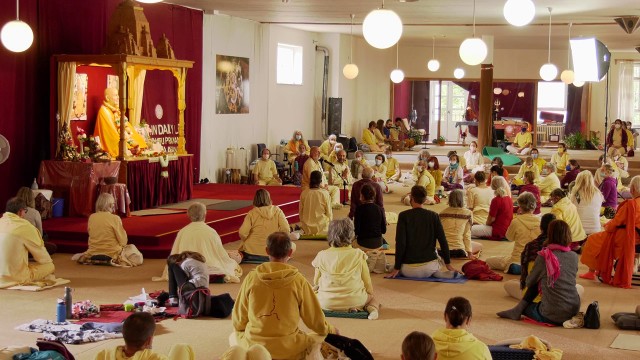
An introductory lecture on the chakras and hidden human powers, based on the book The Hidden Powers in Humans.
"If we touch words like yoga in life, words like sādhanā, our guru, then our life is directed positively."
"Swamījī said that if we are able to manage the Svādhiṣṭhāna Cakra, the power of concentration and the other powers there, we are halfway through on our path."
A speaker guides the satsang, reviewing the foundational powers within the first three chakras. He explains how dormant karmic power and Kuṇḍalinī reside in the Mūlādhāra, and how conscious living through sādhanā in the Svādhiṣṭhāna grants access to vital energies like Prāṇa-śakti. The talk outlines the progressive awakening through the Maṇipūra, Anāhata, and Viśuddhi chakras, emphasizing the guru's essential role in managing this process and illuminating the disciple's path from darkness to light.
Filming location: Strilky, Czech Republic
We can easily destroy our good karma
19:15 - 20:24 (69 min)
Evening satsang with Vishwaguruji from Strilky Ashram, Czech Republic. The story of Vishwaguruji at the time he began to learn the German language. Vasant tells some words about the latest project in Strilky. The story of a very good young man who recently died in an accident. There are paths in front of us, good and bad, and we choose the path on which we go. Sometimes we destroy our good deeds with one bad thought. Dharamraj observes our all karmas before he decides on our fate. Vishwaguruji tells how ashwini mudra is functioning. In speaking the Sanskrit language, we use both hemispheres of our brain. Bhramari pranayam is also using the two hemispheres.
Practice from Strilky
20:30 - 21:20 (50 min)
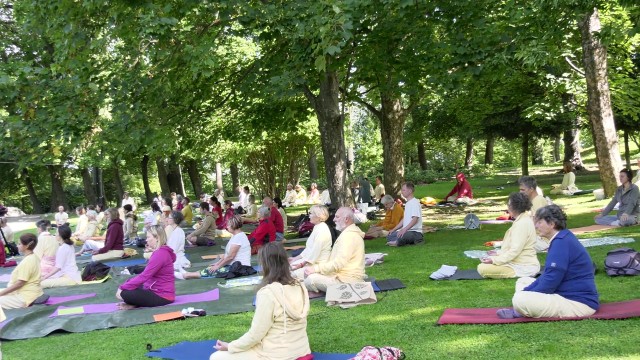
Morning satsang with Vishwaguruji from Strilky Ashram, Czech Republic.
The relation between mother and child
21:25 - 21:42 (17 min)
A spiritual discourse on compassion, the heart, and yoga in daily life.
"Further is not there, so that purity is that as much as we can, we do not let animals be killed."
"Yoga is our heart. And in our heart is the, how to call it, the hymn."
The speaker reflects on the universal, protective love seen in nature, from a mother's warmth to animals caring for their young, urging this compassion to extend to all creatures. He connects this to spiritual practice, stating that true yoga must reside in the heart and inform daily actions, including kindness and dietary choices. The talk concludes with evening blessings.
Filming location: Strilky, Czech Republic
The Inner States: Jagrat, Svapna, Suṣupti, and Beyond
21:45 - 21:59 (14 min)
A spiritual discourse on the states of consciousness and the importance of sleep.
"First, we are Jāgrat. Jagrat means awake... This is whatever we see now: we were cooking, we are eating, we are drinking, we are shopping—anything we are doing. This is from outside to inside."
"What this sleep means is that we are 100% aware about our Self, and so it is very comfortable, relaxed, and peaceful. That is your life."
Swami Madhvānandaji addresses the community, explaining the three common states of waking (Jagrat), dreaming (Svapna), and deep sleep (Suṣupta). He emphasizes the divine quality of sleep as a time to be with the inner Self (Ātmā) and introduces the higher state of Yoga Nidrā, described as a conscious sleep where yogis are awake to the Supreme. The talk concludes with a transition to the Sandhyā prayer, marking the junction of day and night.
Filming location: Strilky, Czech Republic
Around the world - Yoga in Slovakia
22:00 - 23:37 (97 min)
Yoga practice in Slovaka, the city of Presov
We got the energy of our parampara
23:00 - 0:29 (89 min)
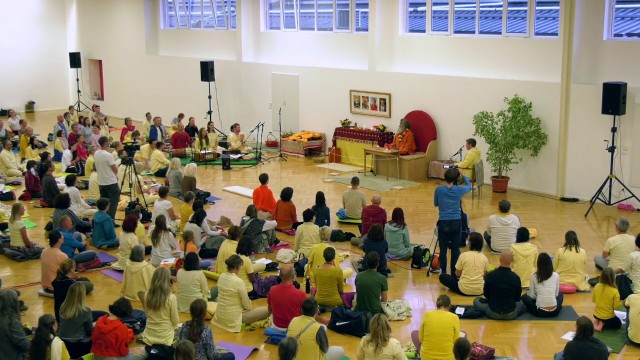
Evening satsang with Vishwaguruji from Ljubljana, Slovenia. Satsang is the life of the human and it will lead us to the cosmic. Alakhpuriji was at the Siva time when the world was balanced between negative and positive. We need regularly meditate, practice pranayama and be in the company of good people otherwise we lose our spirituality. We can develop only step by step in this path. Many of us visited Alakhpurijis and Devpurijis cave to have darshan. Holiguruji had written in one bhajan that Mahaprabujis wisdom will spread all over the world before it happened. Now we can use it or lose it. The story of Devpurijis visit to Holiguruji. The story of Mahaprabhuji and Vishwaguruji with rudraksh malas. Another story of Vishwaguruji and Mahaprabhuji in the forest. Vishwaguruji had three visions of Alakhpuriji. The story of Nanda Devi and the tiger. We also got the power of the Gurus of our parampara. Practising ashwini mudra, Om chanting and bhramari pranayama .
We Have To Do It By Ourselves
23:40 - 0:12 (32 min)
A morning satsang on the personal nature of spiritual practice and the science of prāṇāyāma.
"If you want a good life and good crops from your farming, you must look after it personally. You cannot sit on Waikiki Beach in Hawaii and telephone someone, saying, 'Please put seeds in my farm.'"
"Khetī, pṛthī, prathānā, put tane khujal, jo suk chahe prāṇī, hato hat sambhal. (Farming, love, prayer, an itch on the back—if a being desires happiness, one must attend to these things personally.)"
On the incarnation day of Sadgurudev Swami Mādhavānandajī, The lecturer begins with prāṇāyāma and shares personal memories of his Guruji's disciplined life. He explains the core teaching that sādhanā (spiritual practice) cannot be delegated, using practical analogies of farming, love, and prayer. The discourse then delves into the importance and mechanics of prāṇāyāma, describing its physiological benefits, various techniques, and its role within the broader science of Svara Yoga and Prāṇavidyā. He emphasizes that theoretical knowledge is insufficient without personal, consistent practice.
Filming location: UK
American
Australian