
European
Narada cursed Vishnu
0:15 - 0:58 (43 min)
A narration of the mythological story of Nārada's curse upon Lord Viṣṇu, followed by a discourse on its spiritual meaning.
"You made me a monkey, and I tell you, when you will be in great trouble, only the monkey will help you, nobody else."
"The merciful Lord said, 'Nārada, that was all My icchā. It was My will.'"
The speaker recounts how the sage Nārada, enraged after being tricked by Viṣṇu's illusion (māyā), confronts the Lord to curse Him. In his anger, Nārada pronounces a curse that Viṣṇu will incarnate as Rāma, suffer separation from His wife, and be aided by monkeys. Viṣṇu accepts the curse, explaining it was His own divine will, and later dissolves the illusion. A remorseful Nārada seeks forgiveness, and Viṣṇu promises to give him a liberating Kriyā. The talk includes a tangential account of the churning of the ocean (Samudra Manthan) to illustrate Nārada's accusations.
Filming location: Vép, Hungary
Sri Devpuriji Mahasamadhi Anniversary
1:05 - 2:14 (69 min)
Sri Devpuriji Mahasamadhi Anniversary - evening satsang with Vishwaguruji from Strilky Ashram, Czech Republic. Alakhpuriji was in Shiva's time but he is also living now everywhere, in his astral form. At that time human life was completely different. That time yogis did tapasya - austerities. The development of humans was very quick in many aspects. At that time, there was also good and bad, like now. We don't know why covid only attacks humans. At that time were the seven rishis - the seven stars (of the Great Bear/Big Dipper constellation). They are seeing us and protecting us. Alakhpuriji and Devpuriji come from the area of Lake Mansarovar. It was very strange when Devpuriji appeared. The story of Devpuriji cut the silver money into many pieces. We are very lucky that our parampara is originated from the Satya Yuga Siva time.
Stories are within you
2:20 - 3:18 (58 min)
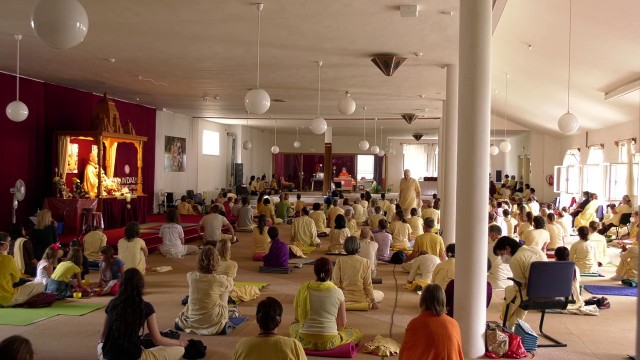
A morning satsang on the guru's grace, devotion, and the power of teaching through stories.
"Na’haṁ kartā means we are not the doer. We cannot do it. If we think we do, it may be confusing. So we give it with both our hands; we surrender it at the holy feet of Mahāprabhujī."
"So, when someone asks you, and you give… The answer first to them. First, give your answers... The answer is yours because you are now a great man."
The speaker, Swami Avatarpuri, opens with the principle of surrender to the guru's grace. He uses analogies, like a sculptor transforming stone into a worshipped deity, to illustrate how devotion elevates the ordinary. He shares a parable about a poor man whose selfless act of seeking answers for others ultimately solves his own plight, emphasizing the power of selfless service and positive speech. The talk concludes with personal anecdotes about the value of stories as a tool for learning and connection.
Filming location: Strilky, Czech Republic
We don't know where we will go
3:25 - 4:55 (90 min)
Evening satsang with Vishwaguruji from Strilky Ashram, Czech Republic. The atmosphere in the Ashram is pure and holy. The whole world is suffering from the coronavirus, that is why we have some protection. We should find out why this virus attacks only humans. We don't know how it will be when death comes. Some will go to the Parabrahma, some will come back. As long as we have the body, we can touch and feel. We don't know the length of our life.
Sri Devpuriji Mahasamadhi Anniversary
5:00 - 6:09 (69 min)
Sri Devpuriji Mahasamadhi Anniversary - evening satsang with Vishwaguruji from Strilky Ashram, Czech Republic. Alakhpuriji was in Shiva's time but he is also living now everywhere, in his astral form. At that time human life was completely different. That time yogis did tapasya - austerities. The development of humans was very quick in many aspects. At that time, there was also good and bad, like now. We don't know why covid only attacks humans. At that time were the seven rishis - the seven stars (of the Great Bear/Big Dipper constellation). They are seeing us and protecting us. Alakhpuriji and Devpuriji come from the area of Lake Mansarovar. It was very strange when Devpuriji appeared. The story of Devpuriji cut the silver money into many pieces. We are very lucky that our parampara is originated from the Satya Yuga Siva time.
Roots are different
6:15 - 7:00 (45 min)
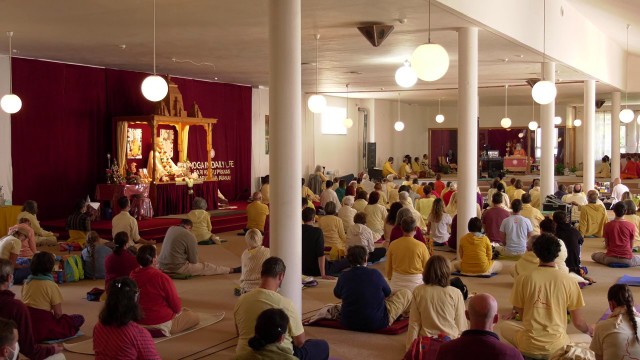
Morning satsang with Vishwaguruji from Strilky Ashram, Czech Republic. Fasting one day a week has a very good effect. Ahimsa means not doing anything to harm others. In getting angry, we destroy our spirituality. The story of a young boy who dies in an accident. Anger has many different types. Sometimes it is not very deep in our hearts. In some cases, it exists till the end of life. Practising kriya anusthan is very good for people. Guru is like a mother, disciples are like children. It is strongly prohibited to give these techniques further. The teaching of every guru is different, so don't mix them. There is one boat and one captain but many people can be in a boat. The story of a minister who attended Vishwaguruji's yoga class.
Sri Vishwaguruji Jayanti Anniversary
7:05 - 8:12 (67 min)
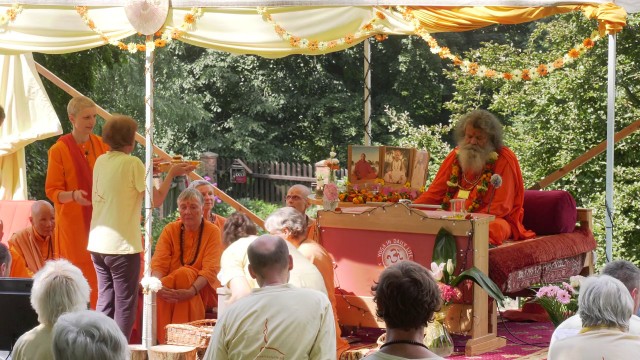
Sri Vishwaguruji Jayanti Anniversary - morning satsang with Vishwaguruji from Strilky Ashram, Czech Republic. Pranam (greetings) to Gurudev, singing bhajans. Greeting words of Dayalpuri. Vishwaguruji has changed our lives and made a huge contribution to humanity. He is the greatest karma yogi in the world. When somebody mentioned Swamiji to Holy Guruji, his heart melted. Holy Guruji made a bhajan that praises his disciple.
Stories are within you
8:20 - 9:18 (58 min)
A morning satsang on the guru's grace, devotion, and the power of teaching through stories.
"Na’haṁ kartā means we are not the doer. We cannot do it. If we think we do, it may be confusing. So we give it with both our hands; we surrender it at the holy feet of Mahāprabhujī."
"So, when someone asks you, and you give… The answer first to them. First, give your answers... The answer is yours because you are now a great man."
The speaker, Swami Avatarpuri, opens with the principle of surrender to the guru's grace. He uses analogies, like a sculptor transforming stone into a worshipped deity, to illustrate how devotion elevates the ordinary. He shares a parable about a poor man whose selfless act of seeking answers for others ultimately solves his own plight, emphasizing the power of selfless service and positive speech. The talk concludes with personal anecdotes about the value of stories as a tool for learning and connection.
Filming location: Strilky, Czech Republic
We don't know where we will go
9:25 - 10:55 (90 min)
Evening satsang with Vishwaguruji from Strilky Ashram, Czech Republic. The atmosphere in the Ashram is pure and holy. The whole world is suffering from the coronavirus, that is why we have some protection. We should find out why this virus attacks only humans. We don't know how it will be when death comes. Some will go to the Parabrahma, some will come back. As long as we have the body, we can touch and feel. We don't know the length of our life.
Practicing Yoga Asanas
11:00 - 11:41 (41 min)
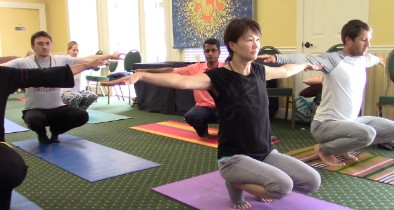
A yoga instruction session focusing on the practice and benefits of Vajrāsana and Vīrāsana.
"This Vajrāsana is designed especially to strengthen or to activate that Vajra Nāḍī."
"This will repair our digestion. This will repair our headache problems, also many, many things. This looks very simple, but it is very powerful."
An instructor guides students through the physical postures of Vajrāsana (thunderbolt pose) and Vīrāsana (hero pose), explaining their effects on the Vajra Nāḍī energy channel, digestion, and sciatic nerve. The session includes detailed alignment instructions, benefits for concentration and alertness, and transitions into other balancing postures and a forward bend before concluding.
Filming location: USA
The basic qualities of our chakras
11:45 - 12:17 (32 min)
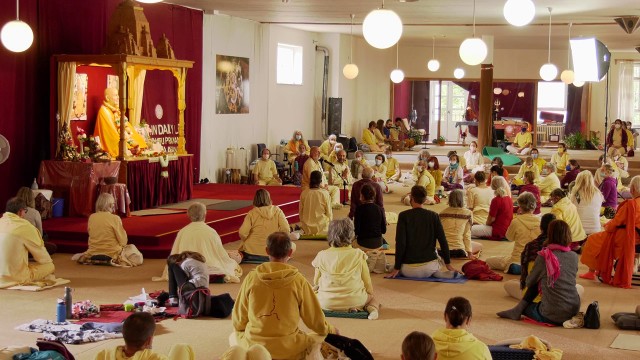
An introductory lecture on the chakras and hidden human powers, based on the book The Hidden Powers in Humans.
"If we touch words like yoga in life, words like sādhanā, our guru, then our life is directed positively."
"Swamījī said that if we are able to manage the Svādhiṣṭhāna Cakra, the power of concentration and the other powers there, we are halfway through on our path."
A speaker guides the satsang, reviewing the foundational powers within the first three chakras. He explains how dormant karmic power and Kuṇḍalinī reside in the Mūlādhāra, and how conscious living through sādhanā in the Svādhiṣṭhāna grants access to vital energies like Prāṇa-śakti. The talk outlines the progressive awakening through the Maṇipūra, Anāhata, and Viśuddhi chakras, emphasizing the guru's essential role in managing this process and illuminating the disciple's path from darkness to light.
Filming location: Strilky, Czech Republic
We should overcome fear
12:25 - 13:20 (55 min)
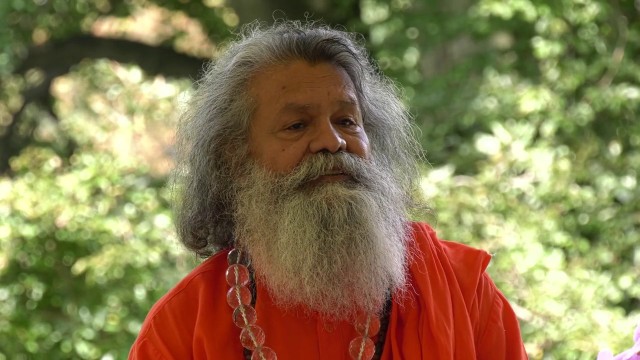
A satsang discourse on spiritual qualities and overcoming fear.
"You will open, not with just a few words. You have to tell how yoga in daily life is around the world."
"Where the sugandha is there, there is no negativity... Sugandh means also that we should become very clean, pure, spiritual, and great saint."
Following remarks from a disciple about the international work of Yoga in Daily Life, The lecturer begins the satsang by explaining the meaning of "Sugandha" (fragrance) as a metaphor for purity and spiritual goodness that dispels negativity. He uses humorous observations and a long, illustrative story about a man terrified by a ghost that turned out to be moonlight on bedclothes to teach that fear is a creation of the mind. The key message is to dispel inner fear to achieve happiness and spiritual progress, briefly touching on the topics of diet, chakras, and kuṇḍalinī.
Filming location: Strilky, Czech Republic
Guru is the first
13:25 - 14:01 (36 min)
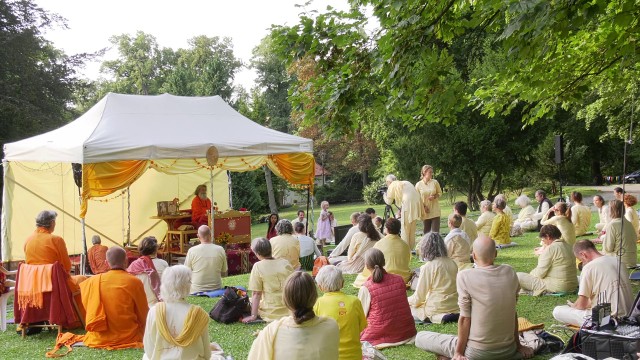
A spiritual discourse on the continuity of sādhanā and the centrality of the Guru.
"Your sādhanā was very beautiful, very good. Many experienced beautiful powers, feelings, and even incarnations. Yes, we should continue this until the end of our life."
"Holy Gurujī, our Swamījī Madhavānandajī Bhagavān, he always said that Seva is all the time with us. We are going, as all goes, to the Cosmic Self."
A teacher addresses students after a spiritual retreat, using the metaphor of a stone creating eternal ripples in a pond to describe the lasting impact of their practice. He emphasizes selfless service (Seva) and explains the Guru's paramount importance, stating all spiritual activities must follow devotion to the Guru. The talk covers the meaning of mantra, the significance of the prayer mala, and outlines the traditional four stages of life (āśramas).
Filming location: Strilky, Czech Republic
We should overcome fear
14:05 - 15:00 (55 min)
A satsang discourse on spiritual qualities and overcoming fear.
"You will open, not with just a few words. You have to tell how yoga in daily life is around the world."
"Where the sugandha is there, there is no negativity... Sugandh means also that we should become very clean, pure, spiritual, and great saint."
Following remarks from a disciple about the international work of Yoga in Daily Life, The lecturer begins the satsang by explaining the meaning of "Sugandha" (fragrance) as a metaphor for purity and spiritual goodness that dispels negativity. He uses humorous observations and a long, illustrative story about a man terrified by a ghost that turned out to be moonlight on bedclothes to teach that fear is a creation of the mind. The key message is to dispel inner fear to achieve happiness and spiritual progress, briefly touching on the topics of diet, chakras, and kuṇḍalinī.
Filming location: Strilky, Czech Republic
Give everything, so not to hold
15:05 - 15:55 (50 min)
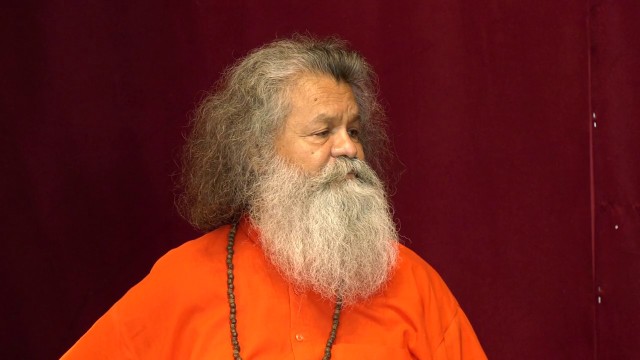
A spiritual discourse on the path of discipleship, austerity, and selfless service.
"Gurujī said, 'I have my spiritualities, my jñāna, my knowledge, everything. What do I want from others?'"
"To go on the path is not easy. One path is with torrents. Another path is very hot, with sand. And there is a knife on the side of the knife. On that, you have to go."
The speaker shares memories of austere early days with his Guru in a simple Jaipur ashram, illustrating the saint's path of inner richness over material possession. He uses parables, like that of a greedy rich man, and metaphors, like the firing of a clay pot, to teach the value of seva (selfless service), detachment, and rigorous spiritual training. The talk contrasts this with modern distractions and concludes with a focus on foundational spiritual practices.
Filming location: Strilky, Czech Republic
Spirituality is without meat and alcohol
16:00 - 16:47 (47 min)
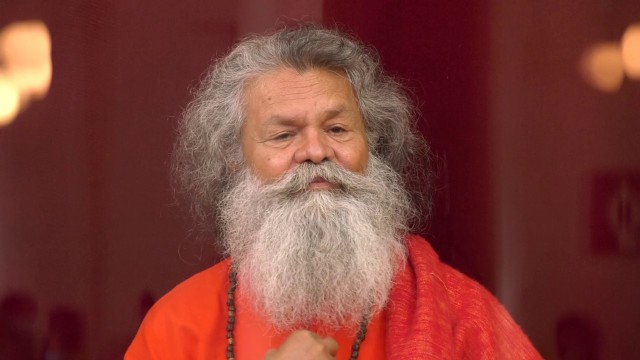
A spiritual discourse on conscious living, compassion for animals, and dietary choices.
"Milk is one of the best sources. It does not matter from which animals, including from our human mother—cow, buffalo, goat, etc."
"My dears, all animals or humans, we are living beings. They feel pain, and we also feel the pain."
The speaker, Swami Avatarpuri, leads a satsang exploring the spiritual and physical significance of milk, tracing its transformation from a mother's nourishment to yogurt, butter, and ghee. He emphasizes compassionate treatment of dairy animals, critiques modern industrial farming and meat consumption, and warns against the dangers of alcohol. The talk expands into themes of interfaith respect, daily prayer for forgiveness, and the inner beauty of the soul beyond physical form.
Filming location: Strilky, Czech Republic
Listen to Vishwaguruji in your language
16:55 - 17:34 (39 min)
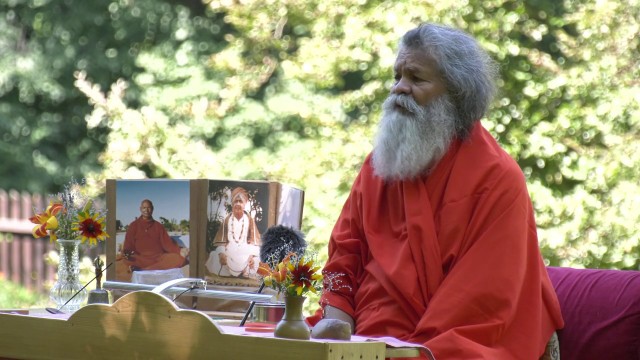
Morning satsang with Vishwaguruji from Strilky Ashram, Czech Republic. It is a plan to buy a machine that can automatically translate Vishwaguruji's words into 20 different languages. This instrument is very sensible we must take care of it very much. Many people gave a selfless donation to our system. They want to be completely sure that their donation goes exactly to those people whom they want to help. We are working for humans animals forests and waters. Be polite and don't be greedy. Do something at least for yourself.
Spirituality leads you to God
17:40 - 18:21 (41 min)
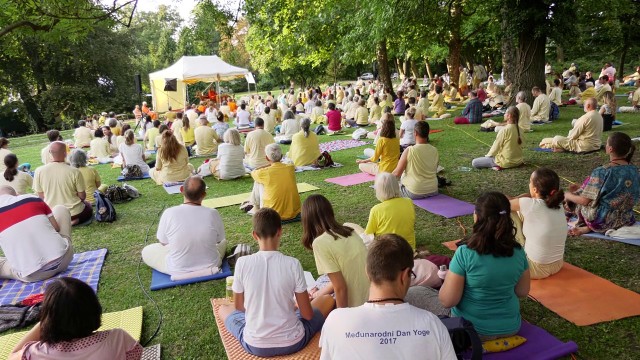
A spiritual discourse on faith, knowledge, and the lineage of teachings.
"Next to God is the doctor. Next to God. Next to God is the doctor."
"If you believe in God. God is also making tests. It is not that always God will say, 'OK.' God will say, 'No, no, no.'"
A swami addresses a gathering, tracing a spiritual lineage from Shiva and the Satya Yuga to the present. He discusses the preservation of knowledge in the Vedas, the relationship between modern science and spirituality, and the necessity of faith. He illustrates this with a parable about a mountain climber bargaining with God, concluding that belief is essential.
Filming location: Strilky, Czech Republic
Practice from Strilky
18:25 - 19:15 (50 min)
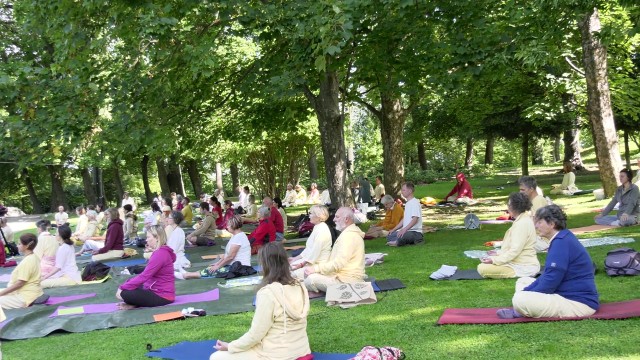
Morning satsang with Vishwaguruji from Strilky Ashram, Czech Republic.
Enjoy your life
19:20 - 19:59 (39 min)
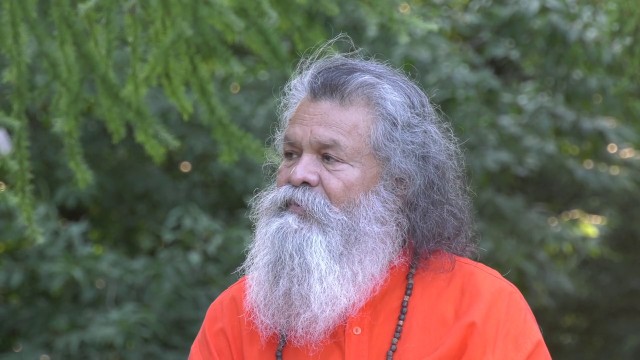
Evening satsang with Vishwaguruji from Strilky Ashram, Czech Republic. Strilky Ashram is not for one it is for all. Many people died by corona. It has many hidden signs. We are the real yoga from the earth till the cosmic. When we leave our body we don't know about how is in the world. God gave us the possibility not to be born again. Sometimes people are afraid of ghosts in the darkness. There is no ghost in reality. We can come back to the earth only through the mother's womb. Nowadays people have many problems with the health of their bodies. Maybe the cause of this is some karma from our past lives. Every creature feels pain and sadness when they die. Sometimes our soul is suffering in this body but we don't want to die. the whole ocean consists of drops. Yogic science knows how it will be afraid we leave this body. So we want to live and enjoy our life.
The name is important not the body
20:05 - 20:30 (25 min)
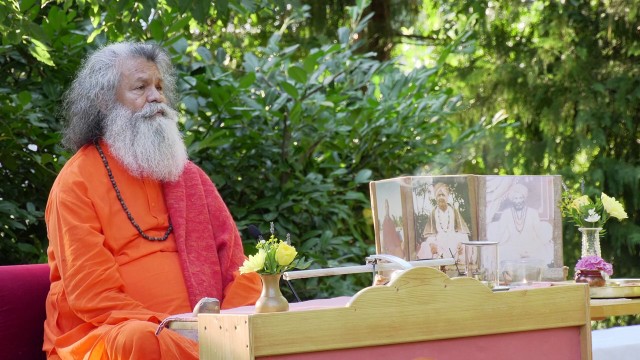
A spiritual discourse on unity, diversity, and the essence of yoga.
"In this Kali Yuga... The difference now is spirituality. You can call it yoga, meditation, prayer, or different religions, but we are all one."
"Holi Guruji said, 'One in all and all in one.'... We should not say, 'If you are not my disciple or my Gurujī’s disciple, then we do not want you.' That is not good."
The lecturer addresses a global television audience, emphasizing the underlying oneness of all spiritual paths, religions, and human beings despite different names and methods. Using analogies like children in a village, trees in a forest, and a football, he explains the philosophy of Yoga in Daily Life, stresses the importance of the immortal divine name over the physical body, and advocates for universal respect and inclusivity.
Filming location: Strilky, Czech Republic
Sadhana Guru seva and Guru kripa
20:35 - 21:30 (55 min)
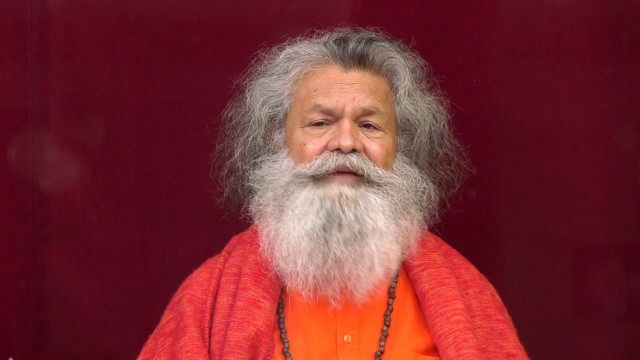
A spiritual discourse on the universal path of sādhanā, or spiritual practice.
"If you have no one day to practice, then you should also not eat for one day. But for eating, we are ready. For half an hour or two hours of practice, it is difficult."
"The cloth is not; if the cloth is dead, then it is your skin. If you do not truly become a sannyāsī, then you go away, and you would have to take your skin off."
A teacher addresses a gathering, challenging the notion that intense sādhanā is only for renunciates (sannyāsīs), whom he criticizes for potential laziness. He explains that true practice, including mantra and selfless service (karma yoga), is essential for all, including householders and farmers. Using metaphors like throwing a stone into a calm pond, he describes meditation and the importance of purifying the inner energies and chakras, regardless of one's external status.
Filming location: Strilky, Czech Republic
Practice yoga like a cosmic dance
21:35 - 21:59 (24 min)
A keynote address on wellness through sattvic living and non-violence.
"Violence is against wellness, and wellness is not violence." "Sattvic quality makes the person very happy, healthy, and balanced."
Swami Maheshwarananda delivers a talk at a conference, opening and closing with Sanskrit peace mantras. He defines wellness as non-violence, beginning with non-violence towards oneself through diet and lifestyle. He explains the Ayurvedic and yogic principles of the three guṇas (sattvic, rajasic, tamasic), advocating for fresh, sattvic food, mindful movement like Yoga in Daily Life, and positive thinking. He emphasizes that being human means being a protector, and connects these practices to holistic health and ultimate liberation.
Filming location: Czech Republic
Yoga in Daily Life: The Fifth Level
22:00 - 22:38 (38 min)
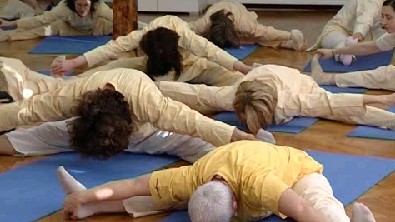
A fifth-level "Yoga in Daily Life" class focused on asana practice and breath awareness.
"Everything we practice in yoga has its purpose, and if we ask ourselves why, we must receive an answer. That is why we say that yoga is the science of the body, mind, spirit, and soul."
"Āsanas do not act only on the body. They are also a correction of our behavior; they act on our consciousness; they affect our entire being."
An instructor guides students through a detailed session, beginning with relaxation in Ānandāsana and emphasizing the purpose behind each alignment detail for reducing stress. The class progresses through a series of asanas including Pavanamuktāsana, Marjari Āsana, Paścimottānāsana, Upaviṣṭha Koṇāsana, Jānu Śīrṣāsana, and Mṛgāsana, with continuous focus on diaphragmatic breathing, mindful movement without strain, and the physical and subtle effects of each posture.
Filming location: Zagreb, Croatia
We should overcome fear
22:45 - 23:40 (55 min)
A satsang discourse on spiritual qualities and overcoming fear.
"You will open, not with just a few words. You have to tell how yoga in daily life is around the world."
"Where the sugandha is there, there is no negativity... Sugandh means also that we should become very clean, pure, spiritual, and great saint."
Following remarks from a disciple about the international work of Yoga in Daily Life, The lecturer begins the satsang by explaining the meaning of "Sugandha" (fragrance) as a metaphor for purity and spiritual goodness that dispels negativity. He uses humorous observations and a long, illustrative story about a man terrified by a ghost that turned out to be moonlight on bedclothes to teach that fear is a creation of the mind. The key message is to dispel inner fear to achieve happiness and spiritual progress, briefly touching on the topics of diet, chakras, and kuṇḍalinī.
Filming location: Strilky, Czech Republic
After death, everything is counted
23:00 - 0:24 (84 min)
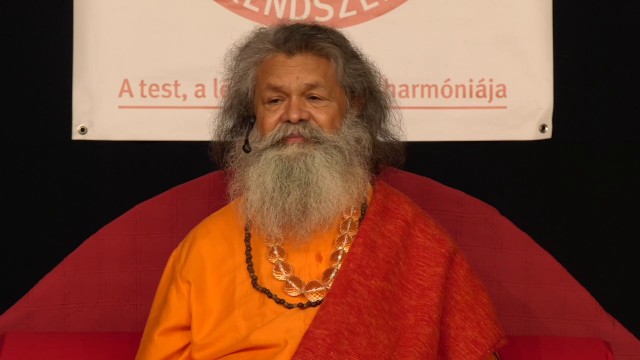
Evening satsang with Vishwaguruji from Debrecen, Hungary. There is God in all of us. It is within our body. There is a flame in our hearts which is the soul. After death, there are eleven points to leave the body. It depends on your qualities. We have immense knowledge. There is modern science and there is yogic science but they are different. The eleventh point in the top of the head and the navel are in connection. Sleeping is very important. Even if you practised yoga and stopped, the memories can awaken in you at any time. Life is the same in every creature. We should work on ourselves. We should complete our life to unite with the Cosmic. Concentration on the vibration of Om Namah Shivaya kirtan. When we die everything is counted as good and bad. Practising ashwini mudra, AUM chanting and bhramari pranayama.
The name is important not the body
23:45 - 0:10 (25 min)
A spiritual discourse on unity, diversity, and the essence of yoga.
"In this Kali Yuga... The difference now is spirituality. You can call it yoga, meditation, prayer, or different religions, but we are all one."
"Holi Guruji said, 'One in all and all in one.'... We should not say, 'If you are not my disciple or my Gurujī’s disciple, then we do not want you.' That is not good."
The lecturer addresses a global television audience, emphasizing the underlying oneness of all spiritual paths, religions, and human beings despite different names and methods. Using analogies like children in a village, trees in a forest, and a football, he explains the philosophy of Yoga in Daily Life, stresses the importance of the immortal divine name over the physical body, and advocates for universal respect and inclusivity.
Filming location: Strilky, Czech Republic
American
Australian