
European
Awakening of muladhar
0:15 - 0:57 (42 min)
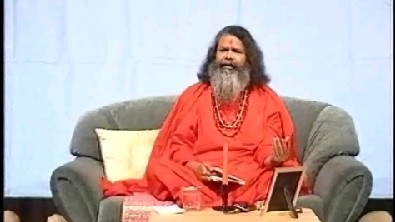
A lecture on the Mūlādhāra chakra, karma, and associated yoga practices.
"Prārabdha, or karma prārabdha, first your destiny is created, and then your body."
"The awakening of the Kuṇḍalinī means wisdom. You become very wise, you become self-confident."
The speaker delivers an in-depth explanation of the root (Mūlādhāra) energy center, linking it to one's karma, destiny, and foundational consciousness. He describes its symbolism—the red color, four-petaled lotus, elephant, and coiled serpent representing past karmas—and clarifies the nature of a true Kuṇḍalinī awakening. The session includes practical guidance, with demonstrators showing postures like Bhujaṅgāsana and Śalabhāsana to activate and regulate this chakra.
Filming location: Croatia
The Living Light of God - Indian Saints
1:05 - 1:32 (27 min)
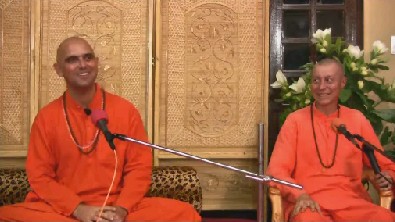
A satsang discourse using a parable to illustrate the guru's role and the disciple's responsibility.
"The saints are there to give us that light, to illuminate our path. The Guru provides the light so we can continue our journey more safely."
"But simultaneously, if we do not apply the brakes of self-discipline and engage in the practices he gives, then that light is of limited use."
The speaker shares a story of a saint offering a light to a speeding motorcyclist who has no brakes, using it as an analogy for spiritual guidance. He explains that the living tradition, or parampara, provides the illuminating light of wisdom through self-realized masters, but disciples must also practice self-discipline. The talk highlights how teachings evolve across generations while preserving their essence, referencing figures like Mahaprabhuji, Guruji, and Swamiji.
Filming location: Jadan, Rajasthan, India
Message of the Deepak
1:40 - 2:10 (30 min)
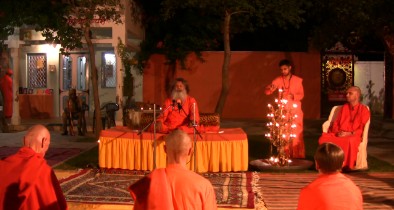
A spiritual discourse on the significance of Diwali (Dīpāvalī).
"This light is the truth, and we light these lights in everyone's heart. If we forget the sins of people, forgive them, and accept them, it means we light the candle again in their heart."
"Therefore, Dīvalī is not only for one day; Dīvalī is every day. When you open your eyes, you get the light, you see the light."
The speaker delivers a satsang on the festival of Diwali, explaining its origin in Lord Rama's return to Ayodhya and its deeper spiritual meaning as the inner light of Brahman. The talk explores the symbolism of the oil lamp—comparing the body to the pot, prana to the oil, the self to the wick, and the flame to the atman—and emphasizes themes of forgiveness, love (prem), non-violence (ahiṃsā), and daily spiritual practice. The discourse includes philosophical reflections, mantra chanting, and a critique of ritual animal sacrifice.
Filming location: Jadan, Rajasthan, India
Remembering Holy Guruji
2:15 - 3:24 (69 min)
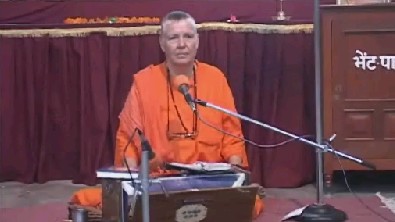
Every master is expressing one of the different aspects of the divine holy trinity as creator, sustainer or liberator. With a master we should always be ready to change. It is his duty to move us to transformation. Sadhana means spiritual practice. Again and again practicing without any expectation, we will reach our aim. Following our sadhana we will learn many things on the way. Holy Guruji was an example and embodiment of discipline and devotion. Bhajans, the spiritual songs were a fundamental part of his life. The divine nectar of spiritual songs open the heart as well as the door of wellbeing and reflecting deep peace. Sadhvi Shanti shares with us some of her personal memories and experiences with Holy Guruji on the occasion of his birthday.
Wonders of the human being
3:30 - 4:56 (86 min)
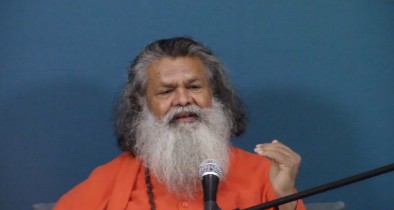
A morning satsang in a Canadian rainforest on the inner body, breath, and spiritual search.
"Where are you searching for me, oh my friend? My heart is in the forest, but I am dwelling in your breath."
"If you really search for me, I will meet you within a second."
Swami Satyanarayana Dasa gives a discourse, using the surrounding forest as a metaphor for the inner landscape of chakras and nadis. He explains the vital importance of breath (prana) and shares stories—including a parable of Ramakrishna and a devotee—to illustrate the intensity of devotion required to know God. The talk covers the five sheaths (Panchakosha), the caution around awakening kundalini, and practical guidance on pranayama and asanas for purifying the physical and energetic bodies.
Filming location: Vancouver, Canada
Understand Guru Tattva
5:00 - 5:53 (53 min)
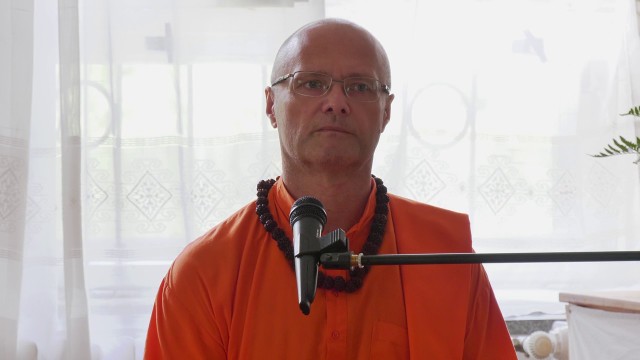
A satsang reflecting on the meaning of Guru Pūrṇimā.
"In spirituality, you ask 'Why?' and you want to understand why you are doing something."
"Guru Tattva is... something like an aha-phenomenon. In one moment, when you realize something—'ah, yes, I understand now'—those who explain to you... that is the guru."
Following the Guru Pūrṇimā festival, a teacher addresses the assembly at the Střílecký ashram. He explains the spiritual significance of the day, contrasting spirituality with religion and emphasizing the importance of understanding symbols. The core theme is the Guru Tattva—the principle of the guru—which he describes as the illuminating consciousness present in various forms. He advises devotees on how to connect with their guru beyond physical proximity, offering practical wisdom for sustaining spiritual energy in daily life and persevering on the path.
Filming location: Strilky, Czech Republic
Enjoy your life
6:00 - 6:39 (39 min)
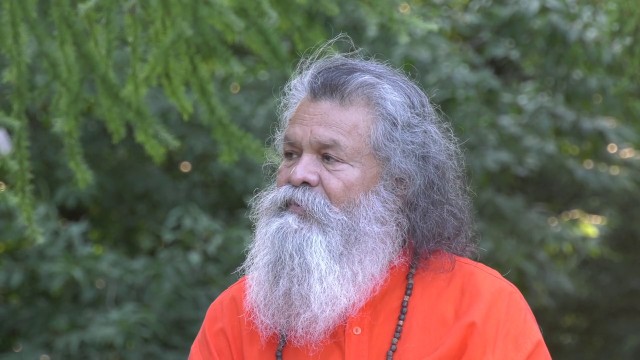
Evening satsang with Vishwaguruji from Strilky Ashram, Czech Republic. Strilky Ashram is not for one it is for all. Many people died by corona. It has many hidden signs. We are the real yoga from the earth till the cosmic. When we leave our body we don't know about how is in the world. God gave us the possibility not to be born again. Sometimes people are afraid of ghosts in the darkness. There is no ghost in reality. We can come back to the earth only through the mother's womb. Nowadays people have many problems with the health of their bodies. Maybe the cause of this is some karma from our past lives. Every creature feels pain and sadness when they die. Sometimes our soul is suffering in this body but we don't want to die. the whole ocean consists of drops. Yogic science knows how it will be afraid we leave this body. So we want to live and enjoy our life.
Try to open your heart
6:45 - 7:45 (60 min)
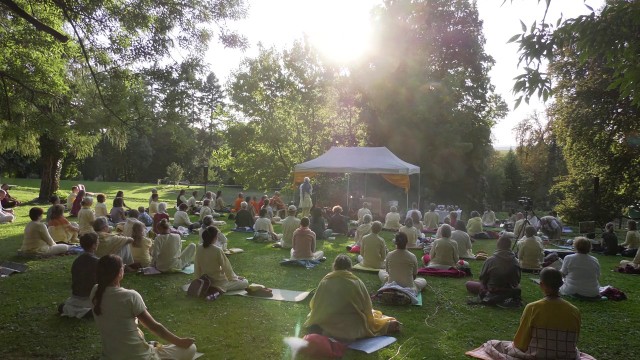
Evening satsang with Vishwaguruji from Strilky Ashram, Czech Republic. People in Strilky Ashram are relaxed and comfortable like the birds are in their nest. Everybody is very happy in this place like every bird. This is yoga. Sometimes we make ourselves unhappy. The story of a married couple who knew each other from their childhood and were good friends.
The science of the constellation
7:50 - 8:44 (54 min)
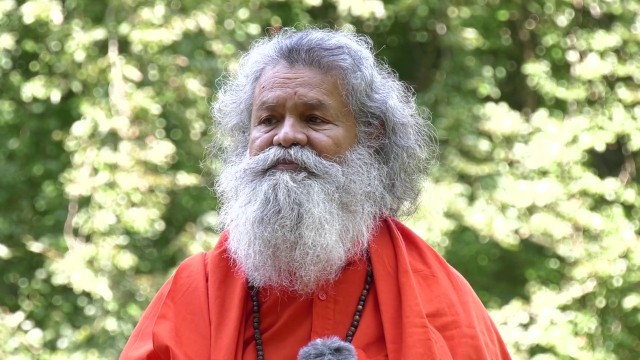
A spiritual discourse on divine names, astrology (Jyotiṣa), and taking refuge in God.
"In Jyotiṣ, in the Jyotiṣ, they are telling when one is born, at which time. And when one is born, child, it means that is that minute that this child touched the earth."
"So, in that name, what time is it? It can be night; the child was born midnight, before, or after. But that is the constellation that you should know, and then you make a name also."
A spiritual teacher delivers a talk centered on the chant "Om Namo Shri Prabhu Dipa Narayanam." He explains the meaning of the chant's words, emphasizing that all are servants taking refuge in the divine light. The discourse shifts to the traditional Vedic science of astrology, discussing how the birth constellation determines the first letter of a person's name for auspiciousness. He shares personal anecdotes about his lineage and a story from his guru about destiny, concluding that true wealth is spiritual happiness and unity.
Filming location: Strilky, Czech Republic
Stories are within you
8:50 - 9:48 (58 min)
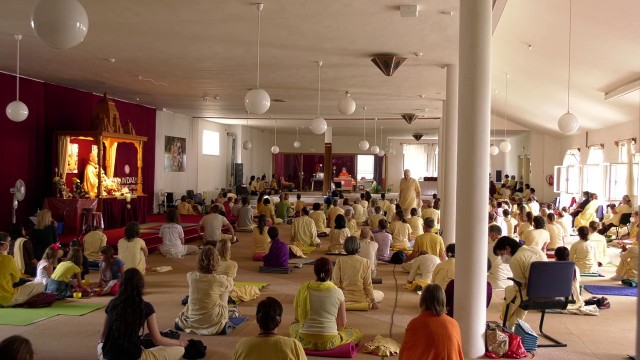
A morning satsang on the guru's grace, devotion, and the power of teaching through stories.
"Na’haṁ kartā means we are not the doer. We cannot do it. If we think we do, it may be confusing. So we give it with both our hands; we surrender it at the holy feet of Mahāprabhujī."
"So, when someone asks you, and you give… The answer first to them. First, give your answers... The answer is yours because you are now a great man."
The speaker, Swami Avatarpuri, opens with the principle of surrender to the guru's grace. He uses analogies, like a sculptor transforming stone into a worshipped deity, to illustrate how devotion elevates the ordinary. He shares a parable about a poor man whose selfless act of seeking answers for others ultimately solves his own plight, emphasizing the power of selfless service and positive speech. The talk concludes with personal anecdotes about the value of stories as a tool for learning and connection.
Filming location: Strilky, Czech Republic
Feel the energy of Mother Earth
9:55 - 10:55 (60 min)
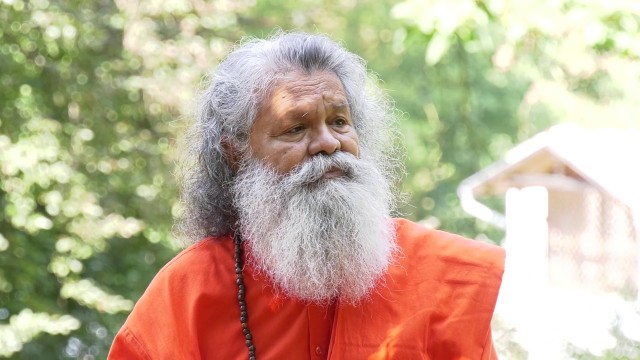
A spiritual discourse on the primordial sound and reverence for Mother Earth.
"Nāda-rūpa parabrahma. That sound is coming from the conch... This sound is God." and "Earth is the mother. And we should, it is written in many books, every day, two or three times, touch the Earth."
Swami Vishwaguruji conducts an outdoor satsang, expounding on the sacred conch as the first emanation from the ocean and the principle of nāda (primordial sound) as the form of the Supreme. He emphasizes the importance of physical connection with Mother Earth for spiritual well-being, sharing stories of Bhagavan Rama and personal anecdotes. The talk concludes with practical instructions for connecting with the earth and a testimony from a disciple, Jayā Devī, about the blessing of being at the ashram.
Filming location: Strilky, Czech Republic
Morning Yoga practice, Umag, Croatia (3/9)
11:00 - 12:33 (93 min)
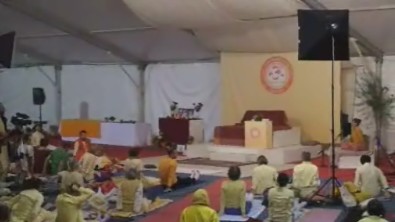
Morning Yoga practice from the international Yoga retreat Umag, Croatia, on the 27 of September
The name is very important
12:40 - 13:31 (51 min)
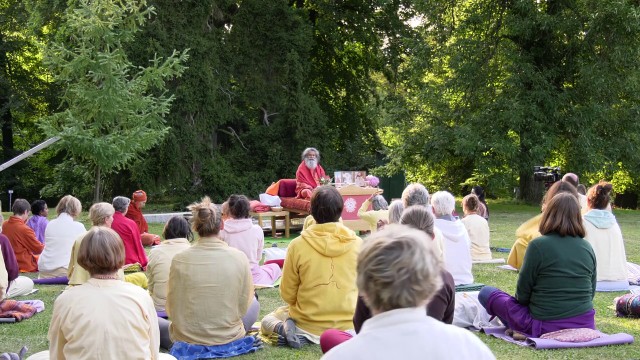
A satsang address on the unity of all yoga paths and a disciple's testimony.
"Yoga is yoga. It comes from Bhagavān Śiva, who brought this yoga. Yoga is not only the physical body, nor merely thinking and learning. We have to go very far towards the cosmic Self."
"Everything that Vishwagurujī said about Vancouver, China, none of it is me, he does it all. I am just this body. Everything comes from Vishwagurujī."
The lecturer addresses an international gathering during a Guru Pūrṇimā retreat. He emphasizes the essential oneness of all yoga traditions, advocating for respect and unity over sectarianism, using analogies of rain, human faces, and family lineage. He then outlines practical cleansing techniques (netī, dhotī) for the attendees. The session includes a heartfelt testimony from Matajī, a disciple who traveled from Canada, who shares her journey and the power of Guru's grace.
Filming location: Strilky, Czech Republic
We have to take one step further
13:35 - 14:22 (47 min)
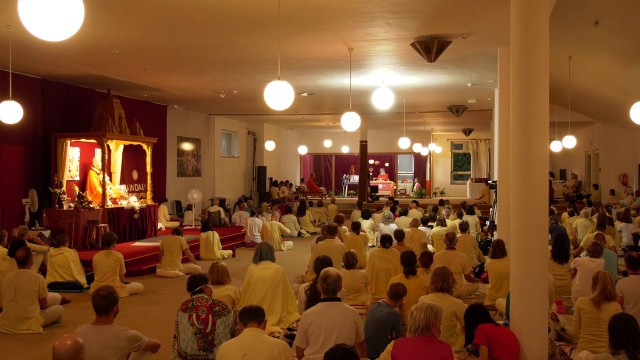
Evening satsang with Vishwaguruji from Strilky Ashram, Czech Republic. We need more yoga classes and more yoga teachers. We should have yoga classes in every village. We should tell correctly what is yoga and what is spirituality. Swami Gyaneswarpuri is a very good teacher of yoga teacher and he knows Sanskrit very well. MM Vivekpuri is the same. We give more freedom to the yoga teachers but they should remain under the umbrella of Yoga in Daily Life. Vishwaguruji answers some questions putting by the participants of the seminar. Vishwaguruji speaks about the greeting customs in different countries. If others are negative we should be humble kind and positive. We should feel this in our hearts. Little meditation.
Believe or not believe in God is your choice
14:30 - 15:47 (77 min)
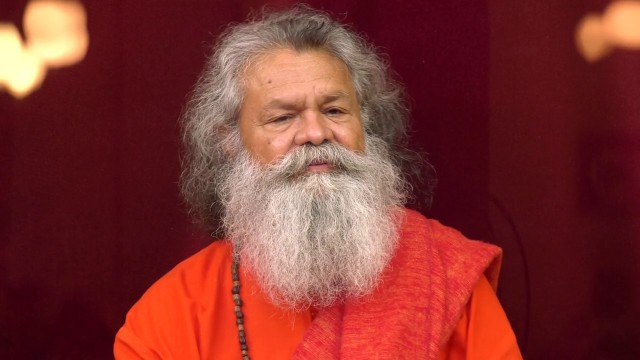
Evening satsang with Vishwaguruji from Strilky Ashram, Czech Republic. Jyotish tells us which day consists of what kind of festival and fasting. Muslims sometimes eat only after sunset. These kinds of fasting have spiritual meaning. We eat more than the generations before us, Farmers know, how is the healthy way of eating. Don't eat anything after sunset, but only drink water. If we practise yoga, don't eat meat and don't drink alcohol, we live a long and healthy life and when our time comes, we die healthy and in a short time. The story of an old Indian man who died healthily and his son. Because a yogi is filled with prana slowly they eat less and less. Live a good life. Many marriages went wrong because of alcohol. The story of a man who doesn't believe in God at all. If you believe in God or not this is your choice. The story of the birth of Jesus Christ. Krishna knows what is the Bhagawad Gita. Jesus said to believe in God and not in the gold.
Mahaprbhuji's glory is in the whole world
15:55 - 16:59 (64 min)
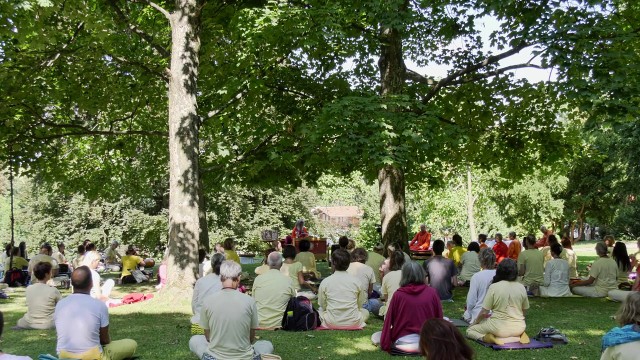
Morning satsang with Vishwaguruji from Strilky Ashram, Czech Republic. At first, we should give prashad to a temple for saints and then for the Guru and the sadhus. Better to get your food from a 50 km radius circle. The story of a lady who has cooked many times for the Vienna Ashram. Never touch the meal during cooking. Greeting mudra means you and I are in my heart. Holy Guruji could make a new bhajan any time. Explanation of bhajan Prakash Punj Amrita ke Sagar. Mahaprabhuji's blessing and glory is on the whole world. Story of Sri Devpuriji telling Holy Guruji that he gives blessing to Vishwaguruji. We should take little and give more to others. We should visit and help our friends who have health problems.
Practising with Vishwaguruji
16:00 - 16:36 (36 min)
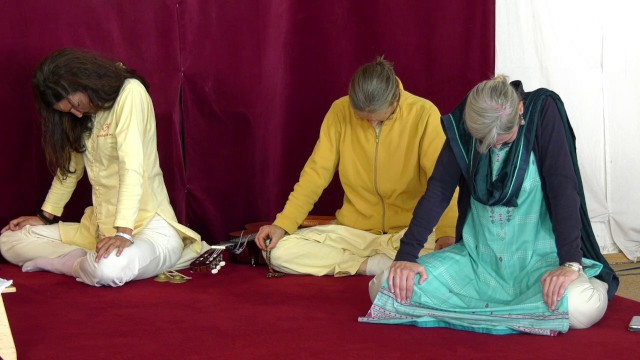
Morning program from Strilky Ashram, Czech Republic. Practising AUM chanting, ashwini mudra and bhramari pranayama.
Great saints share everything what they have
17:05 - 17:55 (50 min)
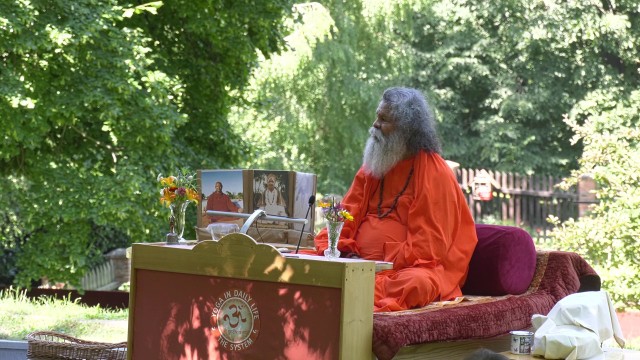
Morning satsang with Vishwaguruji from Strilky Ashram, Czech Republic. Strilky Ashram is a holy divine place. It is good to go there to practising yoga and meditate. Vasant and Ganga work very much for the ashram and for us. We all have to protect this divine holy place. If we are there we feel love and safe. We have to think ourselves within ourselves. In the kingdom of Gurudev, we can get everything. God gives eating for every living being. The story of Sri Devpuriji to make water in the sand. The story of Mahaprabhuji who give his beautiful new sheet to an old poor man. Sooner or later we will die so we no need too many things. Practising bhramari pranayam.
We should see God in everything
18:00 - 18:49 (49 min)
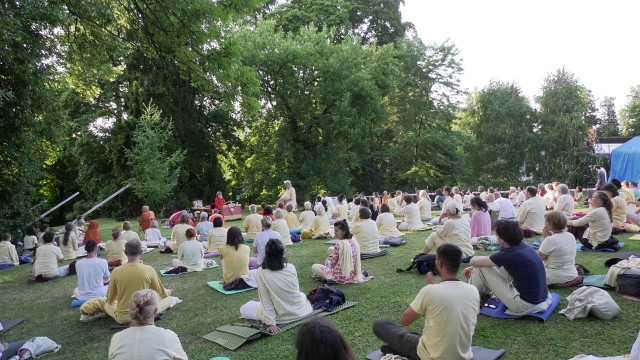
A spiritual discourse on finding divinity in family life and daily practice.
"God is in our heart. You all have God." "My mother is my God, my father is my God. My sister, my brother is my God. And my best friends are my God. That is how we should live."
A swami leads a satsang, weaving together themes of marriage, family duty, and spiritual perception. He discusses marital customs, the role of parents, and the practical challenges of family life, using anecdotes from India and Europe. The talk questions how to see God, ultimately concluding that divinity is found in pure-hearted service to parents, spouse, and all beings, and that true purification comes from mantra and selfless living.
Filming location: Strilky, Czech Republic
Fasting protects your health
18:55 - 19:44 (49 min)
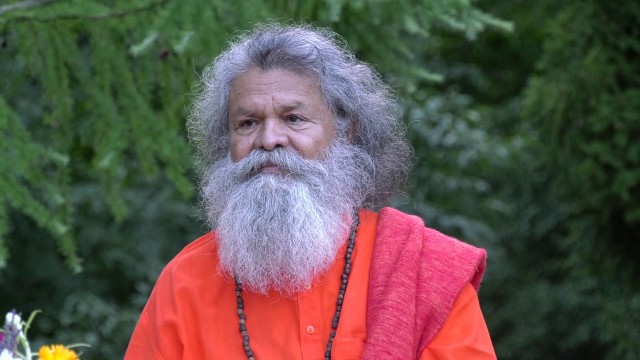
An evening satsang on the sacredness of cows, food, and spiritual practice.
"One hundred percent of the disease goes away. It is said these Indian cows are the first cows."
"In this way, what are we learning? What are we eating? Yes, all are eating meat, all animals—but not human."
Swami Madhvanaji addresses the community on Guru Day, humorously noting he was not given any khir (rice pudding). He expounds on the divine grace and medicinal properties of cows, advocating for their protection and detailing the benefits of their milk, dung, and urine. He extends the discussion to principles of pure food, vegetarianism, and mindful eating, citing the example of Buddha, and advises on fasting as a spiritual and health practice. The talk concludes with remarks on the holiness of horses.
Filming location: Strilky, Czech Republic
Spirituality is without meat and alcohol
19:50 - 20:37 (47 min)
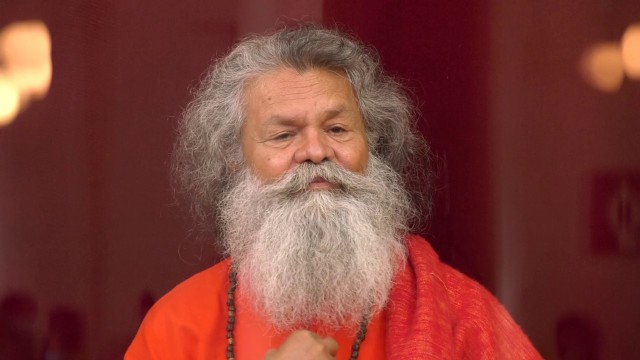
A spiritual discourse on conscious living, compassion for animals, and dietary choices.
"Milk is one of the best sources. It does not matter from which animals, including from our human mother—cow, buffalo, goat, etc."
"My dears, all animals or humans, we are living beings. They feel pain, and we also feel the pain."
The speaker, Swami Avatarpuri, leads a satsang exploring the spiritual and physical significance of milk, tracing its transformation from a mother's nourishment to yogurt, butter, and ghee. He emphasizes compassionate treatment of dairy animals, critiques modern industrial farming and meat consumption, and warns against the dangers of alcohol. The talk expands into themes of interfaith respect, daily prayer for forgiveness, and the inner beauty of the soul beyond physical form.
Filming location: Strilky, Czech Republic
We are a part of God
20:45 - 21:55 (70 min)
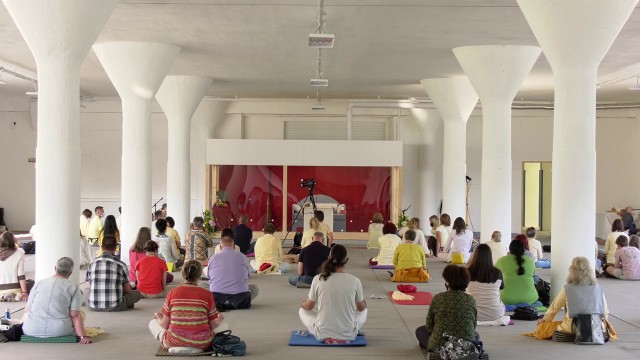
A spiritual discourse on the unity of yoga and the soul's journey.
"Yoga is not only physical, for the physical body, or just breath and concentration, etc. Yoga is very far-reaching."
"I said, your soul, your ātmā in you is your God."
A teacher addresses a gathering, explaining that all forms of yoga are one and that practice is a lifelong endeavor. He describes the soul's cyclical journey through 8.4 million life forms, the divine nature within each person, and the ultimate aim of merging with the cosmic consciousness. He concludes with a practical morning ritual, encouraging attendees to affirm "I am human" upon waking.
Filming location: Slovenia
Good Health and Peace
21:00 - 21:53 (53 min)
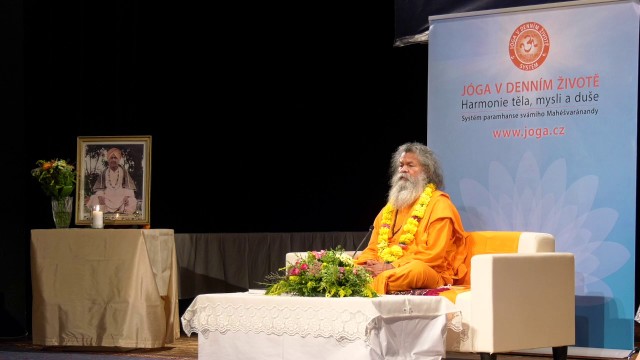
Good Health and Peace in Covid-19 Times through the system Yoga in Daily Life. Scientific conference on health aspects of yoga for covid-19 organized by Swami Madhavananda World Peace Council, held at KC Semilasso, Brno, Czech Republic. When man is able to recognise what God is and is able to recognise the value of human life, then he will no longer take the lives of others. Today yoga is present all over the world. The practitioners of Yoga in Daily Life are vegetarians and only a few of them have been attacked by the coronavirus. The water is the same in the small raindrop and in the river. The Soul will pass through the same door after death, according to the way we act now. Love and protect, do not kill. This is the real yoga.
World Peace is in Our Hands
22:00 - 22:05 (5 min)
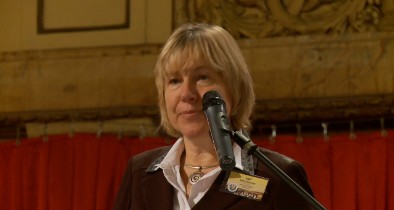
A keynote address on global responsibility and the path to world peace.
"A world without peace will not survive. A world without distributing wealth will not survive. A world without taking care of our beautiful planet will not survive."
"World peace is in our hands... Peace is never achieved without good intentions and cooperation with others. Even more importantly, it requires coherence or balance with one’s self."
The speaker, representing Slovenia, addresses an international conference, arguing that creating resilient societies and active global citizenship is essential for survival. They share Slovenia's initiative to co-create a national vision aligned with the UN Sustainable Development Goals as a model of responsible action. The speech concludes by linking outer peace to inner balance, proposing yoga as a means to achieve it.
Filming location: Prague, Czech Republic
Yoga, Health, and Peace: A Medical Perspective
22:10 - 22:22 (12 min)

A medical doctor presents a scientific perspective on yoga's role in holistic health and peace.
"To create a healthy world, we must be healthy ourselves."
"Yoga techniques influence us on all levels: physical, mental, social, and spiritual."
The speaker, addressing an audience including Vishwa Guruji, explains how modern lifestyles cause stress and disease, contrasting this with the integrated approach of the Yoga in Daily Life system. He details how specific yoga practices—like meditation, prāṇāyāma, and āsanas—scientifically support health by influencing the brain's cortical and subcortical levels and peripheral organs. The talk covers preventing memory loss and depression, advocates for a vegetarian diet, and concludes that balanced self-realization through yoga fosters global peace.
Filming location: Prague, Czech Republic
How to teach Yoga in Daily Life?
22:30 - 23:08 (38 min)
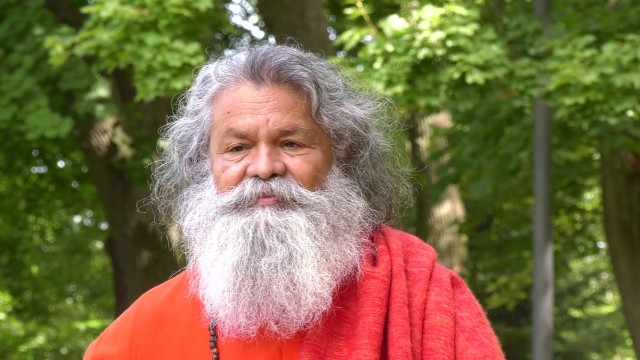
A morning satsang on yoga practice, teaching methods, and spirituality.
"Practicing only physical movement is not enough. But also, without movements of the body is also not good."
"When I came to Europe... anybody can come to a yoga class, okay, come on, I will teach you also, no problem. So many times, people were very confused."
The lecturer addresses attendees after a morning program, reflecting on the practice. He emphasizes the need for a structured, step-by-step approach to teaching yoga, using an analogy to school systems. He discusses the global spread of yoga, the relationship between yoga, spirituality, and religion, and shares anecdotes from his early teaching experiences in Europe, touching on dietary discussions within yoga.
Filming location: Strilky, Czech Republic
The name is important not the body
23:15 - 23:40 (25 min)
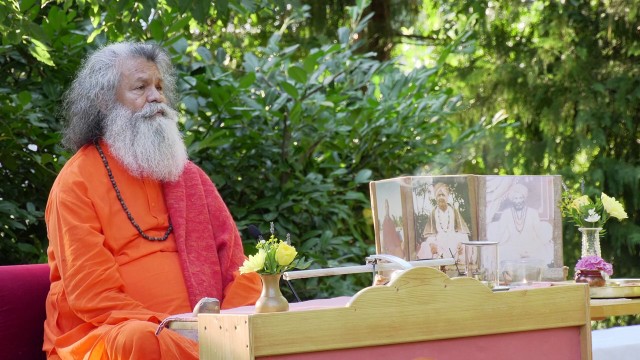
A spiritual discourse on unity, diversity, and the essence of yoga.
"In this Kali Yuga... The difference now is spirituality. You can call it yoga, meditation, prayer, or different religions, but we are all one."
"Holi Guruji said, 'One in all and all in one.'... We should not say, 'If you are not my disciple or my Gurujī’s disciple, then we do not want you.' That is not good."
The lecturer addresses a global television audience, emphasizing the underlying oneness of all spiritual paths, religions, and human beings despite different names and methods. Using analogies like children in a village, trees in a forest, and a football, he explains the philosophy of Yoga in Daily Life, stresses the importance of the immortal divine name over the physical body, and advocates for universal respect and inclusivity.
Filming location: Strilky, Czech Republic
The name is important not the body
23:45 - 0:10 (25 min)
A spiritual discourse on unity, diversity, and the essence of yoga.
"In this Kali Yuga... The difference now is spirituality. You can call it yoga, meditation, prayer, or different religions, but we are all one."
"Holi Guruji said, 'One in all and all in one.'... We should not say, 'If you are not my disciple or my Gurujī’s disciple, then we do not want you.' That is not good."
The lecturer addresses a global television audience, emphasizing the underlying oneness of all spiritual paths, religions, and human beings despite different names and methods. Using analogies like children in a village, trees in a forest, and a football, he explains the philosophy of Yoga in Daily Life, stresses the importance of the immortal divine name over the physical body, and advocates for universal respect and inclusivity.
Filming location: Strilky, Czech Republic
American
Australian