
European
Narada cursed Vishnu
0:15 - 0:58 (43 min)
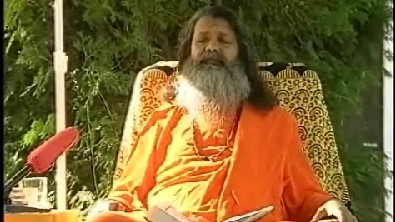
A narration of the mythological story of Nārada's curse upon Lord Viṣṇu, followed by a discourse on its spiritual meaning.
"You made me a monkey, and I tell you, when you will be in great trouble, only the monkey will help you, nobody else."
"The merciful Lord said, 'Nārada, that was all My icchā. It was My will.'"
The speaker recounts how the sage Nārada, enraged after being tricked by Viṣṇu's illusion (māyā), confronts the Lord to curse Him. In his anger, Nārada pronounces a curse that Viṣṇu will incarnate as Rāma, suffer separation from His wife, and be aided by monkeys. Viṣṇu accepts the curse, explaining it was His own divine will, and later dissolves the illusion. A remorseful Nārada seeks forgiveness, and Viṣṇu promises to give him a liberating Kriyā. The talk includes a tangential account of the churning of the ocean (Samudra Manthan) to illustrate Nārada's accusations.
Filming location: Vép, Hungary
The Thirsty Horse and the Path of Spirituality
1:05 - 1:57 (52 min)
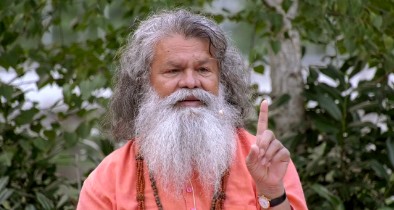
An evening satsang on overcoming worldly stress and pursuing spiritual practice.
"We are thirsty horses in this world, from little children to older people. We are all in this stress."
"If you want to quench your thirst for spirituality, then you should do it... amidst the sound of the generator... amidst this noise of the world."
The lecturer addresses the pervasive stress of modern life, using the parable of a thirsty horse afraid of a water pump to illustrate the need to practice spirituality amidst worldly noise. He discusses the inescapable realities of time and karma, explaining concepts of sin (pāpa) and piety (puṇya) and the impurities of the inner instrument (Antaḥkaraṇa). He narrates the transformative stories of the sage Valmiki, a bandit who became a seer through chanting, and the poet Tulsidas, who was inspired by his wife to turn his love toward God. The talk emphasizes continuing spiritual practice (sādhanā) with humility despite life's obligations.
Filming location: Strilky, Czech Republic
Great saints are always awakened
2:05 - 2:53 (48 min)
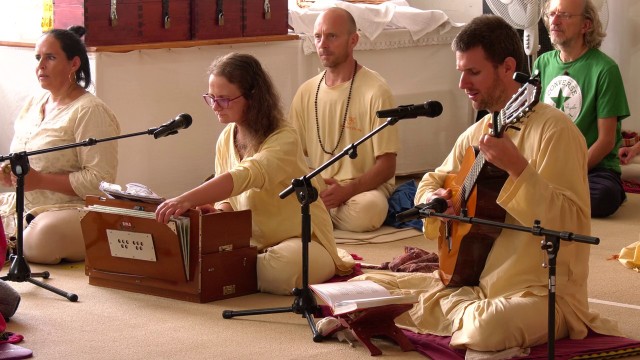
Evening satsang with Vishwaguruji from Strilky Ashram, Czech Republic. We pray to Mahaprabhuji and ask for his blessing. Great saints are for all. Great yogis are always awakened. They practise the yogic way of sleeping that is yoga nidra. Mahaprabhuji sent a message to his disciples in the Yoga nidra bhajan. Jiva is always awakened. we are bounded to the samsara which is senseless. Atma goes to paramatma like a drop to the ocean. We are attached to many things. When we die we should release everything. Only yogis nknow what is the real yoga nidra.
How to think of black magic
3:00 - 3:47 (47 min)
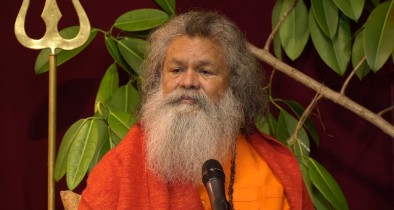
A satsang discourse debunking fear-based beliefs around black magic and ghosts through storytelling.
"People are very much frightened. They speak of ghosts and such things, and many claim they can take away the black magic which is supposedly on you."
"If we believe in God, then believe in God. God will give everything. God will never do anything negative for us."
Swami Ji narrates two cautionary tales to illustrate how fear and superstition are exploited. The first story tells of a village magician who manipulates a grieving widow, and the second describes a 'ghost' that turns out to be a moonlit chimney. He emphasizes that true spiritual practice, such as having a Guru Mantra and faith, offers protection, concluding that it is one's own fear, not external forces, that causes suffering.
Filming location: Strilky, Czech Republic
God is in everyone
3:55 - 4:38 (43 min)
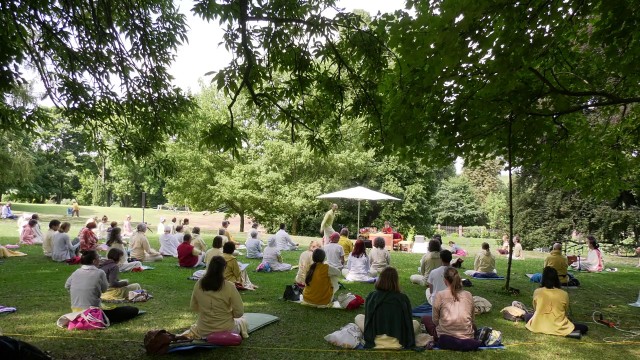
A spiritual discourse on knowledge, family, and the guru's grace, delivered during a Kriyā Anuṣṭhāna gathering near Guru Pūrṇimā.
"Learning is not for one day; it is a whole year. Similarly, Śaṅkarācārya jī learned and gave great knowledge."
"Mother-father's knowledge, lifelong techniques... So yoga or spirituality will go with us for life. And when our ātmā, our soul, goes out, we are going with that, with that knowledge."
A spiritual teacher addresses attendees, weaving together the importance of the guru tradition established by Śaṅkarācārya with the foundational knowledge imparted by one's parents. The talk emphasizes lifelong learning, family unity, and the need to transcend the cycle of the cakras through spiritual practice. The discourse includes parables, such as one about a moth, and concludes with a focus on inner divinity and chants to the guru lineage.
Filming location: Strilky, Czech Republic
Fakirs walk on fire
4:45 - 5:22 (37 min)
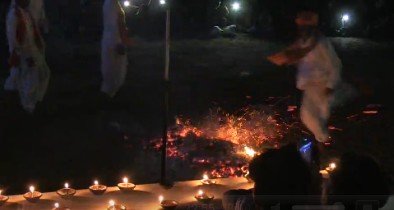
Remembering Holy Guruji's Mahasamadhi at Sri Alakhpuriji Siddha Peeth Parampara Ashram in Bari Khatu, Rajasthan, India. Fakirs walk on fire.
We are all in one
5:30 - 6:06 (36 min)
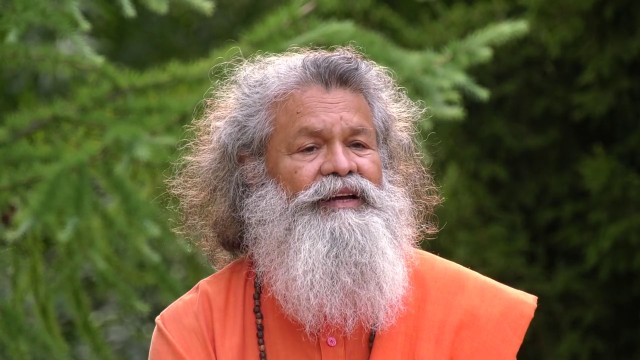
A satsang featuring devotional singing and spiritual discourse.
"Every time you sing this bhajan, remember what it means. All the bhajans we have are from great saints—many, many holy saints."
"You know, my heart is in you, and your heart is in me, if you want. I give it to you. So that is our yoga in daily life: that we are one in all and all in one."
Following a bhajan written by Mahāprabhujī, the speaker reflects on the power of devotional music from various languages and saints. The discourse expands into a contemplation of the body's energy, describing chakras as powerful points in every joint, and emphasizes care for the physical form. Themes of spiritual homecoming, unity, and the interconnectedness of all life are woven together, concluding with an affirmation of oneness.
Filming location: Strilky, Czech Republic
Bhajans from Strilky
6:10 - 6:44 (34 min)
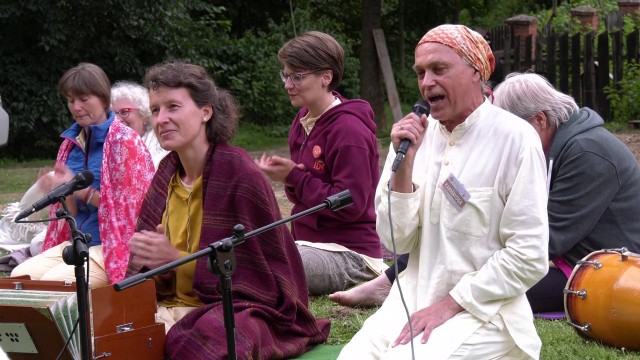
Evening satsang with Vishwaguruji from Strilky Ashram, Czech Republic. Bhajan singing from Sri Mahaprabhudeep Ashram.
The beauty of Mahaprabhudeep Ashram
6:50 - 7:20 (30 min)
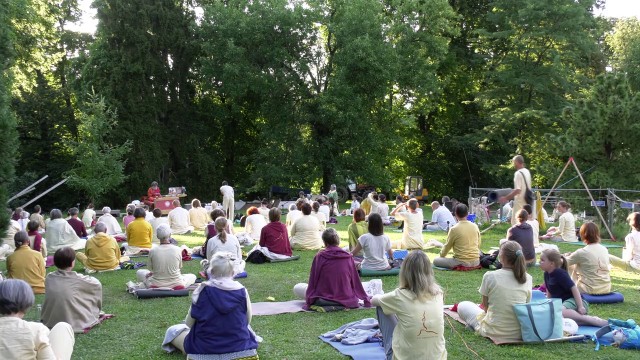
A spiritual discourse and devotional singing from an ashram, praising India's sacred land and the blessings of the Guru.
"Dhanya Dhanya Bhārata Bhūmi, svahitha kari paramasukhāsāgara Prabhu Nelliyaihi Avatāra Anantariṣimuni Yorayogī."
"If one can come here only for one hour or two hours, that is also very much. For one day, two days, three days, four days, day by day, everything comes: the purification, meditation, concentration, peace, harmony, health."
A speaker, likely a swami or devotee, leads a session that begins with Sanskrit chants and hymns glorifying India (Bharat Bhumi) and its divine incarnations. He describes the beautiful, healing atmosphere of the ashram in the forest, emphasizing the benefits of visiting for purification and spiritual practice. He discusses the upcoming Guru Purnima celebration, encourages attendance, and shares insights on karma yoga and the virtues of organic gardening from the ashram's land. The session includes a direct appeal to Indra, the rain god, for clear weather and concludes with devotional singing and the mantra "Śivo'ham."
Filming location: Strilky, Czech Republic
The name of the Divine is always with us
7:25 - 7:54 (29 min)
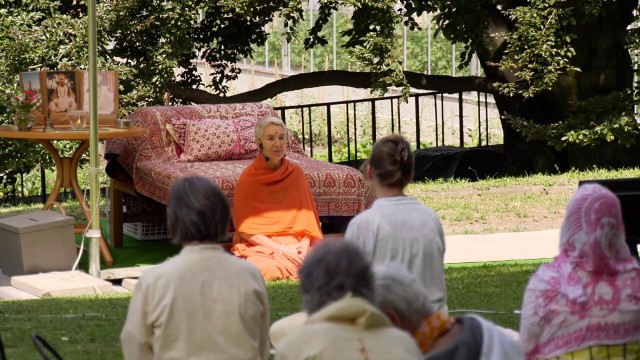
A disciple's reflections on spiritual practice and Guru Pūrṇimā preparations.
"Our consciousness, our view, is still limited. So we know only that we feel this love and this devotion to our Gurudev, and from this we try to do."
"Wherever your name is written, it will never go down. It will always remain and will be fluttering. Your name is the greatest protection, support, and blessing."
A speaker addresses the community from Śrī Mahāprabhujī’s āśram, describing the intense preparations for Guru Pūrṇimā. He shares personal struggles with sādhanā, comparing it to the internal chaos and subsequent purification of a Kumbh Melā, and reflects on the fear of death and the nature of liberation. He concludes by recounting the story of Lord Rāma and the bridge to Lanka to illustrate the supreme power and protection of the Divine Name.
Filming location: Strilky, Czech Republic
Gold and God
8:00 - 8:27 (27 min)
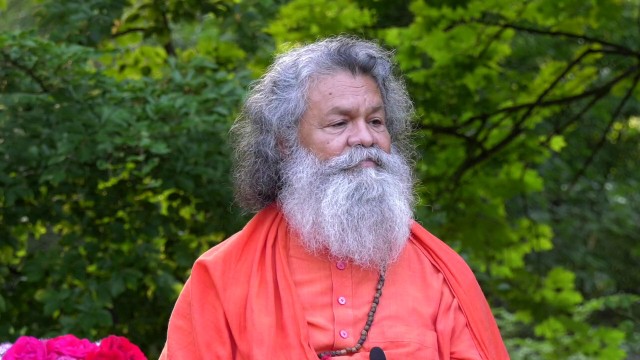
An evening satsang on the universal gift of yoga, transcending divisions of school or religion.
"Yoga is for good health, harmony, understanding, peace, and long life, and to be friends. This is the purpose of yoga."
"It does not matter which religion, which place, anywhere. Only human. If one is human, that is all."
A spiritual teacher addresses a global audience, emphasizing yoga as a divine tool for health, happiness, and harmony meant for all humanity. He recounts a parable about the introduction of gold and money, contrasting a past era of simple, reciprocal giving with modern complexity and attachment. The core message is that yoga, given by God, is a unifying practice beyond any sectarian or material divisions.
Filming location: Strilky, Czech Republic
The Unselfish Work
8:35 - 9:01 (26 min)
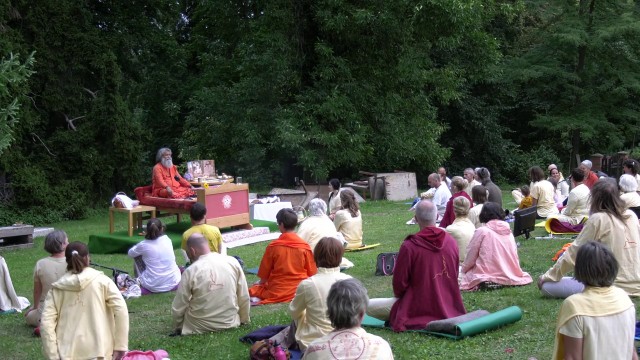
A satsang discourse on karma yoga, selfless service, and the four aims of life.
"Sometimes, when we engage in seva, work, and karma yoga, we think, 'I am doing this. If I were not here, who would do it?'"
"Swāmījī says, 'The greatest sin is to waste time. Use it or lose it.'"
The speaker shares a parable from Swāmījī about a dog who mistakenly believes it is pulling a cart, illustrating the illusion of self-importance in service. The talk emphasizes performing niṣkāma karma (selfless action) as a privilege and explores the four Puruṣārthas (dharma, artha, kāma, mokṣa) as life goals attainable only through dedicated effort and Guru's grace, referencing teachings and bhajans from saints like Ācāla Rāmajī.
Filming location: Strilky, Czech Republic
I am not the doer
9:05 - 9:27 (22 min)
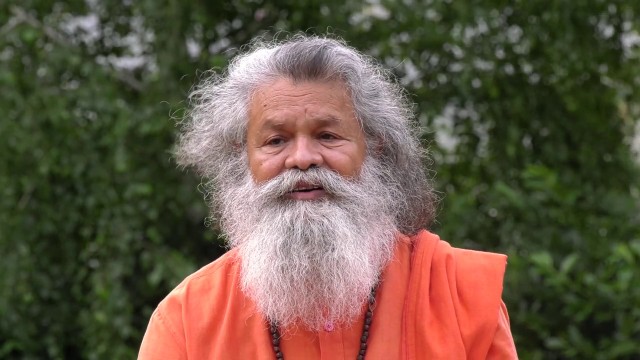
Evening satsang with Vishwaguruji from Strilky Ashram, Czech Republic. Bhajan singing. Chanting mantras. We are not the doer. During all of our life a Supreme leads us and does everything. We are swiming in the ocean of life. Our spiritual life should be happy. The story of a bird on the boat in the ocean.
The Unselfish Work
9:35 - 10:01 (26 min)
A satsang discourse on karma yoga, selfless service, and the four aims of life.
"Sometimes, when we engage in seva, work, and karma yoga, we think, 'I am doing this. If I were not here, who would do it?'"
"Swāmījī says, 'The greatest sin is to waste time. Use it or lose it.'"
The speaker shares a parable from Swāmījī about a dog who mistakenly believes it is pulling a cart, illustrating the illusion of self-importance in service. The talk emphasizes performing niṣkāma karma (selfless action) as a privilege and explores the four Puruṣārthas (dharma, artha, kāma, mokṣa) as life goals attainable only through dedicated effort and Guru's grace, referencing teachings and bhajans from saints like Ācāla Rāmajī.
Filming location: Strilky, Czech Republic
Great saints are always awakened
10:05 - 10:53 (48 min)
Evening satsang with Vishwaguruji from Strilky Ashram, Czech Republic. We pray to Mahaprabhuji and ask for his blessing. Great saints are for all. Great yogis are always awakened. They practise the yogic way of sleeping that is yoga nidra. Mahaprabhuji sent a message to his disciples in the Yoga nidra bhajan. Jiva is always awakened. we are bounded to the samsara which is senseless. Atma goes to paramatma like a drop to the ocean. We are attached to many things. When we die we should release everything. Only yogis nknow what is the real yoga nidra.
Practicing of the system 'Yoga in Daily Life', Level 1 - Part 4
11:00 - 12:04 (64 min)
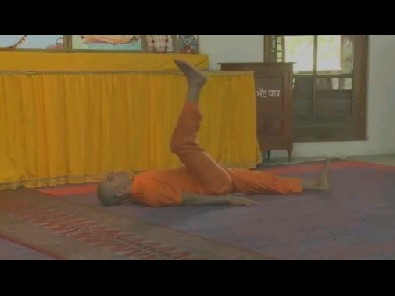
Practicing of the system "Yoga in Daily Life", Level 1 - Part 4, in Om Vishwa Deep Gurukul Swami Maheshwaranand Ashram, Jadan, Rajasthan, India on 23rd of October 2009.
I am not the doer
12:10 - 12:32 (22 min)
Evening satsang with Vishwaguruji from Strilky Ashram, Czech Republic. Bhajan singing. Chanting mantras. We are not the doer. During all of our life a Supreme leads us and does everything. We are swiming in the ocean of life. Our spiritual life should be happy. The story of a bird on the boat in the ocean.
Our duty to have a devotion
12:40 - 13:56 (76 min)
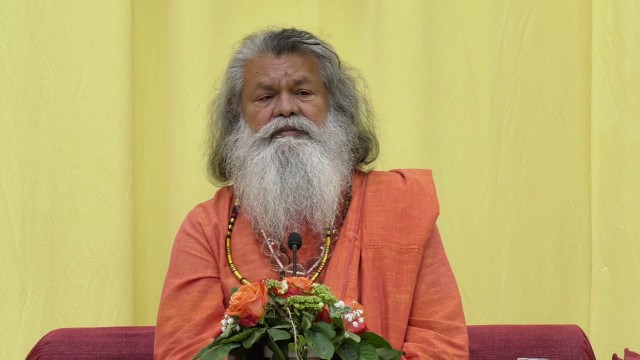
A spiritual discourse on lineage, devotion, and the nature of the soul.
"Our generation to generation to generation is of Alak Purījī. It is a tradition, and the tradition is not merely a tradition; it is, and it has to be, to receive the blessing of adoration."
"The reality is clear: spirituality needs to be in our heart. It does not matter what happens; I will not give up."
Swami Maheshwarananda (Swamiji) addresses a gathering, centering on the rediscovered lineage from Alak Purījī through Devpurījī and Mahāprabhujī to the present. He emphasizes unwavering devotion to the guru, illustrates the master-disciple relationship with anecdotes, and discusses the responsibilities and detachment required of a sannyāsī. The talk expands into teachings on the layers of existence (kośas), karma, and the soul's journey, using everyday metaphors for spiritual concepts.
Filming location: Slovenia
Part 1: The Role of Yoga and Meditation in Improving Quality of Life for Cancer Patients
14:00 - 15:07 (67 min)
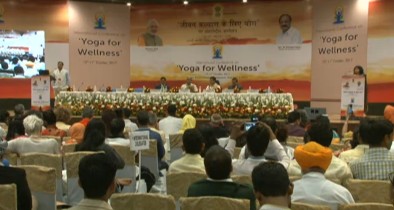
A medical lecture on the role of yoga and meditation as supportive care for cancer patients.
"We must note which specific yogic and meditative techniques were used, as these vary widely."
"Please do not give false hope that cancer will be cured... If a practitioner claims that prāṇāyāma, dhyāna, and some Ayurvedic herbs... can cure cancer, they are committing a grave sin against society."
A doctor from AIIMS Delhi presents a detailed analysis of scientific studies on yogic interventions for cancer patients, emphasizing they are complementary to standard treatments like chemotherapy. He strongly warns against practitioners falsely claiming yoga can cure cancer, shares data on benefits for quality of life and stress, and proposes a large-scale research trial combining yoga, meditation, and herbal products for cancer prevention and care.
Filming location: Delhi, India
Dharma danda
15:15 - 15:58 (43 min)
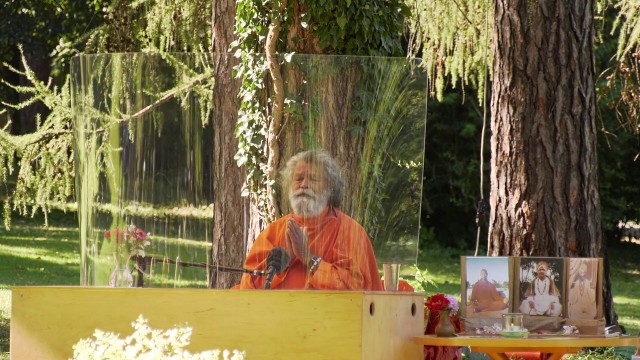
A spiritual discourse on the principle of dharma and the symbolic Dharma Daṇḍa.
"If we protect dharma, if we uphold it, then dharma will protect us."
"This is the dharma daṇḍa... Because you or I can change anything, so the crown and this, then you have this in your hand. Not for your family, not for your friends, but for all."
Following a closing prayer and thanks for a retreat, a spiritual teacher delivers a talk centered on the ancient principle that dharma, when protected, protects in return. Using the allegory of a king's crown and authority, he explains that true leadership and spiritual responsibility are for the benefit of all, not oneself. He introduces the Dharma Daṇḍa (staff) as a physical symbol of this principle, recounting a story of a guru striking a king's head with the staff to emphasize that even authority must be subservient to dharma. He draws parallels to the staffs of Christian bishops and Hindu Mahāmaṇḍaleśvaras, and briefly discusses Hungarian shepherd dogs as an example of protective duty, before concluding with practical retreat reminders.
Filming location: Strilky, Czech Republic
Practice: Raising the Kundalini
16:00 - 16:49 (49 min)
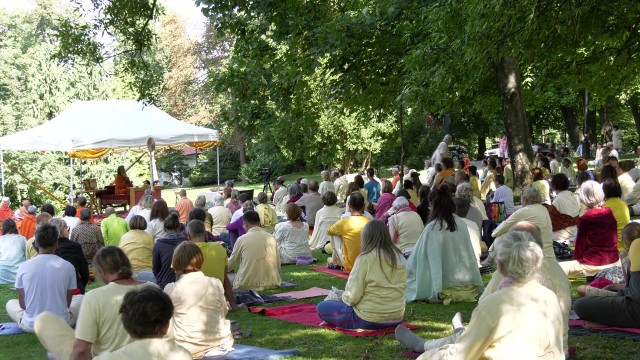
Morning satsang with Vishwaguruji from Strilky Ashram, Czech Republic. Practising mudra and AUM chanting with Vishwaguruji. These exercises should be practised with a guru, the master should be physically with us. The instructions should not be passed on further! Similar to performing a surgical operation, it is not possible to master it just by imitating the doctor. A story about a monkey and the king.
Vegetarian cooking lesson 4, Vegetable Soup
16:00 - 16:23 (23 min)

A cooking demonstration for Hungarian lentil soup at a yoga seminar.
"If we want our family to enjoy vegetarian food, we can take care of these small details."
"Even friends who are not vegetarian or not really open to vegetarian food like this soup very much, and in this way, they come to appreciate the vegetarian kitchen."
Agnes Bugán Szabónyi from Vépr, Hungary, guides viewers through preparing a traditional Hungarian lentil soup. She details the ingredients, including lentils, paprika, and fresh vegetables, and explains the steps from soaking the lentils to sautéing spices and simmering the soup. She emphasizes the dish's appeal to non-vegetarians and shares tips for family-friendly preparation, concluding with well-wishes for a successful vegetarian lifestyle.
Filming location: Vép, Hungary
The Path of the Pilot: Mastering the Inner Aeroplane
16:30 - 17:22 (52 min)
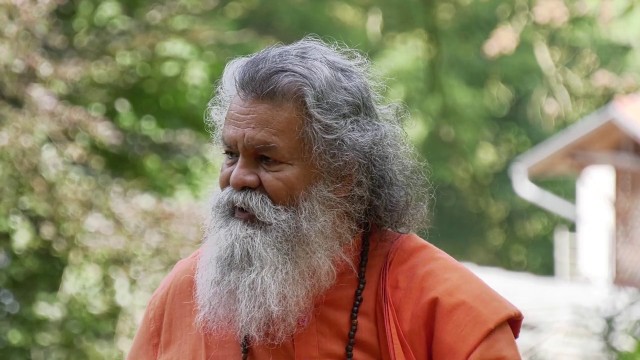
A spiritual discourse using the metaphor of a pilot to discuss self-mastery and inner power.
"The pilot knows what is happening, yet he remains peaceful. When they all land in the same place, they are happy again."
"Therefore, how we are sitting here is not possible; it is not easy. Power, inner power."
The lecturer leads a satsang, explaining that the individual is the pilot of the body's "aeroplane." He discusses the need to control the mind and nervous system (Vajranāḍī), shares stories about disciples undergoing surgery without anesthesia through yogic focus, and describes witnessing fire-walking rituals to illustrate the power of mantra and sādhanā.
Filming location: Strilky, Czech Republic
The Thirsty Horse and the Path of Spirituality
17:30 - 18:22 (52 min)
An evening satsang on overcoming worldly stress and pursuing spiritual practice.
"We are thirsty horses in this world, from little children to older people. We are all in this stress."
"If you want to quench your thirst for spirituality, then you should do it... amidst the sound of the generator... amidst this noise of the world."
The lecturer addresses the pervasive stress of modern life, using the parable of a thirsty horse afraid of a water pump to illustrate the need to practice spirituality amidst worldly noise. He discusses the inescapable realities of time and karma, explaining concepts of sin (pāpa) and piety (puṇya) and the impurities of the inner instrument (Antaḥkaraṇa). He narrates the transformative stories of the sage Valmiki, a bandit who became a seer through chanting, and the poet Tulsidas, who was inspired by his wife to turn his love toward God. The talk emphasizes continuing spiritual practice (sādhanā) with humility despite life's obligations.
Filming location: Strilky, Czech Republic
The beauty of Mahaprabhudeep Ashram
18:30 - 19:00 (30 min)
A spiritual discourse and devotional singing from an ashram, praising India's sacred land and the blessings of the Guru.
"Dhanya Dhanya Bhārata Bhūmi, svahitha kari paramasukhāsāgara Prabhu Nelliyaihi Avatāra Anantariṣimuni Yorayogī."
"If one can come here only for one hour or two hours, that is also very much. For one day, two days, three days, four days, day by day, everything comes: the purification, meditation, concentration, peace, harmony, health."
A speaker, likely a swami or devotee, leads a session that begins with Sanskrit chants and hymns glorifying India (Bharat Bhumi) and its divine incarnations. He describes the beautiful, healing atmosphere of the ashram in the forest, emphasizing the benefits of visiting for purification and spiritual practice. He discusses the upcoming Guru Purnima celebration, encourages attendance, and shares insights on karma yoga and the virtues of organic gardening from the ashram's land. The session includes a direct appeal to Indra, the rain god, for clear weather and concludes with devotional singing and the mantra "Śivo'ham."
Filming location: Strilky, Czech Republic
How to think of black magic
19:05 - 19:52 (47 min)
A satsang discourse debunking fear-based beliefs around black magic and ghosts through storytelling.
"People are very much frightened. They speak of ghosts and such things, and many claim they can take away the black magic which is supposedly on you."
"If we believe in God, then believe in God. God will give everything. God will never do anything negative for us."
Swami Ji narrates two cautionary tales to illustrate how fear and superstition are exploited. The first story tells of a village magician who manipulates a grieving widow, and the second describes a 'ghost' that turns out to be a moonlit chimney. He emphasizes that true spiritual practice, such as having a Guru Mantra and faith, offers protection, concluding that it is one's own fear, not external forces, that causes suffering.
Filming location: Strilky, Czech Republic
Outer and inner meditation
20:00 - 20:53 (53 min)
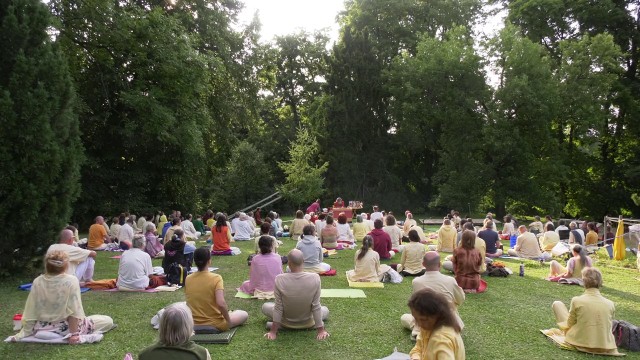
A spiritual discourse on meditation, inner science, and the living tradition of the guru.
"Meditation is within. But how? And who is really the best?"
"Therefore, this science is also very good, and that is also good... So it is better that we should be neutral."
Swami Ji addresses a gathering, contrasting external observation with true inner meditation. He shares a story of an old yogī with a profound indifference to the physical body to illustrate a deeper science. He discusses the upcoming Kriyā Initiation, outlining its prerequisites and daily practice, and expands on the nature of a living spiritual lineage, where every individual is part of a continuous flow of knowledge from generation to generation.
Filming location: Strilky, Czech Republic
Outer and inner meditation
21:00 - 21:53 (53 min)
A spiritual discourse on meditation, inner science, and the living tradition of the guru.
"Meditation is within. But how? And who is really the best?"
"Therefore, this science is also very good, and that is also good... So it is better that we should be neutral."
Swami Ji addresses a gathering, contrasting external observation with true inner meditation. He shares a story of an old yogī with a profound indifference to the physical body to illustrate a deeper science. He discusses the upcoming Kriyā Initiation, outlining its prerequisites and daily practice, and expands on the nature of a living spiritual lineage, where every individual is part of a continuous flow of knowledge from generation to generation.
Filming location: Strilky, Czech Republic
Around the world - Khatu pranam
22:00 - 22:34 (34 min)
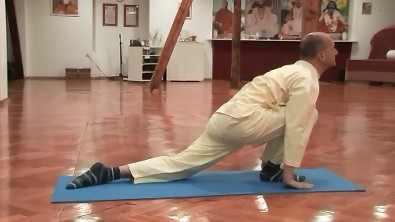
The story of Sri Mahaprabhuji and Khatu Pranam exercise. Produced by Sri Devpuriji Ashram in Zagreb, Croatia. Partially subtitled in Engish.
Chakras in the human being
22:40 - 23:25 (45 min)
A lecture on the science of yoga, focusing on the kuṇḍalinī, the chakras, and specifically the Viśuddhi cakra.
"The definition of a chakra is a cycle, and chakra means turning."
"Viṣ means poison. Everything negative, unpleasant, and harmful for us is a poison. The opposite is nectar, the good things."
Swami Madhavanandji Bhagavan delivers the fifth lecture in a series on chakras. He explains chakras as fundamental cycles of energy, describes the five layers of the human body (kośas), and details the function of the Viśuddhi (throat) chakra in purifying psychic and emotional poison. He illustrates this with the story of Lord Śiva drinking the ocean's poison and holding it at his throat. The talk concludes with a promise to teach practical purification techniques and an invitation for questions.
Filming location: Vancouver, Canada
We can easily destroy our good karma
23:30 - 0:39 (69 min)
Evening satsang with Vishwaguruji from Strilky Ashram, Czech Republic. The story of Vishwaguruji at the time he began to learn the German language. Vasant tells some words about the latest project in Strilky. The story of a very good young man who recently died in an accident. There are paths in front of us, good and bad, and we choose the path on which we go. Sometimes we destroy our good deeds with one bad thought. Dharamraj observes our all karmas before he decides on our fate. Vishwaguruji tells how ashwini mudra is functioning. In speaking the Sanskrit language, we use both hemispheres of our brain. Bhramari pranayam is also using the two hemispheres.
The Principles and Power of Sādhanā
23:30 - 0:15 (45 min)
A spiritual discourse on the principles of sādhanā and the significance of the Maṇipūra Chakra.
"Any kind of sādhanā requires perfect technique and discipline. One must follow the principles."
"That energy, which is located in the maṇipūra cakra, is called hara-śakti. That is the life force, the energy that keeps you moving."
A teacher explains the necessity of disciplined practice, using the analogy of fueling a car correctly. He delves into the esoteric importance of the Maṇipūra Chakra as the seat of life force (hara-śakti) and the junction of vital energies, connecting its functions to immunity, sound resonance (nāda), and mythological symbolism involving Vishnu. The talk covers related practices like Śabda Sañjālan and Khaṭupranām, emphasizing that authentic practice requires devotion, a spiritual lineage, and following a master's instructions to awaken inner energy and burn karmic seeds.
Filming location: Strilky, Czech Republic
American
Australian